

Auto
2022 Beijing Auto Show faces serious COVID threat
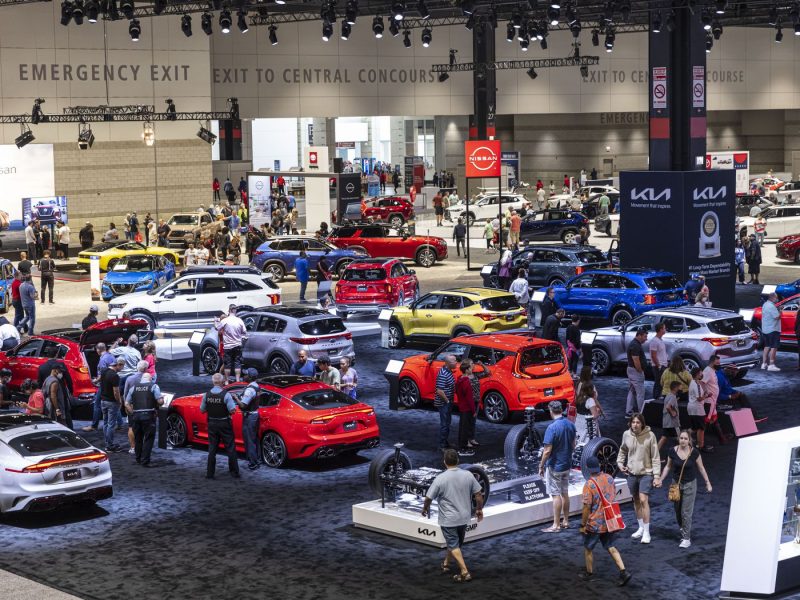
There are fears that the much publicised Beijing Auto Show may either be postponed or cancelled outright following the resurgence of COVID in the host city of China.
Just over two years ago, humanity was dealt a rather undesirable set of cards as the pandemic brought the entire world to a standstill. The contagious virus crept across the globe like an itchy blanket. Life as we knew it came to an end, with events such as auto shows relegated to a pre-COVID past.
As many other nations seem to be returning to normality, motoring-related events have made a comeback. For example, the New York Auto Show is set to commence in April, after an unfortunate two-year pause.
But due to a sharp uptick of coronavirus cases in China, the 2022 Beijing Auto Show is expected to be cancelled.
Automotive News China quoted insiders as telling the publication that plans were afoot to postpone the biennial auto show. Local press coverage points to rescheduling in June. China is currently battling the biggest wave of Covid-19 cases since the pandemic was first discovered. As such, lockdown and public safety measures have been enforced, effectively banning gatherings of large crowds.
The reasons behind the potential cancellation are logical but still disappointing. The eagerly awaited BMW i7 and new 7 Series were set to debut at the Beijing Auto Show. However, the Munich-based automaker could use next month’s NY Auto Show to reveal the new 7 range. Rivals Mercedes-Benz was set to show off its EQS electric SUV at the Chinese expo and will now have to make alternate plans.
Ironically, while most motor shows were being canceled in 2020, the Beijing Auto Show went ahead as planned.
With the world’s motoring press and gearheads unable to travel to China, some manufacturers set up clever ways for people to still experience the show while in government-mandated lockdowns. Porsche offered a virtual tour of its Beijing stand, allowing you to effectively experience its new models through your smartphone or computer.
If the 2022 Beijing Auto Show is canceled, we hope it is postponed to a later date in the year as China is fast becoming carmakers’ most important market.
-Carbuzz










Auto
OMAA Unveils Three CNG, Electric Buses, Offers 48-Month Vehicle Finance
OMAA Unveils Three CNG, Electric Buses, Offers 48-Month Vehicle Finance
…Introduces ₦890,000 monthly payment plan as Nigerian mobility firm marks sixth anniversary
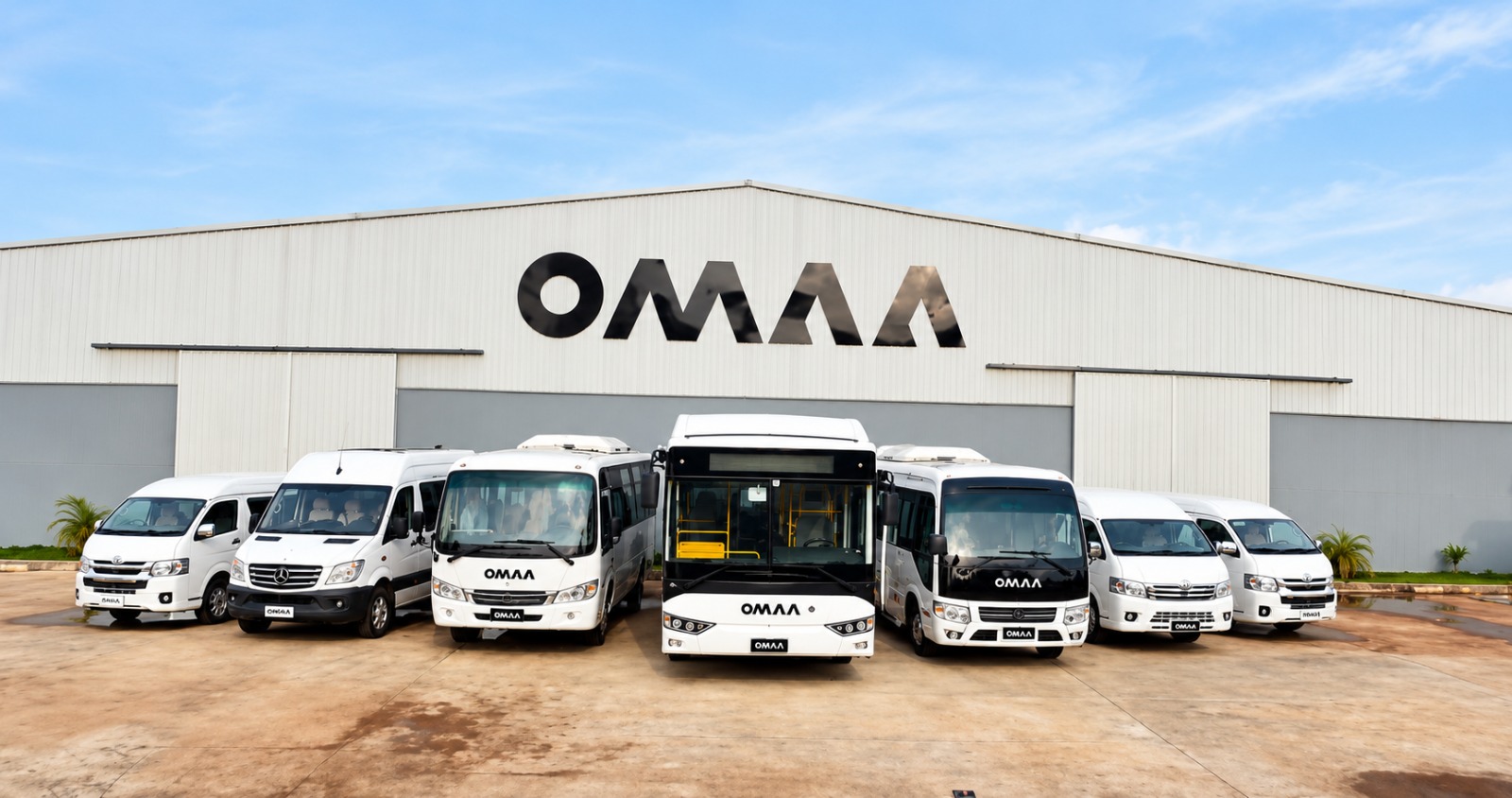
Nigerian vehicle and energy company, OMAA, has unveiled three passenger vehicle models in compressed natural gas (CNG) and battery-electric variants, alongside a financing scheme offering repayment periods of up to 48 months to help transport operators and corporate organisations expand their fleets.
The new models — OMAA U3 minibus, K7 bus and V12 high-capacity city bus — are designed to serve different segments of the passenger transport market, from urban shuttles and institutional transport to large-scale mass transit operations.
The announcement, which coincides with the company’s sixth anniversary, also marks the introduction of OMAA Finance, a programme developed in partnership with Nigerian financial institutions to ease the burden of upfront vehicle acquisition costs.
Under the scheme, advertised monthly payments start from ₦890,000 for the OMAA U3 minibus, with an initial deposit of 10%. Financing terms, however, will depend on eligibility requirements, repayment tenure and the customer’s equity contribution.
The company has also opened pre-orders for the three models, giving prospective buyers the option of choosing between CNG and battery-electric powertrains according to their routes, operating costs and access to the necessary energy infrastructure.
Speaking on the development, OMAA’s Managing Director, Chinedu Oguegbu, said the launch reflected the company’s commitment to local automotive manufacturing and the expansion of cleaner, more affordable transport solutions.
“Six years ago, we set out to demonstrate that commercial vehicles could be assembled in Nigeria and powered by cleaner, more affordable energy. Today, the introduction of the OMAA U3, K7 and V12 in both CNG and electric variants, alongside our vehicle financing programme, represents another significant step towards that vision,” Oguegbu said.
He explained that the company’s objective extended beyond supplying vehicles to helping operators manage running costs, access after-sales support and build sustainable transport businesses.
“By combining locally supported servicing, parts availability and structured financing, we are creating opportunities for schools, hospitals, corporate organisations and mass transit operators to expand their fleets with greater confidence,” he added.
Three models target different market segments
The new lineup covers a broad range of passenger transportation needs.
The OMAA U3 is a 12-to-15-seater minibus designed for urban and intercity transport operators, institutional shuttle services and businesses requiring compact passenger vehicles.
The K7, with a capacity of 23 to 30 passengers, targets staff transportation, school bus services, corporate fleets and medium-capacity passenger routes.
The V12, the largest of the three models, is configured to accommodate between 43 and 70 passengers. It is designed for mass transit operators and businesses serving routes with high passenger demand.
All three models are offered in CNG and battery-electric configurations, allowing fleet owners to evaluate alternative powertrains based on fuel or electricity costs, vehicle utilisation, maintenance requirements and access to refuelling or charging facilities.
The dual-powertrain strategy comes as transport operators increasingly explore ways to manage energy expenses and improve the economics of commercial vehicle operations.
Special-purpose vehicles broaden applications
Beyond passenger buses, OMAA is offering special-purpose vehicle configurations based on the same platforms.
The options include cargo vans, ambulances, VIP transport vehicles and airport shuttles, extending the potential applications of the company’s vehicle range to logistics, healthcare, corporate mobility and airport transportation.
The use of common vehicle platforms could also help fleet owners streamline maintenance, spare-parts management and technical training, particularly where organisations operate different vehicle configurations.
Finance scheme targets high acquisition costs
OMAA Finance is a central component of the company’s strategy to lower the barriers to commercial vehicle ownership.
By spreading acquisition costs over repayment periods of up to four years, the programme is intended to help operators preserve working capital while expanding or renewing their fleets.
The advertised starting monthly payment of ₦890,000 for the U3, subject to a 10% initial deposit, provides an entry point for prospective buyers. The actual cost of financing will depend on the applicable terms, including the vehicle price, deposit, interest and other charges, where applicable.
The company is also promoting a total cost of ownership (TCO) approach, which considers not only the purchase price but also energy consumption, servicing, spare parts and other expenses incurred throughout a vehicle’s operating life.
According to OMAA, the combination of structured financing, local servicing support and spare-parts availability is intended to help customers plan operating expenses and make more informed fleet investment decisions.
However, the potential savings will vary according to the vehicle selected, financing conditions, energy prices, mileage, maintenance costs and the availability of suitable CNG refuelling or electric charging infrastructure.
Six years of operations
Headquartered in Umunya, Anambra State, with offices in Lagos, Abuja and Accra, OMAA operates in Nigeria and Ghana, serving fleet operators, institutions and businesses.
The latest launch builds on the company’s six-year operating history and its efforts to combine local vehicle assembly, alternative energy solutions and financing options in the commercial mobility market.
For transport operators contending with rising operating expenses and the high cost of fleet expansion, the new models and financing arrangements offer additional options for acquiring passenger vehicles.
The initiative’s long-term impact, however, will depend on the vehicles’ performance under local operating conditions, the accessibility and affordability of financing, reliable after-sales support and the availability of the infrastructure required to sustain CNG and electric mobility.
With the latest unveiling, OMAA is seeking to position itself beyond vehicle supply, offering an integrated commercial mobility proposition that combines vehicle acquisition, alternative energy choices, maintenance support and financing.
Auto
FG Moves to Expand CNG Vehicle Production, Targets Cheaper Transport Fares
FG Moves to Expand CNG Vehicle Production, Targets Cheaper Transport Fares
The Federal Government has stepped up efforts to strengthen Nigeria’s automotive industry and promote more affordable transportation through collaboration with local vehicle manufacturers, following visits to two manufacturing facilities in Anambra State.
Board members of the National Automotive Design and Development Council (NADDC) inspected the facilities of Innoson Vehicle Manufacturing (IVM) in Nnewi and Kojo Motors Auto Assembly in Umunya to assess their production capacity, identify operational challenges and explore ways to support indigenous manufacturers.
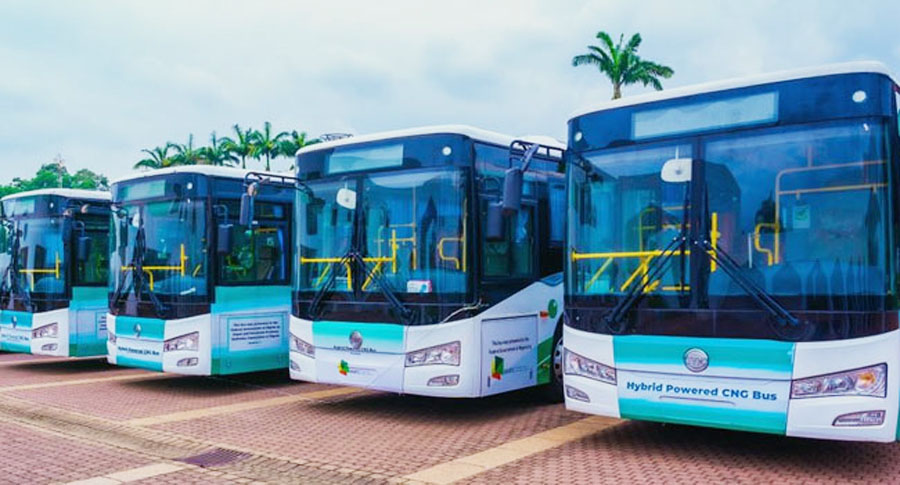
The visit comes amid the Federal Government’s drive to expand the use of compressed natural gas (CNG) and electric vehicles as alternatives to petrol-powered transportation, with the aim of reducing operating costs and making public transport more affordable.
The manufacturers welcomed the government’s new policy directing ministries, departments and agencies (MDAs) to patronise locally manufactured vehicles, saying it could increase demand for their products and strengthen domestic production.
Secretary to the Government of the Federation, George Akume, had issued a circular directing government establishments to purchase vehicles from local manufacturers.
Managing Director of Innoson Vehicle Manufacturing, Chief Innocent Chukwuma, said he was encouraged by the government’s emphasis on CNG, describing the fuel as an important option for sustaining Nigeria’s automotive industry amid rising petrol and diesel costs.
Chukwuma disclosed that the company had dedicated its newest large-scale facility to producing CNG-powered trucks and electric vehicles.
READ ALSO:
- 2027: Adeleke’s Camp Promises 1.5 Million Votes for Tinubu in Osun
- APC Expands Tinubu’s Campaign Council, Names Wike, Adeleke, Soludo
- 2027: Tompolo Unveils 57 Tinubu Campaign Vehicles, Warns Lagosians Against 2023 Repeat
He said wider adoption of CNG could help lower transportation and operating costs while supporting local industrial growth and creating employment opportunities.
The industrialist also called for stronger backward integration in the automotive sector, arguing that manufacturers should focus on producing components that Nigeria has the capacity to manufacture competitively.
At the Umunya facility, the executive director of Kojo Motors, Chinedu Oguegbo, said the company was concentrating on commercial vehicles designed for Nigeria’s transport needs.
He said the company had begun benefiting from the government’s local vehicle procurement policy but had faced challenges arising from the sharp depreciation of the naira and exchange-rate fluctuations.
Oguegbo added that the company was developing its natural gas facility, which he expected to become operational in the future. He also expressed optimism that the company’s Omma Bus brand could eventually be exported to international markets.
NADDC Director-General Oluwemimo Joseph said the inspection was intended to give the council first-hand knowledge of the challenges confronting local vehicle manufacturers.
He explained that the council was reviewing existing policies and working on proposed legislation to improve the operating environment for the industry.
According to him, information gathered during the visits would help the council develop measures to address manufacturers’ concerns and identify vehicle components that could be produced locally.
Joseph said Nigeria had numerous small and medium-sized enterprises capable of supplying components to the automotive industry, adding that stronger partnerships could create new business opportunities and reduce dependence on imported parts.
He also acknowledged concerns about the effect of imported used vehicles on local manufacturers, noting that the council was considering measures to address the competitive disadvantages faced by domestic producers.
NADDC Chairman, Chief Emma Eneukwu, said the council was advocating legislation to protect local vehicle manufacturers from the influx of imported used cars.
He argued that local producers needed a more supportive policy environment to compete effectively and expand production.
The Federal Government’s broader CNG and electric mobility programme is designed to reduce transport costs by encouraging the deployment of vehicles powered by alternative energy sources. However, the impact on passenger fares will depend on the availability of vehicles, refuelling infrastructure, operating costs and the extent to which transport operators pass savings on to commuters.
The Anambra visits form part of efforts to strengthen local manufacturing, encourage investment and improve the availability of vehicles for Nigeria’s public transportation system. While the collaboration could support cheaper transport over time, the visits did not announce a specific new fare reduction or implementation timetable.
FG Moves to Expand CNG Vehicle Production, Targets Cheaper Transport Fares
Auto
Electric Mobility: Spiro Unveils Expansion Plan, Names Nigeria New MD
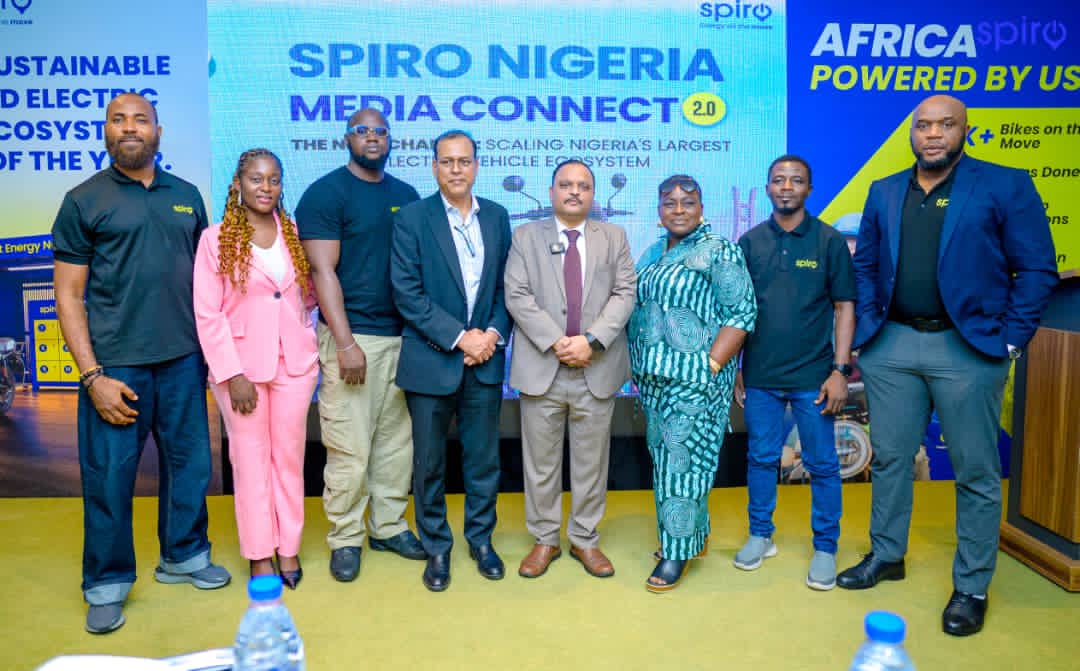
Electric Mobility: Spiro Unveils Expansion Plan, Names Nigeria New MD
Spiro, Africa’s leading electric mobility company, is stepping up plans to expand its footprint in Nigeria, strengthen its battery-swapping infrastructure and deepen partnerships to make electric motorcycles more accessible and affordable to riders.
The company unveiled the growth strategy at the second edition of its Media Connect event in Lagos, where it formally introduced its new Country Head and Managing Director, Mr Prasad Sane, who will lead its operations and expansion drive in the country.
Sane said Spiro would consolidate its presence in Lagos, Ogun and Oyo states while exploring opportunities to extend its operations to additional markets, as it seeks to accelerate Nigeria’s transition to cleaner and more sustainable transportation.
The event brought together journalists covering business, technology, mobility and sustainability to discuss the company’s progress, infrastructure development and long-term ambitions for Nigeria’s electric mobility market.
Addressing the gathering, Sane said the company was moving beyond the deployment of electric motorcycles to building an integrated mobility ecosystem designed to improve riders’ earnings, reduce operating costs and create economic opportunities.
“Today is about progress, partnership and purpose. A year ago, we shared our vision for electric mobility in Nigeria. Today, we are demonstrating tangible results and a clear path forward,” he said.
He added that his mandate was to make Spiro one of the most trusted, affordable and accessible electric mobility solutions for Nigerians, beginning with its existing focus markets.
“My mandate is simple: to make Spiro the most trusted, affordable and accessible electric mobility solution for Nigerians, beginning with Lagos, Ogun and Oyo states.
“We are moving beyond electric bikes to build a complete ecosystem centred on our promise of ‘Energy on the Move’,” Sane stated.
A major pillar of the company’s strategy is its battery-swapping technology, which allows riders to exchange depleted batteries for fully charged ones in under a minute, reducing downtime and eliminating the need to wait for conventional recharging.
According to Sane, the model offers riders an alternative to rising fuel and maintenance costs while supporting efforts to reduce carbon emissions and improve the economics of commercial motorcycle operations.
“Electric mobility is no longer the future. It is the present, and Nigeria is poised to lead the transition,” he said.
Under its expansion plan, Spiro intends to accelerate the deployment of battery-swapping stations and service centres across Lagos, Ogun and Oyo states to improve accessibility, operational efficiency and customer support.
The company also plans to extend its geographical reach beyond the three states, bringing its electric motorcycles and related services to more Nigerian markets.
Another priority is strengthening partnerships with financial institutions, logistics companies and rider communities to improve access to electric motorcycles and its Battery-as-a-Service solutions.
The approach is expected to support wider adoption by riders who may face financial barriers to acquiring electric motorcycles outright, while helping businesses explore cleaner and potentially more cost-effective transportation options.
Spiro also plans to scale up local assembly operations, technical training and after-sales support, with a focus on creating employment opportunities, particularly for young Nigerians and women.
The company said the measures would help strengthen its operational capacity while developing local skills and supporting the growth of Nigeria’s electric mobility ecosystem.
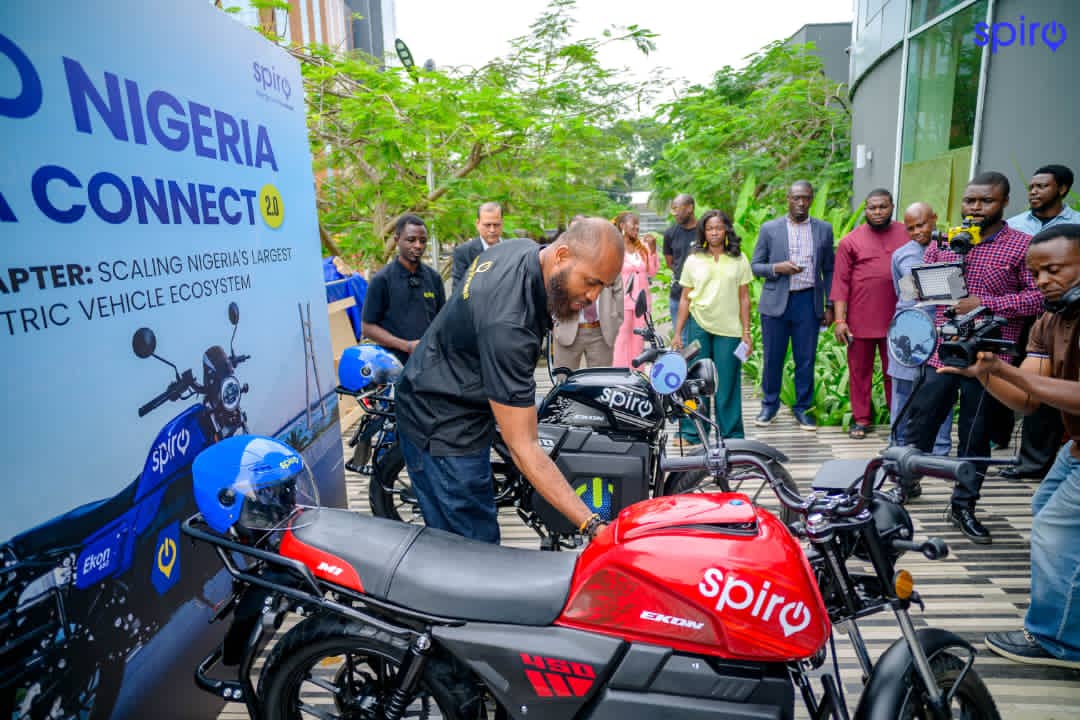
The Media Connect event featured live product demonstrations and operational showcases, alongside the unveiling of the Spiro Ekon M1 Version 3, highlighting the company’s efforts to develop its electric motorcycle offerings for the Nigerian market.
Spiro, which received the West Africa Sustainable Award (WASA), is positioning its expansion around electric motorcycles and battery-swapping infrastructure as it seeks to contribute to the growth of sustainable mobility across Nigeria.
-

 metro3 days ago
VIDEO: Outrage as Indian National Assaults Nigerian Truck Drivers in Lagos
-

 metro2 days ago
Osogbo Cultism Crackdown: Six Suspects Arrested as Police Recover Drugs, Charms
-

 metro2 days ago
Money Rituals: Four Arrested in Kwara Over Suspected Human Parts
-
 Politics3 days ago
2027: Tompolo Unveils 57 Tinubu Campaign Vehicles, Warns Lagosians Against 2023 Repeat
-

 Politics2 days ago
2027: Adeleke’s Camp Promises 1.5 Million Votes for Tinubu in Osun
-

 News2 days ago
2027 Elections: INEC Reveals Why Pantami, Adebutu, Others Were Excluded
-

 metro2 hours ago
₦130m Toyota Tundra Wrecked: Lagos Dealer Questions Police Over Suspect’s Release
-

 metro2 days ago
IPOB Denies Monday Sit-at-Home Return, Challenges Police to Produce Evidence