

Politics
2027: Atiku, Obi, Makinde absent as opposition parties chart path to common candidate
2027: Atiku, Obi, Makinde absent as opposition parties chart path to common candidate
The presidential candidates of the African Democratic Congress (ADC), Atiku Abubakar; Nigeria Democratic Congress (NDC), Peter Obi; and Allied Peoples Movement (APM) and Oyo State Governor, Seyi Makinde, were absent as leaders of six major opposition parties converged on Abuja on Monday to begin a structured process towards building a united political platform ahead of the 2027 general election.
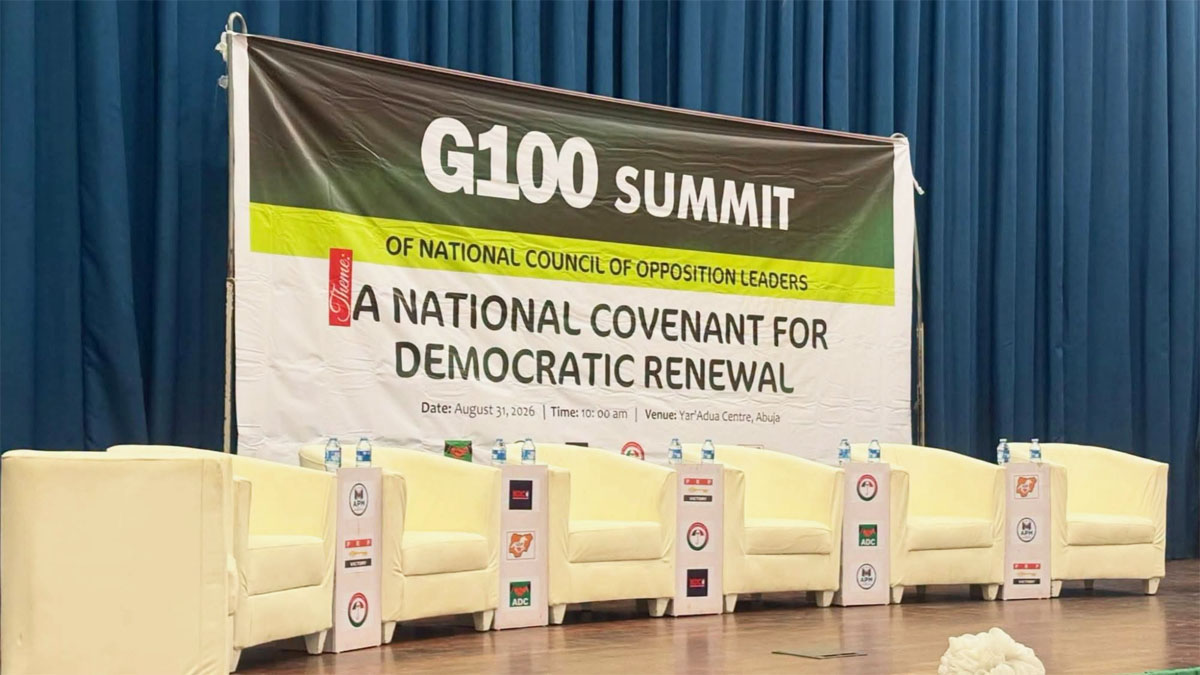
The first Summit of Nigeria’s Opposition Political Parties was held at the Shehu Musa Yar’Adua Centre, with representatives of the ADC, APM, NDC, Peoples Democratic Party (PDP), Peoples Redemption Party (PRP) and Social Democratic Party (SDP) in attendance.
The summit was organised with the participation of the G100 and the Minority Caucus of the House of Representatives as opposition politicians seek to avoid the vote fragmentation that characterised the 2023 presidential election.
Although Atiku, Obi and Makinde were not at the meeting, several presidential and vice-presidential candidates attended, alongside national working committee members and representatives of the boards of trustees of the participating parties.
Those in attendance included SDP presidential candidate Adewole Adebayo, PRP presidential candidate Donald Duke and APM vice-presidential candidate Lawal Musa Daura.
The discussions focused largely on developing a framework that would enable the opposition parties to coordinate their activities, resolve differences and eventually work towards a common presidential candidate for 2027.
Speaking on behalf of the G100, former APC National Vice Chairman Salihu Moh. Lukman proposed the establishment of a Government of National Competence anchored on a single four-year transition term.
Lukman said the proposal was designed to create a government based on competence, integrity, national inclusion and fair representation among parties participating in the proposed alliance.
He said the arrangement should be backed by an enforceable Transition Charter that would commit the parties to a single four-year term and prevent future disagreements from undermining the coalition.
According to Lukman, the opposition should avoid repeating the pattern of political agreements that depend solely on goodwill and personal assurances.
He argued that any agreement reached must be written, witnessed and enforceable, with clearly defined consequences for parties or individuals who violate its provisions.
Lukman also drew lessons from Nigeria’s previous elections, particularly the 2015 presidential election, when opposition parties successfully united under the All Progressives Congress (APC) to defeat the then ruling Peoples Democratic Party.
READ ALSO:
- Security Forces Rescue 10 NYSC Members from Kogi Forest
- Messi Retires from Argentina National Team for Second Time at 39
- IPOB Gives FG 14-Day Ultimatum to List Nnamdi Kanu’s Appeal or Face Election Boycott
He contrasted that outcome with the 2023 presidential election, when votes for major opposition candidates were divided among different platforms.
According to him, the combined votes of the leading opposition candidates were significantly higher than the votes secured by the eventual winner, but the fragmentation of those votes allowed the ruling party to emerge victorious under Nigeria’s electoral system.
Lukman described the 2023 outcome as an arithmetical lesson for the opposition, arguing that parties cannot expect to defeat an established political structure if they continue to divide their support base.
He also cited Kenya’s 2002 election and Malaysia’s 2018 political transition as examples of opposition forces defeating long-standing ruling parties after choosing cooperation over political fragmentation.
To give the proposed alliance a formal structure, the G100 recommended three standing bodies.
The first is a Central Leadership Committee, comprising national chairmen, national secretaries, presidential candidates and vice-presidential candidates of the participating parties. The committee would provide political direction and coordinate the coalition process.
The second is a Publicity and Communication Committee, which would coordinate joint messaging and communication among the participating parties.
The third is a Legal Committee, which would provide legal advice and coordinate legal strategies on matters relating to the proposed opposition cooperation.
The summit also agreed to establish five working groups, with each participating party expected to nominate one representative.
The groups are expected to produce working papers within four weeks covering a National Covenant for Democratic Renewal, Single-Term Transition Charter, National Reform Programme, Framework for Opposition Unity and Roadmap to a Common Presidential Candidate.
The documents are expected to form the basis for deliberations at a second opposition summit, where the parties would consider the next stage of the coalition process.
Lukman stressed that Monday’s meeting was not intended to force any political party to dissolve or merge with another.
He also clarified that the summit was not asking any presidential candidate to withdraw from the 2027 race immediately.
Instead, the immediate objective was to establish the rules and institutional framework that would allow the parties to negotiate their differences before addressing the question of a common presidential candidate.
Leading the House of Representatives Minority Caucus to the summit, Minority Leader Fred Agbedi urged opposition parties to close ranks and replicate the strategy that helped the APC defeat the PDP in 2015.
Agbedi said the Minority Caucus had decided to work with the G100 to help opposition parties streamline their ambitions and develop a collective strategy capable of producing victory in 2027.
READ ALSO:
- Tinubu’s FBI records: Reno Omokri explains why President opposes release
- Seyi Tinubu Can Change Things at NFF — Obafemi Martins Backs President’s Son for Football Reform
- “I Cursed the Pastor” — Yemi Solade Reveals Why He Quit Church 13 Years Ago
He warned that repeating the fragmentation of 2023 could again leave the opposition with millions of votes that would not translate into electoral victory.
Agbedi urged political leaders to put aside personal ambitions and focus on building a viable alternative to the ruling APC.
PRP presidential candidate Donald Duke also called for political leaders to subordinate individual ambitions to the broader interest of the country.
Duke said he was prepared to support any presidential candidate who emerges through a credible and jointly agreed process involving the participating parties.
He argued that political ego had repeatedly prevented opposition politicians from working together effectively.
Duke warned that the opposition would struggle to defeat the ruling party if individual politicians insisted on pursuing their ambitions independently.
Speaking on behalf of the ADC, its National Vice Chairman for the South-South, Usani Uguru Usani, expressed confidence in the coalition initiative but warned opposition politicians against internal attacks.
Usani said opposition figures were sometimes more focused on attacking one another than confronting the political challenges they collectively faced.
He urged the parties to concentrate on developing a credible alternative capable of winning the confidence of Nigerian voters.
APM National Chairman Yusuf Mamman Dantalle described the summit as an important development in Nigeria’s political history and urged participants to look beyond individual and party interests.
Representing the Tanimu Turaki-led faction of the PDP, its Board of Trustees Secretary, Dr Babangida Aliyu, commended the initiative and called for the coalition-building process to be extended to the state and local government levels.
PRP National Chairman Dr Hakeem Baba-Ahmed described the meeting as historic and said Nigerians were watching the opposition’s efforts closely.
He said the participating parties faced significant political and legal challenges but insisted that the coalition-building process would continue.
SDP National Chairman Prof. Sadiq Gombe also pledged his party’s commitment to the initiative, arguing that Nigerian voters had demonstrated a willingness to support credible alternatives.
NDC National Chairman Senator Moses Cleopas Zuwoghe, speaking on behalf of his party and Peter Obi, endorsed the coalition process and described it as an opportunity for opposition parties to develop a pathway towards addressing the country’s challenges.
READ ALSO:
- EFCC Recovers N1.23tn, $684m as Convictions Hit 10,872 in Three Years — Olukoyede
- NELFUND Boss Dismisses Misappropriation Claims, Insists All Payments Traceable Electronically
- ANTP Debunks Cancer Rumors as Actor Wale Elesho Undergoes Successful Facial Surgery
At the end of the meeting, the six parties adopted a Joint Communiqué committing themselves to a structured process of negotiation on opposition cooperation ahead of the 2027 election.
The parties formally established the Central Leadership Committee, Publicity and Communication Committee and Legal Committee.
They also agreed to constitute the five working groups and directed them to produce their respective documents within four weeks ahead of the proposed second summit.
The communiqué confirmed that the G100 would remain a facilitator and observer, rather than assume the authority of the political parties involved in the process.
In another major resolution, the parties called on the United States government to ensure the timely and lawful disclosure of all non-exempt official records concerning President Bola Ahmed Tinubu that are relevant to legitimate public interest.
The demand is connected to an ongoing Freedom of Information Act case before the United States District Court for the District of Columbia.
The opposition parties, however, clarified that the request did not presume the contents of any undisclosed records and did not amount to a finding of wrongdoing against President Tinubu.
They also resolved to formally communicate their position to the ECOWAS Commission.
The major challenge now facing the emerging opposition coalition is whether it can translate the resolutions reached in Abuja into a functioning political alliance capable of competing effectively in 2027.
The absence of Atiku, Obi and Makinde from the inaugural summit also highlights the political complexities that could shape the coalition process, particularly because all three remain influential figures whose political ambitions and support bases could affect any eventual opposition arrangement.
For now, the parties have deliberately avoided the most contentious question — who will fly the eventual opposition presidential ticket.
Instead, they have chosen to establish the negotiating framework first, with the five working groups expected to develop proposals on how a common candidate could eventually emerge.
Whether the parties can overcome individual ambitions, ideological differences, leadership disputes and competing political interests will determine whether the latest opposition unity effort develops into a genuine electoral alliance or becomes another short-lived political arrangement.
With the 2027 general election drawing closer, the Abuja summit marks a renewed attempt by Nigeria’s opposition parties to learn from the lessons of 2023 and build a more coordinated challenge to the ruling APC.
2027: Atiku, Obi, Makinde absent as opposition parties chart path to common candidate








Politics
2027: ADC Vows to Collate, Share Polling-Unit Results Despite INEC Warning
2027: ADC Vows to Collate, Share Polling-Unit Results Despite INEC Warning
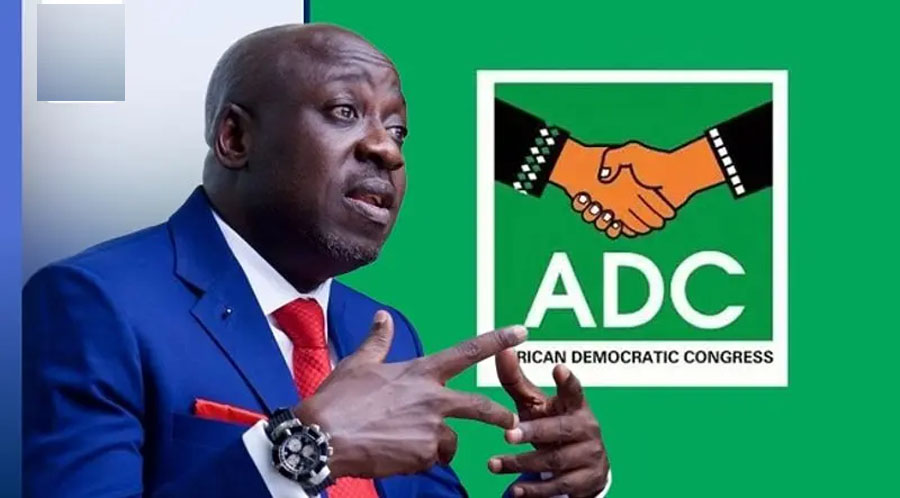
The African Democratic Congress (ADC) has vowed to independently document, collate and share polling-unit results during the 2027 general elections, despite a warning from the Independent National Electoral Commission (INEC) against the publication of privately collated results.
The ADC said its plan is aimed at protecting votes cast for its candidates and ensuring that results announced at the end of the electoral process reflect the figures recorded at polling units.
The party’s National Publicity Secretary, Bolaji Abdullahi, said the ADC recognised INEC’s statutory responsibility to collate and officially declare election results, but maintained that citizens and political parties have the right to collect and share information, including election results.
Abdullahi’s position followed a recent warning by INEC Chairman, Professor Joash Amupitan, against the sharing of privately collated election results.
The ADC argued that independently gathering and publishing polling-unit figures does not prevent INEC from carrying out its constitutional responsibility to conduct the election, collate official results and declare winners.
Under Nigeria’s electoral system, INEC conducts the official collation and declaration process through various levels, from the Registration Area and Local Government Area to state and, for the presidential election, the national level.
READ ALSO:
- Court Grants Alleged Fake JAMB Registrar N50m Bail, Sets Strict Conditions
- NESREA to Honour Lagos Baale After Dramatic Rescue of Endangered Sea Turtle
-
How Six Members of a Family Were Murdered in Oyo
The ADC said its independent collation would provide its candidates and supporters with their own record of results from polling units and allow them to compare those figures with results emerging through the official process.
The party has previously said its decision was influenced by the 2023 general elections, when concerns arose over the electronic transmission of results to the INEC Result Viewing Portal (IReV).
Abdullahi had said the party would no longer rely solely on INEC to protect its votes, arguing that political parties must put their own mechanisms in place to monitor results from polling units through the collation process.
The ADC has also raised concerns about the appointment of Returning and Collation Officers for the 2027 elections.
In September, the party called on INEC to review the use of academics who had openly expressed support for political candidates in sensitive electoral positions.
It argued that people who had publicly taken partisan positions should not subsequently be assigned responsibilities involving the collation of results or declaration of winners in elections contested by their preferred candidates.
The party urged INEC to publish the names of proposed Returning and Collation Officers ahead of the elections to allow political parties and members of the public to raise concerns about possible conflicts of interest.
The latest dispute has placed renewed focus on the distinction between independent election monitoring by political parties and the official collation and declaration of results, which remains the responsibility of INEC.
The ADC maintains that its planned collection and publication of polling-unit figures is intended to promote transparency and protect its votes, rather than replace INEC’s official declaration.
As preparations for the 2027 elections intensify, the disagreement highlights the growing debate over how political parties, election observers and citizens should independently monitor results while preserving INEC’s legal authority over the official electoral process.
2027: ADC Vows to Collate, Share Polling-Unit Results Despite INEC Warning
Politics
Killings, Hardship: Northern Islamic Clerics Tell Tinubu to Drop 2027 Ambition
Killings, Hardship: Northern Islamic Clerics Tell Tinubu to Drop 2027 Ambition
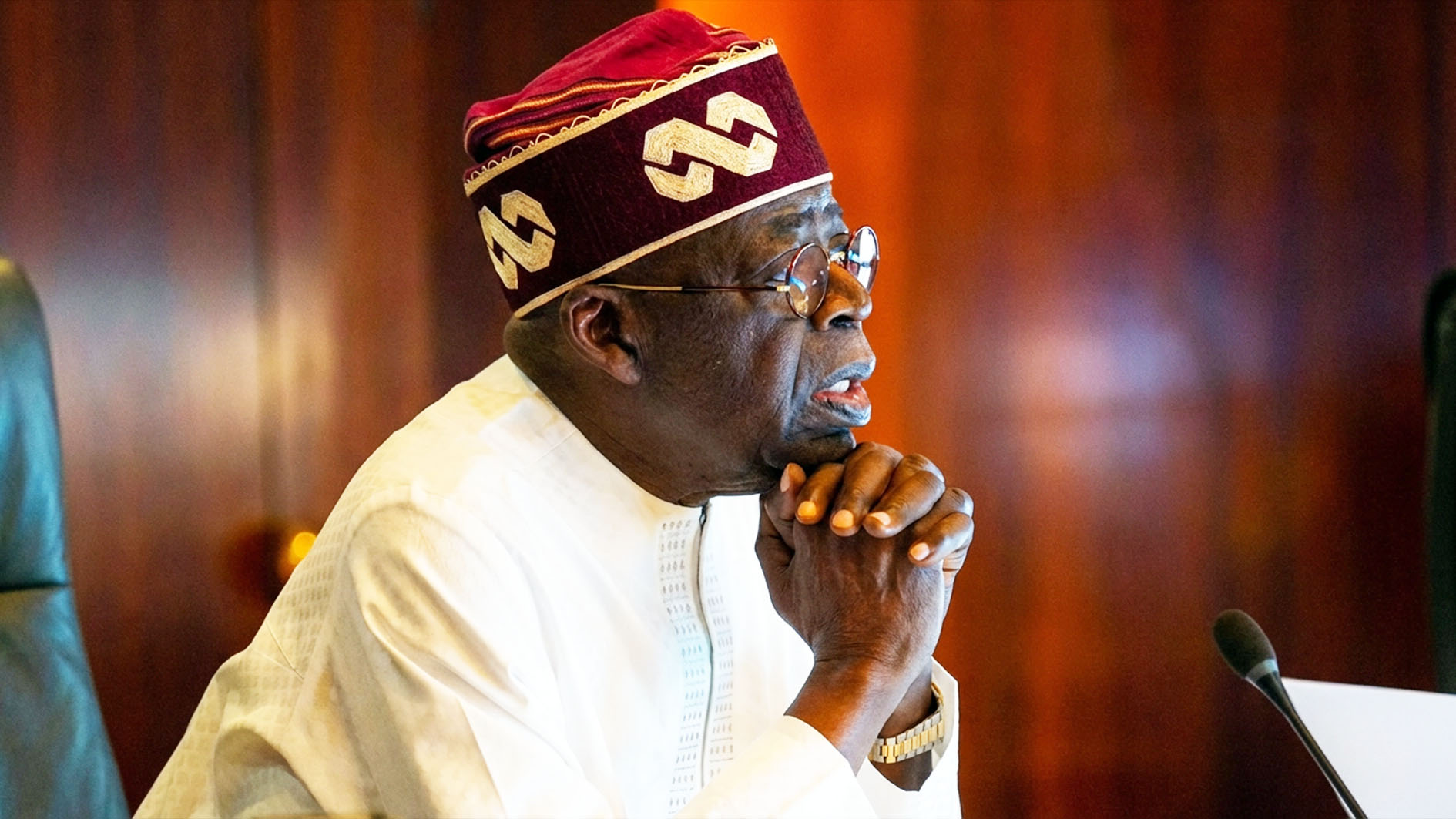
More than 1,000 northern Islamic clerics have called on President Bola Ahmed Tinubu to abandon his ambition to seek re-election in 2027, citing persistent killings, kidnappings, terrorism and economic hardship across the country.
The clerics made the demand in a communiqué issued after a national conference in Kano titled “An Assessment of the State of the Nation under President Tinubu and the 2027 General Elections.”
The conference was organised under the Ko Da Naka platform in collaboration with the AFAQ Educational Foundation.
The clerics expressed particular concern over worsening insecurity in the North-West, where communities have continued to face attacks, kidnappings and other forms of violence.
They urged the Federal Government to take stronger and more effective measures to protect lives and property, warning that the security situation should be a major consideration in determining who Nigerians support in the 2027 elections.
The clerics also asked Tinubu to reconsider his plan to seek another term in office.
They said that if the President decides to contest despite what they described as the country’s worsening security and economic challenges, Nigerians should reject his candidacy at the polls.
The group said political leaders must be judged by their performance in office rather than party affiliation, ethnic identity or regional interests.
READ ALSO:
- [UPDATED] 20 NYSC Prospective Corps Members Freed After Seven Days in Captivity
- 2027 Election Cases: CJN Warns Tribunal Judges, Says Conduct Will Be Monitored
- NSCIA Rejects Genocide Claims, Demands Urgent Security Overhaul
The clerics also criticised key economic policies of the Tinubu administration, including the removal of the fuel subsidy, changes to the foreign exchange regime, increases in electricity tariffs and ongoing tax reforms.
They argued that the policies had contributed to rising living costs and increased pressure on households, businesses and vulnerable Nigerians.
According to the clerics, the government should review policies that have increased the cost of living and focus more on improving citizens’ welfare.
They also raised concerns about the continued migration of skilled Nigerian professionals, including doctors, teachers and engineers, to other countries.
The clerics attributed the trend partly to poor working conditions, inadequate facilities, unemployment and economic pressures, urging the government to create better opportunities for professionals to remain in Nigeria.
They further called on Islamic scholars and religious leaders to remain independent and speak against wrongdoing regardless of the political party, ethnicity or religion of those involved.
The clerics urged Nigerians to place national interest above religious, ethnic and political considerations when choosing leaders in 2027.
They said voters should assess political candidates based on their competence, integrity, experience and policies rather than relying solely on party loyalty.
The intervention comes as political parties and presidential aspirants intensify preparations for the 2027 general elections, with insecurity, economic hardship and governance expected to feature prominently in the political debate.
The clerics’ position adds another voice to the growing scrutiny of the Tinubu administration as political activities ahead of the 2027 presidential election gather momentum.
Killings, Hardship: Northern Islamic Clerics Tell Tinubu to Drop 2027 Ambition
Politics
2027: Donald Duke Pledges To Bring Petrol Price Down To N300 Per Litre
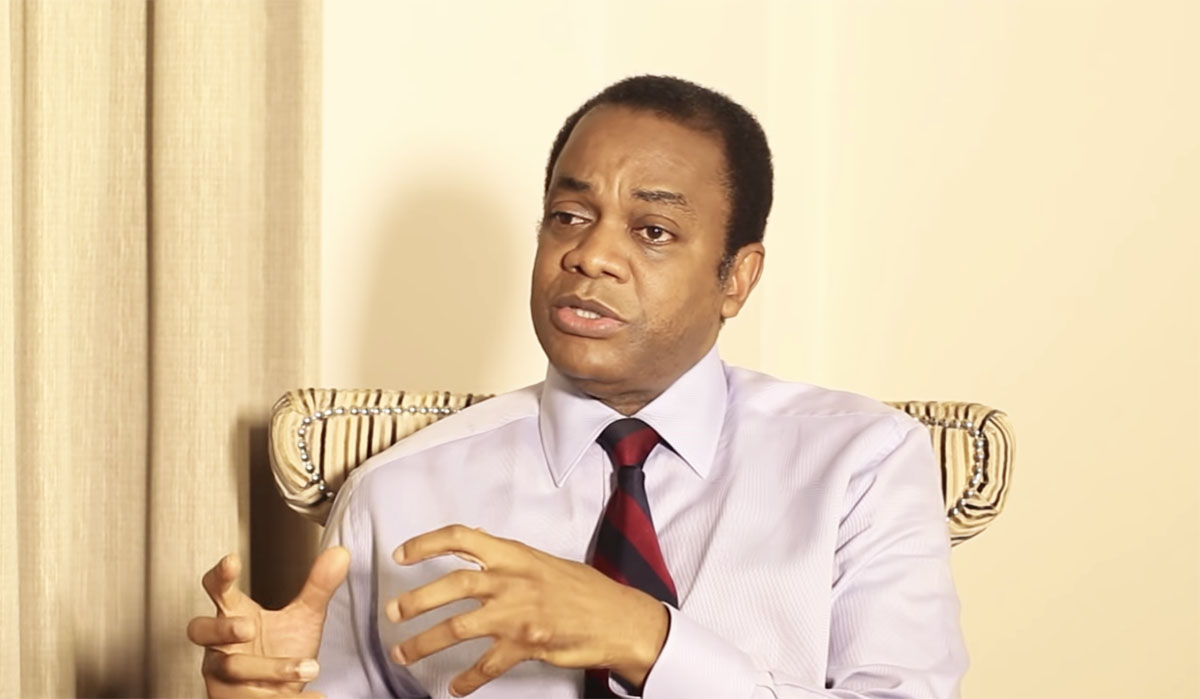
2027: Donald Duke Pledges To Bring Petrol Price Down To N300 Per Litre
Presidential candidate of the Peoples Redemption Party (PRP), Donald Duke, has pledged to work towards reducing the price of petrol to about N300 per litre if elected president in the 2027 presidential election.
Duke, a former governor of Cross River State, made the pledge during an interview on Channels Television’s The Morning Brief, where he outlined his proposed approach to the petroleum sector and Nigeria’s wider economy.
The PRP candidate said petroleum products for domestic consumption should be priced based on the cost of production rather than being fully exposed to international market prices.
He proposed allocating about 600,000 barrels of crude oil per day for domestic consumption, while selling the remaining crude on the international market.
Asked what petrol could cost under his proposed administration, Duke said: “I will try and bring it to about N300.”
He acknowledged that the target could appear ambitious but maintained that his proposed crude allocation and domestic pricing model could make it achievable.
READ ALSO:
- Olu of Warri Denies N2.7tn Pipeline Deal, Demands Evidence From Dokubo
- BREAKING: NLC Shuts Down Abuja Indefinitely Over FCT Teachers’ Promotion Dispute
- Troops Crush Four-Front ISWAP Assault, Kill Over 25 Terrorists In Borno
Duke argued that fuel prices have a direct impact on transportation, businesses and household expenses, making affordable energy important to economic activity.
“Fuel drives your economy. It should be available. It should be affordable,” he said.
The former Cross River governor also indicated that he would pursue a different economic approach from the policies of President Bola Tinubu if elected.
His proposal comes amid continuing debate over petrol prices, fuel subsidy removal, domestic refining and crude oil allocation in Nigeria.
The N300 target is part of Duke’s proposed 2027 economic agenda and would depend on the implementation of the policies he has outlined if he wins the presidential election.
2027: Donald Duke Pledges To Bring Petrol Price Down To N300 Per Litre
-

 metro2 days ago
Ondo Air Tragedy: Soldiers, Families Among 32 Killed In NAF Crash
-

 metro2 days ago
Gunmen Open Fire At Lagos Bus Stop, Kill NURTW Member, Injure Three
-
 News3 days ago
President Tinubu Mourns 32 NAF Personnel in Ondo Jet Crash, Orders Immediate Probe
-
 metro3 days ago
No Survivors Found in Ondo NAF Plane Crash — Ondo Governor
-

 metro2 days ago
Ogun Crash: Nine Die As Bus Collides With Truck On Ijebu-Ode-Ore Road
-

 metro2 days ago
UCH CMD: After Decades Without Muslim, Agunbiade Demands Fair Chance
-

 International2 days ago
Kemi Badenoch: I Don’t Want Migrants Turning UK Into Nation Of ‘Little Ghettos’
-
 metro2 days ago
Supreme Council For Sharia Secretary-General Nafiu Baba-Ahmed Dies