

Politics
2027: South-East Leaders Clash Over Igbo Presidency Feasibility
2027: South-East Leaders Clash Over Igbo Presidency Feasibility
As the 2027 presidential election draws closer, a fierce debate has erupted over the prospects of an Igbo presidency, with political stakeholders divided on whether the dream is attainable or destined to fail. The controversy took centre stage on an Enugu-based Dream FM radio programme, monitored by THE WHISTLER, where contributors offered sharply contrasting views on the political future of the South-East. The discussion comes at a critical juncture, with the Nigeria Democratic Congress (NDC) having zoned its presidential ticket to the South for a single four-year term, clearing the way for Peter Obi, while prominent Igbo figures like Minister of Works David Umahi and a faction of Ohanaeze Ndigbo have publicly endorsed President Bola Tinubu’s re-election.
Dr. Amos Ogbonna, a human rights lawyer and Executive Director of the Centre for Non-Violence and Justice, made a passionate case for Igbo presidency during the radio programme. According to Ogbonna, there is a secret pact by the Nigerian federation to ensure that an Igbo man never becomes president. “Many people across the regions say they would never be alive to see an Igbo man emerge president of Nigeria. When you talk about long-term aspirations of Ndigbo, it is a mirage. Nigeria has a conspiracy and phobia against the Igbo,” Ogbonna declared. The lawyer argued that 2027 represents the only realistic opportunity for an Igbo presidency. He traced the history of power rotation since 1999, noting that the South-East has consistently been sidelined despite supporting other regions. He recalled that after the June 12 injustice, the Yoruba were compensated with the presidency, but the Igbo have never been similarly compensated for the civil war. Ogbonna also claimed that former President Muhammadu Buhari once promised that after his tenure, the Igbo would produce the president, a promise he said was later abandoned. He urged South-Easterners to unite and fight for the presidency, insisting that power would not be handed over voluntarily. “We are left with the remaining four years. By 2031, power will definitely return to the North. This is not a call for violence, but a reminder that we have to struggle for this power; they will not give us. If we don’t get it, we should be happy that we have tried,” he said.
Comrade Fidelis Edeh, a former labour leader and Executive Director of Service Accord Initiative, offered a more pragmatic perspective. He called on the Igbo to organise themselves strategically, acknowledging that the region must not run away from the consequences of the civil war. “We operate a multiparty system. We don’t need anybody to promise us. We usually contest. We must never run away from the consequences of the civil war,” Edeh said. Edeh also criticised the Peoples Democratic Party (PDP) for sabotaging the Igbo presidency. He noted that from 1999, the Igbo camped in the PDP, which later abandoned zoning principles that would have favoured an Igbo candidate. He also accused Peter Obi of political inconsistency, noting that Obi has changed political parties multiple times, unlike Tinubu who has remained in one party. “President Bola Tinubu has remained in one political party up to this point. Obi was chairman of the Southeast Governors’ Forum when he was governor. But immediately he left office, he joined PDP, and abandoned APGA. This is the time to negotiate,” Edeh said.
READ ALSO:
- 2027: Senator Saliu Mustapha quits APC after losing Kwara governorship ticket
- 2027 Election: NDC Tells Atiku to Step Aside, Support Peter Obi to Remove Tinubu
- Delta Governor Reveals ₦503,000 Monthly Salary, Says Permanent Secretaries Earn ₦900,000
Minister of Works David Umahi, a former governor of Ebonyi State, has emerged as one of the most vocal opponents of Peter Obi’s presidential ambition. Speaking during an inspection tour of federal projects in Ebonyi State, Umahi insisted that the South-East votes alone cannot make Obi president. “Our brother, Peter Obi, is contesting for the presidency of the entire country, not the presidency of the South East. The votes of the South East alone cannot produce a president. We must be strategic,” Umahi stated. Umahi further claimed that Obi is not as popular in the South-East as he believes, describing his 2023 performance as an “accident of history.” He predicted that the South-East would massively vote for President Tinubu in 2027. “Who is after him? Nobody is after him. Because, you know, we want him to be on the ballot, to make the victory very sweet, you know, because he says that South East is his catchment area, and I’m saying that South East is not his catchment area,” Umahi said. Umahi urged South-Easterners to align strategically with the ruling APC to sustain the tempo of infrastructural development in the region. He pointed to ongoing federal road projects worth over N248 billion in Ebonyi State as proof of Tinubu’s commitment to the South-East.
Senator Onyekachi Nwebonyi, representing Ebonyi North, echoed similar sentiments in an interview with Channels Television. He argued that the current political arrangement does not favour an Igbo candidate for the presidency. “Peter Obi is coming at the wrong time. Even if our son comes to contest, it is very clear that the political permutation, as at present, does not favour an Igbo man. President Bola Tinubu and other APC candidates will win the south-east come the 2027 general election,” Nwebonyi declared.
A faction of Ohanaeze Ndigbo, led by Deputy President-General Mazi Okechukwu Isiguzoro, has declared that an Igbo presidency is “not feasible” under the NDC. The group described the NDC as a regional party driven by Ijaw interests under the leadership of Senator Seriake Dickson. “We therefore urge Mr. Peter Obi to reconsider his 2027 presidential ambition in the greater interest of the Igbo people,” the faction said in a statement. The same faction has backed Tinubu’s re-election, describing it as a “strategic pathway” for the South-East. It even proposed a “2031 Vice Presidency Initiative” to position an Igbo leader for the vice-presidential slot under the APC, with Umahi and Chimaroke Nnamani identified as potential contenders. However, another faction of Ohanaeze Ndigbo Worldwide, led by President General Senator Azuta Mbata, has dismissed reports suggesting no Igbo person would contest the 2027 election.
Despite the opposition, the Obi-Kwankwaso Movement (OK Movement) has intensified grassroots mobilisation in the South-East. At a summit in Enugu, the group declared its commitment to championing the ideals of a Peter Obi-Rabiu Kwankwaso alliance, which it said centres on inclusiveness and equal opportunity. The movement has directed its coordinators at state, local government, ward, and polling unit levels to commence aggressive sensitisation and membership mobilisation under the NDC. Additionally, the NDC has formally zoned its presidential ticket to the South for a single four-year term, with the vice-presidential slot zoned to the North. The party said the decision reflects its commitment to justice, inclusiveness and national stability. In his remarks at the party’s convention, Obi said: “We are not changing political platforms for transactional reasons. We are making a principled decision to find a platform that gives us the opportunity to build a new Nigeria that is possible.”
Adding another layer to the debate, Hon. Kasimu Maigari, a member of the ADC National Legislators’ Forum, claimed that Peter Obi’s political trajectory has set the Igbo presidency ambition back by two decades. “My worry is not if Peter Obi will win the presidency; my worry is that Peter Obi has pushed Igbo’s 20 years backwards from getting the Presidency,” Maigari said during an interview on ARISE News. He argued that many of Obi’s supporters are driven by personal political ambitions rather than long-term ideological commitment, and that if Obi were not on the ballot, many of them would struggle to win elections independently.
The camp of former Vice President Atiku Abubakar has also weighed in, warning opposition parties that insisting on zoning the 2027 presidential ticket to the South would amount to entering the contest “already defeated.” In a statement by his media aide Olusola Sanni, Atiku’s camp argued that no incumbent president has ever been defeated by an opposition challenger from the same geopolitical bloc. It also accused proponents of southern zoning of “intellectual dishonesty,” noting that the South would have held power for approximately 18 years by 2027, against roughly 10 years for the North. “The Southeast deserves a sustainable and credible pathway to national leadership — not symbolic tokenism or bespoke arrangements tailored to satisfy one individual’s ambition,” the statement said.
As the 2027 election approaches, the opposition faces mounting pressure to present a united front. The Igbo Presidency Project (IPP), a non-political group, has called for rotation of power among regions, arguing that granting the South-East the opportunity to produce a president would deepen national unity. However, with key stakeholders divided and political realignments shifting, the dream of an Igbo presidency remains uncertain. As Ogbonna put it: “We are going to get united and fight for the presidency of Nigeria for the remaining four years. If we don’t get it, we should be happy that we have tried.”
2027: South-East Leaders Clash Over Igbo Presidency Feasibility








Politics
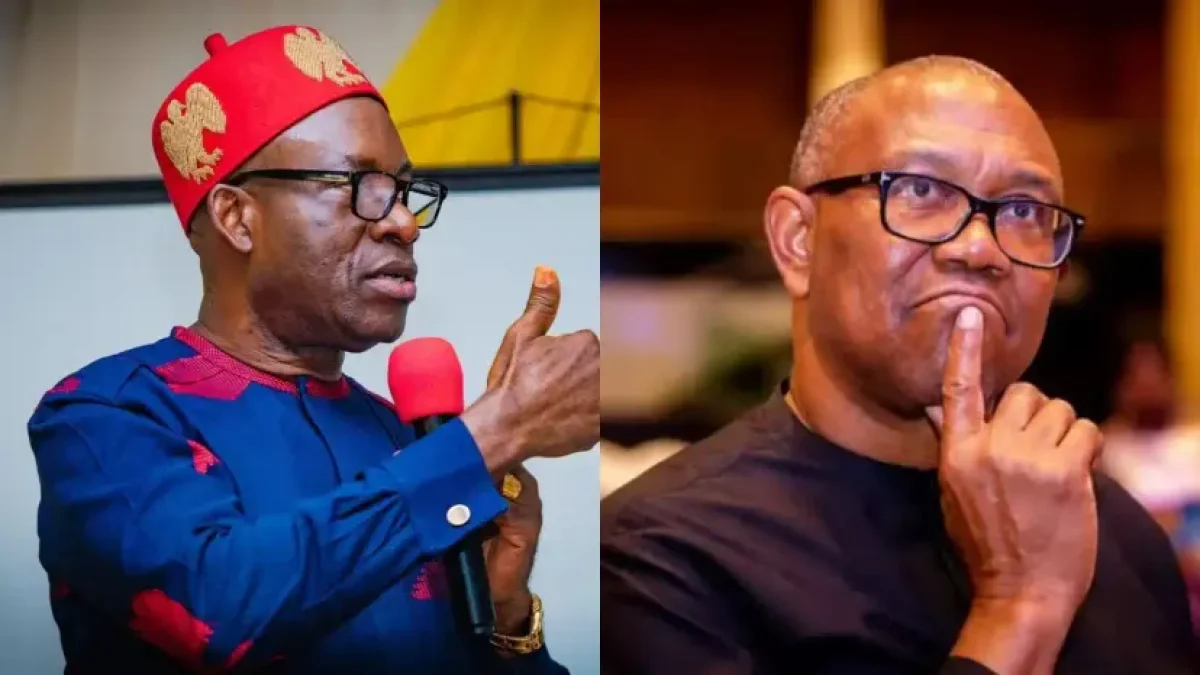
2027: Soludo Govt Accuses Peter Obi Of Plot To Destroy APGA
2027: Soludo Govt Accuses Peter Obi Of Plot To Destroy APGA
The Anambra State Government has declared former governor Peter Obi and his Nigeria Democratic Congress (NDC) a threat to the All Progressives Grand Alliance (APGA) ahead of the 2027 presidential election, urging APGA supporters to resist the opposition party.
The state government made the declaration in a message issued through its New Media office on Monday, accusing Obi of working to weaken the party that gave him the platform to become governor of Anambra.
The government described its message as a “betrayal alert” to APGA supporters, alleging that Obi had been seeking to undermine the party since leaving it in 2014.
It urged party members in the state not to be swayed by Obi’s current political influence, arguing that APGA remained the political platform responsible for his emergence as governor.
The government said, “Since 2014, Obi has had one mission: to destroy the party that made him,” while calling on APGA members to defend the party ahead of the 2027 elections.
The development comes amid an increasingly tense political relationship between Obi and the administration of Governor Chukwuma Soludo.
READ ALSO:
- MURIC Accuses OAU International School of Restricting Hijab-Wearing Students
- Israeli Forces Reportedly Destroy School, Burn Homes in Southern Lebanon
- Nine Zamfara Lawmakers Dump APC for ADC Ahead of 2027
Obi governed Anambra from 2006 to 2014 on the APGA platform before leaving the party for the Peoples Democratic Party (PDP). He later joined the Labour Party, under which he contested the 2023 presidential election, before becoming the presidential candidate of the NDC ahead of the 2027 election.
The former governor remains an influential political figure in the South-East, particularly in Anambra, where his 2023 presidential campaign recorded strong support.
The Anambra government’s latest position also comes against the backdrop of APGA’s alignment with President Bola Ahmed Tinubu ahead of the 2027 presidential election.
The state government has previously defended its relationship with the President and maintained that supporting Tinubu does not conflict with APGA’s interests.
However, Obi’s emergence as the NDC presidential candidate has created a new political challenge for APGA, particularly because of his longstanding influence among voters in Anambra and the wider South-East.
The NDC has rejected the allegations against Obi, accusing the Soludo administration of attacking the former governor because of concerns about his popularity.
NDC Director of New Media and Strategic Communications, Theo Abu Agada, described the state government’s position as political blackmail and maintained that the party was confident of its prospects in the 2027 election.
The latest exchange has further widened the political divide between the camps of Peter Obi and Chukwuma Soludo, with both sides increasingly positioning themselves ahead of the 2027 presidential contest.
For APGA, the emergence of Obi and the NDC presents a particularly sensitive political challenge because of the former governor’s history with the party and his continued influence in Anambra.
The 2027 election is therefore expected to produce a major political contest in the state, with APGA seeking to retain its influence while Obi’s NDC attempts to convert his personal support base into wider electoral backing.
2027: Soludo Govt Accuses Peter Obi Of Plot To Destroy APGA
Politics
Nine Zamfara Lawmakers Dump APC for ADC Ahead of 2027

Nine Zamfara Lawmakers Dump APC for ADC Ahead of 2027
Nine members of the Zamfara State House of Assembly have left the All Progressives Congress (APC) and defected to the African Democratic Congress (ADC) ahead of the 2027 general elections.
The lawmakers cited concerns over insecurity, internal party divisions and what they described as inadequate attention to the welfare of residents and their constituents as reasons for their decision.
The lawmakers are Aliyu Ango Kagara, representing Talata Mafara South; Muktar Nasir, representing Kaura Namoda North; Faruk Dosara Musa, representing Maradun I; Basiru Bello, representing Bungudu West; Bashir A. Masama, representing Bukkuyum North; Ibrahim T. Tukur, representing Bakura; Nasiru Abdullahi, representing Maru North; Yusuf Muhammad Anka, representing Anka; and Bashar Aliyu, representing Gummi I.
Speaking on behalf of the lawmakers, Kagara said their concerns about the security situation in Zamfara had contributed to disagreements with the state government.
He said the lawmakers had raised the issue of insecurity on the floor of the Assembly, but that their position led to disagreements with Governor Dauda Lawal and their subsequent suspension.
READ ALSO:
- Temi Nkem Wins N160m BBNaija Season 11 Grand Prize
- Nigeria — My Country of Destiny
- Ex-APC Women Leader Found Dead With Throat Slit in Bauchi
Kagara also alleged that joining the APC did not resolve their grievances, claiming that some party leaders failed to give them what they considered a fair hearing.
Earlier, some of the lawmakers announced their resignation from the APC in separate letters dated October 4, 2026.
In the letters, the lawmakers cited issues including insecurity, alleged injustice, internal divisions, uncertainty and concerns about governance.
One of the lawmakers also alleged that members of the Assembly had gone about 32 months without receiving salaries, allowances and other entitlements.
The claims about unpaid entitlements and other grievances are allegations by the affected lawmakers and have not been independently established in the reports.
The APC in Zamfara initially said it had not received official copies of the resignation letters. The party’s publicity secretary, Ibrahim Birnin-Magaji, said the documents had been seen on social media and that the party was awaiting formal communication through the appropriate party structures.
The defection represents a significant political realignment in Zamfara ahead of the 2027 elections, with the movement of the lawmakers potentially affecting the political balance within the state legislature.
Nine Zamfara Lawmakers Dump APC for ADC Ahead of 2027
Politics
2027: Atiku, Amaechi Reiterate Plan to Cut Petrol Prices
2027: Atiku, Amaechi Reiterate Plan to Cut Petrol Prices
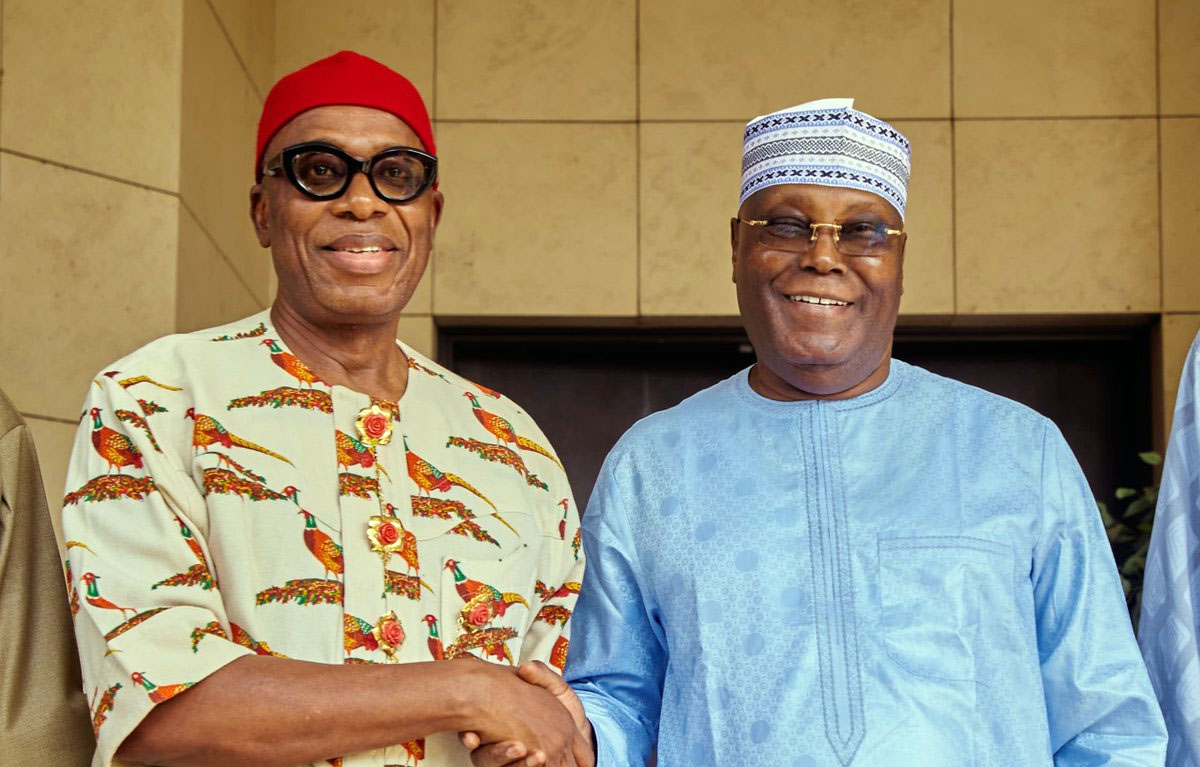
The African Democratic Congress (ADC) presidential candidate, Atiku Abubakar, and his running mate, Rotimi Amaechi, have reiterated their plan to reduce the cost of petrol if elected in the 2027 presidential election.
The pair made the remarks during a brief stop at an NNPC filling station in Guzape, Abuja, on Saturday, October 3, 2026, where they were approached by members of the public.
Amaechi was driving the vehicle with Atiku seated beside him when they stopped at the filling station. The encounter attracted a small crowd, with the politicians responding to questions about fuel prices and their proposed policy.
Amaechi said an Atiku-led government would reduce the cost of petrol through what the ADC ticket describes as a production subsidy, rather than simply returning to the previous system of subsidising imported petrol.
Atiku also addressed the crowd briefly in Hausa, saying, “Zan dawo da tallafi insha Allahu,” which translates to, “I will bring back the subsidy, by God’s grace.”
READ ALSO:
- 2027: Tompolo Mobilises Taraba for Tinubu, Donates 25 Campaign Vehicles
- Osun Iyaloja-General Row: Ataoja Explains Asindemade’s Reinstatement
- Ogun 2027: YPP, BOOT Reject Suit Withdrawal Against Adeola
The encounter came a day after Amaechi challenged President Bola Ahmed Tinubu to reduce petrol to ₦600 per litre.
Amaechi said he would withdraw from Atiku’s presidential ticket and campaign for Tinubu if petrol was brought down to that price. He made the statement during an appearance on Channels Television’s Politics Today.
The former Rivers State governor has continued to criticise the impact of the petrol subsidy removal on households, particularly the effect of higher fuel prices on transportation and the cost of goods.
Atiku has separately outlined a proposed domestic production subsidy under which government support would be directed at locally refined petroleum products.
The proposal is intended to reduce production costs for domestic refineries and, according to Atiku, allow the savings to be reflected in lower petrol prices for consumers.
The former vice president has argued that the intervention would be structured, capped and subject to public disclosure and independent auditing. Imported petrol would not qualify under the proposed arrangement.
The fuel subsidy debate has remained a major issue in Nigeria ahead of the 2027 presidential election, following the removal of the petrol subsidy by the Tinubu administration in May 2023.
The Federal Government has defended the removal, arguing that the former subsidy regime imposed a significant burden on public finances. Opposition figures, including Atiku, have instead linked the policy to higher living costs and have proposed alternative measures to reduce the impact on consumers.
The Abuja filling-station encounter therefore provided Atiku and Amaechi another opportunity to restate their position on petrol prices, fuel subsidy and the cost of living as political parties and candidates intensify preparations for the 2027 election.
2027: Atiku, Amaechi Reiterate Plan to Cut Petrol Prices
-

 metro2 days ago
NYSC Kidnap: Abductors Demand N950m for 19 Prospective Corps Members in Imo
-

 Politics2 days ago
2027: Oshiomhole Dares Opposition Over ₦500 Petrol Promise, Says APC Will Take Argument to Nigerians
-

 Entertainment3 days ago
Olu Jacobs Laid to Rest in Lagos as Dignitaries, Nollywood Stars Honour Screen Icon
-
 metro2 days ago
N500 Petrol, Wage Award: Public Sector Workers Begin Warning Strike
-
 metro2 days ago
Amaechi: Tinubu’s Policies Made My Mother’s Drugs Unaffordable
-

 metro1 day ago
‘I Thought I Was Dead’ — Hairstylist’s Daring Escape From Kidnappers After Benin-Ore Ambush
-

 metro2 days ago
Tension as Kidnappers Threaten to Kill Abducted Oyo Corps Members
-

 Entertainment2 days ago
Less Than Four Months After Wedding, Jarvis Threatens Peller With Lawsuit Over Second-Wife Plan