

News
6 APGA Anambra lawmakers defect to APC

The fortunes of the All Progressives Congress (APC) in the November 6 Anambra Governorship Election got a boost on Tuesday night when six Assembly members under the platform of the All Progressives Grand Alliance (APGA) defected to the APC.
The six lawmakers are: Hon. Nonso Okafor representing Nnewi North; Hon. Timothy Ifedioramma representing Njikoka 1; Hon. Cater D. N Umeoduagu representing Aguata 1; Hon. Lawrence Ezeudu representing Dumekofia; Hon. Arthur Chiekwu representing Idemmih North and Hon. Edward Ibuzo, representing Onisha North 2.
Receiving the defectors at a brief event on Tuesday evening in Abuja, Chairman APC Caretaker Extraordinary Convention Planning Committee (CECPC) Governor Mai Mala Buni restated the party’s determination to win the Anambra governorship election, which informed the zeal in engaging critical stakeholders in Anambra State.
Buni said: “Mere looking at what is happening, especially now that so prominent and serving state lawmakers have started joining, the grassroots is moving and Anambra people are moving to the APC.”
The Chairman later presented the lawmakers with the APC flag at the end of a strategic meeting held behind closed doors.
The defectors described the APC as the preferred party and promised to mobilise support towards victory in the November 6 governorship polls.
Imo Governor and Chairman APC Anambra Governorship Election Council, Senator Hope Uzodinma, said the Southeast people have woken up and the region is committed to national politics and be part and parcel of Nigeria.
He also expressed confidence that APC is set to win the Anambra governorship election.
The brief ceremony held at Imo State Governors’s Lodge was attended by Governors of Lagos, Osun and Kogi as well as top members of the party in Anambra State.

News
Despite Tegbe’s 72-Hour Promise, Nigerians Still Battle Power Outages
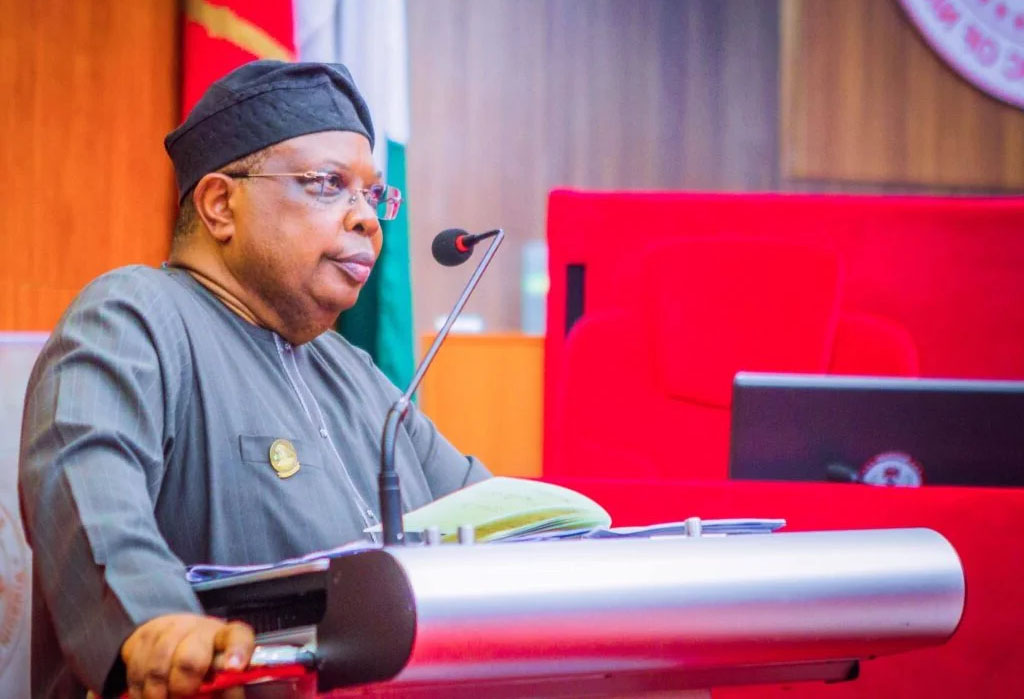
Despite Tegbe’s 72-Hour Promise, Nigerians Still Battle Power Outages
Nigeria’s electricity generation has risen to 4,020.41 megawatts (MW), up from about 3,500MW, but the improvement has yet to translate into reliable power supply for households and businesses across the country.
The development comes amid growing frustration over prolonged power outages, particularly in Lagos and other states, despite assurances by the Minister of Power, Joseph Tegbe, that electricity supply would improve within 48 to 72 hours.
Data from the Nigerian Independent System Operator (NISO) showed that generation increased on Monday, November 9, 2026, following disruptions linked to maintenance at the Egbin Power Station, gas supply constraints and damage to critical transmission infrastructure.
The increase followed the Federal Government’s intervention to restore damaged transmission infrastructure and return affected generating units to operation. However, electricity consumers continued to report inadequate supply, highlighting the gap between improved generation figures and the actual amount of electricity reaching homes and businesses.
According to the reported figures, electricity generation reached a peak of 4,253.6MW on Sunday before standing at 4,020.41MW on Monday. The Afam VI power plant contributed the largest share at 519MW, followed by the Shiroro hydroelectric plant with 445MW and the Azura-Edo plant with 438MW.
However, the Egbin Power Station, which has an installed capacity of 1,320MW, was generating only 108MW at the time of the reported assessment.
READ ALSO:
- Trump Makes Stunning Admission: ‘I Will Always Hate Some of My Enemies’
- Fayose Petitions IGP, Threatens Lawsuit Over Rape, Torture Allegations
- INEC Flags 268 Voter Records Over AI-Generated Photos, Begins Cleanup Ahead of 2027 Elections
The combined electricity allocation to the 11 distribution companies (DisCos) stood at approximately 3,195MW by late Monday afternoon, with Abuja DisCo receiving 581MW, Ikeja Electric 467MW and Eko Electricity Distribution Company 458MW.
The Minister of Power, Joseph Tegbe, had earlier attributed the worsening electricity situation to planned maintenance at the Egbin Power Station, inadequate gas supply to some thermal power plants and the vandalism of critical transmission infrastructure.
In an update issued on Friday, November 6, Tegbe explained that maintenance activities and gas supply constraints had reduced the volume of electricity available on the national grid, forcing operators to introduce load shedding in some areas.
He also disclosed that the vandalism of key transmission lines had restricted alternative routes for delivering electricity, particularly to Lagos.
The minister subsequently apologised to Nigerians over the disruptions, acknowledging the difficulties experienced by households, businesses and public institutions.
He said the government was working with generating companies, the Transmission Company of Nigeria (TCN), NISO and electricity distribution companies to restore affected facilities and improve supply.
Tegbe had promised that the first affected generating units would return to operation within 48 to 72 hours, while repairs to damaged transmission infrastructure would be accelerated.
In a further update on Monday, the minister announced that the vandalised Benin-Egbin 330-kilovolt transmission line had been repaired and returned to service.
According to him, the restoration increased electricity supply to the Lagos electricity complex to more than 1,000MW, bringing it back to the level recorded before the disruption.
Tegbe said electricity had been restored to several previously affected areas in Lagos, Ogun, Oyo, Kwara and the Federal Capital Territory, although some locations were still awaiting full restoration.
He also disclosed that the government was working to repair another important transmission route, the Osogbo-Ikeja West 330kV line, which has reportedly remained out of service for about 18 months.
The line could deliver an additional 400MW to Lagos when restored. However, about six transmission towers along the route have been vandalised, making repairs difficult because of the swampy terrain.
The minister said the government expected the restoration work to be completed by the end of November.
Despite the recent disruptions, Tegbe has expressed confidence that Nigeria could achieve more stable electricity supply within the next three to five years.
He said the Federal Government was considering a proposed $2 billion east-west super grid designed to strengthen the country’s transmission infrastructure and increase its capacity to 19,000MW.
The proposed project is expected to connect several locations, including Funtua, Gwagwalada, Ikot Ekpene, Benin, Epe and Ilorin.
Tegbe said the government had commenced the procurement process and expected the project to improve the resilience of the national electricity network.
He also stressed the need to address longstanding infrastructure problems, noting that some electricity equipment was between 40 and 50 years old.
Meanwhile, he maintained that the government was working to improve electricity supply through better coordination among generation, transmission and distribution operators.
The latest development highlights the continuing challenges in Nigeria’s electricity sector, where improvements in generation do not automatically guarantee adequate supply to consumers because of limitations in transmission and distribution infrastructure.
For millions of Nigerians, the major concern remains whether the increased generation figures and government interventions will translate into more consistent electricity supply.
Despite Tegbe’s 72-Hour Promise, Nigerians Still Battle Power Outages
News
Edo APC Chieftain Hacked to Death by Son Over Alleged Prophecy
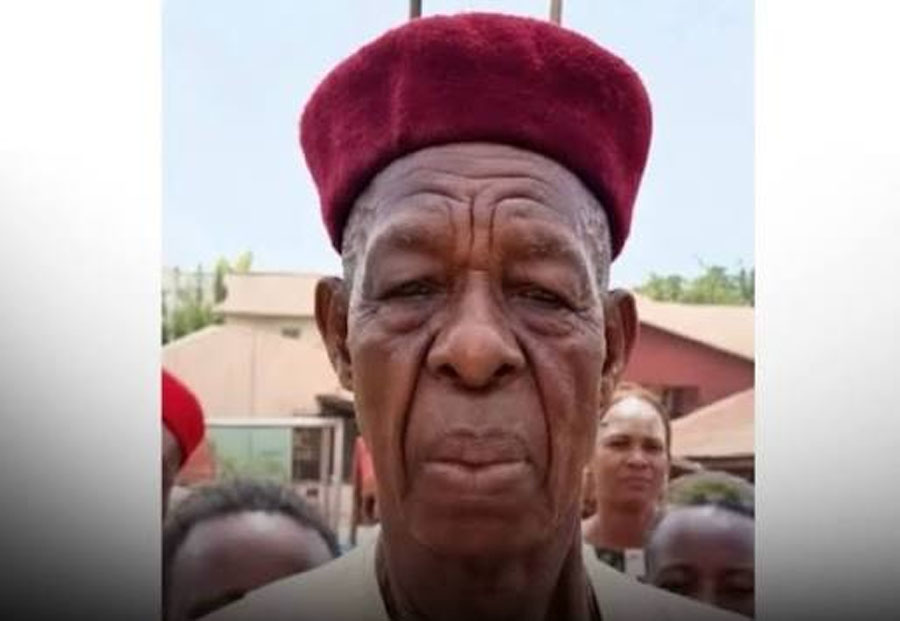
A chieftain of the All Progressives Congress (APC) in Edo State, Julius Bello, popularly known as De Lord Ogata, has reportedly been hacked to death by his son following claims that a prophet blamed him for the younger man’s financial struggles.
Bello, who was the APC Ward Three Chairman in Fugar, Etsako Central Local Government Area, was allegedly attacked with a sledgehammer by his son, identified as Irobudo, on Sunday, November 8, 2026.
The incident reportedly occurred shortly after the suspect returned from Lagos over the weekend.
According to reports, the suspect struck his father on the head with the weapon, inflicting fatal injuries.
Family sources linked the attack to an alleged prophecy that reportedly portrayed Bello as being spiritually responsible for his son’s prolonged poverty and inability to make financial progress.
READ ALSO:
- Fayose Petitions IGP, Threatens Lawsuit Over Rape, Torture Allegations
- INEC Flags 268 Voter Records Over AI-Generated Photos, Begins Cleanup Ahead of 2027 Elections
- Tension in Delta as Task Force Members Protest Over Colleague’s Killing at NDC Rally
The claims were said to have fuelled resentment against the deceased before the fatal attack. However, the alleged prophecy and its connection to the killing have not been independently verified, and the police have not established it as the motive.
The Edo State Police Command confirmed the killing and said an investigation had commenced.
The command’s spokesperson, Eno Ikoedem, disclosed that the suspect was still at large as of Monday, November 9, while police operatives were working to apprehend him.
According to the police, investigations would establish the circumstances surrounding the killing and the events that preceded the attack.
The incident has thrown Bello’s family and residents of Fugar into mourning, particularly because the suspected attacker is his own son.
The killing has also raised concerns about the potential consequences of unverified spiritual accusations when they fuel suspicion, hostility and violence within families.
The police investigation is expected to establish the full circumstances of the incident, determine the motive and bring the suspect to justice.
Edo APC Chieftain Hacked to Death by Son Over Alleged Prophecy
News
INEC Flags 268 Voter Records Over AI-Generated Photos, Begins Cleanup Ahead of 2027 Elections
INEC Flags 268 Voter Records Over AI-Generated Photos, Begins Cleanup Ahead of 2027 Elections
ABUJA, Nigeria – The Independent National Electoral Commission (INEC) has commenced the removal of questionable records from Nigeria’s preliminary Register of Voters after its biometric verification system flagged 268 entries over suspected artificial intelligence-generated photographs and other irregularities.
The development comes amid growing public concerns over the credibility of the voters’ register ahead of the 2027 general elections, following the discovery of suspicious photographs, duplicate registrations and names of deceased persons in the preliminary database.
INEC’s Director of Information and Communication Technology, Lawrence Bayode, disclosed the development during an interview on Channels Television’s Sunday Politics, explaining that the commission’s Automated Biometric Identification System (ABIS) had identified 268 records requiring further examination.
Bayode said the commission had begun reviewing the affected entries and removing those confirmed to be irregular.
He also explained that some registration officers allegedly exploited their authorised access to introduce questionable records into the database.
According to him, some of the irregularities involved the misuse of a special registration option designed for persons with disabilities who have incomplete or missing fingers.
However, the INEC official clarified that not every photograph enhanced with artificial intelligence would lead to the exclusion of the affected voter.
He distinguished between genuine photographs improved with AI-powered applications on mobile phones and images generated entirely by artificial intelligence, stressing that only confirmed fraudulent images would be removed.
The controversy followed INEC’s publication of its preliminary Register of Voters online on October 26, which triggered public outrage after screenshots showing suspicious photographs and other questionable entries circulated on social media.
Some of the disputed records reportedly included entries from parts of Edo State, prompting questions about the commission’s registration and verification procedures.
INEC Chairman, Professor Joash Amupitan, subsequently confirmed that the commission was examining the questionable records and would take corrective action based on verified findings.
The commission has maintained that the preliminary register is not the final certified document, explaining that the verification and public scrutiny exercises are intended to identify inaccuracies and irregularities before certification.
INEC has scheduled December 15, 2026, for the certification of the final Register of Voters after completing the necessary verification, adjudication and data-cleanup processes.
The commission has also encouraged Nigerians to participate in scrutinising the register and report suspicious entries to help safeguard the credibility of the electoral process ahead of the 2027 general elections.
INEC Flags 268 Voter Records Over AI-Generated Photos, Begins Cleanup Ahead of 2027 Elections
-

 Sports3 days ago
BREAKING: Flamingos Make History, Defeat Japan 2–1 to Win First FIFA U-17 Women’s World Cup
-
 News3 days ago
Power Outage: Tegbe Gives Nigerians 72-Hour Timeline as FG Moves to Restore Electricity
-

 Sports2 days ago
Messi Breaks MLS Record, Becomes First Player To Win Back-to-Back Golden Boots
-

 News2 days ago
One Killed, Five Injured as Violence Disrupts Obi-Kwankwaso Rally in Delta
-

 Auto1 day ago
Four-day Abuja International Motor Fair begins tomorrow Nov 10
-

 Politics2 days ago
‘My History Is Traceable’: Atiku Fires Back at Tinubu Over University Funding
-
Politics22 hours ago
Tension in Delta as Task Force Members Protest Over Colleague’s Killing at NDC Rally
-

 metro2 days ago
[ICYMI] Lagos Summons DisCos, Regulators Over Persistent Power Outages, Seeks 24-Hour Electricity