

International
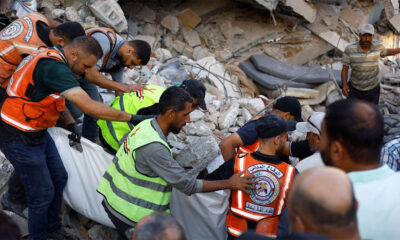
Israeli soldiers kill Palestinian fighter in Gaza amid ceasefire

Israeli soldiers kill Palestinian fighter in Gaza amid ceasefire
Despite the ceasefire in the Gaza Strip, there have been several violent encounters involving armed or masked Palestinians, according to an Israeli military spokesperson.
One such encounter resulted in the death of a man identified as a fighter for the Palestinian Islamic Jihad.
Soldiers also fired warning shots to keep masked suspects at a distance. The army is committed to adhering to the ceasefire.
It has urged Palestinians to avoid military personnel.
Israeli troops removed their vehicles from Jabaliya in the northern Gaza Strip on Wednesday, as planned.
READ ALSO:
- Gunmen murder prominent lawyer in Imo
- Just in: Police rescue wife of retired AIG Hakeem Odumosu, gun down kidnappers
- OAU student murder: Appeal Court upholds Ramon Adedoyin’s death sentence
The military posted photographs showing a column of tanks departing the region along the border line.
Chronicle NG reports that at least three female hostages freed by Hamas were reunited with their mothers inside Israel.
Armed Hamas fighters drove through the southern city of Khan Younis, where crowds cheered and chanted.
People navigated narrow roads through a shattered landscape of wreckage and twisted metal in the north of the region, which had been blasted into oblivion during the war’s most fierce combat.
“I feel like at last I found some water to drink after being lost in the desert for 15 months,” Aya, a displaced woman from Gaza City who has been sheltering in Deir Al-Balah in the central Gaza Strip for over a year, said after the fighting stopped. “I feel alive again.”
Israeli soldiers kill Palestinian fighter in Gaza amid ceasefire











International
Israeli Forces Reportedly Destroy School, Burn Homes in Southern Lebanon
Israeli Forces Reportedly Destroy School, Burn Homes in Southern Lebanon
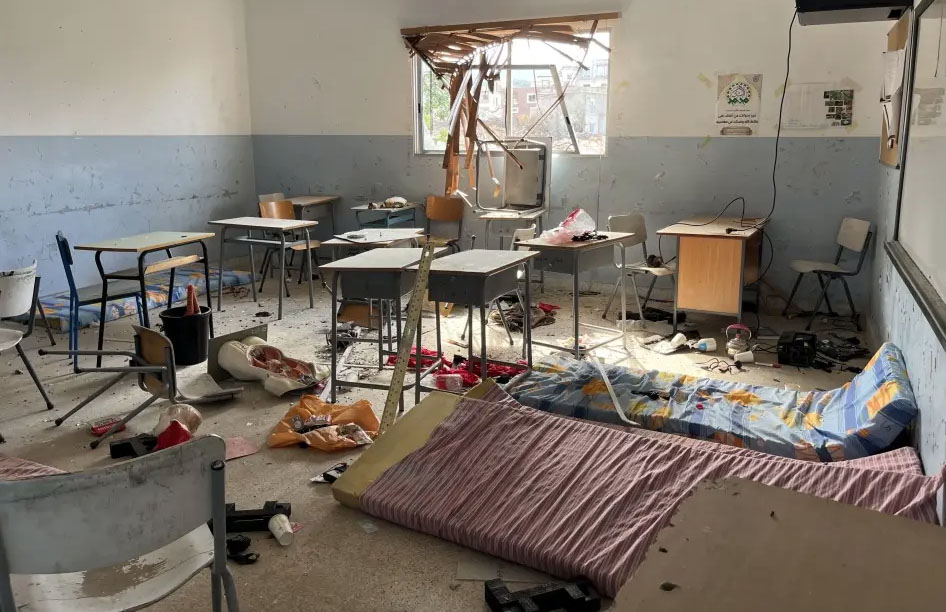
Israeli forces reportedly destroyed a school and set fire to several homes in southern Lebanon as military operations, including airstrikes, artillery fire and demolitions, continued across the region.
The reported incident occurred in Houla, in the Marjayoun district, where Lebanese media said Israeli troops placed explosives inside the Jabal Amel Intermediate School before detonating them.
Local reports said the school was destroyed in an early-morning blast, while further demolitions were reportedly followed by fires in residential buildings in the town.
The reports could not be independently verified, and the Israeli military had not immediately provided a specific response to the allegations concerning the school and homes.
The reported destruction in Houla came amid wider Israeli military operations in southern Lebanon.
Lebanon’s National News Agency reported artillery fire around Khiam, while Tallouseh and Bani Hayyan were also reportedly targeted. Airstrikes were reported in Bani Hayyan and Kfar Tibnit, while artillery fire affected areas around Mayfadoun and Zawtar al-Sharqiyah.
READ ALSO:
- Nine Zamfara Lawmakers Dump APC for ADC Ahead of 2027
- Temi Nkem Wins N160m BBNaija Season 11 Grand Prize
- Nigeria — My Country of Destiny
Further demolitions and explosions were also reported in parts of southern Lebanon, including Beit Yahoun, Qantara and Mansouri.
The latest developments have renewed concerns over damage to civilian infrastructure in southern Lebanon, particularly schools and residential buildings.
The reported destruction of the Houla school comes against a wider backdrop of disruption to education in the region. Previous reporting has indicated that dozens of schools in Lebanon have been damaged or destroyed during the conflict, while thousands of students have been displaced from their communities.
The latest military activity is also occurring amid continuing tensions along the Israel-Lebanon border, despite diplomatic efforts aimed at reducing hostilities.
Israel has previously said its military operations in southern Lebanon are intended to counter Hezbollah infrastructure and security threats near the border. Lebanese authorities and Hezbollah have disputed aspects of Israel’s military activities and their justification.
The United Nations Interim Force in Lebanon (UNIFIL) continues to monitor developments and maintain contact with the parties as part of efforts to prevent further escalation.
The renewed violence has added to concerns over the safety of civilians in southern Lebanon, where communities have already experienced displacement and extensive damage to homes and public infrastructure.
As tensions persist, the situation remains volatile, with further military activity potentially threatening efforts to maintain calm along the border.
Israeli Forces Reportedly Destroy School, Burn Homes in Southern Lebanon
International
Over 70 Killed as Fighting Intensifies Around Yemen’s Taiz
Over 70 Killed as Fighting Intensifies Around Yemen’s Taiz
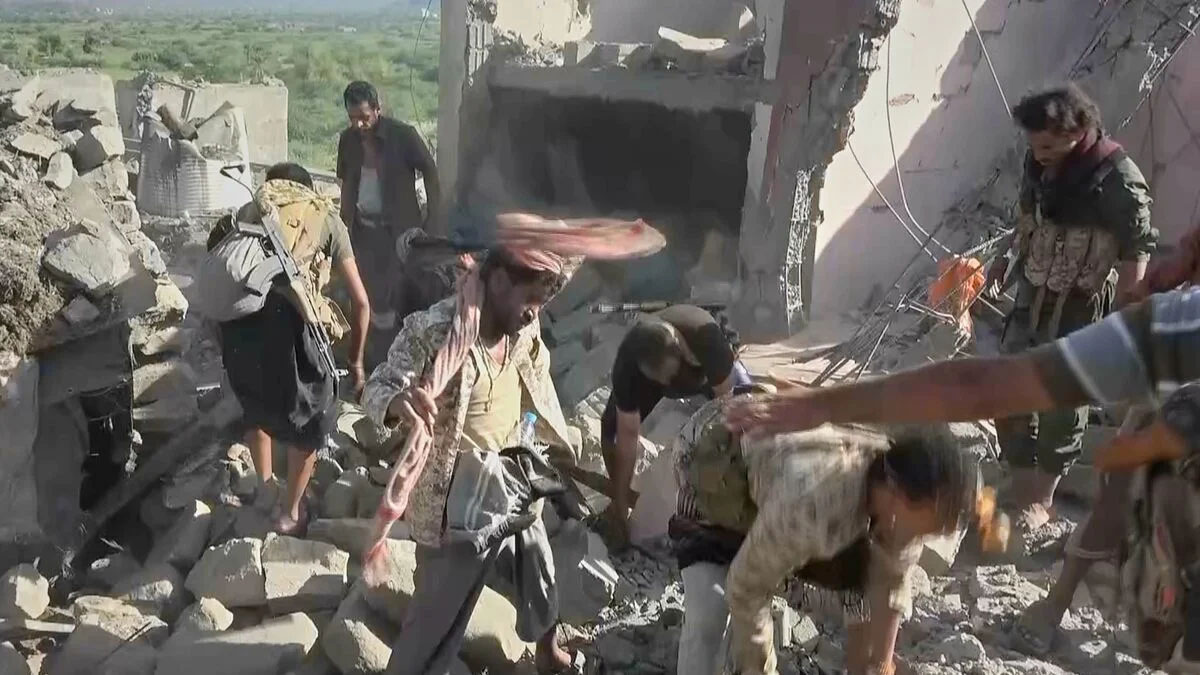
More than 70 people have been killed in fighting in and around Yemen’s southwestern Taiz province over the past 24 hours, as clashes between Houthi fighters and forces aligned with the internationally recognised government intensify.
Sources from both sides cited by AFP reported that 34 government troops were killed, including 20 in neighbouring Lahj province, while Houthi military sources said 39 of their fighters were killed in clashes across Taiz and areas bordering Lahj. The figures could not be independently verified.
The escalation comes after Houthi forces reportedly cut a key supply route linking Taiz with Aden, the interim seat of Yemen’s internationally recognised government. Security and military sources said the Houthis took control of the Al-Safiya area and a police station there, bringing traffic along the route to a halt and effectively tightening their encirclement of Taiz city.
Taiz city itself remains under the control of government-aligned forces, but the city has been surrounded from several directions by Houthi forces for years. The latest advances have increased pressure on the city’s remaining supply lines and raised concerns about access to food, medicine and other essential goods.
The renewed fighting has also focused attention on the strategic importance of Taiz. The city sits between Yemen’s northern and southern regions and provides important links to the Red Sea coast, making control of the area significant for military movements and supply routes.
READ ALSO:
- Nine Zamfara Lawmakers Dump APC for ADC Ahead of 2027
- Temi Nkem Wins N160m BBNaija Season 11 Grand Prize
- Nigeria — My Country of Destiny
The escalation comes as Yemen’s internationally recognised government launches a broader military offensive against the Houthis.
President of the Presidential Leadership Council Rashad al-Alimi announced the start of military operations aimed at retaking territory held by the Houthis and extending government authority across the country.
The announcement followed recent Houthi gains along Yemen’s Red Sea coast and around the Bab el-Mandeb Strait, a strategically important maritime passage connecting the Red Sea with the Gulf of Aden.
The latest escalation marks a major deterioration after several years of relative calm. Yemen’s conflict began in its current form after the Houthis seized the capital, Sanaa, in 2014, prompting a Saudi-led military intervention the following year.
The renewed fighting has already worsened the country’s humanitarian crisis. More than 145,000 people have reportedly been displaced amid the latest escalation, while food insecurity and limited access to healthcare remain major concerns. The World Food Programme has also warned of severe food needs in Taiz, with a large proportion of households in accessible areas struggling to meet basic food requirements.
The conflict has also taken on a wider regional dimension, with Saudi Arabia backing Yemen’s internationally recognised government and the Houthis aligned with Iran.
The latest battlefield developments around Taiz could therefore have wider implications for Yemen’s civil war, humanitarian access and security around the Bab el-Mandeb shipping corridor.
For now, Taiz remains a major flashpoint as government forces seek to reopen supply routes and push back the Houthi advance, while the Houthis attempt to consolidate their positions around the strategically important city.
Over 70 Killed as Fighting Intensifies Around Yemen’s Taiz
International
Trump launches ‘Super Intelligence Force’ to keep US ahead in AI race
Trump launches ‘Super Intelligence Force’ to keep US ahead in AI race
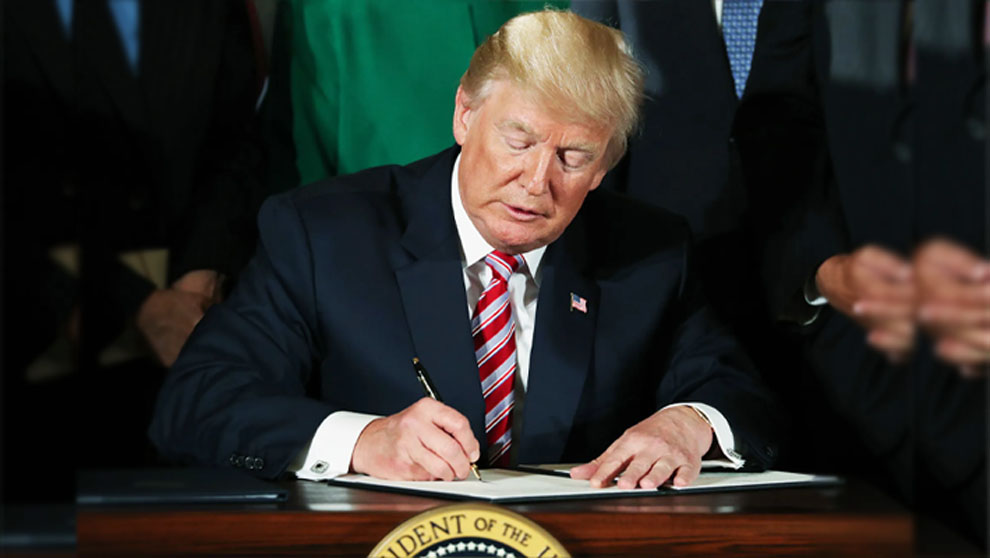
US President Donald Trump has announced the creation of a new Super Intelligence Force (SIF) to coordinate the federal government’s efforts to strengthen the country’s position in the global artificial intelligence (AI) race.
Trump appointed Director of National Intelligence Jay Clayton to lead the new force, making him the administration’s central figure for coordinating its AI strategy and efforts to maintain US technological leadership.
The announcement followed a meeting between Trump and executives from some of the world’s leading technology companies as his administration seeks to accelerate the development of advanced AI while addressing growing concerns about its potential risks.
The Super Intelligence Force will bring together senior government officials and engage AI companies, consumers, public-interest groups, religious organisations and critical-infrastructure providers as the United States develops its approach to increasingly powerful AI systems.
Other senior officials named in connection with the initiative include Federal Trade Commission Chairman Andrew Ferguson, Pentagon Chief Technology Officer Emil Michael and Office of Personnel Management Director Scott Kupor.
READ ALSO:
- Madonna University expels final-year nursing student, suspends 14 over dance video
- JUST IN: WAEC appoints Suleiman Kum as new Nigeria National Office head
- Ojudu Reveals How Tinubu, He Narrowly Escaped Death In Third Mainland Bridge Crash
The force will report to President Trump and White House Chief of Staff Susie Wiles.
One of its immediate tasks will be to assess the risks and opportunities associated with advanced AI, including the role the federal government should play in the sector. The group is expected to submit a comprehensive report to the president within 120 days.
The review is also expected to examine the US government’s ability to respond to potential AI security breaches and other threats linked to rapidly advancing technology, as well as identify areas where federal capabilities may need to be strengthened.
Trump’s latest initiative comes shortly after he signed an executive order directing federal agencies, where legally permissible, to use “Super Intelligence” and “SI” instead of “Artificial Intelligence” and “AI” in official communications, websites, reports and policy documents.
The September 29 executive order also directed the administration to develop a proposed federal definition of Super Intelligence within 60 days and consider changes that could establish the terminology in federal law.
The administration has increasingly presented advanced AI as a strategic issue involving national security, economic competitiveness and technological leadership, particularly as the US competes with China for dominance in the sector.
Trump has repeatedly warned against excessive regulation of AI, arguing that burdensome rules could slow American innovation and give rival countries an advantage.
At the same time, concerns about the technology’s potential impact have intensified, including risks involving cybersecurity, privacy, employment, misinformation, misuse and AI safety.
The White House has therefore sought greater cooperation with the technology industry. Major AI companies recently agreed to voluntary safety measures following discussions with the administration, reflecting Trump’s preference for industry-led safeguards alongside government coordination.
The new Super Intelligence Force is a federal task force and does not represent the creation of a new military branch. It also differs from an earlier proposal by Trump for an “AI Force” modelled on the US Space Force.
With Clayton at its helm, the initiative places AI development, national security and US technological competitiveness at the centre of Trump’s latest technology policy push.
Its 120-day review could provide the administration with a framework for determining how Washington will manage the opportunities and risks created by increasingly advanced AI while seeking to keep the United States ahead in the global technology race.
Trump launches ‘Super Intelligence Force’ to keep US ahead in AI race
-

 metro2 days ago
NYSC Kidnap: Abductors Demand N950m for 19 Prospective Corps Members in Imo
-

 Politics2 days ago
2027: Oshiomhole Dares Opposition Over ₦500 Petrol Promise, Says APC Will Take Argument to Nigerians
-

 Entertainment3 days ago
Olu Jacobs Laid to Rest in Lagos as Dignitaries, Nollywood Stars Honour Screen Icon
-

 metro2 days ago
N500 Petrol, Wage Award: Public Sector Workers Begin Warning Strike
-

 metro2 days ago
Amaechi: Tinubu’s Policies Made My Mother’s Drugs Unaffordable
-

 metro1 day ago
‘I Thought I Was Dead’ — Hairstylist’s Daring Escape From Kidnappers After Benin-Ore Ambush
-

 Entertainment2 days ago
Less Than Four Months After Wedding, Jarvis Threatens Peller With Lawsuit Over Second-Wife Plan
-

 metro2 days ago
Tension as Kidnappers Threaten to Kill Abducted Oyo Corps Members