

Politics
Fubara reportedly plans to join APC amid Tinubu’s deal
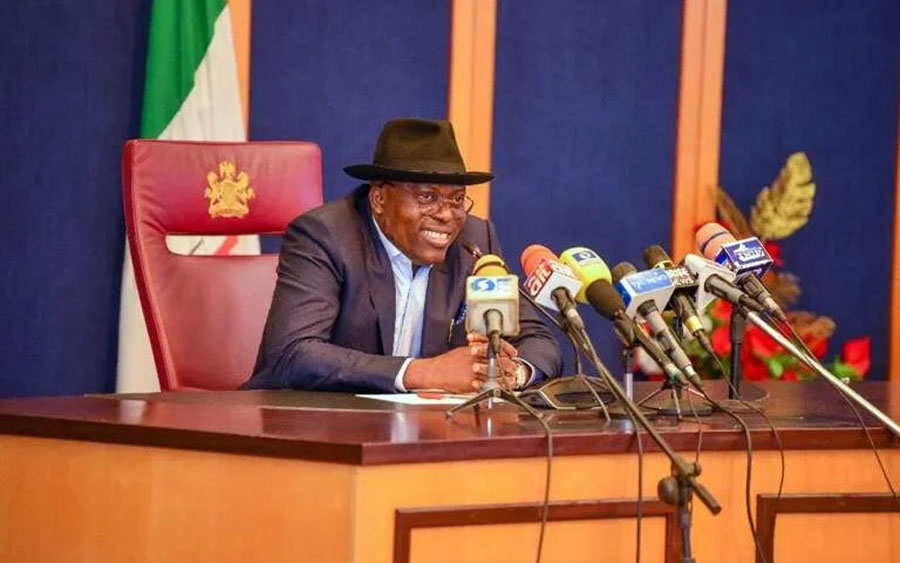
Fubara reportedly plans to join APC amid Tinubu’s deal
In a development that could significantly alter the political dynamics ahead of the 2027 general elections, suspended Governor Siminalayi Fubara of Rivers State is reportedly on the verge of defecting to the All Progressives Congress (APC), following a prolonged period of political coercion and institutional pressure allegedly orchestrated by the federal government under President Bola Tinubu.
According to a report by SaharaReporters, the move marks the climax of a concerted effort by the ruling APC to secure strategic control of key states.
Insiders familiar with the situation describe the tactics employed against Governor Fubara as “unprecedented and deeply troubling,” suggesting a systematic campaign to strip him of political leverage.
According to the online newspaper, federal administration is said to have mobilized state machinery—including the judiciary, law enforcement agencies, and the National Assembly—in an effort to isolate and subdue Fubara politically.
At the center of the unfolding saga is Minister of the Federal Capital Territory (FCT), Nyesom Wike—once Fubara’s political mentor, now his chief rival. With the apparent support of the Presidency, Wike is believed to have led the charge against the embattled governor through various means, including legislative threats, court actions, and a rumored impeachment plan.
“The President wanted Rivers State under control by any means necessary,” one source disclosed. “The fear of 2027 is real. Their internal assessments showed that public discontent was growing over hardship, insecurity, and economic mismanagement. The only way out was to break the opposition and enforce loyalty, state by state.”
The federal government’s alleged refusal to address concerns raised by civil society and prominent citizens further reinforced suspicions of a calculated political offensive.
READ ALSO:
- Rector defends JAMB registrar in 2025 UTME glitches
- 82-year-old grandma, daughter, others arrested for drug trafficking
- LP structure has collapsed, says Enugu Rep member after joining APC
A critical turning point reportedly came during the so-called “2025 London Peace Accord”—a behind-the-scenes negotiation between Fubara and President Tinubu.
“It was during this meeting that Governor Fubara agreed to join the APC in exchange for political survival,” a source revealed.
Reports confirmed that Tinubu met with the suspended governor during an official trip to London in April. Although the Presidency has yet to publicly acknowledge the encounter, insiders believe it was the first direct meeting between both men since the political crisis in Rivers escalated.
As part of the arrangement, Fubara would regain his position—albeit with diminished autonomy—as power brokers within the APC would share or supervise control over the state’s key resources. Interestingly, Wike has since altered his public stance, now referring to Fubara as “his son” and denying any rift between them.
In an interview with BBC Pidgin, Wike denied fighting with the suspended Rivers State governor, saying, “Fubara is my son, why will I fight with him?
“I’m only fighting against people who want to steal what they did not work for.
“When you don’t defeat them, they will think you….. Defeat them to the final stage.
“Now, they are ashamed because they are being defeated. They are the ones pushing Fubara.”
According to the publication, Wike noted that he had told Fubara during a visit that he was ready for peace — if Fubara was ready as well.
“I told him that you have yam in your hand and the knife, you are the one that knows how you want peace. If you want sincere peace, you take, if you want dubious peace, you also take.”
Despite the outward appearance of reconciliation, many observers remain skeptical, interpreting Fubara’s decision as a concession made under duress.
READ ALSO:
- Abducted Ondo APC chairman killed after paying N5m ransom
- Outcry as sacked Covenant University professor owed terminal benefits dies
- Japa: Seven things to know before relocating to Europe
“Fubara has been beaten into submission, and Rivers State has been turned into a pawn in the power game of Abuja,” one of the sources said.
“No governor has ever suffered such humiliation as Governor Fubara suffered in the history of Nigerian politics.”
The source lamented how Fubara, a governor, was “humiliated, tormented, and politically crushed” to force him into the ruling party.
No governor has been subjected to such abuse of power in Nigeria’s history,” the source said.
Recall that on March 18, 2025, President Tinubu invoked Section 305 of the 1999 Constitution (as amended) to declare a state of emergency in Rivers State, citing a breakdown of law and order and the failure of constitutional mechanisms to resolve the escalating political crisis in the state.
The declaration followed months of intense political turmoil between Fubara and his estranged political godfather, Wike.
The conflict, which began shortly after Fubara assumed office in May 2023, led to repeated attempts by a faction of the state House of Assembly to impeach the governor, violent protests, destruction of government property, and a governance vacuum in the state executive council.
Citing the state government’s inability to maintain public order and coordinate essential governance functions, President Tinubu also secured a controversial National Assembly approval for the emergency declaration as required by the Constitution.
He stated that the crisis in Rivers had become a national security concern with implications for democratic stability.
Following the proclamation, Governor Fubara and his deputy, Ngozi Odu, were suspended from office, along with key state officials, and the state’s executive and legislative functions were dissolved.
The President then appointed a sole administrator, retired Vice Admiral Ibok-Ete Ekwe Ibas, believed to be loyal to the Presidency, to take charge of governance in the state during the emergency period.
The move was widely condemned by opposition parties, civil society groups, and constitutional scholars, who argued that the declaration was politically motivated and violated democratic norms.
Fubara reportedly plans to join APC amid Tinubu’s deal
(SAHARA REPORTERS)










Politics
Tompolo’s PBAT Movement Suspends Campaign Over Ondo Military Crash

Tompolo’s PBAT Movement Suspends Campaign Over Ondo Military Crash
The PBAT Door-to-Door Movement, a grassroots campaign organisation supporting President Bola Ahmed Tinubu’s 2027 re-election bid, has suspended all campaign activities for one week following the death of military personnel in the Ondo aircraft crash.
The decision was taken by the movement’s Grand Patron, High Chief Government Ekpemupolo, popularly known as Tompolo, as a mark of respect for the officers and other personnel who died in the crash.
The National Coordinator of the movement, Comrade Sunday Asuku, announced the suspension in a statement on Tuesday.
Tompolo described the military aircraft crash as a painful and monumental loss to the Nigerian Armed Forces and the country, saying the affected personnel paid the ultimate price in the line of duty.
He expressed condolences to President Tinubu, the Nigerian Armed Forces, the government and people of Ondo State, as well as the families, friends and colleagues of the deceased.
The movement said the sacrifice of military personnel who risk their lives to protect the country would not be forgotten.
READ ALSO:
- FULL LIST: NAF Releases Names Of 25 Victims Killed In Ondo Crash
- Supreme Council For Sharia Secretary-General Nafiu Baba-Ahmed Dies
- Former NADECO Leader Ralph Obioha Dies At 80
It also commended the Nigerian Air Force, Nigerian Navy, first responders and local residents who participated in search and rescue operations at the crash site despite the difficult terrain.
The PBAT movement called on the military authorities to conduct a thorough and transparent investigation into the cause of the crash and ensure that lessons from the incident are applied to prevent similar tragedies.
The suspension comes shortly after the movement intensified its nationwide grassroots mobilisation for Tinubu’s 2027 presidential campaign.
The PBAT Door-to-Door Movement had, in recent days, held mobilisation activities in states including Yobe and Taraba, with its leadership urging Nigerians to support the continuation of the Tinubu administration’s policies.
The movement was founded by Tompolo and inaugurated its national executive in July 2026 as part of efforts to mobilise grassroots support for Tinubu ahead of the 2027 election.
The campaign suspension means planned political mobilisation activities will be put on hold for one week as the movement joins Nigerians in mourning the military personnel killed in the Ondo NAF crash.
The Nigerian Air Force has said an investigation is underway to determine the circumstances surrounding the accident. President Tinubu has also declared three days of national mourning for the victims and ordered a thorough investigation into the crash. (State House Abuja)
Tompolo’s PBAT Movement Suspends Campaign Over Ondo Military Crash
Politics
2027: Ajaero Questions Tinubu, Atiku, Obi’s Economic Approach, Highlights Adebayo’s Ideas
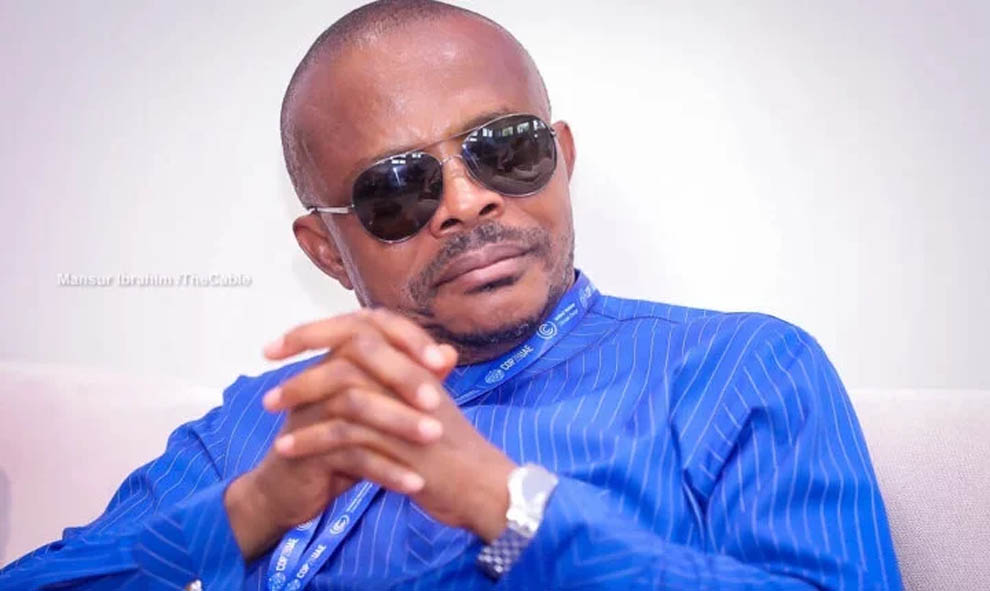
2027: Ajaero Questions Tinubu, Atiku, Obi’s Economic Approach, Highlights Adebayo’s Ideas
President of the Nigeria Labour Congress (NLC), Joe Ajaero, has questioned the economic positions of President Bola Ahmed Tinubu, former Vice President Atiku Abubakar and Peter Obi, while saying the ideas of Social Democratic Party (SDP) presidential candidate Adewole Adebayo deserve serious attention ahead of the 2027 presidential election.
Ajaero made the comments during an interview with Seun Okinbaloye on Mic On, where he was asked about the economic policies of Atiku and other leading figures in the 2027 race.
Rather than focusing solely on Atiku’s economic proposals, the NLC president highlighted the positions of Adebayo and Accord Party presidential candidate Gbenga Olawepo-Hashim, saying he had examined their ideas and was willing to listen to them.
“I have looked at Gbenga Hashim’s position and I think he’s an expert to an extent. I also looked at Adebayo. I may listen to them,” Ajaero said.
He subsequently contrasted the economic approaches of Adebayo and Olawepo-Hashim with those of Tinubu, Atiku and Obi.
“Peter Obi, Atiku and Asiwaju, they all have the same position and they have shown that they are market people from far right,” he said.
Ajaero’s remarks have drawn attention to the economic debate ahead of the 2027 election, particularly as issues such as inflation, fuel prices, electricity costs, unemployment, wages and declining purchasing power remain major concerns for Nigerians.
READ ALSO:
- Adeleke Signs New Law to Regulate Motor Parks Across Osun
- Tragedy Strikes FMC: Medical Director Loses Two Daughters—A Doctor and a Pharmacist—Within 48 Hours
- 27-Year-Old Woman Allegedly Kills Newborn Hours After Giving Birth in Abuja
Adebayo, who is contesting the 2027 presidency on the SDP platform, has built his campaign around social democracy, increased domestic production, job creation and a stronger role for government in providing public services and expanding economic opportunities.
The SDP candidate has also made energy reform a major part of his campaign, arguing that high energy costs and inadequate electricity supply continue to constrain households, businesses and industrial production.
His policy blueprint, Farewell to Poverty and Insecurity: Governance & Accelerated Development — Blueprint of a New Nigeria, 2027–2031, proposes mechanisms for monitoring government performance through measurable targets, periodic assessments and implementation milestones.
Adebayo has also advocated greater emphasis on domestic production, with the argument that Nigeria must reduce its dependence on imports and foreign exchange while strengthening local industries and productive capacity.
Olawepo-Hashim, whom Ajaero also mentioned, has similarly made energy and industrialisation central to his economic programme. His proposed Energy First agenda focuses on increasing domestic energy production, expanding refining capacity and reducing energy costs.
Ajaero’s comments do not amount to a formal endorsement of Adebayo or Olawepo-Hashim for the 2027 presidential election. Rather, the NLC president said their economic proposals were sufficiently different from those of the politicians he discussed to warrant further engagement.
The intervention comes as political parties and presidential candidates increasingly position their economic policies at the centre of the 2027 campaign, with competing proposals on fuel pricing, taxation, electricity, wages, industrialisation, employment and social protection.
For the NLC, which represents organised labour and has been at the forefront of debates over wages and the impact of economic reforms on workers, the direction of the next administration’s economic policy is expected to remain a major issue ahead of the election.
With the 2027 political contest gathering momentum, the competing economic visions of the presidential candidates are likely to face increased scrutiny from organised labour, businesses and voters as parties intensify their campaigns.
2027: Ajaero Questions Tinubu, Atiku, Obi’s Economic Approach, Highlights Adebayo’s Ideas
Politics
2027: Soludo Govt Accuses Peter Obi Of Plot To Destroy APGA
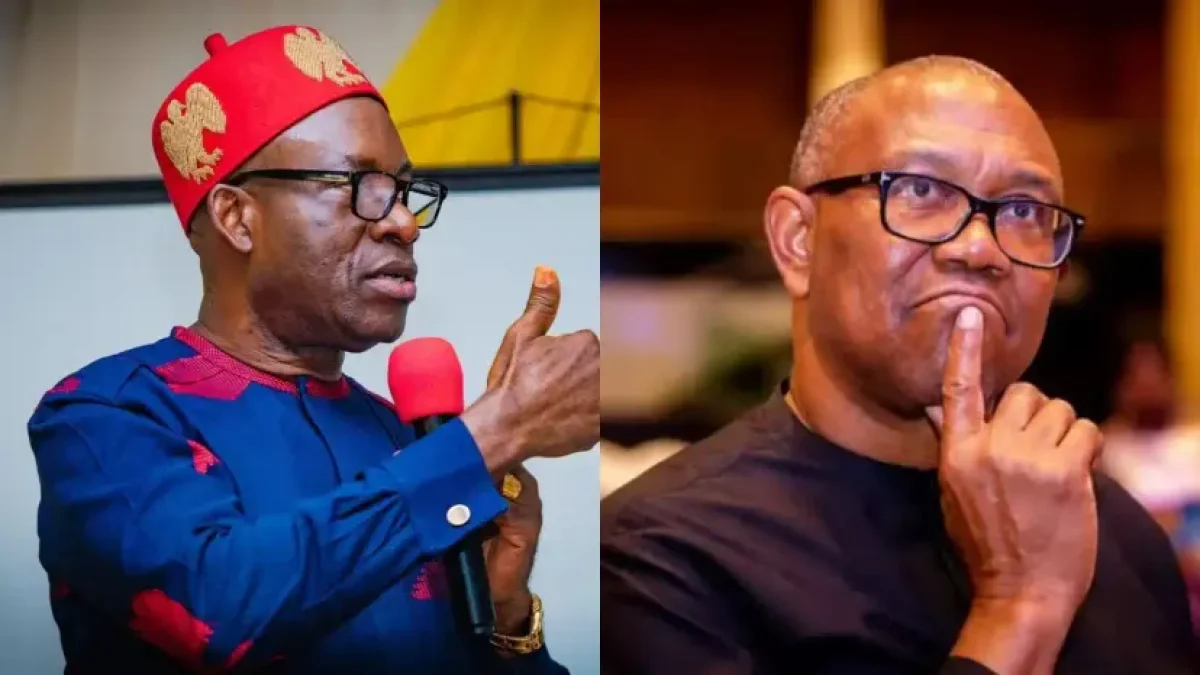
2027: Soludo Govt Accuses Peter Obi Of Plot To Destroy APGA
The Anambra State Government has declared former governor Peter Obi and his Nigeria Democratic Congress (NDC) a threat to the All Progressives Grand Alliance (APGA) ahead of the 2027 presidential election, urging APGA supporters to resist the opposition party.
The state government made the declaration in a message issued through its New Media office on Monday, accusing Obi of working to weaken the party that gave him the platform to become governor of Anambra.
The government described its message as a “betrayal alert” to APGA supporters, alleging that Obi had been seeking to undermine the party since leaving it in 2014.
It urged party members in the state not to be swayed by Obi’s current political influence, arguing that APGA remained the political platform responsible for his emergence as governor.
The government said, “Since 2014, Obi has had one mission: to destroy the party that made him,” while calling on APGA members to defend the party ahead of the 2027 elections.
The development comes amid an increasingly tense political relationship between Obi and the administration of Governor Chukwuma Soludo.
READ ALSO:
- MURIC Accuses OAU International School of Restricting Hijab-Wearing Students
- Israeli Forces Reportedly Destroy School, Burn Homes in Southern Lebanon
- Nine Zamfara Lawmakers Dump APC for ADC Ahead of 2027
Obi governed Anambra from 2006 to 2014 on the APGA platform before leaving the party for the Peoples Democratic Party (PDP). He later joined the Labour Party, under which he contested the 2023 presidential election, before becoming the presidential candidate of the NDC ahead of the 2027 election.
The former governor remains an influential political figure in the South-East, particularly in Anambra, where his 2023 presidential campaign recorded strong support.
The Anambra government’s latest position also comes against the backdrop of APGA’s alignment with President Bola Ahmed Tinubu ahead of the 2027 presidential election.
The state government has previously defended its relationship with the President and maintained that supporting Tinubu does not conflict with APGA’s interests.
However, Obi’s emergence as the NDC presidential candidate has created a new political challenge for APGA, particularly because of his longstanding influence among voters in Anambra and the wider South-East.
The NDC has rejected the allegations against Obi, accusing the Soludo administration of attacking the former governor because of concerns about his popularity.
NDC Director of New Media and Strategic Communications, Theo Abu Agada, described the state government’s position as political blackmail and maintained that the party was confident of its prospects in the 2027 election.
The latest exchange has further widened the political divide between the camps of Peter Obi and Chukwuma Soludo, with both sides increasingly positioning themselves ahead of the 2027 presidential contest.
For APGA, the emergence of Obi and the NDC presents a particularly sensitive political challenge because of the former governor’s history with the party and his continued influence in Anambra.
The 2027 election is therefore expected to produce a major political contest in the state, with APGA seeking to retain its influence while Obi’s NDC attempts to convert his personal support base into wider electoral backing.
2027: Soludo Govt Accuses Peter Obi Of Plot To Destroy APGA
-

 metro3 days ago
‘I Thought I Was Dead’ — Hairstylist’s Daring Escape From Kidnappers After Benin-Ore Ambush
-

 metro1 day ago
Tragedy Strikes FMC: Medical Director Loses Two Daughters—A Doctor and a Pharmacist—Within 48 Hours
-

 metro1 day ago
Transporters Urge IGP Disu to Arrest Illegal Highway Tax Collectors
-
 metro3 days ago
Court Restricts Osun Accounts Over $13.9m Arbitration Award
-

 metro1 day ago
Army, DSS, Amotekun Kill ISWAP Commander Planning Attacks in Southern Nigeria
-
 Politics1 day ago
2027: Soludo Govt Accuses Peter Obi Of Plot To Destroy APGA
-

 Entertainment3 days ago
“Sometimes, I Wonder Why I Married My Husband” — Omotola
-

 News1 day ago
BREAKING: Many Feared Dead as Helicopter Crashes in Ondo Community