

metro
Succession move begins as Awujale is buried in Ijebu-Ode (photos)

Succession move begins as Awujale is buried in Ijebu-Ode (photos)
Remains of the Awujale and paramount ruler of Ijebuland, Oba Sikiru Kayode Adetona, were buried in Ijebu-Ode, Ogun State, amid tight security.
Ijebu-Ode town stood still, as dignitaries and mourners from all walks of life, sons and daughters of Ijebuland, paid the revered monarch last respect.
Armed soldiers, police and other security agents had taken over the palace, his private residence and other strategic locations in Ijebu-Ode to forestall breakdown of law and order.
 There were fears of possible clash between the Muslim and traditional worshippers over the burial rites of the monarch who had insisted that he be laid to rest according to Islamic rites.
The controversial burial rites law of Ogun State government allows a dead monarch to be buried according to the religion he practiced.
The provisions of the Obas and Chiefs Law of Ogun State 2021, specifically section 55, governs the preservation and regulation of traditional burial rites.
Subsection (ii) grants a traditional ruler “the right to be buried in accordance with the customs and traditions of the land”, provided that the body is not subjected to mutilation or cannibalisation.
Subsequent subsections (iii) to (v) establish that the relevant traditional council must determine the nature of the rites, register a declaration of those rites with the commissioner within 21 days, and ensure that registration acts as sufficient proof of compliance.
READ ALSO:
- US threatens Nigerians with permanent travel ban, deportation over visa overstay
- Obi will contest presidency even without coalition – Yunusa Tanko
- Buhari saved Nigeria from P&ID, Mambila trouble, says AGF Fagbemi
Sections 55 and 56 of the law explicitly prohibit harmful practices such as mutilation, cannibalism, and human rituals, and criminalise the killing or use of human parts during burial rites or the installation of a monarch in the state.
However, some traditionalists insisted that monarchs are installed according to customs and tradition of the land and as such, they have the right to take charge of the monarch’s burial rites.
Oba Adetona initiated the bill, hence, his burial yesterday appeared sets the tone for the enforcement of the law.
It was gathered that the security agents were beefed up at different locations especially the burial site to avoid the process being hijacked.
The body of the late Awujale in a motorcade was accompanied by staff of the office of traditional rulers in Ijebuland en route to the Igbeba residential Mosque.
As predicted, traditionalists who came in their numbers were, however, prevented by security operatives from the Nigeria Army, who marched them to the gate.
The soldiers had a tough time controlling crowd during the janazat prayers led by the Chief Imam of Ijebuland, Miftaudeen Gbadegesin Ayanbadejo.
The federal government delegation to the burial was led by the Minister of Marine and Blue Economy, Adegboyega Oyetola and his counterpart in the Ministry of Communications and Digital Economy, Bosun Tijani.
 Others in attendance were the governors of Ogun and Lagos States, Prince Dapo Abiodun and Babajide Sanwo-Olu; the President of Dangote Group, Alhaji Aliko Dangote; former governor of Ogun State, Aremo Olusegun Osoba; deputy governor of Ogun State, Engr Noimot Salako-Oyedele; Senator Gbenga Daniel; Senator Salis Shuaib and Senator Solomon Adeola.
They also included the First Lady of Ogun, Bamidele Abiodun; former first lady of the State, Funso Amosun; the Ogbeni Oja of Ijebuland, Olorogun Sunny Kuku; Chairman of Odua Investment, Otunba Abimbola Ashiru; Olori Omooba of Ijebuland, Alhaji Wasiu Ayinde Marshal, sons and daughters of Ijebuland, among others.
Succession battle begins
Daily Trust reports that following the interment of the late Awujale yesterday, search has begun in earnest for the next occupant to the stool.
Sources hinted that quiet search for the worthy successor had begun in 2019 after Oba Adetona highlighted conditions that must be considered for a successor.
During the 2019 edition of Ojude Oba festival held in August that year, Oba Adetona gave Ijebu kingmakers conditions that must be put into consideration while selecting his successor when he finally joins his ancestors.
READ ALSO:
- Napoli put fresh hurdles before Galatasaray to grab Osimhen
- Kidnappers abduct Delta contractor, demand N100m ransom
- Natasha criticises Akpabio for appealing judgment ordering her reinstatement
Oba Adetona said his would-be successor must not be a money bag who would destroy the achievements Ijebuland recorded so far.
The late monarch told Ijebu kingmakers not to replace him with a moneybag.
He asked them to call on God in order to select a capable successor worthy of building on the records of the Ijebuland.
The Awujale also warned that the process of selecting his successor must not be politicised, and asked Ijebu indigenes to reject selection of “incompetent successor.”
Oba Adetona, who gave the stern warning, said “Nobody knows when I will join my ancestors.”
Our correspondent learnt that in coming days, the race for the highly revered Yoruba stool will begin openly.
By the declaration made under Section 4 (2) of the Chief Law 1957 of the Customary Law regulating the selection of the Awujale of Ijebuland Chieftaincy, there are four ruling houses. They are – (i) the Gbelegbuwa Ruling House; (ii) the Anikinaiya Ruling House, where Oba Adetona came from; (iii) the Fusengbuwa Ruling House; and (iv) the Fidipote Ruling House.
Findings revealed that process of selecting a new Awujale involves specific steps outlined in the Ijebu traditional laws and customs, and involve the participation of the kingmakers (members of the highest traditional council) and the ruling houses of Ijebu.
According to the general outline of the process, the process begins with the passing of the current Awujale, then consultation with kingmakers who are members of the highest traditional council to initiate the selection process.
The ruling houses of Ijebu are then consulted to determine which house is next in line to produce a candidate, follow by the nomination of a candidate by the next ruling house for the vacant stool.
Then, the kingmakers are expected to carefully consider the nominated candidates, considering their suitability and adherence to traditional norms. The final selection is made by the kingmakers, who then present the chosen candidate to the Ijebu people. The selected candidate undergoes traditional coronation rites and ceremonies to become the new Awujale.
According to the order of rotation in which respective ruling houses are entitled to produce candidates, the ruling house of Fusengbuwa, is heir apparent to the Awujale stool.
Gbelegbuwa ruling house produced late Oba Adetona’s predecessor, while he (Adetona) hailed from the Anikinaiya ruling house. In that order, the Fidipote ruling house is next to the current heir apparent.ad
Awujale Gbelegbuwa became an Oba recorded in Ijebu history in 1760. Gbelegbuwa was resuscitated in 1933 when Daniel Adesanya Gbelegbuwa II ascended the Awujale throne and reigned between 1933-1959. Oba Adetona from Anikinaiya ruling house replaced in 1960.
 Reports say the first record of Funsengbuwa ruling house was between 1790-1891 after the ruling of the first Gbelegbuwa between 1760-1790.
The ruling house has many branches across Ijebu-Ode. It includes the Olukoku royal house at Olode, the Ile NLA at Agunsebi Aboki Tunwase, the Awujale whom the British met after 1885-95 and Adekoga Eleruja also from Tunwase/Funsengbuwa ruling house who became the Awujale in 1916.
Oba Adenuga Folagbade who was crowned in 1925 also hailed from Fusengbuwa Tunwase ruling house. Many princes of Fusegbuwa ruling houses became Oba in other Ijebu settlements along the Epe road.
Findings by our correspondent revealed the founder of the First City Monument Bank (FCMB), late Otunba Subomi Balogun, came from the ruling house and as such, his four sons, Bolaji, Jide, Ladi and Gboyega are eligible to vie for the throne. Ladi is the CEO of FCMB Group.
It was gathered that more prominent princes from the ruling house will throw their hats into the ring when the race is finally thrown open.
However, one prominent personality being tipped for the throne is the fuji icon, Wasiu Ayinde, who holds the title of Olori Omoba of Ijebu. He hails from Fidipote ruling house, which according to sources, renders him ‘ineligible’.
Succession move begins as Awujale is buried in Ijebu-Ode (photos)








metro
Woman Arrested for Torching Ex-Boyfriend’s Home in Fit of Jealous Rage
Woman Arrested for Torching Ex-Boyfriend’s Home in Fit of Jealous Rage
Accra, Ghana — A routine breakup escalated into a catastrophic act of arson this week, leaving a young man homeless and his former girlfriend in police custody. The Ghana Police Service has arrested a young woman accused of deliberately setting her boyfriend’s rented apartment on fire after he ended their relationship. The shocking trigger for the split? The woman had answered a phone call on his mobile device without his permission.
According to preliminary police investigations, the couple became embroiled in a volatile and heated argument over the breach of privacy. The confrontation spiraled rapidly out of control when the boyfriend, reportedly furious that she had answered his phone, decided to end the relationship on the spot. Rather than accepting the breakup, the woman’s anger reportedly boiled over into a dangerous and premeditated rage.
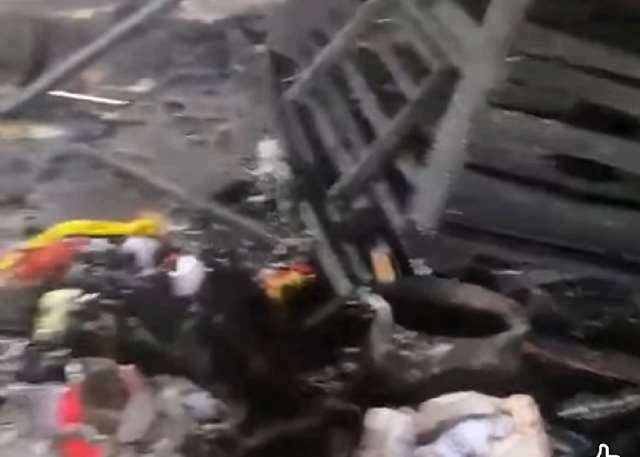
In the aftermath of the breakup, authorities allege that the woman intentionally ignited a fire inside the man’s rented home in an act of vengeance. Eyewitnesses described a scene of sheer chaos as flames rapidly consumed the residence, forcing neighbors to flee and local fire services to be summoned to battle the inferno. Dramatic images from the scene reveal a landscape of utter devastation, with the apartment reduced to a pile of charred debris and twisted metal. While no casualties have been reported, the property damage is extensive, and the young man has effectively lost his home and belongings.
The Ghana Police Service acted swiftly following the incident, apprehending the young woman who is now in police custody facing potential charges of arson and destruction of property. Local neighbors have expressed profound shock at the severity of the attack, with one bewildered resident telling reporters, “It is just a phone call. To burn down a whole apartment because you were broken up with? It is a very sad day for us here.” The suspect is expected to be arraigned in court in the coming days as the police finalize their case, serving as a chilling reminder of the dangerous consequences of unchecked anger.
Woman Arrested for Torching Ex-Boyfriend’s Home in Fit of Jealous Rage
metro
Horror in Sokoto: Bandits Intercept Vehicle, Massacre All Passengers Returning from City
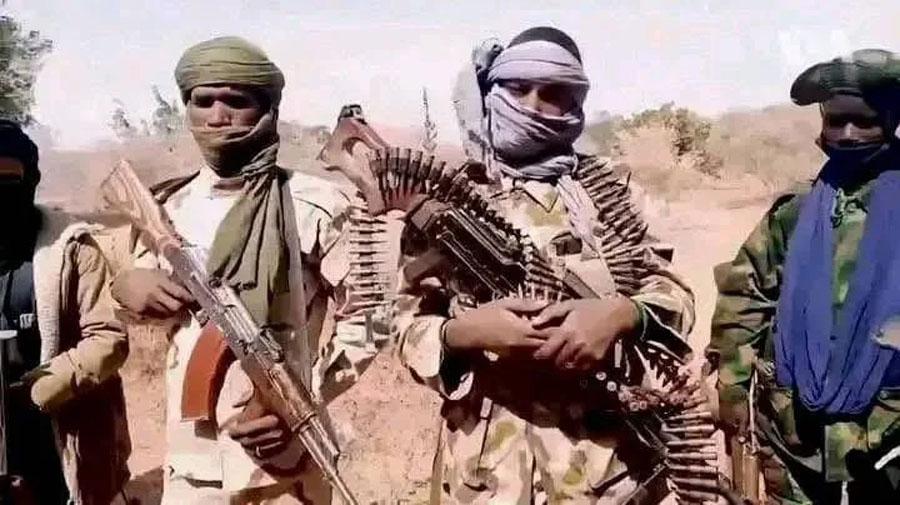
Horror in Sokoto: Bandits Intercept Vehicle, Massacre All Passengers Returning from City
SOKOTO — In a gruesome escalation of insecurity in the North-West, armed bandits have reportedly intercepted a vehicle and killed all passengers on board along a road leading to the Isa Local Government Area of Sokoto State.
According to reports, the tragic incident occurred as the vehicle, a commercial transport conveying passengers, was returning from Sokoto city. The assailants, described as heavily armed, ambushed the vehicle, forcing it to a halt before opening fire on the occupants.
The incident was disclosed by Bakatsine, a conflict reporter covering northwestern Nigeria, who shared information about the attack and photographs of some of the deceased . According to the report, some of the victims were reportedly among the 3,000 people recruited by the Sokoto State Government who had been invited to Sokoto city for further screening and the collection of their documents . The passengers were said to have been travelling back home when the armed men intercepted their vehicle and opened fire on them.
The exact number of people killed in the attack has yet to be confirmed, and there has been no official confirmation from Nigerian authorities as of the time of reporting . Although photographs of some of the deceased have circulated following the incident, the total number of victims and their identities have yet to be independently established .
The attack highlights the persistent security challenges plaguing the region, where bandits frequently target highways and rural communities. Isa Local Government Area, which shares a border with Zamfara State, has been a notorious flashpoint for such criminal activities, including kidnapping, cattle rustling, and highway ambushes.
The reported killing also comes amid continuing concerns over attacks on civilians in other parts of northern Nigeria, particularly in communities affected by insurgency and banditry . Residents of the affected area have expressed deep grief and outrage over the continuous loss of lives, urging security agencies to intensify patrols along the Sokoto-Isa road and other vulnerable routes.
When contacted, the Sokoto State Police Command Public Relations Officer promised to provide details of the incident, stating that operatives have been deployed to the area to ascertain the facts and restore normalcy.
The mass killing underscores the urgent need for enhanced security measures to protect travelers and rural dwellers in Sokoto State and the broader North-West region. NewsTrends will continue to monitor the situation and provide updates as more information becomes available.
Horror in Sokoto: Bandits Intercept Vehicle, Massacre All Passengers Returning from City
metro
Bauchi Mosque Removes Imam After Tinubu Campaign, Rejects Proposal to Rename Mosque
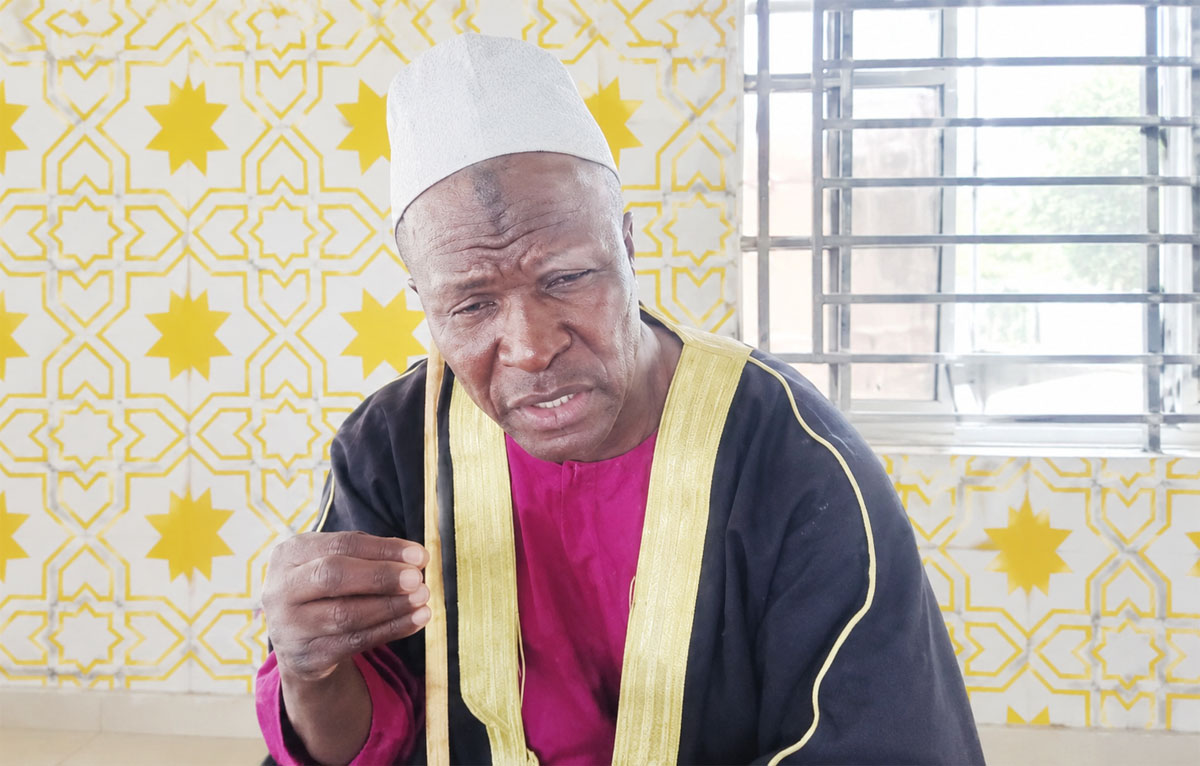
A mosque committee in Bauchi metropolis has removed Imam Dahiru Abubakar after he repeatedly urged worshippers to support President Bola Ahmed Tinubu’s re-election bid in 2027, triggering a dispute over the use of religious institutions for partisan political activities.
Abubakar served as the imam of Masjid Abdullahi Bin Zubbair in Madina Quarters, Bauchi, where he reportedly used sermons delivered after obligatory prayers to defend Tinubu’s administration against criticism over insecurity and economic hardship.
The cleric argued that the country’s challenges should not be blamed entirely on the President, describing insecurity and economic difficulties as problems requiring divine intervention, prayer and greater fear of God.
He also urged worshippers to give Tinubu another opportunity in the 2027 presidential election, maintaining that the country’s problems could not be resolved simply by blaming political leaders.
The disagreement reportedly intensified after Abubakar repeated his political messages following the early morning Subhi prayer on Sunday, October 18, 2026, despite previous warnings from the mosque committee.
Abubakar defended his position, saying his preaching was intended to encourage Nigerians to pray for the country rather than continually blame leaders for its difficulties.
“My preaching centred on telling people to embrace fear of God and stop blaming leaders for the insecurity,” he said, according to reports.
He cited security challenges in other African countries, including Sudan, Chad and Mali, questioning whether Tinubu could be held responsible for crises in those nations.
The imam maintained that he had encouraged worshippers to stop criticising Tinubu over insecurity and economic hardship and to support his administration for another term.
However, the mosque committee said the decision to remove him was not based solely on his political views but also on his alleged attempts to turn the mosque into a venue for political gatherings.
The committee’s chairman, Imam Abubakar Jibrin, confirmed the removal, explaining that the management had cautioned Abubakar several times against bringing partisan political activities into the mosque.
Jibrin alleged that the imam had been gathering people inside and outside the mosque to discuss politics despite repeated warnings. He said the committee considered the practice inappropriate for a place primarily dedicated to worship.
“We vehemently rejected the use of the mosque for political meetings,” Jibrin said, adding that the committee had repeatedly appealed to the imam to stop the practice.
According to the chairman, the committee’s position was that political meetings and campaign activities should take place at designated political venues rather than within mosque premises.
Jibrin also disclosed that the committee had convened discussions to address the matter before deciding to remove Abubakar. He indicated that the decision was final and that the former imam would not be reinstated.
Another major point of disagreement was the reported proposal to rename the mosque after Tinubu.
Jibrin said Abubakar had pushed for the mosque’s name to be changed from Masjid Abdullahi Bin Zubbair to Masjid Imam Bola Ahmed Tinubu. The committee unanimously rejected the proposal, insisting that the mosque belonged to the community and that its name should remain unchanged.
The chairman maintained that the committee was not campaigning for or against any presidential candidate but was determined to prevent the mosque from becoming a platform for partisan political mobilisation.
He suggested that anyone wishing to use a mosque exclusively for political activities should establish or acquire a separate facility rather than impose such an agenda on a community-owned place of worship.
The development has drawn attention to the debate over the role of religious leaders in Nigeria’s political process as preparations for the 2027 general elections gather momentum.
While religious leaders have the right to discuss governance and national challenges, the Bauchi incident highlights the tensions that can arise when sermons are perceived as direct endorsements of a political candidate.
Tinubu’s re-election ambition has generated differing reactions among religious leaders and political groups, with supporters defending his administration and critics pointing to insecurity, economic hardship and the rising cost of living.
The Bauchi mosque committee’s decision reflects its stated position that the mosque should remain focused on worship rather than serve as a venue for political meetings or campaign activities.
For Abubakar, however, his defence of Tinubu was rooted in his belief that prayer and faith were essential to addressing Nigeria’s challenges and that the President should not be blamed for every difficulty confronting the country.
The dispute leaves the mosque’s management and the former imam with sharply different views about the boundaries between religious preaching, political expression and the administration of community-owned places of worship.
Bauchi Mosque Removes Imam After Tinubu Campaign, Rejects Proposal to Rename Mosque
-

 metro2 days ago
Army Major, Soldiers Killed in ISWAP Ambush in Yobe State
-

 metro1 day ago
‘We Don’t Know What Else to Do’ — Mother Begs for Release of Abducted Children
-
 metro1 day ago
Atiku: US Lobbying Firm Raises Alarm Over Alleged Assassination Plot
-
 metro2 days ago
Breaking: Afenifere Leader Pa Fasoranti Dies at 100
-

 metro1 day ago
Five Arraigned Over Kidnapping of 20 Prospective NYSC Members in Imo
-
 metro2 days ago
‘I Never Asked Them to Abandon Loved Ones’ — Obi Clarifies Diaspora Remarks
-

 Auto1 day ago
Happening now: Hyundai unveiling of Mufasa and Grand Creta
-

 Auto2 days ago
Beyond the Showroom: Why After-Sales Service Will Define Auto Industry Winners