

International
Qatar says Netanyahu must be ‘brought to justice’ over strikes

Qatar says Netanyahu must be ‘brought to justice’ over strikes
DOHA: Qatar’s prime minister warned Wednesday that an unprecedented Israeli strike in Doha targeting Hamas killed hope for Gaza hostages, calling for Israeli leader Benjamin Netanyahu to be “brought to justice.”
His comments came a day after deadly strikes targeted Hamas leaders in Qatar — a US ally — a first in the oil-rich Gulf that rattled a region long shielded from conflict.
“I think that what Netanyahu has done yesterday, he just killed any hope for those hostages,” Qatari Prime Minister Sheikh Mohammed bin Abdulrahman Al Thani told CNN.
Doha is “reassessing everything” around their involvement in future ceasefire talks and discussing next steps with Washington, he added in comments cited in CNN’s live blog after an interview with the broadcaster.
The attack, just three months after Iran launched a retaliatory strike on a US air base in Qatar, also cast serious doubt on Qatar-mediated Gaza ceasefire talks and undermined security reassurances to the Gulf from key ally Washington.
Earlier Wednesday, Defense Minister Israel Katz vowed that Israel would “act against its enemies anywhere” while Netanyahu urged Qatar to expel Hamas officials or hold them to account, “because if you don’t, we will.”
Qatar has hosted Hamas’s political bureau since 2012 with Washington’s blessing, and has been a key mediator in Gaza talks alongside Egypt and the United States.
READ ALSO:
- Businesses suffer as national grid collapses again
- INEC recognises Mark, Aregbesola as ADC chairman, secretary
- Tinubu to address world leaders at UN General Assembly Sept 24
Israel’s military said it struck Houthi targets in Yemen on Wednesday, including in the capital Sanaa, killing 35 people according to the militants.
Palestinian militant group Hamas said six people were killed in Tuesday’s strikes in Qatar, but its senior leaders had survived, affirming “the enemy’s failure to assassinate our brothers in the negotiating delegation.”
The White House said Trump did not agree with Israel’s decision to take military action.
Trump said he was not notified in advance and when he heard, asked his envoy Steve Witkoff to warn Qatar immediately — but the attack had already started.
Israel’s ambassador to the United Nations, Danny Danon, sought to justify the decision, telling an Israeli radio station: “It was not an attack on Qatar; it was an attack on Hamas.”
‘Shaken conscience of world’
Hamas political bureau member Hossam Badran said Israel “represents a real danger to the security and stability of the region.”
“It is in an open war with everyone, not just with the Palestinian people,” he said.
In Gaza City on Wednesday, the Israeli military destroyed another high-rise building as it intensified its assault on the territory’s largest urban center, despite mounting calls to end its campaign.
The military issued an evacuation warning to those living in and around the Tiba 2 tower, before later saying it had “struck a high-rise building that was used by the Hamas terrorist organization.”
AFP images showed huge plumes of smoke billowing into the sky as the residential tower in western Gaza City crashed to the ground.
READ ALSO:
- Trump scolds Israeli PM Netanyahu over Qatar strikes
- Tragedy in Onitsha, pregnant woman killed, seven injured in market clash
- Crisis brews over new NOUN VC selection, top aspirant name omitted from list
In the aftermath, young girls rushed to pick dust-covered dough out of the rubble.
Siham Abu Al-Foul told AFP she couldn’t take anything with her when the army issued the evacuation orders.
“They brought down the tower and we came running and there was nothing left… Everything we fixed in two years was gone in a minute.”
The Israeli military said it had struck 360 targets since Friday and vowed that it would “increase the pace of targeted strikes” in the Gaza City area in the coming days.
The Gaza war has created catastrophic humanitarian conditions for the population of more than two million, with the United Nations last month declaring a famine in Gaza City and its surroundings.
EU chief Ursula von der Leyen said she would push to sanction “extremist” Israeli ministers and curb trade ties over the dire situation.
“What is happening in Gaza has shaken the conscience of the world,” she said.
‘Not thrilled’
Israel’s targeting of Hamas leaders in Qatar sparked international condemnation.
Trump said he was not notified in advance of the Israeli strikes and was “not thrilled about the whole situation.”
“I view Qatar as a strong Ally and friend of the US, and feel very badly about the location of the attack,” he said in a social media post, adding Hamas’s elimination was still a “worthy goal.”
Canada said it was reassessing its relationship with Israel following the Doha strikes.
Hamas’s October 2023 attack resulted in the deaths of 1,219 people, mostly civilians, according to an AFP tally based on Israeli figures.
Of the 251 hostages seized during the assault, 47 remain in Gaza, including 25 the Israeli military says are dead.
Israel’s retaliatory offensive has killed at least 64,656 Palestinians, most of them civilians, according to figures from the health ministry in Hamas-run Gaza that the UN considers reliable.







International
Trump Says US Navy Cleared All Mines From Strait of Hormuz, Warns Iran of ‘Zero Tolerance’
Trump Says US Navy Cleared All Mines From Strait of Hormuz, Warns Iran of ‘Zero Tolerance’
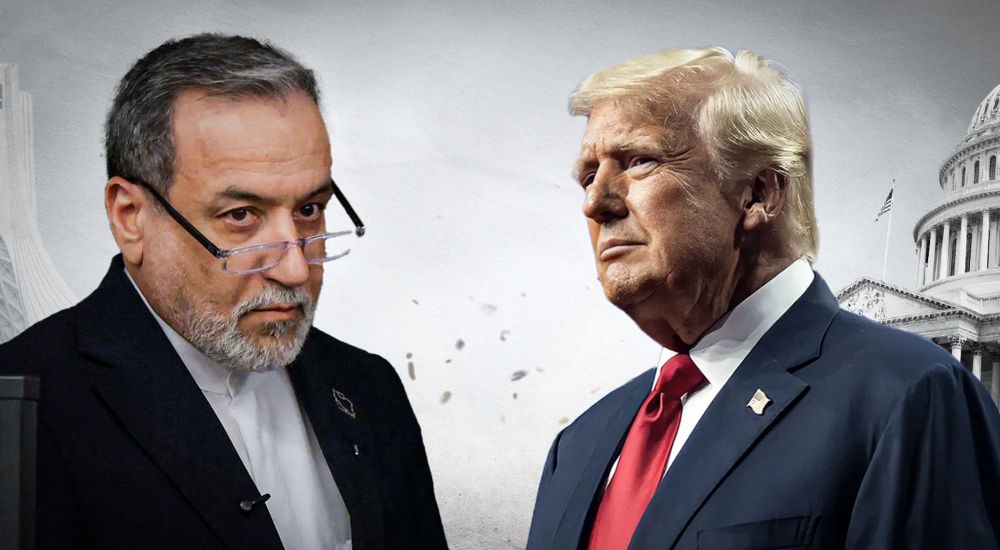
President Donald Trump announced on Tuesday, August 25, that all mines in the international waters of the Strait of Hormuz have been cleared or detonated by the US Navy. In a post on his Truth Social platform, Trump stated: “I have just been informed by the United States Navy that all mines have been removed and/or detonated from within the International Waters of the Strait of Hormuz.” The President further warned that Iran had been notified that “any ship or boat placing new mines will be immediately and systematically destroyed.” He added that the United States is enforcing a “Zero Tolerance” policy on mine placement, and that the US Space Force is “watching every square inch of the Strait.”
Two US officials with direct knowledge of the matter confirmed Trump’s announcement, stating that the US Navy has cleared the Traffic Separation Scheme (TSS)—the median lane of the Strait that lies between Oman and Iran. During the conflict, Iran had deployed dozens of mines in the median lane, creating a significant hazard for commercial shipping. Over the past several months, US Navy underwater drones systematically scanned the area and located more than 100 objects suspected to be mines. The US military then contracted private companies to remove or detonate them. The clearing of the median lane now allows ships to move simultaneously in both directions through the strait with US Air Force protection. The operation comes as the US military has already been using the southern lane close to Oman’s coast to move oil tankers, with more than 500 ships transiting in the last 30 days.
READ ALSO:
- 2027: Sanwo-Olu’s Aide Accuses Atiku of Using Subsidy to Turn Nigerians Against Tinubu
- Ogogo’s First Wife Opens Up: Why He Asked Me to Quit Acting After Marriage
- BREAKING: Tinubu Orders Immediate Rescue of Niger Mosque Abduction Victims
Despite the President’s announcement, an August 25 advisory from the Joint Maritime Information Center (JMIC) warned of a “continued risk of drifting or uncharted mines” in and near the TSS, noting that mine danger areas remain active and “clearance and mine-surveying operations continue throughout the Strait of Hormuz.” JMIC maintained the overall threat level for the waterway at SEVERE. Trump’s statement specifically refers to mines in “International Waters,” while JMIC’s assessment covers the broader Strait and areas around the traffic separation scheme. Known mines in international waters may have been cleared while surveys continue for drifting or previously uncharted mines. Still, JMIC has not declared the Strait mine-free.
The strategic waterway, through which approximately one-fifth of global oil supplies normally pass, has seen a dramatic drop in traffic during the conflict. Oil flows fell to about 5 million barrels per day recently, down from over 20 million before the war. The removal of mines will allow significantly more oil tankers to transit the strait and reduce Iran’s leverage over global energy markets.
On the same day as Trump’s announcement, Iranian Foreign Minister Abbas Araghchi met with his Omani counterpart Sayyid Badr bin Hamad bin Hamood Al-Busaidi in Tehran to discuss a joint proposal for the Strait of Hormuz. The proposal includes establishing a temporary joint maritime corridor and an agreement to carry out a joint project for mine clearance. However, the two countries did not reach a deal, and questions remain over whether such an agreement would be relevant given the US blockade and Trump’s unilateral announcement of mine clearance.
Trump’s latest announcement comes as tensions remain high over access to the strategic waterway. This marks the second time in a week that Trump has declared the mine threat essentially eliminated. On August 18, he said the Strait was open and that “all water mines” had been removed or detonated, though maritime authorities maintained the operating environment remained dangerous. Iran has continued asserting authority over vessel movements, and the underlying dispute over the Strait’s status remains unresolved.
Trump Says US Navy Cleared All Mines From Strait of Hormuz, Warns Iran of ‘Zero Tolerance’
International
US plans largest mass visa revocation in history, up to 200,000 foreigners targeted
US plans largest mass visa revocation in history, up to 200,000 foreigners targeted
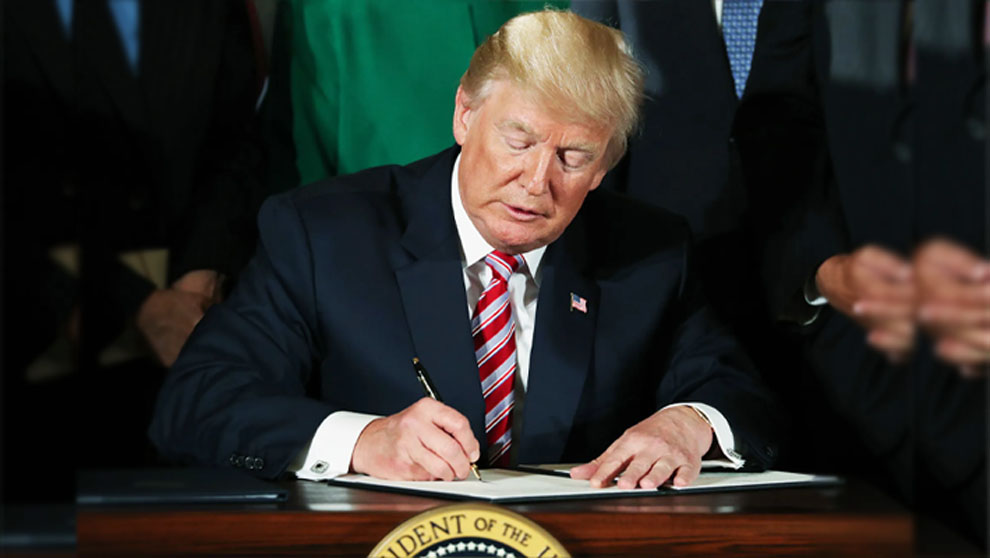
The administration of US President Donald Trump is preparing to revoke the business and tourism visas of up to 200,000 foreigners who have applied for or are currently seeking asylum in the United States.
If implemented at the reported scale, the measure would become the largest single mass visa revocation in US history and is likely to trigger legal challenges.
The planned action targets holders of B1 and B2 visas issued between 2016 and 2026 who have sought or are currently seeking asylum in the United States.
The US State Department is expected to begin announcing the revocations in the coming weeks, unless the policy is revised or challenged. The department is coordinating the process with the Department of Homeland Security (DHS) to identify affected visa holders.
State Department spokesman Tommy Pigott said the government was working with DHS to identify and revoke the nonimmigrant visas of foreigners who entered the United States as short-term visitors but later filed for asylum.
However, Pigott did not confirm that exactly 200,000 visas would be revoked. He said the number would remain dynamic because the process would be conducted on a rolling basis.
The reported 200,000 figure should therefore be regarded as an estimate rather than a final government tally.
The proposed visa revocations would also not necessarily result in the immediate deportation of everyone affected.
Officials said most people with pending asylum cases would be recategorised but would lose their status as business or tourism visitors. Visa cancellation would therefore be separate from an automatic deportation order.
READ ALSO:
- Lagos-Ibadan Expressway crash: Seven killed, two injured in three-vehicle collision
- Traffic Alert: Lagos Announces Diversion as Oke-Afa Bridge Undergoes Rehabilitation
- Warri-Itakpe Derailment: 4 Dead, 64 Injured – Opeifa Explains What Really Happened
A B1 visa is generally issued for temporary business travel, while a B2 visa is commonly used for tourism, visiting family or friends and certain medical purposes.
The Trump administration argues that some foreigners have misused short-term visitor visas by entering the United States as tourists or business travellers and subsequently filing asylum claims to remain in the country.
Deputy Secretary of State Christopher Landau criticised the practice, arguing that the US asylum system should not be used as a means of circumventing immigration laws.
The planned US visa revocation is part of a wider immigration crackdown by the Trump administration, which has introduced tougher screening and restrictions for prospective and existing visa holders.
The measures include increased scrutiny of applicants’ social media activity, new financial requirements for some visa applicants and restrictions on visa issuance to citizens of certain countries.
The State Department has also revoked more than 175,000 visas since President Donald Trump returned to office for his second term. The revocations have involved foreign nationals accused or convicted of crimes and people whose conduct or circumstances were deemed grounds for visa cancellation.
The administration has also intensified efforts to curb so-called birth tourism, in which foreign nationals travel to the United States to give birth.
Trump has separately sought to restrict birthright citizenship, although those efforts have faced legal challenges.
The latest visa plan could face further litigation because of its unprecedented scale and its potential impact on people with pending asylum applications.
Rights groups have criticised the administration’s broader immigration policies, raising concerns about due process and civil liberties. The Trump administration has defended the measures as necessary to strengthen border security, enforce immigration laws and prevent abuse of the immigration system.
The review of existing B1 and B2 visa holders reportedly began after the State Department received information about asylum applications from US Citizenship and Immigration Services.
For now, the final number of people whose visas will be revoked remains uncertain. The State Department has indicated that the process will be conducted on a rolling basis, meaning the eventual figure could change as officials complete their review.
If the policy proceeds at the reported scale, it would represent an unprecedented US immigration crackdown and the biggest single mass cancellation of US visas in the country’s history.
US plans largest mass visa revocation in history, up to 200,000 foreigners targeted
International
Iran Warns Countries Backing New US Sanctions, Threatens Strait of Hormuz Closure
-

 metro3 days ago
Lagos Police arrest five suspected telecom vandals, recover truckload of iron rods
-

 Entertainment2 days ago
Veteran Nollywood Actor Taiwo Hassan ‘Ogogo’ Dies at 66 After Cancer Battle
-

 metro2 days ago
MUSCOYS Honours Pioneering Educationist with Commendation Award
-

 Politics3 days ago
Opposition Unity Cracks as Atiku, Obi, Kwankwaso Diverge on 2027 Strategy Against Tinubu
-

 metro3 days ago
Lagos Moves to Tackle Housing Deficit, Inaugurates 2026 World Habitat Day Committee
-

 metro19 hours ago
LASG Moves to Fix Ikotun Junction, Seeks Community Support
-

 metro3 days ago
2027: Over 500 Northern Muslim Clerics Endorse Tinubu for Second Term
-

 Politics3 days ago
2027: Alfindiki tackles Atiku over Tinubu’s FBI records