

International
UN’s top Gaza investigator expresses hope for prosecution of Israeli leaders

UN’s top Gaza investigator expresses hope for prosecution of Israeli leaders
GENEVA: The UN investigator who this week accused Israel of committing genocide in Gaza said she sees parallels with the butchery in Rwanda, and that she hopes one day Israeli leaders will be put behind bars.
Navi Pillay, a South African former judge who headed the international tribunal for the 1994 Rwanda genocide and also served as UN human rights chief, acknowledged that justice “is a slow process.”
But as late South African anti-apartheid icon Nelson “Mandela said, it always seems impossible until it’s done,” she said in an interview.
“I consider it not impossible that there will be arrests and trials” in the future.
Pillay’s Independent International Commission of Inquiry (COI), which does not speak on behalf of the United Nations, issued a bombshell report on Tuesday concluding that “genocide is occurring in Gaza” – something Israel vehemently denies.
The investigators also concluded that Israeli President Isaac Herzog, Prime Minister Benjamin Netanyahu and former defense minister Yoav Gallant have “incited the commission of genocide.”
Israel categorically rejected the findings and slammed the report as “distorted and false.”
But for Pillay, the parallels to Rwanda – where some 800,000 people, mostly ethnic Tutsis and moderate Hutus, were slaughtered – are clear.
As head of the International Criminal Tribunal for Rwanda, she says watching footage of civilians being killed and tortured had marked her “for life.”
“I see similarities” to what is happening in Gaza, she said, pointing to “the same kind of methods.”
While Tutsis were targeted in Rwanda’s genocide, she said “all the evidence (indicates) it is Palestinians as a group that is being targeted” in Gaza.
Israeli leaders, she said, had made statements, including calling Palestinians “animals,” which recalled the demonizing rhetoric used during the Rwanda genocide, when Tutsis were labelled as “cockroaches.”
READ ALSO:
- BVAS, IReV need stronger legal backing for poll credibility — Ubani, SAN
- Saudi crown prince, Pakistani PM sign joint strategic defense agreement
- Xbox Game Camp Africa Returns for 2025, empowering new generation of developers
In both cases, she said the target population is “dehumanized,” signaling that “it’s ok to kill them.”
‘Traumatic’
The International Criminal Court has already issued arrest warrants for Netanyahu and Gallant for suspected war crimes.
Pillay said securing accountability would not be easy, highlighting that the ICC “does not have its own sheriff or police force to do the arrests.”
But she stressed that popular demand could bring about sudden change, as it had in her home country.
“I never thought apartheid will end in my lifetime,” she said.
Pillay, who rose through the ranks to become a judge in apartheid South Africa despite her Indian heritage, has a knack for handling difficult cases.
Her career has taken her from defending anti-apartheid activists and political prisoners in South Africa to the Rwanda tribunal, the ICC and on to serving as the UN’s top human rights official from 2008 to 2014.
The 83-year-old took on a particularly daunting mission four years ago when she agreed to chair the freshly-created COI tasked with investigating rights abuses in the occupied Palestinian territories and Israel.
Since then, she and her two co-commissioners have faced a barrage of accusations of bias and antisemitism, which they deny, and a recent social media campaign urging Washington to sanction them, as it has ICC judges, Palestinian NGOs and a UN expert focused on the situation in Gaza.
The pressure has been intense, but Pillay says the hardest thing for her team has been viewing video evidence from the ground.
“Watching those videos is just traumatic,” she said, pointing to images of “sexual violence of women (and abuse of) doctors who were stripped naked by the military.”
“It’s so painful” to watch.
Pillay said that going forward, the commission aims to draft a list of suspected perpetrators of abuses in Gaza, and also explore the suspected “complicity” of countries supporting Israel.
That work will meanwhile be left to her successor, since Pillay will be leaving the commission in November, citing her age and health concerns.
Before that, she said she had her visa ready to travel to New York to present her report to the UN General Assembly.
So far, she said, “I have heard nothing about that visa being withdrawn.”








International
Iran Flogs Singer, Four Others 74 Times Over Hijab-Free Performance

Iranian singer flogged over hijab-free concert
The punishment followed a video of Ahmadi’s “Caravanserai Concert”, recorded in December 2024 at the historic Deir-e Gachin Caravanserai near Qom and released online.
The performance, staged without a live audience, showed the singer wearing a sleeveless black dress with her hair uncovered while singing alongside male musicians, in defiance of Iran’s compulsory hijab regulations and restrictions on women performing publicly.
The video attracted millions of views on YouTube and drew attention to restrictions on women’s freedom of expression and participation in public cultural activities in the Islamic Republic.
Iranian authorities subsequently opened a criminal case against Ahmadi and members of her production team over what officials described as an illegal performance that violated religious and legal standards.
A criminal court in Qom convicted nine people in June over what it described as offending public decency through the production and dissemination of immoral content online. The defendants denied the accusations.
An appeals court upheld the sentences in September, including the flogging punishment and two-year restrictions on artistic activities and foreign travel.
READ ALSO:
- Nollywood Legend Pete Edochie Dies at 79 After Battle With Prostate Cancer
- BREAKING: Court Sacks Omo-Agege as NDC Senatorial Candidate, Orders INEC to Remove His Name
- Fraud, Drugs, Money Laundering: US Targets 157 Nigerians for Deportation
It was unclear what happened to the other four people sentenced in the case, as reports confirmed the flogging of Ahmadi and four members of her team.
The enforcement of the punishment reportedly came after lawyers unsuccessfully sought to overturn the verdict, reduce the sentences or secure a suspension of the flogging.
One of the lawyers told the BBC that the defence team had exhausted efforts to stop the punishment but was unable to prevent its immediate enforcement.
The case has renewed criticism of Iran’s treatment of women, particularly artists who challenge compulsory dress regulations and restrictions on female performances.
Women in Iran are required to observe the country’s hijab rules, while solo public singing by women is restricted, particularly in performances before mixed-gender audiences.
The restrictions have remained a major flashpoint since the 2022 protests following the death of Mahsa Amini, a young Kurdish-Iranian woman who died in custody after being arrested over alleged dress-code violations.
Human rights organisations have repeatedly condemned flogging as cruel, degrading and a violation of international human rights standards, urging Iranian authorities to abolish corporal punishment and end restrictions on women’s rights.
Ahmadi’s punishment has further fuelled outrage among artists, activists and supporters of women’s rights, who say the prosecution reflects the authorities’ continued efforts to suppress artistic freedom and punish women who challenge compulsory hijab laws.
Iranian singer flogged over hijab-free concert
International
Fraud, Drugs, Money Laundering: US Targets 157 Nigerians for Deportation

Fraud, Drugs, Money Laundering: US Targets 157 Nigerians for Deportation
The United States government has listed 157 Nigerians on its immigration enforcement register for possible deportation over various alleged criminal offences, including fraud, money laundering, drug-related crimes, identity theft, assault and offences involving children.
The latest update by the US Department of Homeland Security (DHS) added 24 Nigerians to its controversial Worst of the Worst register, bringing the total number of Nigerians featured on the list to 157.
The development was reported on Tuesday, November 24, 2026, following an update to the DHS website, which features foreign nationals arrested by the US Immigration and Customs Enforcement (ICE) over serious criminal allegations.
According to information published by the department, the newly listed Nigerians were arrested in different locations across the United States over offences ranging from financial crimes and drug-related violations to weapons offences and child cruelty.
Among those named is Emmanuel Omowaiye, arrested in Richmond, Texas, over alleged mail fraud, while Laurene Onwuka was arrested in Chantilly, Virginia, over fraud by impersonation.
Olusegun Shonekan, arrested in Newark, New Jersey, was listed over wire fraud, while Olusegun Olaseni was arrested in Greencastle, Indiana, over the alleged sale of amphetamine.
Others include Peter Ude, arrested in Atlanta, Georgia, over wire fraud, and Newton Jemide, arrested in Fort Dix, New Jersey, over alleged wire fraud, conspiracy and mail fraud.
The register also features Shedrack Umukoro, arrested in Yazoo City, Mississippi, over money laundering; Olasoji Akinbode, arrested in Kearny, New Jersey, over fraud by impersonation; and Oluwatosin Afolabi, arrested in Conroe, Texas, over fraud.
READ ALSO:
- Uduere Killings: Ughelli Chairman Accuses Omo-Agege’s Camp of Triggering Deadly Clash, Demands IGP Probe
- ‘Shame on You’: Fayose Blasts Nigerian Youths Over Poor Protest Turnout
- KWAM 1 Warns Tinubu Over Economic Hardship, Says Nigerians Should Not Suffer to Death
Alameen Adetunji Tokosi, arrested in Chicago, Illinois, was listed over heroin possession, while Joshua Ipoade, arrested in Atlanta, Georgia, was named over wire fraud.
Another Nigerian, Michael Orji, arrested in Oxford, Wisconsin, was listed over several alleged offences, including weapons-related violations, fraud, identity theft, wire fraud, falsely claiming US citizenship and money laundering.
Other Nigerians on the updated register include Ahmadu Apooyin, arrested in Baltimore, Maryland, over a cocaine-related offence; Teslim Kiriji, arrested in Yazoo City, Mississippi, over money laundering; and Onomen Uduebor, arrested in Seattle, Washington, over identity theft.
Charles Ochi and Daniel Eta, both arrested in White Deer, Pennsylvania, were listed over money laundering and wire fraud, respectively.
The list further includes Ifeanyi Ibennah, arrested in Tampa, Florida, over alleged cruelty towards a child; Kazeem Runsewe, arrested in Thomson, Illinois, over wire fraud; and Fatiu Lawal, arrested in Lompoc, California, also over wire fraud.
Others are Justin Akubueze, arrested in Orem, Utah, over money laundering; Moyinoluwaseun Okeowo, arrested in Orlando, Florida, over larceny, forgery and concealing stolen property; Babajide Oluwaseun Faseyi, arrested in Alden, New York, over assault; and Bright Eigbedion, arrested in Lompoc, California, over money laundering.
The DHS said the register was part of President Donald Trump’s administration’s efforts to remove foreign nationals involved in serious criminal activities from the United States.
In its description of the initiative, the department said it was fulfilling Trump’s promise to remove what it described as the “worst of the worst criminal aliens” from the country.
The agency explained that the register highlights foreign nationals arrested by ICE over serious criminal activities, including drug and weapons offences, violent crimes, fraud and the misuse or theft of public benefits.
The number of Nigerians featured on the register has increased significantly in recent months. Reports indicated that 124 Nigerians were listed in July, while the figure rose to 134 in September before the latest additions brought it to 157.
However, the DHS has not disclosed specific deportation dates for the Nigerians listed or provided detailed information about the immigration status of each individual.
Importantly, inclusion on the register should not automatically be interpreted as proof of conviction for every offence listed. The descriptions reflect information published by US immigration authorities, while the criminal and immigration proceedings involving the individuals may differ.
The latest development comes amid the Trump administration’s intensified immigration enforcement and efforts to remove foreign nationals it considers to pose serious criminal or public safety concerns.
Fraud, Drugs, Money Laundering: US Targets 157 Nigerians for Deportation
International
Iran Unveils Twin-Missile Launcher, Sends Fresh Warning To US
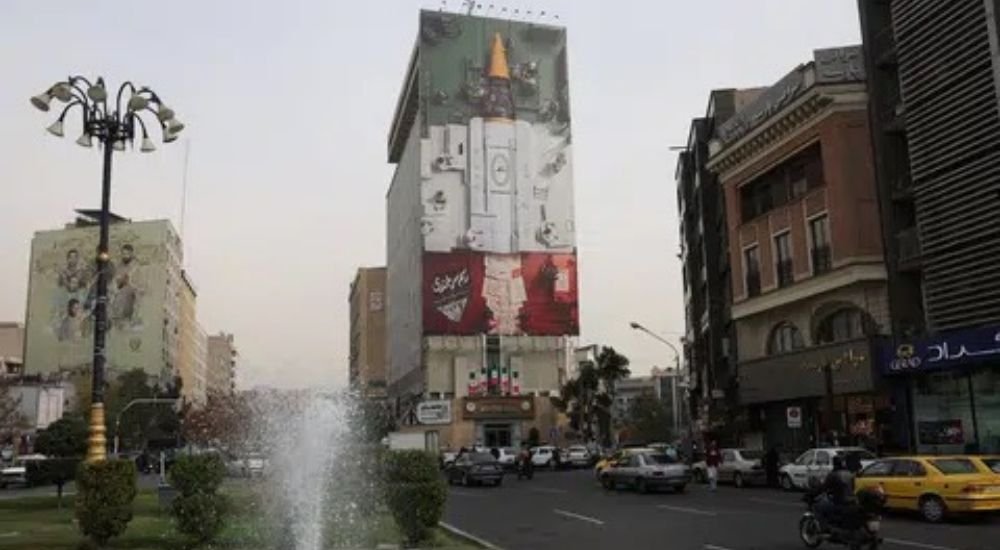
Iran Unveils Twin-Missile Launcher, Sends Fresh Warning To US
Iran has showcased a new dual-missile launcher capable of firing two missiles simultaneously, while its military commanders issued fresh warnings to the United States amid escalating tensions and concerns over a possible renewal of hostilities.
The newly displayed weapon, reportedly designed to launch two liquid-fuelled missiles at the same time, was unveiled during an inspection of an underground missile facility by senior commanders of Iran’s Islamic Revolutionary Guard Corps (IRGC).
Iranian state television broadcast footage of IRGC Commander-in-Chief Ahmad Vahidi and Aerospace Force commander Seyed Majid Mousavi touring the underground installation, where several missile systems, launchers and other military equipment were displayed.
The unveiling is seen as part of Tehran’s efforts to demonstrate that its military capabilities and missile infrastructure remain operational despite previous attacks targeting its weapons facilities.
During the visit, Vahidi issued a defiant warning to Iran’s adversaries, suggesting that the consequences of confronting the country were only beginning.
Mousavi also claimed that Iran had significantly expanded its military capabilities between recent periods of conflict, with the development of new weapons and systems designed to strengthen its defence and deterrence capabilities.
READ ALSO:
- Gombe: Three Killed, 13 Injured as Alleged Military Shooting Sparks Outcry
- Jimmy Odukoya Sues Sister, Church Trustees Over Removal as Senior Pastor
- UNILAG Gets 10 CNG Buses as FG Expands Campus Transport Scheme to 60 Institutions
The commanders’ remarks accompanied footage of missile launchers, military equipment and extensive underground tunnels, highlighting Iran’s efforts to protect its weapons infrastructure from potential airstrikes.
Iranian state media described the newly displayed launcher as an advancement in the country’s missile development programme, although detailed technical information about its range, accuracy and operational capabilities was not independently established.
Reports surrounding the unveiling also highlighted improvements in Iranian missile guidance technology, including systems designed to operate without relying entirely on the United States-developed Global Positioning System (GPS).
The latest demonstration comes amid continuing tensions between Iran and the United States, particularly over Tehran’s military activities, nuclear programme and regional influence.
Iran has repeatedly warned that any renewed military attack against its territory would attract retaliation, while the United States has maintained pressure on Tehran over issues relating to regional security and nuclear proliferation.
The unveiling also follows previous Iranian announcements showcasing underground missile installations containing ballistic and cruise missile systems.
Tehran has increasingly presented these underground facilities as an important component of its military strategy, arguing that they provide protection for weapons stockpiles and launch systems against aerial attacks.
The latest display appears intended to reinforce Iran’s message that it retains the military capacity to respond to external threats, even after previous attacks on its defence infrastructure.
However, the actual performance and combat effectiveness of the newly displayed dual-missile launcher remain unclear, as the technical claims made by Iranian authorities have yet to receive independent verification.
The development is likely to attract further international attention as Washington and Tehran continue to navigate a tense relationship, with concerns that another military confrontation could have wider consequences for security across the Middle East.
Iran Unveils Twin-Missile Launcher, Sends Fresh Warning To US
-
 metro2 days ago
Oyoland Grand Chief Imam Moves to End Feud, Seeks Reconciliation Among Markaziyya, Adabiyyah, Mahdul ‘Arabi
-

 News2 days ago
Omokri Arrives in Mexico to Assume Duty as Nigerian Ambassador, Thanks Govt for Ministerial Reception
-

 metro13 hours ago
Nigerian Health Worker, 26, Found Dead in Canada After Returning From Work
-
 metro14 hours ago
Phone-Tapping Claim: I Lied to Unsettle Tinubu Government – El-Rufai
-

 metro15 hours ago
‘I Came to Nigeria for Love, Now I’m Stranded, Begging for Rent’ — American Woman Married to Enugu Man Cries Out
-

 Politics3 days ago
Uduere Killings: Ughelli Chairman Accuses Omo-Agege’s Camp of Triggering Deadly Clash, Demands IGP Probe
-

 Politics8 hours ago
BREAKING: Makinde Reportedly Agrees to Back Atiku’s Presidential Bid
-

 metro2 days ago
Tinubu Gives Igboho Fresh Security Mandate Across South-West