

International
Trump says Israel backs Gaza peace plan

Trump says Israel backs Gaza peace plan
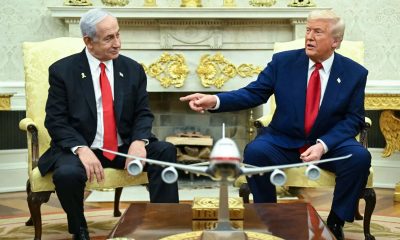
WASHINGTON: US President Donald Trump said Monday that he had Prime Minister Benjamin Netanyahu’s backing for a wide-ranging Gaza peace plan that would bring an immediate ceasefire.
The plan, which Trump has circulated to Arab leaders, was released after Trump met Netanyahu in Washington.
Trump told a press conference that Netanyahu had agreed to the plan, which calls for an immediate ceasefire, followed by disarmament of Hamas and Israeli withdrawal.
Hamas also has yet to give its approval but Trump said he was hopeful the militant group was in favor.
Trump said approval from all sides was “beyond very close.”
The 20 point plan states that on agreement by both sides, “the war will immediately end” with Israeli withdrawals timed to release of the last hostages held by Hamas. During that initial period, there would be a ceasefire.
Key points include deployment of a “temporary international stabilization force” and creation of a transitional authority headed by Trump.
The deal would demand Hamas militants fully disarm and be excluded from future roles in the government. However, those who agreed to “peaceful co-existence” would be given amnesty.
Following Israeli withdrawal, the borders would be opened to aid and investment.
READ ALSO:
- Typhoon Bualoi kills 11 in Vietnam
- Universities face shutdown as ASUU reissues strike ultimatum
- FG declares Oct. 1 public holiday
In a crucial change from Trump’s earlier apparent goals, Palestinians will not be forced to leave and instead, the document said, “we will encourage people to stay and offer them the opportunity to build a better Gaza.”
The US president had met key Arab leaders at the United Nations last week and said Sunday on social media that “ALL ARE ON BOARD FOR SOMETHING SPECIAL, FIRST TIME EVER.”
Netanyahu has recently given little reason for optimism, vowing in a defiant UN speech Friday to “finish the job” against Hamas and rejecting Palestinian statehood — recently recognized by several Western nations.
Normally a staunch ally of Netanyahu, the US president has shown increasing signs of frustration ahead of the Israeli premier’s fourth White House visit since Trump’s return to power.
Trump was infuriated by Israel’s recent strike on Hamas members in key US ally Qatar.
And he warned Netanyahu last week against annexing the Israeli-occupied West Bank, as some of Netanyahu’s cabinet members have urged, a move that would seriously complicate the route to Palestinian statehood.
Netanyahu’s coalition government is propped up by the far-right ministers who oppose a peace deal.
READ ALSO:
- Tinubu running Nigeria like family empire – Gov Adeleke aide
- Court stops UBA from releasing Osun LG funds to APC chairmen
- PENGASSAN enforces strike, shuts NNPC, NUPRC, NMDPRA offices
– Voices from Gaza –
Meanwhile, Israeli strikes continued across the Gaza Strip, killing at least four people in Khan Yunis, according to the Hamas-run territory’s civil defense agency.
Families of Israeli hostages held in Gaza urged Trump to uphold his Gaza proposal.
“We respectfully ask you to stand firm against any attempts to sabotage the deal you have brought forth,” the Hostages and Missing Families Forum said in an open letter to Trump.
In Gaza, people expressed a mix of hope, exhaustion and distrust ahead of the White House meeting.
“I don’t expect anything from Trump, because Trump supports Netanyahu in destroying the Gaza Strip and displacing people to carry out the Riviera project,” said Mohammed Abu Rabee, 34, referring to Trump’s earlier proposal to turn the Palestinian territory into the “Riviera of the Middle East.”
The outcome may hinge on how far Trump pushes Netanyahu, said Natan Sachs, a senior fellow at the Middle East Institute.
“Netanyahu has a clear preference for continuing the war and defeating Hamas, but I don’t think it’s impossible for Trump to convince him otherwise,” Sachs told AFP.
The Gaza war was triggered by Hamas’s October 7, 2023 attack that killed 1,219 people, mostly civilians, according to an AFP tally from Israeli official figures.
Israel’s offensive has killed 66,055 Palestinians, also mostly civilians, according to health ministry figures in the Hamas-run territory that the United Nations considers reliable.







International
Job Seeker Steals Bugatti CEO’s £2m Car After Finding Keys Inside

A man who reportedly visited the headquarters of luxury car manufacturer Bugatti in search of employment allegedly drove away in the company chief executive’s £2 million sports car after discovering that its keys had been left inside.
The incident involved Mate Rimac, the Croatian businessman and chief executive of Bugatti, whose personal Bugatti Chiron was stolen from the company’s production and technology campus near Zagreb, Croatia.
The suspect, a Croatian man in his mid-30s, reportedly entered the facility looking for a job before spotting the high-performance vehicle with its keys inside and driving away.
Rimac disclosed the incident in a series of posts on Instagram, explaining that he had routinely left the keys inside his vehicles because he considered Croatia a safe place.
He admitted that the habit had continued for years without any incident until the Chiron disappeared.
The theft was discovered after an employee alerted colleagues that an unfamiliar person had driven away in the expensive vehicle.
Rimac immediately contacted the police and used the car’s built-in tracking and telemetry system to monitor its movements.
The tracking technology provided information about the vehicle’s location, speed and fuel level, allowing the Bugatti team to follow its journey and share updates with law enforcement officers.
READ ALSO:
- Netanyahu Faces Political Setback as Israeli President Picks Rival to Form Government
- 2027: Tinubu Challenges Atiku to Explain How He Financed University
- Afenifere Crisis: ‘There Is Only One Afenifere’, Secretary Insists Amid Breakup Allegations
After discovering that the stolen vehicle was heading towards Slovenia, Rimac jumped into a Porsche 911 and pursued it.
The pursuit continued across borders, with the Chiron eventually reaching Austria. Rimac and his team maintained communication with the police through a group chat, providing updates that helped Austrian officers locate and intercept the vehicle.
The suspect was subsequently arrested in Austria, where Rimac later met him at a police station.
According to the Bugatti boss, the man explained that he had initially visited the company’s premises to seek employment but decided to take the car after noticing that its keys were inside.
Rimac said he was not planning to press charges against the suspect. However, he acknowledged that the man could still face prosecution because of the high value of the stolen vehicle.
The CEO also revealed that he had considered giving the suspect a lift home to his family but police officers did not allow him to do so.
The recovered Chiron sustained some damage during the incident, although Rimac said it could be repaired.
The businessman thanked the Austrian police for their intervention, saying he was relieved that nobody was injured during the incident.
He also admitted that the experience had taught him an expensive lesson, promising never again to leave the keys inside his vehicles.
The Bugatti Chiron, unveiled in 2016, is one of the world’s most powerful luxury hypercars. The model has a starting price of about €2.4 million, equivalent to approximately £2 million, and a manufacturer-limited top speed of 420 kilometres per hour.
Bugatti operates under Bugatti Rimac, a joint venture in which Rimac Group holds a majority stake.
The unusual theft has attracted international attention because of the vehicle’s value, the suspect’s reported reason for visiting the facility and the extraordinary cross-border pursuit involving the Bugatti chief executive.
Job Seeker Steals Bugatti CEO’s £2m Car After Finding Keys Inside
International
Netanyahu Faces Political Setback as Israeli President Picks Rival to Form Government
Netanyahu Faces Political Setback as Israeli President Picks Rival to Form Government
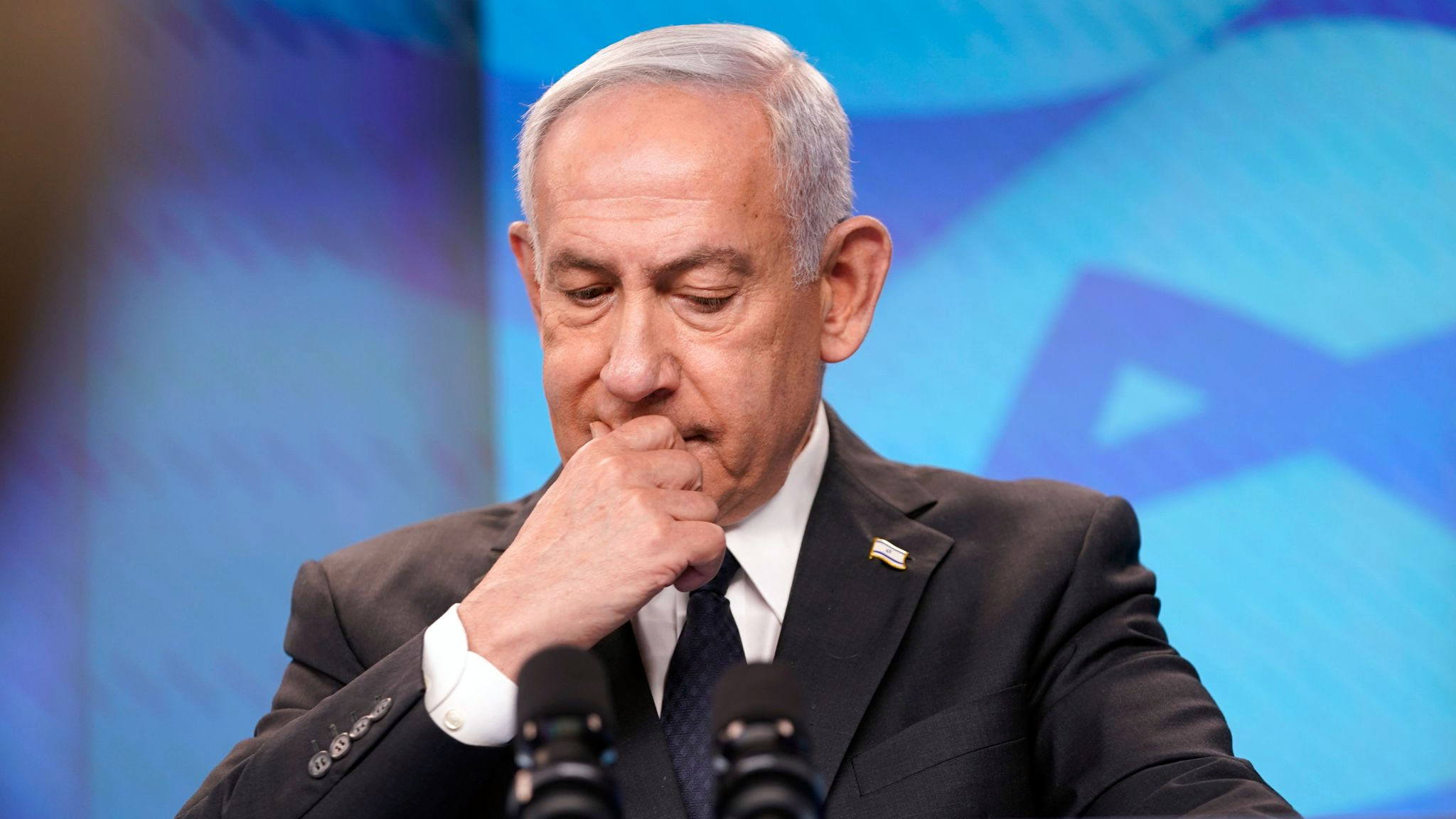
Israeli President Isaac Herzog has given opposition leader and former military chief Gadi Eisenkot the first opportunity to form the country’s next government, dealing Prime Minister Benjamin Netanyahu a major political setback after a closely contested general election.
Herzog announced his decision on Saturday, November 7, 2026, following consultations with political parties elected to the 26th Knesset, Israel’s parliament.
Eisenkot, leader of the Yashar party, emerged with the highest number of recommendations from lawmakers, receiving the backing of representatives from factions controlling 67 seats, compared with 46 seats for Netanyahu. Representatives of another faction controlling seven seats did not recommend either candidate.
The decision followed the October 27 general election, which left neither Netanyahu’s governing bloc nor the opposition grouping with the 61 seats required for a parliamentary majority in the 120-member Knesset.
Netanyahu’s religious-nationalist coalition secured 53 seats, while the four-party opposition alliance led by Eisenkot won 48. The two Arab-led parties made significant gains, securing a combined 19 seats, placing them in a potentially decisive position in negotiations over the next government.
Eisenkot is expected to receive the formal mandate from Herzog at a ceremony at the President’s Residence in Jerusalem on Sunday, November 8.
READ ALSO:
- 2027: Tinubu Challenges Atiku to Explain How He Financed University
- Afenifere Crisis: ‘There Is Only One Afenifere’, Secretary Insists Amid Breakup Allegations
- Illicit Donations: Adeboye Orders RCCG to Refund Billions Traced to Church Projects
Under the Israeli government-formation process, he will have 28 days to negotiate a coalition, with the possibility of a further 14-day extension.
The former military chief will face difficult negotiations because his opposition alliance does not have enough seats to govern independently. Although the Arab-led parties have endorsed him, Eisenkot has previously expressed reservations about forming a coalition with them.
One possible route is to establish a minority government with support from Arab-led lawmakers on confidence votes and key legislation. Another option would involve reaching an agreement with ultra-Orthodox parties that have traditionally aligned with Netanyahu.
However, both options could create tensions within Eisenkot’s own political alliance, particularly among members who oppose relying on Arab parties or making concessions to religious parties.
A broader national unity government involving Netanyahu’s Likud party is another possibility, although the two leaders have significant disagreements over key political and security issues.
Eisenkot has previously ruled out serving in a government alongside Netanyahu, while criticising the prime minister’s handling of the war in Gaza and his reliance on far-right political partners.
Netanyahu, Israel’s longest-serving prime minister, had sought to prevent an opposition-led government from emerging with the support of Arab-led parties.
Shortly before Herzog announced his decision, Netanyahu called for a national unity government and warned against the formation of an administration dependent on what he described as supporters of terrorism, referring to the Arab-led parties.
His comments drew criticism from Eisenkot’s political camp, which accused the prime minister of using divisive language to undermine the opposition’s efforts to form a government.
The Arab-led parties, which represent a significant section of Israel’s Palestinian citizens, have indicated their willingness to support efforts to end Netanyahu’s long tenure in office.
Their combined 19 seats could provide Eisenkot with the parliamentary backing needed to overcome the deadlock, although securing a workable arrangement remains uncertain.
Eisenkot, 66, served as chief of staff of the Israel Defence Forces from 2015 to 2019 before entering politics in 2022. He later served as an observer in Netanyahu’s wartime cabinet following the Hamas-led attacks on Israel on October 7, 2023.
He subsequently became one of Netanyahu’s most prominent critics, particularly over the conduct of the war in Gaza, the government’s security decisions and the influence of far-right politicians.
If Eisenkot fails to form a government within the stipulated period, Herzog may give another candidate the opportunity to try. If the process remains unsuccessful, Israel could be forced into another general election.
Netanyahu will remain prime minister in a caretaker capacity until a new government is sworn in.
Herzog’s decision therefore represents an important development in Israel’s political transition, but the final outcome will depend on whether Eisenkot can overcome divisions among opposition parties and secure sufficient parliamentary support.
Netanyahu Faces Political Setback as Israeli President Picks Rival to Form Government
International
White House Reaffirms US Policy Recognising Only Two Genders

The White House has reaffirmed the United States government’s policy recognising only two sexes, male and female, under President Donald Trump’s administration.
The administration restated its position in a message published on its official X account on Friday, November 6, 2026, declaring that the United States government officially recognises only two genders.
“It is the official policy of the United States government that there are only two genders: male & female,” the White House stated.
The latest declaration reinforces Trump’s position on gender identity and his administration’s efforts to make biological sex the basis for federal government policies, official documents and administrative procedures.
Trump formally established the policy on January 20, 2025, through an executive order titled Defending Women From Gender Ideology Extremism and Restoring Biological Truth to the Federal Government.
Under Section Two of the executive order, the President declared that it was the policy of the United States to recognise two sexes, male and female.
The directive defined sex as an individual’s unchangeable biological classification as either male or female, distinguishing it from gender identity.
READ ALSO:
- ‘Stop Blaming Us’, APC Tells Atiku, ADC Over Court Judgment
- Atiku to Tinubu: You Cannot Use Courts to Escape Nigerians’ Verdict
- University Funding Crisis: States Beg FG to Take Over Cash-Strapped Institutions
It also instructed federal agencies to adopt the definitions when interpreting and implementing federal laws, regulations and government policies.
Among other measures, the executive order directed government agencies to review and remove official statements, policies, regulations and communications considered inconsistent with the administration’s position.
It further required federal agencies to ensure that official forms requesting information about an individual’s sex provided only male and female options.
The policy marked a significant departure from measures introduced under former President Joe Biden, whose administration expanded federal recognition of gender identity in several areas of government operations.
In 2022, the Biden administration introduced an X gender marker option on US passports, allowing applicants who did not identify as male or female to select the alternative designation.
Trump’s executive order sought to reverse such measures and restore biological sex as the basis for federal government recognition.
The administration has maintained that the policy is intended to protect sex-based rights and ensure consistency in the interpretation of federal laws.
However, the policy has generated considerable debate over transgender rights, gender identity, discrimination and the legal recognition of transgender and non-binary people in the United States.
The White House’s latest declaration did not announce a new executive order or additional regulatory measures but reaffirmed the administration’s existing position on an issue that continues to attract political, legal and social debate.
White House Reaffirms US Policy Recognising Only Two Genders
-

 Sports2 days ago
BREAKING: Flamingos Make History, Defeat Japan 2–1 to Win First FIFA U-17 Women’s World Cup
-

 Entertainment3 days ago
Mohbad: Court-Supervised DNA Samples Collected From Singer’s Remains, Son Liam
-
 News2 days ago
Power Outage: Tegbe Gives Nigerians 72-Hour Timeline as FG Moves to Restore Electricity
-
 International3 days ago
US Offers $20m Reward, Relocation for Information on Iran’s Nuclear Programme
-

 Africa3 days ago
Shakahola Massacre: Kenyan Court Jails Doomsday Pastor 200 Years Over 191 Deaths
-

 Politics3 days ago
‘Stop Blaming Us’, APC Tells Atiku, ADC Over Court Judgment
-

 Entertainment3 days ago
Nasarawa Murder: Two Arrested as Police Recover Burnt Body from Dry Well
-
 Politics3 days ago
Atiku to Tinubu: You Cannot Use Courts to Escape Nigerians’ Verdict