

Africa
Anti-Immigrant Protest in South Africa Targets Nigerians, Others
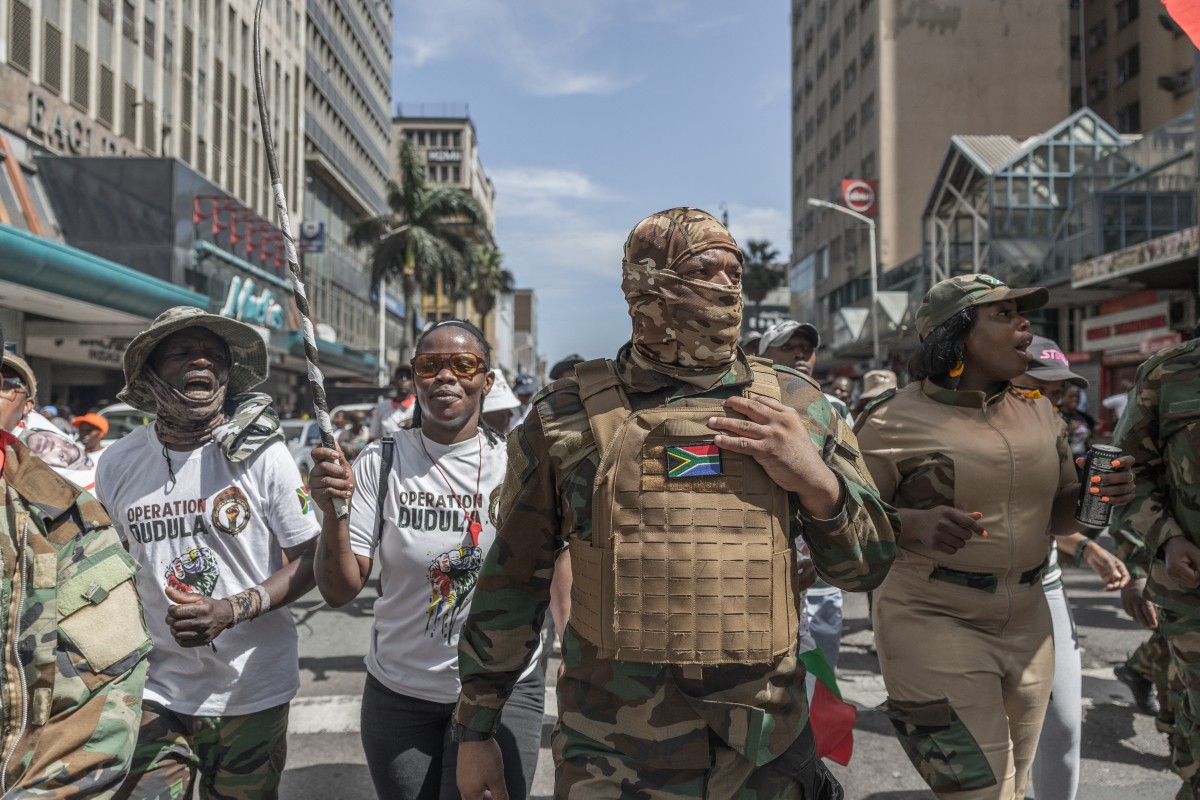
Anti-Immigrant Protest in South Africa Targets Nigerians, Others
Durban, South Africa – Hundreds of demonstrators took to the streets of Durban yesterday as the controversial civic group March and March led an anti-immigrant protest, demanding stricter immigration laws and tighter border controls. The protest specifically targeted Nigerians and other foreign nationals, amid claims that undocumented immigrants are taking jobs, straining public services, and contributing to rising crime.
Joining the march were members of the political party ActionSA and the vigilante anti-migrant group Operation Dudula, who called for the mass deportation of undocumented foreign nationals. The protest marked the first anniversary of March and March raising immigration issues in public forums.
March and March leader Jacinta Ngobese-Zuma stoked tensions with rhetoric widely condemned as xenophobic, questioning why undocumented foreigners are allowed access to public facilities such as healthcare. “If you are saying you can’t refuse them healthcare, then why must it be public? Make them pay for their own healthcare if they want to be here in the country milking our resources,” she said.
READ ALSO:
- Iran Rejects US 15-Point Peace Plan, Issues Own Demands for War End
- Nigeria Liberalises Forex Market as CBN Ends Repatriation Limits for Oil Firms
- Fuel Marketers Warn Rising Petrol Prices Worsening Nigeria’s Cost-of-Living Crisis
ActionSA leader Herman Mashaba defended his party’s participation, arguing that the government has been too slow to enforce immigration laws. “We are seeing our government allowing our country to be flooded by groups from all over the world — Pakistan, Bangladesh, Nigeria, Mexico, all over the world. So, we are saying to our government this is unacceptable,” Mashaba said.
Protesters, including local resident Muzi Xaba, claimed that undocumented immigrants are taking jobs from South Africans. “Our duty is to deal with labour as well as civil matters. We must remove foreigners and then hire South Africans,” he said. Anti-migrant activists also blamed foreign nationals for increasing crime and weakening local communities, fueling ongoing tensions in South Africa.
Police in Durban deployed additional personnel to maintain order and prevent clashes, using rubber bullets and teargas in some areas to disperse the crowd. Authorities warned that further unrest could escalate into violence or property damage.
The Nigerians in Diaspora Commission (NiDCOM) advised Nigerians in South Africa to avoid protest areas and shelter in place for safety. Officials stated they were not aware of targeted attacks but urged vigilance amid rising anti-immigrant sentiment. Efforts to reach the Ministry of Foreign Affairs for comment were unsuccessful.
South Africa has a long history of anti-immigrant sentiment, particularly against Nigerians, Zimbabweans, and Somalis. Analysts warn that protests such as these could exacerbate xenophobic tensions, disrupt communities, and strain diplomatic relations if not addressed through dialogue and legal enforcement.
Anti-Immigrant Protest in South Africa Targets Nigerians, Others






Africa
DR Congo Sentences 66 Soldiers to Death for Cowardice, Mutiny
DR Congo Sentences 66 Soldiers to Death for Cowardice, Mutiny
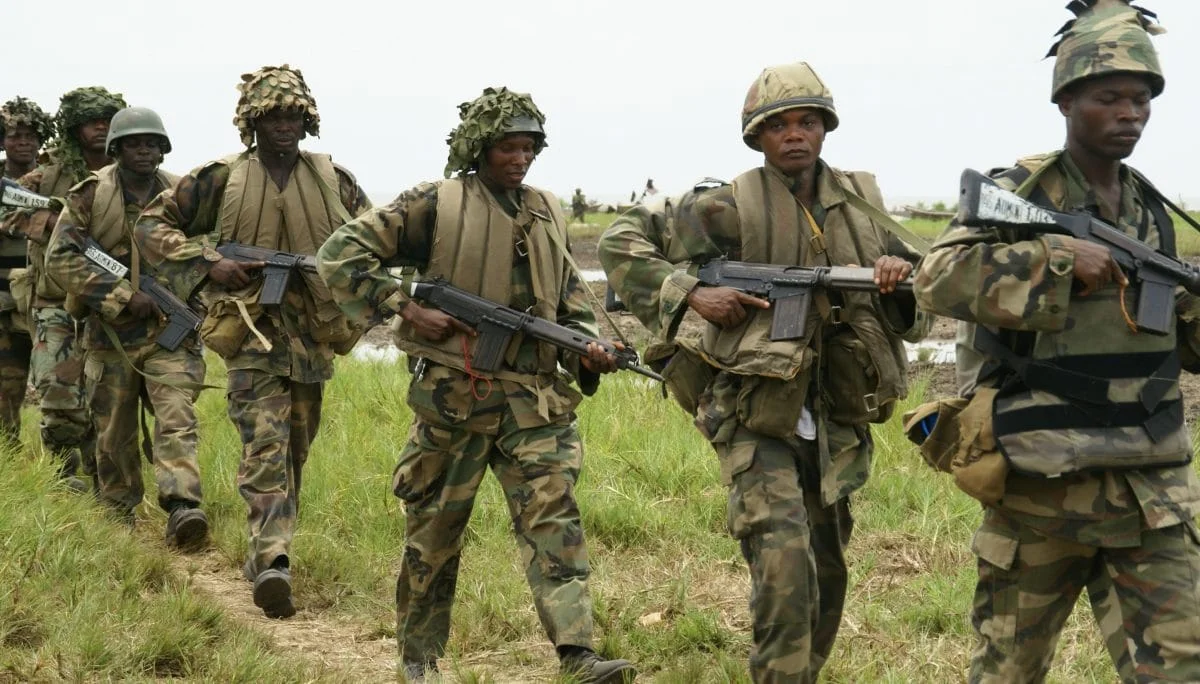
A military court in the Democratic Republic of Congo (DR Congo) has sentenced 66 soldiers to death after finding them guilty of cowardice, mutiny and disobeying orders during military operations against rebel groups in the country’s conflict-ridden eastern region.
The soldiers were convicted by the Goma Garrison Military Court, which conducted the trial in Walikale territory, North Kivu Province, following accusations that they abandoned their positions and fled during clashes with rebel fighters.
The trial involved 71 members of the Congolese armed forces, including troops from the army’s 3415th Regiment, who were arrested on October 20 over alleged offences committed in the area.
According to reports by local media, the proceedings lasted approximately 12 days, with prosecutors seeking the death penalty for 70 defendants while requesting a 10-year prison sentence for an intelligence officer.
At the conclusion of the trial, the court sentenced 66 soldiers to death, acquitted four others and handed a 10-year prison sentence to another defendant.
The charges included mutiny, failure to obey orders and cowardice in the face of the enemy.
The military authorities said the trial was partly intended to strengthen discipline within the armed forces as government troops continue to battle armed groups in eastern DR Congo.
READ ALSO:
- Lookman’s Atletico Future Under Question After Simeone Leaves Him Out Against Barcelona
- UK Councillor Gets 150 Hours Community Service Over ‘Melt Nigerians’ Post
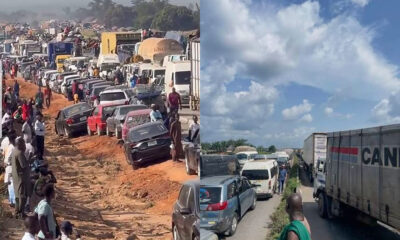
- Three Broken-Down Trucks Paralyse Abuja-Kaduna Highway, Travellers Spend Eight Hours in Gridlock
Major Dieudonne Kasereka, the army’s communications chief in the affected region, said the prosecution was necessary to reinforce discipline among soldiers operating in North Kivu and South Kivu.
Eastern DR Congo has experienced decades of armed conflict involving government forces and several rebel organisations, including the March 23 Movement (M23), which operates as part of the broader Alliance Fleuve Congo/Front for the Refoundation of the Nation (AFC/FRN) coalition.
The latest convictions come amid renewed fighting in the mineral-rich region, where government troops have struggled to contain rebel advances.
The military has faced persistent challenges, including desertions, poor organisation, inadequate equipment and complaints by soldiers over poor pay and working conditions.
The latest death sentences also follow a similar military court ruling in October, when 27 Congolese soldiers were sentenced to death for cowardice after allegedly withdrawing from frontline positions during clashes with AFC/M23 rebels.
DR Congo lifted a moratorium on executions in March 2024, ending a suspension that had lasted for more than two decades.
The government defended the decision as part of efforts to tackle treason and other serious offences within the armed forces, particularly amid the security crisis in the country’s east.
However, the resumption of death sentences has attracted criticism from international human rights organisations.
Amnesty International has repeatedly warned that military trials in the country raise serious concerns about fair-trial standards and the growing use of capital punishment.
The organisation has called on Congolese authorities to halt plans to resume executions and work towards abolishing the death penalty.
Although dozens of soldiers have received death sentences since the government lifted the moratorium, no executions have been officially reported since the decision.
The latest convictions therefore represent death sentences handed down by the military court, not confirmation that the soldiers have been executed.
DR Congo Sentences 66 Soldiers to Death for Cowardice, Mutiny
Africa
“This Is Not A Church”: Passengers Challenge Pastor Preaching Inside Moving Bus

“This Is Not A Church”: Passengers Challenge Pastor Preaching Inside Moving Bus
ACCRA, Ghana – A disagreement reportedly broke out inside a moving commercial bus after a pastor attempting to preach to passengers was confronted by commuters who demanded that he stop the sermon and return to his seat.
The incident, captured in a video circulating on social media, showed passengers expressing displeasure over the preacher’s decision to turn their journey into an impromptu religious gathering.
The pastor, who had reportedly stood up to address commuters while the vehicle was in motion, encountered resistance from passengers who insisted that they had not consented to participate in a religious service.
The disagreement reportedly escalated into a heated exchange, with some commuters making it clear that they wanted to enjoy their journey without being subjected to unsolicited preaching.
One of the arguments raised by passengers was the need to respect people’s personal space and freedom to decide when and where they wish to participate in religious activities.
The incident has since generated conversations about the growing practice of religious preaching inside commercial vehicles, particularly in Ghana, where pastors and other religious evangelists sometimes use public transport as an opportunity to reach commuters.
While some people consider such encounters an opportunity to spread the gospel, others believe passengers should not be compelled to listen to religious messages while travelling.
Critics of the practice argue that boarding a commercial vehicle does not automatically amount to consenting to a religious gathering. They also maintain that passengers deserve a peaceful journey without unwanted interruptions.
However, supporters of public evangelism insist that preaching outside conventional places of worship remains one way of reaching people who might otherwise never attend church services.
The latest confrontation has reignited debate over the limits of religious expression in shared public spaces and whether commuters should have the right to reject unsolicited preaching.
As reactions continue to trail the footage, the incident has raised a broader question: Should pastors be allowed to preach inside commercial vehicles without the consent of passengers?
“This Is Not A Church”: Passengers Challenge Pastor Preaching Inside Moving Bus
Africa
Shakahola Massacre: Kenyan Court Jails Doomsday Pastor 200 Years Over 191 Deaths
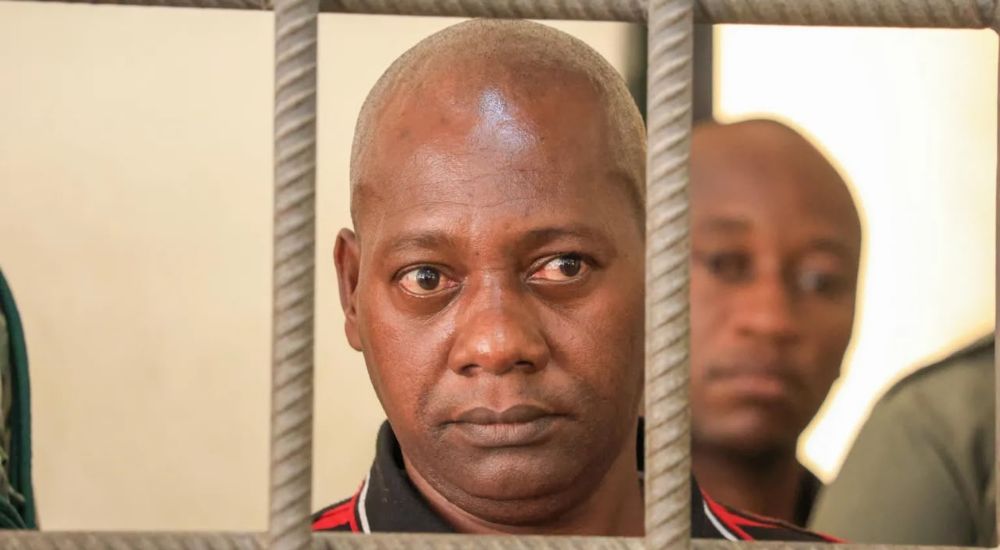
A Kenyan High Court has sentenced controversial preacher Paul Nthenge Mackenzie to 200 years in prison for his role in the deaths of 191 people, including 190 children, in one of the country’s deadliest religious cult tragedies.
The sentence was handed down on Friday, November 6, 2026, by Justice Diana Kavedza of the High Court in Mombasa, following Mackenzie’s conviction for orchestrating the deaths of his followers through starvation and direct killings.
Mackenzie, the leader of the Good News International Church, was found guilty of directing followers to starve themselves and their children to death in the belief that doing so would enable them to meet Jesus before the end of the world.
The court held that Mackenzie bore primary criminal responsibility for the deaths, having allegedly relocated his followers to the remote Shakahola settlement in Kilifi County, where he established and enforced an extreme fasting programme.
According to the judgment, the 200-year prison sentence comprises two separate 100-year terms: one for murder by starvation and another for murder through direct homicide. The court ordered the sentences to run consecutively.
Of the 191 victims covered by the murder trial, 183 died from starvation, including 182 children and one adult, while eight other children were killed through direct violence, including suffocation, strangulation and blunt-force injuries.
Justice Kavedza described the killings as calculated and rejected Mackenzie’s defence that his followers had voluntarily chosen to fast.
The court found that the victims were subjected to an organised system of religious indoctrination and coercion, with children among the first to be targeted.
The judge also highlighted the treatment of children who resisted the fasting instructions, noting that some were reportedly restrained, locked up and beaten when they attempted to eat or drink.
In one particularly disturbing finding, the court heard that a baby survived for only 12 days after birth after being denied its mother’s milk and left to die.
Mackenzie was not the only person convicted in connection with the tragedy. Twenty-eight other defendants were found guilty alongside him and handed lengthy prison sentences for their respective roles in the killings.
READ ALSO:
- Nasarawa Murder: Two Arrested as Police Recover Burnt Body from Dry Well
- Kunle Afod Breaks Silence on Marriage Crisis, Cheating Allegations, Sex Toys
- NDLEA Arraigns Two Mexicans, Four Nigerians Over Secret Meth Lab in Oyo Forest
His assistant pastor and deputy, Smart Deri Mwakalama, received 160 years in prison.
According to the sentencing breakdown, 14 other convicts also received 160-year prison terms, while 10 were sentenced to 140 years each. Michael Mweri Baya received 100 years, while Enos Amanya Ngala and Pastor Lucas Owino Ogola were sentenced to 10 years each.
The court considered the individual roles played by the defendants, the gravity of their offences and the vulnerability of the victims when determining their sentences.
The prosecution had sought the death penalty for Mackenzie and life imprisonment for his accomplices. However, his lawyer, Lawrence Obonyo, announced plans to appeal, arguing that the lengthy sentences effectively amounted to life imprisonment.
The tragedy, popularly known as the Shakahola massacre, came to international attention in April 2023 after Kenyan authorities began uncovering mass graves in Shakahola Forest, near Malindi in coastal Kilifi County.
Investigations revealed that Mackenzie had allegedly persuaded followers to abandon conventional lifestyles, relocate to the remote forest and observe extreme fasting as a means of attaining salvation.
Some members reportedly abandoned their homes and moved into the forest, where they lived in makeshift structures and followed the preacher’s instructions.
The court established that the fasting programme was enforced through a structured hierarchy. Guards allegedly prevented followers from escaping, while those who resisted were beaten, restrained or confined.
Children were reportedly instructed to fast first, followed by young people, women and men.
Investigators recovered hundreds of bodies from shallow graves and other locations across the settlement. Some victims were reportedly buried alive, while others died from starvation or physical violence.
The prosecution relied on extensive forensic and medical evidence, DNA analysis, digital recordings, physical exhibits and witness testimonies to establish the circumstances surrounding the deaths.
The trial reportedly involved 120 prosecution witnesses and nine defence witnesses, with the court also considering post-mortem examinations and eyewitness accounts.
Although 191 deaths formed the basis of the murder trial, the wider Shakahola investigation uncovered a much larger tragedy.
Authorities recovered 448 bodies from the forest, according to Reuters, while other official records have cited different figures as investigations and identification exercises progressed.
More than 60 bodies were reportedly identified and handed over to relatives for burial, while many others remained unidentified.
Mackenzie is also facing separate allegations involving another 52 deaths discovered at a different location, approximately 30 kilometres from Shakahola Forest. That matter is being handled separately, and the allegations should not be confused with the 191 deaths covered by the latest judgment.
The discovery of the mass graves triggered widespread outrage in Kenya and raised serious questions about the failure of security and government institutions to prevent the tragedy.
Mackenzie had reportedly come under the attention of law enforcement agencies as far back as 2017 over allegations of radicalisation. His church was shut down in 2019, but he subsequently relocated his activities to Shakahola.
Following the discovery of the graves in 2023, Kenyan President William Ruto acknowledged the government’s failure to prevent the deaths and called for stronger measures against religious extremism.
The sentencing has renewed calls for tighter oversight of religious organisations and improved protection for vulnerable people, particularly children.
For families who lost relatives, however, the lengthy prison terms cannot undo the devastating consequences of the tragedy.
The case has become a landmark development in Kenya’s efforts to prosecute religious extremism and prevent religious teachings from being used to justify violence, coercion and mass killings.
Shakahola Massacre: Kenyan Court Jails Doomsday Pastor 200 Years Over 191 Deaths
-

 metro2 days ago
Fayose Petitions IGP, Threatens Lawsuit Over Rape, Torture Allegations
-

 Auto3 days ago
Four-day Abuja International Motor Fair begins tomorrow Nov 10
-

 Politics2 days ago
ADC Raises Alarm as Court Delays Release of Lifu’s Judgment Despite Payment
-

 metro2 days ago
‘Miracle’ Turns Sour as Visiting Pastor Vanishes with Congregants’ Phones During Crusade in Edo
-
 News2 days ago
Despite Tegbe’s 72-Hour Promise, Nigerians Still Battle Power Outages
-

 Railway3 days ago
Tinubu Targets December 3 Inauguration for Kaduna-Kano Rail Project as Construction Hits 90%
-
 metro2 days ago
Three Broken-Down Trucks Paralyse Abuja-Kaduna Highway, Travellers Spend Eight Hours in Gridlock
-

 News3 days ago
Ex-CSU Lecturer Reopens Tinubu’s Certificate Controversy, Says President Never Attended University