

International
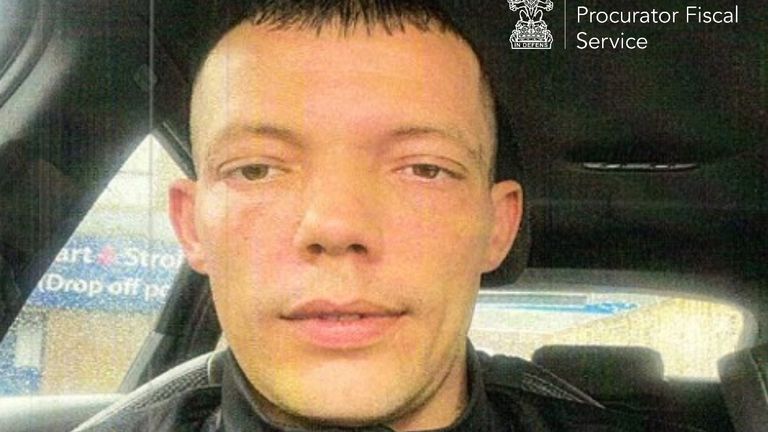
Taxi Driver Jailed Seven Years for Raping Passenger
Taxi Driver Jailed Seven Years for Raping Passenger
A Glasgow taxi driver has been sentenced to seven years in prison after being found guilty of raping and sexually assaulting a vulnerable passenger he picked up following a night out. The case has renewed concerns over passenger safety and the responsibilities of taxi operators.
Thomas Tosh, 39, attacked a 23-year-old woman at his home in Drumchapel after picking her and her friends from a pub in Clydebank, West Dunbartonshire, in the early hours of 30 September 2023. At the time, the victim was intoxicated and unable to give consent.
Prosecutors revealed that Tosh logged out of the taxi’s GPS system after dropping the other passengers, deliberately concealing his actions. He then drove the woman to his home, committed the assault, and only two hours later resumed normal taxi operations, dropping her at her residence.
READ ALSO:
- Yemi Osinbajo Appointed Senior Strategic Adviser to Africa CDC
- Veteran Nollywood Actor Davis Ofor ‘Clarus’ of New Masquerade Dies at 85
- Harry Maguire Signs New Manchester United Deal Until 2027
Tosh was identified after a friend of the victim showed her a photo of him on social media. Evidence including DNA, text messages, and witness statements helped secure his conviction in February at the High Court in Glasgow.
During sentencing, Tosh was also placed on the sex offenders register indefinitely and issued a 10-year non-contact order with his victim. Faye Cook, Procurator Fiscal for High Court Sexual Offences, described the attack as a “despicable betrayal of trust” and praised the victim for her courage throughout the prosecution.
The case has drawn attention to the need for enhanced safety measures in taxis, including strict GPS monitoring, driver vetting, and passenger awareness campaigns, to prevent similar attacks in the future.
Taxi Driver Jailed Seven Years for Raping Passenger













International
Panama Earthquake: 27 Injured as Powerful 7.7-Magnitude Tremor Damages Hundreds of Buildings

A powerful 7.7-magnitude earthquake has struck Panama, injuring at least 27 people, damaging hundreds of buildings and infrastructure, and forcing evacuations in several parts of the Central American country.
The earthquake, which struck on Friday, October 9, 2026, was centred near Pitaloza Arriba in Herrera Province, according to the United States Geological Survey (USGS). The agency initially estimated the magnitude at 8.0 before revising it to 7.7.
Panama’s National Civil Protection System reported that at least 27 people sustained minor injuries. Authorities had not reported any deaths or missing persons in the latest updates available on Saturday.
The disaster damaged more than 400 buildings and other structures, including residential properties, schools, healthcare facilities, churches, government buildings, hotels, bridges and roads, according to reports citing Panamanian authorities.
The provinces of Coclé, Herrera and Los Santos were among the hardest-hit areas, with emergency teams assessing the damage and working to reach communities affected by damaged roads, bridges and landslides.
In Penonomé, parts of buildings reportedly collapsed, including a tower of the San Juan Bautista Cathedral and sections of the provincial government building. A hotel was also reported to have collapsed, while falling debris damaged vehicles.
READ ALSO:
- EFCC Wins ₦132m Money Laundering Case as Court Orders Forfeiture of Lagos Properties
- Hardship: ACF Gives Tinubu Three Months to Deliver Relief, Demands Clear Timelines
- Adamawa Mourns as Fufore Loses Second Council Chairman in 18 Months
Authorities reported damage to 142 homes and 188 schools, alongside other public and private infrastructure. The full extent of the damage was still being assessed, meaning the figures could change as more inspections were completed.
The coastal town of Tonosí, in Los Santos Province, was among the communities experiencing access difficulties. Health Minister Fernando Boyd said officials were exploring ways to reach affected areas by air where damaged roads made land access difficult.
The earthquake was also strongly felt in Panama City, approximately 200 kilometres from the epicentre. Residents and office workers rushed out of high-rise buildings as the tremor shook the capital, while hospitals and other facilities carried out precautionary evacuations.
Operations at Tocumen International Airport were temporarily disrupted, with some flights reportedly diverted as a precaution. Airport operations later resumed, while the Panama Canal continued operating without reported disruption to shipping.
A tsunami warning was issued for parts of the eastern Pacific following the earthquake but was subsequently lifted. Authorities continued monitoring the situation for aftershocks, with Panama’s geosciences institute reporting more than 80 tremors, including one exceeding magnitude 6.0.
President José Raúl Mulino travelled to Penonomé to coordinate the government’s response and urged residents to remain calm while emergency teams assessed the affected areas.
The country’s Education Ministry also announced the suspension of classes nationwide as a precautionary measure.
The United States offered assistance, with Secretary of State Marco Rubio saying Washington was monitoring the situation and mobilising resources and personnel at the request of the Panamanian government. Leaders in Colombia, Ecuador and Guatemala also expressed solidarity and offered support.
Despite the extensive damage and widespread evacuations, no fatalities had been confirmed in the latest official updates available on Saturday. Emergency workers continued inspecting buildings, assessing infrastructure and determining the needs of affected communities.
Authorities were expected to provide further updates as damage assessments progressed and more information became available about the earthquake’s impact.
Panama Earthquake: 27 Injured as Powerful 7.7-Magnitude Tremor Damages Hundreds of Buildings
International
Anti-Apartheid Lawyer Navi Pillay Wins 2026 Nobel Peace Prize After Gaza Genocide Findings
Anti-Apartheid Lawyer Navi Pillay Wins 2026 Nobel Peace Prize After Gaza Genocide Findings
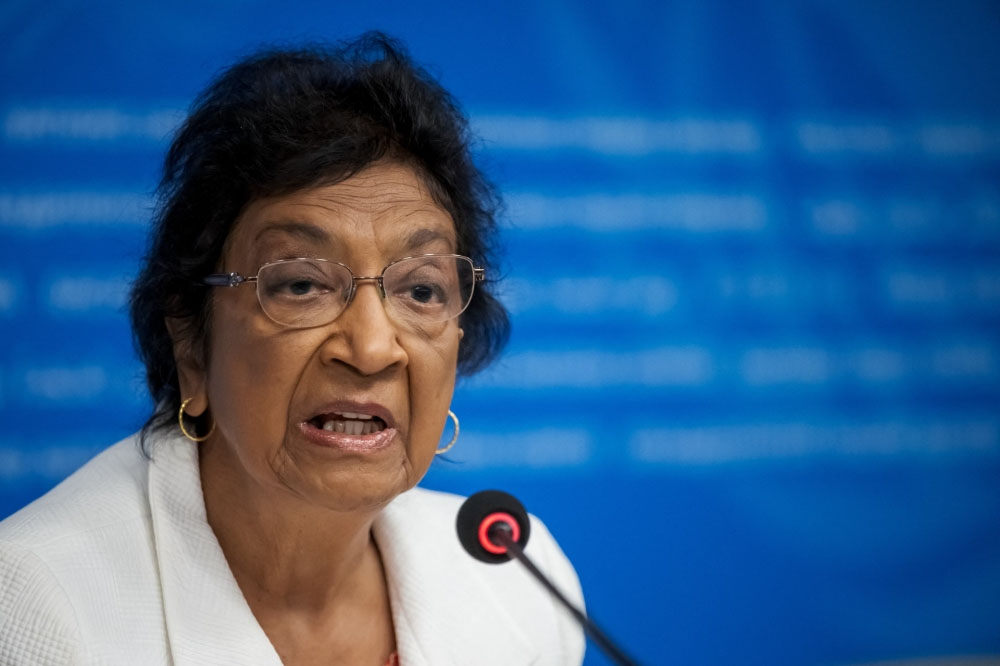
South African jurist and human rights advocate Navi Pillay, who fought apartheid and led a United Nations inquiry that concluded Israel had committed genocide in Gaza, has won the 2026 Nobel Peace Prize for her efforts to promote peace and international law.
The Norwegian Nobel Committee announced the award on Friday, October 9, recognising Pillay’s decades-long work to strengthen international justice and ensure accountability for war crimes, crimes against humanity and genocide.
Pillay, 85, is a former United Nations High Commissioner for Human Rights and a former judge of the International Criminal Court (ICC). She also served as a judge and president of the International Criminal Tribunal for Rwanda, which prosecuted those responsible for crimes committed during the 1994 genocide.
The Nobel Committee praised her courage, integrity and contribution to developing a stronger international legal order at a time when institutions responsible for upholding international law face increasing political pressure.
Born into a family of Indian Tamil descent in Durban, South Africa, during the apartheid era, Pillay built her legal career challenging racial discrimination and defending political activists. Her early work included defending anti-apartheid figures, including Nelson Mandela and others who opposed the system of racial segregation.
She later became one of South Africa’s pioneering female jurists, serving on the country’s High Court after apartheid ended.
Pillay’s international career included serving as a judge at the International Criminal Tribunal for Rwanda from 1999 to 2003, where she contributed to landmark developments in international criminal law, particularly the recognition of rape and sexual violence as potential crimes against humanity and acts of genocide.
READ ALSO:
- [UPDATED] Lagos Train Crash: 55-Year-Old Motorist Survives as Honda Car Is Wrecked at PWD Crossing
- How Parents Raised Millions to Free 20 Abducted NYSC Members
- Lasaco Assurance Retains A(NG) Rating as Revenue Rises 35.2% to N30.8bn
She subsequently served as a judge at the ICC and as the United Nations High Commissioner for Human Rights from 2008 to 2014.
More recently, Pillay chaired the UN Independent International Commission of Inquiry on the Occupied Palestinian Territory, which published findings in 2025 concluding that Israel had committed genocide against Palestinians in Gaza. The Israeli government strongly rejected the report and its conclusions.
Pillay has continued to defend the importance of accountability under international law. She has also stressed the need to address violations committed by all parties to conflicts, including crimes attributed to Hamas during its October 7, 2023, attack on Israel.
Reacting to the Nobel announcement, Pillay reiterated her position on Gaza, saying the situation amounted to genocide. Her comments came amid continuing international debate over the conflict and the legal responsibilities of the parties involved.
The Nobel Committee’s decision recognises Pillay’s broader career and does not itself constitute a judicial ruling on whether genocide has occurred in Gaza. The committee cited her contribution to international law and the prosecution of serious international crimes as central reasons for the award.
Pillay is also serving as an ad hoc judge at the International Court of Justice in the genocide case brought by The Gambia against Myanmar over the treatment of the Rohingya.
Her award makes her the fifth South African to receive the Nobel Peace Prize, following Albert Luthuli, Desmond Tutu, Nelson Mandela and former president FW de Klerk.
South African President Cyril Ramaphosa welcomed the announcement, describing the honour as recognition of Pillay’s courage, integrity and lifelong commitment to justice and human dignity.
The 2026 award comes as international legal institutions face mounting scrutiny and political pressure over their efforts to investigate alleged war crimes and hold individuals and governments accountable.
By recognising Pillay, the Nobel Committee has placed renewed emphasis on the role of international law, independent courts and human rights protections in efforts to prevent violence and build lasting peace.
Anti-Apartheid Lawyer Navi Pillay Wins 2026 Nobel Peace Prize After Gaza Genocide Findings
International
UK Navy Sailor Charged Over Alleged Plot to Leak Intelligence to Russia

UK Navy Sailor Charged Over Alleged Plot to Leak Intelligence to Russia
A 24-year-old British Royal Navy sailor has been charged with national security offences over an alleged plot to obtain sensitive military intelligence and pass protected information to Russia, raising fresh concerns about the security of classified defence information.
The suspect, Teddy Young, appeared before Westminster Magistrates’ Court in London on Thursday, October 8, where the allegations against him were outlined.
According to British authorities, Young faces two charges under the National Security Act 2023 relating to the alleged retention of protected information and preparations to disclose sensitive material for the benefit of a foreign power.
The Crown Prosecution Service (CPS) alleged that Young accessed and retained sensitive United Kingdom defence and intelligence information while serving as a Royal Navy warfare intelligence rating with high-level security clearance and access to intelligence systems.
Prosecutors said the alleged offences occurred between November 2024 and May 2025, during his first deployment, which began on November 4, 2024.
The allegations include obtaining, copying, recording or retaining protected information with the intention of benefiting a foreign power, as well as engaging in conduct in preparation for disclosing the material.
READ ALSO:
- How Parents Raised Millions to Free 20 Abducted NYSC Members
- Lasaco Assurance Retains A(NG) Rating as Revenue Rises 35.2% to N30.8bn
- Man Allegedly Caught Using Old Tyres to Scam POS Operator
Although the charges identify an unnamed foreign power, British media reports have identified Russia as the country Young allegedly sought to assist.
Investigators reportedly suspect that Young used the dark web to explore ways of contacting Russian authorities. He is also alleged to have drafted a message in Russian intended to establish contact with a potential recipient of the sensitive information.
Reports further alleged that he copied information to a private email account, in breach of Navy rules.
Young joined the Royal Navy in April 2024 and was serving in a warfare intelligence role when the alleged offences took place.
He was first arrested on May 21, 2025, and subsequently released on bail while investigations continued. His security clearance was suspended, and he was removed from his duties.
Counterterrorism police arrested him again at his home in Bedfordshire on Tuesday, October 6, 2026, before charging him with the offences.
During Thursday’s brief court hearing, Young was not asked to enter a plea because the seriousness of the charges meant the case could not be dealt with at the magistrates’ court.
District Judge Annabel Pilling ordered that he remain in custody pending his next appearance at the Central Criminal Court, commonly known as the Old Bailey, on October 16.
The Royal Navy confirmed that a serving member had been charged following an investigation by Counter Terrorism Policing London.
The Navy declined to comment further, citing the ongoing legal proceedings.
British authorities also stressed that the investigation was separate from a recent security incident involving suspicious vehicles near RAF Fairford, a military airbase in Gloucestershire.
The case comes amid continuing concerns among Western governments about espionage, the protection of sensitive military information and attempts by foreign powers to obtain intelligence relating to national security.
However, the allegations against Young remain unproven, and any determination of his criminal responsibility will be made through the judicial process.
UK Navy Sailor Charged Over Alleged Plot to Leak Intelligence to Russia
-
 metro3 days ago
[UPDATED] 20 NYSC Prospective Corps Members Freed After Seven Days in Captivity
-
 metro3 days ago
EFCC Re-Arraigns Two Over Alleged £110,000 Money Laundering, ₦500m Fraud
-

 Africa2 days ago
FBI Raids Ghana Scam Centre, Detains Over 130 in $10m Fraud Probe
-
metro2 days ago
How Parents Raised Millions to Free 20 Abducted NYSC Members
-

 News3 days ago
World Bank Raises Nigeria Growth Forecast, Demands More Jobs, Poverty Reduction
-

 Sports3 days ago
Ronaldo Pays Emotional Tribute to Messi After Argentina Farewell
-

 metro2 days ago
[UPDATED] Lagos Train Crash: 55-Year-Old Motorist Survives as Honda Car Is Wrecked at PWD Crossing
-

 metro3 days ago
NAF Crash: NYSC-Bound Graduate, Only Son, Among 25 Victims