

Politics
2027: Mass Defections Hit PDP and NNPP as Lawmakers Join APC, ADC
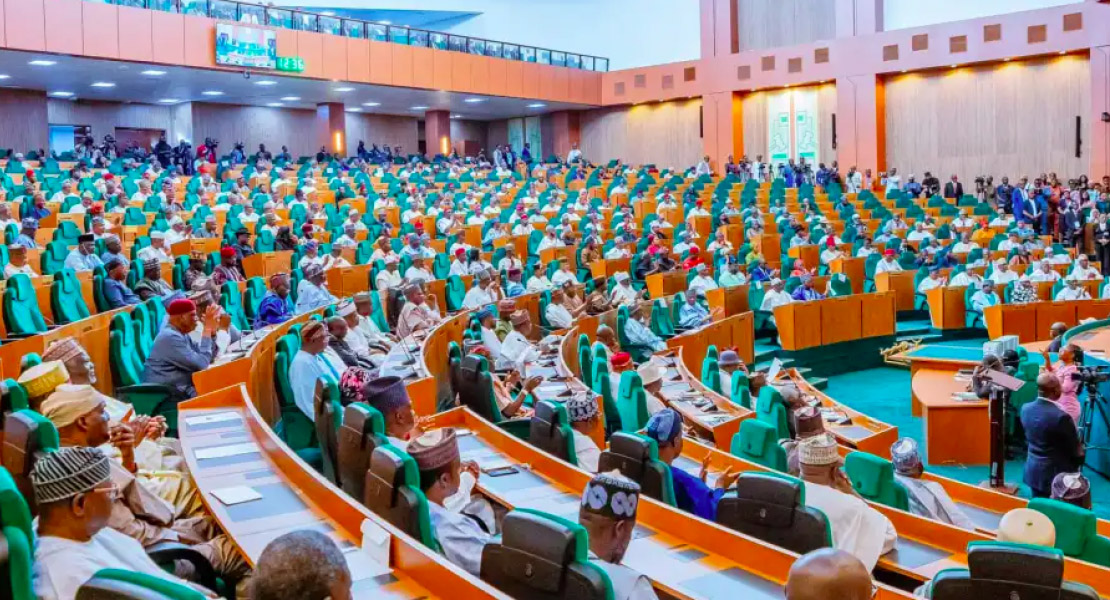
2027: Mass Defections Hit PDP and NNPP as Lawmakers Join APC, ADC
The wave of defections ahead of the 2027 general elections has intensified in the House of Representatives, as six lawmakers elected on the platforms of the New Nigeria Peoples Party and the Peoples Democratic Party officially dumped their parties for the ruling All Progressives Congress and the African Democratic Congress.
The latest realignment, announced during plenary presided over by Speaker Tajudeen Abbas, comes less than 24 hours after a similar political shift in the chamber, underscoring rising instability and shifting loyalties within Nigeria’s lower legislative house.
NNPP Lawmakers Dump Party for ADC
Four lawmakers from Kano State elected on the NNPP platform announced their defection to the ADC, citing internal leadership disputes and prolonged factional crises within the party.
Leading the group, Adamu Wakili, representing Minjibir/Ungogo Federal Constituency, said his decision was driven by “persistent leadership crisis in the NNPP resulting in internal divisions,” adding that he needed a platform that guarantees inclusion and stability.
Other defectors include Umar Zakari, Umar Datti, and Abdulhakeem Ado, all from Kano State. The lawmakers said unresolved disputes at both state and national levels of the NNPP had made their continued membership untenable.
Their move further boosts the ADC’s growing presence in the National Assembly, especially as the party continues to absorb dissatisfied politicians from smaller opposition blocs.
READ ALSO:
- Supreme Court Reserves Judgment in ADC Leadership Dispute
- Tinubu Approves Fresh Education Appointments
- NAFDAC Launches Special Task Force in Kano to Combat Fake Drugs
PDP Loses Lawmakers to APC
In a separate development, two lawmakers elected on the PDP platform also announced their exit.
Ahmadu Kabiru, representing Gusau/Tsafe Federal Constituency in Zamfara State, defected from the PDP to the APC, citing “irreconcilable differences” within the opposition party. He said his decision was also influenced by his support for the federal government’s policy direction under the Renewed Hope Agenda.
Similarly, Chinedu Martins, representing Ahiazu/Ezinihitte/Mbaise Federal Constituency in Imo State, confirmed his defection from the PDP to the APC, stating that his alignment with the ruling party had been in place at the ward level since March 2026.
APC Strengthens Dominance in House of Reps
With the latest defections, the APC has further consolidated its dominance in the House of Representatives, increasing its numerical strength to about 282 seats.
The PDP has now been reduced to about 30 seats, reflecting a sharp decline in its parliamentary influence.
The ADC has emerged as a fast-growing third force with 24 seats, largely benefiting from defections by disaffected opposition lawmakers. Other parties in the chamber include the Labour Party with 10 seats, the All Progressives Grand Alliance (APGA) with five, Accord Party with four, and both the Action Peoples Party (APP) and Social Democratic Party (SDP) holding two seats each. The NNPP is now left with only one seat.
Political Implications for 2027 Elections
Political analysts say the ongoing defections reflect broader 2027 election realignments in Nigeria, driven by internal crises in opposition parties, leadership disputes, and strategic positioning ahead of the next general elections.
The APC’s continued control of federal power has made it an attractive destination for lawmakers seeking political stability and re-election support, while the ADC is increasingly becoming a refuge for opposition politicians unwilling to join the ruling party but eager to exit troubled platforms.
Observers warn that if the trend continues, opposition parties may struggle to mount a coordinated challenge in 2027, especially if internal disputes remain unresolved.
As the election cycle draws closer, more defections are expected, further reshaping the balance of power in Nigeria’s National Assembly.
2027: Mass Defections Hit PDP and NNPP as Lawmakers Join APC, ADC








Politics
Tinubu’s Second-Term Denial Could Trigger Political Crisis, Ex-NAHCON Chairman Warns
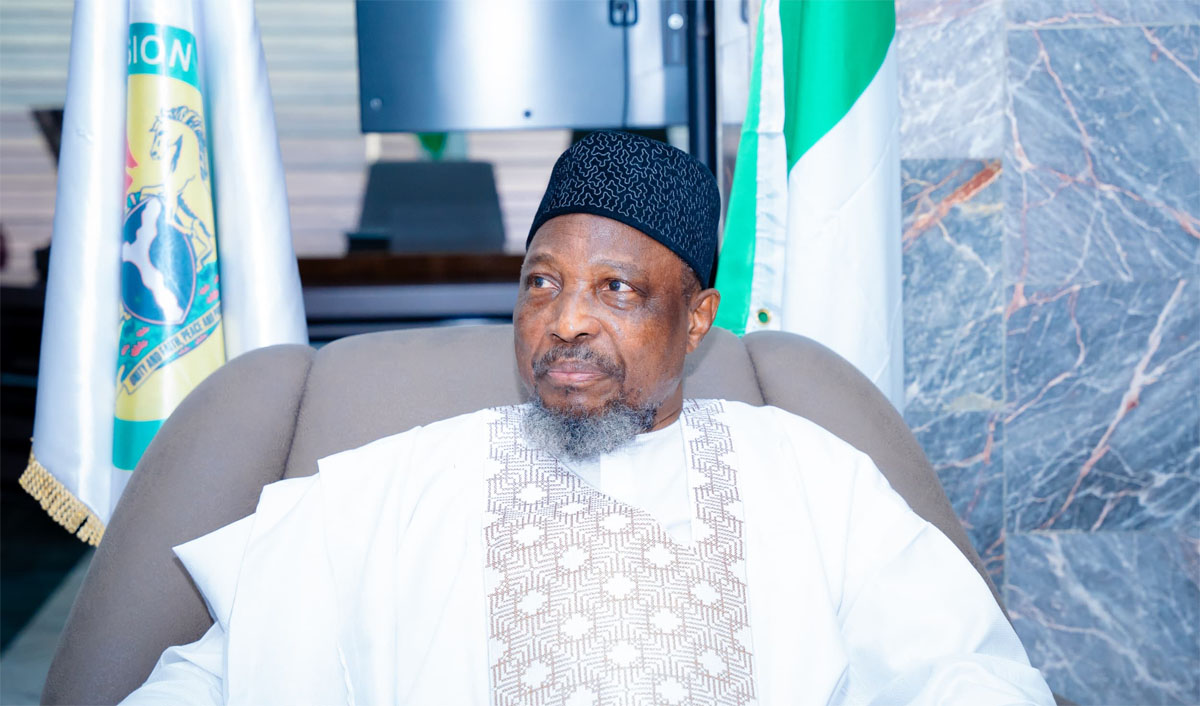
Tinubu’s Second-Term Denial Could Trigger Political Crisis, Ex-NAHCON Chairman Warns
Former Hajj commission chairman urges fairness in power rotation, cites security gains and lower food prices
The immediate past chairman of the National Hajj Commission of Nigeria (NAHCON), Sheikh Abdullahi Saleh Pakistan, has warned that denying President Bola Ahmed Tinubu a second term in office could plunge Nigeria into a political crisis.
Pakistan said allowing Tinubu to complete two terms, as former President Muhammadu Buhari did, would help sustain the informal understanding of power rotation between the North and South and prevent future political tensions.
The former NAHCON chairman made the remarks while addressing youth groups at his residence in Kano, where he argued that political leaders should not be rejected primarily because of their regional origins.
He warned that attempts to deny Tinubu re-election on such grounds could create a dangerous precedent for future presidential contests, particularly for northern politicians seeking to serve two terms.
“We have to be fair to Tinubu. The type of politics we are playing where we reject somebody because of the region he came from is dangerous. If we sustain this, we will suffer in the future,” he said.
Pakistan recalled Tinubu’s support for Buhari’s second-term ambition, arguing that the former Lagos State governor had stood by the late president and insisted that he should complete his two terms despite concerns about his health.
According to him, it would be unfair for political actors to oppose Tinubu’s second-term bid after Buhari, who came from the North, was allowed to serve eight years.
He warned that denying a southern president the opportunity to complete two terms could undermine the informal power-sharing arrangement between the two regions.
“The way Tinubu supported late Muhammadu Buhari and insisted that he completed his two terms, even though he was ill, and now some people are working hard to deny Tinubu a second term, we will fling the country into a political crisis in the future. Nobody will allow any northerner to take two terms,” he said.
The former NAHCON chairman’s position comes amid growing political discussions over zoning, regional representation and the 2027 presidential election.
Although Nigeria’s Constitution does not require presidential power to rotate between the North and South, the practice has remained an important political consideration in the country’s party negotiations and presidential contests.
However, the decision on who becomes president ultimately rests with the electorate through the constitutional electoral process.
Pakistan also defended the Tinubu administration’s handling of insecurity, arguing that the president inherited significant security challenges from previous administrations.
He identified the Boko Haram insurgency and banditry as major problems confronting the country, claiming that the former began before Buhari assumed office, while banditry expanded during the latter’s administration.
The cleric argued that the security situation should be assessed in the context of the challenges inherited by the Tinubu government rather than being used solely as a political weapon against the president.
He particularly cited the Abuja-Kaduna highway, which experienced serious security concerns during Buhari’s administration, as an example of what he described as an improvement under Tinubu.
“Up to the time Buhari finished his second term in office, a journey from Abuja to Kaduna was suicidal. You only heaved a sigh of relief when you arrived in Kaduna. But now you can leave Abuja at 12am and arrive at Kaduna safely. It means there is an improvement,” Pakistan said.
He also recalled attacks on the Abuja-Kaduna railway, which heightened fears among passengers and disrupted confidence in train travel along the route.
According to him, the security situation has improved compared with the period when kidnappers and armed groups posed serious threats to travellers.
His assessment, however, represents his own view of the security situation, and the extent of any improvement would require a broader examination of security incidents and official data across affected locations.
On the economy, Pakistan argued that the prices of some food commodities had declined under the Tinubu administration, citing rice and millet as examples.
He claimed that a bag of rice, which he said sold for about ₦120,000 under Buhari, now cost approximately ₦57,500.
“Under Buhari, a bag of rice sold for ₦120,000, but today it is ₦57,500. It is less than half the amount under Tinubu,” he said.
The former commission chairman, who identified himself as a farmer, also compared millet prices, saying he sold a bag for about ₦85,000 under Buhari, while the commodity now sells for approximately ₦30,000.
The figures were cited by Pakistan to support his argument that the current administration had recorded improvements in some areas of the economy.
However, food prices vary by location, quality, season and market conditions. The figures he provided were not accompanied by details establishing a uniform nationwide price decline, and they should be understood as his personal comparison rather than a comprehensive assessment of the cost of living.
Nigeria’s economic conditions, including food affordability, inflation and household purchasing power, remain important issues in the debate over the performance of the Tinubu administration.
Pakistan maintained that political disagreements over the president’s re-election should not be driven by regional considerations, warning that the consequences could extend beyond the 2027 election.
He urged Nigerians to consider the long-term implications of their political decisions, arguing that fairness in the treatment of political leaders was necessary to preserve stability and confidence in the country’s power-sharing arrangements.
His comments add to the ongoing debate over Tinubu’s second-term ambition, with supporters emphasising continuity and regional balance, while political opponents continue to assess the administration’s performance and prospects ahead of the next general election.
Whether Tinubu secures another term will ultimately be determined by the electoral process and the decisions of Nigerian voters.
Tinubu’s Second-Term Denial Could Trigger Political Crisis, Ex-NAHCON Chairman Warns
Politics
Adamawa Political Shake-Up: 21 Council Chairmen, 226 Councillors Dump PDP for APC

Adamawa Political Shake-Up: 21 Council Chairmen, 226 Councillors Dump PDP for APC
YOLA, Adamawa State — The Peoples Democratic Party (PDP) has suffered a major political setback in Adamawa State as all 21 elected local government chairmen and 226 councillors have defected to the ruling All Progressives Congress (APC).
The mass defection, which became public on Tuesday, October 20, 2026, followed the submission of resignation letters by the council chairmen to their respective PDP ward chairpersons.
The development comes months after Governor Ahmadu Umaru Fintiri left the PDP for the APC, triggering a political realignment across the state.
The Adamawa State APC Publicity Secretary, Victor Dogo, confirmed the defections, saying all 21 local government chairmen, area development administrators and 226 councillors had joined the ruling party.
According to Dogo, the council officials decided to align with Fintiri, whom he described as their political benefactor.
He said the defectors believed they could better align their political activities with the governor by joining the same party.
Several council chairmen explained their decisions in resignation letters dated Monday, October 19, 2026, citing personal considerations and consultations with their families, political associates and other stakeholders.
The chairman of Yola North Local Government Area, Jibril Jimeta, said he had decided to pursue a different political path, while expressing appreciation to the PDP for the opportunities and relationships he developed during his membership of the party.
READ ALSO:
- ‘I Never Asked Them to Abandon Loved Ones’ — Obi Clarifies Diaspora Remarks
- FG Confirms Ebola Case in Abuja, Identifies 44 Contacts
- Breaking: Afenifere Leader Pa Fasoranti Dies at 100
The Maiha Local Government chairman, Tijani Atiku, and his Mubi North counterpart, Musa Hassan, also submitted letters announcing their departure from the opposition party.
Similarly, the chairman of Demsa Local Government Area, Akham Jalo, said his decision followed consultations with his family, political associates, stakeholders and residents of his council.
Jalo said he joined the APC to align with Fintiri’s political direction and attract more development to Demsa.
The defections have strengthened the APC’s presence across Adamawa’s 21 local government areas, further reshaping the state’s political landscape ahead of the 2027 governorship election.
The development had been anticipated after Fintiri defected from the PDP on February 27, 2026. However, the newly elected council officials had contested the June 2026 local government elections on the PDP platform after securing the party’s tickets before the governor’s departure.
The PDP had won the chairmanship positions across all 21 local government areas in the election, which was conducted by the Adamawa State Independent Electoral Commission.
The party had previously dismissed speculation that the newly elected officials would abandon it following Fintiri’s defection.
Reacting to the latest development, the PDP leadership in Adamawa played down its implications for the party’s electoral prospects.
The party’s governorship candidate, Maurice Vunobolki, had earlier argued that the departure of council chairmen would not necessarily determine the outcome of the 2027 governorship election, insisting that voters, rather than elected council officials, would decide the winner.
The PDP’s state leadership also expressed confidence that the party could regain the governorship despite the defections.
The mass movement represents a significant shift in Adamawa politics, placing the APC and Fintiri at the centre of a new political alignment while leaving the PDP to reorganise ahead of the next electoral contest.
Adamawa Political Shake-Up: 21 Council Chairmen, 226 Councillors Dump PDP for APC
Politics
Buhari Feared Tinubu Presidency, Resisted Pressure to Back Him – Baba-Ahmed Claims

Buhari Feared Tinubu Presidency, Resisted Pressure to Back Him – Baba-Ahmed Claims
The National Chairman of the Peoples Redemption Party (PRP), Hakeem Baba-Ahmed, has claimed that former President Muhammadu Buhari had reservations about President Bola Ahmed Tinubu succeeding him in 2023, describing the current President as “bad news” for Nigeria.
Baba-Ahmed made the allegation at a summit organised by the Northern Elders Forum (NEF), where he criticised Tinubu’s administration and questioned the President’s handling of the country’s economic and political challenges.
According to him, Buhari resisted pressure from some political associates who wanted Tinubu to emerge as his successor after the 2023 general election.
“Even Buhari saw Tinubu as bad news for this country. In fairness to him, he is not around him. Buhari resisted some people who insisted it had to be Tinubu,” Baba-Ahmed said.
He did not identify the individuals who allegedly pressured Buhari or provide further details of the former President’s reported reservations about Tinubu’s candidacy.
Baba-Ahmed also revisited Tinubu’s declaration of “Emilokan”, a Yoruba expression meaning “it is my turn”, during the build-up to the 2023 presidential election, arguing that Nigerians should have examined the statement more critically.
“Nigerians ought to have known there was something wrong the day Tinubu said ‘It’s my turn’. Maybe we missed it,” he said.
Questioning the purpose behind the declaration, Baba-Ahmed argued that the presidency of a country with more than 200 million people should be about public service rather than the fulfilment of an individual’s political ambition.
The PRP chairman further accused the Tinubu administration of worsening the country’s difficulties, citing economic hardship and what he described as failures across key areas of governance.
READ ALSO:
- NAFDAC Probes Corps Member’s Death at Enugu Camp as Fake Drug Claims Emerge
- Nigerian Universities Have Not Expired, Only Teaching Methods, Professor Tells Ojuolape
- Kano: Soldiers Kill Two Kidnappers, Rescue Victim, Recover ₦10m
He argued that the President should not prioritise his ambition for a second term over the welfare of Nigerians, insisting that the country needed a change in direction.
Baba-Ahmed also expressed confidence that Nigeria would overcome its current challenges, describing its people as resilient despite the economic and political difficulties confronting the nation.
“We are very resilient people. We have seen crises bigger than this, and we survived it. We survived this one, and we will survive this one,” he said.
On the 2027 general election, Baba-Ahmed disclosed that opposition parties were working towards a coalition to challenge Tinubu, adding that the alliance would seek to unite political interests behind a single candidate.
He urged Nigerians opposed to the President’s re-election bid to support whoever emerges as the coalition’s candidate.
Baba-Ahmed also called on the Independent National Electoral Commission (INEC) to ensure that the 2027 elections are credible and reflect the wishes of voters.
Tinubu succeeded Buhari on May 29, 2023, after winning the presidential election on the platform of the All Progressives Congress (APC). His administration has introduced major economic reforms, including the removal of petrol subsidies and changes to the foreign exchange system, which have generated sustained public debate over their impact on households and businesses.
Baba-Ahmed’s claim about Buhari’s alleged opposition to Tinubu’s emergence has not been independently established in the account of the summit. His remarks come amid growing political manoeuvring ahead of the 2027 elections and renewed criticism of the President’s performance by opposition figures.
Buhari Feared Tinubu Presidency, Resisted Pressure to Back Him – Baba-Ahmed Claims
-

 metro2 days ago
Army Major, Soldiers Killed in ISWAP Ambush in Yobe State
-

 metro1 day ago
‘We Don’t Know What Else to Do’ — Mother Begs for Release of Abducted Children
-
 metro2 days ago
Breaking: Afenifere Leader Pa Fasoranti Dies at 100
-
 metro1 day ago
Atiku: US Lobbying Firm Raises Alarm Over Alleged Assassination Plot
-

 metro1 day ago
Five Arraigned Over Kidnapping of 20 Prospective NYSC Members in Imo
-

 metro2 days ago
‘I Never Asked Them to Abandon Loved Ones’ — Obi Clarifies Diaspora Remarks
-

 Auto1 day ago
Beyond the Showroom: Why After-Sales Service Will Define Auto Industry Winners
-

 Auto1 day ago
No 5% Petrol Tax Plan, Oyedele Says, Amid Public Concerns