

metro
BREAKING: DSS Arraigns El-Rufai Over Alleged Interception of Ribadu’s Phone
BREAKING: DSS Arraigns El-Rufai Over Alleged Interception of Ribadu’s Phone
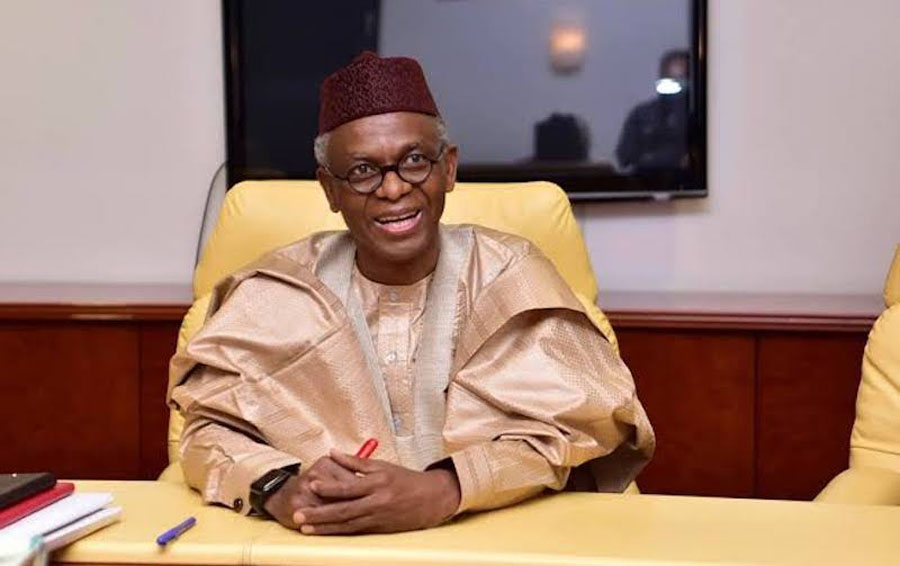
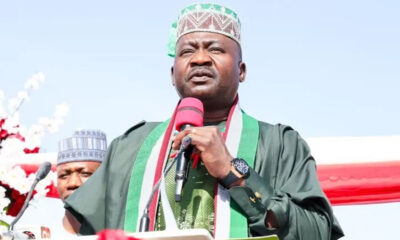
Nigeria’s Department of State Services (DSS) has arraigned former Kaduna State governor, Nasir el-Rufai, before a Federal High Court in Abuja over allegations that he unlawfully accessed the private telephone conversation of Nuhu Ribadu, the National Security Adviser (NSA).
El-Rufai, who also served as Minister of the Federal Capital Territory (FCT), is being prosecuted on a five-count amended charge bordering on alleged unlawful interception of communications and related offences.
At Thursday’s proceedings, the DSS, through its counsel Oluwole Aladeloye, informed the court that the initial three-count charge had been expanded to five counts. Following the application, the presiding judge, Justice Joyce Abdulmalik, struck out the earlier charge sheet and directed that the amended charges be read.
The former governor pleaded not guilty to all counts.
After the plea, the prosecution asked the court to fix a date for trial. However, proceedings were briefly stalled when defence counsel, Oluwole Iyamu, raised concerns over a pending bail application.
READ ALSO:
- Senator Barau Empowers APC Leaders in Kano with 47 Cars, 282 Motorcycles
- Haaland Fires Man City Top as Burnley Relegated After 1–0 Defeat
- FBI Hunts Nigerian Woman in Multi-Million-Dollar Romance Fraud Case
Iyamu told the court that a bail application had earlier been filed on February 17, alongside a further affidavit submitted recently. He explained that he needed time to properly confer with his client, noting that el-Rufai had been in the custody of multiple security agencies.
Justice Abdulmalik, however, stated that the said further affidavit was not in the court’s file, stressing that due diligence should have been done in ensuring proper filing. She criticised what she described as unnecessary courtroom distractions, including the presence of camera personnel, warning against turning proceedings into “Nollywood theatrics.”
The defence lawyer denied inviting any media personnel into the courtroom.
The judge subsequently stood down the matter to allow the issue surrounding the filing of the further affidavit to be resolved before continuing with proceedings.
The case stems from comments made by el-Rufai in February during an appearance on Prime Time, a programme on Arise Television. In the interview, he claimed that individuals had access to Ribadu’s phone conversations and alleged that he became aware of directives for his arrest through such intercepted communication.
According to el-Rufai, “someone tapped” the NSA’s phone and relayed information about instructions given to security operatives. He further suggested that surveillance of communications was not exclusive to government agencies.
Authorities have interpreted those remarks as an admission or indication of unauthorised access to protected communications, forming the basis of the charges against him under relevant cybercrime and national security laws.
The high-profile case has drawn national attention, raising broader questions about privacy, surveillance, and the limits of intelligence operations in Nigeria’s security architecture.
The court is expected to resume proceedings after resolving the bail application and related procedural issues, with a trial date likely to be fixed thereafter.
BREAKING: DSS Arraigns El-Rufai Over Alleged Interception of Ribadu’s Phone






metro
Horror in Sokoto: Bandits Intercept Vehicle, Massacre All Passengers Returning from City
Horror in Sokoto: Bandits Intercept Vehicle, Massacre All Passengers Returning from City
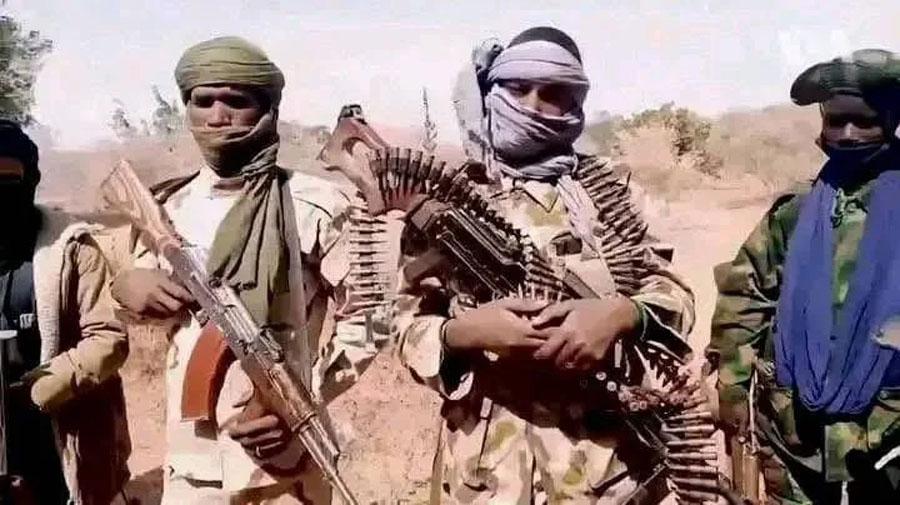
SOKOTO — In a gruesome escalation of insecurity in the North-West, armed bandits have reportedly intercepted a vehicle and killed all passengers on board along a road leading to the Isa Local Government Area of Sokoto State.
According to reports, the tragic incident occurred as the vehicle, a commercial transport conveying passengers, was returning from Sokoto city. The assailants, described as heavily armed, ambushed the vehicle, forcing it to a halt before opening fire on the occupants.
The incident was disclosed by Bakatsine, a conflict reporter covering northwestern Nigeria, who shared information about the attack and photographs of some of the deceased . According to the report, some of the victims were reportedly among the 3,000 people recruited by the Sokoto State Government who had been invited to Sokoto city for further screening and the collection of their documents . The passengers were said to have been travelling back home when the armed men intercepted their vehicle and opened fire on them.
The exact number of people killed in the attack has yet to be confirmed, and there has been no official confirmation from Nigerian authorities as of the time of reporting . Although photographs of some of the deceased have circulated following the incident, the total number of victims and their identities have yet to be independently established .
The attack highlights the persistent security challenges plaguing the region, where bandits frequently target highways and rural communities. Isa Local Government Area, which shares a border with Zamfara State, has been a notorious flashpoint for such criminal activities, including kidnapping, cattle rustling, and highway ambushes.
The reported killing also comes amid continuing concerns over attacks on civilians in other parts of northern Nigeria, particularly in communities affected by insurgency and banditry . Residents of the affected area have expressed deep grief and outrage over the continuous loss of lives, urging security agencies to intensify patrols along the Sokoto-Isa road and other vulnerable routes.
When contacted, the Sokoto State Police Command Public Relations Officer promised to provide details of the incident, stating that operatives have been deployed to the area to ascertain the facts and restore normalcy.
The mass killing underscores the urgent need for enhanced security measures to protect travelers and rural dwellers in Sokoto State and the broader North-West region. NewsTrends will continue to monitor the situation and provide updates as more information becomes available.
Horror in Sokoto: Bandits Intercept Vehicle, Massacre All Passengers Returning from City
metro
Bauchi Mosque Removes Imam After Tinubu Campaign, Rejects Proposal to Rename Mosque
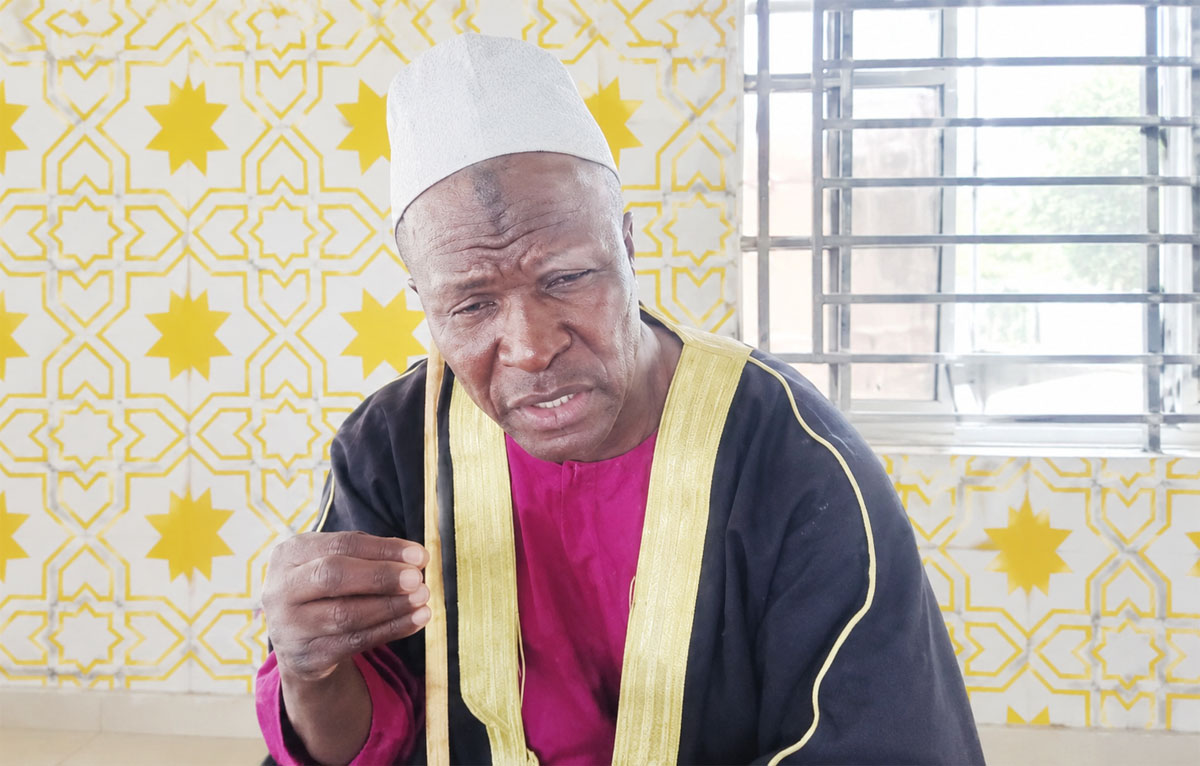
A mosque committee in Bauchi metropolis has removed Imam Dahiru Abubakar after he repeatedly urged worshippers to support President Bola Ahmed Tinubu’s re-election bid in 2027, triggering a dispute over the use of religious institutions for partisan political activities.
Abubakar served as the imam of Masjid Abdullahi Bin Zubbair in Madina Quarters, Bauchi, where he reportedly used sermons delivered after obligatory prayers to defend Tinubu’s administration against criticism over insecurity and economic hardship.
The cleric argued that the country’s challenges should not be blamed entirely on the President, describing insecurity and economic difficulties as problems requiring divine intervention, prayer and greater fear of God.
He also urged worshippers to give Tinubu another opportunity in the 2027 presidential election, maintaining that the country’s problems could not be resolved simply by blaming political leaders.
The disagreement reportedly intensified after Abubakar repeated his political messages following the early morning Subhi prayer on Sunday, October 18, 2026, despite previous warnings from the mosque committee.
Abubakar defended his position, saying his preaching was intended to encourage Nigerians to pray for the country rather than continually blame leaders for its difficulties.
“My preaching centred on telling people to embrace fear of God and stop blaming leaders for the insecurity,” he said, according to reports.
He cited security challenges in other African countries, including Sudan, Chad and Mali, questioning whether Tinubu could be held responsible for crises in those nations.
The imam maintained that he had encouraged worshippers to stop criticising Tinubu over insecurity and economic hardship and to support his administration for another term.
However, the mosque committee said the decision to remove him was not based solely on his political views but also on his alleged attempts to turn the mosque into a venue for political gatherings.
The committee’s chairman, Imam Abubakar Jibrin, confirmed the removal, explaining that the management had cautioned Abubakar several times against bringing partisan political activities into the mosque.
Jibrin alleged that the imam had been gathering people inside and outside the mosque to discuss politics despite repeated warnings. He said the committee considered the practice inappropriate for a place primarily dedicated to worship.
“We vehemently rejected the use of the mosque for political meetings,” Jibrin said, adding that the committee had repeatedly appealed to the imam to stop the practice.
According to the chairman, the committee’s position was that political meetings and campaign activities should take place at designated political venues rather than within mosque premises.
Jibrin also disclosed that the committee had convened discussions to address the matter before deciding to remove Abubakar. He indicated that the decision was final and that the former imam would not be reinstated.
Another major point of disagreement was the reported proposal to rename the mosque after Tinubu.
Jibrin said Abubakar had pushed for the mosque’s name to be changed from Masjid Abdullahi Bin Zubbair to Masjid Imam Bola Ahmed Tinubu. The committee unanimously rejected the proposal, insisting that the mosque belonged to the community and that its name should remain unchanged.
The chairman maintained that the committee was not campaigning for or against any presidential candidate but was determined to prevent the mosque from becoming a platform for partisan political mobilisation.
He suggested that anyone wishing to use a mosque exclusively for political activities should establish or acquire a separate facility rather than impose such an agenda on a community-owned place of worship.
The development has drawn attention to the debate over the role of religious leaders in Nigeria’s political process as preparations for the 2027 general elections gather momentum.
While religious leaders have the right to discuss governance and national challenges, the Bauchi incident highlights the tensions that can arise when sermons are perceived as direct endorsements of a political candidate.
Tinubu’s re-election ambition has generated differing reactions among religious leaders and political groups, with supporters defending his administration and critics pointing to insecurity, economic hardship and the rising cost of living.
The Bauchi mosque committee’s decision reflects its stated position that the mosque should remain focused on worship rather than serve as a venue for political meetings or campaign activities.
For Abubakar, however, his defence of Tinubu was rooted in his belief that prayer and faith were essential to addressing Nigeria’s challenges and that the President should not be blamed for every difficulty confronting the country.
The dispute leaves the mosque’s management and the former imam with sharply different views about the boundaries between religious preaching, political expression and the administration of community-owned places of worship.
Bauchi Mosque Removes Imam After Tinubu Campaign, Rejects Proposal to Rename Mosque
metro
Shettima Blasts States Over Power Woes, Says Govs Must Stop Waiting for Abuja
Shettima Blasts States Over Power Woes, Says Govs Must Stop Waiting for Abuja
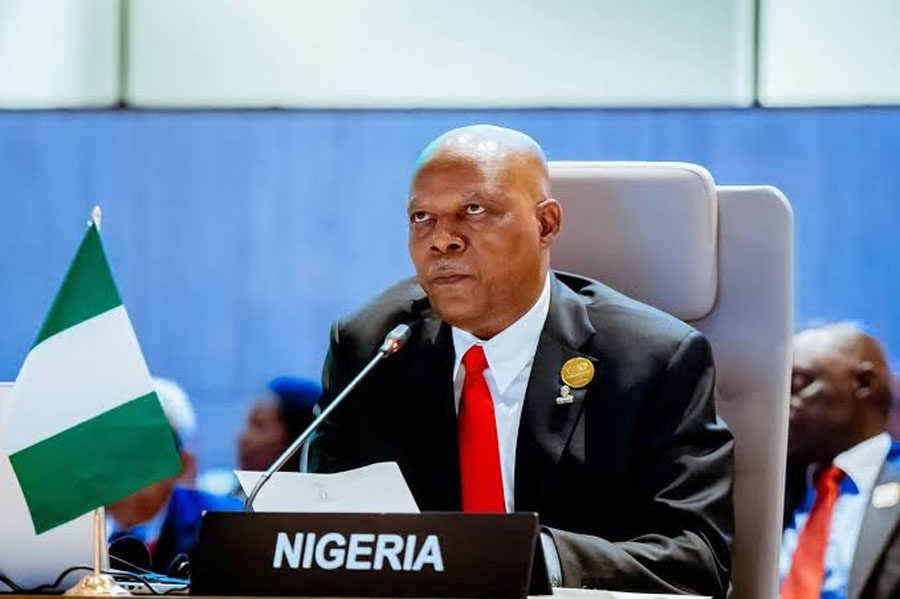
Vice-President Kashim Shettima has challenged state governments to take responsibility for addressing electricity problems in their jurisdictions, urging them to stop depending on the Federal Government for solutions and establish functional power markets.
Shettima made the call on Wednesday while declaring open the National Stakeholders’ Workshop on the Electricity Act 2023 at the State House Banquet Hall, Presidential Villa, Abuja.
Represented by the Deputy Chief of Staff to the President, Senator Ibrahim Hadejia, the Vice-President said Nigeria’s ambition to build a competitive industrial economy would remain constrained unless electricity reforms delivered reliable power to businesses, households and public institutions.
He said the Electricity Act 2023 had created an opportunity for states to decentralise electricity governance and develop power markets that reflect their economic needs and available energy resources.
“Electricity supply must become a shared responsibility, pursued with innovation and accountability across the Federation. Our States must shed the habit of waiting for Abuja to provide every answer,” he said.
Shettima identified the country’s diverse energy resources as an opportunity for states to expand electricity access and attract investment. He cited the solar energy potential of Sokoto, Borno and Katsina states, the gas resources of Delta, Rivers and Bayelsa states, and the hydroelectric opportunities in Niger and Kebbi states.
READ ALSO:
- Fourth Gas Leak in Six Months: Over 100 Ogun Pupils Hospitalised, Schools Shut as Parents Panic
- Nigerian Journalist Sentenced to 4 Years Over Facebook Post Criticising Police
- Hyundai Unveils Mufasa, Grand Creta SUVs to Strengthen Nigeria Line-up (Updated)
He urged governors to harness these resources to support agriculture, manufacturing, healthcare, education and other economic activities.
The Vice-President also warned that passing laws alone would not improve electricity supply, insisting that states must establish the institutions needed to regulate and manage their electricity markets effectively.
“Legislation cannot implement itself. States yet to act must begin their legislative and institutional preparations promptly. They need to establish functional electricity regulatory bodies with technical competence and capacity,” he said.
To accelerate implementation, Shettima proposed a voluntary National Electricity Reform Peer Review and Implementation Framework involving the Nigerian Electricity Regulatory Commission (NERC), the Federal Ministry of Power, the Nigeria Governors’ Forum and state electricity regulators.
The proposed framework would allow states to exchange experiences, strengthen regulatory capacity and assess their progress in electricity market development, investment readiness, consumer protection and access to electricity.
He said periodic reviews would help identify implementation challenges, encourage technical assistance and enable states to learn from jurisdictions that had made progress, without undermining their constitutional powers.
Shettima further stressed that government funding alone could not finance the transformation required in the electricity sector, calling for greater participation by private investors.
He said transparent licensing procedures, predictable regulations, commercially viable electricity markets, investment safeguards and credible dispute-resolution mechanisms would help build investor confidence.
The Vice-President also called for stronger consumer protection, warning against arbitrary billing, poor service delivery and unfair commercial practices. He maintained that electricity operators must be held accountable for the quality of service provided to consumers.
“The final verdict on this law will be delivered wherever a Nigerian reaches for a switch,” he said, stressing that the success of the reforms should ultimately be measured by improvements in electricity supply and the daily lives of Nigerians.
Meanwhile, the Director-General of the Nigeria Governors’ Forum, Abdulateef Shittu, said the forum was working on a standard tariff framework for state electricity markets, with the aim of protecting consumers while encouraging investment.
The Head of Compliance at NERC, Hauwa Yakubu, disclosed that the commission had issued regulatory transfers to 17 states, allowing them to assume regulatory responsibilities for electricity markets within their territories.
She said the commission was supporting emerging state regulators through technical engagement and peer-to-peer training.
Signed into law by President Bola Ahmed Tinubu in June 2023, the Electricity Act 2023 provides a framework for states to regulate electricity generation, transmission and distribution within their jurisdictions, subject to the applicable constitutional and statutory provisions. The national regulator retains oversight of electricity matters that fall within federal jurisdiction.
The law is expected to encourage competition, attract investment and expand electricity access. However, its impact will depend on effective implementation, functioning regulatory institutions and the ability of state governments to develop sustainable electricity markets.
Shettima Blasts States Over Power Woes, Says Govs Must Stop Waiting for Abuja
-

 metro2 days ago
Army Major, Soldiers Killed in ISWAP Ambush in Yobe State
-

 metro1 day ago
‘We Don’t Know What Else to Do’ — Mother Begs for Release of Abducted Children
-
 metro1 day ago
Atiku: US Lobbying Firm Raises Alarm Over Alleged Assassination Plot
-
 metro2 days ago
Breaking: Afenifere Leader Pa Fasoranti Dies at 100
-
 metro24 hours ago
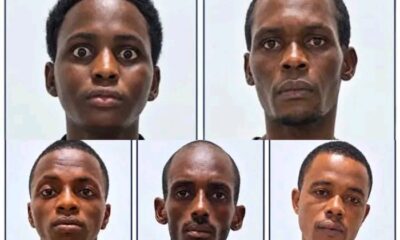
Five Arraigned Over Kidnapping of 20 Prospective NYSC Members in Imo
-

 metro2 days ago
‘I Never Asked Them to Abandon Loved Ones’ — Obi Clarifies Diaspora Remarks
-

 Auto1 day ago
Beyond the Showroom: Why After-Sales Service Will Define Auto Industry Winners
-

 Auto1 day ago
No 5% Petrol Tax Plan, Oyedele Says, Amid Public Concerns