

metro
US Civil Rights Organisation Appoints Deji Adeyanju to Board

US Civil Rights Organisation Appoints Deji Adeyanju to Board
Human rights lawyer and activist, Deji Adeyanju, has been appointed to the Board of the Katutu Civil Rights Center, an international civil rights organisation headquartered in New York, United States.
The appointment was formally communicated to THE WHISTLER on Friday by the organisation, confirming Adeyanju’s inclusion in its global leadership structure.
The Katutu Civil Rights Center is a civil rights and advocacy organisation known for its work in human rights protection, policy engagement, and support for vulnerable and marginalised communities across different regions of the world.
In his acceptance, Adeyanju expressed gratitude for the appointment, saying he was honoured to support the organisation’s mission of advancing human rights and strengthening civic participation globally.
READ ALSO:
- Woman Gets 20-Year Jail Term For Supporting Terrorism Activities
- Police Dismiss Five Inspectors, Prosecute Three Over Robbery, Kidnapping in Rivers
- ‘I’m Sorry My Daddy’ — Desmond Elliot Tenders Public Apology to Gbajabiamila
He noted that the role would further enable him to contribute to justice-oriented advocacy beyond Nigeria, while working alongside international stakeholders focused on democratic governance and civil liberties.
Adeyanju, who has been active in human rights advocacy for over a decade, is widely known for his campaigns against police brutality, civic repression, and abuse of power in Nigeria.
His appointment has been interpreted by observers as international recognition of his long-standing involvement in democracy advocacy, social justice campaigns, and legal representation of activists and citizens in high-profile rights cases.
The Katutu Civil Rights Center said Adeyanju’s selection reflects its commitment to including diverse voices from different regions in its governance structure, particularly individuals with hands-on experience in grassroots human rights work.
The organisation also highlighted his track record in legal activism and public advocacy as key factors in his appointment.
The development has sparked reactions across civic and human rights circles, with supporters describing it as a significant milestone for Nigerian civil society engagement on the global stage.
Adeyanju’s new role is expected to further expand his involvement in international human rights conversations, particularly around accountability, rule of law, and protection of civic freedoms.
US Civil Rights Organisation Appoints Deji Adeyanju to Board







metro
[ICUMI] Mohbad Was Killed Over DNA Dispute, His Friend Told Me – Father Alleges
[ICUMI] Mohbad Was Killed Over DNA Dispute, His Friend Told Me – Father Alleges
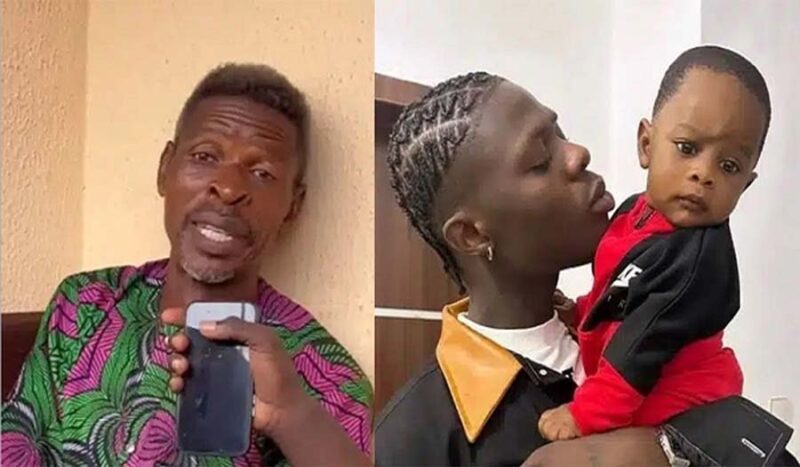
LAGOS, Nigeria — Joseph Aloba, father of late Nigerian singer Ilerioluwa Aloba, popularly known as Mohbad, has alleged that his son was killed over issues surrounding DNA testing and paternity.
Aloba made the startling allegation during an emotional interview, claiming that a close friend of the late singer told him that the controversy over paternity was connected to his son’s death.
” Mohbad was killed because of DNA. I’m saying it now for the whole world to hear. Mohbad was killed because of DNA, his friend told me. He was killed because of paternity,” the bereaved father declared.
His claim has introduced another dimension to the controversy surrounding the circumstances of the singer’s death and the prolonged dispute within his family.
DNA Controversy Deepens
Mohbad died on September 12, 2023, at the age of 27, under circumstances that have continued to generate public debate and calls for justice.
Since his death, a protracted disagreement has emerged between his father and widow, Omowunmi Aloba, over the paternity of their son, Liam.
The dispute has also fuelled demands for a DNA test to establish the child’s biological paternity.
The controversy took another turn following reported court-ordered DNA sample collection involving parties connected to the dispute in October, although the outcome of the process remains a subject of public interest.
Father Seeks Public Support
During the interview, Joseph Aloba appealed to Nigerians and other well-meaning individuals to support his demand for justice and transparency over his son’s death.
He maintained that there were deeper issues surrounding the events that preceded the singer’s demise, pointing specifically to the alleged connection between the DNA controversy and the circumstances of his death.
However, his latest allegation has not been independently substantiated, and no official investigative finding has established that a DNA or paternity dispute was responsible for Mohbad’s death.
The allegation is therefore expected to generate further reactions as Nigerians continue to demand answers over the circumstances surrounding the death of the former Marlian Records singer.
Mohbad’s death remains a subject of public interest, with his family and supporters continuing to seek clarity and justice.
[ICUMI] Mohbad Was Killed Over DNA Dispute, His Friend Told Me – Father Alleges
metro
Oluwo Advised to Exercise Restraint, Emotional Intelligence Amid Osun Govt Controversy

Oluwo Advised to Exercise Restraint, Emotional Intelligence Amid Osun Govt Controversy
Public analyst, Lukman Raimi, urges monarch to embrace diplomacy, strengthen ties with government, prioritise peaceful coexistence and community development
A public analyst, Lukman Raimi, has advised the Oluwo of Iwo, Oba (Dr.) Abdulrasheed Adewale Akanbi, Telu I, to exercise emotional intelligence, strategic caution and restraint in his public engagements amid the controversy surrounding a reported cautionary letter issued to the monarch by the Osun State Government.
Raimi, who offered the advice in a public commentary, said the traditional ruler should avoid unnecessary verbal confrontations and adopt a more diplomatic approach in addressing issues capable of generating tension between the palace, the government and members of the public.
The analyst noted that the reported letter from the Osun State Government had generated mixed reactions, with some people welcoming the government’s intervention while others, particularly supporters of the monarch, expressed disagreement.
However, he said he belonged to neither camp, explaining that his intervention was intended to offer constructive advice to the monarch rather than take sides in the controversy.
According to him, understanding the relationship between traditional institutions and government authorities is essential to preserving the dignity and influence of the throne.
Raimi pointed out that state governments exercise statutory responsibilities over the appointment, recognition, regulation and remuneration of traditional rulers, subject to applicable laws.
He therefore urged the Oluwo to recognise the limits of traditional authority while appreciating the constitutional and statutory responsibilities of government.
Religious Convictions and Royal Restraint
Addressing the religious and cultural dimensions of the controversy, the analyst acknowledged that differences surrounding religion and cultural identity had generated tensions in parts of Yorubaland, including Iwo.
He maintained that the Oluwo had every fundamental right to affirm and practise his Islamic faith, stressing that the monarch should not be expected to apologise for his religious convictions.
Raimi also acknowledged that some critics of the monarch’s Islamic beliefs had allegedly resorted to provocative comments and derogatory remarks.
Nevertheless, he argued that such provocations should not compel a traditional ruler to engage in prolonged public exchanges or respond to every criticism.
Describing himself as a proud Muslim, Raimi said he admired the Oluwo’s commitment to Islam but believed that frequent public responses, the use of street slang and prolonged verbal exchanges were inconsistent with Islamic etiquette and the dignity expected of a traditional ruler.
He urged the monarch to demonstrate that religious commitment, cultural appreciation and peaceful coexistence could exist side by side.
‘A King Must Not Fight Like a Servant’
To reinforce his argument, Raimi invoked two Yoruba expressions which, according to him, capture the expectations of royal conduct.
He quoted the saying, “Oba kì í jagun bí ẹrú,” meaning that a king does not fight battles like a servant.
He also cited the expression, “Oluwo kò ṣe wò!” to emphasise the importance and dignity of the Oluwo’s throne.
The analyst argued that kingship comes with responsibilities that require wisdom, composure and the ability to rise above personal disagreements.
He further referenced prominent traditional rulers, including the Sultan of Sokoto, the Emir of Ilorin, the Emir of Kano, the Ooni of Ife, the Oba of Lagos, Oba Rilwan Akiolu, the Olubadan of Ibadanland and the Oba of Benin, as examples of monarchs whose public engagements, in his view, demonstrate the importance of measured communication.
According to Raimi, prominent traditional rulers often face criticism and insults but generally refrain from responding to every provocation because of the dignity associated with their offices.
He maintained that the Oluwo could protect his royal image and strengthen his influence by adopting a similar approach to public communication.
Analyst Recommends Meeting With Osun Governor
Beyond urging restraint, Raimi recommended that the Oluwo consider paying courtesy visits to the Osun State Governor and the Commissioner responsible for Chieftaincy Affairs.
He described such visits as important diplomatic gestures that could demonstrate institutional respect and a willingness to pursue constructive engagement.
According to him, direct engagement with government officials could help strengthen relationships, clarify possible misunderstandings, address misleading information and create opportunities for meaningful collaboration.
He suggested that rather than allowing disagreements to escalate through public exchanges, the palace should explore diplomatic channels capable of producing lasting understanding between the traditional institution and the state government.
Calls for Greater Focus on Community Development
Raimi also urged the monarch to devote greater attention to initiatives that would improve the welfare and development of people in Iwoland.
He specifically highlighted peaceful coexistence, charitable interventions, children’s mentorship, youth empowerment, support for widows and sustainable community development as areas deserving greater attention from the palace.
He advised the Oluwo to reposition himself as an ambassador of Islam, a proponent of the positive aspects of Yoruba culture, a father to all and a servant leader.
The analyst said the monarch had an opportunity to demonstrate that Islamic convictions, respect for Yoruba heritage and peaceful coexistence were not mutually exclusive.
He added that sustained commitment to these ideals would strengthen the Oluwo’s public image, enhance his royal legacy and elevate his standing beyond temporary controversies.
‘Royalty Must Be Defended With Wisdom’
Concluding his intervention, Raimi prayed for Allah’s guidance, patience and wisdom for the Oluwo, expressing hope that the monarch would enjoy a peaceful reign.
He also expressed confidence in the monarch’s personal appeal, ending his message with a humorous compliment about his handsome appearance.
“Long live the Oluwo! Long live Iwoland!” he declared.
His intervention comes amid continuing public discussions about the relationship between traditional institutions, religious identity and government authority in Osun State, with the analyst urging the Oluwo to embrace diplomacy and community-focused leadership as a means of strengthening his reign.
Oluwo Advised to Exercise Restraint, Emotional Intelligence Amid Osun Govt Controversy
metro
‘Attacking Referee Before Match’: Shehu Sani Reacts to Nigerians’ Confrontation With INEC Chairman in UK
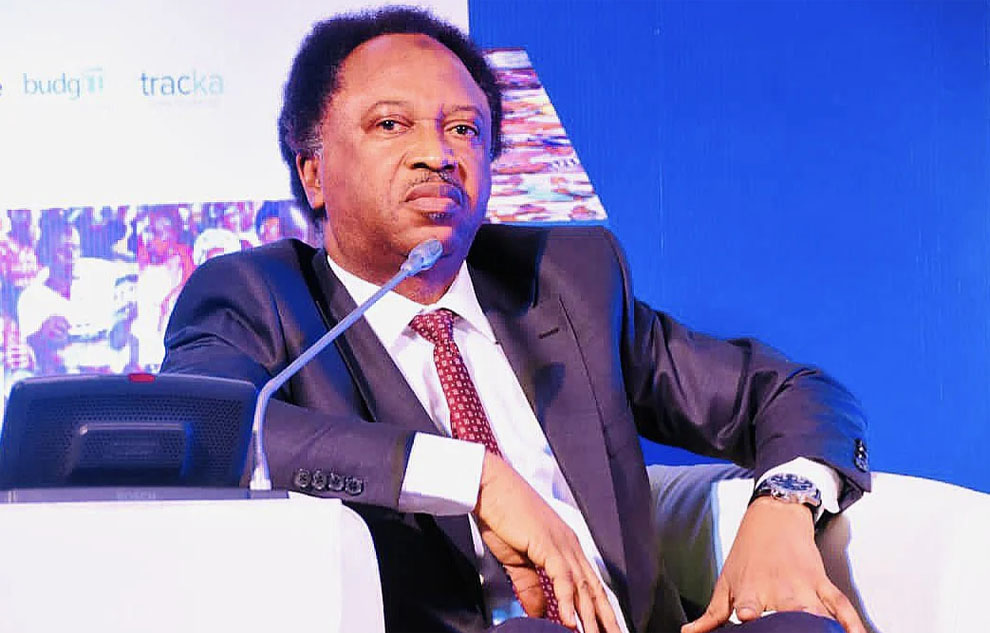
‘Attacking Referee Before Match’: Shehu Sani Reacts to Nigerians’ Confrontation With INEC Chairman in UK
Former Kaduna Central Senator, Shehu Sani, has condemned the reported harassment of the Chairman of the Independent National Electoral Commission (INEC), Professor Joash Amupitan, by a group of Nigerians in the United Kingdom.
Sani’s reaction followed the circulation of a viral video showing Nigerians confronting the electoral commission’s chairman during his visit to the UK, sparking reactions across social media.
The incident has also generated discussions about how public officeholders should be held accountable, particularly when they travel outside the country.
Reacting in a post on his official X account on Friday, Sani questioned why the INEC chairman would be intimidated over an election that had yet to take place.
He likened the conduct of the protesters to the activities of political thugs in Nigeria who disrupt public gatherings, insult people and resort to intimidation.
Sani wrote: “What is the point in intimidating and harassing the INEC chairman in London for an election that is yet to be held?
“What is the difference between their actions and those of thugs who gatecrash, insult and molest others here at home?”
The former senator also expressed concern that the incident could further damage Nigeria’s image internationally, particularly amid negative perceptions of Nigerians in some foreign countries.
He questioned whether such footage was what Nigerians wanted the international community to see, adding that confronting the electoral umpire before the election was equivalent to attacking a referee before a football match.
The confrontation occurred on Thursday, November 12, outside Chatham House in London, where Amupitan had participated in a discussion on Nigeria’s preparations for the 2027 general elections.
The protesters reportedly surrounded the vehicle conveying the INEC chairman, demanding that he address their concerns over alleged irregularities in the preliminary voters’ register.
They reportedly raised issues including suspected duplicate registrations, artificial intelligence-generated photographs and alleged questionable polling units, while calling for greater transparency in the electoral process.
Amupitan remained inside the vehicle as the protesters shouted and demanded that he come out to address them.
The incident has generated widespread reactions, with renewed debate over electoral accountability, the independence of INEC and the appropriate ways of expressing public grievances.
‘Attacking Referee Before Match’: Shehu Sani Reacts to Nigerians’ Confrontation With INEC Chairman in UK
-

 metro2 days ago
Court Orders Final Forfeiture Of 48 Properties Worth N212bn Linked To Malami
-
 International2 days ago
US Lawmakers to Hold Fresh Hearing on Nigeria’s Insecurity, Christian Killings
-

 metro2 days ago
Ogbomosoland Grand Chief Imam, Sheikh Teliat Ayilara II, Marks Five Years in Office
-

 News2 days ago
Tinubu’s Chicago Varsity Certificate Row: Omokri Challenges Journalists to Verify Fresh Allegations
-
 Auto2 days ago
After-Sales Support Will Define Future of Nigeria’s Auto Industry – Carloha Marketing Chief
-

 News1 day ago
BREAKING: Manchester United Sack Michael Carrick After Disastrous Start to Season
-

 Sports2 days ago
Tinubu Rewards Flamingos With ₦100m Each After Historic World Cup Triumph
-
 metro2 days ago
Agunbiade Celebrates Oyo Grand Chief Imam Akeugberu at One, Says His Impact Equals a Decade