

Education
Certificate Forgery: NYSC Rolls Out Mandatory NERD Compliance for All Prospective Corps Members

Certificate Forgery: NYSC Rolls Out Mandatory NERD Compliance for All Prospective Corps Members
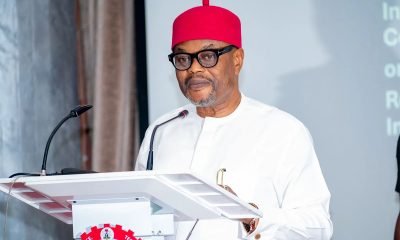
The National Youth Service Corps (NYSC) has intensified efforts to tackle certificate forgery and ensure that only qualified graduates are mobilised for national service, with the enforcement of the Federal Government’s directive requiring all Prospective Corps Members (PCMs) to present a compliance certificate from the Nigeria Education Repository and Databank (NERD) . The Director of Information and Public Relations of the NYSC, Caroline Embu, confirmed in an official statement that the directive is aimed at curbing certificate fraud and sanitising the mobilisation process, adding that prospective corps members without a compliance certificate from NERD will not be mobilised for national service .
The Director-General of the NYSC, Brigadier General Olakunle Nafiu, disclosed this during his keynote address at the 2026 Batch ‘B’ Pre-Mobilisation Workshop held in Abuja . The workshop, themed “Strengthening Institutional Accountability and Compliance in the NYSC Mobilization Process for Effective Service Delivery,” brought together key stakeholders in the education and mobilisation sectors, including representatives of the Joint Admissions and Matriculation Board (JAMB), National Universities Commission (NUC), National Board for Technical Education (NBTE), Federal Ministry of Education (FME), the Nigeria Education Repository and Databank, SIDMACH Technologies, as well as 266 Student Affairs Officers from various corps producing institutions nationwide .
According to the NYSC boss, the enforcement of the NERD compliance certificate will take effect starting from the 2026 Batch B orientation camp and is aimed at sanitising the mobilisation process and preventing fake graduates from participating in the national service scheme . He appealed to Corps Producing Institutions (CPIs) across the country to adequately sensitise their students and ensure full compliance with the directive. Nafiu stressed that the responsibility of ensuring credible mobilisation should not rest solely on the NYSC, urging regulatory agencies, security institutions, and relevant government ministries to strengthen collaboration through policy support, capacity building, and strict enforcement mechanisms .
“When we work in synergy, we ease the path for our prospective corps members, ensuring that their transition from student to national service is smooth, transparent, and credible,” Nafiu said. “Let us be bold in confronting the obstacles before us and creative in fashioning solutions that will stand the test of time. Let us build a more accountable, transparent, and efficient mobilisation process for the benefit of all”.
READ ALSO:
- ADC’s Atiku Victory a Testament to Internal Democracy – David Mark
- Several Fighters Killed As NAF Air Strikes Destroy Terrorist Hideouts in Sambisa
- Hajj 2026: Sanwo-Olu, Hamzat Join 1,600 Lagos Pilgrims in Arafah Prayer
The NERD platform is a comprehensive national digital infrastructure designed to secure, digitise and authenticate academic records across tertiary institutions in Nigeria, serving as a strategic national infrastructure aimed at protecting the integrity of Nigerian academic qualifications while positioning the education sector for the digital age . According to the Minister of Education, Dr Maruf Tunji Alausa, CON, graduates whose academic records are not captured in the NERD platform will not be eligible for the NYSC . Speaking during a national capacity-building programme for school representatives organised to support the implementation of NERD, Alausa said linking access to verified academic records will serve as a strong deterrent against certificate forgery and other forms of academic fraud .
The Minister revealed that within just four months of enforcement, the system had already preserved nearly 100,000 digital student submissions and onboarded more than 250 universities, polytechnics, monotechnics and colleges of education for real-time credential verification . He added that over 133,000 students and 6,800 lecturers are currently registered on the platform, supported by more than 655 institutional focal persons nationwide . Through collaboration with Nigerian technology entrepreneurs, the programme has also facilitated the establishment of more than 1,000 digital service centres across the country, generating over 3,000 jobs .
Key components of the NERD system include the National Credential Number, National Credential Revocation Service, National Student Clearing House, Federated Repository of Academic Theses and Abstracts, and the National Academic Publication and Indexing Database . The Chief Executive Officer of NERD, Tunji Ariyomo, emphasised the importance of preserving academic knowledge and research outputs, noting that nations that lead globally are those that effectively document and build upon their knowledge systems . He explained that the platform documents academic projects, theses, and dissertations along with supervisors, co-supervisors, and departmental heads, strengthening accountability and improving the quality of academic supervision .
Alausa further announced the establishment of the NERD Annual National Laureate Prize and Awards Programme, aimed at promoting academic excellence by recognising outstanding undergraduate, master’s and doctoral research works with prizes ranging from ₦5 million to ₦20 million, with the maiden edition scheduled for November this year . Beyond NYSC participation, Alausa said compliance with NERD would become mandatory for institutions seeking access to services from agencies such as TETFund, the National Universities Commission, the National Board for Technical Education, the National Commission for Colleges of Education and the Industrial Training Fund, making institutional participation a requirement for accessing services from these agencies . The minister added that the government had already acted against fraudulent qualifications obtained abroad, particularly from unaccredited institutions in neighbouring countries, noting that individuals found with such certificates had been removed from public service.
READ ALSO:
- Eid-ul-Adha: ‘Dark Days Are Over, Light Is Here,’ Tinubu Assures Nigerians
- Gov Yusuf Approves N20,000 Eid-ul-Adha Goodwill Package for Civil Servants
- Lagos-Ibadan Trains to Run Six Trips on Tuesday as FG Cuts Sallah Fares by Half
Meanwhile, the Federal Ministry of Education has revealed that 119 out of the 124 Federal Government-owned tertiary institutions have been integrated into the Federal Tertiary Institutions Governance Transparency Portal (FTIGTP) . The data, obtained through the Nigerian Education Data Infrastructure (NEDI) , showed that 32 million students across 221,229 schools in 21 states have so far been captured on the platform . A breakdown indicated that 57 out of 60 federal universities, 35 out of 36 polytechnics, and 27 out of 28 colleges of education have successfully uploaded and submitted their data to the transparency portal .
The FTIGTP, established to promote accountability and evidence-based decision-making in tertiary education governance, provides access to institutional data, including student enrolment, budgets, research grants, and intervention funding records . The portal, launched in 2025, was introduced as a unified platform for tracking and analysing key performance and funding metrics across federal tertiary institutions using data from the past three years, designed to promote transparency and provide interactive reports and visualisations to support evidence-based decision-making in the tertiary education system . The Federal Government had, in 2025, mandated all federal tertiary institutions to publish key institutional data on their websites as part of broader reforms in the education sector .
As part of reforms aimed at improving accountability and efficiency, the government in May 2025 fixed a minimum student enrolment benchmark of 2,000 for tertiary institutions . However, findings revealed that the benchmark was later reduced by 50 per cent following pressure from heads of institutions. Speaking at the 2025 Policy Meeting in Abuja, the Minister of State for Education, Prof. Suwaiba Ahmad, said tertiary institutions with student populations below 1,000 would no longer benefit from intervention funding from the Tertiary Education Trust Fund (TETFund) . Executive Secretary of TETFund, Arc. Sonny Echono, confirmed that the policy was already being implemented using a “carrot-and-stick” approach to encourage compliance among institutions, explaining that allocations are now competitive, with interventions given to institutions that can demonstrate their ability to use funds effectively .
The NYSC has also announced a partnership with the National Identity Management Commission (NIMC) to simplify biometric verification for prospective corps members nationwide. The partnership aims to enable seamless registration through technology-driven reforms designed to improve service delivery and reduce bottlenecks in the mobilisation process . Nafiu explained that the partnership is part of efforts to deepen digital reforms within the scheme, noting that registration, mobilisation, payments, and record-keeping processes have largely been digitized to enhance operational efficiency across Nigeria, with the goal of allowing corps members to register from home using NIMC biometrics .
Earlier in her remarks, the NYSC Director of Corps Mobilisation, Rachel Ideawor, described the pre-mobilisation workshop as an important platform for strengthening collaboration among the NYSC, Corps Producing Institutions, and other stakeholders . She noted that despite improvements in the mobilisation process, there was still a need to optimise service delivery across the mobilisation value chain. “I urge our Student Affairs Officers to approach their responsibilities with diligence and integrity, ensuring that the information provided accurately reflects the true profiles of Prospective Corps Members,” she said . The NYSC has emphasised that effective mobilisation requires collective responsibility from all stakeholders and is not solely the responsibility of the scheme, but depends on cooperation from all relevant agencies .
With the new enforcement taking effect from the 2026 Batch B orientation camp, all Prospective Corps Members are advised to ensure their academic records are properly uploaded and verified on the NERD platform before applying for mobilisation . Officials have clarified that the rule applies to all higher institutions, including universities, polytechnics and colleges of education, while graduates already serving in the NYSC before the policy’s enforcement are not affected. The government maintains that the move is part of broader reforms aimed at improving the credibility and transparency of Nigeria’s education system as part of the Nigerian Education Sector Renewed Initiative (NESRI) , a six-point agenda designed to transition the country from a resource-based to a knowledge-based economy .
Certificate Forgery: NYSC Rolls Out Mandatory NERD Compliance for All Prospective Corps Members












Education
CIoTA Set to Inaugurate New Council, Install Odewumi as National President
Odewumi Takes CIoTA Helm as Institute Unveils New Governing Council
The Chartered Institute of Transport Administration of Nigeria (CIoTA) is set to usher in a new era of leadership with the investiture of Professor Samuel G. Odewumi as its National President and Chairman of Council, alongside the inauguration of its new National Executive Committee and Governing Council.
The ceremony, scheduled for Thursday, December 3, 2026, will hold at Makanjuola Hall, Lagos State University (LASU), Ojo, Lagos, beginning at 10:00 a.m.
With the theme, “Transportation to the Rescue in Nigeria: Piloting Up National Development and Driving Down Poverty, A New Clarion Call,” the event is expected to attract transport professionals, government representatives, academics, industry operators and other stakeholders.
It will provide a platform for discussions on how an efficient and professionally managed transportation system can accelerate economic growth, promote national integration and help address poverty.
Speaking at the institute’s pre-investiture press briefing, the Deputy President-Elect of CIoTA and Vice-Chancellor of the Federal University of Transportation, Daura, Professor Umar Adam Katsayal, called for stronger collaboration among professional bodies, academic institutions, government agencies and industry operators to build a modern and globally competitive transport system.
Katsayal, who delivered the welcome address on behalf of the institute’s elected leadership and members, described transportation as a critical driver of national development, economic growth, regional integration and social mobility.
He stressed that stakeholders across the transport ecosystem had a collective responsibility to promote excellence, innovation, sustainability and professionalism in transportation administration and management.
According to him, the pre-investiture engagement was designed to encourage meaningful interaction, knowledge exchange and constructive discussions on the challenges and opportunities confronting Nigeria’s transport industry.
He expressed confidence that sustained engagement among stakeholders would generate practical solutions, strengthen institutional capacity and contribute to the development of the sector.
The Deputy President-Elect further underscored the importance of cooperation between professional bodies, universities, government institutions and private-sector operators, noting that such partnerships were essential to achieving international standards in transportation administration.
He also urged media organisations to deepen their engagement with transport stakeholders and contribute informed perspectives that would enrich the deliberations and strengthen the institute’s leadership and administration.
The investiture will feature Emeritus Professor Peter Okebukola (MON) as the guest speaker. He is expected to deliver a presentation titled “Banking as a Tool for Transport Development.”
The Vice-Chancellor of Lagos State University, Professor Ayodeji O. Lawunmi, is listed as the Special Guest of Honour, while Pastor (Chief) Reuben Wilson, Managing Director/Chief Executive Officer of Reuwills Oil and Gas Nigeria Limited and Founder of the Leadership, Peace and Cultural Development Initiative, will chair the investiture ceremony.
Beyond the formal installation of Odewumi and inauguration of the new leadership, the event is expected to draw attention to the critical role of effective transportation administration, professional standards, access to financing and institutional partnerships in advancing Nigeria’s development agenda.
CIoTA said the engagement would further reinforce the need for professionalism, innovation and sustainable practices in managing the country’s transport sector.
Education
NANS Threatens UNIOSUN Shutdown Over Arrest of Three Student Leaders

NANS Threatens UNIOSUN Shutdown Over Arrest of Three Student Leaders
The National Association of Nigerian Students (NANS) and the management of Osun State University (UNIOSUN) have disagreed over the arrest and arraignment of three Students’ Union Government (SUG) officials accused of assaulting a 100-level student.
The disagreement followed NANS’ threat to mobilise students nationwide to shut down the university and occupy the Osun State Government Secretariat over the arrest of the SUG president.
NANS National President, Babatunde Akinteye, accused the university’s Vice-Chancellor, Professor Clement Adebooye, of allegedly ordering the arrest of the student union president, describing the development as an attack on the rights and dignity of Nigerian students.
In a statement issued on Tuesday, November 24, Akinteye said the SUG president had been arrested, charged before a court and remanded in prison.
He subsequently directed the NANS zonal coordinator and the Osun State Joint Campus Committee chairman to mobilise students for a coordinated shutdown of UNIOSUN and a peaceful occupation of the state government secretariat to demand the Vice-Chancellor’s removal.
He also said NANS structures nationwide had been activated to relocate to Osun State until the matter was resolved.
However, the university management gave a different account, saying the three student leaders were arrested and prosecuted over their alleged involvement in the assault of a 100-level student, Emmanuel Onifade.
READ ALSO:
- ADC Asks Tinubu to Resign or Face Impeachment Over Kano Court Allegation
- Kwankwasiyya Supporters Carry Sticks But Never Harm Anyone – Obi
- Iran Flogs Singer, Four Others 74 Times Over Hijab-Free Performance
The university’s Public Relations Officer, Ademola Adesoji, said the incident occurred on Friday night, November 20, and involved three student union executives.
The accused students were identified as Layonu Idowu Akintayo, a 500-level Medicine and Surgery student and SUG president; Adesanmi Tijesunimi, a 400-level Computer Science student and assistant general secretary; and Oyedeji Samsideen, a 400-level Information Technology student and faculty chairman.
According to the university, preliminary findings indicated that the disagreement started after Onifade allegedly used the institution’s logo and the Office of Student Affairs as the identity of a WhatsApp platform.
He was also accused of threatening another student, Oyebode Oluwatobi Jomiloju Barnabas, a 200-level Computer Science student, over a video posted on social media concerning the university.
The management said Oyebode reported the matter to the Students’ Union executives, after which the union president contacted Onifade and asked him to meet at the downtown area of the university’s main campus.
The university alleged that Onifade was subsequently taken in a Students’ Union vehicle to a mechanic workshop in Osogbo, where he was beaten and seriously injured by the assistant general secretary and other individuals.
It further alleged that the victim was taken to another location, where he encountered the union president and was assaulted again by the assistant general secretary and Samsideen.
The university said Onifade was eventually released with serious bodily injuries, prompting his father to report the incident at the Oja-Oba Divisional Police Headquarters in Oke Baale, Osogbo.
Following the complaint, the three student leaders were handed over to the police and subsequently charged before a magistrate’s court in Oke-Fia, Osogbo.
The university disclosed that the accused students had been granted administrative bail, while the case was adjourned until December 23, 2026.
As part of its response to the incident, UNIOSUN management announced the indefinite suspension of all Students’ Union activities pending the resolution of the issues surrounding the alleged assault.
The institution reaffirmed its commitment to students’ safety and welfare, urging members of the university community to conduct themselves responsibly and in accordance with the law.
NANS Threatens UNIOSUN Shutdown Over Arrest of Three Student Leaders
Education
South-West Leaders Challenged to Emulate Kwankwaso, Invest in Education of Poor Children

South-West Leaders Challenged to Emulate Kwankwaso, Invest in Education of Poor Children
A call has been made to political leaders across Nigeria’s South-West region to invest more deliberately in the education and professional development of brilliant children from poor and disadvantaged backgrounds, with emphasis on overseas scholarships and specialised skills acquisition.
The call was made by a concerned citizen, Adeagbo Suraj Ademola, who questioned the commitment of political leaders in the region to sustainable human capital development, arguing that the transformation of young people from economically disadvantaged families should be considered one of the greatest measures of good governance.
Ademola, in a statement, drew attention to reports about the scholarship initiative introduced by former Kano State Governor, Senator Rabiu Musa Kwankwaso, under which thousands of young people from the state were reportedly sponsored to pursue postgraduate studies abroad.
He cited the account of a Hausa man who reportedly benefited from the programme, travelled to the United States for further studies and eventually became a university lecturer in America.
According to him, the reported figure of more than 3,000 beneficiaries under the initiative raises important questions about the priorities of political leaders in the South-West, particularly regarding investments in education and opportunities for children whose parents cannot afford quality education.
He recalled similar initiatives introduced by former Osun State Governor, Ogbeni Rauf Aregbesola, noting that his administration sponsored 85 medical students of Osun State University (UNIOSUN) to Ukraine to complete their medical education.
Ademola also highlighted the decision of the Aregbesola administration to sponsor 31 graduates to Germany for specialised training in automobile mechatronics, while another 20 young people were reportedly sent to Germany for advanced agricultural training.
He described the mechatronics initiative as particularly significant, recalling that a friend of his, whose mother was a local leaf seller, benefited from the programme.
According to him, the experience demonstrated how government-sponsored educational and professional opportunities could transform the lives of young people from ordinary homes who would otherwise struggle to access such opportunities.
He maintained that programmes of this nature should not be treated merely as political empowerment schemes but as strategic investments capable of producing skilled professionals who would contribute to national development.
The South-West leaders were also reminded of the scholarship initiative introduced by former Ekiti State Governor, Dr Kayode Fayemi, during his first administration.
The programme, known as the Fayemi Scholars initiative, reportedly supported outstanding graduates to pursue postgraduate studies in reputable institutions in countries including the United Kingdom, the United States and China.
For Ademola, these examples demonstrate that visionary leadership goes beyond the construction of roads, bridges and public buildings. It also involves identifying talented young people, providing them with opportunities and preparing them to become future professionals and leaders.
He, however, argued that the South-West could achieve much more if its six state governments adopted deliberate and sustainable programmes to sponsor brilliant but financially disadvantaged young people for specialised education and professional training.
He proposed that each state should consider sponsoring at least 500 or even 1,000 qualified young people annually to study specialised courses in reputable institutions within and outside Nigeria.
According to him, such an initiative could significantly strengthen the region’s capacity in critical sectors, including medicine, engineering, artificial intelligence, agriculture, manufacturing, technology and scientific research.
He stressed that the benefits would extend beyond the individual scholarship recipients, as the region and the country would eventually gain from the expertise, innovation and professional contributions of the beneficiaries.
Ademola further argued that political leadership should not be assessed exclusively by the number of infrastructure projects executed, political appointments made or conventional empowerment programmes organised.
Rather, he said, the number of ordinary children whose lives have been transformed through access to quality education, specialised training and life-changing opportunities should also be an important measure of governance.
He therefore challenged governors and other political leaders across the South-West to explain the deliberate, sustainable and transparent programmes they have established to identify, train and support brilliant children whose parents lack the financial resources to provide them with opportunities available to children from wealthy families.
He emphasised that many of the country’s future professors, medical experts, engineers, innovators, researchers and national leaders could currently be growing up in communities where poverty has limited their access to quality education and professional development.
The statement further called for scholarship programmes that would be transparent, merit-based and sustainable, ensuring that beneficiaries are selected based on their academic abilities and potential rather than political connections or family backgrounds.
Ademola maintained that investing in disadvantaged children was not simply an act of charity but a strategic responsibility that could determine the economic and technological future of the region.
He argued that the greatest legacy of any administration should not be limited to physical structures constructed during its tenure but should also include the quality of human beings it prepares to sustain development long after leaving office.
He concluded with a message to political leaders across the South-West, urging them to place greater emphasis on human capital development and deliberately create opportunities for children from poor families.
“We must invest in PEOPLE, not just PROJECTS,” he declared.
The statement was signed by Adeagbo Suraj Ademola of Adenle Onile-Aran’s Compound
South-West Leaders Challenged to Emulate Kwankwaso, Invest in Education of Poor Children
-
 metro1 day ago
Oyoland Grand Chief Imam Moves to End Feud, Seeks Reconciliation Among Markaziyya, Adabiyyah, Mahdul ‘Arabi
-

 News2 days ago
Omokri Arrives in Mexico to Assume Duty as Nigerian Ambassador, Thanks Govt for Ministerial Reception
-

 Politics2 days ago
Uduere Killings: Ughelli Chairman Accuses Omo-Agege’s Camp of Triggering Deadly Clash, Demands IGP Probe
-

 metro2 days ago
‘Shame on You’: Fayose Blasts Nigerian Youths Over Poor Protest Turnout
-

 metro2 days ago
Tinubu Gives Igboho Fresh Security Mandate Across South-West
-
 News2 days ago
BREAKING: Court Sacks Omo-Agege as NDC Senatorial Candidate, Orders INEC to Remove His Name
-

 International1 day ago
Iran Flogs Singer, Four Others 74 Times Over Hijab-Free Performance
-

 Entertainment2 days ago
KWAM 1 Warns Tinubu Over Economic Hardship, Says Nigerians Should Not Suffer to Death