

Politics
Tinubu’s Trillion-Naira Projects in North Will Deliver Landslide Victory in 2027 — Kwankwaso

Tinubu’s Trillion-Naira Projects in North Will Deliver Landslide Victory in 2027 — Kwankwaso
A chieftain of the All Progressives Congress (APC) in Kano State, Dr Musa Iliyasu Kwankwaso, has said President Bola Tinubu’s massive infrastructure and development projects across Northern Nigeria will secure him overwhelming support and a landslide victory in the 2027 presidential election.
Kwankwaso made the assertion in a statement issued to journalists in Kano on Saturday, where he highlighted what he described as trillions of naira worth of strategic projects currently being executed by the Tinubu administration across key sectors including transportation, power, agriculture, healthcare and ecological intervention.
According to him, the President’s developmental footprint in the North has significantly altered the political landscape and strengthened his acceptance across the region.
He said the administration’s commitment to large-scale infrastructure renewal demonstrates Tinubu’s determination to address longstanding developmental challenges confronting Northern Nigeria.
Among the projects cited was the Kano–Kongolam Road project, a 132-kilometre road dualisation and construction initiative valued at about N334 billion, designed to connect Kano with Jigawa and Katsina states and improve economic activities along the corridor.
Kwankwaso also referenced the ongoing reconstruction of the Abuja–Kaduna–Kano Expressway, one of the most strategic road networks in the country, which is being upgraded using continuous reinforced concrete pavement technology aimed at ensuring durability and enhancing road security.
READ ALSO:
- BREAKING: Dangote Refinery Announces New Petrol, Diesel Prices
- Driver Dies as SUV Somersaults Multiple Times on Oshodi-Apapa Expressway
- Police Arrest Two Nigerians, Three Others For Gang Rape Of Colombian Tourist
He further listed the Sokoto–Badagry Superhighway, a proposed 1,068-kilometre six-lane economic corridor expected to integrate rail infrastructure and boost commercial connectivity between Northern and Southern Nigeria.
According to him, the project reflects Tinubu’s vision for national integration and economic transformation.
The APC stalwart also praised progress on the Kano Eastern Bypass, a 37.8-kilometre dual carriageway with multiple bridges designed to divert heavy-duty industrial traffic away from Kano metropolis and ease urban congestion.
On rail transportation, Kwankwaso described the Kano–Maradi Rail Line as one of the administration’s flagship regional integration projects.
The 284-kilometre railway project traverses Kano, Jigawa and Katsina states and is expected to facilitate trade between Nigeria and neighbouring Niger Republic while reducing transportation costs for goods and passengers.
He also highlighted the near-completion of the Ajaokuta–Kaduna–Kano (AKK) Gas Pipeline, a 614-kilometre strategic energy project expected to boost domestic gas supply, support industrialisation and improve electricity generation across Northern states.
In the area of ecological and agricultural intervention, Kwankwaso said Tinubu approved N47 billion for the Jakara-Gogau-Zungeru urban drainage project in Kano State.
The project is designed to address severe flooding challenges, improve sanitation and modernise sewage systems within Kano metropolis.
He further noted that the Federal Government had released multi-billion naira interventions for the rehabilitation and expansion of 16 dams in Kano State, including the Challawa Gorge Dam, Tiga Dam, and the broader Kano River Irrigation Project, all aimed at strengthening irrigation farming and food security.
On healthcare, he said the administration had sustained upgrades of Federal Teaching Hospitals across the North and revitalised thousands of Primary Healthcare Centres (PHCs) under the Federal Government’s IMPACT health programme.
Kwankwaso argued that the visible impact of these projects has already positioned Tinubu favourably ahead of the 2027 polls.
“President Tinubu should sleep with his two eyes closed because his re-election bid is already a done deal. The North, and Kano in particular, will give him massive votes that will speedily secure his victory come 2027,” he said.
He added that Northern voters would assess the President based on tangible performance rather than political rhetoric.
The remarks come amid increasing political calculations and alignments ahead of the 2027 general election, with major political blocs across the country already positioning for possible alliances and strategic negotiations.
Political observers note that Northern Nigeria remains a decisive electoral bloc due to its large voting population, making infrastructural development and security improvements critical factors in shaping future electoral outcomes.
While opposition parties have continued to criticise aspects of the Tinubu administration’s economic reforms, APC supporters insist that ongoing federal projects across the North will significantly influence voter sentiment in the next presidential contest.
Tinubu’s Trillion-Naira Projects in North Will Deliver Landslide Victory in 2027 — Kwankwaso





Politics
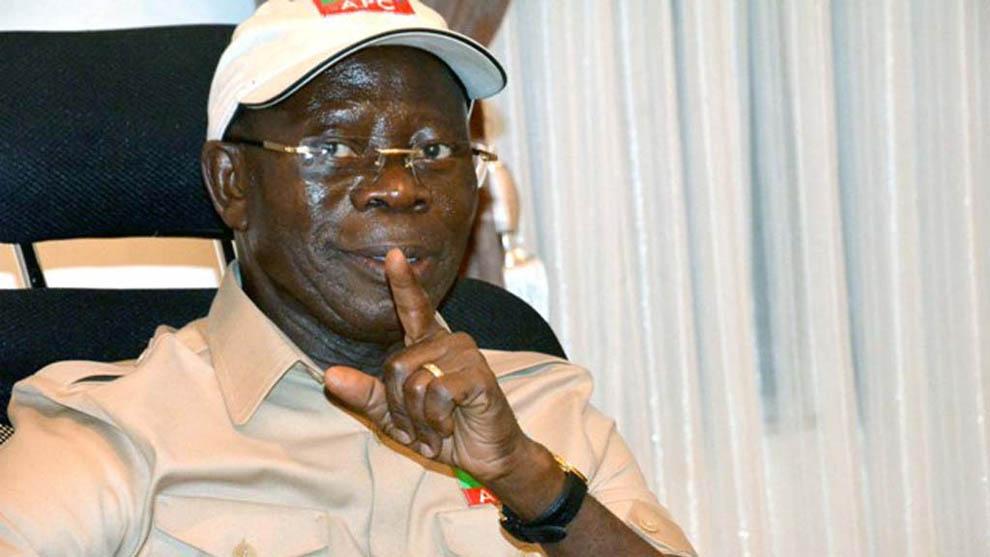
Oshiomhole Challenges Obi to Bible Oath Over Private Jet Controversy
Oshiomhole Challenges Obi to Bible Oath Over Private Jet Controversy
Former Edo Governor insists he witnessed Obi’s private jet use, calls for religious test to settle dispute
BENIN CITY — A fresh political controversy has erupted following claims by former Edo State Governor, Senator Adams Oshiomhole, that Labour Party presidential candidate Peter Obi frequently uses private jets despite public claims to the contrary.
Speaking in a recent interview on SYMFONI TV, Oshiomhole challenged Obi to a public oath-taking, proposing that both men place their hands on a Bible to settle the dispute.
“Obi is a Christian; I’m a Christian. Please bring a priest, bring your Bible, and I’ll put my hand on it, and let Obi put his hand on it,” Oshiomhole said, emphasizing their shared faith as the basis for the challenge.
The former governor alleged that he personally encountered Obi at the Executive Jet Wing in Lagos on at least two occasions. According to him, on one instance Obi was alone, while on another he was accompanied by his wife. Oshiomhole further claimed that he himself had flown a private jet from Benin and landed at the same time as Obi.
The remarks come amid a broader political exchange regarding Obi’s travel arrangements, which have been a subject of public debate. Obi’s media adviser, Dr. Valentine Obienyem, has since disputed Oshiomhole’s claims, pointing to a long history between the two politicians, including instances where Oshiomhole had previously praised Obi and invited him to campaign in Edo State.
The proposal for a Bible oath has sparked mixed reactions among political observers, with some describing it as an unusual but telling escalation of the ongoing verbal duel between the two prominent figures.
As of press time, neither Peter Obi nor his media team had responded directly to the specific challenge issued by Oshiomhole.
Oshiomhole Challenges Obi to Bible Oath Over Private Jet Controversy
Politics
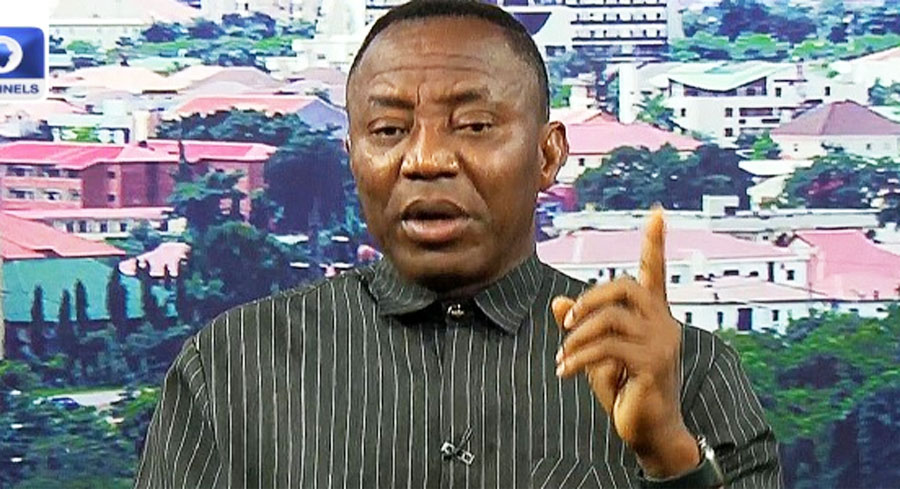
Obi Positioning for SGF Role Under Atiku’s ADC Ticket – Sowore
Obi Positioning for SGF Role Under Atiku’s ADC Ticket – Sowore
LAGOS — The political landscape ahead of the upcoming general elections was thrown into fresh turmoil yesterday following explosive allegations by the African Action Congress (AAC) presidential candidate, Omoyele Sowore, who claims that his Nigeria Democratic Congress (NDC) counterpart, Peter Obi, is secretly working to install Atiku Abubakar as president. In a statement made available to journalists, Sowore alleged that Obi is not genuinely pursuing the presidency but is instead positioning himself for the position of Secretary to the Government of the Federation (SGF) in an Atiku-led administration.
According to Sowore, the former Anambra State governor has been surreptitiously directing his teeming supporters to work for the African Democratic Congress (ADC) presidential candidate, Atiku Abubakar, rather than campaigning for his own party. “Obi is positioning himself to become Atiku’s SGF,” Sowore stated bluntly. “He is secretly directing his supporters to work for the ADC presidential candidate, Atiku. This is a betrayal of the movement that trusts him.” The allegation suggests a complex political realignment where the NDC and ADC are allegedly operating in a synergistic, if covert, manner. Sowore’s claims imply that the Obi movement is being used as a vehicle to siphon votes and energy toward Atiku’s bid, with the promise of a high-ranking position in the cabinet as the reward.
READ ALSO:
- How Bandits Demand ₦300m Ransom for Abducted Kaduna Couple, Baby in Viral Video
- 2027 Elections: Atiku Demands Names of INEC Ballot Printers, Questions Secret Contracts
- ₦8.7bn Erosion-Control Budget Gap Raises Questions as Anambra Gullies Expand
The accusation, if proven, could have significant implications for the opposition’s unity. Sowore, a vocal activist and former presidential candidate, has historically positioned himself as a critic of the political establishment, often accusing major party candidates of engaging in backroom deals that undermine the will of the electorate. The claim that Obi is eyeing the SGF role—typically the highest administrative office in the presidency—suggests that he may not be confident in winning the top seat, or that a consensus power-sharing arrangement has been struck behind closed doors.
The statement, however, raises questions about the current state of party coalitions. The article identifies Obi as the “NDC presidential candidate” and Atiku as the “ADC presidential candidate,” party labels that differ from their traditional political affiliations (Labour Party and PDP, respectively). This suggests a major realignment of political platforms in this election cycle. Neither the Obi campaign nor the Atiku campaign has issued an official response to Sowore’s allegations at the time of filing this report.
The news has sparked immediate debate on social media, with supporters of both camps expressing confusion and anger. Sowore’s supporters have praised him for “exposing the truth,” while Obi’s loyalists have dismissed the claims as a desperate attempt to remain relevant in a crowded political space. Political analysts suggest that if Sowore’s claims hold any weight, it could lead to a massive voter apathy among the youth demographic that has largely backed Obi’s previous bids.
As the election date approaches, the political arithmetic appears to be shifting rapidly, with accusations of secret pacts and strategic positioning becoming the order of the day. Sowore has vowed to continue exposing what he describes as the “unholy alliances” shaping the future of the nation.
Obi Positioning for SGF Role Under Atiku’s ADC Ticket – Sowore
Politics
Okonkwo Alleges Return of Subsidy, Accuses NNPC of Plotting Trillions in ‘Lost Profit’

Okonkwo Alleges Return of Subsidy, Accuses NNPC of Plotting Trillions in ‘Lost Profit’
Says FG’s 30-Day Fuel Discount Not Sourced from Dangote
The spokesman for the African Democratic Congress (ADC) presidential campaign, Kenneth Okonkwo, has raised an alarm over the Federal Government’s new 30-day fuel discount policy, describing it as a deceptive return to the previously abolished fuel subsidy regime.
In an interview with Channels TV on Sunday, October 11, 2026, Okonkwo criticized the policy for failing to source petroleum products from the Dangote Refinery. He argued that the Nigerian National Petroleum Company Limited (NNPC) is poised to claim trillions of naira in alleged lost profits as a result of the scheme.
Okonkwo, a political commentator, stated that because the NNPC is not producing domestic refined fuel, the discount is essentially an “import-related subsidy” that benefits foreign refineries and shipping operations rather than local ones.
“The NNPC is not taking from Dangote at all, but they’ll claim trillions in lost profit,” Okonkwo said. “Since NNPC isn’t producing domestic refined fuel, this discount is essentially an import-related subsidy benefiting foreign refineries and shipping operations instead of local ones.”
He warned that the return to a subsidy system opens the door to financial fraud, particularly through the inflation of consumption figures.
“You could report 70 million liters when only 15 million liters were used,” he cautioned, noting the risk of opaque accounting in the sector.
As an alternative, Okonkwo advocated for supplying crude oil directly to the Dangote Refinery for domestic processing to reduce import costs. He stated that domestic refining is a central pillar of the ADC’s economic proposal.
The ADC chieftain’s comments come amid ongoing debate over the Federal Government’s new fuel price mechanism. The government, through Finance Minister Taiwo Oyedele, has maintained that the 30-day discount is a “NNPC margin cut” and not a subsidy.
Under the arrangement, NNPC Retail is expected to forgo its profit margin on petrol rather than using public funds to stabilize prices. However, Okonkwo contends that this still constitutes a subsidy, as it artificially reduces consumer costs while masking the true financial burden on the state oil company.
Okonkwo Alleges Return of Subsidy, Accuses NNPC of Plotting Trillions in ‘Lost Profit’
-
 metro2 days ago
Tension in Kano as Phone Traders Confront Chinese Sellers Over Cheaper Phones
-
 metro3 days ago
Police Launch Manhunt After Fresh Attacks, Kidnappings Rock Four Nigerian States
-

 metro3 days ago
EFCC Wins ₦132m Money Laundering Case as Court Orders Forfeiture of Lagos Properties
-
 Business3 days ago
NNPC Petrol Discount: Motorists Must Download App to Save ₦66 Per Litre
-

 Sports3 days ago
Ronaldo Hits 980th Career Goal as Al-Nassr Win After Portugal Fallout
-

 Entertainment2 days ago
‘My Wife Fed Actresses I Was Dating Despite Knowing About Our Affairs’ – Yinka Quadri
-
 Politics3 days ago
INEC Raises Alarm Over Fake APC Result Naming Okorocha, Seeks DSS, Police Probe
-
 metro3 days ago
Hardship: ACF Gives Tinubu Three Months to Deliver Relief, Demands Clear Timelines