

metro
DHQ: Troops Rescue 398 Kidnap Victims, Arrest 31 Terrorists in One Week

DHQ: Troops Rescue 398 Kidnap Victims, Arrest 31 Terrorists in One Week
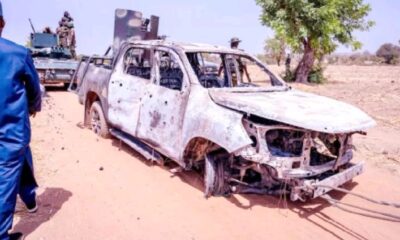
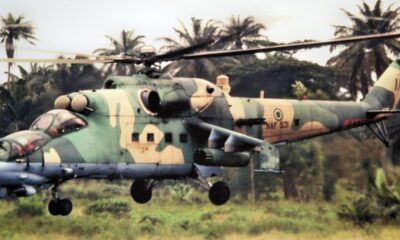
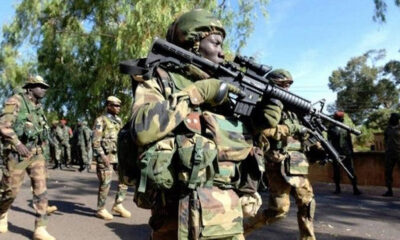
The Defence Headquarters (DHQ) has confirmed that coordinated military operations across the country have resulted in the rescue of 398 kidnapped victims, the arrest of 31 suspected terrorists and collaborators, and the neutralisation of 10 criminals within the last week. The update was given in Abuja on Tuesday by the Director of Defence Media Operations, Major General Michael Onoja, who said the Armed Forces recorded significant operational gains across all six geopolitical zones. Onoja explained that troops operating under various missions intensified offensive and intelligence-driven operations in the North-West, North-East, North-Central, South-East, and Niger Delta, targeting criminal networks and disrupting their supply chains, with the military continuing to urge members of the public to provide credible and timely information to support ongoing security efforts.
In the North-East, troops of Operation Hadin Kai intensified operations against Boko Haram and ISWAP fighters through raids, patrols and clearance operations across Borno, Adamawa and Yobe states, with a major breakthrough occurring when military operations in the Mandara Mountains led to the rescue of hundreds of civilians abducted by terrorists. According to Major General Abdulsalam Abubakar, Theatre Commander of the Northeast Joint Task Force Operation Hadin Kai, the rescue followed a coordinated special operation conducted on June 6 across multiple fronts around the Mandara Mountains, with Special Operations Forces initially carrying out preliminary missions that created confusion within terrorist camps, paving the way for ground troops of the 26 Task Force Brigade to extract the captives successfully. Major General Michael Onoja stated, “This daring manoeuvre induced widespread chaos within the terrorist networks, enabling ground troops to successfully rescue 360 civilians, predominantly women and children, who had been held since their abduction during an attack on the Ngoshe community on March 3, 2026.” Tragically, two infants died due to the harsh terrain during the evacuation, but the surviving 358 victims were evacuated to the hospital, treated, provided with food and water, and later handed over to the relevant authorities for reunification with their families. The military also confirmed the arrest of informants and logistics suppliers linked to insurgent groups, alongside the recovery of communication gadgets, cash, and other materials used to support terrorist activities, while additional tactical victories in the North-East included the surrender of a 20-year-old terrorist, Fannami Ali, in Monguno town, and the arrest of suspected informants in Yobe and Adamawa states. Troops also foiled an attack in Mallam Fatori, forcing the adversaries to flee and leaving behind an AK-47 rifle bearing Arabic inscriptions, further demonstrating the effectiveness of ongoing military operations in the region.
READ ALSO:
- Rapper Mystikal Sentenced to 20 Years in Prison After Pleading Guilty to Rape Charge
- Floyd Mayweather Faces Felony Charges Over Alleged $200,000 Watch Theft
- Mbappé Scores Brace as France Beat Senegal 3–1 in World Cup Opener
In the North-West, troops of Operation Fansan Yamna recorded decisive gains against terrorists and criminal elements in Kaduna, Katsina, and Zamfara States, with one of the most significant operations occurring on 5 June 2026 at a snap checkpoint en route from Gusau to Shinkafi Local Government Area of Zamfara State. Troops intercepted a vehicle and recovered a locally fabricated 9mm pistol, 1,002 rounds of 7.62mm by 39mm ammunition, 10 rounds of 9mm ammunition, and 10 rounds of 9.4mm ammunition, all concealed in a sack of millet, with the suspect, Mallam Mustapha Abubakar, arrested with the items and believed to be an arms dealer. Preliminary interrogation revealed the weapons were destined for an unidentified contact in Shinkafi LGA; troops subsequently tracked and arrested the intended recipient at Tupa village in Shinkafi LGA, with the suspect identified as 42 years old and allegedly involved in the illegal transportation of arms and ammunition to terrorist groups operating within the region. Troops also neutralised terrorists during separate operations in Birnin Magaji and Maru Local Government Areas of Zamfara State, recovering motorcycles, communication gadgets, uniforms and other logistics items, while in Tudun Wada village, eight suspected terrorists were arrested, and seven motorcycles were recovered along with 30 phone batteries, 19 mobile phones, 41 power banks, seven phone chargers, four Baofeng handheld radios, four pairs of camouflage uniforms, and three pairs of boots. The DHQ also recently launched “Operation Clean Sweep III” in Katsina State following the death of retired Major General Rabe Abubakar, who was abducted by suspected terrorists alongside his wife, with the operation targeting terrorists operating in Matazu Local Government Area and surrounding communities.
In the North-Central region, troops conducted intelligence-based operations across Niger, Plateau, Benue, Kogi, and Taraba states, leading to the rescue of kidnapped travellers and the arrest of suspected kidnappers and informants, with firearms, ammunition, mobile phones, and other incriminating items also recovered during the operations. Troops of Operation Savannah Shield arrested a high-value terrorist informant at Kara Market, Wawa, who had been on the watch list, with investigation of a recovered mobile phone revealing a photograph of a beheaded individual dated 2 May 2026, indicating possible links to terrorist networks. Operation Enduring Peace troops rescued six passengers along the Hawan Kibo – Rafin Sayin road in Riyom LGA of Plateau State after responding to reports of kidnappers blocking the road, while troops also arrested a suspected kidnappers’ informant at Mungi village in Mangu LGA and recovered a concealed pistol from his residential compound. In Kogi State, troops rescued two kidnap victims, including a bar manager and a sales girl abducted on 6 June 2026 at Ikoyi in Ijumu LGA, and reunited them with their families, while security forces also disrupted kidnapping networks in the state, preventing the movement of victims across criminal routes.
In the South-East, troops of Operation Udoka conducted joint operations targeting suspected IPOB/ESN hideouts, with one of the most significant operations occurring on 9 June 2026 when troops in conjunction with Department of State Services (DSS) operatives arrested six suspected IPOB/ESN members at Nenwe community in Aninri LGA of Enugu State. A follow-up operation to a suspected arms hideout disguised as a piggery led to the recovery of one General Purpose Machine Gun (GPMG), one RPG-7 tube, three AK-47 rifles, two hand grenades, a tear gas gun, 2 tear gas cartridges, six AK-47 magazines, and 748 rounds of assorted ammunition, representing a significant blow to the operational capacity of the proscribed group. On 10 June 2026, at a suspected IPOB/ESN safe house at Agbani in Nkanu West LGA of Enugu State, troops recovered eight AK-47 rifles, 12 AK-47 magazines, a tear gas gun, 323 rounds of 7.62mm special ammunition, and 10 pairs of IPOB uniforms, with all suspects and recovered items handed over to DSS Enugu State Command for further action.
In the Niger Delta, troops of Operation Delta Safe intensified anti-oil theft operations, dismantling illegal refining sites in Rivers and Delta states and recovering stolen petroleum products, with one notable operation occurring on 7 June 2026 along Road Eket–Etinan in Eket LGA of Akwa Ibom State. Troops recovered approximately 1,200 litres of suspected illegally refined Automotive Gas Oil (AGO) valued at approximately ₦2,256,000, with the suspects fleeing into the bush while their vehicle and product were appropriately handled. In Edo State, troops arrested five suspected kidnappers who confessed to involvement in kidnapping activities over the past two years, while in Delta State, troops discovered a trampoline tank containing approximately 4,000 litres of stolen crude oil, along with other illegal refining infrastructure, all of which were appropriately handled. Major General Onoja said the successes reflect the military’s sustained pressure on criminal elements and the effectiveness of intelligence-led operations across the country, reaffirming the Armed Forces’ commitment to restoring peace and ensuring the safety of lives and property nationwide.
DHQ: Troops Rescue 398 Kidnap Victims, Arrest 31 Terrorists in One Week








metro
Court Admits Supreme Court Judgment Against Emefiele in $4.5bn, N2.8bn Fraud Trial Despite Defence Objection

Court Admits Supreme Court Judgment Against Emefiele in $4.5bn, N2.8bn Fraud Trial Despite Defence Objection
LAGOS, NIGERIA — The Ikeja Special Offences Court has overruled an objection by former Central Bank of Nigeria (CBN) Governor, Godwin Emefiele, and admitted a certified true copy of a Supreme Court judgment into evidence in his ongoing $4.5 billion and N2.8 billion fraud trial.
Justice Rahman Oshodi, who presided over the proceedings on Friday, admitted the judgment as Exhibit L, ruling that it was a public document admissible in evidence.
The document reportedly concerns multiple properties forfeited to the Federal Government and allegedly linked to the former CBN governor.
The prosecution had sought to tender the Supreme Court judgment through its eighth witness, Alvan Gurumnaan, the lead investigator in the case.
However, Emefiele’s defence counsel opposed its admission, questioning its relevance and legal admissibility in the ongoing criminal proceedings.
READ ALSO:
- Tinubu Failed to Honour Our Agreement After I Took Political Risk for Him – Makinde
- Agunbiade Celebrates Wife, Raheem Adepeju, on M.Ed. Graduation from University of Ibadan
- ICPC Recovers ₦5.3bn in Seven States, FCT as LG Financial Probe Uncovers Irregularities
Emefiele is facing a 19-count charge bordering on alleged gratification, corrupt demands and abuse of office involving $4.5 billion and N2.8 billion.
He is standing trial alongside Henry Omoile, who faces a separate three-count charge over the alleged unlawful acceptance of gifts.
During Friday’s proceedings, the defence challenged the prosecution’s attempt to introduce the Supreme Court judgment, raising concerns about its relevance to the criminal trial and the circumstances surrounding the document’s presentation.
The defence also questioned the prosecution’s reliance on the judgment, which arose from a forfeiture-related matter.
In his ruling, Justice Oshodi dismissed the objections, holding that a certified true copy of a court judgment qualifies as a public document that can be admitted in evidence.
The judge explained that judgments are tendered in subsequent proceedings to establish what a court had previously decided, not to automatically import the evidence presented in the earlier case into a fresh trial.
He cited several judicial authorities, including David v. Friyisi Akperen (2000), Egwu v. Ezeubu (1992), Okoye v. Ogoji (1991) and Ademba v. Odizi (1999), in support of his position.
Justice Oshodi further held that the omission of certain ancillary details did not make the certified judgment incomplete or inadmissible.
Following the ruling, the court admitted the document as Exhibit L, with its use restricted to establishing the decisions previously reached by the Supreme Court concerning the disputed assets.
The development marks another stage in the prosecution’s presentation of evidence against the former CBN governor.
The court subsequently adjourned the case until December 17, 2026, for the continuation of cross-examination and further proceedings.
Court Admits Supreme Court Judgment Against Emefiele in $4.5bn, N2.8bn Fraud Trial Despite Defence Objection
metro
[ICYMI] Mohbad Was Killed Over DNA Dispute, His Friend Told Me – Father Alleges
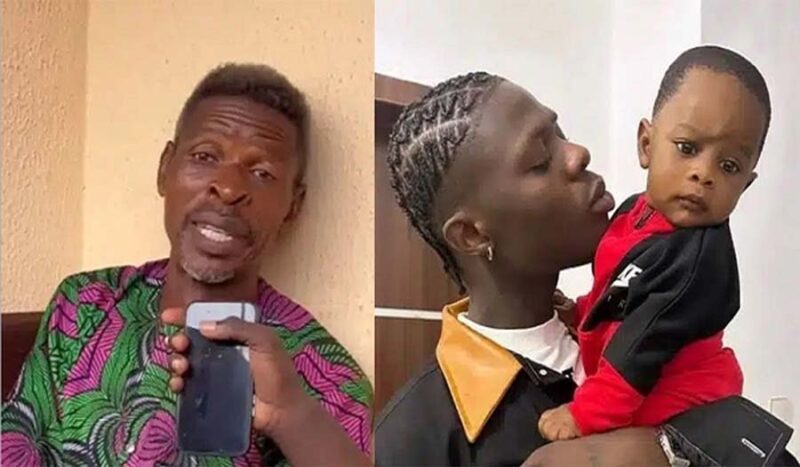
[ICYMI] Mohbad Was Killed Over DNA Dispute, His Friend Told Me – Father Alleges
LAGOS, Nigeria — Joseph Aloba, father of late Nigerian singer Ilerioluwa Aloba, popularly known as Mohbad, has alleged that his son was killed over issues surrounding DNA testing and paternity.
Aloba made the startling allegation during an emotional interview, claiming that a close friend of the late singer told him that the controversy over paternity was connected to his son’s death.
” Mohbad was killed because of DNA. I’m saying it now for the whole world to hear. Mohbad was killed because of DNA, his friend told me. He was killed because of paternity,” the bereaved father declared.
His claim has introduced another dimension to the controversy surrounding the circumstances of the singer’s death and the prolonged dispute within his family.
DNA Controversy Deepens
Mohbad died on September 12, 2023, at the age of 27, under circumstances that have continued to generate public debate and calls for justice.
Since his death, a protracted disagreement has emerged between his father and widow, Omowunmi Aloba, over the paternity of their son, Liam.
The dispute has also fuelled demands for a DNA test to establish the child’s biological paternity.
The controversy took another turn following reported court-ordered DNA sample collection involving parties connected to the dispute in October, although the outcome of the process remains a subject of public interest.
Father Seeks Public Support
During the interview, Joseph Aloba appealed to Nigerians and other well-meaning individuals to support his demand for justice and transparency over his son’s death.
He maintained that there were deeper issues surrounding the events that preceded the singer’s demise, pointing specifically to the alleged connection between the DNA controversy and the circumstances of his death.
However, his latest allegation has not been independently substantiated, and no official investigative finding has established that a DNA or paternity dispute was responsible for Mohbad’s death.
The allegation is therefore expected to generate further reactions as Nigerians continue to demand answers over the circumstances surrounding the death of the former Marlian Records singer.
Mohbad’s death remains a subject of public interest, with his family and supporters continuing to seek clarity and justice.
[ICYMI] Mohbad Was Killed Over DNA Dispute, His Friend Told Me – Father Alleges
metro
Oluwo Advised to Exercise Restraint, Emotional Intelligence Amid Osun Govt Controversy

Oluwo Advised to Exercise Restraint, Emotional Intelligence Amid Osun Govt Controversy
Public analyst, Lukman Raimi, urges monarch to embrace diplomacy, strengthen ties with government, prioritise peaceful coexistence and community development
A public analyst, Lukman Raimi, has advised the Oluwo of Iwo, Oba (Dr.) Abdulrasheed Adewale Akanbi, Telu I, to exercise emotional intelligence, strategic caution and restraint in his public engagements amid the controversy surrounding a reported cautionary letter issued to the monarch by the Osun State Government.
Raimi, who offered the advice in a public commentary, said the traditional ruler should avoid unnecessary verbal confrontations and adopt a more diplomatic approach in addressing issues capable of generating tension between the palace, the government and members of the public.
The analyst noted that the reported letter from the Osun State Government had generated mixed reactions, with some people welcoming the government’s intervention while others, particularly supporters of the monarch, expressed disagreement.
However, he said he belonged to neither camp, explaining that his intervention was intended to offer constructive advice to the monarch rather than take sides in the controversy.
According to him, understanding the relationship between traditional institutions and government authorities is essential to preserving the dignity and influence of the throne.
Raimi pointed out that state governments exercise statutory responsibilities over the appointment, recognition, regulation and remuneration of traditional rulers, subject to applicable laws.
He therefore urged the Oluwo to recognise the limits of traditional authority while appreciating the constitutional and statutory responsibilities of government.
Religious Convictions and Royal Restraint
Addressing the religious and cultural dimensions of the controversy, the analyst acknowledged that differences surrounding religion and cultural identity had generated tensions in parts of Yorubaland, including Iwo.
He maintained that the Oluwo had every fundamental right to affirm and practise his Islamic faith, stressing that the monarch should not be expected to apologise for his religious convictions.
Raimi also acknowledged that some critics of the monarch’s Islamic beliefs had allegedly resorted to provocative comments and derogatory remarks.
Nevertheless, he argued that such provocations should not compel a traditional ruler to engage in prolonged public exchanges or respond to every criticism.
Describing himself as a proud Muslim, Raimi said he admired the Oluwo’s commitment to Islam but believed that frequent public responses, the use of street slang and prolonged verbal exchanges were inconsistent with Islamic etiquette and the dignity expected of a traditional ruler.
He urged the monarch to demonstrate that religious commitment, cultural appreciation and peaceful coexistence could exist side by side.
‘A King Must Not Fight Like a Servant’
To reinforce his argument, Raimi invoked two Yoruba expressions which, according to him, capture the expectations of royal conduct.
He quoted the saying, “Oba kì í jagun bí ẹrú,” meaning that a king does not fight battles like a servant.
He also cited the expression, “Oluwo kò ṣe wò!” to emphasise the importance and dignity of the Oluwo’s throne.
The analyst argued that kingship comes with responsibilities that require wisdom, composure and the ability to rise above personal disagreements.
He further referenced prominent traditional rulers, including the Sultan of Sokoto, the Emir of Ilorin, the Emir of Kano, the Ooni of Ife, the Oba of Lagos, Oba Rilwan Akiolu, the Olubadan of Ibadanland and the Oba of Benin, as examples of monarchs whose public engagements, in his view, demonstrate the importance of measured communication.
According to Raimi, prominent traditional rulers often face criticism and insults but generally refrain from responding to every provocation because of the dignity associated with their offices.
He maintained that the Oluwo could protect his royal image and strengthen his influence by adopting a similar approach to public communication.
Analyst Recommends Meeting With Osun Governor
Beyond urging restraint, Raimi recommended that the Oluwo consider paying courtesy visits to the Osun State Governor and the Commissioner responsible for Chieftaincy Affairs.
He described such visits as important diplomatic gestures that could demonstrate institutional respect and a willingness to pursue constructive engagement.
According to him, direct engagement with government officials could help strengthen relationships, clarify possible misunderstandings, address misleading information and create opportunities for meaningful collaboration.
He suggested that rather than allowing disagreements to escalate through public exchanges, the palace should explore diplomatic channels capable of producing lasting understanding between the traditional institution and the state government.
Calls for Greater Focus on Community Development
Raimi also urged the monarch to devote greater attention to initiatives that would improve the welfare and development of people in Iwoland.
He specifically highlighted peaceful coexistence, charitable interventions, children’s mentorship, youth empowerment, support for widows and sustainable community development as areas deserving greater attention from the palace.
He advised the Oluwo to reposition himself as an ambassador of Islam, a proponent of the positive aspects of Yoruba culture, a father to all and a servant leader.
The analyst said the monarch had an opportunity to demonstrate that Islamic convictions, respect for Yoruba heritage and peaceful coexistence were not mutually exclusive.
He added that sustained commitment to these ideals would strengthen the Oluwo’s public image, enhance his royal legacy and elevate his standing beyond temporary controversies.
‘Royalty Must Be Defended With Wisdom’
Concluding his intervention, Raimi prayed for Allah’s guidance, patience and wisdom for the Oluwo, expressing hope that the monarch would enjoy a peaceful reign.
He also expressed confidence in the monarch’s personal appeal, ending his message with a humorous compliment about his handsome appearance.
“Long live the Oluwo! Long live Iwoland!” he declared.
His intervention comes amid continuing public discussions about the relationship between traditional institutions, religious identity and government authority in Osun State, with the analyst urging the Oluwo to embrace diplomacy and community-focused leadership as a means of strengthening his reign.
Oluwo Advised to Exercise Restraint, Emotional Intelligence Amid Osun Govt Controversy
-
 International3 days ago
US Lawmakers to Hold Fresh Hearing on Nigeria’s Insecurity, Christian Killings
-
 metro3 days ago
Court Orders Final Forfeiture Of 48 Properties Worth N212bn Linked To Malami
-

 metro2 days ago
Ogbomosoland Grand Chief Imam, Sheikh Teliat Ayilara II, Marks Five Years in Office
-
 metro3 days ago
Agunbiade Celebrates Oyo Grand Chief Imam Akeugberu at One, Says His Impact Equals a Decade
-

 News3 days ago
Tinubu’s Chicago Varsity Certificate Row: Omokri Challenges Journalists to Verify Fresh Allegations
-

 Auto3 days ago
After-Sales Support Will Define Future of Nigeria’s Auto Industry – Carloha Marketing Chief
-

 News2 days ago
BREAKING: Manchester United Sack Michael Carrick After Disastrous Start to Season
-

 metro3 days ago
Two Arrested as Police Recover ₦600,000, Nine Phones in Kano Robbery