

metro
Bandits Fear Death, Not God, Says Ex-NYSC DG Tsiga After 56-Day Captivity

Bandits Fear Death, Not God, Says Ex-NYSC DG Tsiga After 56-Day Captivity
- Retired General exposes insider collaborators, human shield tactics, and the terrifying weakness of criminal groups terrorizing Nigeria’s North-West
KADUNA, Nigeria – After surviving 56 harrowing days in the dens of armed bandits, former Director-General of the National Youth Service Corps (NYSC), Brigadier-General Maharazu Tsiga (retd.), has delivered a sobering message to Nigerians and security chiefs alike: bandits are not invincible, they fear death, and endless negotiations will never bring an end to the terrorism and banditry plaguing the nation.
The retired military officer, who was abducted from his hometown in Tsiga, Bakori Local Government Area of Katsina State, on February 5, 2025, alongside nine other residents, and released on April 1, 2025, spoke on Thursday in Kaduna during a press briefing organised by friends, associates, and colleagues of the late retired Major-General Abubakar Rabe. His testimony offered rare, unfiltered insight into the psychology, operations, and vulnerabilities of the criminal networks that have turned Nigeria’s North-West into a theatre of terror.
In his most striking remarks, Tsiga insisted that the criminals terrorizing communities are not supernatural beings but ordinary humans who can be effectively confronted. He declared that these people are human beings like everyone else, that they fear death and fear being confronted, and that if the security forces remove that fear through decisive action and face them squarely, they will achieve more meaningful results than endless negotiations. The former NYSC boss questioned the logic of negotiating with armed groups while failing to dismantle the wider infrastructure of informants, financiers, and logistics suppliers that enable their survival. He argued that a more aggressive and coordinated military strategy is urgently required to dismantle their operations and restore lasting peace.
Tsiga raised serious concerns about individuals and groups allegedly providing support to criminal organisations from within communities and public institutions. He alleged that during his captivity, he overheard bandit leaders discussing the procurement of ammunition from persons with access to government resources, suggesting that insider collaboration remains a major obstacle to peace. He asked who exactly the nation is negotiating with, pointing out that while authorities may negotiate with the bandits, those supplying them and profiting from the conflict will not allow peace to prevail because they are more interested in financial gain than the lives and property of innocent citizens. The retired general stressed that the fight against insecurity must also target individuals who provide support, intelligence, and logistics to criminal gangs. According to him, such collaborators are often embedded within communities and even public institutions, making them a far more dangerous threat than the foot soldiers wielding rifles in the forests.
READ ALSO:
- Biden, Clinton, Bush Join Obama for Historic Presidential Centre Opening
- Court Declares PENGASSAN Strike Against Dangote Refinery Illegal, Labels Crude Supply Disruption ‘Economic Sabotage’
- Libya Arrests Two Nigerians Over “Inciting” Social Media Posts
Tsiga offered a chilling assessment of the bandits’ psychology, revealing that they operate without any moral or religious restraint but tremble at the sound of fighter jets. He stated that they do not fear God, that they tell their captives not to call God for them but just to give them money, yet immediately they see aircraft, even their cows start running. This revelation has been widely interpreted as validation of the military’s ongoing aerial campaigns in the North-West, which have forced bandits to adopt desperate defensive measures – including using human shields. Security analysts have pointed to Tsiga’s testimony as confirmation that Operation Whirl Punch and other air operations are inflicting significant damage on criminal networks, destroying camps, and eliminating key leaders.
Perhaps the most disturbing revelation from Tsiga’s testimony was how the bandits exploited high-profile captives during military operations. He disclosed that whenever Nigerian Air Force aircraft approached the camp, the abductors forced hostages – especially those they knew held military rank – into the open as human shields. He recounted that whenever they were being attacked, sincerely speaking, the bandits brought them out so that the aircraft could target them, wanting them to be hit, but that God is merciful. In one particularly chilling episode, after a rocket fired at the bandits’ camp failed to explode, his captors placed the unexploded device beside where he slept, hoping he would trigger it. He recalled that they carried that rocket to where he was sleeping and hid it there so that immediately he woke up and touched it, it would explode, but God is merciful.
The retired senior military officer described conditions that tested the limits of human endurance. The abductors fed their captives only once a week – a meager meal of guinea corn – and subjected them to regular beatings. For a 72-year-old hypertensive patient like Tsiga, the excessive salt in the food compounded his suffering. He recounted that they were kept with dangerous animals – hyenas, snakes, and scorpions – and that a day before he was released, while on the mountain where he was staying, they suddenly noticed a hyena circling them, looking for food, with the only food available being the human captives themselves. The psychological torture was equally brutal, with Tsiga recalling how bandits constantly threatened to kill them, creating an atmosphere of perpetual fear and uncertainty.
The retired general further urged communities not to succumb to fear, noting that criminal groups often rely on intimidation to dominate larger populations. He observed that when only a few armed men can force hundreds or even thousands of people to flee, it shows the need for collective action, and that communities must work together with security agencies to deny criminals the space to operate. Tsiga emphasised that if the Army is doing its part and society fails to support those efforts, then everyone has failed, insisting that security is a collective responsibility and that only a united front involving security agencies, government institutions, and citizens can successfully confront banditry, terrorism, and their sponsors. He called on Nigerians to provide timely and credible intelligence to security forces, emphasizing that the National Security Adviser and the Chief of Defence Staff are not magicians and cannot act without reliable information from the public.
The bandits initially demanded ₦400 million for Tsiga’s release. A coordinated fundraising effort, organised through a WhatsApp platform named “TSIGA,” brought together over 300 members – including retired and serving military officers, university lecturers, ambassadors, and business people. Brigadier General Ismaila Abdullahi (retd.), who coordinated the effort, revealed that donations flowed in like August Rains after Tsiga’s bank account details were shared. While conflicting figures regarding the actual ransom amount have been reported – some sources claiming ₦60 million, others suggesting three times that amount – the ordeal highlighted the broader crisis of kidnapping in Nigeria. A 2024 National Bureau of Statistics report estimated that Nigerians paid approximately ₦2.2 trillion in ransom over a 12-month period, with an average of ₦2.67 million paid per kidnapping incident.
Security analysts have pointed to Tsiga’s testimony as validation of the military’s ongoing aerial campaigns in the North-West. According to Mukhtar Ya’u Madobi, a research fellow at the Centre for Crisis Communication, the general’s account reignited public confidence in the military’s relentless campaign against banditry. Operations such as Operation Hadin Kai in the North-East and Operation Whirl Punch in the North-West have sustained pressure on criminal networks, destroying camps and eliminating key leaders. Despite occasional incidents of collateral damage, the effectiveness of airstrikes has forced bandits to adopt desperate defensive measures – including using human shields. However, Tsiga’s warning about insider collaborators suggests that military action alone will not suffice, and that the networks of informants, financiers, and logistics suppliers that sustain banditry must also be dismantled through intelligence-driven operations and community engagement.
Now reunited with his family, Tsiga reflected on his release with profound gratitude while urging Nigerians to remain resilient in the fight against insecurity. He recalled that when they brought him out, he asked himself if he was still a human being. He called on his military colleagues to remain steadfast, describing the security challenge as one that will prepare the nation for a stronger future, noting that they were there 20 years ago doing the same thing and that it is a challenge, but a very good challenge that will prepare their future. As communities across Nigeria grapple with escalating insecurity, Tsiga’s message is clear: the military is making progress, bandits are terrified of air power, and citizens must play their part in providing intelligence to end the menace.
Bandits Fear Death, Not God, Says Ex-NYSC DG Tsiga After 56-Day Captivity












metro
Three Young Herders Killed, Two Missing in Plateau Attack
Three Young Herders Killed, Two Missing in Plateau Attack
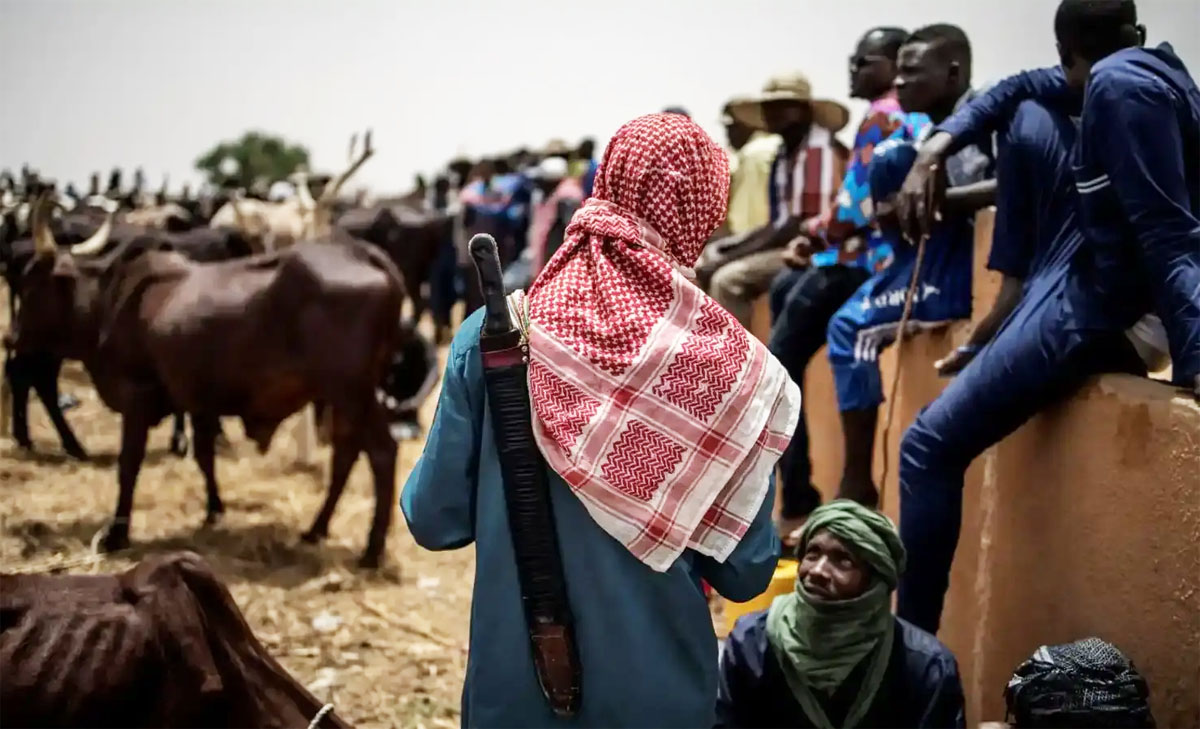
Three young herders have been killed and two others reported missing after suspected gunmen attacked a group tending cattle in the Aloghom area of Mangu Local Government Area, Plateau State.
The attack occurred on Saturday, September 12, 2026, in the Sabon Gari district of Mangu, an area that has experienced repeated incidents of violence involving farming and herding communities.
The victims were identified as Garzali Shaibu, 18; Bashiru Yakubu, 14; and Salim Abubakar, 15.
According to reports citing a military situation report, troops of Operation Enduring Peace were alerted after receiving information that herders grazing in the area had come under attack. Soldiers deployed from Sabon Gari subsequently moved to the location and recovered the bodies of the three victims.
Surviving members of the group reportedly told the troops that two other herders were unaccounted for, prompting efforts to establish their whereabouts.
The attack also resulted in significant losses of livestock. A situation report cited by security-focused publication Zagazola Makama put the number of cattle killed at 36, while 12 others were reportedly found with gunshot wounds. Community sources, however, estimated that about 50 cattle were killed in the attack.
The differing figures could not immediately be reconciled, but reports agree that the incident caused substantial losses of livestock belonging to the affected herding community.
Hashimu Yahaya, coordinator of the Fulbe Fulani Development Association in Mangu, identified the three victims and condemned the killings.
The Plateau State chairman of the Miyetti Allah Cattle Breeders Association of Nigeria (MACBAN), Ibrahim Yusuf Babayo, also condemned the attack and called for an investigation into the killings.
READ ALSO:
- JAMB Allows Candidates to Change Lost SIM, Email Addresses
- How Nigerians Can Get Federal High Court Affidavit Online Without Visiting Court
- Plateau Violence: Several Killed as Fresh Attacks Trigger Mass Exodus
Community representatives alleged that the attackers were members of a militia suspected to be operating in the area. That allegation has not been independently established, and the identities of the attackers and their motive remained under investigation.
There were also allegations that security personnel from another agency were present around the area during the incident but failed to intervene. The claim was reported as an allegation and had not been independently verified.
Security personnel reportedly recovered empty tear-gas canisters from the scene as troops intensified patrols and other operations in the area.
The military also warned against any attempt by members of the affected community to retaliate, amid concerns that the killings could trigger further violence between communities.
The latest incident came amid a fresh series of attacks in Plateau State, particularly in Mangu and neighbouring areas.
The state government subsequently condemned fresh attacks recorded in Mangu and a separate attack at Dungus Junction in Jos South Local Government Area, while urging residents to reject reprisals and cooperate with security agencies.
The violence has also occurred against the backdrop of efforts by security agencies and community stakeholders to mediate disputes between farmers and herders.
In Bokkos Local Government Area, for instance, troops of Operation Enduring Peace recently facilitated a settlement between farmers and herders after farms in Dambwash, Danbukor and Fokko were reportedly destroyed. Under the agreement, affected herders paid N4.5 million in compensation to 38 farmers, according to reports citing the military situation report.
Despite such interventions, recurring attacks continue to raise concerns over the security of farming and herding communities in Plateau.
The three slain herders were later buried in Mangu following funeral prayers at the Mangu Central Mosque, with community leaders using the occasion to appeal for calm and government action. Security personnel present at the burial reportedly urged residents to allow investigations into the killings to continue and avoid retaliatory attacks.
The killings have renewed concerns about the vulnerability of young people involved in livestock production and the wider impact of prolonged insecurity on livelihoods in Plateau.
For residents of Mangu and surrounding communities, the immediate concern remains preventing the incident from triggering another cycle of reprisal violence, while security agencies face pressure to identify those responsible, establish the fate of the two missing herders and strengthen protection for communities at risk.
Authorities have not publicly established the identities of the perpetrators, and investigations into the circumstances surrounding the attack remain ongoing.
Three Young Herders Killed, Two Missing in Plateau Attack
metro
EFCC Opens Mambilla Probe as Atiku, Malami, Others Named in ICC Arbitration Award

EFCC Opens Mambilla Probe as Atiku, Malami, Others Named in ICC Arbitration Award
The Economic and Financial Crimes Commission (EFCC) has reportedly constituted a special investigative team to examine alleged questionable transactions and dealings connected to the long-running Mambilla Hydroelectric Power Project, following a major International Chamber of Commerce (ICC) arbitration ruling involving Nigeria and Sunrise Power and Transmission Company Limited.
The development comes days after an ICC tribunal ruled in favour of the Federal Government of Nigeria, rejecting claims brought by Sunrise Power and its promoter, Leno Adesanya, over the controversial power project.
The reported EFCC investigation is expected to examine transactions and allegations arising from the 616-page arbitration award.
Among the individuals named or discussed in the tribunal proceedings are former Vice-President Atiku Abubakar, his former wife Jennifer Douglas Abubakar, former Attorney-General of the Federation Abubakar Malami, former Minister of Power and Steel Olu Agunloye, former National Security Adviser Sambo Dasuki, his son Abubakar Dasuki, former Solicitor-General of the Federation Abdullahi Yola, and former Permanent Secretary in the Ministry of Power Dere Awosika.
The appearance of a person’s name in the arbitration award does not, however, establish criminal liability. The reported EFCC investigation is a separate process through which allegations and financial transactions may be examined under Nigerian law.
The ICC tribunal rejected Sunrise Power’s claims against Nigeria, including a demand linked to an earlier settlement agreement. The tribunal also ordered Sunrise and Adesanya to reimburse Nigeria about $11.8 million in legal fees and expenses.
The arbitration was connected to the disputed Mambilla Power Project in Taraba State, which has been the subject of legal and contractual disagreements for more than two decades.
One of the transactions examined by the tribunal was a $500,000 payment made by Adesanya in January 2003 from an account associated with his offshore company, China Castle Investments Ltd, to a United States bank account belonging to Jennifer Douglas Abubakar.
READ ALSO:
- Jetour T1 Storms Abuja as Automaker Accelerates Nigeria Expansion
- Kidnapped Female Police Officer Found Dead in Ebonyi as Suspect Leads Police to Remains
- CNN, MS NOW, Politico Sue Trump Over White House Access Ban
According to the tribunal findings, Adesanya said the payment was connected to a foreign-exchange transaction undertaken for Atiku through his bureau de change business.
The tribunal, however, said the explanation was not supported by sufficient documentary evidence. It noted that records establishing the underlying naira payment, exchange rate, instructions or other documentation corroborating the explanation were not produced.
The tribunal described the circumstances surrounding the transaction as raising significant questions, particularly because of its timing and Adesanya’s efforts to secure the Mambilla contract.
The tribunal also considered other payments involving individuals connected to the project, including payments allegedly made to former minister Olu Agunloye through an aide and a payment of about $1.74 million made to Abubakar Dasuki.
In relation to Atiku, the tribunal’s findings require particular distinction. While it examined the $500,000 payment and the circumstances surrounding it, the tribunal did not find evidence that Atiku used his position as a government official to secure the Mambilla contract for Sunrise.
That finding is significant because the EFCC‘s reported investigation should not be presented as an established finding of criminal wrongdoing against Atiku or any other individual named in the award.
The arbitration also contained critical findings concerning former Attorney-General Abubakar Malami.
The tribunal criticised Malami’s handling of settlement negotiations with Sunrise and, according to the award, raised serious concerns about his dealings with Adesanya.
The tribunal also concluded that the settlement arrangements at the centre of the dispute were not binding on Nigeria because the required presidential approval had not been obtained.
The findings concerning Malami are part of an arbitration award rather than a criminal conviction. Any criminal consequences would depend on further investigation and, where applicable, prosecution and adjudication by the appropriate Nigerian courts.
The Mambilla Power Project dates back to a 2003 arrangement for the development of a major hydropower facility in Taraba State. The project subsequently became embroiled in disputes over the validity of the contract, settlement agreements and compensation claims.
Sunrise Power later pursued arbitration proceedings against Nigeria, including claims running into hundreds of millions of dollars.
The latest ICC decision rejected the claims before the tribunal and was welcomed by the Federal Government as a major development in the prolonged dispute.
President Bola Ahmed Tinubu welcomed the ruling and said it removed a significant legal obstacle surrounding the project.
Sunrise Power promoter Leno Adesanya, however, said the company’s legal team would review the arbitration decision and consider available lawful options.
The reported EFCC investigation now introduces a separate domestic dimension to the Mambilla controversy.
Investigators are expected to examine the financial transactions, relationships and official decisions highlighted during the arbitration proceedings and determine whether any of the conduct amounts to offences under Nigerian law.
The EFCC has not publicly announced criminal charges against Atiku, Malami or the other individuals whose names appeared in the tribunal proceedings based on the reports surrounding the latest development.
Consequently, being named in the ICC Mambilla arbitration award should not be interpreted as equivalent to being charged with or convicted of a crime.
The latest development nevertheless places the Mambilla Power Project, the disputed financial transactions and the conduct of several former public officials under renewed scrutiny as the reported EFCC investigation progresses.
The focus will now be on what the domestic investigation establishes independently of the ICC proceedings, while the Federal Government continues efforts to advance the long-delayed hydropower project.
EFCC Opens Mambilla Probe as Atiku, Malami, Others Named in ICC Arbitration Award
metro
Kidnapped Female Police Officer Found Dead in Ebonyi as Suspect Leads Police to Remains
Kidnapped Female Police Officer Found Dead in Ebonyi as Suspect Leads Police to Remains
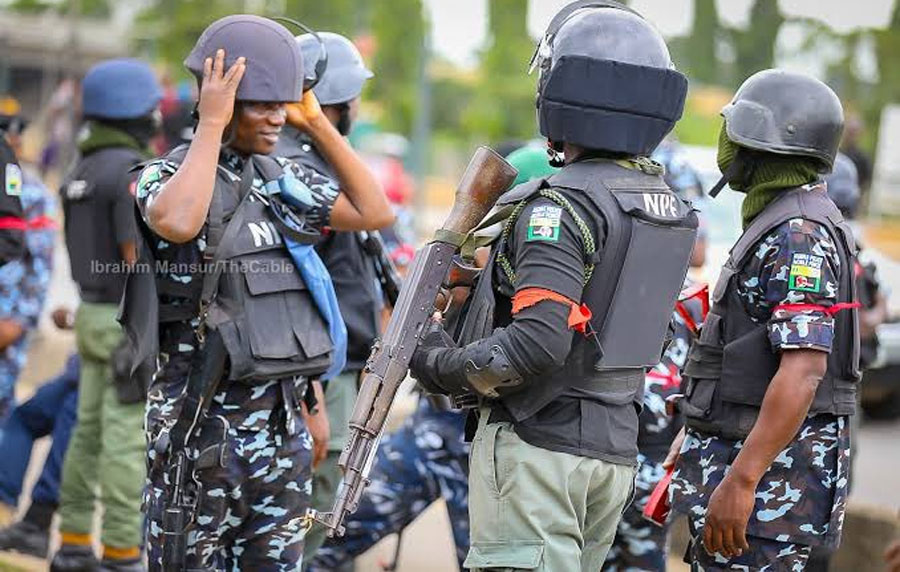
A female police officer kidnapped in Ebonyi State has been found dead after police arrested a principal suspect in connection with her abduction and recovered her remains from a location allegedly identified by the suspect.
The development was disclosed by the Nigeria Police Force in its latest nationwide operational update, which highlighted arrests, rescue operations and the recovery of weapons and other exhibits across several states.
According to the police, the suspect was arrested following sustained intelligence-driven and technology-based investigations into the abduction of the female officer.
The suspect allegedly led police operatives to the location where the remains of the kidnapped police officer were recovered.
The Force did not, however, disclose the identity of the officer, the circumstances surrounding her abduction or the cause of her death.
It also did not state how long the officer had been missing before her remains were recovered or whether additional suspects had been arrested in connection with the case.
The development represents a major breakthrough in the investigation into the officer’s disappearance, but police said the case remains under investigation.
The suspect is being treated as an alleged member of a kidnapping syndicate pending the conclusion of investigations and any subsequent court proceedings.
Police said the investigation was supported by intelligence gathering and technology, which eventually led operatives to the principal suspect.
Following the arrest, the suspect allegedly provided information that enabled investigators to locate the scene where the officer’s remains were recovered.
The circumstances surrounding the officer’s death are yet to be publicly established. Police have not disclosed whether the remains showed evidence of violence or whether a forensic examination has been conducted to determine the cause of death.
Investigators are expected to examine the recovered remains and other evidence as they work to establish what happened to the officer and determine whether other individuals were involved in her abduction and death.
READ ALSO:
- CNN, MS NOW, Politico Sue Trump Over White House Access Ban
- JAMB Allows Candidates to Change Lost SIM, Email Addresses
- How Nigerians Can Get Federal High Court Affidavit Online Without Visiting Court
The Ebonyi case was included in a wider Nigeria Police Force operational report covering security operations across the country. The Force said its operations resulted in the arrest of 334 suspects and the rescue of kidnapped victims, alongside the recovery of firearms, ammunition and other exhibits in different states.
In another operation reported in Adamawa State, police said two kidnapped victims were rescued from a suspected kidnappers’ hideout in Shako Forest, Toungo Local Government Area, while a suspect was arrested and allegedly provided information implicating five fleeing accomplices. (Primetimes)
The police said the various cases remain under investigation by the relevant State Criminal Investigation Departments (CID) and the CID at Force Headquarters in Abuja.
For the Ebonyi investigation, the immediate focus is expected to be on determining the circumstances of the officer’s abduction, identifying all those allegedly involved and establishing how and when she died.
The recovery also gives investigators an opportunity to gather further physical and forensic evidence that could help link suspects to the crime.
The police have not announced any further arrests in the case or disclosed whether any weapons, vehicles, communication devices or other exhibits were recovered during the operation.
The Force has increasingly emphasised intelligence-led policing, technology-assisted investigations and inter-agency cooperation in its response to kidnapping and other organised crimes.
The latest development in Ebonyi underscores the continuing security challenges faced by police personnel and other residents in areas affected by kidnapping and violent criminal activity.
While the arrest represents progress in the investigation, the police have yet to provide a full account of the circumstances leading to the officer’s death.
Further details are expected as investigators continue questioning the suspect and examining evidence recovered from the scene.
Until the investigation and any court proceedings are concluded, the suspect remains presumed innocent and allegations against him have not been established by a court.
Kidnapped Female Police Officer Found Dead in Ebonyi as Suspect Leads Police to Remains
-

 metro2 days ago
Oyo Police: Student Who Died by Suicide Was Charged With Assault, Not ₦8,000 Debt
-

 metro3 days ago
Niger Miners’ Deaths: Families Demand Compensation, Justice for Victims
-

 metro3 days ago
Mambilla: ICC Raises Questions Over $500,000 Payment to Atiku’s Former Wife
-

 Entertainment3 days ago
“She Wanted to Stay Single”: Rema Opens Up About Rejection That Inspired Hit Song ‘Oh No’
-
 International19 hours ago
18 Suspects Transferred to US Over 2021 Killing of Haitian President Moïse
-

 Auto2 days ago
Abuja Demand Rises as Jetour Brings X70 Plus Experience to FCT
-

 metro2 days ago
Irreconcilable Developments: Wedding Cancelled 24 Hours Before Ceremony
-

 metro3 days ago
Niger Miners’ Deaths: Survivor Alleges Substance Was Sprayed in Cell as Probe Intensifies