

Politics
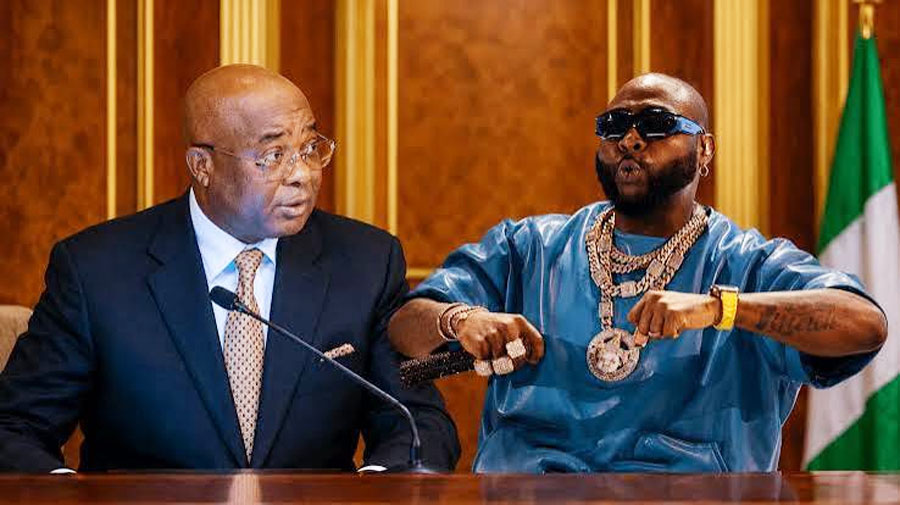
Osun Election: ‘Prepare to Sign Your Uncle as Dancer’ — Uzodimma Fires Back at Davido
Osun Election: ‘Prepare to Sign Your Uncle as Dancer’ — Uzodimma Fires Back at Davido
Imo State Governor Hope Uzodimma has delivered a sharp response to Afrobeats superstar Davido, telling the singer to prepare to sign his uncle, Governor Ademola Adeleke, as a dancer in his musical band after the upcoming Osun State governorship election. The exchange follows Davido’s appeal to an unnamed politician from Imo State, widely interpreted as Uzodimma, to allow a free and fair election in Osun and refrain from interference ahead of the August 15, 2026 governorship poll.
Davido, who serves as the head of youth mobilisation for his uncle Governor Adeleke’s re-election campaign, addressed supporters on Wednesday urging calm and rejecting violence ahead of the poll. Speaking at a press conference in Osogbo, Davido called on an unnamed “daddy from Imo State” to use his influence to promote peace rather than interfere in the electoral process. “I’ve heard rumours that there are moves to interfere in the Osun State election or to use the state as a political battleground to prove a point,” Davido said. “I do not present these claims as facts, but I appeal to you, sir, to use your influence to promote peace and allow the people of Osun to choose their candidates freely.” The singer invoked his family connection to Imo State through his wife, Chioma, to lend sincerity to his appeal. “Osun is ours, the future is ours, and let peace lead the way,” Davido urged residents.
READ ALSO:
- Abuja Earth Tremor: Minister Orders Hourly Monitoring, Assures Residents of Safety
- Tinubu Orders EFCC to Unfreeze Osun Govt Accounts, Says Timing ‘Embarrassing’
- Osun Account Freeze: Atiku Accuses Tinubu of Weaponising State Institutions Against Opposition
Uzodimma, who chairs the All Progressives Congress (APC) National Campaign Council for the Osun election, responded through a statement issued by his Senior Special Assistant on Electronic and Creative Media, Ambrose Nwaogwugwu. He dismissed Davido’s appeal as “pedestrian,” arguing that the singer should direct his message to Osun voters rather than to him. “It is rather pedestrian for Davido to direct such an appeal to the Chairman of the Progressive Governors’ Forum simply because his wife is from Imo State,” the statement read. “Instead, his appeal should be directed to the people of Osun State, who will ultimately decide the election’s outcome through their votes.”
Uzodimma also took aim at Governor Ademola Adeleke’s record, claiming dissatisfaction among Osun residents. “The reality is that Governor Ademola Adeleke has, in the opinion of many, failed woefully in the discharge of his responsibilities. This is why many Osun voters are determined to vote him out in the August 15, 2026, governorship election,” Uzodimma said. He claimed that signals from across the state indicated voters were ready to embrace “a new direction” under the APC candidate, Bola Oyebamiji.
In a biting personal jab, Uzodimma suggested Davido prepare his uncle for life after politics. “Rather than attempting to influence Governor Hope Uzodimma through emotional appeals, Davido should concentrate on helping his uncle prepare for life after office, as the people of Osun appear ready to cast their votes massively in favour of the APC candidate,” the statement read. “Perhaps, Davido should also begin making preparations to officially sign his uncle as a dancer in his musical band, because judging by the mood of the electorate, he may well be out of a political job after the August 15, 2026, governorship election.”
The exchange comes amid heightened political tensions ahead of the Osun governorship election, where Governor Adeleke is seeking a second term under the Accord Party. The controversy follows recent actions by the Economic and Financial Crimes Commission, which froze bank accounts linked to the Osun State Government, and alleged arrests of Adeleke’s supporters by the police. The governorship election is scheduled to take place on August 15, with 14 candidates contesting the poll.
Osun Election: ‘Prepare to Sign Your Uncle as Dancer’ — Uzodimma Fires Back at Davido





Politics
Hamzat, GRV Clash Over Housing, Transport, Governance at Lagos Debate
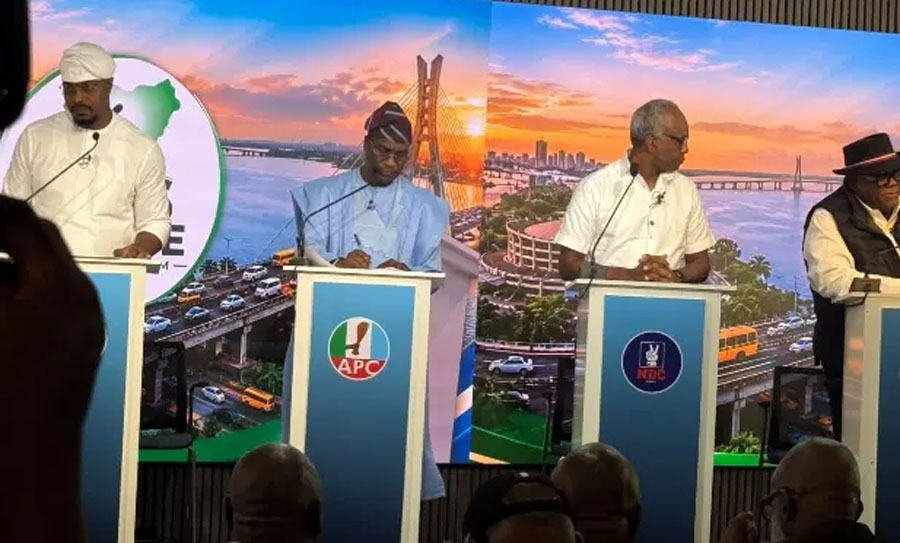
The Lagos State Deputy Governor and All Progressives Congress (APC) governorship candidate, Obafemi Hamzat, and his African Democratic Congress (ADC) counterpart, Gbadebo Rhodes-Vivour, have presented contrasting development plans for Lagos State ahead of the 2027 governorship election.
The two candidates outlined their policy priorities during the 2026 Lagos State Governorship Debate held in Lekki on Sunday, November 8, with particular attention to housing, transportation, infrastructure, security, healthcare, waste management and accountable governance.
Hamzat, who described the debate as a job interview, relied heavily on his experience in public service, arguing that his professional background and previous appointments had prepared him for the responsibility of governing Lagos.
He said his experience as a teacher, case manager in New York and systems manager, alongside his years in the Lagos State Government, had equipped him with the knowledge required to manage the state’s affairs.
The APC candidate recalled his time as Commissioner for Science and Technology, during which he said he led the development of the state’s residents and structural database.
He also highlighted his tenure as Commissioner for Works and Infrastructure, citing his involvement in the delivery of major infrastructure projects, including a cable bridge described as the first of its kind in West Africa and the second in Africa.
Hamzat said effective governance required a leader who understood the people, the state and the responsibilities attached to public office.
Presenting his development blueprint, tagged Jacob’s Promise, he said it was structured around seven pillars, seven broad areas of action and 100 pledges.
He identified respect for citizens, hard work and truthfulness as the principles that would guide his administration, adding that government should prioritise actual delivery over public announcements.
READ ALSO:
- ‘My History Is Traceable’: Atiku Fires Back at Tinubu Over University Funding
- Job Seeker Steals Bugatti CEO’s £2m Car After Finding Keys Inside
- Netanyahu Faces Political Setback as Israeli President Picks Rival to Form Government
According to him, residents should evaluate candidates based on their experience, the substance of their programmes and their ability to translate promises into tangible results.
In contrast, Rhodes-Vivour argued that Lagos needed a different approach to governance, accusing successive administrations of prioritising the interests of wealthy residents and privileged communities over those of ordinary people.
The ADC candidate said his political activities and manifesto had consistently focused on improving the living conditions of ordinary Lagos residents.
He maintained that the state needed an integrated development strategy capable of addressing interconnected challenges in housing, transportation, healthcare, education, waste management and urban planning.
On housing, Rhodes-Vivour promised to deliver 100,000 housing units within his first four years if elected.
He proposed funding social housing through luxury taxation, developing the eastern foreshore and intergenerational areas, and decentralising housing development across the state.
He also promised to expand Lagos’ railway network, saying his administration would connect the state’s rail lines within two and a half years through a private-sector-driven arrangement.
He said the proposed approach would be transparent, equitable and cost-effective, with the objective of improving connectivity and opening up more communities for development.
Rhodes-Vivour further argued that the state’s high internally generated revenue should translate into improved living conditions and better public services for residents.
He cited communities such as Makoko while criticising what he described as development policies that displaced ordinary residents in favour of elite interests.
The ADC candidate also pledged to address traffic congestion, flooding, waste management and the activities of street touts, popularly known as agberos.
OTHER CANDIDATES PRESENT THEIR VISIONS
The debate also featured governorship candidates of other political parties, including Funso Doherty of the Nigeria Democratic Congress (NDC) and Deji Doherty of the Peoples Democratic Party (PDP).
Funso Doherty criticised the state’s revenue and taxation system, arguing that Lagos residents continued to face multiple levies without receiving public services commensurate with the revenue generated by the government.
READ ALSO:
- 2027: Tinubu Challenges Atiku to Explain How He Financed University
- Afenifere Crisis: ‘There Is Only One Afenifere’, Secretary Insists Amid Breakup Allegations
- Illicit Donations: Adeboye Orders RCCG to Refund Billions Traced to Church Projects
He maintained that Lagos was operating below its potential despite its substantial internally generated revenue.
The NDC candidate, who said he had spent about 30 years in the private sector, promised a new direction for the state, particularly in healthcare and essential public services.
He urged residents to hold his party accountable if elected.
Deji Doherty, on his part, highlighted the need to improve electricity supply and create more economic opportunities for residents.
He said his experience as a technocrat and industrialist had informed his decision to seek the governorship position.
On housing, the PDP candidate cautioned against making unrealistic promises, arguing that the cost of land and building materials must be considered before setting ambitious construction targets.
He also raised concerns about gaps in primary healthcare delivery, particularly in some island communities.
DEBATE AHEAD OF 2027 ELECTION
The Lagos governorship debate was organised by the Nigeria Debate Consortium, a coalition of media organisations comprising Channels Television, TVC News, The PUNCH, TheCable and Vanguard.
The exercise is part of a series of debates scheduled ahead of the 2027 general elections, aimed at giving candidates a platform to explain their programmes and respond to questions on issues affecting Nigerians.
The organisers said the debate was designed to promote issue-based political engagement, democratic accountability and informed electoral choices.
The participating candidates were expected to address major concerns affecting Lagos residents, including the economy and cost of living, transportation and infrastructure, flooding and the environment, healthcare and social welfare, security and accountability.
The February 6, 2027 governorship election will determine who succeeds Governor Babajide Sanwo-Olu as the next governor of Lagos State.
Hamzat, GRV Clash Over Housing, Transport, Governance at Lagos Debate
Politics
ADC Crisis: Aregbesola Heads to Appeal Court, Challenges Judgment Nullifying Mark-Led Leadership

ADC Crisis: Aregbesola Heads to Appeal Court, Challenges Judgment Nullifying Mark-Led Leadership
The leadership crisis rocking the African Democratic Congress (ADC) has taken another legal turn as the party’s National Secretary, Rauf Aregbesola, has approached the Court of Appeal to challenge the Federal High Court judgment nullifying the emergence of the David Mark-led leadership of the party.
Aregbesola is asking the appellate court to overturn the judgment delivered on November 5, 2026, by Justice Peter Lifu of the Federal High Court in Abuja, arguing that the lower court lacked jurisdiction to entertain the dispute over the party’s leadership.
The former Osun State governor filed a notice of appeal on Friday through his lawyer, Mohammed Sheriff, a Senior Advocate of Nigeria (SAN).
In the appeal, Aregbesola listed former ADC National Deputy Chairman, Nafiu Gombe, the ADC, Senator David Mark, the Independent National Electoral Commission (INEC) and former National Chairman, Ralph Nwosu, as the first to fifth respondents.
He is challenging the lower court’s decision to assume jurisdiction over issues surrounding his emergence as national secretary and the validity of resolutions reached at the party’s 99th National Executive Committee (NEC) meeting.
Aregbesola also wants the Court of Appeal to set aside the declaration that Gombe’s four-year tenure remained valid and that he was entitled to oversee the affairs of the party.
The appeal contains five grounds, through which his lawyer argued that Justice Lifu made errors in interpreting the relevant provisions of the Electoral Act 2022, the 1999 Constitution and the ADC constitution.
One of the central arguments is that the trial judge wrongly assumed jurisdiction over competing claims to the party’s leadership by relying on issues relating to INEC’s statutory oversight responsibilities.
READ ALSO:
- ‘My History Is Traceable’: Atiku Fires Back at Tinubu Over University Funding
- Job Seeker Steals Bugatti CEO’s £2m Car After Finding Keys Inside
- Netanyahu Faces Political Setback as Israeli President Picks Rival to Form Government
Aregbesola’s lawyer also faulted the court’s reliance on the absence of a democratic election at the 99th NEC meeting to invalidate his emergence as national secretary.
According to the appellant’s legal team, Section 82(3) of the Electoral Act 2022 and Section 223(1)(a) of the Constitution must be considered alongside Article 23(4) of the ADC constitution.
The lawyer argued that Article 23(4) empowers the appropriate executive organ of the party to appoint an eligible replacement to fill a vacant position pending an election at the next convention or congress.
He maintained that the trial court failed to determine whether Aregbesola’s emergence was an election or an interim appointment permitted under the party’s constitution.
In one of the arguments contained in the appeal, the lawyer stated that the absence of voting did not automatically establish whether the resolutions of the NEC meeting amounted to an election or an interim appointment.
Aregbesola is therefore asking the appellate court to set aside the lower court’s decision and strike out the affected claims if it determines that the Federal High Court lacked jurisdiction.
Alternatively, he wants the findings invalidating his assumption of office and the disputed NEC resolutions reversed.
He also requested that if the Court of Appeal upholds the lower court’s jurisdiction but considers a fresh hearing necessary, the affected claims should be returned to the Federal High Court for retrial before another judge.
Aregbesola Seeks Stay of Execution
Apart from filing the appeal, Aregbesola has also approached the Federal High Court with a separate application seeking a stay of execution of the November 5 judgment pending the determination of his appeal.
The motion, filed on Saturday and marked FHC/ABJ/CS/1819/2025, seeks an order restraining the enforcement of, or further consequential actions arising from, Orders 7 and 8 of the judgment.
His lawyer argued that the appeal raises substantial and arguable questions of law and fact, particularly concerning the jurisdiction of the trial court and the interpretation of the ADC constitution and relevant electoral provisions.
The application is intended to prevent the immediate enforcement of the disputed orders while the appellate proceedings continue.
How the ADC Leadership Crisis Started
The dispute followed the resignation of former ADC National Chairman, Ralph Nwosu, after which Nafiu Gombe claimed he was constitutionally entitled to assume leadership of the party.
Gombe subsequently approached the Federal High Court, challenging the emergence of the Mark-led leadership and arguing that the process violated the ADC constitution and relevant provisions of the Electoral Act.
He asked the court to invalidate decisions taken by the Mark-led leadership and restrain Mark, Aregbesola and other members of the interim National Working Committee from presenting themselves as the party’s legitimate leaders.
However, the Mark-led faction opposed the suit, maintaining that Gombe was no longer serving as deputy national chairman when Nwosu resigned and was therefore not entitled to take over the party’s leadership.
In his November 5 judgment, Justice Lifu ruled against the Mark-led leadership, nullifying the caretaker committee and its decisions, including actions relating to the party’s selection of candidates for the 2027 general election.
The ruling also affected the process that produced former Vice-President Atiku Abubakar as the ADC’s presidential candidate.
The ADC had earlier announced that it had separately appealed the judgment and applied for a stay of execution. The party also urged INEC to suspend further action on the leadership dispute pending the determination of the legal challenge.
Aregbesola’s latest move adds another dimension to the dispute, with the party’s leadership and the validity of decisions taken under the Mark-led executive now subject to further judicial proceedings.
ADC Crisis: Aregbesola Heads to Appeal Court, Challenges Judgment Nullifying Mark-Led Leadership
Politics
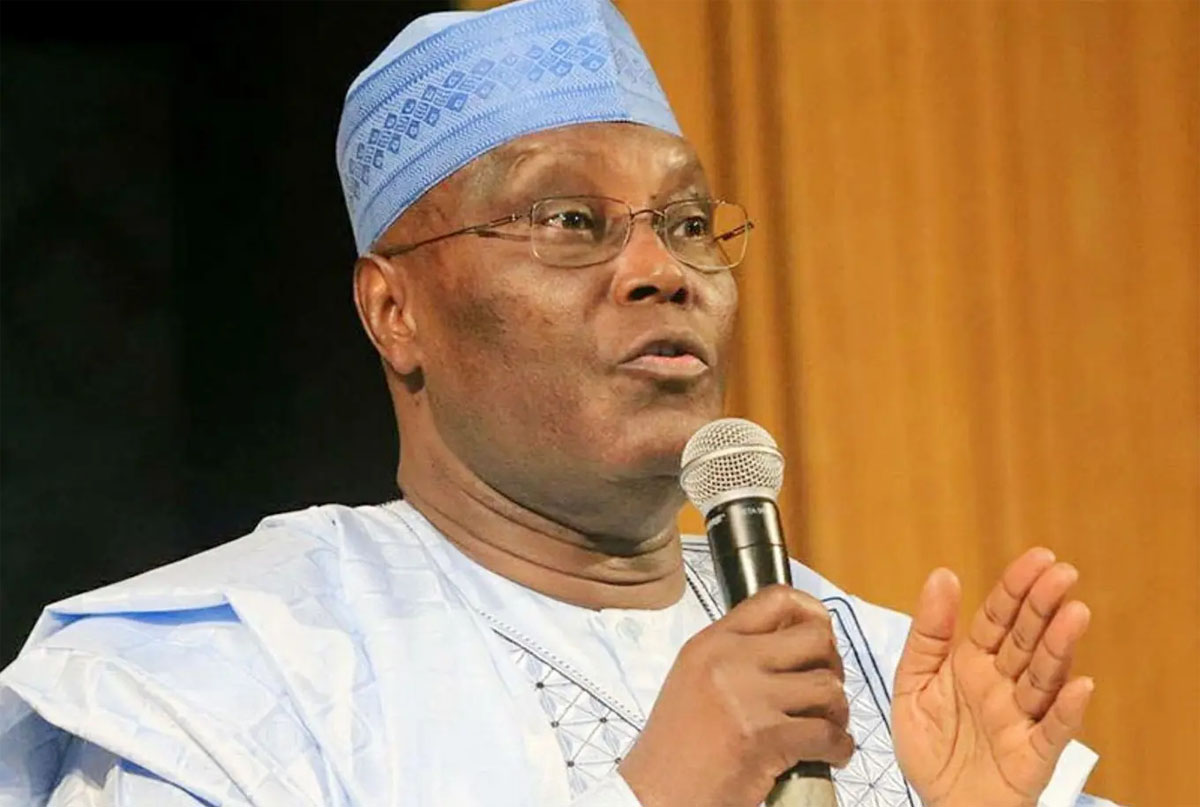
‘My History Is Traceable’: Atiku Fires Back at Tinubu Over University Funding
‘My History Is Traceable’: Atiku Fires Back at Tinubu Over University Funding
Former Vice-President Atiku Abubakar has fired back at President Bola Ahmed Tinubu over comments questioning how he financed the establishment of his university, insisting that his business and educational investment records are traceable.
Atiku, the presidential candidate of the African Democratic Congress (ADC), said his investment in education began long before he became vice-president, accusing Tinubu of attempting to divert public attention from the economic challenges facing Nigerians by questioning his business history.
The exchange followed Tinubu’s remarks at an All Progressives Congress (APC) campaign rally in Port Harcourt, Rivers State, on Saturday, November 7, 2026.
The President had challenged Atiku to explain how he established the American University of Nigeria (AUN) in Yola, Adamawa State, while serving as vice-president under former President Olusegun Obasanjo between 1999 and 2007.
Tinubu alleged that public resources were used to establish the institution, asking who financed the university and questioning Atiku’s moral integrity to seek the presidency.
In response, Atiku, through his Director of Strategic Communication, Phrank Shaibu, said his investment in education predated his entry into public office.
He maintained that he laid the foundation for ABTI Academy in 1993, arguing that the project later developed into the American University of Nigeria.
Atiku said: “The answer is simple: my investment in education predates my time in public service. In 1993, while a US court ordered the forfeiture of funds in an account in your name, describing them as proceeds of narcotics trafficking or funds involved in unlawful financial transactions, I was laying the foundation for ABTI Academy. That Academy has since grown into the American University of Nigeria.”
READ ALSO:
- Job Seeker Steals Bugatti CEO’s £2m Car After Finding Keys Inside
- Netanyahu Faces Political Setback as Israeli President Picks Rival to Form Government
- 2027: Tinubu Challenges Atiku to Explain How He Financed University
The former vice-president described his business history as open to scrutiny, declaring that he could explain how he built his businesses and entered public leadership.
“That moment captures the difference between us. My history is traceable. I can show Nigerians how I built my name, achieved success in business and entered public leadership,” he said.
Atiku also revived the controversy surrounding the forfeiture of $460,000 in the United States involving an account in Tinubu’s name in 1993, using the development to challenge the President’s criticism of his own financial history.
He accused Tinubu of focusing on his educational investment to avoid addressing questions about the performance of his administration.
The ADC candidate argued that the more important issue ahead of the 2027 presidential election should be how to address the country’s economic difficulties, including rising living costs, poverty, unemployment and insecurity.
Atiku also criticised the President’s position on the removal of the petrol subsidy, saying Nigerians were yet to experience the promised economic benefits of the policy.
He challenged Tinubu’s argument that the country could not return to subsidised petrol prices, promising that an Atiku-led government would introduce what he described as a transparent, production-based subsidy linked to local refining.
According to him, the proposed arrangement would reduce the cost of energy, including petrol and diesel, while ensuring that Nigerians benefit directly from the country’s refining capacity.
He also promised to expand social welfare programmes and address what he described as an opaque system for distributing funds meant for economically vulnerable citizens.
Atiku said his Affordable Life campaign was designed to provide an alternative to the economic policies of the Tinubu administration, insisting that criticism of his campaign would not stop him from pursuing his presidential ambition.
He further declared that he would remain on the ballot for the 2027 election, expressing confidence in his chances against the incumbent President.
However, the timeline surrounding the establishment of Atiku’s university has also become part of the controversy.
While Atiku says he laid the foundation for ABTI Academy in 1993, information published on the American University of Nigeria’s website, as reported by THISDAY, states that he first established ABTI Academy, now known as AUN Academy, in 2002.
The university was licensed as ABTI University in 2003, while construction of its buildings began in October 2004. Its first students were admitted in the 2005/2006 academic session.
The difference between Atiku’s claimed 1993 beginning of his education investment and the university’s published establishment timeline is therefore an important detail in the dispute.
Tinubu has not, in the reports cited, provided documentary evidence to substantiate his allegation that public resources were used to finance the university. Atiku, for his part, maintains that his investment in education began before he became vice-president.
The exchange has added to the growing political confrontation between the President and the ADC presidential candidate as political activities ahead of the 2027 general election intensify.
‘My History Is Traceable’: Atiku Fires Back at Tinubu Over University Funding
-

 metro3 days ago
NNPCL Slashes Petrol Price By Up To ₦80, Sells At ₦1,325 Per Litre In Abuja
-

 Sports1 day ago
BREAKING: Flamingos Make History, Defeat Japan 2–1 to Win First FIFA U-17 Women’s World Cup
-
 News3 days ago
ADC Heads to Appeal, Insists Mark, Aregbesola Remain Party Leaders Despite Court Ruling
-

 News2 days ago
Tinubu’s Visit: One Feared Dead, Several Injured as APC Women’s Bus Collides With Security Vehicle in Uyo
-

 metro3 days ago
Niger Police Arrest Five Over Alleged Plot to Sacrifice Biological Children for Wealth
-

 News2 days ago
Sex Trafficking: ‘They Took Us To Native Doctor, Shaved Our Private Parts Before Leaving Edo’ – Survivor
-

 Auto2 days ago
Uwatse Joins Ade-Ojo, Maduka in Exclusive League of Nigeria Auto Legends
-

 Politics3 days ago
Aisha Yesufu Fires Warning At INEC After Rufai Oseni Hails Americans For Voting Out Tyranny