

Politics
Osun Decides 2026: Over 40,000 Security Operatives Deploy as Voters Brave Tensions to Elect New Governor






Politics
Obi Drops Bombshell, Vows to Bring Back Petrol Subsidy
Obi Drops Bombshell, Vows to Bring Back Petrol Subsidy
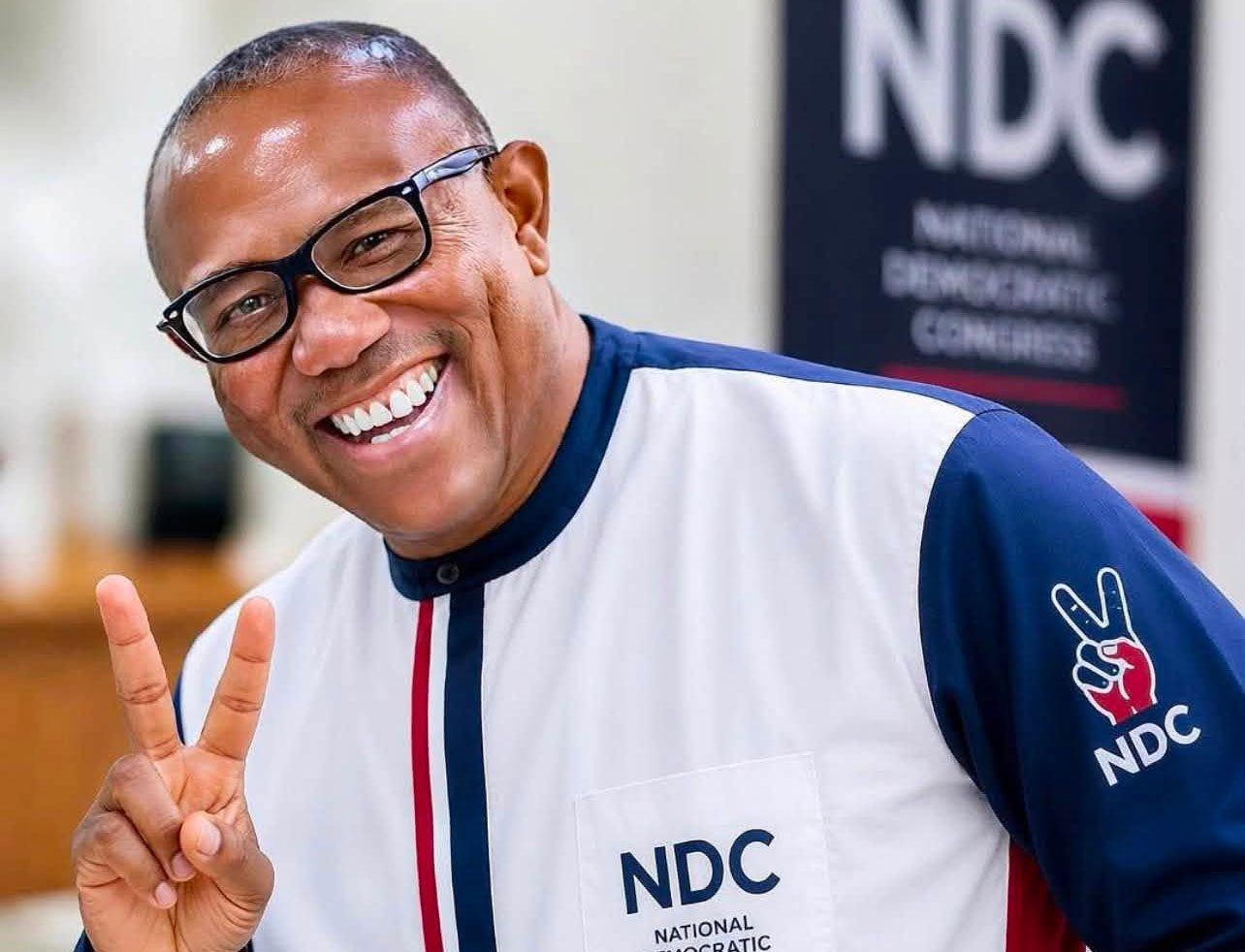
Peter Obi, presidential candidate of the Nigeria Democratic Congress (NDC), has pledged to restore petrol subsidy if elected president in the 2027 general elections, saying his administration would first tackle corruption in the system.
Obi made the declaration on Monday, September 28, 2026, at an NDC town hall meeting in Sokoto attended by his running mate, Rabiu Kwankwaso, party leaders and supporters.
He said the major problem associated with the fuel subsidy system was corruption, insisting that his administration would address the loopholes that had allegedly allowed public funds meant for the sector to be mismanaged.
Obi said his government would eliminate corruption and ensure that any subsidy provided by the state directly benefits Nigerians.
The pledge represents a change from a position Obi expressed earlier in 2026, when he supported the removal of petrol subsidy and argued that mismanagement of savings from the policy should not be used as a reason to restore it.
His latest position came shortly after Kwankwaso proposed that an NDC administration would reintroduce fuel subsidy in a different form if elected.
Obi subsequently backed the proposal, explaining that the planned arrangement would be accompanied by greater transparency in the petroleum sector.
He said an NDC government would establish mechanisms for monitoring crude oil production, petroleum transactions, imports, exports and government revenues to ensure that government intervention in the sector was transparent and beneficial to Nigerians.
READ ALSO:
- FG Releases 2026–2028 Approved Textbooks, Introduces QR Codes for Tracking
- 24 Hours in Darkness: Iju Ishaga Residents, Businesses Count Losses as Ikeja Electric Fails to Restore Power
- TCAN Honours Dangote Cement Transport for Safety, Logistics Excellence
The proposed policy comes against the background of the petrol subsidy removal implemented by President Bola Ahmed Tinubu’s administration in 2023.
The removal has remained one of Nigeria’s most contentious economic policies, with its supporters arguing that it freed government resources for other purposes, while critics have pointed to the impact of higher petrol prices and living costs.
The issue has also become a major subject of debate ahead of the 2027 presidential election, with opposition candidates putting forward different proposals on how to reduce fuel costs.
Atiku Abubakar, the African Democratic Congress (ADC) presidential candidate, has also proposed a form of subsidy focused on supporting locally refined petroleum products.
Obi, however, said his proposed system would be different from the previous arrangement because it would be backed by stronger monitoring and transparency.
Beyond the fuel subsidy debate, Obi used the Sokoto engagement to outline other priorities of a potential NDC administration.
He listed education, security and national unity among his key priorities and said education would receive particular attention.
He also pledged greater investment in job creation, poverty reduction, vocational training, healthcare and the empowerment of young people and women.
On infrastructure, Obi promised to connect all Nigerian state capitals by railway, saying improved rail transportation would facilitate the movement of people and goods and stimulate economic activity.
Kwankwaso, while addressing the gathering, highlighted the security challenges facing communities in the North-West, particularly kidnapping and banditry.
The former Kano State governor said security would be a major focus of an NDC administration.
The delegation also visited the Sultan of Sokoto, Muhammad Sa’ad Abubakar, who urged politicians and their supporters to maintain peace as preparations for the 2027 elections intensify.
Obi’s subsidy proposal leaves several policy questions to be answered, including the structure of the proposed intervention, its projected cost, how it would be funded and the specific safeguards that would prevent the corruption he identified as a major problem with the previous system.
For now, the NDC’s position is that a future subsidy would be accompanied by stronger monitoring of the petroleum value chain, rather than simply returning to the exact arrangement that existed before the 2023 subsidy removal.
Obi Drops Bombshell, Vows to Bring Back Petrol Subsidy

Politics
2027 Presidency: Atiku Asked Me to Make Obi His Running Mate — Babachir Lawal

2027 Presidency: Atiku Asked Me to Make Obi His Running Mate — Babachir Lawal
Former Secretary to the Government of the Federation, Babachir Lawal, has disclosed that former Vice President Atiku Abubakar once sent him to persuade Peter Obi to accept the vice-presidential slot on the African Democratic Congress (ADC) platform ahead of the 2027 presidential election.
Lawal made the disclosure during an interview with Diaspora Digital Media, while recounting the negotiations among opposition figures before the coalition eventually fractured.
According to the former SGF, Atiku wanted Obi to return to the political arrangement and become his running mate under the ADC.
Lawal said Atiku’s proposal was not limited to a conventional president-vice-president arrangement. He claimed that Atiku envisaged serving for four years and then working towards an amendment of the Constitution to introduce a single six-year presidential term, with provisions for rotational leadership.
He said Atiku specifically asked him to approach Obi because of his relationship with the former Anambra State governor.
Lawal recalled that he travelled to meet Obi despite heavy rainfall.
“They say you have influence against Peter Obi, I want Peter Obi to come back and be my vice presidential candidate,”
Lawal quoted Atiku as telling him, adding that he subsequently explained the proposal to Obi.
According to Lawal, however, Obi was not enthusiastic about the arrangement and declined to accept the proposal.
Obi previously disputed the account
The latest disclosure comes against the background of a previous statement by Obi in which he denied that he had rejected a formal vice-presidential offer from Atiku.
During an interview with Arise TV earlier in September, Obi said he did not know where the claim originated and maintained that he was not in a position where such an offer had formally been made to him and rejected.
Obi said discussions about a possible opposition alliance had moved beyond individual politicians and would have to involve the political parties themselves.
The differing accounts mean that Lawal’s latest recollection represents his account of the discussions, while Obi has publicly disputed the characterization that he received and rejected a formal VP offer.
Coalition split
The disclosure also provides another glimpse into the political negotiations that preceded the breakdown of the opposition coalition ahead of the 2027 election.
Atiku eventually emerged as the ADC’s presidential candidate, while Obi subsequently became the presidential candidate of the Nigeria Democratic Congress (NDC).
Lawal himself left the ADC in June after alleging that the party’s presidential primary had been manipulated in Atiku’s favour. The allegations were rejected by Atiku’s camp.
In September, Lawal joined the NDC and publicly backed the Obi-Kwankwaso ticket, further marking his movement away from the political camp led by Atiku.
The latest revelation is therefore likely to attract fresh attention to the behind-the-scenes negotiations that preceded the eventual emergence of separate presidential tickets for Atiku and Obi ahead of the 2027 election.
2027 Presidency: Atiku Asked Me to Make Obi His Running Mate — Babachir Lawal
Politics
Obi’s Debt Storm Deepens as Okonkwo Says: ‘I Was Misled’

Obi’s Debt Storm Deepens as Okonkwo Says: ‘I Was Misled’
The controversy over the financial record of former Anambra State Governor Peter Obi has taken a fresh turn after his former 2023 campaign spokesman, Kenneth Okonkwo, said he was “misled” when he previously defended the former governor against claims that his administration left debts and other financial obligations behind.
Okonkwo made the disclosure on Sunday Politics, a programme on Television Continental (TVC), saying he could no longer repeat some of the claims he made in Obi’s defence after considering fresh information presented by the Anambra State Government.
The development has added a new dimension to the ongoing disagreement between Obi and the Anambra State Government over loans, salary arrears and other financial obligations allegedly connected to his administration.
Recalling his position during the 2023 presidential campaign, Okonkwo said he had confidently told Nigerians that Obi left office without debts, unpaid salaries, pensions or gratuities and challenged people to verify his claims.
However, he said his position had changed after new information emerged.
“You know me, I’m a very passionate person in whatever I believe in. Let me tell you because I was misled,” Okonkwo said.
He added that he was not prepared to continue defending a position if new facts showed that his previous understanding was incorrect.
“I’m not a man that stands on my own misunderstanding. When I see the facts, I agree,” he said.
Okonkwo specifically referred to claims by the Anambra State Government that Obi’s administration obtained eight loans and that workers at the state-owned water corporation were owed salaries and arrears.
“The fact is Anambra State Government said he borrowed eight loans. The fact is that Anambra State said that at the water corporation, he was owing workers there, all the salaries, all the arrears. I cannot say the same thing that I said about Peter Obi in 2023,” he said.
The comments came against the backdrop of an escalating dispute between Obi and the Anambra State Government over the state’s debt profile.
The state government has said eight external financing facilities associated with projects undertaken during Obi’s tenure had a combined contracted value of $123.77 million, with $92.35 million outstanding as of June 30, 2026.
Obi has rejected the description of the entire $123.77 million figure as debt he left behind, arguing that the figure includes different categories of multilateral development financing. He has also cited Debt Management Office figures in arguing that Anambra’s external debt stood at about $30 million when he left office in March 2014.
Another major point of disagreement is Obi’s claim that his administration left about N2.1 billion in an ecological fund for Anambra State.
While Obi has maintained that the fund existed and was left for the state, the Anambra Government has disputed the claim and said it has no evidence of the ecological fund in the form alleged by the former governor.
The state government has also released documents relating to N363.38 million in salary arrears, which it says were inherited from the Obi administration. The issue has become part of the broader argument over whether Obi left outstanding financial obligations when he handed over power to Willie Obiano in March 2014.
Okonkwo also revisited his previous defence of Obi’s family over claims concerning an expensive wristwatch allegedly worn by a son of President Bola Tinubu.
He recalled that he had previously gone on television to defend Obi’s family and stake his reputation on the position he took at the time.
But he questioned whether he could make the same assertion today, further illustrating the extent of his stated change in position.
Explaining his approach ahead of the 2027 election, Okonkwo used courtroom language to describe the difference between his role in 2023 and his current political position.
“That’s why I said in 2023, I campaigned for them as the examination in chief. In 2027, it’s going to be a cross-examination,” he said.
Okonkwo is now a chieftain of the African Democratic Congress (ADC) and spokesman for the presidential campaign council of former Vice-President Atiku Abubakar, the ADC’s 2027 presidential candidate. He served as a spokesman for Obi during the 2023 presidential campaign.
Obi, meanwhile, remains at the centre of the political and financial controversy, with his record as Anambra governor increasingly becoming a subject of scrutiny as the 2027 political season approaches.
The latest comments by Okonkwo are unlikely to end the dispute, as the central questions over the nature of the loans, outstanding obligations and the financial position of Anambra at the end of Obi’s tenure remain subjects of competing claims by the former governor and the state government.
Obi’s Debt Storm Deepens as Okonkwo Says: ‘I Was Misled’
-
 metro3 days ago
$155m Left Behind, $750m Liabilities: Anambra Govt Opens Fresh Obi Files
-
 News2 days ago
Fake Agency Scandal: Gbajabiamila Says He Never Betrayed Tinubu’s Trust
-

 metro2 days ago
Woman Busted With Alleged Alcohol Hidden in Water Pack at Ogun Prison
-

 International2 days ago
Iran Claims Capture of Second US Underwater Drone in Strait of Hormuz
-
News2 days ago
Anambra Govt Demands Unreserved Apology From Peter Obi Over Debt Claims
-
 Politics2 days ago
2027: NDC State Chairmen Reject Obi-Kwankwaso Movement’s Parallel Structures
-
 Politics2 days ago
APC Sweeps Enugu LG Election, Wins All 17 Chairmanship, 260 Councillorship Seats
-
 Sports3 days ago
Man City Chairman Breaks Silence After Club Found Guilty Of 114 Charges