

metro
Lagos declares Thursday work-free for 2026 Isese Day celebration
Lagos declares Thursday work-free for 2026 Isese Day celebration
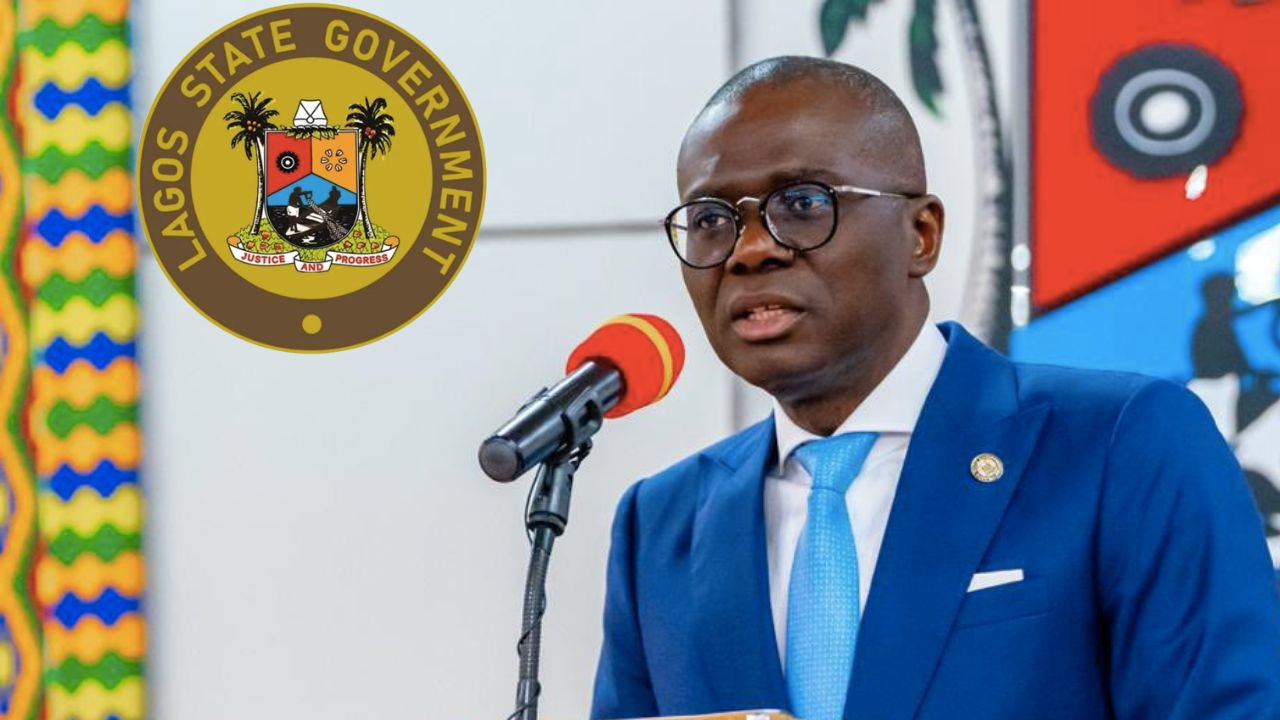
The Lagos State Government has declared Thursday, August 20, 2026, a work-free day to allow residents, visitors and traditional worshippers participate in activities marking the 2026 Ìṣẹ̀ṣe Day celebration.
The annual observance, which celebrates Yoruba indigenous culture, spirituality and heritage, is expected to attract more than three million participants, according to the state government.
The declaration was announced on Wednesday by Idris Aregbe, Special Adviser to Governor Babajide Sanwo-Olu on Tourism, Arts and Culture.
Aregbe described Ìṣẹ̀ṣe Day as more than a public holiday, saying the celebration provides an opportunity to promote and preserve Yoruba traditions while showcasing Lagos as a destination for cultural tourism.
“Ìṣẹ̀ṣe is not a relic. It is a living expression of our traditions and a celebration of Yoruba spirituality as an important part of Nigeria’s cultural and religious landscape,” Aregbe said.
He said the celebration would allow Lagos residents and visitors to experience various aspects of indigenous culture through traditional prayers, rituals, processions, drumming and cultural displays dedicated to the Òrìṣà.
The 2026 celebration is the culmination of a week-long programme of traditional activities being coordinated by the Association of African Traditional Religion Nigeria and Overseas (AATREN).
Aregbe said the continued observance of Ìṣẹ̀ṣe demonstrates the resilience of Yoruba culture and its ability to remain relevant across generations.
READ ALSO:
- South African Consulate Denies Visa Restrictions on Nigerians
- 2027: Peter Obi lost his chance when he left ADC for NDC – Fayose
- Electric Vehicles: Six-point blueprint to drive mass adoption, by Metropolitan CEO
He estimated the global Yoruba population at more than 55 million and noted that Yoruba cultural and spiritual traditions have also survived among diaspora communities in countries such as Cuba, Brazil and Trinidad and Tobago.
“When the drums sound in Lagos on Thursday, they answer drums in Havana, in Salvador, in Port of Spain. Fifty-five million people and counting. Lagos is not observing a local holiday. Lagos is standing at the centre of a global heritage,” he said.
The Lagos Government has designated Ìṣẹ̀ṣe Day as a work-free day since 2023, following a request from the Lagos State Council of Obas and Chiefs.
The policy has continued under the Sanwo-Olu administration as part of its stated commitment to promoting indigenous values, cultural preservation and religious inclusiveness under the THEMES+ development agenda.
Aregbe commended the governor for maintaining the annual declaration and recognised the contribution of traditional rulers and other custodians of Yoruba heritage.
He specifically acknowledged the Oba of Lagos, Oba Rilwan Akiolu, royal fathers, White Cap Chiefs, Babaláwo, Ìyánífá, Olóòrìṣà and other cultural practitioners involved in preserving indigenous traditions.
The large-scale celebration is expected to feature activities across different parts of Lagos, with participants observing traditional rites and cultural programmes associated with Yoruba indigenous religion.
The state government urged participants to celebrate peacefully and respectfully, particularly given the expected turnout.
Aregbe said the celebration also reflects Lagos’ reputation as a diverse society where people from different cultural and religious backgrounds live and participate in public life.
“Three million voices rising in honour of tradition is not noise. It is history, faith and cultural pride in harmony,” he said.
He added that the celebration should not be viewed as an event reserved only for traditional worshippers.
“Whether you worship in a mosque, a church or a grove, Ìṣẹ̀ṣe Day belongs to you, because heritage has no denomination. Lagos remains the city where every heritage finds its place,” Aregbe said.
The August 20 work-free declaration means public servants and government institutions covered by the directive will not conduct normal official business on Thursday. Government activities are expected to resume on Friday, August 21.
The development comes as Ìṣẹ̀ṣe Day continues to receive official recognition in parts of southwestern Nigeria, where traditional institutions and cultural organisations have advocated greater recognition of indigenous festivals and heritage.
Beyond its religious significance, supporters say the annual celebration provides an avenue to preserve indigenous knowledge, music, language, traditional arts and cultural practices while creating opportunities for cultural tourism.
For Lagos, the 2026 celebration is also expected to reinforce the state’s efforts to position its cultural heritage as part of its tourism offering.
With millions expected to participate, the state government has called on residents and visitors to observe the celebration peacefully and respect the different religious and cultural traditions represented in Lagos.
Lagos declares Thursday work-free for 2026 Isese Day celebration






metro
Military Kills 21 ISWAP Fighters in Borno Airstrikes, 26 Surrender

Military Kills 21 ISWAP Fighters in Borno Airstrikes, 26 Surrender
The Nigerian military has announced the killing of 21 fighters of the Islamic State West Africa Province (ISWAP) in precision airstrikes in Borno State, dealing what it described as a major blow to the insurgent group’s leadership and operational network.
The operations, conducted on November 16 and 17 around Monguno and Arinna in the South Lake Chad area, also left 10 other fighters severely injured, according to the military.
The Acting Media Information Officer of the Joint Task Force (North-East), Operation Hadin Kai, Captain Mohammed Goni, disclosed the development in a statement issued on Wednesday.
Goni said the first operation followed intelligence reports that ISWAP fighters were advancing towards Monguno. An unmanned aerial vehicle deployed for surveillance reportedly identified the fighters moving along a bush path northeast of the town, leading to a precision airstrike.
The strike killed seven fighters, including members of the group’s improvised explosive device (IED) network. The military also identified Abba Bomma, described as a key IED expert, as having been incapacitated, while four other fighters sustained severe injuries.
In a separate operation at Arinna in the South Lake Chad area, airstrikes targeted what the military described as important elements of ISWAP’s command structure.
Among those reportedly killed was Mallam Sharki, a prominent member of the group’s Shura Council and its Amirul Amniya, or Provost Commander. Another senior operative, Abu Sa’ad, identified as the Qaid of Sabon Tumbu, was also killed.
READ ALSO:
- Doctor Shortage: FG Increases Medical Student Admissions by 140%
- 2027: Tinubu Urges Oyo Voters to Stick With APC, Promises More Development
- 2027: PDP Rejects Opposition Coalition, Backs Wike’s Rainbow Alliance
Twelve additional fighters were reportedly eliminated in the Arinna operation, while five others sustained severe injuries. Several motorcycles belonging to the insurgents were also destroyed.
The military said the two operations accounted for 21 ISWAP fighters killed and 10 injured, adding that the strikes had disrupted the group’s IED network and weakened its operational capabilities.
In a related development, the Armed Forces of Nigeria said sustained military pressure had prompted 26 terrorists and their family members to surrender between November 13 and 18.
The Director of Defence Media Operations, Major General Michael Onoja, disclosed this in a statement covering military operations across the country from November 13 to 19.
According to Onoja, the 26 people comprised eight fighters and 18 family members who surrendered in Bama, Dikwa, Gwoza, Kukawa and Monguno local government areas of Borno State.
He said those who surrendered included 12 women and children who fled Bula Daloye on November 13. Another fighter reportedly surrendered along the Gwoza-Pulka Road on November 14, handing over an AK-47 rifle, five magazines, 34 rounds of ammunition and two hand grenades.
Onoja said the surrendering fighters attributed their decision to intense military operations and internal clashes among rival factions within the terrorist group.
The military also reported the rescue of four internally displaced persons who escaped from terrorist captivity at Zaha Village in the Mandara Mountains area of Gwoza Local Government Area.
Beyond the North-East, troops reportedly arrested suspected terrorist collaborators and logistics suppliers in Borno, Yobe and Kano states. The suspects were allegedly involved in moving combat materials and supplies to terrorist enclaves.
Onoja said the Chief of Defence Staff, General Olufemi Oluyede, commended troops and the Air Component for their efforts, while urging communities, traditional rulers and other stakeholders to provide credible and timely intelligence to security agencies.
The military called on residents to reject collaboration with criminal networks and encourage terrorists and bandits willing to abandon violence to surrender.
The latest operations form part of the military’s ongoing campaign against ISWAP and other armed groups operating in the North-East, where Borno State has remained a major theatre of the insurgency.
Military Kills 21 ISWAP Fighters in Borno Airstrikes, 26 Surrender
metro
Nigerian Student Lures Canadian Teen on TikTok, Demands $2,000 Over Nude Photos
Nigerian Student Lures Canadian Teen on TikTok, Demands $2,000 Over Nude Photos
A Nigerian university student has been exposed for allegedly using a fake female identity on TikTok to lure a Canadian teenager into sharing intimate photographs before threatening to publish the images unless he paid money.
An investigation by The Associated Press (AP) and PBS FRONTLINE identified the student, known only as Ayomide, as a Nigerian man in his early 20s who allegedly operated an online sextortion scheme targeting young men and boys in foreign countries.
The Canadian victim was 15 when he was approached on TikTok by someone posing as a young woman named Ava. Believing he was communicating with a genuine female user, the teenager gradually developed trust in the account and agreed to continue their conversation on an encrypted messaging application.
According to the investigation published on November 17, 2026, the fraudster manipulated the teenager into sharing personal information, including a copy of his learner’s driving permit, which contained his home address and date of birth.
Ayomide also sent him an explicit photograph taken from the internet, pretending it was his own image, before persuading the teenager to send an intimate photograph in return.
However, what the teenager believed was a private online relationship soon turned into a frightening blackmail operation.
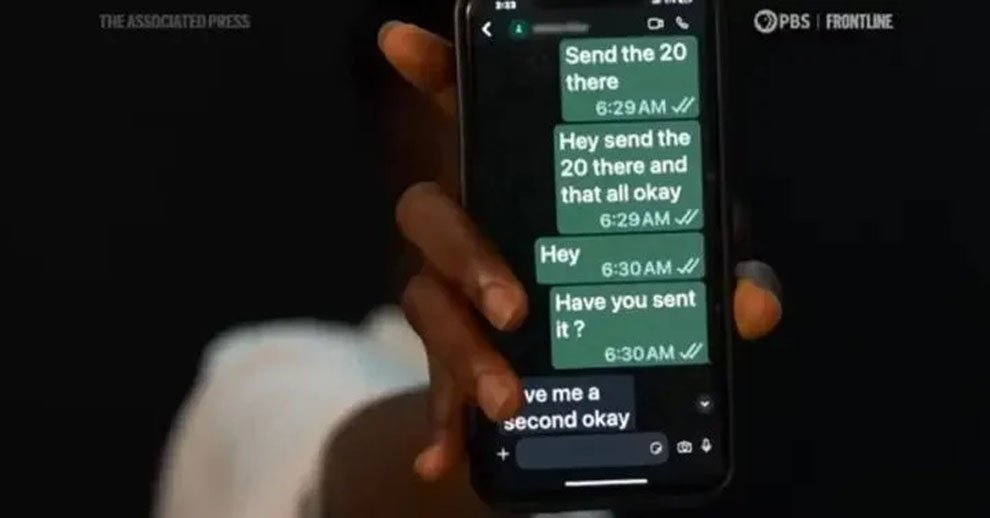
After obtaining the photograph, Ayomide allegedly threatened to circulate it among the teenager’s family members, friends and employer unless he paid money to prevent its publication.
Panicked by the threats, the victim initially paid $500. But when he asked whether the payment meant the ordeal was over, the scammer reportedly told him that it was not that simple.
The teenager subsequently paid nearly $2,000 as the demands continued.
The victim told AP that the experience left him terrified and unable to think clearly, particularly because the blackmailer possessed his personal information and knew how to reach people connected to him.
How the Nigerian Student Operated the TikTok Scam
The AP/FRONTLINE investigation revealed that Ayomide allegedly impersonated an attractive young woman on TikTok, following hundreds of foreign men and boys and initiating conversations with those who followed the account back.
READ ALSO:
- UNIABUJA Used Just 12% of Land in 38 Years, Wike’s Aide Fires Back at Unions
- Tinubu’s Chicago University Row Deepens as Fresh Findings Cast Doubt on Pearse’s Lecturer Claims
- Failed Miracle: Arrested Prophet Begs Toluwanisings’ Family for Forgiveness
He reportedly used friendly and intimate conversations to establish trust before moving potential victims to private messaging platforms, where he could continue manipulating them.
Once a victim shared personal information or intimate photographs, the operation allegedly shifted to threats, intimidation and demands for money.
The investigation also found that Ayomide used gift cards and payment accounts to collect money from victims.
He reportedly encouraged victims to purchase Apple or Steam gift cards, which he converted into local currency through a gift-card resale service. He also used payment accounts belonging to other individuals to receive money.
AP journalists travelled to Lagos, where they met Ayomide and reviewed chat histories from some of his alleged successful scams, including conversations involving the Canadian teenager.
The student reportedly acknowledged that he learnt how to blackmail foreigners using his phone from friends.
He described himself as a computer science student who was also undergoing an apprenticeship at a barbershop.
Although he expressed regret over his actions and said he would apologise to the Canadian victim if given the opportunity, the teenager said he would find it difficult to accept an apology from someone he regarded as a manipulator.
Student Admits Continuing Fraud Despite Regrets
During the investigation, Ayomide reportedly admitted that he continued demanding money from the teenager because he wanted more funds.
He also described the financial pressures he faced as a student, including the need to pay school fees and rent.
The investigation explored how online fraud, popularly associated with the term Yahoo Boys in Nigeria, has become normalised in some youth circles, with some young people regarding cybercrime as a shortcut to financial success.
It also examined how some university students become involved in organised online fraud networks, sometimes learning the methods from friends and more experienced operators.
However, the investigation stressed that financial hardship does not excuse the exploitation and psychological abuse of victims.
FBI Raises Alarm Over Growing Sextortion Threat
Charles Smith, the FBI’s law enforcement attaché in Abuja, warned that perpetrators of financially motivated online sexual extortion were becoming increasingly aggressive.
“These perpetrators are becoming more and more aggressive,” Smith told AP.
He warned that any child with access to a computer or the internet could become a target.
The investigation cited figures from the National Center for Missing & Exploited Children (NCMEC), which had received more than 40,000 reports of financially motivated sextortion by August 2026, compared with approximately 50,000 reports throughout 2025.
It also highlighted the devastating psychological consequences of sextortion, including cases in which young victims have died by suicide following threats to expose their private images.
EFCC Chairman Condemns Internet Fraud
The investigation also featured comments by the Chairman of the Economic and Financial Crimes Commission (EFCC), Ola Olukoyede, who described internet fraudsters popularly known as Yahoo Boys as a national shame.
Olukoyede said Nigeria would no longer serve as a safe haven for individuals involved in internet fraud.
The report further examined the roles of social media platforms and encrypted messaging applications in the growing problem, including concerns that changes designed to improve online privacy can sometimes make it more difficult to identify and report abuse.
The case highlights the growing international dimension of cybercrime in Nigeria, particularly the use of social media platforms to target vulnerable teenagers across national borders.
It also reinforces the need for stronger online safety measures, parental awareness and cooperation between law enforcement agencies and technology companies to protect children from digital exploitation.
What victims of sextortion should do
Online safety experts advise victims of sextortion not to pay blackmailers, as making payments may encourage further demands.
Victims should:
-
Stop communicating with the blackmailer.
-
Preserve screenshots, messages, account details and payment records as evidence.
-
Block and report the offending accounts on TikTok and other platforms.
-
Avoid sending additional photographs, personal information or money.
-
Inform a trusted adult, particularly when the victim is a minor.
-
Report the incident to relevant law enforcement authorities.
The AP investigation also found that paying a blackmailer does not guarantee that private images will be deleted or that further threats will stop.
Nigerian Student Lures Canadian Teen on TikTok, Demands $2,000 Over Nude Photos
metro
UNIABUJA Used Just 12% of Land in 38 Years, Wike’s Aide Fires Back at Unions

The University of Abuja (UNIABUJA) has utilised only 1,426.67 hectares, representing 12.07 per cent of its 11,824.04-hectare land allocation, in 38 years of existence, according to Lere Olayinka, an aide to the Minister of the Federal Capital Territory (FCT), Nyesom Wike.
Olayinka, Senior Special Assistant on Public Communications and Social Media to Wike, disclosed this while defending the FCT minister’s decision to reduce the university’s land allocation from 11,824.04 hectares to 4,685 hectares amid protests by the institution’s workers’ unions.
In a statement on Thursday, Olayinka cautioned the unions against what he described as irresponsible agitation over their opposition to the land reduction, while criticising the Chairman of the Academic Staff Union of Universities (ASUU) at UNIABUJA, Professor Sylvanus Ugoh, over his comments on the controversy.
He also faulted the university’s Joint Action Committee (JAC) for alleging that Wike forged the 2016 report of a joint committee of the Federal Capital Territory Administration (FCTA) and UNIABUJA on land and sundry issues.
According to Olayinka, another committee was constituted on December 17, 2020, following a meeting between the university management and the FCT minister on October 13, 2020.
He said the committee recommended that the university retain 1,922.66 hectares, while the remaining land should be designated for compatible purposes, including institutional and research districts.
Olayinka said the recommendation considered the National Universities Commission’s stipulated 100-hectare campus requirement, as well as the expansion of surrounding villages and encroachment on the university’s land.
READ ALSO:
- Saudi-Led Coalition Destroys 60 Houthi Targets in Yemen Airstrikes, 17 Killed
- Islam Set to Overtake Christianity as World’s Largest Religion by 2035
- 2027: Sowore Fires Back at Fashola, Promises Free Education, Vows to Scrap NELFUND
The committee reportedly found that 805.7 hectares had been occupied by villages, while the Nigerian Army Welfare Limited Guarantee Housing Estate occupied another 9.91 hectares. It also identified approximately 500 hectares previously approved for a main sewage treatment plant.
Olayinka said issues presented by the university to the 2016 committee included the issuance of Certificates of Occupancy for its main and mini campuses, properties in Kado and Jahi districts, illegal settlements within its main campus and the re-issuance of title documents for its mini campus.
He questioned why the university’s unions would accuse the FCT minister of forging an official document produced by a committee established by his predecessor.
The Wike aide further argued that the minister did not require a committee report to exercise his powers under the Land Use Act in matters relating to land administration in the FCT.
He also questioned the unions’ involvement in the Federal Government’s decision to review the land allocation to the government-owned university.
“Government established a university, gave land to it and later saw the need to reduce the land to what it opined can be better managed and utilised by the university, workers unions with primary responsibility of welfare of their members are protesting, what exactly is their business?” he asked.
Olayinka also challenged the university’s need to retain more than 11,000 hectares of land when it had utilised less than 1,500 hectares in nearly four decades.
“Most importantly, after existing for 38 years, UNIABUJA has only utilised 1,426.67 hectares of land, with 49.56 hectares used for staff quarters. What then is the need for over 11,000 hectares of land when less than 1,500 hectares was utilised in 38 years?” he said.
He further questioned the university’s alleged allocation of portions of its land to individuals and corporate organisations, including the Economic and Financial Crimes Commission (EFCC), amid the ongoing controversy.
The dispute over UNIABUJA’s land allocation has intensified, with the FCT Administration defending the reduction and university workers opposing the move. The controversy raises questions about the institution’s land requirements, future expansion, encroachment, government authority and the management of public land in the Federal Capital Territory.
UNIABUJA Used Just 12% of Land in 38 Years, Wike’s Aide Fires Back at Unions
-
 metro1 day ago
FG’s ₦100,000 Family Grant: Eligibility, How to Apply and Payment Procedure Revealed
-

 metro3 days ago
Viral Video: Nigerian Army Explains Why Soldiers, DSS Operatives Met Bandits In Kwara Forest
-
 Sports23 hours ago
Ex-Super Eagles Captain Segun Odegbami Survives Death as Three Assailants Machete Him in Abeokuta Home
-

 International2 days ago
Islam Set to Overtake Christianity as World’s Largest Religion by 2035
-

 Business2 days ago
NNPCL, MRS, Other Marketers Slash Petrol Prices Across Nigeria As Motorists Get Fresh Relief
-

 metro21 hours ago
Cleveland Girl, 11, Gets 7-Year Juvenile Sentence Over Rape, Attempted Murder of 5-Year-Old
-
 News2 days ago
Agunbiade Proposes Council of Grand Chief Imams for Yorubaland, Edo, Delta
-

 News2 days ago
Adeleke Rejects Proposed Naming of Osogbo Stadium After Him, Orders Removal of Signpost