

Politics
2027: South-East Leaders Clash Over Igbo Presidency Feasibility
2027: South-East Leaders Clash Over Igbo Presidency Feasibility
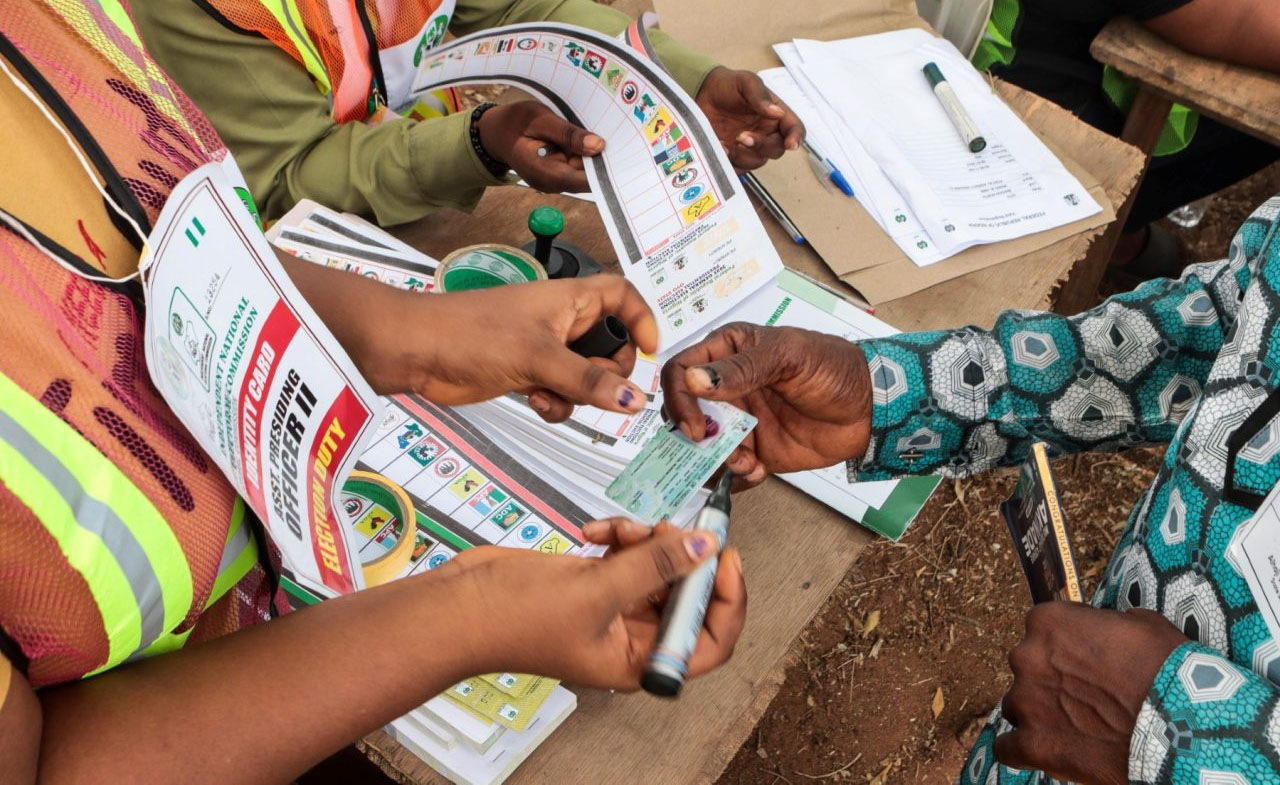
As the 2027 presidential election draws closer, a fierce debate has erupted over the prospects of an Igbo presidency, with political stakeholders divided on whether the dream is attainable or destined to fail. The controversy took centre stage on an Enugu-based Dream FM radio programme, monitored by THE WHISTLER, where contributors offered sharply contrasting views on the political future of the South-East. The discussion comes at a critical juncture, with the Nigeria Democratic Congress (NDC) having zoned its presidential ticket to the South for a single four-year term, clearing the way for Peter Obi, while prominent Igbo figures like Minister of Works David Umahi and a faction of Ohanaeze Ndigbo have publicly endorsed President Bola Tinubu’s re-election.
Dr. Amos Ogbonna, a human rights lawyer and Executive Director of the Centre for Non-Violence and Justice, made a passionate case for Igbo presidency during the radio programme. According to Ogbonna, there is a secret pact by the Nigerian federation to ensure that an Igbo man never becomes president. “Many people across the regions say they would never be alive to see an Igbo man emerge president of Nigeria. When you talk about long-term aspirations of Ndigbo, it is a mirage. Nigeria has a conspiracy and phobia against the Igbo,” Ogbonna declared. The lawyer argued that 2027 represents the only realistic opportunity for an Igbo presidency. He traced the history of power rotation since 1999, noting that the South-East has consistently been sidelined despite supporting other regions. He recalled that after the June 12 injustice, the Yoruba were compensated with the presidency, but the Igbo have never been similarly compensated for the civil war. Ogbonna also claimed that former President Muhammadu Buhari once promised that after his tenure, the Igbo would produce the president, a promise he said was later abandoned. He urged South-Easterners to unite and fight for the presidency, insisting that power would not be handed over voluntarily. “We are left with the remaining four years. By 2031, power will definitely return to the North. This is not a call for violence, but a reminder that we have to struggle for this power; they will not give us. If we don’t get it, we should be happy that we have tried,” he said.
Comrade Fidelis Edeh, a former labour leader and Executive Director of Service Accord Initiative, offered a more pragmatic perspective. He called on the Igbo to organise themselves strategically, acknowledging that the region must not run away from the consequences of the civil war. “We operate a multiparty system. We don’t need anybody to promise us. We usually contest. We must never run away from the consequences of the civil war,” Edeh said. Edeh also criticised the Peoples Democratic Party (PDP) for sabotaging the Igbo presidency. He noted that from 1999, the Igbo camped in the PDP, which later abandoned zoning principles that would have favoured an Igbo candidate. He also accused Peter Obi of political inconsistency, noting that Obi has changed political parties multiple times, unlike Tinubu who has remained in one party. “President Bola Tinubu has remained in one political party up to this point. Obi was chairman of the Southeast Governors’ Forum when he was governor. But immediately he left office, he joined PDP, and abandoned APGA. This is the time to negotiate,” Edeh said.
READ ALSO:
- 2027: Senator Saliu Mustapha quits APC after losing Kwara governorship ticket
- 2027 Election: NDC Tells Atiku to Step Aside, Support Peter Obi to Remove Tinubu
- Delta Governor Reveals ₦503,000 Monthly Salary, Says Permanent Secretaries Earn ₦900,000
Minister of Works David Umahi, a former governor of Ebonyi State, has emerged as one of the most vocal opponents of Peter Obi’s presidential ambition. Speaking during an inspection tour of federal projects in Ebonyi State, Umahi insisted that the South-East votes alone cannot make Obi president. “Our brother, Peter Obi, is contesting for the presidency of the entire country, not the presidency of the South East. The votes of the South East alone cannot produce a president. We must be strategic,” Umahi stated. Umahi further claimed that Obi is not as popular in the South-East as he believes, describing his 2023 performance as an “accident of history.” He predicted that the South-East would massively vote for President Tinubu in 2027. “Who is after him? Nobody is after him. Because, you know, we want him to be on the ballot, to make the victory very sweet, you know, because he says that South East is his catchment area, and I’m saying that South East is not his catchment area,” Umahi said. Umahi urged South-Easterners to align strategically with the ruling APC to sustain the tempo of infrastructural development in the region. He pointed to ongoing federal road projects worth over N248 billion in Ebonyi State as proof of Tinubu’s commitment to the South-East.
Senator Onyekachi Nwebonyi, representing Ebonyi North, echoed similar sentiments in an interview with Channels Television. He argued that the current political arrangement does not favour an Igbo candidate for the presidency. “Peter Obi is coming at the wrong time. Even if our son comes to contest, it is very clear that the political permutation, as at present, does not favour an Igbo man. President Bola Tinubu and other APC candidates will win the south-east come the 2027 general election,” Nwebonyi declared.
A faction of Ohanaeze Ndigbo, led by Deputy President-General Mazi Okechukwu Isiguzoro, has declared that an Igbo presidency is “not feasible” under the NDC. The group described the NDC as a regional party driven by Ijaw interests under the leadership of Senator Seriake Dickson. “We therefore urge Mr. Peter Obi to reconsider his 2027 presidential ambition in the greater interest of the Igbo people,” the faction said in a statement. The same faction has backed Tinubu’s re-election, describing it as a “strategic pathway” for the South-East. It even proposed a “2031 Vice Presidency Initiative” to position an Igbo leader for the vice-presidential slot under the APC, with Umahi and Chimaroke Nnamani identified as potential contenders. However, another faction of Ohanaeze Ndigbo Worldwide, led by President General Senator Azuta Mbata, has dismissed reports suggesting no Igbo person would contest the 2027 election.
Despite the opposition, the Obi-Kwankwaso Movement (OK Movement) has intensified grassroots mobilisation in the South-East. At a summit in Enugu, the group declared its commitment to championing the ideals of a Peter Obi-Rabiu Kwankwaso alliance, which it said centres on inclusiveness and equal opportunity. The movement has directed its coordinators at state, local government, ward, and polling unit levels to commence aggressive sensitisation and membership mobilisation under the NDC. Additionally, the NDC has formally zoned its presidential ticket to the South for a single four-year term, with the vice-presidential slot zoned to the North. The party said the decision reflects its commitment to justice, inclusiveness and national stability. In his remarks at the party’s convention, Obi said: “We are not changing political platforms for transactional reasons. We are making a principled decision to find a platform that gives us the opportunity to build a new Nigeria that is possible.”
Adding another layer to the debate, Hon. Kasimu Maigari, a member of the ADC National Legislators’ Forum, claimed that Peter Obi’s political trajectory has set the Igbo presidency ambition back by two decades. “My worry is not if Peter Obi will win the presidency; my worry is that Peter Obi has pushed Igbo’s 20 years backwards from getting the Presidency,” Maigari said during an interview on ARISE News. He argued that many of Obi’s supporters are driven by personal political ambitions rather than long-term ideological commitment, and that if Obi were not on the ballot, many of them would struggle to win elections independently.
The camp of former Vice President Atiku Abubakar has also weighed in, warning opposition parties that insisting on zoning the 2027 presidential ticket to the South would amount to entering the contest “already defeated.” In a statement by his media aide Olusola Sanni, Atiku’s camp argued that no incumbent president has ever been defeated by an opposition challenger from the same geopolitical bloc. It also accused proponents of southern zoning of “intellectual dishonesty,” noting that the South would have held power for approximately 18 years by 2027, against roughly 10 years for the North. “The Southeast deserves a sustainable and credible pathway to national leadership — not symbolic tokenism or bespoke arrangements tailored to satisfy one individual’s ambition,” the statement said.
As the 2027 election approaches, the opposition faces mounting pressure to present a united front. The Igbo Presidency Project (IPP), a non-political group, has called for rotation of power among regions, arguing that granting the South-East the opportunity to produce a president would deepen national unity. However, with key stakeholders divided and political realignments shifting, the dream of an Igbo presidency remains uncertain. As Ogbonna put it: “We are going to get united and fight for the presidency of Nigeria for the remaining four years. If we don’t get it, we should be happy that we have tried.”
2027: South-East Leaders Clash Over Igbo Presidency Feasibility







Politics
Just in: Court Sacks Ribadu, Orders INEC to Restore Suleiman as Adamawa ADC Candidate
Just in: Court Sacks Ribadu, Orders INEC to Restore Suleiman as Adamawa ADC Candidate
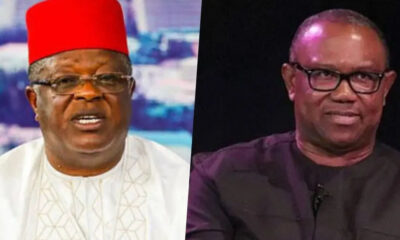
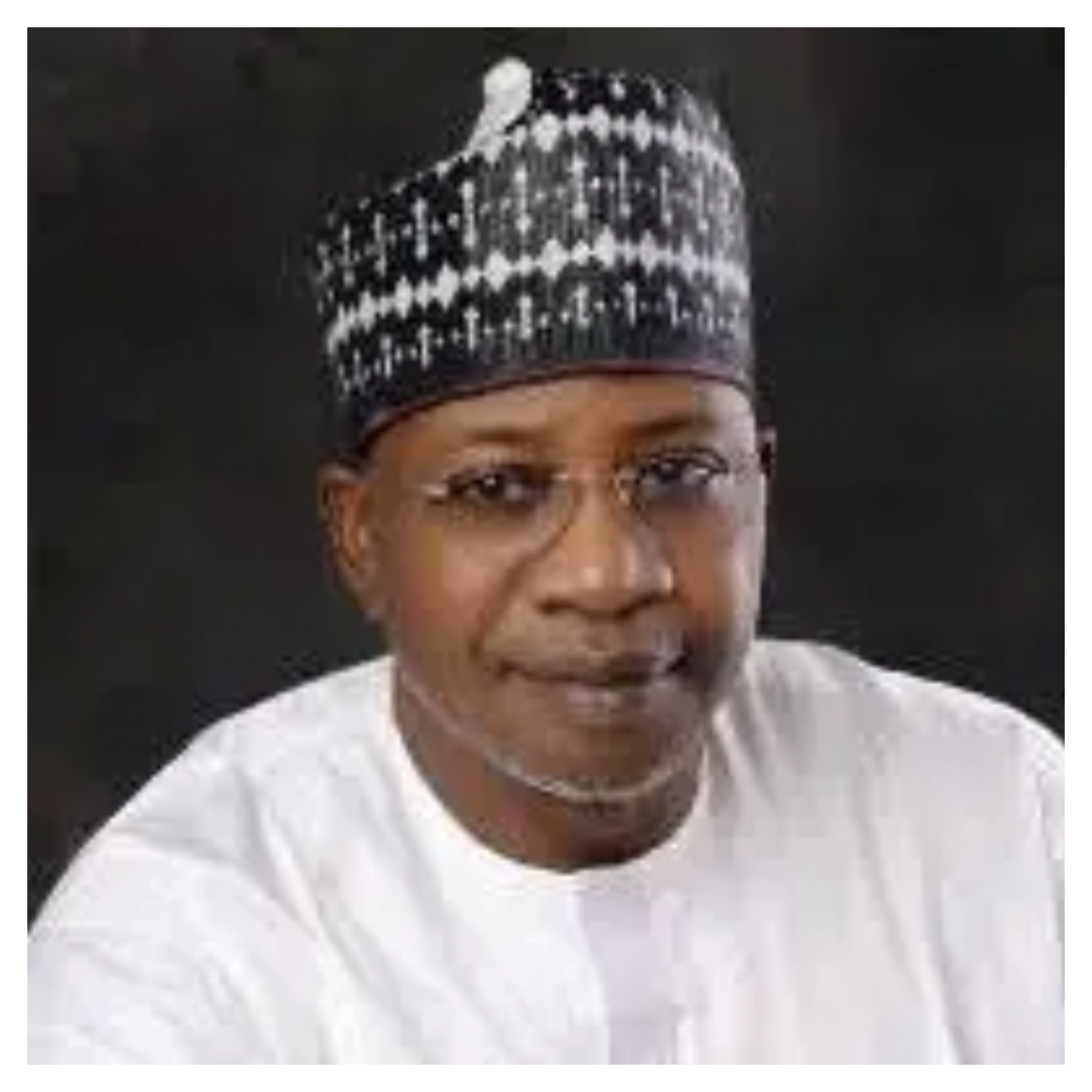
The Federal High Court in Abuja has nullified the emergence of Tukur Ribadu as the African Democratic Congress (ADC) governorship candidate in Adamawa State, directing the Independent National Electoral Commission (INEC) to immediately restore Ambassador Omar Suleiman as the party’s rightful candidate.
The judgment followed a legal challenge instituted by Suleiman, who contested his replacement after initially emerging as the ADC candidate through the party’s governorship primary in Adamawa State.
Suleiman, a cousin of former Secretary to the Government of the Federation, Babachir Lawal, was subsequently replaced by Ribadu, reportedly a loyalist of former Vice President Atiku Abubakar.
Dissatisfied with the decision, Suleiman approached the court to challenge the substitution, insisting that his emergence from the party primary could not be overturned unlawfully.
Delivering its judgment, the court held that a duly nominated candidate could only be replaced under the law if the candidate voluntarily withdraws from the race or dies.
It ruled that since Suleiman had neither withdrawn his candidacy nor died, the decision to substitute him with Ribadu was unlawful and could not stand.
The court consequently declared Ribadu’s replacement of Suleiman null and void and ordered INEC to immediately reinstate Suleiman as the ADC governorship candidate for Adamawa State.
The ruling represents a significant development in the ADC’s governorship nomination dispute in Adamawa, effectively restoring Suleiman’s claim to the party’s ticket.
Politics
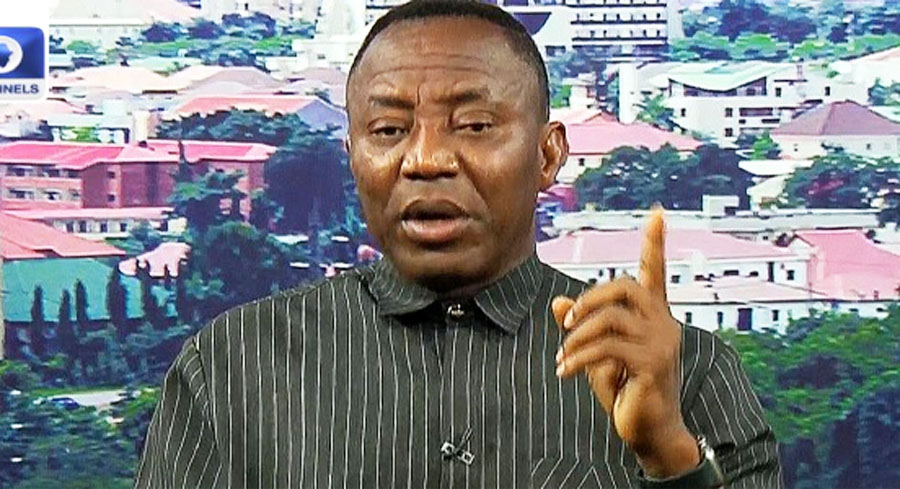
2027: Sowore Fires Back at Fashola, Promises Free Education, Vows to Scrap NELFUND
2027: Sowore Fires Back at Fashola, Promises Free Education, Vows to Scrap NELFUND
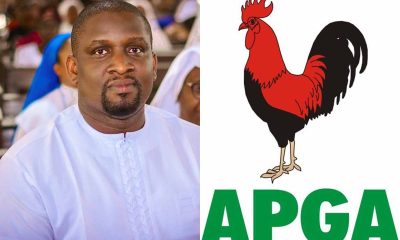
ABUJA – The presidential candidate of the African Action Congress (AAC), Omoyele Sowore, has vowed to abolish the Nigerian Education Loan Fund (NELFUND) if elected president in 2027, promising to replace the student loan scheme with publicly funded study grants.
Sowore made the declaration on Thursday, November 19, 2026, while responding to former Lagos State Governor, Babatunde Fashola, who challenged opposition presidential candidates to campaign on a promise to scrap the student loan programme introduced by President Bola Ahmed Tinubu’s administration.
In a statement shared on his Facebook page, the human rights activist criticised Fashola’s defence of the scheme, describing him as one of the most deceptive figures working with the Tinubu administration.
Sowore argued that access to education should be a fundamental right rather than a financial burden that forces young Nigerians to borrow money to obtain university degrees.
He said an AAC-led government would abolish NELFUND and introduce a system of study grants supported by public funding.
” #Sowore2027 will abolish NELFUND‘s student loan scheme and replace it with study grants,” he declared.
“For the avoidance of doubt, under an @aacparty-run government, education will be a right, not a privilege, and young Nigerians should not have to mortgage their future to obtain a degree.”
The AAC candidate further accused Nigerian political leaders of promoting student loans for ordinary citizens while allegedly sending their own children to expensive schools abroad.
READ ALSO:
- ADC Crisis: INEC Explains Why Atiku’s Name Remains on 2027 Presidential Candidates’ List
- Adeleke Rejects Proposed Naming of Osogbo Stadium After Him, Orders Removal of Signpost
- Man Arrested After Allegedly Shooting Brother Dead Over Family Dispute
He questioned why young Nigerians should be expected to accumulate debts to access higher education when, according to him, public officials enjoy educational opportunities that ordinary families cannot afford.
Sowore described the student loan arrangement as a form of financial burden on young people, insisting that his proposed alternative would guarantee access to education without forcing students to repay loans after graduation.
“We reject the peonage they package as student loans. Our commitment is to study grants and publicly funded education,” he added.
Fashola had challenged opposition politicians to openly declare their intention to abolish NELFUND if they came to power, arguing that students benefiting from the initiative and their families would oppose such a proposal.
The former governor made the challenge on Tuesday, November 17, during an appearance on Channels Television’s Politics Today, where he defended the Tinubu administration’s economic policies and described NELFUND as an intervention designed to reduce the financial burden on Nigerian families.
Fashola explained that the scheme was introduced to help families meet educational expenses, particularly school fees and students’ upkeep allowances, while preserving household income for other essential needs such as rent, transportation and healthcare.
He maintained that more than one million Nigerians had benefited from the initiative and challenged opposition candidates to test its popularity by promising to discontinue it.
“I challenge the opponents to promise to scrap NELFUND and see how the people and the students who are benefiting from it and the families will vote. I know they won’t dare to,” he said.
NELFUND was established in April 2024 after President Tinubu signed the Student Loans (Access to Higher Education) Act into law. The initiative provides interest-free loans to eligible students in Nigerian tertiary institutions to support their educational expenses.
According to figures released by the fund, NELFUND had disbursed more than ₦372 billion to 1,635,676 beneficiaries across 312 tertiary institutions as of October 3, 2026.
The latest exchange has brought the future of the student loan programme into the political debate ahead of the 2027 presidential election, with Sowore advocating publicly funded study grants while Fashola has defended the existing loan arrangement.
Sowore’s position forms part of his broader education policy argument that government should prioritise public investment in education rather than make students depend on loans to finance their studies.
The debate is expected to remain an issue in the campaigns as Nigerians consider competing proposals on education financing, access to tertiary institutions and the cost of higher education.
2027: Sowore Fires Back at Fashola, Promises Free Education, Vows to Scrap NELFUND
Politics
ADC Crisis: INEC Explains Why Atiku’s Name Remains on 2027 Presidential Candidates’ List
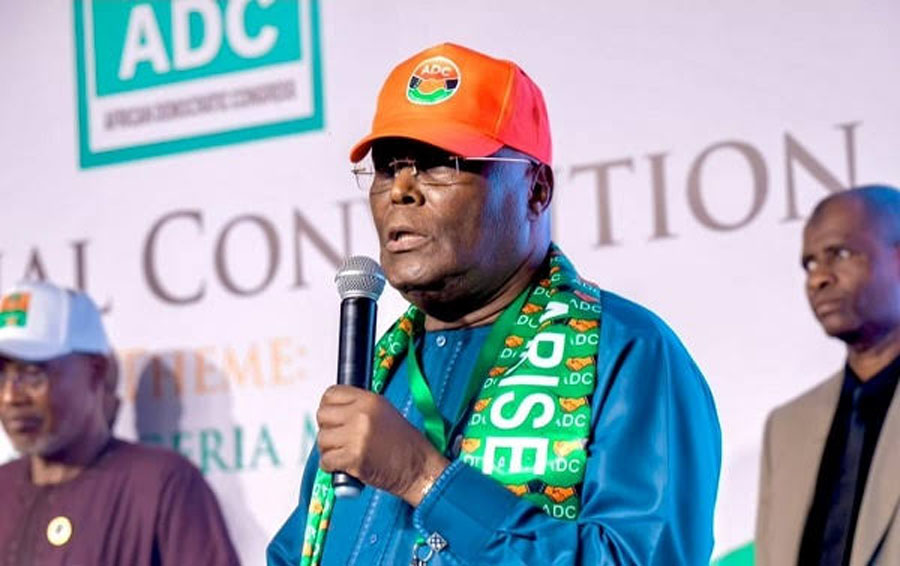
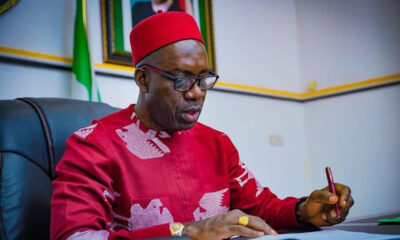
ABUJA – The Independent National Electoral Commission (INEC) has explained why former Vice-President Atiku Abubakar remains listed as the African Democratic Congress (ADC) presidential candidate for the 2027 general election despite a Federal High Court judgment that nullified his nomination.
According to an INEC source, the commission has retained Atiku’s name on its website because of a pending Notice of Appeal and Stay of Execution challenging the judgment delivered by Justice Peter Lifu of the Federal High Court, Abuja, on November 5, 2026.
The source, who spoke to ARISE News, said the ongoing legal proceedings were relevant to INEC’s decision on whether to implement the judgment immediately.
The clarification comes amid renewed controversy over the ADC leadership crisis after Nafiu Bala Gombe announced that he had resumed office as the party’s National Chairman in compliance with the court judgment.
The November 5 judgment nullified the David Mark-led ADC leadership structure and set aside decisions taken under it, including the process that produced Atiku as the party’s presidential candidate.
Following the judgment, Bala Gombe wrote to INEC Chairman, Professor Joash Amupitan, in a letter dated November 16, notifying the commission that he had resumed office as the party’s National Chairman.
He requested that INEC recognise him as the party’s National Chairman and update its official records to reflect his assumption of office.
However, the electoral commission’s source questioned the basis for Bala Gombe’s claim to the leadership position while the appeal and application for a stay of execution remained pending.
READ ALSO:
- Adeleke Rejects Proposed Naming of Osogbo Stadium After Him, Orders Removal of Signpost
- Man Arrested After Allegedly Shooting Brother Dead Over Family Dispute
- Dangote Sinotruk Unveils Nigeria’s First Locally Assembled Electric Truck, Targets West African Market
When asked specifically why Atiku’s name was still appearing on the commission’s website, the source reportedly responded: “Is Bala Gombe a presidential candidate?”
The response appeared to distinguish the dispute over the ADC’s national leadership from the separate issue of the party’s presidential nomination.
The source, however, stopped short of announcing a formal decision on Bala Gombe’s request, saying the commission would communicate its position at the appropriate time.
Meanwhile, the ADC has challenged the Federal High Court judgment at the Court of Appeal, filing a 17-ground appeal against the decision.
The opposition party is also seeking to prevent INEC from altering its leadership records and the nomination details of its candidates while the legal proceedings remain pending.
The party’s Director of Strategic Communication, Phrank Shaibu, said the appeal questioned the jurisdiction of the trial court, the legal standing of the claimant and the orders made against the party.
The ADC has maintained that Atiku remains its presidential candidate and expressed confidence that the appellate court would overturn the judgment.
The development has further complicated the party’s preparations for the 2027 general election, with competing claims over its leadership and the validity of its candidates’ nominations.
For now, Atiku’s continued appearance on INEC’s website does not amount to a final judicial determination of his candidacy. The substantive dispute remains subject to the outcome of the pending legal proceedings and INEC’s formal position.
ADC Crisis: INEC Explains Why Atiku’s Name Remains on 2027 Presidential Candidates’ List
-

 metro2 days ago
Viral Video: Nigerian Army Explains Why Soldiers, DSS Operatives Met Bandits In Kwara Forest
-

 International1 day ago
Islam Set to Overtake Christianity as World’s Largest Religion by 2035
-

 Business23 hours ago
NNPCL, MRS, Other Marketers Slash Petrol Prices Across Nigeria As Motorists Get Fresh Relief
-

 News3 days ago
BREAKING: Fountain Of Life Crisis Deepens As Trustees Reaffirm Jimmy Odukoya’s Removal, Appoint Interim Leader
-
 News1 day ago
Agunbiade Proposes Council of Grand Chief Imams for Yorubaland, Edo, Delta
-

 News1 day ago
Adeleke Rejects Proposed Naming of Osogbo Stadium After Him, Orders Removal of Signpost
-

 Sports3 days ago
Super Eagles Stumble Against Tanzania As Nigeria Settle For Goalless Draw In AFCON Qualifier
-

 Auto1 day ago
Dangote Sinotruk Unveils Nigeria’s First Locally Assembled Electric Truck, Targets West African Market