

Politics
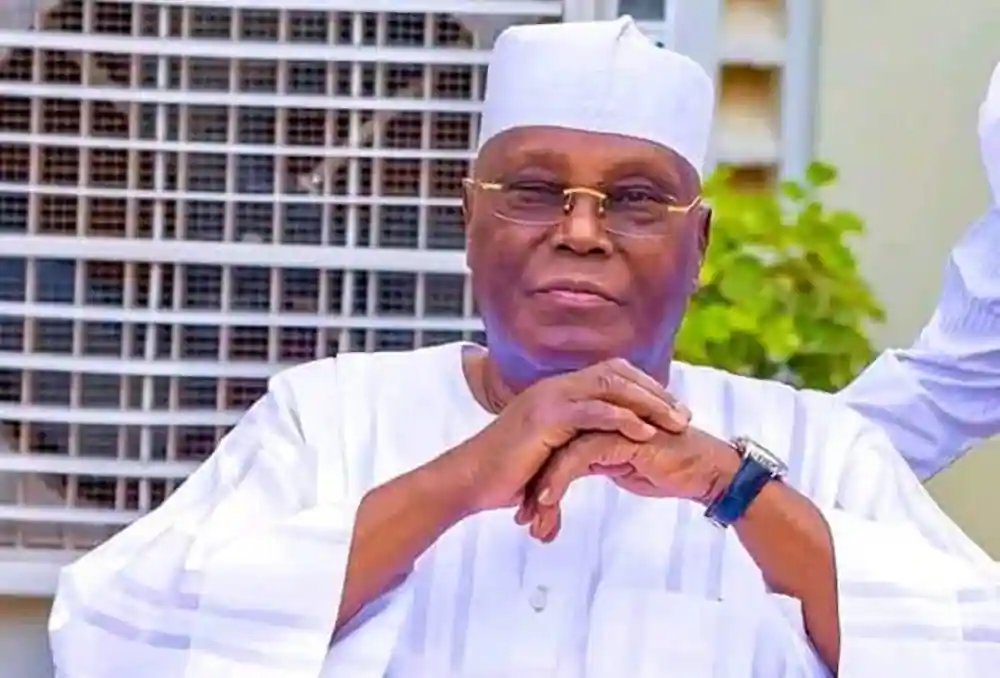
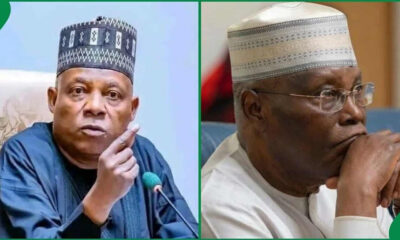
Atiku: Production subsidy will boost local oil production, put money back in Nigerians’ pockets
Atiku: Production subsidy will boost local oil production, put money back in Nigerians’ pockets
Former Vice President and African Democratic Congress (ADC) presidential candidate for 2027, Atiku Abubakar, has criticised President Bola Tinubu’s economic policies, accusing the administration of worsening the cost-of-living crisis and weakening the purchasing power of Nigerian households and businesses.
Atiku said Nigerians were facing rising costs of petrol, food, transportation and basic goods, while many businesses were struggling because consumers had less money to spend.
In a statement issued on September 6 by his Senior Special Assistant on Public Communication, Phrank Shaibu, the ADC presidential candidate said the Federal Government could not rely solely on economic statistics while Nigerians continued to experience financial hardship.
Atiku particularly criticised the removal of the petrol subsidy, arguing that the policy had contributed to higher transportation and living costs.
He also rejected criticism of his proposal for a production subsidy, saying the initiative was designed to support domestic production and refining rather than return to the previous system of subsidising imported petrol.
“This is why my Production Subsidy is about putting money back into people’s pockets. Support what we produce and refine here, increase supply, monitor the price and make sure Nigerians feel the benefit at the pump,” Atiku said.
According to the former vice president, the proposed intervention would focus government support on Nigerian oil production and domestic refineries, with the broader objective of increasing supply, strengthening the petroleum industry and reducing pressure on consumers.
READ ALSO:
- Kaduna to Lead Govt Patronage of Local Vehicles as Sani Unveils Peugeot 5008
- Opeifa Donates Salary to LSSTF as Lagos Gives NRC Two Security Vehicles
- Peter Obi, Others Challenging Tinubu Cannot Transform Nigeria — Datti Baba-Ahmed
Atiku said the position of the Crude Oil Refinery Owners Association of Nigeria (CORAN) in support of stronger domestic refining further reinforces his argument for targeted government intervention.
He also cited the policies of US President Donald Trump as an example of how government support could be used to strengthen strategic domestic energy production.
Atiku argued that Nigeria should similarly support its local refining industry instead of relying heavily on imported petroleum products.
However, his reference to Trump was a comparison between the two approaches and should not be interpreted as a direct endorsement by the US president of Atiku’s Nigerian policy.
Atiku said the cost-of-living crisis had become increasingly difficult for Nigerians, accusing the Tinubu administration of making essential goods and services significantly more expensive.
“Tinubu did not inherit this cost-of-living crisis from Nigerians. His policies created and deepened it,” Atiku said.
He cited increases in the prices of fertiliser, petrol and cement, as well as changes in the naira-to-dollar exchange rate, as examples of the economic pressures facing Nigerians.
Atiku said fertiliser had risen from about N9,000 to N50,000, while petrol had increased from approximately N199 to around N1,400 per litre. He also cited an increase in cement prices from roughly N4,000 to about N13,500.
He further pointed to the depreciation of the Nigerian naira against the US dollar as another factor affecting businesses and household purchasing power.
Atiku argued that the consequences of these increases extended beyond individual consumers, affecting small businesses that must cope with higher transportation, electricity and restocking expenses.
He illustrated his argument with the example of a frozen-food seller in Kubwa, Abuja, who, according to him, now spends more to transport goods, power freezers and purchase new stock while customers increasingly struggle to afford the products.
The situation, Atiku said, could eventually affect the entire supply chain as retailers struggle to restock, suppliers wait for payments and customers reduce their purchases.
The ADC candidate also referred to reports indicating that significant amounts of short-term assets belonging to some major Nigerian companies were tied up in unpaid customer bills.
He said the development reflected the weakening purchasing power of consumers, arguing that businesses could make sales on paper but still face financial difficulties when customers were unable to pay.
READ ALSO:
- FG Opens N2.5bn Grant Window For 50 Student Innovators Under “Next Moonshot Initiative”
- Kneeling to Propose Is Why Western Marriages Fail — Pete Edochie Sparks Fresh Debate
- US Strikes Three Iranian Oil Tankers in Retaliation for Missile Attack on Navy Ships
Atiku therefore challenged the Federal Government to look beyond headline economic indicators and assess whether Nigerians were actually experiencing improvements in their daily lives.
“Nigerians know the prices they meet every day,” he said, arguing that households were more concerned about the cost of food, fuel, transport and other necessities than official economic statistics.
He also questioned the availability of meaningful relief for Nigerians amid rising living costs, citing concerns over electricity, security, food prices and transportation.
Atiku said his production subsidy proposal was intended to change the way government intervention operates in Nigeria’s petroleum sector.
Rather than subsidising imported petrol, he said the policy would support domestic oil production and refining, with intervention linked to measurable production and supply.
The objective, he said, would be to increase domestic petroleum output, strengthen local refineries, create jobs and reduce the cost of petroleum products for consumers.
Atiku also questioned why government intervention should be considered poor economic policy when the intended beneficiaries were Nigerian consumers and producers.
“Why does intervention suddenly become bad economics when ordinary Nigerians are meant to benefit?” he asked.
The former vice president argued that Nigeria should adopt policies that support strategic domestic industries while ensuring that the benefits reach ordinary citizens.
He said increased local refining would reduce dependence on imported petroleum products and help Nigeria retain more value from its oil resources.
The renewed debate over fuel subsidy, domestic refining and the cost of living is likely to become an important issue ahead of the 2027 presidential election.
Atiku is seeking to distinguish his production-focused proposal from the petrol subsidy regime that was removed by the Tinubu administration.
He said his economic approach would prioritise domestic production, local refining, job creation and lower living costs, rather than policies that place additional pressure on household incomes.
“The choice before Nigeria is therefore clear: continue with an economy that takes more from the people, or build one that puts money back in their pockets,” Atiku said.
He urged Nigerians to support policies that would increase domestic production and make essential goods and services more affordable.
“Support production. Refine in Nigeria. Create Nigerian jobs. Lower the cost of living,” he said.
Atiku maintained that Nigeria must produce more locally while ensuring that ordinary Nigerians pay less for essential goods and have enough income left to support their families.
The statement comes as political parties and presidential aspirants begin shaping their economic messages ahead of the 2027 general election, with fuel prices, purchasing power, domestic refining and the broader cost of living expected to remain central issues.
Atiku: Production subsidy will boost local oil production, put money back in Nigerians’ pockets






Politics
Tinubu’s Second-Term Denial Could Trigger Political Crisis, Ex-NAHCON Chairman Warns
Tinubu’s Second-Term Denial Could Trigger Political Crisis, Ex-NAHCON Chairman Warns
Former Hajj commission chairman urges fairness in power rotation, cites security gains and lower food prices
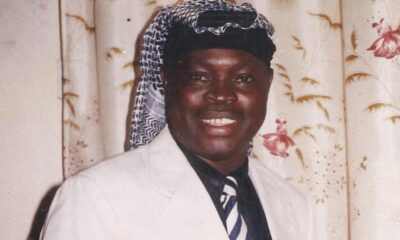
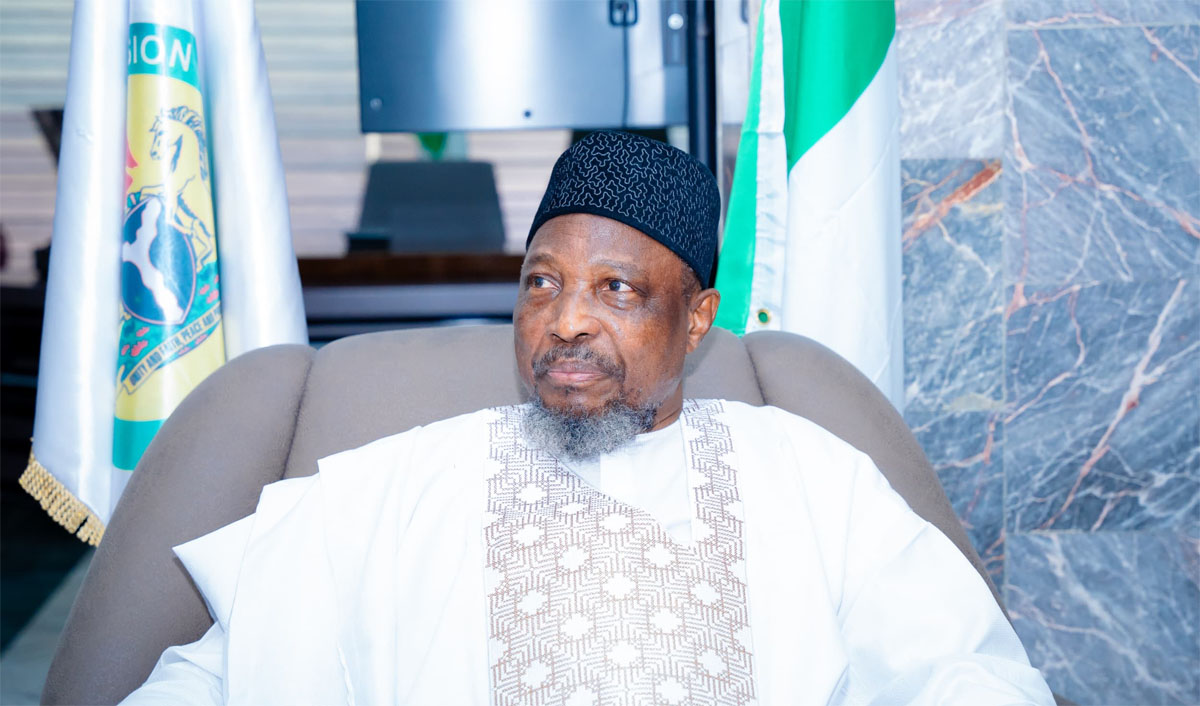
The immediate past chairman of the National Hajj Commission of Nigeria (NAHCON), Sheikh Abdullahi Saleh Pakistan, has warned that denying President Bola Ahmed Tinubu a second term in office could plunge Nigeria into a political crisis.
Pakistan said allowing Tinubu to complete two terms, as former President Muhammadu Buhari did, would help sustain the informal understanding of power rotation between the North and South and prevent future political tensions.
The former NAHCON chairman made the remarks while addressing youth groups at his residence in Kano, where he argued that political leaders should not be rejected primarily because of their regional origins.
He warned that attempts to deny Tinubu re-election on such grounds could create a dangerous precedent for future presidential contests, particularly for northern politicians seeking to serve two terms.
“We have to be fair to Tinubu. The type of politics we are playing where we reject somebody because of the region he came from is dangerous. If we sustain this, we will suffer in the future,” he said.
Pakistan recalled Tinubu’s support for Buhari’s second-term ambition, arguing that the former Lagos State governor had stood by the late president and insisted that he should complete his two terms despite concerns about his health.
According to him, it would be unfair for political actors to oppose Tinubu’s second-term bid after Buhari, who came from the North, was allowed to serve eight years.
He warned that denying a southern president the opportunity to complete two terms could undermine the informal power-sharing arrangement between the two regions.
“The way Tinubu supported late Muhammadu Buhari and insisted that he completed his two terms, even though he was ill, and now some people are working hard to deny Tinubu a second term, we will fling the country into a political crisis in the future. Nobody will allow any northerner to take two terms,” he said.
The former NAHCON chairman’s position comes amid growing political discussions over zoning, regional representation and the 2027 presidential election.
Although Nigeria’s Constitution does not require presidential power to rotate between the North and South, the practice has remained an important political consideration in the country’s party negotiations and presidential contests.
However, the decision on who becomes president ultimately rests with the electorate through the constitutional electoral process.
Pakistan also defended the Tinubu administration’s handling of insecurity, arguing that the president inherited significant security challenges from previous administrations.
He identified the Boko Haram insurgency and banditry as major problems confronting the country, claiming that the former began before Buhari assumed office, while banditry expanded during the latter’s administration.
The cleric argued that the security situation should be assessed in the context of the challenges inherited by the Tinubu government rather than being used solely as a political weapon against the president.
He particularly cited the Abuja-Kaduna highway, which experienced serious security concerns during Buhari’s administration, as an example of what he described as an improvement under Tinubu.
“Up to the time Buhari finished his second term in office, a journey from Abuja to Kaduna was suicidal. You only heaved a sigh of relief when you arrived in Kaduna. But now you can leave Abuja at 12am and arrive at Kaduna safely. It means there is an improvement,” Pakistan said.
He also recalled attacks on the Abuja-Kaduna railway, which heightened fears among passengers and disrupted confidence in train travel along the route.
According to him, the security situation has improved compared with the period when kidnappers and armed groups posed serious threats to travellers.
His assessment, however, represents his own view of the security situation, and the extent of any improvement would require a broader examination of security incidents and official data across affected locations.
On the economy, Pakistan argued that the prices of some food commodities had declined under the Tinubu administration, citing rice and millet as examples.
He claimed that a bag of rice, which he said sold for about ₦120,000 under Buhari, now cost approximately ₦57,500.
“Under Buhari, a bag of rice sold for ₦120,000, but today it is ₦57,500. It is less than half the amount under Tinubu,” he said.
The former commission chairman, who identified himself as a farmer, also compared millet prices, saying he sold a bag for about ₦85,000 under Buhari, while the commodity now sells for approximately ₦30,000.
The figures were cited by Pakistan to support his argument that the current administration had recorded improvements in some areas of the economy.
However, food prices vary by location, quality, season and market conditions. The figures he provided were not accompanied by details establishing a uniform nationwide price decline, and they should be understood as his personal comparison rather than a comprehensive assessment of the cost of living.
Nigeria’s economic conditions, including food affordability, inflation and household purchasing power, remain important issues in the debate over the performance of the Tinubu administration.
Pakistan maintained that political disagreements over the president’s re-election should not be driven by regional considerations, warning that the consequences could extend beyond the 2027 election.
He urged Nigerians to consider the long-term implications of their political decisions, arguing that fairness in the treatment of political leaders was necessary to preserve stability and confidence in the country’s power-sharing arrangements.
His comments add to the ongoing debate over Tinubu’s second-term ambition, with supporters emphasising continuity and regional balance, while political opponents continue to assess the administration’s performance and prospects ahead of the next general election.
Whether Tinubu secures another term will ultimately be determined by the electoral process and the decisions of Nigerian voters.
Tinubu’s Second-Term Denial Could Trigger Political Crisis, Ex-NAHCON Chairman Warns
Politics
Adamawa Political Shake-Up: 21 Council Chairmen, 226 Councillors Dump PDP for APC

Adamawa Political Shake-Up: 21 Council Chairmen, 226 Councillors Dump PDP for APC
YOLA, Adamawa State — The Peoples Democratic Party (PDP) has suffered a major political setback in Adamawa State as all 21 elected local government chairmen and 226 councillors have defected to the ruling All Progressives Congress (APC).
The mass defection, which became public on Tuesday, October 20, 2026, followed the submission of resignation letters by the council chairmen to their respective PDP ward chairpersons.
The development comes months after Governor Ahmadu Umaru Fintiri left the PDP for the APC, triggering a political realignment across the state.
The Adamawa State APC Publicity Secretary, Victor Dogo, confirmed the defections, saying all 21 local government chairmen, area development administrators and 226 councillors had joined the ruling party.
According to Dogo, the council officials decided to align with Fintiri, whom he described as their political benefactor.
He said the defectors believed they could better align their political activities with the governor by joining the same party.
Several council chairmen explained their decisions in resignation letters dated Monday, October 19, 2026, citing personal considerations and consultations with their families, political associates and other stakeholders.
The chairman of Yola North Local Government Area, Jibril Jimeta, said he had decided to pursue a different political path, while expressing appreciation to the PDP for the opportunities and relationships he developed during his membership of the party.
READ ALSO:
- ‘I Never Asked Them to Abandon Loved Ones’ — Obi Clarifies Diaspora Remarks
- FG Confirms Ebola Case in Abuja, Identifies 44 Contacts
- Breaking: Afenifere Leader Pa Fasoranti Dies at 100
The Maiha Local Government chairman, Tijani Atiku, and his Mubi North counterpart, Musa Hassan, also submitted letters announcing their departure from the opposition party.
Similarly, the chairman of Demsa Local Government Area, Akham Jalo, said his decision followed consultations with his family, political associates, stakeholders and residents of his council.
Jalo said he joined the APC to align with Fintiri’s political direction and attract more development to Demsa.
The defections have strengthened the APC’s presence across Adamawa’s 21 local government areas, further reshaping the state’s political landscape ahead of the 2027 governorship election.
The development had been anticipated after Fintiri defected from the PDP on February 27, 2026. However, the newly elected council officials had contested the June 2026 local government elections on the PDP platform after securing the party’s tickets before the governor’s departure.
The PDP had won the chairmanship positions across all 21 local government areas in the election, which was conducted by the Adamawa State Independent Electoral Commission.
The party had previously dismissed speculation that the newly elected officials would abandon it following Fintiri’s defection.
Reacting to the latest development, the PDP leadership in Adamawa played down its implications for the party’s electoral prospects.
The party’s governorship candidate, Maurice Vunobolki, had earlier argued that the departure of council chairmen would not necessarily determine the outcome of the 2027 governorship election, insisting that voters, rather than elected council officials, would decide the winner.
The PDP’s state leadership also expressed confidence that the party could regain the governorship despite the defections.
The mass movement represents a significant shift in Adamawa politics, placing the APC and Fintiri at the centre of a new political alignment while leaving the PDP to reorganise ahead of the next electoral contest.
Adamawa Political Shake-Up: 21 Council Chairmen, 226 Councillors Dump PDP for APC
Politics
Buhari Feared Tinubu Presidency, Resisted Pressure to Back Him – Baba-Ahmed Claims

Buhari Feared Tinubu Presidency, Resisted Pressure to Back Him – Baba-Ahmed Claims
The National Chairman of the Peoples Redemption Party (PRP), Hakeem Baba-Ahmed, has claimed that former President Muhammadu Buhari had reservations about President Bola Ahmed Tinubu succeeding him in 2023, describing the current President as “bad news” for Nigeria.
Baba-Ahmed made the allegation at a summit organised by the Northern Elders Forum (NEF), where he criticised Tinubu’s administration and questioned the President’s handling of the country’s economic and political challenges.
According to him, Buhari resisted pressure from some political associates who wanted Tinubu to emerge as his successor after the 2023 general election.
“Even Buhari saw Tinubu as bad news for this country. In fairness to him, he is not around him. Buhari resisted some people who insisted it had to be Tinubu,” Baba-Ahmed said.
He did not identify the individuals who allegedly pressured Buhari or provide further details of the former President’s reported reservations about Tinubu’s candidacy.
Baba-Ahmed also revisited Tinubu’s declaration of “Emilokan”, a Yoruba expression meaning “it is my turn”, during the build-up to the 2023 presidential election, arguing that Nigerians should have examined the statement more critically.
“Nigerians ought to have known there was something wrong the day Tinubu said ‘It’s my turn’. Maybe we missed it,” he said.
Questioning the purpose behind the declaration, Baba-Ahmed argued that the presidency of a country with more than 200 million people should be about public service rather than the fulfilment of an individual’s political ambition.
The PRP chairman further accused the Tinubu administration of worsening the country’s difficulties, citing economic hardship and what he described as failures across key areas of governance.
READ ALSO:
- NAFDAC Probes Corps Member’s Death at Enugu Camp as Fake Drug Claims Emerge
- Nigerian Universities Have Not Expired, Only Teaching Methods, Professor Tells Ojuolape
- Kano: Soldiers Kill Two Kidnappers, Rescue Victim, Recover ₦10m
He argued that the President should not prioritise his ambition for a second term over the welfare of Nigerians, insisting that the country needed a change in direction.
Baba-Ahmed also expressed confidence that Nigeria would overcome its current challenges, describing its people as resilient despite the economic and political difficulties confronting the nation.
“We are very resilient people. We have seen crises bigger than this, and we survived it. We survived this one, and we will survive this one,” he said.
On the 2027 general election, Baba-Ahmed disclosed that opposition parties were working towards a coalition to challenge Tinubu, adding that the alliance would seek to unite political interests behind a single candidate.
He urged Nigerians opposed to the President’s re-election bid to support whoever emerges as the coalition’s candidate.
Baba-Ahmed also called on the Independent National Electoral Commission (INEC) to ensure that the 2027 elections are credible and reflect the wishes of voters.
Tinubu succeeded Buhari on May 29, 2023, after winning the presidential election on the platform of the All Progressives Congress (APC). His administration has introduced major economic reforms, including the removal of petrol subsidies and changes to the foreign exchange system, which have generated sustained public debate over their impact on households and businesses.
Baba-Ahmed’s claim about Buhari’s alleged opposition to Tinubu’s emergence has not been independently established in the account of the summit. His remarks come amid growing political manoeuvring ahead of the 2027 elections and renewed criticism of the President’s performance by opposition figures.
Buhari Feared Tinubu Presidency, Resisted Pressure to Back Him – Baba-Ahmed Claims
-

 metro2 days ago
Army Major, Soldiers Killed in ISWAP Ambush in Yobe State
-

 metro1 day ago
‘We Don’t Know What Else to Do’ — Mother Begs for Release of Abducted Children
-
 metro2 days ago
Breaking: Afenifere Leader Pa Fasoranti Dies at 100
-
 metro1 day ago
Atiku: US Lobbying Firm Raises Alarm Over Alleged Assassination Plot
-

 metro1 day ago
Five Arraigned Over Kidnapping of 20 Prospective NYSC Members in Imo
-
 metro2 days ago
‘I Never Asked Them to Abandon Loved Ones’ — Obi Clarifies Diaspora Remarks
-

 Auto1 day ago
Beyond the Showroom: Why After-Sales Service Will Define Auto Industry Winners
-

 Auto1 day ago
No 5% Petrol Tax Plan, Oyedele Says, Amid Public Concerns