

News
Atiku to Tinubu: Cut Fuel Prices, Let Nigerians Breathe
Atiku to Tinubu: Cut Fuel Prices, Let Nigerians Breathe
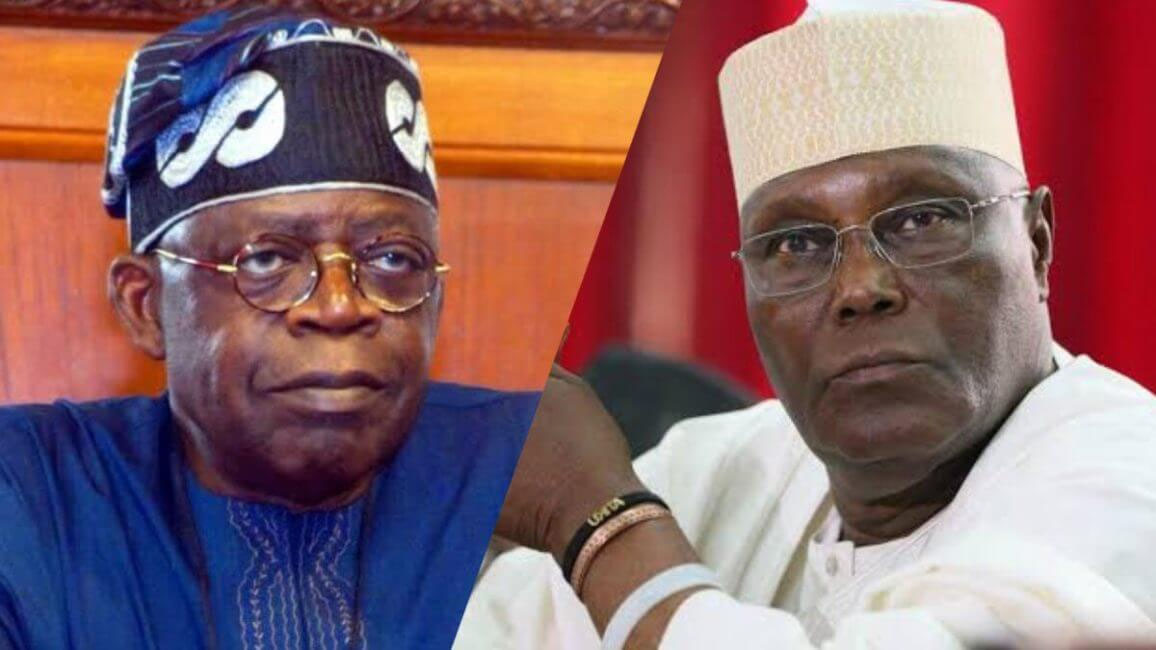
Former Vice-President and African Democratic Congress (ADC) presidential candidate Atiku Abubakar has urged President Bola Ahmed Tinubu to intervene in the petroleum sector and reduce petrol and diesel prices, saying rising energy costs are putting additional pressure on Nigerian households, workers, farmers and businesses.
Atiku made the call on Friday, September 18, 2026, during a press conference in Abuja, where he also criticised the Federal Government’s reliance on palliatives and raised concerns over plans to phase out electricity subsidies.
He asked President Tinubu to use the remaining months of the administration to implement measures capable of easing the cost-of-living crisis, arguing that Nigerians need policies that reduce the underlying cost of goods and services rather than temporary relief after prices have already risen.
According to Atiku, the impact of higher petrol prices has extended far beyond filling stations, affecting transportation, food distribution, farming, manufacturing, logistics and household budgets.
He argued that when petrol becomes more expensive, transport operators face higher costs, farmers spend more moving produce, traders pay more to move and stock goods, workers spend more commuting and businesses incur higher logistics and energy expenses.
Atiku said the resulting pressure ultimately reaches consumers through higher prices for food and other essential goods.
He also questioned the effectiveness of government palliatives, including food distribution and cash-transfer programmes, arguing that such interventions may provide temporary assistance but cannot replace policies that restore the purchasing power of Nigerians.
The ADC candidate said government should concentrate on lowering production and energy costs so that households and businesses can retain more of their income.
His comments came amid another round of increases in the domestic petrol price.
READ ALSO:
- Xenophobia: FG Brings 33 More Nigerians Home From South Africa
- Falconets Thrash England 3-0, Face Colombia in U-20 World Cup Quarter-Finals
- Replace Fuel Subsidy With Vehicle Credit to Drive Mobility, Jobs,LCCI, Ilekuba tell FG
The Dangote Petroleum Refinery increased its petrol gantry price from ₦1,265 to ₦1,350 per litre effective September 12, 2026. The increase represented an ₦85, or 6.7 per cent, rise and was the fourth upward adjustment in the refinery’s petrol price since August 21.
The successive adjustments have also been reflected at some filling stations, with petrol selling for as much as ₦1,395 per litre at some locations in Lagos, although prices have varied between stations and marketers.
Atiku said the government should not hesitate to adopt measures capable of lowering petrol prices simply because similar proposals originated from the opposition.
He said his concern was the effect of high energy costs on Nigerians and argued that the administration should act in the public interest.
A major part of Atiku’s argument is his proposal for a production subsidy for locally refined petroleum products.
The former vice-president has said his proposal is different from the former system of subsidising imported petrol. Under his plan, government support would be targeted at the crude feedstock supplied to qualifying refineries operating in Nigeria.
Atiku said the proposed mechanism would lower the cost of crude supplied to domestic refineries, with the reduction expected to translate into lower production costs and ultimately lower petrol prices for consumers.
He has proposed that the intervention should be transparent, capped and independently verified, with only crude refined in Nigeria qualifying for the support. Imported petroleum products, according to his proposal, would not benefit from the scheme.
Atiku has also said any such intervention should have a defined financial limit, be subject to National Assembly approval and undergo independent auditing.
He maintains that the policy would encourage domestic refining, protect investments in Nigeria’s refining industry and reduce the country’s dependence on imported petroleum products.
The proposal has generated debate because the Tinubu administration ended the long-standing petrol subsidy in May 2023, with the government arguing that the policy had become financially unsustainable and placed a heavy burden on public finances.
The subsequent removal of the subsidy resulted in a sharp increase in petrol prices and contributed to higher transportation and living costs, making fuel pricing one of the major economic issues in Nigeria.
The latest debate is taking place as Nigeria’s domestic refining capacity expands, particularly through the Dangote refinery.
The refinery has become a major supplier to the Nigerian market, but its prices continue to be influenced by factors including crude oil costs, exchange rates, refining expenses, logistics and international market conditions.
Atiku’s position is that government can intervene on the production side by lowering the cost of crude supplied to domestic refineries rather than returning to a system that subsidises imported petrol.
The former vice-president has also urged the government to reduce diesel prices, which remain important to manufacturers, transport operators, small businesses and other enterprises that depend on diesel-powered generators and equipment.
READ ALSO:
- Tinubu, Macron Hold Private Dinner in Paris, Reaffirm Nigeria-France Ties
- Federal Workers Urge Finance Ministry to Pay Delayed Allowances, Promotion Arrears
- Nigeria Wins $3.38bn Mambilla Arbitration Battle As ICC Rejects Sunrise Claims
He argued that lower energy costs would help reduce the cost of doing business and could eventually moderate prices paid by consumers.
Atiku also turned his attention to the electricity sector, where the Federal Government has announced plans to phase out electricity subsidies in 2027.
The government has said the reform is aimed at improving the financial sustainability of the power sector. The planned changes have nevertheless generated concerns over their possible impact on households and businesses already struggling with high operating costs.
Atiku warned that higher electricity costs could add to the burden already being carried by Nigerians.
He pointed to small enterprises such as barbers, tailors, welders and frozen-food sellers, as well as manufacturers that rely on a combination of public electricity, diesel and other alternative power sources.
He argued that government should avoid imposing additional energy costs before adequate measures are put in place to protect consumers.
The debate over fuel subsidy and electricity subsidy has therefore become part of a broader disagreement over the direction and social impact of Nigeria’s economic reforms.
Atiku has argued that the savings and additional revenues generated by subsidy reforms should translate into tangible improvements in Nigerians’ living standards.
The Federal Government, meanwhile, has maintained that the petrol subsidy removal was necessary to reduce the fiscal burden of the old system and allow resources to be redirected towards development and other government priorities.
The issue has gained renewed prominence as petrol prices rise again.
Organised labour and opposition groups have also increased pressure on the Federal Government for measures to cushion households from the impact of higher petrol prices, while calls have continued for greater support for domestic refiners.
The latest petrol price increases have revived questions about why pump prices remain high despite the availability of locally refined fuel and Nigeria’s status as a major crude oil producer.
Market participants have pointed to the cost of crude, global oil-market volatility, exchange-rate movements, distribution expenses and other factors affecting the final pump price.
Aliko Dangote has also raised concerns about differences between Nigerian petrol prices and prices in neighbouring countries, which can create incentives for cross-border fuel smuggling.
For Atiku, however, the immediate priority is to reduce the pressure on consumers.
He has urged President Tinubu to consider his proposed local refining production subsidy, lower petrol and diesel costs, address electricity affordability and adopt broader economic policies aimed at restoring Nigerians’ purchasing power.
The intervention also comes against the backdrop of the 2027 presidential election, in which Atiku is the ADC presidential candidate.
His criticism of the Tinubu administration’s economic policies is therefore part of the wider political debate over the consequences of subsidy removal, the cost of living, domestic refining and the management of Nigeria’s energy sector.
The central policy disagreement is whether government intervention should return in some form to reduce consumer prices or whether Nigeria should continue moving towards a market-driven energy pricing system while using targeted measures to protect vulnerable households.
As petrol prices remain elevated and electricity reforms continue, the debate is likely to remain a major issue for Nigerian households, businesses and policymakers.
Atiku to Tinubu: Cut Fuel Prices, Let Nigerians Breathe








News
NDLEA Arraigns Two Mexicans, Four Nigerians Over Secret Meth Lab in Oyo Forest
NDLEA Arraigns Two Mexicans, Four Nigerians Over Secret Meth Lab in Oyo Forest
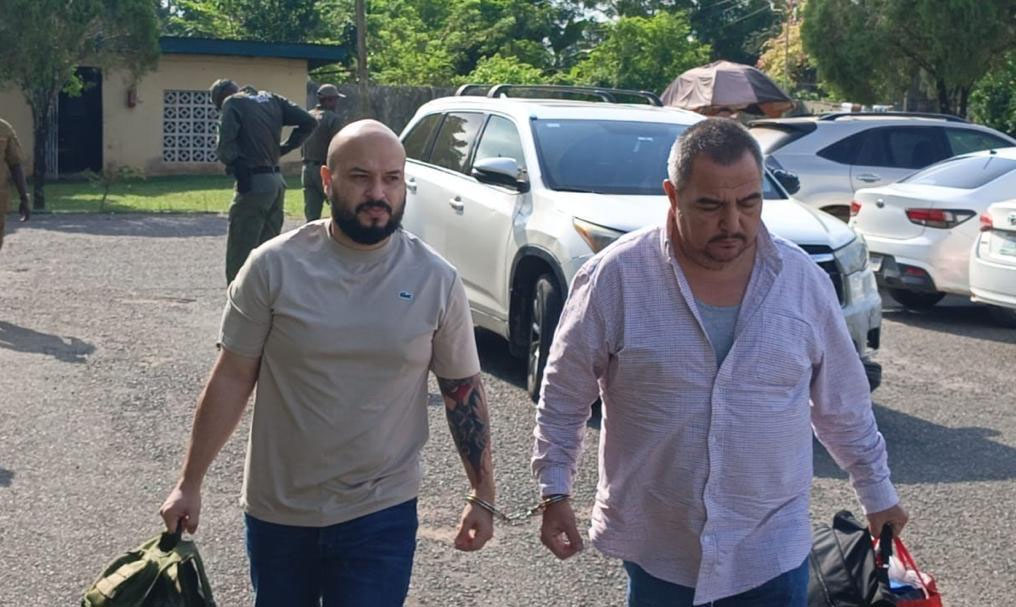
The National Drug Law Enforcement Agency (NDLEA) has arraigned two Mexican nationals and four Nigerians before the Federal High Court in Ibadan, Oyo State, over their alleged involvement in the establishment and operation of a clandestine methamphetamine laboratory in the state.
The six defendants were arraigned before Justice Nkeonye Evelyn Maha on a four-count charge bordering on conspiracy, the establishment of an illegal drug laboratory and the unlawful transportation and distribution of chemicals intended for the production of methamphetamine, a highly addictive psychotropic substance.
The defendants were identified as 56-year-old Mexican national Jose Villa Ochoa; another Mexican, 40-year-old Carrera Loaiza Arturo; and four Nigerians, Maxwell Uche Nevoh, 30; Olatunji Yusuf, 37; Bankole Akeem Owolabi, 45; and Ganiu Monsiu, 43.
According to the NDLEA, Ochoa and the four Nigerian defendants were arrested on June 17, 2026, in a forested area of Tapa village, Ibarapa North Local Government Area of Oyo State, where operatives uncovered the clandestine laboratory.
READ ALSO:
- Tinubu’s Visit: One Feared Dead, Several Injured as APC Women’s Bus Collides With Security Vehicle in Uyo
- ADC Leadership Crisis: Why Two Federal High Court Judgments Do Not Conflict – Obono-Obla
- 2027: Atiku Defies Court Ruling, Vows to Remain in Presidential Race
The second Mexican suspect, Arturo, was subsequently tracked down and arrested on August 19, 2026, while allegedly attempting to flee Nigeria through the Lagos airport.
The agency disclosed that the defendants were accused of conspiring to operate a drug trafficking organisation and establishing a secret laboratory for the production of methamphetamine between December 2025 and June 2026 at different locations in Lagos and Oyo states.
They were also accused of unlawfully transporting and distributing chemical substances for the manufacture of the prohibited drug, contrary to Section 20(1)(f) and punishable under Section 20(2)(a) of the NDLEA Act.
When the charges were read to them in a language they understood, all six defendants pleaded not guilty.
Following their pleas, Justice Maha ordered that they be remanded at the Correctional Centre in Ibadan pending the commencement of their trial.
The court subsequently fixed January 26, 27, 28 and 29, 2027, for the trial.
In a related development, the NDLEA disclosed that three other Mexican nationals and seven Nigerian collaborators arrested over the alleged operation of a similar clandestine methamphetamine laboratory in a forest hideout in Ogun State on May 16, 2026, had also been arraigned before a Federal High Court in Lagos.
The court reportedly rejected their bail application and ordered an accelerated hearing of the case.
The latest development underscores the NDLEA‘s ongoing efforts to dismantle suspected international drug trafficking networks and prevent Nigeria from becoming a hub for the illicit manufacture of dangerous narcotic substances.
The agency’s Director of Media and Advocacy, Femi Babafemi, announced the arraignment in a statement issued on Friday, November 6, 2026.
NDLEA Arraigns Two Mexicans, Four Nigerians Over Secret Meth Lab in Oyo Forest
News
Tinubu’s Visit: One Feared Dead, Several Injured as APC Women’s Bus Collides With Security Vehicle in Uyo
Tinubu’s Visit: One Feared Dead, Several Injured as APC Women’s Bus Collides With Security Vehicle in Uyo
UYO, Akwa Ibom State – A tragic road accident involving a bus conveying supporters of the All Progressives Congress (APC) has reportedly claimed one life and left several others injured in Uyo, Akwa Ibom State.
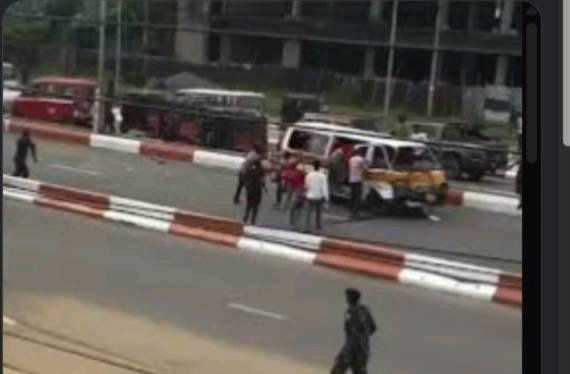
The accident occurred on Friday, November 6, when the bus, reportedly conveying APC women to participate in activities marking President Bola Ahmed Tinubu’s visit to the state, collided with a security vehicle along Oron Road.
The incident happened amid heightened security arrangements for the President’s visit to Akwa Ibom, where he was scheduled to commission several projects executed by Governor Umo Eno’s administration and attend political activities.
According to reports, the bus, identified as belonging to the Akwa Ibom State Transport Corporation (AKTC), was conveying the women towards the reception venue when it collided with a Toyota Hilux security vehicle.
The impact reportedly left the bus badly damaged, triggering panic as passers-by, motorists and security personnel rushed to assist the victims.
A video circulating on social media showed the wreckage of the bus at the accident scene, with people gathering around the damaged vehicle as rescue efforts continued.
The injured victims were reportedly evacuated and taken to hospitals in Uyo for medical attention.
The Guardian reported that one person had died in the accident, while several others sustained injuries. However, another local media report said no death had been confirmed as of the time of its publication.
The exact casualty figure and the identities of the victims had yet to be officially established.
The accident has raised concerns about the safety of transportation arrangements for political supporters mobilised to participate in high-profile presidential events.
President Tinubu arrived in Akwa Ibom on Friday as part of a two-state visit to Akwa Ibom and Rivers states. His itinerary included the inauguration of major infrastructure projects and engagement with political stakeholders.
As of the time of filing this report, further details about the circumstances surrounding the collision and the condition of the injured victims were still emerging.
Tinubu’s Visit: One Feared Dead, Several Injured as APC Women’s Bus Collides With Security Vehicle in Uyo
News
Sex Trafficking: ‘They Took Us To Native Doctor, Shaved Our Private Parts Before Leaving Edo’ – Survivor

Sex Trafficking: ‘They Took Us To Native Doctor, Shaved Our Private Parts Before Leaving Edo’ – Survivor
A survivor of human trafficking, Piana Shua Kimari, has recounted how she was subjected to disturbing traditional rituals before being trafficked out of Nigeria at the age of 15.
Kimari, who shared her experience during a media appearance, disclosed that she and other young girls were taken to a traditional practitioner in Ekpoma, Edo State, where parts of their bodies were shaved before they were transported out of the country.
Recounting the frightening experience, she said the traffickers subjected them to the rituals before leaving Ekpoma.
“Before we left Ekpoma in Edo State, they took us to a powerful native doctor. They shaved our armpits, private parts and head hair,” she recalled.
Her revelation has brought renewed attention to the disturbing methods allegedly employed by human trafficking syndicates to recruit, intimidate and control vulnerable young women and girls.
The practice of subjecting trafficking victims to traditional oaths and rituals is a recognised method of psychological intimidation used by some trafficking networks, particularly in cases involving cross-border sexual exploitation.
In some instances, victims are made to believe that revealing the identities of their traffickers, escaping or refusing to repay alleged trafficking debts could expose them or their families to spiritual attacks, madness or death.
Such threats often leave victims traumatised and afraid to seek help, even when they have opportunities to escape.
Kimari further recounted how their journey took them beyond Nigeria, with movements through areas around the Seme border and towards Mali, before she fully understood the dangerous situation she had found herself in.
According to her account, what initially appeared to be an opportunity turned into a nightmare when she realised she had fallen into the hands of human traffickers.
Her experience highlights the vulnerability of young girls to trafficking networks that exploit poverty, unemployment, deception and the desire for better opportunities abroad.
Nigeria, particularly Edo State, has long been identified as an important source area for victims of human trafficking, with some victims recruited and transported through international routes for sexual and other forms of exploitation.
The survivor’s account also underscores the importance of community awareness, early intervention and effective collaboration among security agencies, anti-trafficking organisations and relevant authorities.
There are growing calls for stronger efforts to identify and prosecute individuals involved in trafficking networks, including recruiters, transporters and collaborators who facilitate the exploitation of vulnerable persons.
Beyond rescuing victims, human rights advocates have consistently stressed the need for rehabilitation, psychological support, vocational training and reintegration programmes to help survivors rebuild their lives.
Kimari’s testimony serves as another reminder of the dangers confronting vulnerable Nigerian girls and the need for families and communities to remain vigilant against deceptive offers of overseas employment and travel opportunities.
Sex Trafficking: ‘They Took Us To Native Doctor, Shaved Our Private Parts Before Leaving Edo’ – Survivor
-

 metro3 days ago
Bandits Demand Over ₦100m Ransom for 15 Abducted Islamiya Students in Niger
-
 metro3 days ago
FG’s N50,000 Relief: OPay Details Eligibility Check Process, Issues Strong Warning Against Scams
-

 International3 days ago
Musk Breaks Silence After $458M Gamble Backfires in Historic Democratic Sweep
-

 News3 days ago
Omoda and Jaecoo Race Past 1.4m Sales, Expand Push into AI, Electrification
-

 Politics3 days ago
Appeal Court Upholds INEC’s Recognition of Wike-Backed PDP Leadership, Dismisses Turaki Faction’s Suit
-

 International3 days ago
Abdul El-Sayed, Seven Other Muslims Make History In US Midterm Elections
-
 News3 days ago
Tinubu Reveals How He Worked As Taxi Driver In US Before Becoming Nigeria’s President
-

 Politics3 days ago
Rufai, Abati Clash Over Natasha’s Cash Empowerment Programme in Kogi