

News
UK complicit in Kanu’s ‘abduction’ in Kenya, says lawyer
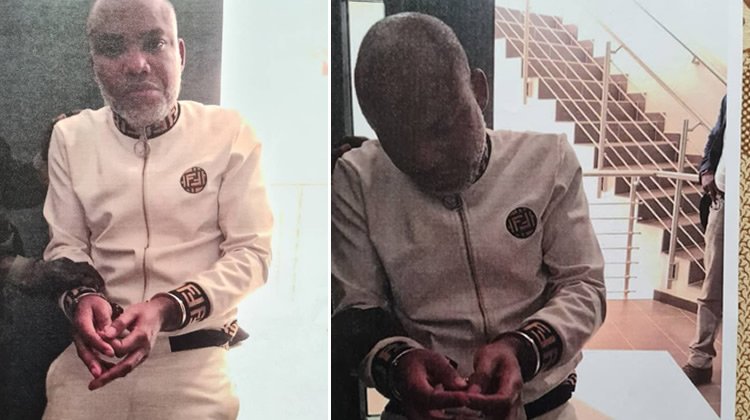
The British government has a hand in the alleged ‘abduction’ of leader of the Indigenous People of Biafra Nnamdi Kanu in Nairobi, Kenya, his lawyer, Ifeanyi Ejiofor, has said.
He made the accusation on Wednesday while speaking on Arise TV Morning Show.
He also accused the British Government and the British High Commission of not doing much to help Kanu despite being a British citizen.
Ejiofor wondered why the Commission has not visited Kanu since he was brought to Nigeria.
He noted that unlike Kanu’s 2015 arrest when the commission was regularly visiting him while in detention, the British Commission was paying lip service to helping him this time around.
He said, “I can confirm to you that British High Commission is not doing much about this case. I can confirm to you that there is every likelihood of connivance in what happened to my client.
“Because some times in 2015 when my client was arrested, I know how they were keeping in constant communication with him and visiting him regularly both when he was in DSS custody and when he was transferred to prison.
“But as at yesterday, a British national was arrested and till date they have not visited him even when we have officially notified them of the situation.
“As at the time he was arrested, he was arrested as a British national because he had renounced his Nigerian citizenship over five years ago. And they are still talking about offering him consular services,” he said.
Ejiofor cautioned the media to stop describing the ordeal of his client in Kenya as an arrest arguing that it was a clear case of abduction, illegal imprisonment, torture and extraordinary rendition.
He said the manner he was taken and the way Yoruba Activist, Sunday Igboho, was arrested were completely different.
“At the time he was arrested, his associates in Nairobi started looking for him. They searched in all the police stations and other law enforcement agencies and he was nowhere to be found.
“In the case of Sunday Igboho, he was arrested in Benin Republic and taken to custody and is being subjected to trial. His arrest was announced but in the case of my client he was detained in an illegal facility for eight days.”








News
Oyinlola Denies Adeleke’s Car Gift Claim: “Osun Govt Gave Me the Car, Not You”
Oyinlola Denies Adeleke’s Car Gift Claim: “Osun Govt Gave Me the Car, Not You”
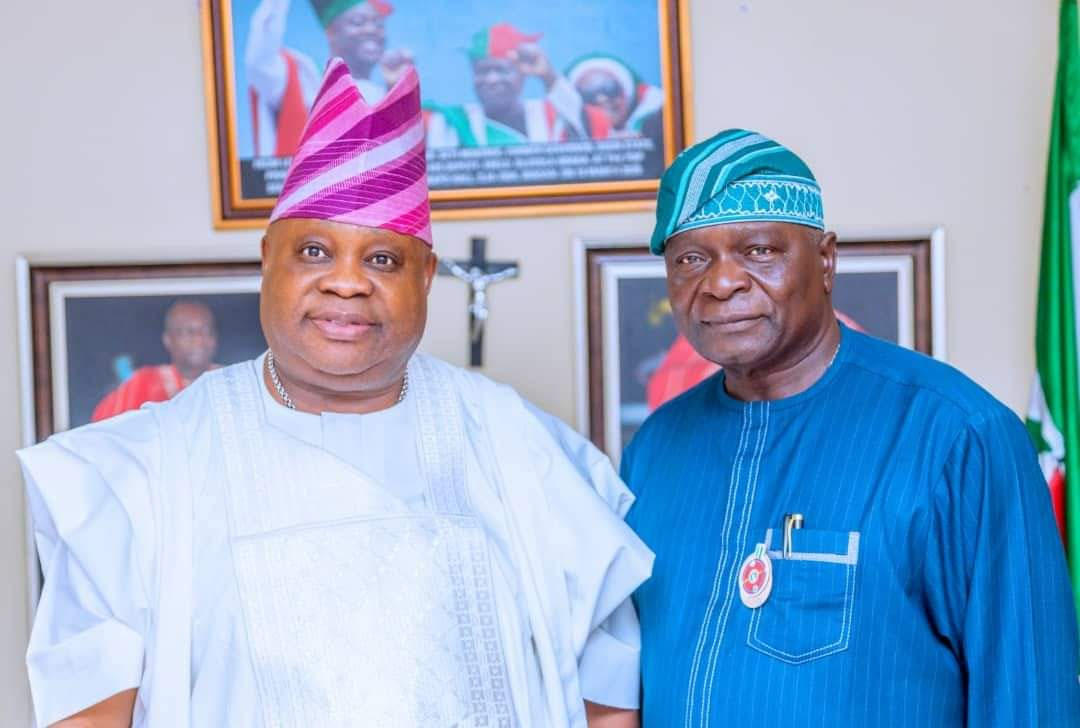
Former Osun State Governor Olagunsoye Oyinlola has dismissed Governor Ademola Adeleke’s claim that he received a vehicle from him before endorsing the All Progressives Congress (APC) governorship candidate, Bola Oyebamiji, ahead of the August 15 election. Oyinlola said the claim was false, maintaining that the vehicle was provided by the Osun State Government as part of benefits legally approved for former governors. The former governor made the clarification during an interview on Channels Television’s Politics Today while reacting to Adeleke’s assertion that he gave him a car, describing the governor’s claim as untrue and expressing disappointment at what he called a misrepresentation of facts. “That is far from the truth and it is a bad development that a governor will continue to tell lies,” Oyinlola said, emphasizing that the vehicle was not a personal gift but a statutory entitlement.
Explaining his position, Oyinlola said a law enacted by the Osun State House of Assembly provides certain entitlements for former governors, including the replacement of official vehicles every four years. He maintained that the vehicle in question was issued under that legal provision and should not be regarded as a personal gift from the governor. “It wasn’t Ademola that gave me vehicle. It was the Osun State Government; it is a law of the state enacted by the House of Assembly,” he said, clarifying that the vehicle was provided through the state’s official channels and not through the governor’s personal resources. This explanation underscores the former governor’s insistence that Adeleke’s claim misrepresents the nature of the transaction and the legal framework governing benefits for former governors in Osun State.
READ ALSO:
- Tinubu Rejects Blame Game, Vows to Revive Refineries with Profitability Focus
- Scores of Terrorists Killed, 60 Arrested in Nationwide Military Operations
- Navy Rescues 22 Sea Robbery Victims, Recovers Hijacked Boat in Akwa Ibom
Oyinlola further noted that having left office 16 years ago, he remained entitled to several vehicle replacements that accrued during that period. He explained that the law provides for the replacement of official vehicles allocated to former governors every four years, and having been out of office for 16 years, he argued that he was still entitled to three more vehicles under the provision. “I’ve been out of Osun State government since the last 16 years. If you aggregate it, it means the state is still having to give up three vehicles,” he stated, suggesting that the vehicle he received was just one of several to which he is legally entitled. The former governor also said the legislation covers other benefits available to former occupants of the office, including security arrangements and support staff, such as police personnel, cooks, and drivers, all of which are part of the statutory benefits package for former governors under the law.
The former governor rejected Adeleke’s suggestion that he had approached him because he could not afford or did not own a vehicle. “By the grace of God, I had started buying cars since I was 21. When I was going to the Government House, I went with my entire convoy. So, how will he paint it as if I went to beg? It is a very sad development. He should say it the way it is, and that it is a law, it is my entitlement and he still owes me three more vehicles,” he said, challenging the governor to present the facts accurately rather than misrepresenting the situation. Oyinlola’s response reflects his frustration with what he perceives as an attempt to diminish his standing by suggesting he was dependent on the governor’s goodwill for a vehicle.
The vehicle controversy has emerged amid a broader political disagreement between the two figures ahead of Saturday’s governorship election, in which Adeleke is seeking re-election. Oyinlola, a chieftain of the Peoples Democratic Party (PDP), recently endorsed the APC governorship candidate, Bola Oyebamiji, a decision that has further strained his relationship with Adeleke. Explaining his decision, Oyinlola cited Adeleke’s decision to defect from the PDP to Accord without consultation and what he described as the concentration of major government projects in Adeleke’s hometown of Ede, among other concerns. He revealed that he had held discussions with Adeleke and his brother on four alternative political platforms amid the crisis within the PDP, with Oyinlola advocating for Accord. However, he said he was surprised to learn through social media that Adeleke had resigned from the PDP and joined Accord without further consultation, a move that Oyinlola described as dismissive and disrespectful. These political tensions have now spilled over into public view, with the vehicle claim becoming a point of contention between the two political figures.
Oyinlola Denies Adeleke’s Car Gift Claim: “Osun Govt Gave Me the Car, Not You”
News
Tinubu Rejects Blame Game, Vows to Revive Refineries with Profitability Focus
Tinubu Rejects Blame Game, Vows to Revive Refineries with Profitability Focus
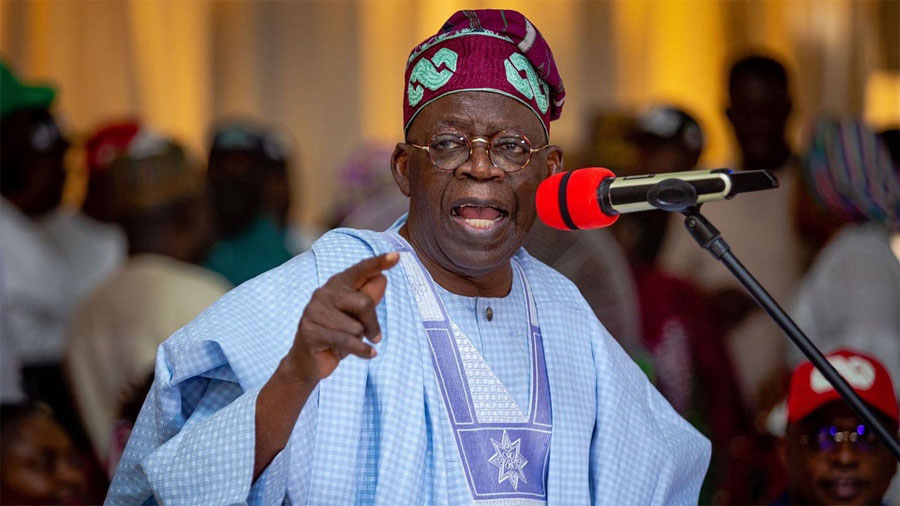
President Bola Ahmed Tinubu has firmly rejected engaging in a blame game over Nigeria’s long-moribund state-owned refineries, instead vowing to take full responsibility for reviving them and ensuring they operate profitably rather than merely producing smoke and flames without economic value. The President gave this assurance on Thursday, August 13, 2026, while receiving the leadership of the Nigeria Union of Petroleum and Natural Gas Workers (NUPENG), led by its National President, Mr. Sulaimon Oladiti, at the Presidential Villa in Abuja. The meeting, which was also attended by the Minister of Information and National Orientation, Mohammed Idris, provided a platform for the union to express its concerns about the state of the nation’s refineries and other pressing issues affecting the petroleum sector.
President Tinubu acknowledged the union’s concerns about the prolonged delays in reviving the refineries and declared that the Port Harcourt, Warri, and Kaduna refineries would indeed return to operation. He cautioned that mere visible activity would not be considered success, stating emphatically that “the refineries that you mentioned are going to come back to work. We’re just building a very firm reset and structural reworking of the economics of it. Ordinary flame and smoke of a refinery doesn’t mean it’s working, until it’s profitable and yields the value for which it is built.” This statement underscores the President’s determination to move beyond the symbolic restarting of the refineries to ensuring their long-term commercial viability and contribution to the national economy.
READ ALSO:
- Scores of Terrorists Killed, 60 Arrested in Nationwide Military Operations
- Navy Rescues 22 Sea Robbery Victims, Recovers Hijacked Boat in Akwa Ibom
- Keyamo Issues One-Week Ultimatum to Airlines Over Debt Repayment Plans
The President’s stance reflects a significant shift from merely attempting to restart the facilities to ensuring their long-term commercial viability. This comes after years of government spending on rehabilitation projects that failed to deliver sustained production. Under the previous administration, about $2.9 billion was approved for the rehabilitation of the refineries, yet the facilities barely produced refined products before being shut down again. The Nigerian National Petroleum Company Limited (NNPC) has since signed a Memorandum of Understanding with Chinese companies for a potential Technical Equity Partnership to support the completion and operation of the Port Harcourt and Warri refineries, signaling a new approach to addressing the challenges facing these critical national assets.
Acknowledging the history of failed interventions, Tinubu said his administration has accepted the assets and liabilities inherited from previous governments and would not waste time looking backward. He declared, “I’m not a man who will look back and blame everyone, because I’ve accepted the assets and liabilities of my predecessors. No matter what happened in the past years, it’s my responsibility now as President to fix it and make it work for the greatest common good of our population. I take responsibility for that, and I’m going to do it.” This statement reflects the President’s commitment to taking ownership of the challenges facing the nation’s refineries and his determination to find lasting solutions that will benefit all Nigerians.
The meeting also addressed other important issues affecting the petroleum sector and the broader economy. Tinubu urged truck owners who have converted their vehicles to Compressed Natural Gas (CNG) to pass on the cost savings to commuters rather than pocketing the full benefit themselves. He expressed concern that “whatever benefit that is coming from CNG is going into the pocket of truck owners, it’s not spreading as fast as I would like it, but it should spread.” The President also linked the government’s ability to fund major infrastructure projects to the economic reforms his administration has pursued since 2023, citing the Lagos-Ibadan, Abuja-Kaduna, Abuja-Kano, and Sokoto-Badagry road corridors among investments aimed at stimulating economic activities and improving public safety. Tinubu also promised to review constitutional issues surrounding the implementation of local government autonomy and appealed to stakeholders for understanding.
Earlier in the meeting, the NUPENG President, Salimon Oladiti, commended Tinubu’s decision to remove the fuel subsidy as courageous, saying it had freed resources for infrastructure development and other critical sectors. He also urged the President to sustain efforts to revive the country’s refineries, noting that functional facilities would strengthen Nigeria’s energy security, reduce dependence on imported petroleum products, and create more opportunities for Nigerian workers. Oladiti appealed for the rehabilitation of the Nigerian Pipelines and Storage Company (NPSC) depots, recommending they be handed over to private investors to manage under an equity arrangement. He also raised concerns about the casualisation of workers in the upstream sector, describing it as an “unhealthy trend” that NUPENG and its sister union, PENGASSAN, had been trying to correct with little success, and urged the President to use his good offices to stop the practice.
The NUPENG leadership later decorated President Tinubu as the Grand Patron of the union, a symbolic gesture of their confidence in his leadership and commitment to the welfare of petroleum workers. The Minister of Information and National Orientation, Mohammed Idris, said NUPENG‘s recognition of the administration’s efforts had helped reduce friction between organised labour and the government, describing it as uncommon for a major labour union to publicly acknowledge government reforms. Tinubu also pledged greater involvement of NUPENG in implementing the Presidential Initiative on CNG, ensuring that the union plays a key role in the transition to cleaner energy sources.
Tinubu Rejects Blame Game, Vows to Revive Refineries with Profitability Focus
News
State police bill: Gbajabiamila-led panel extends deadline for public input
State police bill: Gbajabiamila-led panel extends deadline for public input
ABUJA — The Presidential Working Group on the National Policing Bill has extended the deadline for the submission of memoranda and position papers on the proposed legislation to Friday, August 21, 2026.
The submissions must be made by 5 p.m. West Africa Time (WAT) through the official National Policing Bill portal.
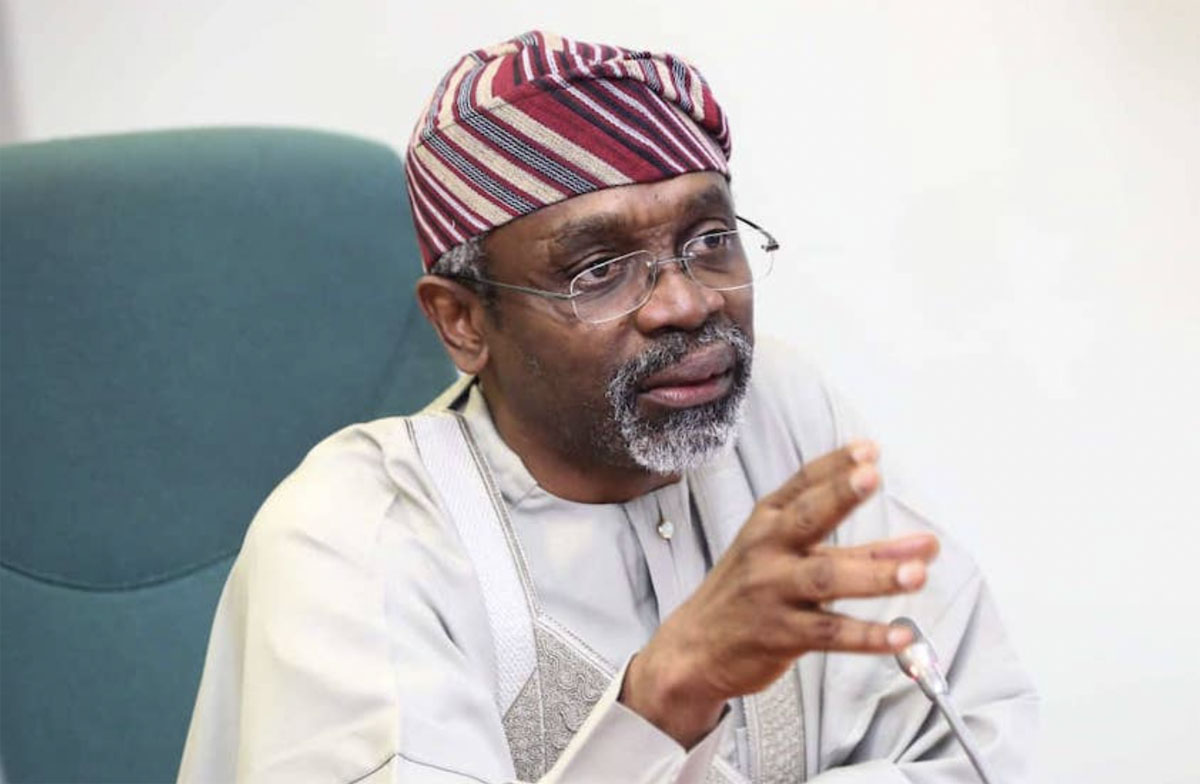
The extension was announced on Thursday in a statement issued by the Chief of Staff to President Bola Tinubu and Chairman of the Presidential Working Group, Rt. Hon. Femi Gbajabiamila.
Gbajabiamila said the additional time would enable stakeholders to prepare more detailed submissions and allow interested individuals, institutions and organisations to make well-considered contributions to the proposed legislation.
He said the Working Group remained committed to broad consultation and would consider informed contributions from Nigerians and relevant stakeholders as it develops the National Policing Bill.
The proposed legislation is expected to establish the operational, administrative, institutional and funding framework for an effective policing system capable of responding to Nigeria’s changing security needs.
It is also expected to provide safeguards for police accountability, professionalism and the protection of citizens’ rights.
“Given the significance of the proposed reform to the future of policing and internal security in Nigeria, the Working Group considers it important that stakeholders are afforded more opportunity to make substantive and technically sound contributions to the process,” the statement said.
READ ALSO:
- Davido Halts London Concert, Threatens to Walk Off Stage Over Fan’s Disrespect to Staff
- 29-Year Kwankwaso Ally Who Swore on Qur’an Defects to APC
- ICPC Uncovers Official Who Enrolled 14 Family Members on Govt Payroll, Another Collected 13 Salaries
The panel specifically encouraged legal practitioners, civil society organisations, security-sector professionals, state governments, professional bodies, academics, experts and other interested members of the public to use the extended period to submit their views.
“All submissions must be made on or before 5:00 p.m. WAT on Friday, August 21, 2026, exclusively through the official National Policing Bill portal, nationalpolicingbill.com,” the statement added.
The extension comes as the Federal Government advances plans for a new national policing framework, including the proposed establishment of state police.
The reform has gained renewed attention amid persistent security challenges across Nigeria, including kidnapping, banditry, terrorism, communal violence and other forms of criminality.
Supporters of state police argue that a more decentralised policing structure could strengthen community intelligence, improve response times and enable security agencies to better understand local security threats.
However, concerns have also been raised over the possibility of political interference and abuse of state-controlled police structures. These concerns have made accountability, oversight and safeguards against political interference important elements of the proposed reform.
The Working Group said its assignment would require careful consideration of several issues, including sustainable funding, command and control structures, recruitment and training standards, operational jurisdiction, inter-agency coordination and accountability mechanisms.
The group will also consider safeguards against political interference and abuse to ensure that the proposed policing framework protects citizens while allowing security agencies to operate effectively.
The development of the National Policing Bill is linked to the ongoing constitutional process for the establishment of state police in Nigeria. The proposed reform seeks to create a legal framework that would allow policing responsibilities to be more effectively shared between federal and state authorities.
President Bola Tinubu had earlier inaugurated the Presidential Working Group to develop an implementation-ready draft of the bill for onward legislative consideration.
The Working Group brings together representatives from the Federal Government, state governments, the security sector and the legal profession, reflecting the broad institutional implications of the proposed state police system.
The Presidency has said the proposed framework is expected to address issues such as minimum policing standards, state readiness, federal-state coordination, accountability, human rights protection and sustainable financing.
These issues are considered critical to ensuring that a decentralised policing system does not create significant disparities in policing standards or weaken national security coordination.
The Working Group said the issues under consideration underscore the need for extensive stakeholder engagement to develop a policing framework that is effective, accountable, sustainable and responsive to the security needs of communities across Nigeria.
“At the conclusion of its assignment, the Presidential Working Group will present a final, implementation-ready draft of the National Policing Bill for onward legislative processing,” the statement said.
The panel thanked stakeholders who had already submitted memoranda and encouraged others intending to participate in the process to take advantage of the extended deadline.
With the new timeline, all memoranda and position papers must be submitted by 5 p.m. on Friday, August 21, 2026.
The submissions are expected to help shape the final draft of the legislation before it proceeds to the next stage of the legislative process.
State police bill: Gbajabiamila-led panel extends deadline for public input
-
 Education3 days ago
Nigerian Young Academy, LASU to Host 16th International Conference on Convergent Research
-
 News3 days ago
Trump smuggled out of Turkey in catering truck over Iran threat
-
 International24 hours ago
Iran Had Detailed Intel on Trump’s Location Before Secret Turkey Escape
-
 News2 days ago
Tinubu Vows to Secure Nigeria, Declares Unity Non-Negotiable Amid Worsening Insecurity
-
 News24 hours ago
FG to Attach 300 NYSC Corps Members to CNG Workshops for Skills Training
-

 metro2 days ago
Nigeria Needs Competent, Ethical Young Leaders, Says HAVEK Leadership Academy
-

 Auto3 days ago
Omoda, Jaecoo Shake Global Auto Market, Hit One Million Sales in Three Years
-
 metro19 hours ago
Seven Miners Killed in Plateau Mining Pit Collapse, Renewing Urgent Calls for Safety Reform