

Politics
After Losing Lagos To Obi, Tinubu Demands Maximum Votes In 2027
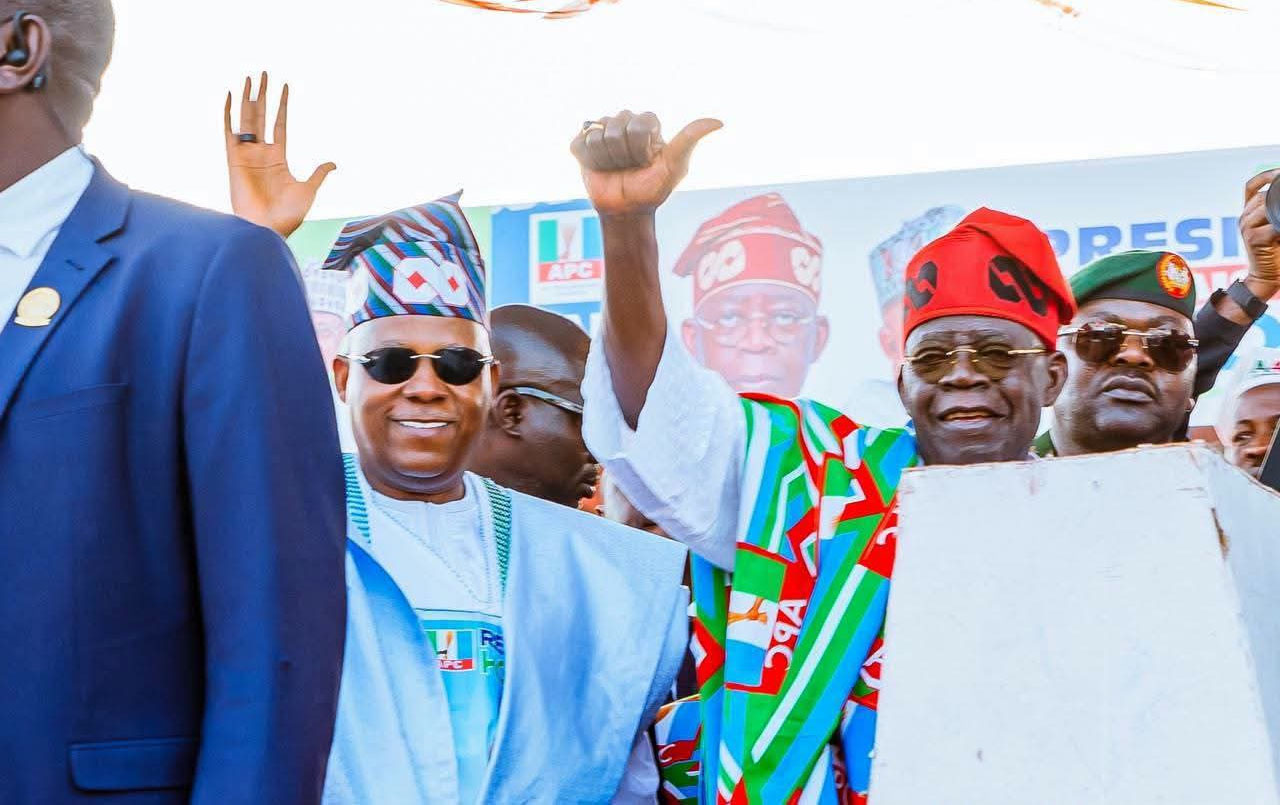
After Losing Lagos To Obi, Tinubu Demands Maximum Votes In 2027
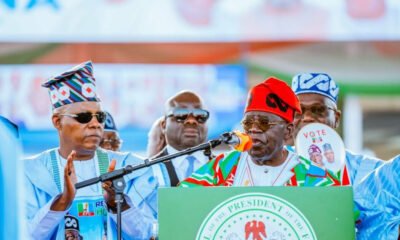
President Bola Ahmed Tinubu has declared that securing massive votes in Lagos State during the 2027 general elections is a major priority, urging residents and political supporters to intensify voter mobilisation and ensure higher participation at the polls.
The President described Lagos as particularly important to his political ambition, stressing that the state’s large voting population should translate into a significantly higher number of votes for his re-election bid.
Tinubu made the remarks on Sunday, November 22, 2026, during a special prayer session organised by members of his family at the Yoruba Tennis Club in Onikan, Lagos, ahead of the 2027 general elections.
Addressing political associates, family members and other guests, the President urged supporters to embark on grassroots mobilisation, particularly by encouraging eligible voters to collect their Permanent Voter Cards (PVCs) and participate in the elections.
He emphasised that political leaders must not take voter support for granted, insisting that the task ahead required extensive engagement with residents and communities.
“The challenge of today is much easier than that of yesterday. But we cannot take it for granted. You must knock your neighbour’s door. Tell them to go and collect their PVCs,” Tinubu said.
Describing Lagos as central to his political calculations, he declared: “To me, Lagos is the big deal.”
The President questioned why a state with millions of registered voters continued to record relatively low voter turnout, arguing that the number of votes cast should better reflect its electoral strength.
READ ALSO:
- Gombe: Three Killed, 13 Injured as Alleged Military Shooting Sparks Outcry
- Jimmy Odukoya Sues Sister, Church Trustees Over Removal as Senior Pastor
- UNILAG Gets 10 CNG Buses as FG Expands Campus Transport Scheme to 60 Institutions
“How can you have seven million registered voters and produce 100,000, 200,000? No. That’s failure. Even if you win and say you win, is it a win? No! You have to generate the maximum,” he said.
Tinubu also urged supporters not to allow personal disagreements with political leaders or dissatisfaction with individuals to discourage them from exercising their voting rights.
He encouraged residents to set aside political differences, collect their PVCs and participate in the electoral process, adding that disagreements could persist even after voting.
The President further reminded supporters that their voter cards represented their opportunity to influence the country’s political direction.
“If you have PVC, you have the power of January 16 and February 6. And that’s what I want to ask you to exercise,” he said, referring to the scheduled dates for the 2027 presidential and governorship elections.
The President’s renewed emphasis on Lagos comes against the background of his defeat in the state during the 2023 presidential election, when Peter Obi, then the Labour Party candidate, secured more votes than the All Progressives Congress (APC) candidate.
According to results announced by the Independent National Electoral Commission (INEC), Obi polled 582,454 votes against Tinubu’s 572,606, defeating the President by 9,848 votes in a state where Tinubu had served as governor from 1999 to 2007.
The result attracted considerable political attention because Lagos had remained a major centre of Tinubu’s political influence and the APC’s electoral strength for years.
Although Tinubu won 11 of the state’s 20 local government areas, Obi secured victory in nine, including Alimosho, Ojo, Ikeja, Kosofe, Oshodi-Isolo, Amuwo-Odofin, Ajeromi-Ifelodun, Eti-Osa and Somolu.
The outcome exposed the competitiveness of Lagos politics and demonstrated that the state’s electoral support could not be taken for granted by any political party.
For the 2027 contest, the APC is seeking to strengthen its grassroots structures and improve voter mobilisation as Tinubu prepares to defend his presidential mandate.
The President’s latest remarks suggest that his political associates are being encouraged to focus particularly on voter registration, PVC collection and turnout, rather than relying solely on the party’s existing political structures.
Lagos is also expected to attract significant attention from opposition parties seeking to retain or expand their support in the state.
Meanwhile, the Independent National Electoral Commission has scheduled January 16, 2027, for the presidential and National Assembly elections, while governorship and State Houses of Assembly elections are fixed for February 6, 2027.
Tinubu’s appeal for a stronger electoral showing in Lagos therefore places the state at the centre of his 2027 re-election mobilisation, with the outcome set to provide another measure of the political strength of the APC and its opponents in Nigeria’s commercial capital.
After Losing Lagos To Obi, Tinubu Demands Maximum Votes In 2027







Politics
2027: Makinde Invokes 1966 Coup, Questions Obi-Kwankwaso Ticket
2027: Makinde Invokes 1966 Coup, Questions Obi-Kwankwaso Ticket
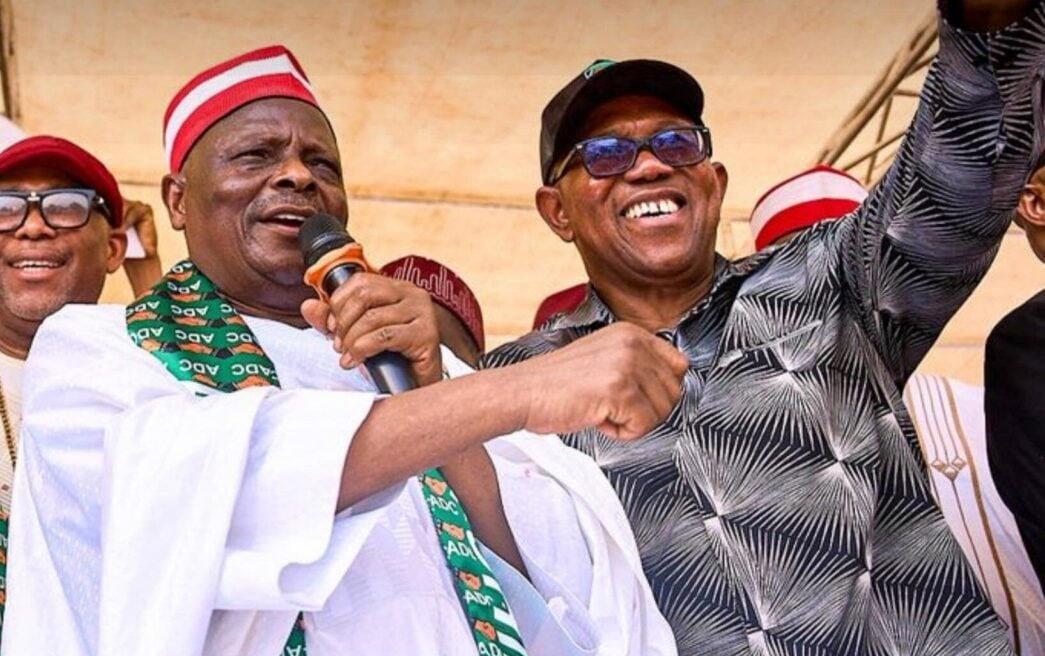
Oyo State Governor, Seyi Makinde, has questioned the suitability of the proposed presidential ticket involving Peter Obi and Rabiu Musa Kwankwaso ahead of the 2027 general elections, arguing that a traditional political alliance between the North and Southwest offers a stronger foundation for national stability.
Makinde made the remarks while defending his own presidential ambition and proposed ticket with former Director-General of the Department of State Services (DSS), Lawal Daura, under the platform of the Allied Peoples Movement (APM).
The governor spoke during an interview on The Rooftop, a political talk show hosted by Kayode Okikiolu, published on Sunday.
Asked why Nigerians should support his proposed ticket rather than the Obi-Kwankwaso combination, Makinde pointed to the historical relationship between the North and Southwest, insisting that cooperation between the two regions had played an important role in maintaining Nigeria’s stability during difficult periods.
“Well, apart from the traditional Southwest-North alliance, that alliance has always provided stability for Nigeria during times of crisis in the past,” he said.
Makinde further referenced the January 15, 1966 military coup, arguing that the deaths of prominent political and military leaders from the North and Southwest during the uprising demonstrated the historical roles played by the two regions in the country’s political development.
“If you go back to the first military coup in Nigeria, the people who were killed were largely from the North and Southwest because we have always been at the forefront of efforts to maintain stability in the country. That is what we have brought to the table,” the governor said.
The January 1966 coup, organised by a group of young military officers, resulted in the assassination of several prominent Nigerian leaders, including Prime Minister Abubakar Tafawa Balewa, Northern Premier Ahmadu Bello and Western Region Premier Samuel Ladoke Akintola.
READ ALSO:
- Military Kills 21 ISWAP Fighters in Borno Airstrikes, 26 Surrender
- Doctor Shortage: FG Increases Medical Student Admissions by 140%
- 2027: Tinubu Urges Oyo Voters to Stick With APC, Promises More Development
Other senior military officers and political figures were also killed during the uprising, which ended Nigeria’s First Republic and paved the way for military rule under Major General Johnson Aguiyi-Ironsi.
Makinde’s reference to the coup formed part of his argument for a political partnership between the North and Southwest, which he believes could provide a stabilising framework for Nigeria’s leadership.
Beyond the regional alliance argument, the governor also cited what he described as the youthful energy of his proposed ticket and the achievements of his administration in Oyo State as reasons Nigerians should consider his presidential ambition.
He maintained that his administration had documented its promises and commitments, making it possible for citizens to assess its performance and hold it accountable.
“There is also the youthful energy, what we have achieved in Oyo State, and the fact that we have reduced all these promises to black and white, making ourselves accountable,” he added.
The Oyo governor also used the interview to explain his proposal for a transitional government of national unity, which he said would address Nigeria’s political, economic and security challenges.
Makinde argued that the country required a new political arrangement capable of addressing its socio-political problems through broad-based cooperation rather than allowing individual ambitions to dominate national interests.
He said he was prepared to lead such a transitional arrangement but would not seek to benefit personally from its outcome.
According to him, removing himself from the benefits of the proposed transition would enable him to make decisions in the national interest without allowing personal political considerations to influence his judgment.
“Transitional in the sense that we know that we have to do something about our socio-political environment,” he said.
“I’m saying that I can lead it, but I will not be a beneficiary of the outcome, because if I’m looking at myself as benefiting from that outcome, it may cloud my judgment and also influence how I will take that decision.
“So, I’ve upfront removed myself and said, look, I will not be there now. I’m saying it for the record, even now,” Makinde stated.
He further argued that Nigeria’s security challenges were no longer restricted to particular regions and required a collective national response involving political leaders and stakeholders across the country.
Makinde’s comments come amid continuing political discussions among opposition figures over possible alliances and strategies for challenging President Bola Ahmed Tinubu and the ruling All Progressives Congress (APC) in 2027.
The proposed Obi-Kwankwaso ticket has featured prominently in discussions about opposition cooperation, following the emergence of Peter Obi as the presidential candidate of the Nigerian Democratic Congress (NDC) and Kwankwaso as his running mate.
However, disagreements over political platforms, leadership arrangements and presidential ambitions have continued to complicate efforts to establish a unified opposition front.
Makinde’s position introduces another perspective into the debate, with the governor making a case for his own North-Southwest political partnership rather than the proposed Obi-Kwankwaso combination.
As political consultations continue ahead of the 2027 elections, the competing alliance proposals are expected to remain important issues in discussions about opposition strategy, regional representation and Nigeria’s political future.
2027: Makinde Invokes 1966 Coup, Questions Obi-Kwankwaso Ticket
Politics
Kwankwaso Made Me Swear on Qur’an to Join APC After Election Victory — Gov Yusuf Reveals Tinubu Deal
Kwankwaso Made Me Swear on Qur’an to Join APC After Election Victory — Gov Yusuf Reveals Tinubu Deal
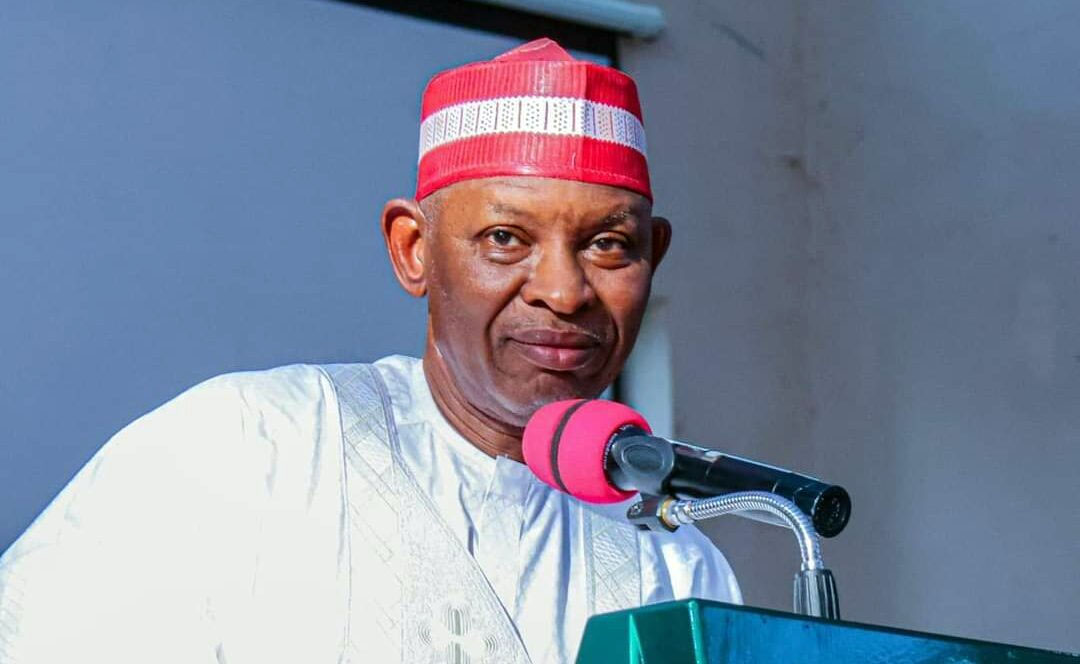
KANO, Nigeria — Kano State Governor, Abba Kabir Yusuf, has revealed fresh details of an alleged political agreement involving President Bola Ahmed Tinubu, his former political benefactor, Senator Rabiu Musa Kwankwaso, and his eventual defection to the ruling All Progressives Congress (APC).
Yusuf disclosed that Kwankwaso personally instructed him to approach President Tinubu after the 2023 governorship election and assure the President that they would return to the APC if the legal battle challenging his electoral victory was resolved in his favour.
In a startling revelation, the governor said Kwankwaso also made him swear on the Holy Qur’an to demonstrate his commitment to the agreement.
He made the disclosures during an interview with **BBC Hausa**, in which he spoke extensively about his political fallout with the former Kano governor and leader of the Kwankwasiyya movement.
The revelation offers a different account of the circumstances surrounding Yusuf’s January 2026 defection, which generated considerable controversy within Kano’s political establishment.
According to Yusuf, the arrangement was reached after the 2023 governorship election, when APC candidate Nasiru Yusuf Gawuna challenged his victory in court.
The governor explained that the understanding was that Tinubu would allow the judicial process to run its course without interference, while Kwankwaso and his political associates would eventually reunite with the APC if Yusuf retained his mandate.
He said Kwankwaso personally sent him to meet the President and communicate the commitment.
Yusuf further claimed that the discussions went beyond a one-time meeting, alleging that Kwankwaso held several meetings with Tinubu and repeatedly dispatched delegations to discuss the proposed political realignment.
He maintained that the agreement involved the former Kano governor, himself, elected representatives and their supporters returning to the APC.
The Kano governor alleged that Kwankwaso subsequently abandoned the arrangement despite having initiated the negotiations and insisted that he take an oath on the Qur’an.
Yusuf said he fulfilled his own part of the understanding by communicating the commitment to Tinubu and eventually returning to the APC.
He also dismissed suggestions that his defection was a carefully orchestrated political drama designed to deceive the public or weaken opposition forces.
According to him, meetings involving Kwankwaso, lawmakers and local government chairmen had taken place with the knowledge of the former governor.
He attributed the eventual breakdown of the arrangement partly to comments allegedly made by Kwankwaso after he had already communicated their commitment to Tinubu.
Addressing accusations that he betrayed the man who helped him become governor, Yusuf insisted that his decision to leave the NNPP should not be interpreted as disloyalty.
Rather, he argued that he had fulfilled an earlier commitment which Kwankwaso himself had failed to honour.
The governor also acknowledged that internal disagreements within the NNPP contributed to the deterioration of their political relationship.
Yusuf formally defected from the NNPP to the APC on January 26, 2026, less than three years after winning the Kano governorship election on the platform of the former party.
The latest revelations contrast with Kwankwaso’s earlier public comments following Yusuf’s defection.
In an interview with BBC Hausa in January 2026, the former Kano governor described the development as shocking, saying he struggled to understand how his political protégé could leave the NNPP.
Kwankwaso also expressed disappointment over Yusuf’s decision to align with the APC political camp associated with former Kano governor Abdullahi Ganduje.
He subsequently maintained that Yusuf and those who followed him would eventually regret leaving the NNPP.
The latest interview has therefore brought renewed attention to the political relationship between the two former allies, particularly as political realignments gather momentum ahead of the 2027 general elections.
However, the alleged agreement with Tinubu and the account of the Qur’an oath remain claims made by Governor Yusuf in the BBC interview. The account does not, by itself, establish independent confirmation from Kwankwaso or the Presidency.
Kwankwaso Made Me Swear on Qur’an to Join APC After Election Victory — Gov Yusuf Reveals Tinubu Deal
Source: BBC Hausa interview.
Politics
Shehu Sani Warns Northerners Against Celebrating Abuja Attack on Tinubu, Fears Ethnic Reprisals
Shehu Sani Warns Northerners Against Celebrating Abuja Attack on Tinubu, Fears Ethnic Reprisals
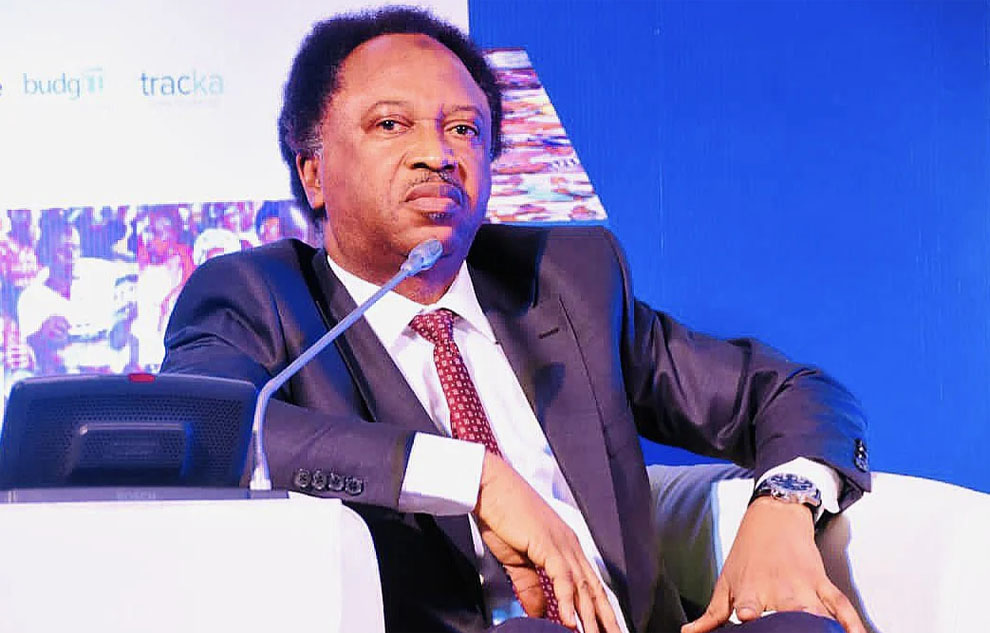
ABUJA — Former Kaduna Central Senator, Shehu Sani, has cautioned Northerners against celebrating, justifying or encouraging attacks on President Bola Ahmed Tinubu, warning that similar incidents involving Northern political leaders in Southern Nigeria could trigger dangerous ethnic tensions and possible reprisals.
Sani said Nigerians should consider the consequences of allowing political disagreements to degenerate into hostility against leaders on the basis of their regional or ethnic backgrounds.
The former lawmaker gave the warning in a statement posted on his official X handle on Saturday, November 21, 2026, while drawing comparisons between attacks involving two Southern Nigerian presidents and a hypothetical situation in which a Northern presidential candidate or sitting president was subjected to similar treatment in the South.
Recalling the attack on former President Goodluck Jonathan’s campaign convoy in Bauchi State in January 2015 and the recent incident involving President Tinubu’s motorcade in Abuja, Sani observed that neither incident plunged the country into widespread ethnic unrest.
He, however, questioned whether Nigerians would demonstrate the same restraint if a Northern leader experienced similar hostility in a Southern state.
“Former President Goodluck was once reportedly pelted in Bauchi and the country was calm. President Tinubu was reportedly pelted in Abuja and the country is calm.
“Will there be the same calmness in the country if a Presidential candidate from the North or a future president from the North is pelted in Enugu or Ekiti?” he asked.
Warns Against Ethnic Reprisals
Sani expressed concern that an attack on a Northern political leader in the South could provoke angry reactions among youths in the North, potentially worsening the country’s already delicate ethnic and political relationships.
He illustrated the danger by asking whether Northern youths would take to the streets chanting provocative slogans such as “Shege Biafra” or “Shege Oduduwa” if a Northern presidential candidate or president were attacked in the South-East or South-West.
The former senator’s remarks appeared to be a warning against the dangerous consequences of normalising political violence and celebrating attacks on public officials simply because they belong to a different region.
He urged Northerners to demonstrate the same tolerance and restraint they would expect from other Nigerians if a political leader from their region became the target of public hostility.
“For those of us from the North, let’s not support, applaud or encourage what we can NEVER tolerate when the table turns,” he stated.
How Tinubu’s Abuja Motorcade Was Attacked
Sani’s intervention comes against the backdrop of the November 13 incident involving President Tinubu’s motorcade shortly after he attended Juma’at prayers at the Shehu Shagari Central Mosque in Area 1, Garki, Abuja.
As the presidential convoy departed the mosque, some youths reportedly gathered around the area, chanting anti-government slogans in Hausa, including “Ba ma yi, ba ma so”, meaning “We don’t want it; we don’t accept it”.
Videos circulated on social media also appeared to show some individuals throwing stones and other objects towards the presidential convoy.
The incident initially generated conflicting accounts, with presidential aide O’Tega Ogra dismissing some circulating videos as misleading.
However, the Federal Capital Territory Police Command subsequently confirmed that the motorcade had come under attack, disclosing that vehicles were damaged and some security operatives sustained injuries.
The police also announced the arrest of 78 suspects in connection with the incident.
President Tinubu subsequently directed the police to caution and release the detained suspects.
Political Tensions Mount Ahead of 2027 Elections
The Abuja incident has further heightened political tensions as Nigeria approaches the 2027 general elections.
The ruling All Progressives Congress (APC) has accused opposition interests, particularly the African Democratic Congress (ADC) and the Nigeria Democratic Congress (NDC), of being behind the incident. Both opposition parties have rejected the allegations.
The controversy has added to growing concerns about political intolerance, regional divisions and the possibility of violence as political activities intensify ahead of the next general elections.
Sani’s intervention has therefore brought renewed attention to the need for political maturity and restraint across the country’s diverse regions.
His central message is that political opposition should never become an excuse for violence, just as attacks on leaders should not be applauded simply because they belong to a different political party, ethnic group or geographical region.
With the 2027 elections approaching, the former senator’s warning underscores the importance of protecting Nigeria’s political stability from the dangers of ethnic hostility and retaliatory violence.
Shehu Sani Warns Northerners Against Celebrating Abuja Attack on Tinubu, Fears Ethnic Reprisals
-
 metro3 days ago
FG’s ₦100,000 Family Grant: Eligibility, How to Apply and Payment Procedure Revealed
-
 Sports3 days ago
Ex-Super Eagles Captain Segun Odegbami Survives Death as Three Assailants Machete Him in Abeokuta Home
-

 metro3 days ago
Cleveland Girl, 11, Gets 7-Year Juvenile Sentence Over Rape, Attempted Murder of 5-Year-Old
-
 metro2 days ago
Hoodlums Descend on Tinubu’s Praise Singer Rarara at Abuja Mosque, Tear His Clothes
-

 metro3 days ago
Honesty Cost Lagos Taxi Driver His Job, Marriage After Returning ₦21,000 Passenger Left in His Cab
-

 metro3 days ago
Bandits Storm Rival Kidnappers’ Hideout, Free Abducted Victims in Shocking Video
-

 metro17 hours ago
Chibok Girl Escapes After Eight Years in Boko Haram Captivity, Reveals 20 Classmates Still Held
-

 Politics3 days ago
Just in: Court Sacks Ribadu, Orders INEC to Restore Suleiman as Adamawa ADC Candidate