

Politics
NDC Spokesman Apologises to Tinubu, Okpebholo Over Controversial ‘Goat’ Remark
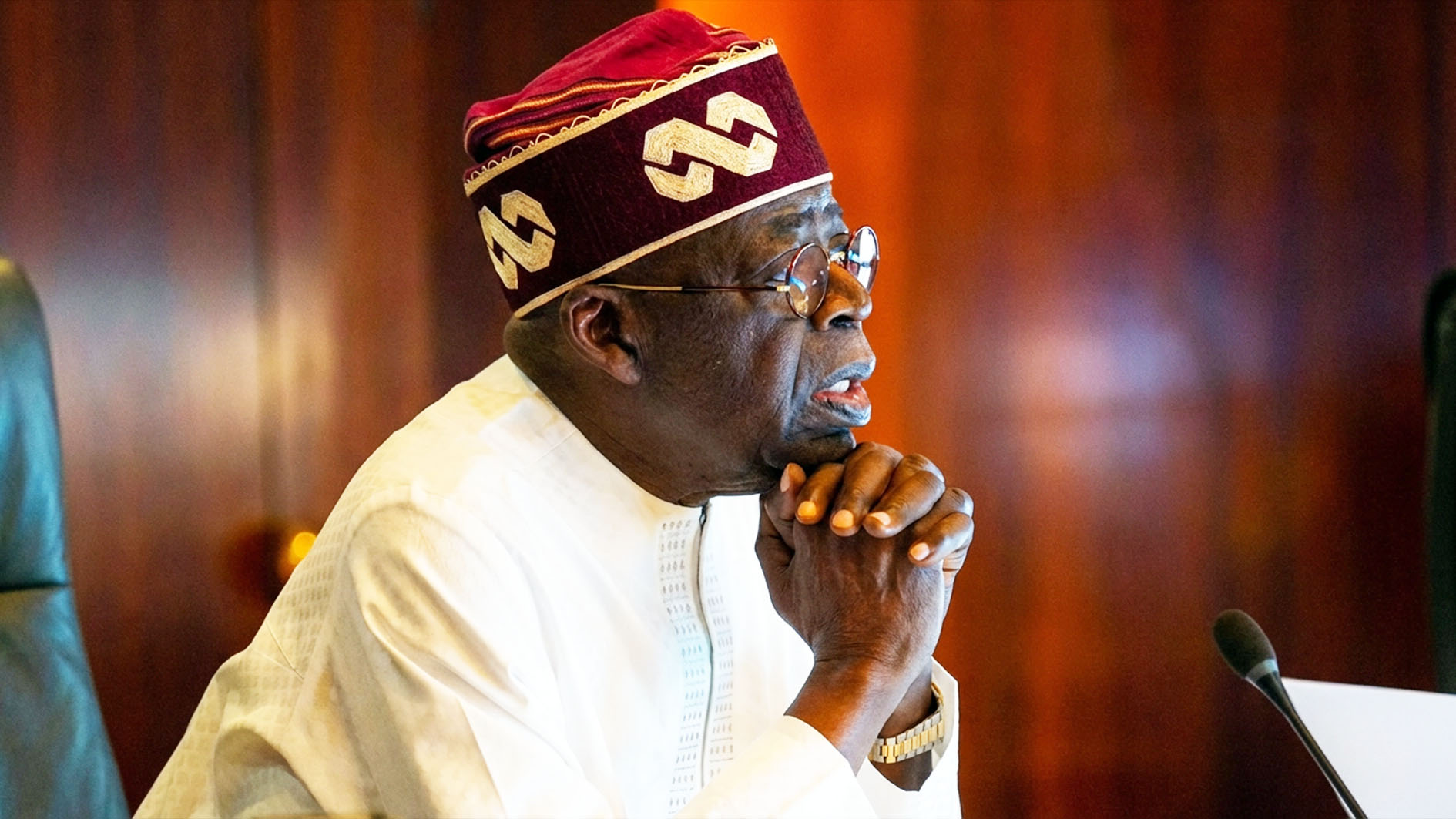
NDC Spokesman Apologises to Tinubu, Okpebholo Over Controversial ‘Goat’ Remark
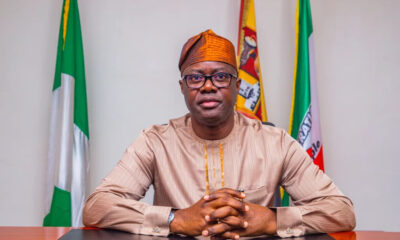
The Head of Media of the Nigeria Democratic Congress (NDC) in Edo State, Reverend Olu Martins, has apologised to President Bola Ahmed Tinubu and Edo State Governor Monday Okpebholo over derogatory remarks he reportedly made against the two political leaders.
Martins tendered the apology following controversy surrounding his description of Tinubu and Okpebholo as “goats”, a remark that reportedly attracted attention and criticism.
The apology was directed at both the President and the Edo State governor, signalling a retreat from the controversial language attributed to the NDC spokesman.
Martins made the remarks during an NDC town hall meeting in Edo State on November 25, 2026, amid heightened political activities surrounding the party’s engagement in the state.
In an apology video shared on his Facebook page, the cleric acknowledged that political disagreements should not justify the use of insulting or demeaning language against public office holders.
Addressing Okpebholo, Martins said there was no justification for demeaning the office of the governor.
He also extended his apology to Tinubu, urging political actors and Nigerians to respect the office of the President irrespective of their political affiliations or disagreements with his administration.
“There is no reason to call leadership untoward names. I have never called or liked those who called the governor names. I apologise to Gov. Monday Okpebholo, the Executive Governor. There is no reason to demean your office,” he said.
Speaking about the President, Martins said political campaigns should remain respectful and free from abusive expressions.
He stressed that political parties could disagree over policies, leadership and ideology without resorting to insults.
READ ALSO:
- Fashola: Tinubu’s Identity Controversy Resurfaces Whenever Election Approaches
- Kano Govt Denies Yusuf’s Role in EFCC Investigation of Kwankwaso
- OK Movement Faction Withdraws Support for Obi, NDC, Pulls Nationwide Structures
“We can differ in terms of our political leanings, but we should keep our campaign clean, devoid of dirty and street languages,” he stated.
The NDC spokesman also acknowledged that public figures, particularly religious leaders holding political positions, should exercise restraint even when confronted with political pressure and disagreements.
“No matter the tension and pressure, leadership should be able to get itself together, especially if you are wearing a white collar as a pastor,” he added.
Martins specifically expressed regret over the language he used at the November 25 town hall meeting, urging political actors to address public office holders by their proper titles.
“I apologise for the choice of words, especially the one used at the town hall meeting of the NDC in Edo on the 25th of November, 2026,” he said.
“I implore people to keep campaigns clean and let us call people by their nomenclature.”
His apology comes amid renewed political activities in Edo State, where political parties and their supporters are positioning themselves ahead of the 2027 general elections.
The development has also drawn attention to the importance of responsible political communication, particularly as competition among political parties intensifies.
While political criticism remains an important feature of democratic engagement, Martins’ apology underscores the need for political disagreements to be expressed without personal insults or language capable of inflaming tensions.
NDC Spokesman Apologises to Tinubu, Okpebholo Over Controversial ‘Goat’ Remark







Politics
Fayose Accuses Obasanjo Of Using Tinubu Visit To Pursue Daughter’s Governorship Ambition
Fayose Accuses Obasanjo Of Using Tinubu Visit To Pursue Daughter’s Governorship Ambition
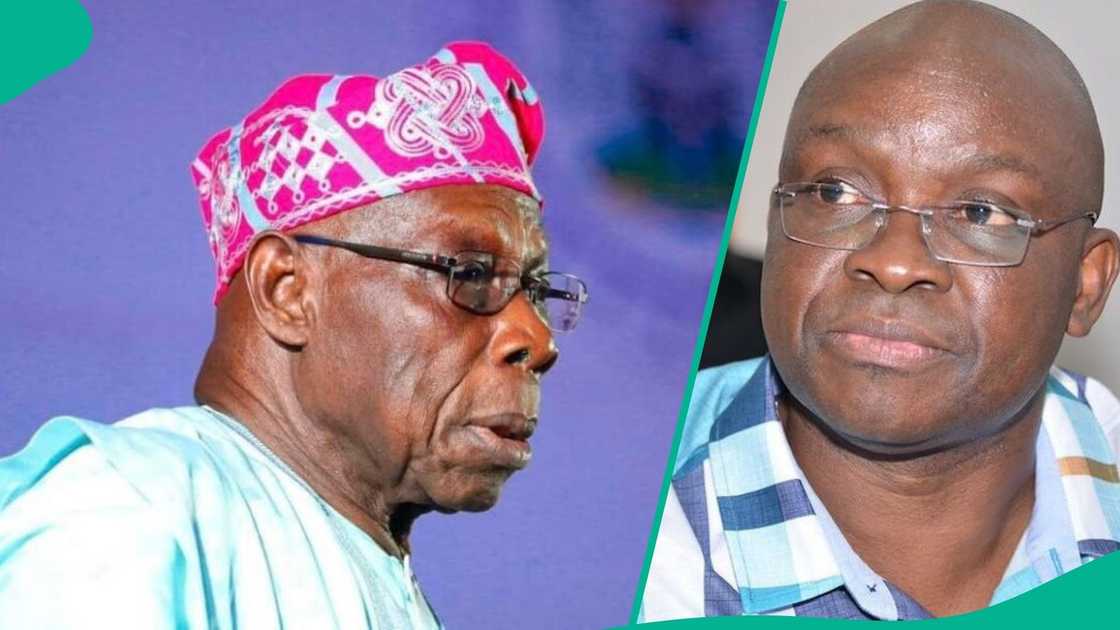
Former Ekiti State Governor, Ayodele Fayose, has launched a fresh verbal attack on former President Olusegun Obasanjo, accusing him of pretending to support President Bola Tinubu during the President’s visit to Ogun State because of an alleged personal political interest involving his daughter, Iyabo Obasanjo.
Fayose claimed that Obasanjo’s friendly disposition towards Tinubu during the President’s visit to Ogun State in April 2026 was motivated by an alleged attempt to secure presidential support for Iyabo’s ambition to become the next governor of the state.
The former governor made the allegations during an interview on Television Continental (TVC), while reacting to Obasanjo’s criticisms of Tinubu’s administration and its economic policies.
According to Fayose, Obasanjo had approached former Ogun State Governor, Chief Olusegun Osoba, to help persuade Tinubu to support his daughter’s governorship ambition.
He alleged that Obasanjo’s appearance alongside Tinubu during the inauguration of the Gateway International Cargo Airport in Ogun State was connected to the alleged political arrangement.
Fayose recalled that the former president wore an outfit matching the President’s during the visit and spoke favourably about Tinubu.
He suggested that Obasanjo’s apparent support for the President was not necessarily driven by genuine political conviction but by expectations surrounding his daughter’s political ambition.
The former Ekiti governor further claimed that Obasanjo became hostile towards Tinubu after the alleged effort to secure presidential backing for Iyabo failed.
READ ALSO:
- Fashola: Tinubu’s Identity Controversy Resurfaces Whenever Election Approaches
- Kano Govt Denies Yusuf’s Role in EFCC Investigation of Kwankwaso
- OK Movement Faction Withdraws Support for Obi, NDC, Pulls Nationwide Structures
Fayose said the former president subsequently revisited his disagreements with Osoba, particularly over comments contained in the latter’s book.
He alleged that Obasanjo had a tendency to maintain cordial relationships with political leaders when his interests were accommodated but turned against them when his expectations were not met.
Fayose said: “Obasanjo himself went to Chief Aremo Olusegun Osoba to help him beg Tinubu so that Iyabo Obasanjo would become governor of Ogun State.
“That was the reason why Obasanjo came to welcome President Tinubu.
“The moment that did not work, Obasanjo simply remembered what Osoba wrote about him in his book and went to reply to him because what he wanted did not fly.”
He added that Obasanjo would allegedly seek favours behind the scenes but resort to criticism when his requests were unsuccessful.
Fayose also questioned Obasanjo’s record of publicly criticising successive administrations, arguing that the former president had similarly fallen out with previous leaders, including the late President Umaru Musa Yar’Adua and former President Goodluck Jonathan.
He accused Obasanjo of constantly seeking public attention and finding fault with successive administrations.
“We are overrating Obasanjo. That is the truth. It is a style. Nobody gets it done better than Obasanjo in life. If anybody wants to talk, it is either Obasanjo or nobody,” he said.
Fayose further claimed that Obasanjo became uncomfortable with Jonathan when the former president could no longer exercise the level of influence he allegedly expected over the administration.
Iyabo Obasanjo, a former senator and daughter of the former president, declared her interest in the Ogun State governorship race in February 2026 under the platform of the All Progressives Congress (APC).
However, she later suspended her ambition after the party adopted Senator Solomon Adeola, popularly known as Yayi, as its consensus candidate.
Fayose’s latest comments have brought renewed attention to the political calculations surrounding the 2027 Ogun governorship election and the relationship between Obasanjo and the Tinubu administration.
The allegations about Obasanjo’s purported request for presidential backing for his daughter remain Fayose’s claims and have not been independently established.
As of the time of this report, no response from Obasanjo, Osoba, Iyabo Obasanjo or the Presidency was contained in the reports of Fayose’s interview.
Fayose and Obasanjo have had a long history of political disagreements, with both men previously exchanging criticisms and accusations publicly.
Fayose Accuses Obasanjo Of Using Tinubu Visit To Pursue Daughter’s Governorship Ambition
Politics
Fashola: Tinubu’s Identity Controversy Resurfaces Whenever Election Approaches
Fashola: Tinubu’s Identity Controversy Resurfaces Whenever Election Approaches
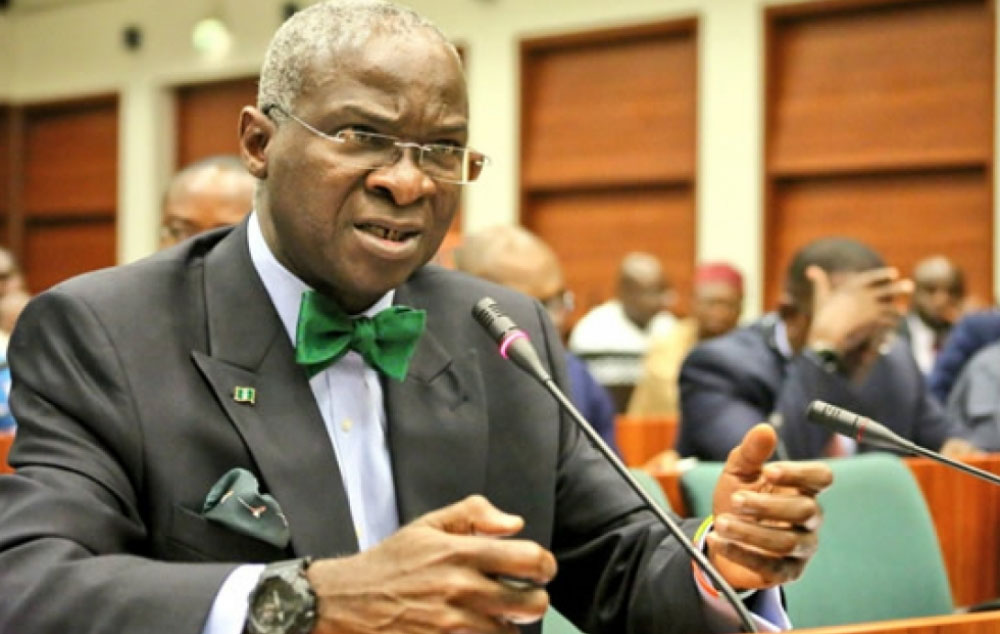
Former Lagos State Governor Babatunde Raji Fashola has dismissed renewed questions about President Bola Ahmed Tinubu’s identity and background, describing the controversy as a recurring political distraction whenever the President approaches an election.
Fashola said the issues surrounding Tinubu’s identity had persisted for more than two decades but had not prevented him from winning previous elections.
The former Minister of Works and Housing made the remarks during an interview with ARISE News on Friday, November 27, 2026, while responding to questions about the controversies surrounding the President’s personal and academic records ahead of the 2027 general election.
According to Fashola, the controversies typically resurface whenever Tinubu is close to securing an electoral victory.
“I think that these matters have carried on for all of 20-something years. So, every time he’s at the threshold of winning an election, these issues come, and you know what always happens: he wins,” he said.
Fashola added that he believed the same pattern would repeat itself in the 2027 presidential election.
“So history is about to repeat itself again. He’s going to win. These are needless distractions. They don’t answer a fundamental question. And I’ve said about minimum qualification. He has met it,” he stated.
The former Lagos governor questioned the relevance of repeatedly raising issues about Tinubu’s identity, arguing that opposition politicians should concentrate on policies and programmes capable of improving the lives of Nigerians.
He challenged opposition parties to explain how revisiting the controversies would address the country’s economic and social challenges or improve the welfare of citizens.
“The question I will focus upon if I were those fragmented opposition is how does this help the people whose mandate I want? It doesn’t help them,” Fashola said.
READ ALSO:
- OK Movement Faction Withdraws Support for Obi, NDC, Pulls Nationwide Structures
- Adeleke Begins Second Term, Pledges Industrialisation, Jobs, Infrastructure
- Ex-Governor Jailed 25 Years for Murder of Pregnant Lover
He maintained that political debates should focus more on issues affecting ordinary Nigerians, including the cost of living, employment, infrastructure, security and access to essential services.
Fashola also referred to previous legal proceedings and investigations involving aspects of Tinubu’s background, saying some of the controversies had already been examined during earlier political periods.
Drawing on his experience as a lawyer and Senior Advocate of Nigeria, he invoked the legal principle that there must eventually be an end to litigation.
“I believe parts of this were litigated in the last election. They were litigated in 1999. It was the subject of a House investigation in that period,” he said.
He added that repeatedly reopening issues that had previously been subjected to legal scrutiny would not necessarily advance the country’s political development.
The former governor also pointed to Tinubu’s victory in the 2023 presidential election, arguing that Nigerians had already expressed their position through the ballot box.
“They pursue it at their own choice, but I think the Nigerian people have left that subject behind. They have left it behind with their votes in 2023. They will reaffirm it in 2027,” he said.
However, questions surrounding Tinubu’s identity, educational records and personal background have remained subjects of public debate, particularly during election periods.
The controversies have featured in political discussions and legal proceedings, with critics demanding further clarification while supporters have defended the President’s eligibility and right to contest elections.
Fashola’s latest comments come as political parties and opposition groups intensify preparations for the 2027 presidential election, with Tinubu expected to seek another term on the platform of the All Progressives Congress (APC).
His remarks also reflect the growing political exchanges between supporters of the President and opposition figures over the issues likely to dominate the next general election.
Fashola: Tinubu’s Identity Controversy Resurfaces Whenever Election Approaches
Politics
OK Movement Faction Withdraws Support for Obi, NDC, Pulls Nationwide Structures
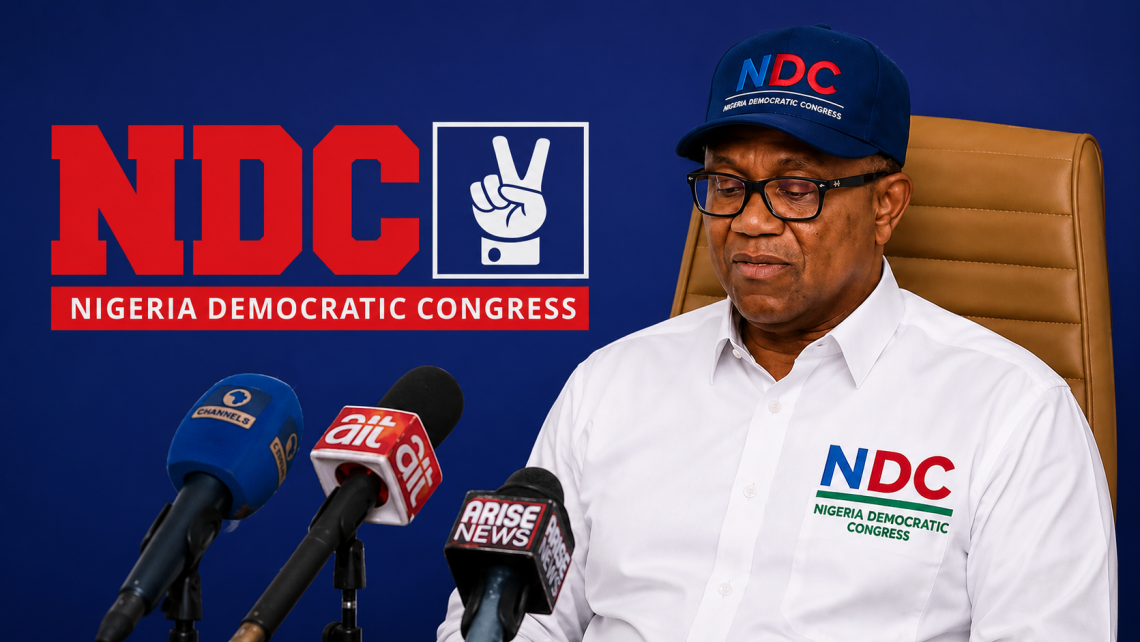
A faction of the OK Movement has withdrawn its campaign, mobilisation and operational support for Peter Obi and the Nigeria Democratic Congress (NDC) ahead of the 2027 general elections, announcing plans to explore other political alliances.
The group, led by its National Director-General, John Ozyl Ughulu, said it had been informed that Obi and the NDC leadership had decided to discontinue their political relationship with the movement.
In a statement issued on Friday, November 27, 2026, Ughulu said the development was regrettable but that the group’s leadership had resolved to end all support for the party with immediate effect.
The movement consequently directed its structures at ward, local government and state levels to withdraw from the NDC’s campaign and mobilisation activities.
The group said the withdrawal followed the breakdown of its political relationship with Obi and the NDC, adding that it respected the decision while appreciating the engagements and opportunities previously shared with the party.
It also disclosed that it had commenced discussions with other political parties and prospective presidential candidates whose political visions, leadership capacity and ideological commitments aligned with its principles.
Ughulu said the movement would announce its preferred political party and presidential candidate for the 2027 elections after concluding consultations.
He insisted that the OK Movement remained an independent political organisation with structures across the country, claiming its grassroots presence, organisational reach and mobilisation capacity could influence the outcome of the next general election.
READ ALSO:
- Adeleke Begins Second Term, Pledges Industrialisation, Jobs, Infrastructure
- Ex-Governor Jailed 25 Years for Murder of Pregnant Lover
- Plateau Attack: Death Toll Rises to 22 as Gunmen Kill Residents in Fresh Bloodbath
The group also criticised what it described as shortcomings in leadership, arguing that political leaders should demonstrate competence, integrity, emotional intelligence and the ability to manage disagreements, build bridges and unite supporters.
It said leadership should not be driven by personal interests, self-centred ambitions or the pursuit of supremacy, but by accountability, honesty and the willingness to prioritise collective interests.
The movement further argued that the NDC’s social media popularity must be translated into meaningful grassroots participation to deliver electoral success, insisting that the responsibility for achieving this now rested with the party’s leadership.
The development comes amid growing political realignments and coalition-building ahead of the 2027 presidential election, with Obi and his running mate, Rabiu Kwankwaso, seeking to consolidate support for the NDC ticket.
However, the announcement has been disputed by the NDC and Obi’s camp, which rejected Ughulu’s faction as the authentic leadership of the OK Movement.
The NDC’s National Publicity Secretary, Osa Director, reportedly described the group behind the withdrawal as impostors, insisting that the genuine leadership and members of the movement remained committed to Obi and the party.
Obi’s spokesman, Idris Zekeri, also said the campaign did not recognise Ughulu’s group as an official support organisation, identifying the Obidient Movement and Kwankwasiyya Movement as groups aligned with the campaign.
The competing claims suggest the dispute may be more than a political withdrawal, with questions emerging over the leadership, identity and control of the OK Movement.
The faction, however, maintained that its identity and organisational structures were independent of any individual or political party, declaring that it was not retreating from politics but repositioning for the next phase of its political journey.
It urged members and coordinators nationwide to remain calm, disciplined and focused while awaiting further directives, adding that members were free to pursue their personal political choices without intimidation or hostility.
The group said its core principles, including integrity, fairness, equity, justice, competence, accountability and national unity, remained non-negotiable.
The announcement is expected to add another dimension to opposition politics ahead of the 2027 elections, particularly as political parties and support groups continue to negotiate alliances and mobilise grassroots structures in preparation for the contest.
OK Movement Faction Withdraws Support for Obi, NDC, Pulls Nationwide Structures
-
 metro2 days ago
Oyoland Grand Chief Imam Moves to End Feud, Seeks Reconciliation Among Markaziyya, Adabiyyah, Mahdul ‘Arabi
-

 metro1 day ago
Nigerian Health Worker, 26, Found Dead in Canada After Returning From Work
-
 metro1 day ago
Phone-Tapping Claim: I Lied to Unsettle Tinubu Government – El-Rufai
-
 News3 days ago
Omokri Arrives in Mexico to Assume Duty as Nigerian Ambassador, Thanks Govt for Ministerial Reception
-

 metro1 day ago
‘I Came to Nigeria for Love, Now I’m Stranded, Begging for Rent’ — American Woman Married to Enugu Man Cries Out
-
 Politics1 day ago
BREAKING: Makinde Reportedly Agrees to Back Atiku’s Presidential Bid
-

 Politics1 day ago
2027 Presidency: ‘Atiku Should Forget His Ambition, Wait Until 2031’ – Bode George
-

 International2 days ago
Iran Flogs Singer, Four Others 74 Times Over Hijab-Free Performance