

News
Despite Arrest Warrant, Jimmy Odukoya Mounts Pulpit, Leads Fountain of Life Sunday Service
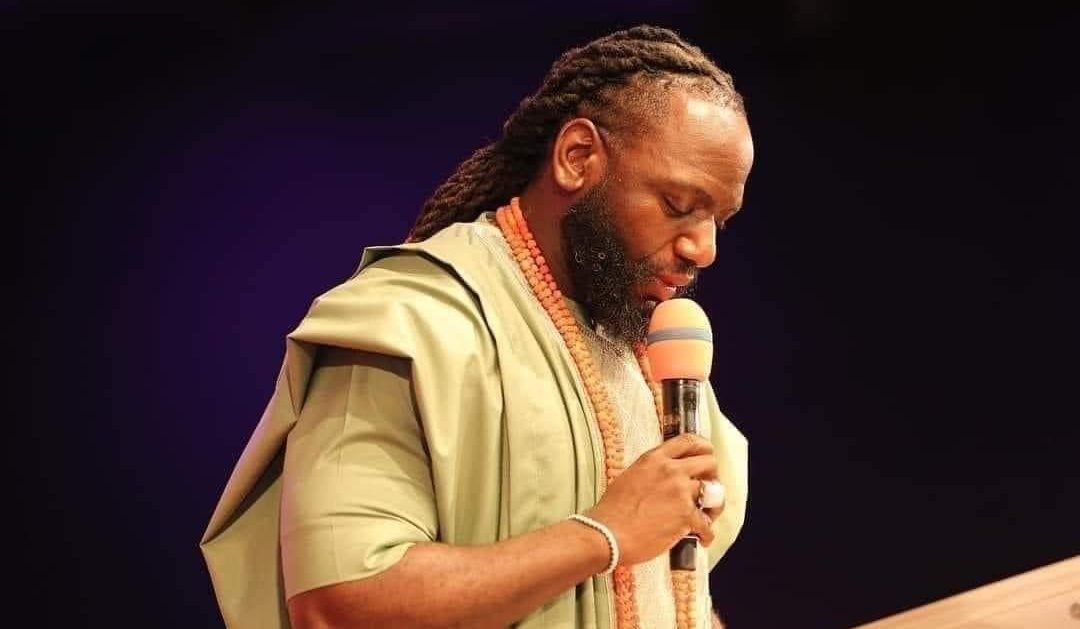
Despite Arrest Warrant, Jimmy Odukoya Mounts Pulpit, Leads Fountain of Life Sunday Service
LAGOS, Nigeria — Pastor Jimmy Odukoya on Sunday mounted the pulpit and led the weekly service at The Fountain of Life Church in Ilupeju, Lagos, despite a bench warrant issued for his arrest by a Lagos State High Court over an alleged breach of an interim court order.
Odukoya’s appearance at the church came barely three days after the court ordered his arrest for allegedly disobeying an earlier directive restraining him from parading himself as the Senior Pastor and spiritual head of the congregation or interfering with the church’s governance and activities.
His decision to lead the Sunday service also came amid an escalating leadership crisis that has plunged the prominent Lagos-based Pentecostal church into a legal battle.
Police officers and the church’s internal security personnel were stationed at the entrance of the premises on Sunday morning, conducting security checks and searching worshippers before allowing them into the auditorium.
However, the security presence was considerably lighter than it was the previous Sunday, when approximately 10 police vehicles and more than 20 officers were reportedly deployed around the church premises.
Addressing the congregation after the praise, worship and prayer sessions, Odukoya acknowledged the uncertainty surrounding the service, particularly against the backdrop of the ongoing legal dispute and public attention it had attracted.
Questioning how the church’s internal disagreements had become subjects of public discussion, he asked, “How did we get here? Why are internal matters in external places?”
The cleric urged members to remain steadfast, drawing from biblical teachings about perseverance and endurance in difficult circumstances.
READ ALSO:
- INEC Debunks 2027 Mock Election Winner Claims, Disowns Viral Results Website
- Edo NDC Chieftain John Ovie Crushed To Death By Truck Along Benin Bypass
- ‘I Disowned My Mother While Growing Up’ — Omotola Reveals Childhood Struggles
“We might be perplexed, but we are not in despair. When you are forged in the furnace of affliction, God never sends you where He has not given you capacity. We have been hard-pressed on every side, yet we will not be crushed,” he told worshippers.
He further challenged suggestions that the crisis indicated God’s departure from the ministry, urging members not to be discouraged by the controversy.
“There is so much talk outside, yet you are still here. You were not sure if there would be Sunday service, yet you are still here. Anybody who tells you that what’s happening is as a result of God has left, tell them to take a chill pill, please,” he said.
Turning attention to the extensive media coverage surrounding the dispute, Odukoya described the publicity as an unexpected opportunity for the church to gain wider recognition.
“Fountain is the most popular church. Every five steps you go, they are mentioning Fountain,” he said, drawing cheers from the congregation.
“Publicity that we did not pay for, we are having it abroad. Everything works together for us. Whether they like it or not, their opinion is working for us.”
The pastor subsequently appealed to members to continue praying for the church and its leadership as the dispute unfolds.
“All through the week, I want you to continue to uphold The Fountain of Life Church in your prayers. Fountain, I love you. I thank God for you, and I will not stop praying for you. And please, don’t stop praying for me,” he added.
The latest development comes against the backdrop of a protracted disagreement over the leadership and administration of The Fountain of Life Church.
On Thursday, November 26, Justice O.O. Adewunmi-Oshin of the Lagos State High Court reportedly issued a bench warrant for Odukoya’s arrest following his failure to appear before the court in connection with contempt proceedings over the alleged violation of an interim restraining order issued on November 18.
The church has, however, challenged the proceedings, maintaining that Odukoya was not properly served with the restraining order and that applications questioning the court’s directives were still pending.
It also stressed that the issuance of a bench warrant does not amount to a conviction or determine the substantive issues surrounding the church’s leadership.
The church leadership has continued to maintain that Odukoya remains its duly appointed Senior Pastor and Chairman of the Board of Trustees.
Odukoya assumed leadership of the ministry following the death of his father and the church’s co-founder, Pastor Taiwo Odukoya, in August 2023.
In a separate legal move, Jimmy Odukoya has reportedly approached the court to challenge resolutions adopted by opposing trustees, arguing that his purported removal contravened the church’s constitution.
He has also approached the Court of Appeal to challenge the jurisdiction of the Lagos State High Court in the matter.
With both sides maintaining their positions, the leadership dispute remains unresolved, while the next court proceedings are scheduled for December 1, 2026.
Despite Arrest Warrant, Jimmy Odukoya Mounts Pulpit, Leads Fountain of Life Sunday Service







News
Kano Housewife Found Dead in Pool of Blood as Neighbours Discover Gruesome Killing

Kano Housewife Found Dead in Pool of Blood as Neighbours Discover Gruesome Killing
KANO, Nigeria — Residents of Rimin Zakara neighbourhood in Kano State have been thrown into shock following the gruesome killing of a housewife identified as Hafsat, popularly known as Mama Mimi, whose lifeless body was discovered inside her matrimonial home.
The deceased was reportedly found dead on Saturday, November 28, after neighbours became concerned about her whereabouts when she allegedly went out to purchase ingredients for soup but failed to return.
Eyewitness accounts indicated that the circumstances surrounding her death began to raise suspicion at about 3pm when residents noticed that Hafsat had not been seen outside and repeated attempts to reach her by telephone proved unsuccessful.
Her phone was reportedly switched off, further heightening concerns among neighbours who subsequently went to her residence to find out what had happened.
According to a witness who spoke to DAILY POST, residents initially knocked repeatedly on her door but received no response.
Their attention was later drawn to a slight opening around the door, prompting them to peep inside.
The neighbours reportedly caught sight of Hafsat lying motionless inside the house, with blood around her body.
One of the witnesses, recounting the horrifying discovery, said residents eventually entered the house and immediately raised the alarm after seeing her lifeless body.
The discovery reportedly triggered panic among residents, who rushed outside screaming for help.
Another neighbour, identified as Mumsy, provided additional details about the events leading to the discovery.
READ ALSO:
- INEC Debunks 2027 Mock Election Winner Claims, Disowns Viral Results Website
- Edo NDC Chieftain John Ovie Crushed To Death By Truck Along Benin Bypass
- ‘I Disowned My Mother While Growing Up’ — Omotola Reveals Childhood Struggles
She disclosed that some residents had initially visited her house while searching for Hafsat after failing to locate her.
Mumsy said she told them she did not know where the woman was but advised them to continue knocking because the deceased was known to sleep deeply.
She explained that after waiting for approximately 30 minutes without receiving further information, she decided to visit Hafsat’s residence herself.
On arriving, she reportedly met several people still gathered outside the house, making repeated attempts to contact the deceased.
Mumsy said she was subsequently asked to look through an opening to ascertain whether Hafsat’s footwear could be seen inside.
Although she reportedly noticed the footwear and a curtain that appeared to have been slightly pulled aside, she initially suspected that Hafsat might still be sleeping.
However, when the house was eventually opened and the body was sighted, she reportedly became convinced that something terrible had happened.
Mumsy said she immediately called for Hafsat’s relatives, insisting that members of the family should be the first to enter and establish what had happened.
The incident has plunged the deceased’s family into mourning, with relatives appealing for prayers and demanding that those responsible for her death be brought to justice.
Hafsat’s younger brother, identified as Mansur S. Nuhu, reportedly appealed to members of the public to pray for the family while calling on God to expose his sister’s killers.
Another relative, Jibrin Sani Ayagi, who described the deceased as his niece, also expressed grief over the incident and announced that funeral prayers would be held at the family residence in the Ayagi neighbourhood.
Security operatives were reportedly seen at the scene as investigations into the circumstances surrounding her death commenced.
However, the identities of the suspected assailants and their whereabouts remained unknown as of the time of filing this report.
The circumstances surrounding the killing, including the motive and how the attackers gained access to the residence, have yet to be officially established.
Residents are now hoping that a thorough investigation will uncover the circumstances behind the tragedy and ensure that anyone found responsible is brought to justice.
Kano Housewife Found Dead in Pool of Blood as Neighbours Discover Gruesome Killing
News
INEC Debunks 2027 Mock Election Winner Claims, Disowns Viral Results Website

INEC Debunks 2027 Mock Election Winner Claims, Disowns Viral Results Website
ABUJA, Nigeria — The Independent National Electoral Commission (INEC) has dismissed reports circulating on social media claiming that a political party or presidential candidate emerged victorious in its nationwide mock accreditation exercise conducted on Saturday, November 28, ahead of the 2027 general elections.
The commission described the purported results as misleading and warned Nigerians against accepting or sharing fabricated election figures, insisting that the exercise was strictly a technical test and not an actual election.
INEC also disowned a website, neis.ng, which reportedly published figures presented as results of the mock exercise, stressing that the commission neither conducted a vote count nor declared any winner.
The clarification comes amid growing political reactions and online debates triggered by the circulation of the purported results, with concerns that misinformation could undermine public confidence in the electoral process ahead of the 2027 polls.
The mock accreditation exercise was designed primarily to assess the operational performance of the Bimodal Voter Accreditation System (BVAS) and the INEC Result Viewing Portal (IReV) under different conditions.
According to the details of the exercise, the simulation covered two polling units in each ward nationwide, representing approximately 17,618 of the country’s 176,846 polling units across 8,809 wards.
The exercise was intended to identify technical challenges, test the reliability of electoral technology and enable the commission to address potential weaknesses before the actual elections.
Importantly, the ballot papers used during the simulation did not contain the names or logos of political parties or presidential candidates. Instead, neutral labels were reportedly used to facilitate the technical assessment.
Consequently, claims that any political party or candidate secured victory in the exercise have no basis in the official objectives or procedures of the simulation.
The controversy intensified following the circulation of purported figures on neis.ng, reportedly associated with the Nigeria Election Intelligence System, which generated reactions among political supporters and social media users.
READ ALSO:
- ‘I Disowned My Mother While Growing Up’ — Omotola Reveals Childhood Struggles
- Tinubu Approves Eastern Rail, Gas Projects at Enugu APC Campaign Rally
- FCT Police Rescue Woman After Suspected Suicide Attempt in Abuja Hotel
The All Progressives Congress (APC) Presidential Campaign Council also rejected the published figures, describing them as fraudulent and insisting that INEC had not collated or announced results at any level of the exercise.
The campaign council urged Nigerians to disregard the figures, warning against attempts to present unofficial technical simulations as an indication of voters’ preferences or the likely outcome of the 2027 general elections.
Meanwhile, the mock exercise has attracted scrutiny from election observers and opposition stakeholders over reported technical challenges in some locations.
Yiaga Africa, a civil society organisation involved in election observation, reportedly identified discrepancies affecting some polling units and registration areas, alongside challenges involving BVAS scanning and the uploading of information.
Other concerns included late commencement of the exercise and low participation in certain locations.
The reported shortcomings have renewed calls for greater transparency and independent technical scrutiny of the electoral technologies being deployed for the forthcoming elections.
Some opposition figures and political parties have also called on INEC to provide greater clarity regarding the integrity of result-sheet uploads, associated metadata and the overall readiness of its technological infrastructure.
INEC, however, maintains that the purpose of conducting mock exercises is to identify and resolve operational difficulties before election day, rather than determine political winners or measure the popularity of candidates.
The commission has repeatedly warned that fabricated election results, misleading online publications and digital disinformation could damage public trust in the electoral process.
With preparations for the 2027 general elections gathering momentum, INEC is urging political parties, their supporters and members of the public to rely on information released through its officially recognised communication channels.
The commission’s position is that no candidate or political party won Saturday’s mock accreditation exercise, and any publication suggesting otherwise should be treated as unofficial and misleading.
The 2027 general elections are scheduled to begin with the presidential and National Assembly elections on January 16, 2027, followed by governorship and State House of Assembly elections on February 6, 2027, according to the timetable contained in the report.
INEC Debunks 2027 Mock Election Winner Claims, Disowns Viral Results Website
News
2027: INEC’s Mock Poll Tests BVAS, Exposes Low Turnout, Logistical Gaps

INEC 2027 Mock Poll Exposes BVAS Glitches, Low Turnout
The Independent National Electoral Commission (INEC) has identified strengths and weaknesses in its preparations for the 2027 general elections following a nationwide mock accreditation and voting exercise that exposed technical glitches, poor voter turnout, inadequate sensitisation and logistical challenges in several states.
The exercise, conducted on Saturday, November 28, across selected polling units in the 36 states and the Federal Capital Territory (FCT), was designed to test the upgraded Bimodal Voter Accreditation System (BVAS), electronic result transmission and the INEC Result Viewing Portal (IReV) ahead of the elections.
While INEC officials described the exercise as encouraging in some locations, reports from across the country showed that voters’ participation was generally low, with some polling units recording only a handful of participants and others reporting no turnout several hours after commencement.
The mock poll also revealed problems involving late arrival or absence of electoral officials, delayed distribution of materials, malfunctioning BVAS devices and cases of voters unable to locate their names on the register or discover that their polling units had not been selected for the exercise.
INEC Chairman, Prof. Joash Ojo Amupitan, who monitored the exercise in Plateau State, expressed satisfaction with the performance of the technology in locations he visited, describing the process as impressive.
He said the mock accreditation was organised to identify technical and operational difficulties and address them before the actual elections, assuring Nigerians that the commission remained committed to conducting free, fair, credible and transparent polls.
However, low voter turnout emerged as one of the most widespread challenges, with reports from several states indicating limited public awareness of the exercise.
READ ALSO:
- How Senator Adebule Reportedly Collapsed During APC Campaign Before Her Death
- Canada’s ICAS Stops Assessing Certificates From Four Nigerian Universities, Graduates Face Uncertainty
- BREAKING: Lagos Senator Idiat Adebule Dies at 56, Hours After Birthday Celebration
In Kogi, Kano, Imo, Abia, Anambra, Cross River and Benue, among other states, polling units recorded poor participation, with some electoral officials waiting for hours for voters to arrive.
In Kano, turnout was particularly low in some locations. At Kankorofi Quranic School, no voter had been accredited as of 10am, while only eight out of 736 registered voters participated at one polling unit in Konar Goje. Another unit in the area recorded just four participants out of 546 registered voters.
Similar reports emerged from Anambra, where only a few voters participated in some polling units despite the deployment of electoral officials across the state.
In Benue, 11 out of 745 registered voters participated at Madikpo Tokumbo Market polling unit in Makurdi, while six voters were accredited at LGEA Primary School, Wurukum, out of 833 registered voters.
The poor turnout was blamed largely on inadequate publicity, with several residents saying they were unaware that INEC was conducting a mock election. The exercise also coincided with the monthly environmental sanitation period in some states, further affecting participation.
Beyond voter apathy, logistical shortcomings affected the exercise in parts of the country.
In Kaduna State, voters and party agents in Chikun Local Government Area reportedly waited for hours without electoral officials arriving at some designated polling units. At Narayi LGEA Primary School and Ungwan Yelwa Primary School, the exercise had yet to commence by late morning, prompting complaints from residents and political party agents.
In Enugu, some electoral officials arrived late at polling centres, with reports indicating that personnel reached certain locations between 9.30am and 10am. Voters also complained about difficulty locating their designated polling units, while some said they visited centres only to discover that their units were not part of the simulation.
READ ALSO:
- HAP Autos Unveils OMODA and JAECOO with 7-Year Warranty, Eyes Nigerian Vehicle Production
- Mitsubishi L200 4×4 Goes for ₦42m as Massilia Motors Unveils Year-End Bonanza
- Portable Mocks Peter Obi, Reveals What Happened During Flight Encounter With Presidential Hopeful
Technical challenges were also recorded in some locations, raising questions about the reliability of the accreditation devices under different conditions.
In Ondo State, BVAS reportedly malfunctioned at some polling units. At Tipper Garage in Akure, only two voters were accredited out of 470 registered voters, while other units recorded similarly low participation.
In Lagos, concerns were raised over BVAS devices failing to recognise some Permanent Voter Cards (PVCs) in parts of Ifako-Ijaiye and Iju. However, the Resident Electoral Commissioner, Prof. Ayobami Salami, reported smooth accreditation at a polling unit in Surulere, where he said voters were processed in less than a minute without complaints.
Delta State also recorded concerns over the speed of accreditation, with Isoko North Local Government Chairman, Godwin Ogorugba, claiming that the process took between 25 and 30 minutes for a single voter at a polling unit, raising questions about the system’s capacity to handle large numbers on election day.
In Nasarawa State, some voters reportedly discovered that their polling units had been changed without their knowledge, while others could not find their names on the register. Similar complaints were recorded in Bayelsa, where voters said their names were missing from polling-unit registers despite having voted at the locations during previous elections.
The electronic transmission and result-uploading process also formed a major part of the exercise, with INEC testing safeguards built into the BVAS and IReV system to prevent discrepancies in accreditation figures and polling-unit results.
In Rivers State, the electronic EC8A result form integrated into BVAS was highlighted as a potential improvement in election result management, particularly in ensuring that the number of accredited voters tallies with figures entered on result sheets before transmission.
Election observers also raised concerns about the exercise. Yiaga Africa reported that accreditation and mock voting had commenced in 195 of the 300 polling units monitored by its citizen observers as of 10am, representing 65 per cent of the observation sample.
The group said its findings pointed to operational, technological and procedural issues that required attention before the 2027 elections.
INEC had earlier directed Resident Electoral Commissioners across the states and the FCT to address operational and logistical shortcomings ahead of the mock poll, with instructions to submit comprehensive reports on technical failures, network problems and procedural bottlenecks.
The commission is expected to use feedback from the exercise to improve its systems, strengthen logistics, train personnel and intensify voter education ahead of the 2027 general elections.
The presidential and National Assembly elections are scheduled for January 16, 2027, while governorship and State Houses of Assembly elections are slated for February 6, 2027.
The mock poll has provided INEC with an opportunity to assess its preparedness under field conditions, but the challenges recorded suggest that technology alone may not guarantee a smooth election without effective logistics, adequate public sensitisation, reliable voter registers and timely deployment of officials.
INEC 2027 Mock Poll Exposes BVAS Glitches, Low Turnout
-

 News1 day ago
BREAKING: Lagos Senator Idiat Adebule Dies at 56, Hours After Birthday Celebration
-

 News13 hours ago
Canada’s ICAS Stops Assessing Certificates From Four Nigerian Universities, Graduates Face Uncertainty
-
 metro1 day ago
Patience Jonathan Challenges Claims Of Goodluck’s Second Wife, Cites Court Marriage In Viral Interview
-
 News2 days ago
Adeleke Begins Second Term, Pledges Industrialisation, Jobs, Infrastructure
-
 Politics2 days ago
Fayose Accuses Obasanjo Of Using Tinubu Visit To Pursue Daughter’s Governorship Ambition
-
 Politics2 days ago
OK Movement Faction Withdraws Support for Obi, NDC, Pulls Nationwide Structures
-

 News13 hours ago
How Senator Adebule Reportedly Collapsed During APC Campaign Before Her Death
-
 metro2 days ago
BREAKING: Sanwo-Olu Cancels November 28 Environmental Sanitation Exercise Over INEC Mock Accreditation