

Business
FIRS collects N1tn VAT in six months, says NBS
- FIRS to appeal judgment stopping collection in Rivers
The National Bureau of Statistics says the Federal Inland Revenue Service generated N1 trillion from Value Added Tax (VAT) in six months even as the FIRS vows to appeal the ruling that voided its jurisdiction on VAT collection.
A Federal High Court sitting in Port Harcourt on Monday declared that Rivers, not the FIRS, should collect VAT, and Personal Income Tax (PIT) in Rivers State.
The NBS said the FIRS raked in N512.25 billion in the second half as against the N496.36 billion it generated from VAT in the first quarter.
The revenue is N185.05b higher than the N327.20 billion generated by the Service in the corresponding period of last year.
The sectoral distribution of VAT data for Q2 2021, indicated a 3.20 per cent increase on Quarter-on-Quarter and 56.56 per cent rise Year-on-Year.
According to the NBS, the manufacturing sectors generated the highest VAT with N44.89 billon, tailed by professional services’ N29.30 billion.
The NBS report said commercial and trading generated N21.96 billion; textile and garment industry realised the least and closely followed by pioneering and pharmaceutical, soaps and toiletries yielding N77.74 million, N169 million and N188.71 million respectively.
The report shows that out of the revenue generated in Q2 2021, N187.43 billion was generated as non-import VAT locally; N207.69 billion as non-import VAT for foreign.
It said the remaining N117.13 billion came in as NCS-import VAT.
On who should collect VAT, the FIRS said it will challenge the court ruling stripping it of powers to collect VAT and PIT in the South-South state.
The Value Added Tax Act states that “tax shall be administered and managed by the FIRS Board.
The board, the Act stated, “may do such things as it may deem necessary and expedient for the assessment and collection of the tax and shall account for all amounts so collected in accordance with the provisions of this Act.
It notes that “a taxable person shall on supplying taxable goods or services to his accredited distributor, agent, client or consumer, as the case may be, collect the tax on those goods or services at the rate specified in section 2 of this Act.
The Act also stipulates that “a taxable person shall render to the Board, on or before the 21st day of the month following that in which the purchase or supply was made, a return of all taxable goods and services purchased or supplied by him during the preceding month in such manner as the Board may, from time to time, determine.
“A person who imports taxable goods into Nigeria shall render to the Board returns on all the taxable goods imported by him into Nigeria. In this regard, any payment made to duly authorised government agents shall be deemed to have been made to the FIRS.”
The Act proposes FIRS chairman; FIRS directors and legalm adviser; a director in the Nigerian Customs Service and three representatives of the state governments as members of the Joint Tax Board (JTB).
The distribution of VAT revenue is carried out as 15 per cent to the federal, 50 per cent states and the Federal Capital Territory (FCT) and 35 per cent to the 774 local government areas.










Auto
Tesla’s Flying Roadster Rekindles Race to Put Cars in the Sky
Tesla’s Flying Roadster Rekindles Race to Put Cars in the Sky
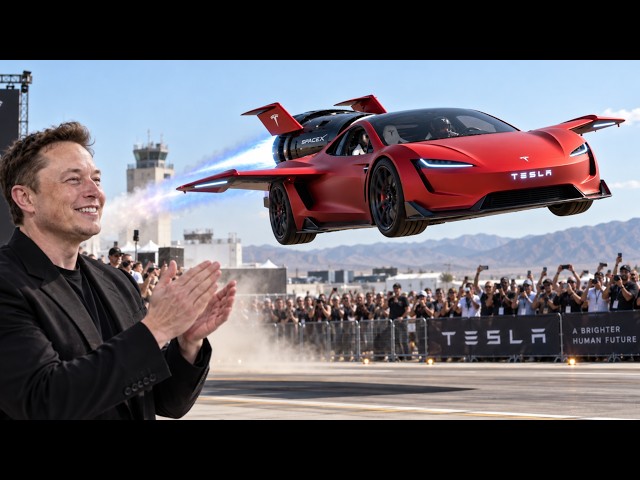
Tesla chief executive Elon Musk has brought the prospect of putting cars in the sky back to the spotlight with the unveiling of the company’s Roadster sports car. The demonstration, staged at a SpaceX facility in Texas, has reignited the debate over whether flying cars could fundamentally change how people and goods move—or whether they will remain expensive technological curiosities for wealthy enthusiasts.
Analysts note that getting a vehicle briefly off the ground is not the same as developing a practical aircraft that can transport people safely over meaningful distances, land in confined spaces and remain usable on ordinary roads.
And that is where the real challenge begins.
At the centre of the latest excitement is Tesla’s next-generation Roadster, a high-performance electric sports car equipped with technology developed in collaboration with SpaceX, Musk’s aerospace company.
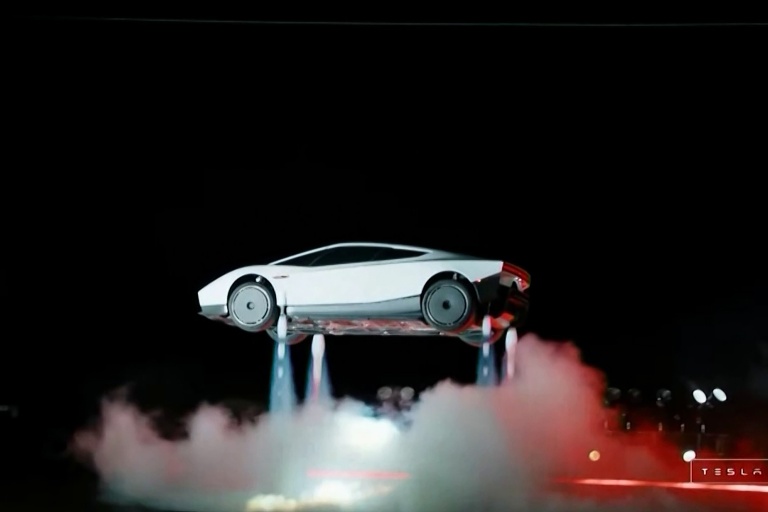
During the October 15 demonstration in Texas, the vehicle performed a series of dramatic manoeuvres, including launching into the air, flipping and landing, using a system of compressed-air thrusters. Tesla also showcased a suction-based system that allowed it to perform an extraordinary stunt on a ramp. The company claims the car can accelerate from zero to 60 miles per hour in less than a second.
The spectacle was designed to demonstrate what happens when automotive engineering meets rocket technology. Musk described the project as a collaboration between what he called the world’s best car company and the world’s best rocket company.
However, the demonstration did not establish that the Roadster can sustain conventional flight, travel long distances through the air or operate as an everyday flying vehicle.
That distinction is central to the debate.
The vehicle’s production is planned for 2028, but the promised timeline, technical capabilities and regulatory pathway remain matters to watch. Tesla has previously revised its Roadster production schedules, making the latest target one that prospective buyers will need to treat cautiously.
For now, the Roadster is better understood as a demonstration of extraordinary engineering ambition than proof that flying cars are ready to transform daily commuting.
The technology is already taking shape
Tesla is not alone in pursuing the dream of personal flight. Across the aerospace and automotive industries, companies are developing vehicles that can take off and land vertically, potentially eliminating the need for conventional runways.
These machines are commonly known as electric vertical take-off and landing aircraft, or eVTOLs. Depending on their design, they use multiple electric propellers, rotors or other lifting systems to rise vertically before transitioning into forward flight.
Unlike a conventional flying car that must also function as a road vehicle, many eVTOLs are designed primarily as aircraft. Their intended uses include urban air taxis, airport transfers, medical transport and short-distance passenger services.
One of the companies pursuing a road-and-air vehicle is California-based Alef Aeronautics. Its Model A project uses distributed propellers to lift the vehicle, illustrating a different approach from Tesla’s rocket-assisted demonstration.
The wider industry is also attracting regulatory attention. In the United States, the Federal Aviation Administration has established rules covering pilot qualifications and operations for powered-lift aircraft, creating a framework for the introduction of new types of vertical-flight transportation. Certification of individual aircraft and safe integration into airspace remain essential steps.
The implication is significant: flying transportation is no longer merely an imaginative concept. But the most practical early applications may be specialised aircraft operating along defined routes, rather than private cars routinely switching between roads and skies.
Why building a flying car is so difficult
The biggest obstacle is not simply making a vehicle leave the ground. It is combining the conflicting requirements of a road car and an aircraft without compromising either.
A car must be sturdy enough to withstand collisions, potholes and the daily stresses of road use. It needs a chassis, crash-protection structures, tyres, suspension and other components that add weight.
An aircraft must be designed around weight, lift, stability, energy efficiency and control. Every extra kilogram can affect how much energy is needed to take off and remain airborne.
Combining the two creates a difficult engineering compromise.
A flying car must also manage the transition between ground travel and flight. Engineers have to ensure that the vehicle remains stable as it lifts off, changes direction and returns to the ground. A failure during that transition could have catastrophic consequences.
The Tesla demonstration offers a glimpse of what thrust technology can achieve, but a brief airborne manoeuvre does not answer the harder questions about sustained flight, passenger safety, weather resistance, emergency landing and repeated everyday use.
Battery performance presents another challenge for electric flying vehicles. Taking off vertically demands considerable power, while maintaining safe flight requires sufficient energy reserves. Designers must balance passenger capacity, range, payload and operating costs.
Then comes the question of price. A machine carrying sophisticated aviation systems, advanced batteries and road-safety equipment is unlikely to match the cost of an ordinary family car in its early years.
These challenges explain why the first commercially successful flying vehicles may be aircraft that serve specific transport needs, rather than universal replacements for cars.
Will flying cars end traffic congestion?
The promise of flying cars is particularly attractive in cities such as Lagos where road congestion consumes hours of people’s lives and imposes substantial economic costs.
In principle, moving some journeys into the air could shorten travel times between distant urban centres, business districts, airports and industrial locations. Electric air taxis could offer faster alternatives for passengers willing to pay a premium.
Yet the idea that everyone will soon fly above traffic is less convincing.
Cities cannot allow thousands of privately operated aircraft to take off and land wherever their owners choose. Flight paths, separation distances, weather conditions, emergency procedures and air-traffic management would all have to be coordinated.
Landing infrastructure is another constraint. Even aircraft capable of vertical take-off need suitable places to land, recharge or refuel, undergo maintenance and accommodate passengers.
For flying cars that are also road-legal, owners would still need somewhere to park and drive. A vehicle that takes off from one location but cannot land safely near its destination may offer little practical advantage.
Noise could also become a concern, particularly for residents living near vertiports and frequently used flight corridors.
Consequently, the first generation of urban flying transport is more likely to resemble a carefully managed air-taxi network than an unrestricted skyway for private motorists.
Could flying cars become affordable?
Cost may ultimately determine whether flying vehicles transform transportation or remain a luxury reserved for a small group of buyers.
Early models are likely to carry substantial costs associated with advanced engineering, certification, insurance, maintenance and specialised training. Even when a vehicle can be operated without a conventional runway, its aviation-related requirements will distinguish it from an ordinary car.
The more promising business model may therefore involve shared use.
Instead of buying an expensive flying vehicle, passengers could book an air taxi for particular journeys. Operators could spread the cost of aircraft, maintenance and infrastructure across multiple trips.
As manufacturing scales up and technology improves, some costs may fall. But cheaper batteries and more efficient motors alone will not resolve every challenge involving certification, safety, infrastructure and public acceptance.
Tesla’s Roadster could still influence the industry by attracting attention to new propulsion technologies and encouraging competition. Its immediate significance, however, is more likely to be technological and symbolic than a mass-market transportation breakthrough.
What does the future hold for Nigeria?
For Nigeria, the emergence of flying vehicles presents both opportunities and questions.
Lagos offers an obvious illustration of the problem such technology seeks to address. Heavy congestion along major routes, including the Lekki-Epe corridor and key approaches to the island business districts, creates demand for faster and more predictable transport options.
Abuja, with its expanding urban footprint and relatively long journeys between some residential, administrative and commercial districts, could also eventually find specialised aerial mobility useful.
Potential applications extend beyond executive travel. Subject to safety, cost and regulatory approval, future vertical-flight aircraft could support emergency medical transfers, time-sensitive cargo delivery and connections between airports and business centres.
But Nigeria would need more than imported aircraft to develop a sustainable flying-mobility ecosystem.
The country would require appropriate aviation regulations, trained personnel, reliable charging or energy infrastructure, approved landing facilities, maintenance capabilities and effective airspace coordination. Affordability would be especially important in a market where many commuters depend on public transport and conventional road-based mobility.
The Nigerian Civil Aviation Authority would have a crucial role in determining how emerging aircraft technologies could be certified and operated locally, in line with applicable national requirements and international aviation standards.
There may also be opportunities for local engineering firms, technology companies and transport operators to participate in infrastructure development, maintenance and specialised mobility services.
Nevertheless, the business case would have to be demonstrated. A flying taxi that saves time but costs many times more than a road journey would initially serve a limited market.
For Nigeria, the most realistic starting point may be specialised commercial operations, rather than privately owned flying cars becoming a common sight over major cities.
The flying car remains an intriguing glimpse of the future—one with the potential to reshape mobility, but not yet a replacement for the familiar car on the road.
Aviation
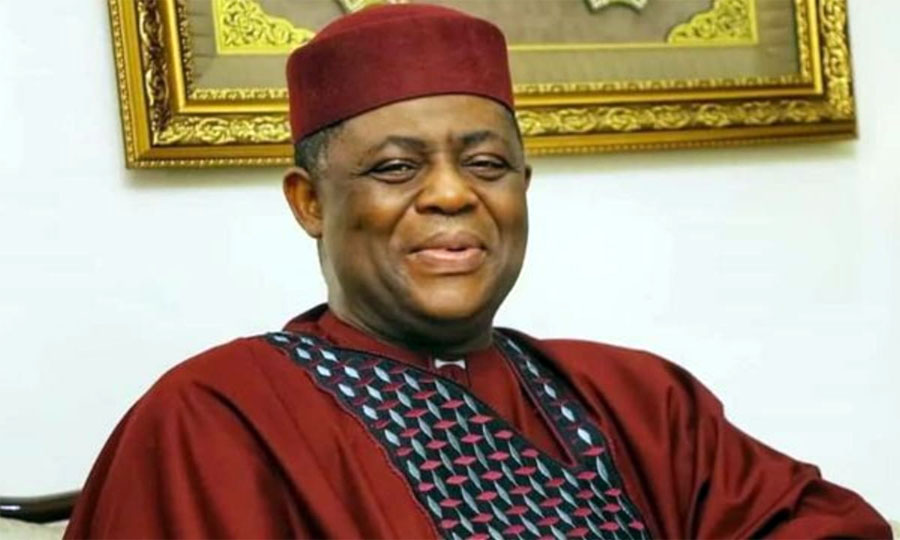
Fani-Kayode Counters Keyamo, Defends Atiku Over Nigeria Airways Collapse
Fani-Kayode Counters Keyamo, Defends Atiku Over Nigeria Airways Collapse
Former Minister of Aviation, Femi Fani-Kayode, has challenged the criticism of former Vice-President Atiku Abubakar by the Minister of Aviation and Aerospace Development, Festus Keyamo, over the liquidation of Nigeria Airways and the non-payment of pension arrears owed to its former workers.
Fani-Kayode, who served as Minister of Aviation in 2006, argued that the defunct national carrier’s collapse resulted from years of mismanagement, corruption, mounting debts and operational failures that predated the return of former President Olusegun Obasanjo to democratic rule in 1999.
He made the remarks in a response to Keyamo’s statement on October 14, 2026, in which the aviation minister accused Atiku of hypocrisy over the airline’s liquidation in 2004 and the subsequent failure to pay its former employees their pensions and gratuities.
Keyamo had said President Bola Tinubu approved and released ₦36 billion to settle outstanding pension liabilities owed to former Nigeria Airways workers, adding that beneficiaries had begun receiving payment alerts.
In his response, Fani-Kayode acknowledged the Tinubu administration’s efforts to settle the outstanding liabilities but maintained that the history of the airline’s collapse required a broader examination of events preceding its liquidation.
According to him, Nigeria Airways was already in a critical state before Obasanjo returned to office in 1999.
Fani-Kayode recalled that when Obasanjo left office as military head of state in 1979, Nigeria Airways had 32 functional aircraft, experienced pilots and crew members, a competent management team and an accountable board of directors.
He said the airline was then regarded as a source of national pride but had deteriorated considerably over the following two decades.
By the time Obasanjo returned as elected president in 1999, Fani-Kayode claimed, only one aircraft remained, and it was not operational. He attributed the airline’s deterioration to years of alleged corruption, poor management and the disappearance of company assets.
He maintained that the liquidation process, which was completed in 2004, followed years of financial insolvency, operational collapse and unsuccessful attempts to rescue the airline.
Fani-Kayode also cited the withdrawal of the International Finance Corporation from privatisation-related efforts as part of the difficulties encountered in attempts to revive the company.
He said Obasanjo’s administration had little choice but to liquidate the airline rather than continue committing public funds to an organisation he described as having become practically irredeemable.
The former minister, however, acknowledged that the liquidation left thousands of former employees and their families facing prolonged financial hardship because their pension entitlements remained unpaid.
Recounting his own involvement in the matter, Fani-Kayode said a committee chaired by the then Head of the Civil Service of the Federation, Yayale Ahmed, recommended the release of funds to pay the pensioners.
He said that, as aviation minister in 2006, he presented a memorandum to the Federal Executive Council seeking approval for the payment of the outstanding entitlements and argued that settling the liabilities was the right thing to do.
However, according to him, the proposal was rejected after some members of the cabinet opposed it on the grounds that former management teams and boards of Nigeria Airways had contributed to the airline’s destruction.
Fani-Kayode said he disagreed with that position but acknowledged that those who supported payment were outnumbered during the deliberations.
He added that the issue was revisited under the late President Umaru Musa Yar’Adua, whose administration paid a substantial number of the pensioners. The administration of former President Muhammadu Buhari also made further payments, he said.
Commending Keyamo for the latest intervention, Fani-Kayode said he was pleased that the remaining pension liabilities had finally been addressed, while expressing regret that the payments had taken so many years.
He described the suffering endured by the former workers as immense and reiterated that paying their entitlements had always been the appropriate course of action.
On Atiku’s role in the Federal Executive Council deliberations, Fani-Kayode said he knew the position the former vice-president had taken during the debate but declined to disclose it publicly.
He argued that the eventual decision was a collective responsibility of the administration, adding that members of the government had to share the consequences of the outcome.
Fani-Kayode’s intervention has added another dimension to the political disagreement surrounding Nigeria Airways’ collapse, the handling of its former workers’ pension entitlements and the responsibilities of successive administrations.
While Keyamo credited the Tinubu administration with clearing the outstanding pension arrears, Fani-Kayode’s account focused on the airline’s long decline, the difficulties surrounding earlier efforts to pay its former employees and the involvement of successive governments in addressing the liabilities.
The dispute has also renewed attention on the fate of former Nigeria Airways workers, many of whom endured years of uncertainty while awaiting their retirement benefits.
Fani-Kayode Counters Keyamo, Defends Atiku Over Nigeria Airways Collapse
Auto
OMAA Unveils Three CNG, Electric Buses, Offers 48-Month Vehicle Finance
OMAA Unveils Three CNG, Electric Buses, Offers 48-Month Vehicle Finance
…Introduces ₦890,000 monthly payment plan as Nigerian mobility firm marks sixth anniversary
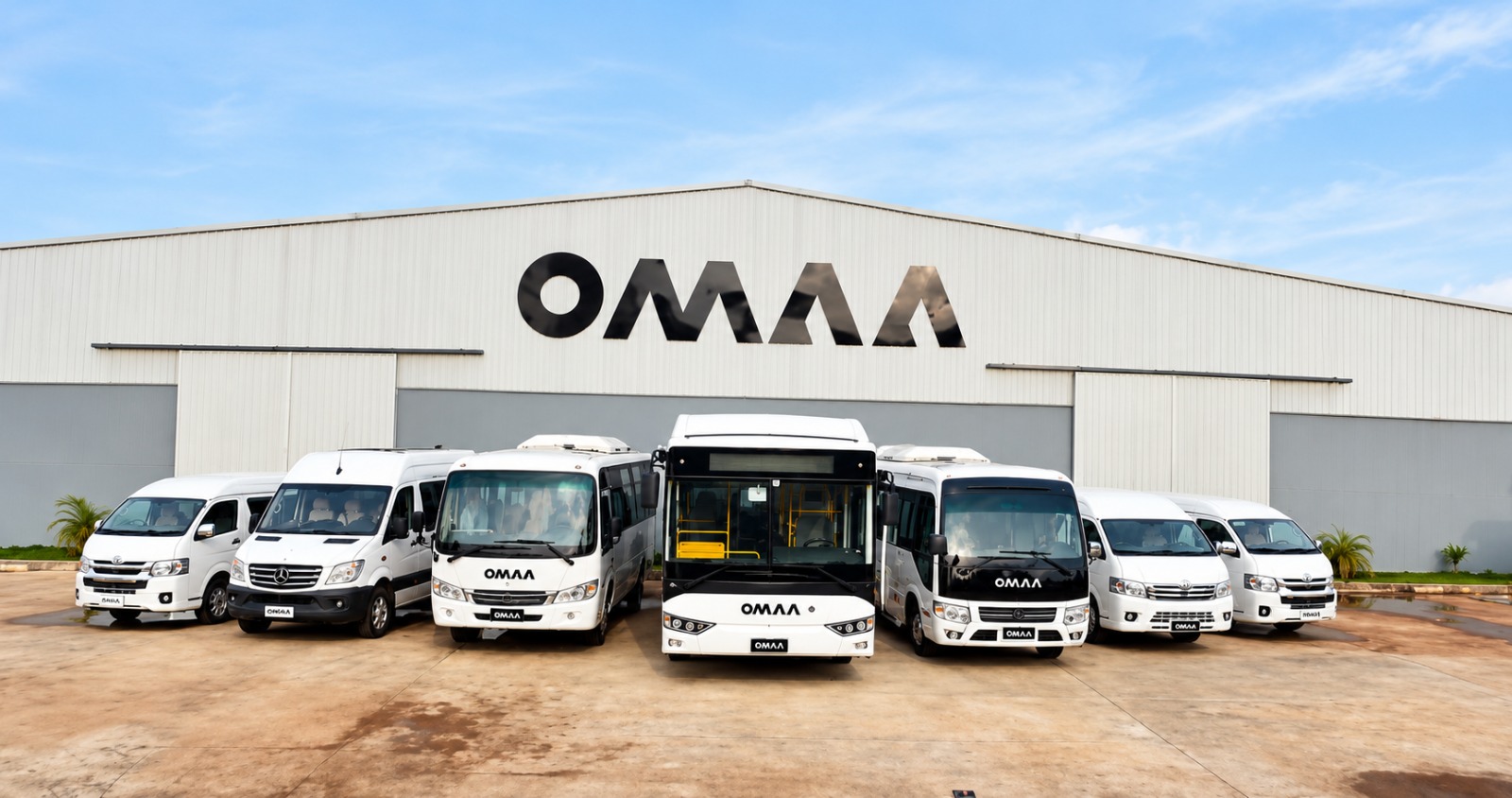
Nigerian vehicle and energy company, OMAA, has unveiled three passenger vehicle models in compressed natural gas (CNG) and battery-electric variants, alongside a financing scheme offering repayment periods of up to 48 months to help transport operators and corporate organisations expand their fleets.
The new models — OMAA U3 minibus, K7 bus and V12 high-capacity city bus — are designed to serve different segments of the passenger transport market, from urban shuttles and institutional transport to large-scale mass transit operations.
The announcement, which coincides with the company’s sixth anniversary, also marks the introduction of OMAA Finance, a programme developed in partnership with Nigerian financial institutions to ease the burden of upfront vehicle acquisition costs.
Under the scheme, advertised monthly payments start from ₦890,000 for the OMAA U3 minibus, with an initial deposit of 10%. Financing terms, however, will depend on eligibility requirements, repayment tenure and the customer’s equity contribution.
The company has also opened pre-orders for the three models, giving prospective buyers the option of choosing between CNG and battery-electric powertrains according to their routes, operating costs and access to the necessary energy infrastructure.
Speaking on the development, OMAA’s Managing Director, Chinedu Oguegbu, said the launch reflected the company’s commitment to local automotive manufacturing and the expansion of cleaner, more affordable transport solutions.
“Six years ago, we set out to demonstrate that commercial vehicles could be assembled in Nigeria and powered by cleaner, more affordable energy. Today, the introduction of the OMAA U3, K7 and V12 in both CNG and electric variants, alongside our vehicle financing programme, represents another significant step towards that vision,” Oguegbu said.
He explained that the company’s objective extended beyond supplying vehicles to helping operators manage running costs, access after-sales support and build sustainable transport businesses.
“By combining locally supported servicing, parts availability and structured financing, we are creating opportunities for schools, hospitals, corporate organisations and mass transit operators to expand their fleets with greater confidence,” he added.
Three models target different market segments
The new lineup covers a broad range of passenger transportation needs.
The OMAA U3 is a 12-to-15-seater minibus designed for urban and intercity transport operators, institutional shuttle services and businesses requiring compact passenger vehicles.
The K7, with a capacity of 23 to 30 passengers, targets staff transportation, school bus services, corporate fleets and medium-capacity passenger routes.
The V12, the largest of the three models, is configured to accommodate between 43 and 70 passengers. It is designed for mass transit operators and businesses serving routes with high passenger demand.
All three models are offered in CNG and battery-electric configurations, allowing fleet owners to evaluate alternative powertrains based on fuel or electricity costs, vehicle utilisation, maintenance requirements and access to refuelling or charging facilities.
The dual-powertrain strategy comes as transport operators increasingly explore ways to manage energy expenses and improve the economics of commercial vehicle operations.
Special-purpose vehicles broaden applications
Beyond passenger buses, OMAA is offering special-purpose vehicle configurations based on the same platforms.
The options include cargo vans, ambulances, VIP transport vehicles and airport shuttles, extending the potential applications of the company’s vehicle range to logistics, healthcare, corporate mobility and airport transportation.
The use of common vehicle platforms could also help fleet owners streamline maintenance, spare-parts management and technical training, particularly where organisations operate different vehicle configurations.
Finance scheme targets high acquisition costs
OMAA Finance is a central component of the company’s strategy to lower the barriers to commercial vehicle ownership.
By spreading acquisition costs over repayment periods of up to four years, the programme is intended to help operators preserve working capital while expanding or renewing their fleets.
The advertised starting monthly payment of ₦890,000 for the U3, subject to a 10% initial deposit, provides an entry point for prospective buyers. The actual cost of financing will depend on the applicable terms, including the vehicle price, deposit, interest and other charges, where applicable.
The company is also promoting a total cost of ownership (TCO) approach, which considers not only the purchase price but also energy consumption, servicing, spare parts and other expenses incurred throughout a vehicle’s operating life.
According to OMAA, the combination of structured financing, local servicing support and spare-parts availability is intended to help customers plan operating expenses and make more informed fleet investment decisions.
However, the potential savings will vary according to the vehicle selected, financing conditions, energy prices, mileage, maintenance costs and the availability of suitable CNG refuelling or electric charging infrastructure.
Six years of operations
Headquartered in Umunya, Anambra State, with offices in Lagos, Abuja and Accra, OMAA operates in Nigeria and Ghana, serving fleet operators, institutions and businesses.
The latest launch builds on the company’s six-year operating history and its efforts to combine local vehicle assembly, alternative energy solutions and financing options in the commercial mobility market.
For transport operators contending with rising operating expenses and the high cost of fleet expansion, the new models and financing arrangements offer additional options for acquiring passenger vehicles.
The initiative’s long-term impact, however, will depend on the vehicles’ performance under local operating conditions, the accessibility and affordability of financing, reliable after-sales support and the availability of the infrastructure required to sustain CNG and electric mobility.
With the latest unveiling, OMAA is seeking to position itself beyond vehicle supply, offering an integrated commercial mobility proposition that combines vehicle acquisition, alternative energy choices, maintenance support and financing.
-

 metro23 hours ago
₦130m Toyota Tundra Wrecked: Lagos Dealer Questions Police Over Suspect’s Release
-

 metro3 days ago
Money Rituals: Four Arrested in Kwara Over Suspected Human Parts
-

 News3 days ago
2027 Elections: INEC Reveals Why Pantami, Adebutu, Others Were Excluded
-

 metro3 days ago
Osogbo Cultism Crackdown: Six Suspects Arrested as Police Recover Drugs, Charms
-

 News23 hours ago
₦200m Fake Alcohol Packaging Uncovered as NAFDAC Raids Aba Market
-

 Politics3 days ago
2027: Adeleke’s Camp Promises 1.5 Million Votes for Tinubu in Osun
-

 metro2 days ago
Outrage as Residents Scoop Groundnut Oil From Lagos Tanker Crash Scene
-
 International3 days ago
Houthi Missile Targeting Riyadh Shot Down as Debris Injures Four, Damages 15 Homes