

News
We’ll not ban Almajiri qur’anic education, but reform it — Gov. Tambuwal
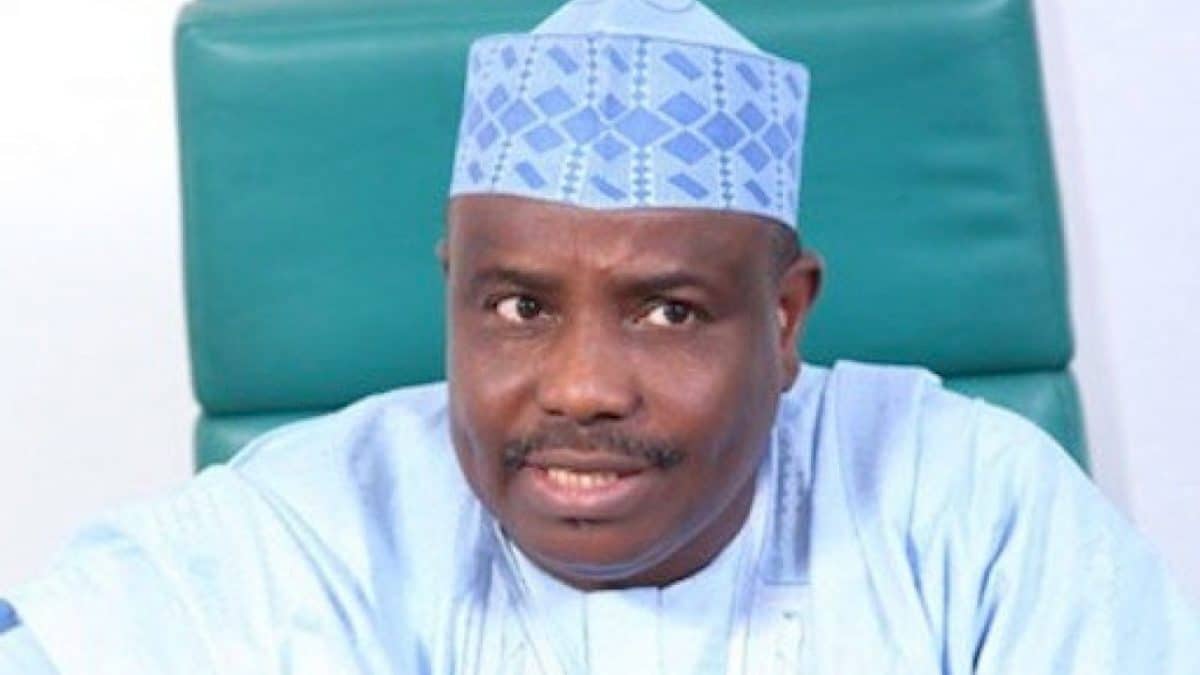
Governor Aminu Tambuwal of Sokoto State has said the state government was targeting the remodelling of the Qur’anic education system and not banning it.
Tambuwal stated this on Saturday at the closing of a two-day workshop for the adaptation of the Indonesian Pondok system into the Almajiri-Islamiyya educational system in the state.
He expressed government’s determination to ensure that the initiative was implemented to the letter, stressing that any recognisable success of the system would upgrade and improve the state’s educational system.
He said: “We are not aiming to ban the Almajiri qur’anic education system as some people have urged the Sokoto State Government to emulate other states.
“We are striving to provide reasonable solutions to the challenges and with the present initiative the time has come.”
Tambuwal assured of full implementation of the suggestions made by resource persons and the design of a programme that would surely be a solution to the educational challenges, especially bridging the gap of out of school children.
In his remarks, the Sultan of Sokoto, Alhaji Sa’ad Abubakar III, urged the Federal Government and its agencies, including the Universal Basic Education Commission, to consider making financial provisions to the Almajiri qur’anic educational system.
Abubakar noted that when the implementation of the initiative begins, the out of school children figure will drop as well as curtail those roaming the streets.
The Sultan urged others states to emulate Sokoto state on the initiative, in recognition of its importance and suitability to Nigerian’s system of education.
The Special Adviser to President Muhammadu Buhari on National Social Investment Programmes, Maryam Uwais, expressed delight at the initiative as it was in line with the President’s efforts at reducing poverty and empowering Nigerians.
Uwais said: “The huge numbers of marginalised youths and children, who have no education, school dropouts who have no skills, have contributed to the dismal outcomes of security challenges.
“The challenges also include females who faced incidence of gender based violence, along with cases of early marriages arising from lack of education, which leads to diminished opportunities.”
She noted that the Pandok system focuses on character development and addressing socioeconomic challenges that children faced, as well as improving educational levels which were all aligned with Sustainable Development Goals.
Uwais added that her office was working towards empowering between 30 to 50 youths in all the local government councils, to supervise and monitor others on valuable skills to be acquired, through various initiatives.
Earlier, the Executive Director, Sokoto State Arabic and Islamic Education Board, Alhaji Umar Altine, said based on the study conducted, the Pandok system of education in Indonesia were owned and managed by individuals or communities, regulated and assisted by the federal ministry of religious affairs.
Altine said the major sources of sustainability were Endowments (Waqf) and Alumni, noting that based on advocacy and sensitisation by the board, six Qur’anic schools had adopted the model.
In her presentation, UNICEF Education Specialist, Sokoto Field Office, Dr. Safiyya Tahir, said that no fewer than 1.2 million children were out of school in Sokoto State, noting that early children development centres were mostly owned by private schools, with only a small percentage owned by public schools.
Tahir said the Pandok system would be relevant to the culture of Sokoto people because they shared similarities with the Indonesians as many families prepared their children for enrolment in religious schools in early life.
The News Agency of Nigeria reports that several resource persons made presentations at the occasion, including Dr. Bala Muhammad of the Mass Communication Department, Bayero University, Kano, and Prof. Abdullahi Sule-Kano of the Political Science Department, BUK.
Others were: Prof. Maryam Koko of the Centre for Entrepreneurship Development, Usmanu Danfodio University, Sokoto; Prof. Suleiman Khalil, Sociology Department in UDUS; Prof. Bashir Galadanci; and Prof. Muhammad Junaid.
The Eagle Online










News
INEC Flags 268 Voter Records Over AI-Generated Photos, Begins Cleanup Ahead of 2027 Elections
INEC Flags 268 Voter Records Over AI-Generated Photos, Begins Cleanup Ahead of 2027 Elections
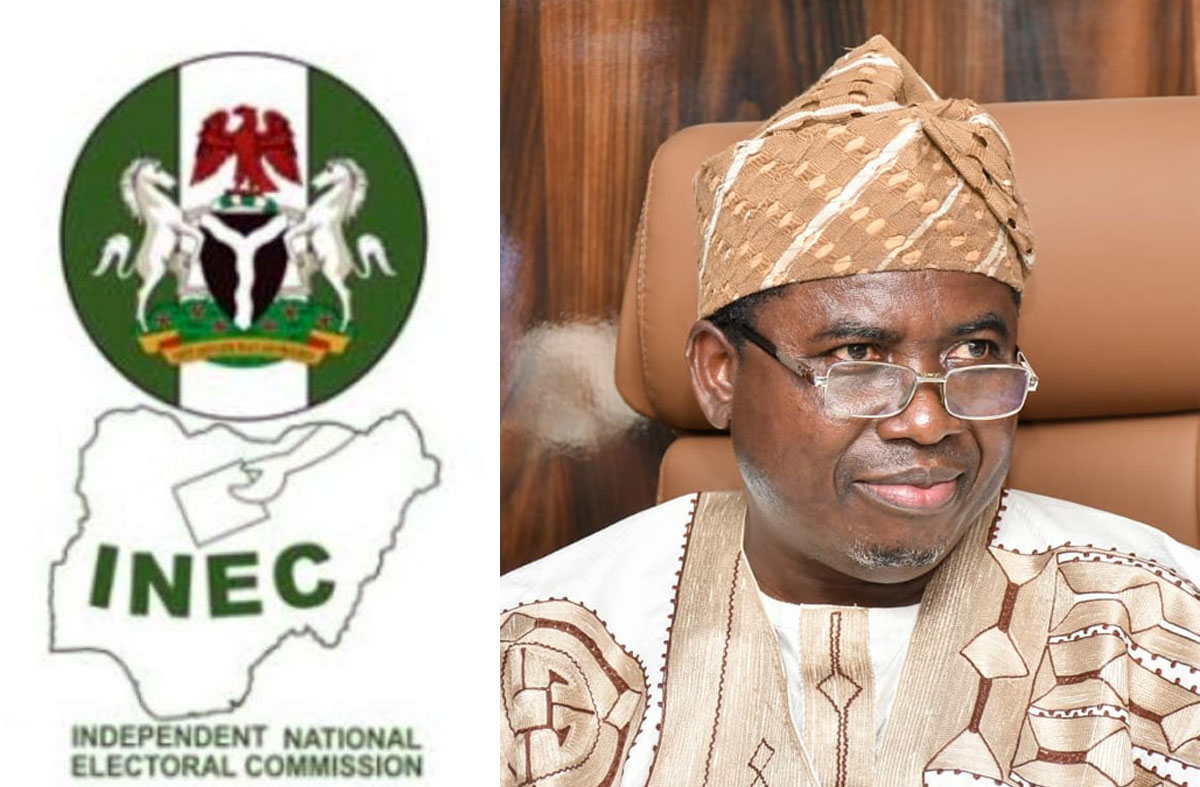
ABUJA, Nigeria – The Independent National Electoral Commission (INEC) has commenced the removal of questionable records from Nigeria’s preliminary Register of Voters after its biometric verification system flagged 268 entries over suspected artificial intelligence-generated photographs and other irregularities.
The development comes amid growing public concerns over the credibility of the voters’ register ahead of the 2027 general elections, following the discovery of suspicious photographs, duplicate registrations and names of deceased persons in the preliminary database.
INEC’s Director of Information and Communication Technology, Lawrence Bayode, disclosed the development during an interview on Channels Television’s Sunday Politics, explaining that the commission’s Automated Biometric Identification System (ABIS) had identified 268 records requiring further examination.
Bayode said the commission had begun reviewing the affected entries and removing those confirmed to be irregular.
He also explained that some registration officers allegedly exploited their authorised access to introduce questionable records into the database.
According to him, some of the irregularities involved the misuse of a special registration option designed for persons with disabilities who have incomplete or missing fingers.
However, the INEC official clarified that not every photograph enhanced with artificial intelligence would lead to the exclusion of the affected voter.
He distinguished between genuine photographs improved with AI-powered applications on mobile phones and images generated entirely by artificial intelligence, stressing that only confirmed fraudulent images would be removed.
The controversy followed INEC’s publication of its preliminary Register of Voters online on October 26, which triggered public outrage after screenshots showing suspicious photographs and other questionable entries circulated on social media.
Some of the disputed records reportedly included entries from parts of Edo State, prompting questions about the commission’s registration and verification procedures.
INEC Chairman, Professor Joash Amupitan, subsequently confirmed that the commission was examining the questionable records and would take corrective action based on verified findings.
The commission has maintained that the preliminary register is not the final certified document, explaining that the verification and public scrutiny exercises are intended to identify inaccuracies and irregularities before certification.
INEC has scheduled December 15, 2026, for the certification of the final Register of Voters after completing the necessary verification, adjudication and data-cleanup processes.
The commission has also encouraged Nigerians to participate in scrutinising the register and report suspicious entries to help safeguard the credibility of the electoral process ahead of the 2027 general elections.
INEC Flags 268 Voter Records Over AI-Generated Photos, Begins Cleanup Ahead of 2027 Elections
News
Ex-CSU Lecturer Reopens Tinubu’s Certificate Controversy, Says President Never Attended University
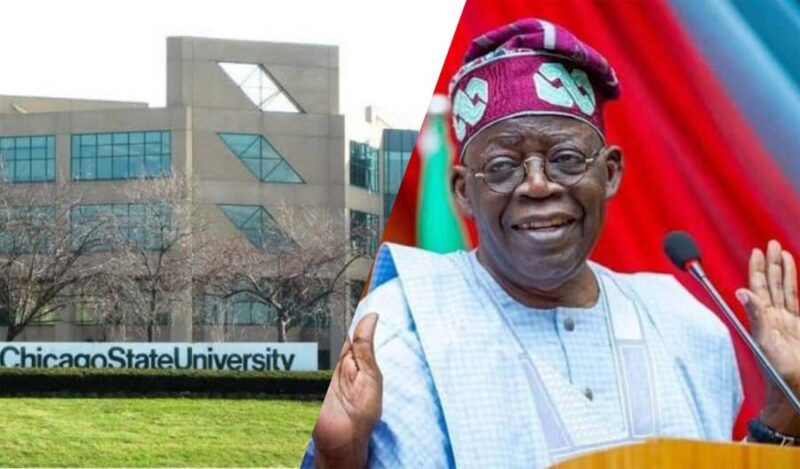
Ex-CSU Lecturer Reopens Tinubu’s Certificate Controversy, Says President Never Attended University
A fresh controversy has emerged over President Bola Ahmed Tinubu’s educational background after a former lecturer at Chicago State University (CSU), Dr Adetokunbo Pearse, claimed that the Nigerian leader never attended the American institution.
Pearse made the allegation during an interview on News Central Television on Sunday, November 8, 2026, insisting that he had personal knowledge of the university’s academic programme and Tinubu’s alleged attendance.
The former lecturer, who said he worked at Chicago State University between 1985 and 1990, claimed he was the director of the programme Tinubu reportedly attended.
According to him, he was familiar with the institution’s records and maintained that the President never enrolled there.
“The fact of the matter is, I know he never attended Chicago State University. He knows that I know. So the man (Mr Tinubu) has no integrity,” Pearse said.
He also questioned the educational institutions Tinubu listed in documents submitted to the Independent National Electoral Commission (INEC), arguing that the President had identified schools he allegedly never attended.
Pearse further claimed that he was approached in 1999 by individuals seeking information about Tinubu’s academic records when the late Funsho Williams was reportedly making inquiries into the matter.
The allegation has reopened public debate over Tinubu’s educational qualifications, which generated considerable controversy during the 2023 presidential election and subsequent legal proceedings.
However, Pearse’s assertion contradicts Chicago State University’s official position. In September 2023, the institution confirmed that Tinubu attended the university and graduated in 1979 with a bachelor’s degree.
The university subsequently released academic records following legal proceedings initiated in the United States by former Vice-President Atiku Abubakar.
The records indicated that Tinubu attended the institution between August 1977 and June 1979 and was awarded a Bachelor of Science degree in Business Administration.
Although questions were raised during the legal proceedings about the authenticity of the particular diploma submitted to INEC, Chicago State University maintained that its records confirmed Tinubu’s attendance and graduation.
Pearse’s latest comments therefore introduce a fresh personal challenge to the university’s previously stated position, although his assertion does not, on its own, invalidate the institution’s official records.
As of the time of filing this report, the Presidency had yet to publicly respond to the latest allegations, according to reports on the interview.
The renewed controversy is likely to attract further political attention as Nigerians continue to debate questions surrounding transparency, public accountability and the President’s educational background.
Ex-CSU Lecturer Reopens Tinubu’s Certificate Controversy, Says President Never Attended University
News
One Killed, Five Injured as Violence Disrupts Obi-Kwankwaso Rally in Delta
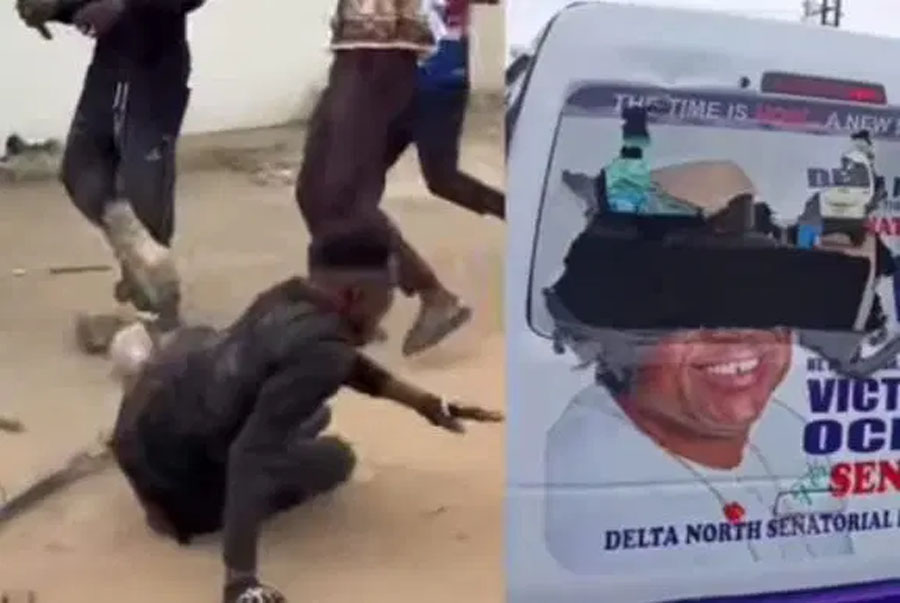
One Killed, Five Injured as Violence Disrupts Obi-Kwankwaso Rally in Delta
One person has been killed and five others injured following a violent clash that disrupted a political procession organised by supporters of the Nigeria Democratic Congress (NDC) presidential candidate, Peter Obi, and his running mate, Rabiu Kwankwaso, in Asaba, Delta State.
The incident occurred at about 12:15 p.m. on Saturday, November 7, 2026, along Nnebisi Road, during a one-million-man march organised by supporters of the Obi-Kwankwaso Movement.
The Delta State Police Command confirmed the casualties, disclosing that the identities of the deceased and injured persons had yet to be established as investigations commenced.
In a statement issued by the Police Public Relations Officer, SP Bright Edafe, the command said it had received intelligence indicating the possibility of violence ahead of the procession.
According to the police, organisers of the rally were invited to a security meeting, where they were briefed about the identified threats and advised against holding an open-road procession.
The command said the organisers were encouraged to conduct their political activities at a designated venue where adequate security arrangements could be provided.
However, the police alleged that the organisers ignored the advice and proceeded with the procession.
READ ALSO:
- ‘Stop Blaming Us’, APC Tells Atiku, ADC Over Court Judgment
- Atiku to Tinubu: You Cannot Use Courts to Escape Nigerians’ Verdict
- University Funding Crisis: States Beg FG to Take Over Cash-Strapped Institutions
Following a distress call, police operatives were deployed to the scene and evacuated the injured victims to hospital for medical attention.
Security was subsequently reinforced in the affected area to prevent further breakdown of law and order.
The police said investigations were ongoing to establish the circumstances surrounding the violence and identify those responsible.
Commissioner of Police, Samuel Erale, condemned the incident and reiterated that political parties were free to conduct lawful campaigns and other political activities across the state.
He, however, urged political parties and their supporters to avoid road processions in the interest of public safety and liaise with the police ahead of political gatherings to facilitate adequate security arrangements.
The command also appealed to members of the public with useful information about the incident to contact the police through 09155570008 or 09155570007.
Meanwhile, the NDC has accused the ruling All Progressives Congress (APC) of being behind the attack, alleging that the incident was an attempt to intimidate opposition supporters and disrupt its political activities.
Former Speaker of the Delta State House of Assembly and NDC senatorial candidate for Delta North, Victor Ochei, called on Governor Sheriff Oborevwori to order an immediate investigation and ensure that those responsible were arrested and prosecuted.
Ochei alleged that more than 30 campaign buses were destroyed during the attack, accusing suspected attackers of being mobilised by individuals allegedly connected to the ruling party.
However, Delta APC spokesperson, Valentine Onojeghghuo, dismissed the allegation, insisting that the NDC had provided no evidence linking APC members to the incident.
He described the accusation as baseless and urged the opposition party to embrace peaceful political engagement.
The Delta State Coordinator of the Obi-Kwankwaso Movement, Favour Emerue, also alleged that the gathering was peaceful before suspected hoodlums disrupted the procession, leaving some participants injured.
In a separate reaction, Peter Obi condemned the reported attacks on his supporters and NDC members in Delta State, calling on the state government and security agencies to investigate the incidents and bring those responsible to justice.
The latest violence has renewed concerns about the safety of political activities ahead of the 2027 general elections.
The police have assured residents that a thorough and impartial investigation will be conducted to establish the circumstances surrounding the clash and ensure that anyone found culpable faces the law.
One Killed, Five Injured as Violence Disrupts Obi-Kwankwaso Rally in Delta
-

 Sports2 days ago
BREAKING: Flamingos Make History, Defeat Japan 2–1 to Win First FIFA U-17 Women’s World Cup
-

 Entertainment2 days ago
Mohbad: Court-Supervised DNA Samples Collected From Singer’s Remains, Son Liam
-
 News2 days ago
Power Outage: Tegbe Gives Nigerians 72-Hour Timeline as FG Moves to Restore Electricity
-
 International2 days ago
US Offers $20m Reward, Relocation for Information on Iran’s Nuclear Programme
-

 Africa2 days ago
Shakahola Massacre: Kenyan Court Jails Doomsday Pastor 200 Years Over 191 Deaths
-

 Politics2 days ago
‘Stop Blaming Us’, APC Tells Atiku, ADC Over Court Judgment
-

 metro3 days ago
Church Growth Is Not About Numbers’: Bishop Smith Champions Training for Small Churches
-
 News2 days ago
NDLEA Arraigns Two Mexicans, Four Nigerians Over Secret Meth Lab in Oyo Forest