

Auto
Range Rover shines as Velar wins 2021 Nigeria luxury SUV
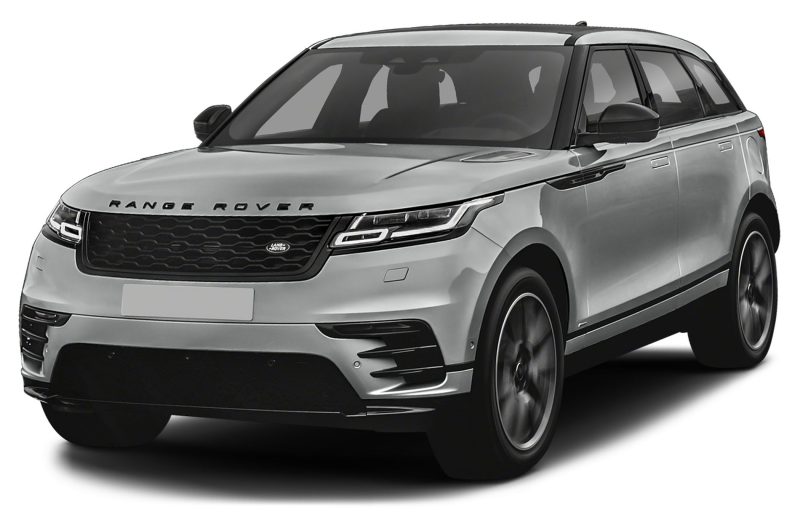
The 2021 will go down as a year of glory for Range Rover brand as its new model, the Velar, has won multiple awards. The latest is the Luxury SUV of the Year 2021 at the annual Nigeria Auto Journalists Association (NAJA) Awards just in Lagos.
The Velar, which is currently on sale in Nigeria via Coscharis Motors, had earlier won the 2021 Business Motoring Award for the Best Large SUV.
A statement by Coscharis Motors said the awards were a follow up to the 2018 World Car Awards for the design of the year.
The auto firm noted that the new Range Rover Velar fought off stiff competition from other brands nominated for the same category.
The editorial team considered the entrants based on a combination of factors such as technology, design and style, adding that the Velar excelled on all fronts.
The Range Rover Velar was said to have been chosen as the outright winner in the luxury car of the year category due to its class-leading technology, exhibiting novel features such as Pivi and Pivi Pro, providing the latest in-car artificial intelligence such as self-learning navigation system for a fully connected journey; the deployable door handles which could retract when not in use, the split armrest and crafted materials throughout.
The organisers praised Land Rover’s cutting-edge lineage, said to be instantly recognisable in the Velar, given its beautifully balanced stance with optimised proportions from the formal, powerful front end, through a flowing, continuous waistline, culminating in a taut and elegantly tapered rear.
The Velar was also commended for its Meridian’s Trifield 3D technology, found to create a truly unique ‘live’ sound experience.
Group General Manager, Marketing and Communications, Abiona Babarinde, who received the award on behalf of the auto firm, said, “For combining the off-road capabilities of a Range Rover and leading technology with the desirability of an electric vehicle, the Range Rover Velar just had to win it for us.”
He also said the NAJA award meant a lot to Coscharis Motors and “it is fantastic for the Velar to win the Luxury SUV of the Year as that is what the vehicle truly represents.
“I am really happy to pick it up on behalf of Coscharis Motors and most especially the Land Rover team who put so much hard work into the design and engineering – it is great to be recognised for leading edge and innovative technology wrapped in such a fantastic design.”
According to the statement, every Land Rover vehicle sold by Coscharis Motors comes with a complementary five-year/100,000km service plan and five-year/150,000km warranty.

L-R: Dr Boboye Oyeyemi, Corps Marshal, Federal Road Safety Corps, giving award of Luxury SUV of the year to Mr Abiona Babarinde, GM, Marketing Corporate Communications, Coscharis Group; Mr Felix Mahan, Brand Manager, Coscharis Motors; and Mr Mike Ochonma, Chairman, Nigeria Auto Journalists Association, during the 2021 edition of the association’s award night held in Eko Hotel, Victoria Island, Lagos.

Auto
Omoda, Jaecoo Storm Europe as Global Sales Surge 123% to 73,421
Omoda, Jaecoo Storm Europe as Global Sales Surge 123% to 73,421
Chinese automotive brands strengthen foothold in UK, Spain, Italy and France as new-energy vehicles drive growth
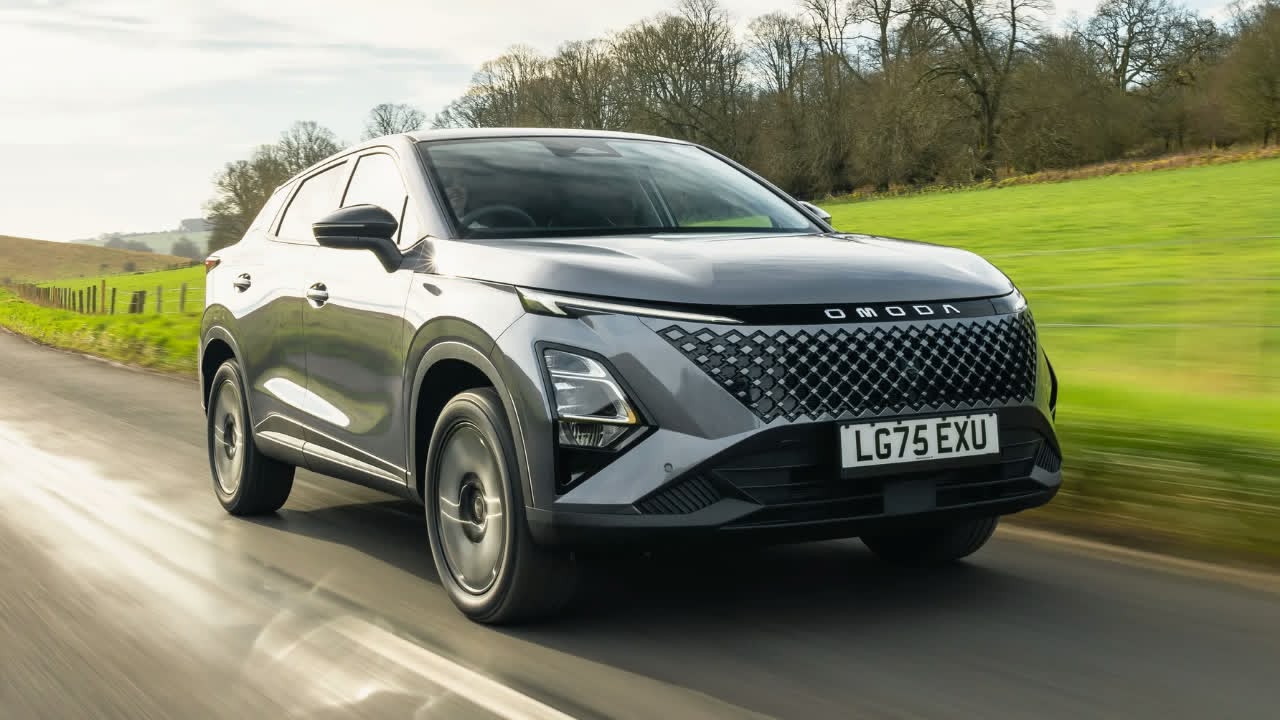
Omoda and Jaecoo are accelerating their European expansion, buoyed by surging demand in key markets and a growing appetite for electrified vehicles, as the automotive brands recorded a 123 per cent year-on-year increase in global sales to 73,421 units in September 2026.
The latest performance underscores the brands’ growing international reach, with cumulative sales for the first nine months of the year reaching 587,846 units, according to figures released by the company.
The United Kingdom emerged as a major growth driver, with the brands recording 22,296 registrations in September, more than double their performance in the corresponding period of 2025. The volume translated into a 6.37 per cent market share and second place among automotive brands in the country for the month.
A standout performer was the Jaecoo 7, which recorded 10,813 registrations in the UK during September to become the country’s best-selling new-car model for the month. Its cumulative registrations for the first nine months of the year stood at 39,473 units.
The model’s performance highlights the growing competitive presence of the Chinese automotive brands in a market traditionally dominated by established European, Japanese and South Korean manufacturers.
READ ALSO:
- 16-Year-Old Girl Recounts Horror of Hookup Encounter, Says Man Threatened Her With Knife, Acid
- Ex-Super Eagles Coach Westerhof Battles Colon Cancer in Critical Condition, Wife Seeks Help
- NRC Denies Ticket Racketeering, Says Abuja-Kaduna Rail Demand Exceeds Seats by 10-Fold
Beyond sales, Omoda and Jaecoo are also deepening their long-term commitment to the UK through plans to establish a research and development centre at UTAC Millbrook in Bedfordshire. The proposed facility will focus on areas such as chassis tuning and advanced driver-assistance systems, enabling the brands to tailor their vehicles more closely to European driving conditions and customer expectations.
Spain, Italy and France also delivered strong performances, reinforcing the brands’ broader European growth strategy.
In Spain, September registrations increased by 91.5 per cent year-on-year to 4,010 units, lifting the brands’ market share to a record 4.3 per cent. Electrified vehicles accounted for 98 per cent of their sales in the country, highlighting the importance of alternative-powertrain models to their European strategy.
Italy recorded 4,678 registrations in September, giving the brands a 3.31 per cent market share. Their cumulative registrations between January and September rose by 256.23 per cent to 32,945 units, reflecting a rapid expansion in one of Europe’s important automotive markets.
France, another market in which the brands are building their presence, recorded combined September registrations of 3,003 units. Jaecoo contributed 2,589 units, an impressive showing approximately six months after its entry into the French market.
The gains across these countries point to an increasingly coordinated European push, with Omoda and Jaecoo seeking to translate their expanding product portfolios into stronger market positions.
Electrification drives global growth
New-energy vehicles (NEVs) remained a major contributor to the brands’ worldwide performance, with sales reaching 53,957 units in September, representing an 184 per cent increase year-on-year.
The volume accounted for approximately 73.5 per cent of total monthly sales, underlining the growing contribution of electrified models to the brands’ global business.
The figures suggest that electrification is becoming central to Omoda and Jaecoo’s expansion, particularly in markets where consumers are increasingly considering hybrid and other electrified powertrains alongside conventional petrol vehicles.
With rising registrations in major European markets, expanding technical development plans and strong demand for the Jaecoo 7, the brands are seeking to consolidate their position in an increasingly competitive automotive landscape.
Sustaining the momentum will depend on their ability to maintain product appeal, strengthen dealer and after-sales networks, and respond to the differing regulatory requirements and consumer preferences across Europe.\
Omoda, Jaecoo Storm Europe as Global Sales Surge 123% to 73,421
Auto
Naija Driver 2026: Online CBT Screening Holds today

Naija Driver 2026: Online CBT Screening Holds today
LAGOS, NIGERIA — The race to identify Nigeria’s safest and most skilled drivers enters a decisive phase today, Saturday, October 17, as registered candidates nationwide prepare for the 11am online computer-based test (CBT) screening of the inaugural Nigerian Drivers Challenge, Naija Driver 2026.
The organisers have urged candidates to log in prepared, with a functional laptop or desktop computer, webcam and reliable internet connection, warning that smartphones and tablets will not be supported for the 20-minute, 40-question examination.
Auto
Tesla’s Flying Roadster Rekindles Race to Put Cars in the Sky
Tesla’s Flying Roadster Rekindles Race to Put Cars in the Sky
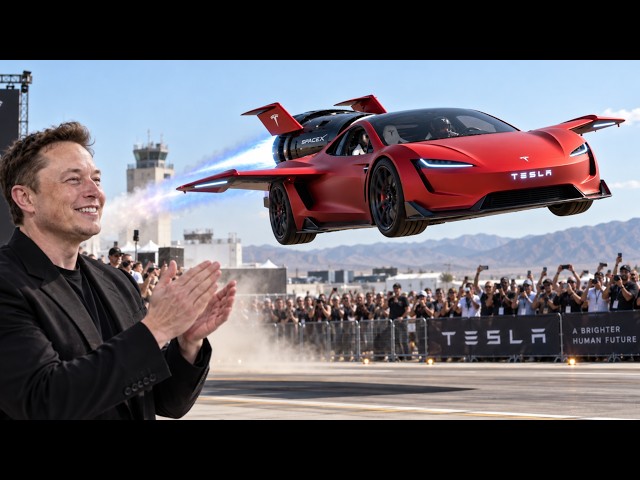
Tesla chief executive Elon Musk has brought the prospect of putting cars in the sky back to the spotlight with the unveiling of the company’s Roadster sports car. The demonstration, staged at a SpaceX facility in Texas, has reignited the debate over whether flying cars could fundamentally change how people and goods move—or whether they will remain expensive technological curiosities for wealthy enthusiasts.
Analysts note that getting a vehicle briefly off the ground is not the same as developing a practical aircraft that can transport people safely over meaningful distances, land in confined spaces and remain usable on ordinary roads.
And that is where the real challenge begins.
At the centre of the latest excitement is Tesla’s next-generation Roadster, a high-performance electric sports car equipped with technology developed in collaboration with SpaceX, Musk’s aerospace company.
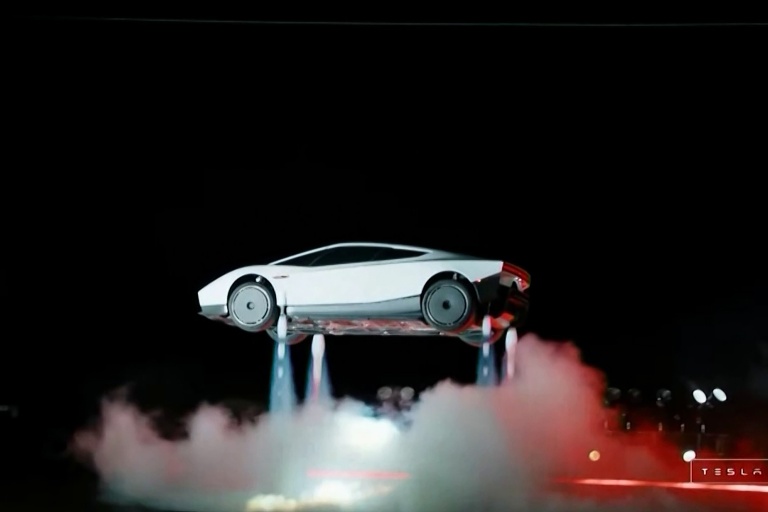
During the October 15 demonstration in Texas, the vehicle performed a series of dramatic manoeuvres, including launching into the air, flipping and landing, using a system of compressed-air thrusters. Tesla also showcased a suction-based system that allowed it to perform an extraordinary stunt on a ramp. The company claims the car can accelerate from zero to 60 miles per hour in less than a second.
The spectacle was designed to demonstrate what happens when automotive engineering meets rocket technology. Musk described the project as a collaboration between what he called the world’s best car company and the world’s best rocket company.
However, the demonstration did not establish that the Roadster can sustain conventional flight, travel long distances through the air or operate as an everyday flying vehicle.
That distinction is central to the debate.
The vehicle’s production is planned for 2028, but the promised timeline, technical capabilities and regulatory pathway remain matters to watch. Tesla has previously revised its Roadster production schedules, making the latest target one that prospective buyers will need to treat cautiously.
For now, the Roadster is better understood as a demonstration of extraordinary engineering ambition than proof that flying cars are ready to transform daily commuting.
The technology is already taking shape
Tesla is not alone in pursuing the dream of personal flight. Across the aerospace and automotive industries, companies are developing vehicles that can take off and land vertically, potentially eliminating the need for conventional runways.
These machines are commonly known as electric vertical take-off and landing aircraft, or eVTOLs. Depending on their design, they use multiple electric propellers, rotors or other lifting systems to rise vertically before transitioning into forward flight.
Unlike a conventional flying car that must also function as a road vehicle, many eVTOLs are designed primarily as aircraft. Their intended uses include urban air taxis, airport transfers, medical transport and short-distance passenger services.
READ ALSO:
- NAPTIP Raises Alarm as Parents Allegedly Trade Children for Sex, Arrests Woman in Abuja
- Troops Crush Lakurawa Enclave in Sokoto, Kill Fighters, Destroy Terrorist Camps
- Kaduna Kidnapping: Couple, Six-Month-Old Baby Regain Freedom After Nine Days in Captivity
One of the companies pursuing a road-and-air vehicle is California-based Alef Aeronautics. Its Model A project uses distributed propellers to lift the vehicle, illustrating a different approach from Tesla’s rocket-assisted demonstration.
The wider industry is also attracting regulatory attention. In the United States, the Federal Aviation Administration has established rules covering pilot qualifications and operations for powered-lift aircraft, creating a framework for the introduction of new types of vertical-flight transportation. Certification of individual aircraft and safe integration into airspace remain essential steps.
The implication is significant: flying transportation is no longer merely an imaginative concept. But the most practical early applications may be specialised aircraft operating along defined routes, rather than private cars routinely switching between roads and skies.
Why building a flying car is so difficult
The biggest obstacle is not simply making a vehicle leave the ground. It is combining the conflicting requirements of a road car and an aircraft without compromising either.
A car must be sturdy enough to withstand collisions, potholes and the daily stresses of road use. It needs a chassis, crash-protection structures, tyres, suspension and other components that add weight.
An aircraft must be designed around weight, lift, stability, energy efficiency and control. Every extra kilogram can affect how much energy is needed to take off and remain airborne.
Combining the two creates a difficult engineering compromise.
A flying car must also manage the transition between ground travel and flight. Engineers have to ensure that the vehicle remains stable as it lifts off, changes direction and returns to the ground. A failure during that transition could have catastrophic consequences.
The Tesla demonstration offers a glimpse of what thrust technology can achieve, but a brief airborne manoeuvre does not answer the harder questions about sustained flight, passenger safety, weather resistance, emergency landing and repeated everyday use.
Battery performance presents another challenge for electric flying vehicles. Taking off vertically demands considerable power, while maintaining safe flight requires sufficient energy reserves. Designers must balance passenger capacity, range, payload and operating costs.
Then comes the question of price. A machine carrying sophisticated aviation systems, advanced batteries and road-safety equipment is unlikely to match the cost of an ordinary family car in its early years.
READ ALSO:
- IPOB Reaches Out to Hausa, Northern Groups in Fresh Push for Biafra Referendum
- MURIC Warns EFCC Over Atiku Probe, Says Timing Could Heighten Political Tension
- ToluwaniSings’ Final Hours: Aide Reveals Desperate Search Across 8 Hospitals
These challenges explain why the first commercially successful flying vehicles may be aircraft that serve specific transport needs, rather than universal replacements for cars.
Will flying cars end traffic congestion?
The promise of flying cars is particularly attractive in cities such as Lagos where road congestion consumes hours of people’s lives and imposes substantial economic costs.
In principle, moving some journeys into the air could shorten travel times between distant urban centres, business districts, airports and industrial locations. Electric air taxis could offer faster alternatives for passengers willing to pay a premium.
Yet the idea that everyone will soon fly above traffic is less convincing.
Cities cannot allow thousands of privately operated aircraft to take off and land wherever their owners choose. Flight paths, separation distances, weather conditions, emergency procedures and air-traffic management would all have to be coordinated.
Landing infrastructure is another constraint. Even aircraft capable of vertical take-off need suitable places to land, recharge or refuel, undergo maintenance and accommodate passengers.
For flying cars that are also road-legal, owners would still need somewhere to park and drive. A vehicle that takes off from one location but cannot land safely near its destination may offer little practical advantage.
Noise could also become a concern, particularly for residents living near vertiports and frequently used flight corridors.
Consequently, the first generation of urban flying transport is more likely to resemble a carefully managed air-taxi network than an unrestricted skyway for private motorists.
Could flying cars become affordable?
Cost may ultimately determine whether flying vehicles transform transportation or remain a luxury reserved for a small group of buyers.
Early models are likely to carry substantial costs associated with advanced engineering, certification, insurance, maintenance and specialised training. Even when a vehicle can be operated without a conventional runway, its aviation-related requirements will distinguish it from an ordinary car.
The more promising business model may therefore involve shared use.
Instead of buying an expensive flying vehicle, passengers could book an air taxi for particular journeys. Operators could spread the cost of aircraft, maintenance and infrastructure across multiple trips.
As manufacturing scales up and technology improves, some costs may fall. But cheaper batteries and more efficient motors alone will not resolve every challenge involving certification, safety, infrastructure and public acceptance.
Tesla’s Roadster could still influence the industry by attracting attention to new propulsion technologies and encouraging competition. Its immediate significance, however, is more likely to be technological and symbolic than a mass-market transportation breakthrough.
What does the future hold for Nigeria?
For Nigeria, the emergence of flying vehicles presents both opportunities and questions.
Lagos offers an obvious illustration of the problem such technology seeks to address. Heavy congestion along major routes, including the Lekki-Epe corridor and key approaches to the island business districts, creates demand for faster and more predictable transport options.
Abuja, with its expanding urban footprint and relatively long journeys between some residential, administrative and commercial districts, could also eventually find specialised aerial mobility useful.
Potential applications extend beyond executive travel. Subject to safety, cost and regulatory approval, future vertical-flight aircraft could support emergency medical transfers, time-sensitive cargo delivery and connections between airports and business centres.
But Nigeria would need more than imported aircraft to develop a sustainable flying-mobility ecosystem.
The country would require appropriate aviation regulations, trained personnel, reliable charging or energy infrastructure, approved landing facilities, maintenance capabilities and effective airspace coordination. Affordability would be especially important in a market where many commuters depend on public transport and conventional road-based mobility.
The Nigerian Civil Aviation Authority would have a crucial role in determining how emerging aircraft technologies could be certified and operated locally, in line with applicable national requirements and international aviation standards.
There may also be opportunities for local engineering firms, technology companies and transport operators to participate in infrastructure development, maintenance and specialised mobility services.
Nevertheless, the business case would have to be demonstrated. A flying taxi that saves time but costs many times more than a road journey would initially serve a limited market.
For Nigeria, the most realistic starting point may be specialised commercial operations, rather than privately owned flying cars becoming a common sight over major cities.
The flying car remains an intriguing glimpse of the future—one with the potential to reshape mobility, but not yet a replacement for the familiar car on the road.
Tesla’s Flying Roadster Rekindles Race to Put Cars in the Sky
-

 metro1 day ago
₦130m Toyota Tundra Wrecked: Lagos Dealer Questions Police Over Suspect’s Release
-

 News1 day ago
₦200m Fake Alcohol Packaging Uncovered as NAFDAC Raids Aba Market
-

 metro12 hours ago
Suspended Archbishop Ibezim Drags Anglican Primate to Court, Challenges Six-Month Leave
-

 metro2 days ago
Outrage as Residents Scoop Groundnut Oil From Lagos Tanker Crash Scene
-

 metro2 days ago
Borno Woman Jailed Two Years for Sexual Exploitation of 16-Year-Old Girl
-
 Sports1 day ago
Real Madrid Demand Tebas’ Exit After Explosive Nazi Propaganda Row
-

 Entertainment1 day ago
ToluwaniSings’ Final Hours: Aide Reveals Desperate Search Across 8 Hospitals
-

 Politics2 days ago
Shettima Attacks Atiku Over Tinubu Remarks, Questions Subsidy Plan