

Auto
How strong are Chinese vehicles in Nigeria?

Chinese automotive products used to be viewed with skepticism in Nigeria. But those days are gone. From sedan to pickups, Sport Utility vehicles, mini buses and trucks, the Chinese vehicles have shown strong presence and even now dominate certain segments of the nation’s market.
For instance, commercial buses like Yutong Jinbei, Foton, Joylong and others now give the Japanese brands like Toyota and Nissan a serious fight in their categories.
Aside from being assembled locally, Japanese auto brands are now marketed by such reputable Nigerian companies as CFAO Group, Stallion Group, Coscharis, Mikano, CIG Motors and more.
Changan is one of the top four Automobile groups in China and top selling domestic Chinese automobile brand, which boasts of an industrial history stretching back 153 years. It is now entrenched in Nigeria, courtesy of Zahav Automobile Co, a member of Stallion Group, Nigeria’s representatives for Changan automobile brand.
In Nigeria’s mass transit sector, the Chinese brands have significantly offered relief, comfort and durability to the nation’s transporters.
Yutong, represented by Lanre Shittu in Nigeria, is noted for its intra-city buses, inter-city (luxury) coaches as well as medium and long models designed for BRT (Bus Rapid Transport) currently being operated by the Lagos State Government.
For the heavy duty equipment and trucks, Dangote Group has been in partnership with China’s Sinotruck. In 2017, it partnered with Chinese heavy duty truck group, Sinotruck, to set up a $100 million plant to assemble trucks and cars in Nigeria for local use and export.
Today, the Dangote Group, which boasts of a fleet size of 12,000 trucks, is largely of Yotoung brands.
In the same vein, recently, Chinese automaker, CIG Motors and the Lagos State government signed a joint venture agreement that will culminate in assembling of cars that are easy to maintain and low on fuel consumption and gas emission in Lagos.
According to the Lagos State Governor, Babajide Sanwo-Olu, Lagosians should expect a roll-out of vehicles from this plant within the next 18 months.
“As we formally sign the Joint Venture Agreement for the establishment of Motor Assembly Plant, Lagosians should expect a roll-out of vehicles from this plant within the next 18 months,” the governor said.
Although, the Chinese are not yet there when it comes to first class automobiles, one could attest to the fact that the Chinese models being introduced into the market today are much more improved compared to the earlier models launched into the country years back.
-Nigeria Auto Journal, December 2021

Auto
NADDC Pushes Affordable Auto Loans to Boost Vehicle Ownership, More Jobs
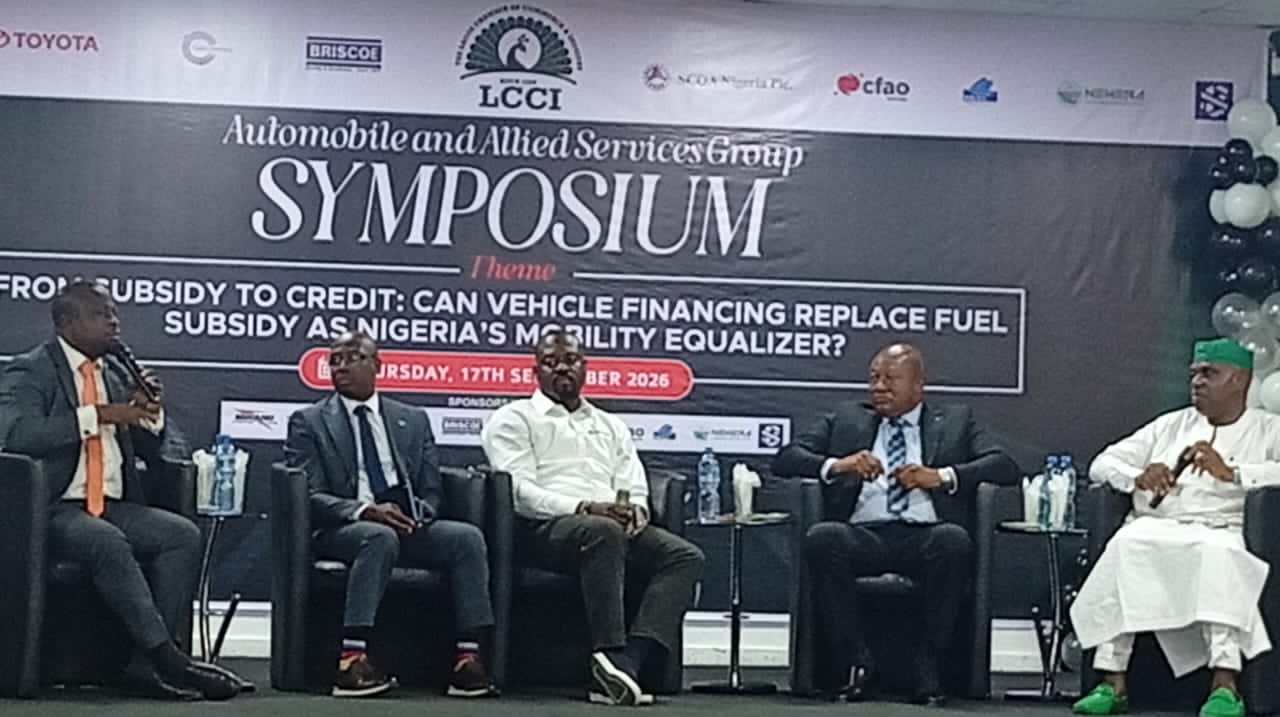
NADDC Pushes Affordable Auto Loans to Boost Vehicle Ownership, More Job
The National Automotive Design and Development Council has called for far-reaching reforms in vehicle financing to make car ownership more affordable while boosting local vehicle assembly, job creation and industrial development.
The Council said a properly structured financing system could turn vehicle credit from a mere consumer lending product into a major economic tool for expanding productive mobility and strengthening Nigeria’s automotive value chain.
Director-General of NADDC, Otunba Joseph Oluwemimo Osanipin, stated this in an address delivered on his behalf by the Council’s Principal Information Officer, Tanko Kyumnom, at the Lagos Chamber of Commerce and Industry (LCCI) Auto Sectoral Group Symposium in Lagos.
The symposium, held on Thursday, September 17, 2026, at the Henry Fajemirokun Hall of LCCI, was themed: “From Subsidy to Credit: Can Vehicle Financing Replace Fuel Subsidy as Nigeria’s Mobility Equaliser?”
Osanipin said the growing cost of mobility had made it necessary to explore financing models that would enable individuals, businesses and transport operators to acquire vehicles without bearing the full cost of ownership upfront.
According to him, spreading vehicle payments over an agreed period could provide a more sustainable pathway to vehicle acquisition, provided that the financing products are affordable, accessible and structured around the economic realities of Nigerian consumers.
He, however, cautioned that simply making credit available would not be enough.
“Vehicle financing offers a more sustainable approach by enabling individuals, businesses and transport operators to acquire vehicles and pay for them over time,” Osanipin stated.
The NADDC DG said the bigger opportunity lies in linking vehicle financing with the growth of locally assembled and Nigerian-made vehicles.
He explained that increased access to credit for locally produced vehicles could generate wider economic benefits by stimulating demand for domestic assembly, supporting component manufacturers, creating jobs and strengthening local supply chains.
Osanipin therefore urged stronger collaboration among government institutions, financial institutions, vehicle manufacturers and other stakeholders in designing financing schemes capable of supporting both mobility access and automotive industrialisation.
The NADDC boss identified affordable vehicle loans, leasing arrangements, fleet financing, credit guarantees and appropriate interest-rate support as mechanisms that could broaden access to vehicle ownership and productive mobility.
lt also stressed the need for repayment structures that take into account the earning patterns and business realities of Nigerians, particularly transport operators and small businesses whose vehicles are directly linked to their income-generating activities.
Osanipin maintained that the objective should extend beyond increasing the number of vehicles on Nigerian roads.
“The goal is not simply to put more vehicles on Nigerian roads. It is to ensure that Nigerians can access productive mobility without placing an unsustainable burden on government finances or household incomes,” he said.
According to him, a properly structured automotive financing system could create a stronger connection between mobility, economic inclusion and domestic vehicle production.
“With the right policies and partnerships, vehicle financing can become a powerful instrument for mobility, economic inclusion and automotive industrial development,” Osanipin added.
The NADDC’s position places vehicle financing within the broader effort to build a sustainable automotive ecosystem in Nigeria—one in which access to credit supports vehicle users while also creating stronger demand for local assembly, components and associated automotive services.
Auto
Jetour T1 Storms Abuja as Automaker Accelerates Nigeria Expansion
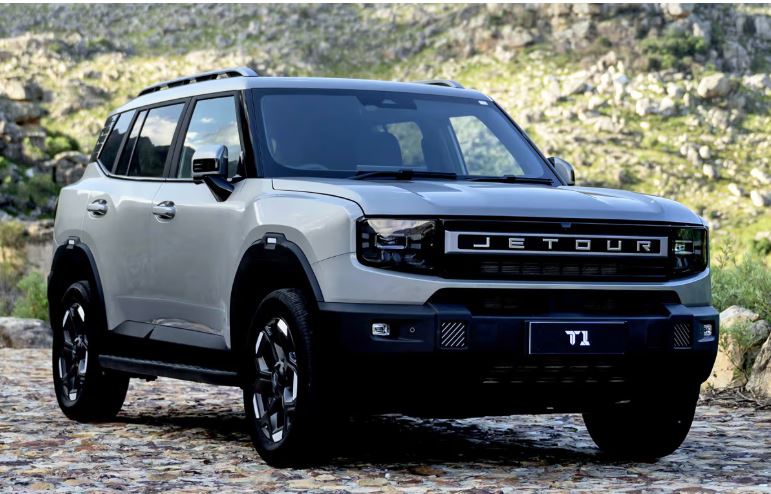
Jetour T1 Set to debut in Abuja as Expansion Gains Momentum
Following a successful debut in Lagos, Jetour Nigeria will host the Jetour Experience Abuja from September 22 to 24, 2026, positioning its all-new T1 model as a major competitor in the country’s growing adventure SUV market.
The three-day event in the Federal Capital Territory will give prospective buyers and motoring enthusiasts direct access to product demonstrations, expert-led technical sessions, and hands-on test drives.
“Strong participation, extensive test drives, and significant sales enquiries at the Lagos edition, coupled with growing demand from Abuja residents, influenced the decision to bring the experience to the nation’s capital,” the company said in a statement. The show holds at Maha Event Centre, Area 8, Garki.
To support its growing national footprint, Jetour Nigeria has established a network of seven accredited dealers: Elizade Nigeria Limited, New Era AutoVehicle Services Limited, Kojo Motors, Germaine Auto Centre, Tab Autos Limited, R.T. Briscoe Motors, and Mandilas Autos. The partnerships cover retail sales, genuine spare parts supply, and comprehensive after-sales maintenance.
READ ALSO:
- Kidnapped Female Police Officer Found Dead in Ebonyi as Suspect Leads Police to Remains
- CNN, MS NOW, Politico Sue Trump Over White House Access Ban
- JAMB Allows Candidates to Change Lost SIM, Email Addresses
The T1 enters the market with a focal point on balance—combining off-road capability with urban comfort.
The smart T1 has the following features-
Dimensions: 4,705mm (L) x 1,967mm (W) x 1,843mm (H) |; Wheelbase: 2,800mm; and
Powertrains: 1.5L Turbo / 2.0L Turbo (254 hp, 390 Nm torque).
The drivetrain is BorgWarner XWD Intelligent 4WD | 7-Speed DCT or 8-Speed Automatic. Terrain Capability: 199mm ground clearance, 600mm wading depth, and 28° approach/departure angles.
Other features include 15.6-inch HD touchscreen, Qualcomm Snapdragon 8155 platform, 8-speaker audio, 5-seater configuration with 574 litres of rear luggage space, 85 percent high-strength steel chassis alongside a Level 2 Advanced Driver Assistance System (ADAS), which includes Adaptive Cruise Control, Lane Keeping Assist, Forward Collision Warning, and Autonomous Emergency Braking.
Since its Nigerian market entry, Jetour has secured several local and international automotive honors, including Fastest Growing Auto Brand of the Year and Auto Brand of the Year.
Jetour T1 Set to debut in Abuja as Expansion Gains Momentum
Auto
Abuja Demand Rises as Jetour Brings X70 Plus Experience to FCT
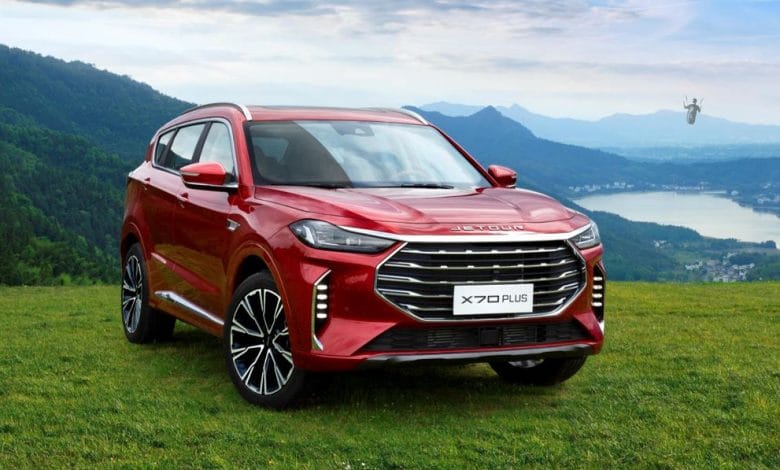
Abuja Demand Rises as Jetour Brings X70 Plus Experience to FCT
Jetour Nigeria is taking its seven-seater X70 Plus SUV to Abuja as rising interest from motorists in the Federal Capital Territory and neighbouring states fuels the brand’s latest push to deepen its presence across Nigeria.
The X70 Plus will headline the Jetour Experience Abuja, holding from September 22 to 24 at Maha Event Centre, Area 8, Garki, following the strong response recorded during the Lagos edition, where motorists turned out for test drives and made enquiries about Jetour models.
The Abuja activation is designed to give prospective buyers direct access to the X70 Plus and other models, with opportunities to test-drive the vehicles, engage product specialists and experience their technology, safety and comfort features.
The X70 Plus is positioned as a family-oriented SUV, offering seven-seat capacity and a range of features targeted at customers seeking comfort, technology and practicality.
The SUV is available with 1.5-litre and 1.6-litre turbocharged engine options, with outputs of up to 145kW and 290Nm of torque, paired with a dual-clutch automatic transmission.
READ ALSO:
- Enough Is Enough: Muslim Supporters Demand New Man United Owners
- Stray Bullet Kills 400-Level IBBU Student During Land Dispute in Niger
- Oyo Police: Student Who Died by Suicide Was Charged With Assault, Not ₦8,000 Debt
Its safety equipment includes front, side and curtain airbags, Vehicle Stability Control, Hill-Start Assist, Hill-Descent Control and a 360-degree panoramic camera with 2D and 3D viewing modes. Advanced Driver-Assistance Systems are also available.
Inside the cabin, the X70 Plus features a 10.23-inch LCD touchscreen, dual-zone climate control with air purification, wireless charging, a panoramic sunroof and an eight-speaker audio system.
Jetour Nigeria, the authorised distributor of the brand in the country, currently operates through seven accredited dealers: Elizade Nigeria Limited, Mandilas Autos, R.T. Briscoe Motors, Germaine Auto Centre, Kojo Motors, Tab Autos Limited and New Era Auto Vehicle Services Limited.
The company said the dealer network supports vehicle sales, genuine spare-parts supply and after-sales services across the country.
Jetour has also received recent industry recognition in Nigeria, including Fastest Growing Auto Brand by the Nigeria Auto Journalists Association and Auto Brand of the Year at the Nigeria Transport Lecture and Awards.
The Abuja experience is expected to provide prospective customers in the FCT and surrounding states with direct access to the X70 Plus and other Jetour models as the brand continues its national market expansion.
Abuja Demand Rises as Jetour Brings X70 Plus Experience to FCT
-

 metro3 days ago
Oyo Police: Student Who Died by Suicide Was Charged With Assault, Not ₦8,000 Debt
-

 Entertainment3 days ago
“She Wanted to Stay Single”: Rema Opens Up About Rejection That Inspired Hit Song ‘Oh No’
-

 metro3 days ago
Mambilla: ICC Raises Questions Over $500,000 Payment to Atiku’s Former Wife
-

 International1 day ago
18 Suspects Transferred to US Over 2021 Killing of Haitian President Moïse
-

 metro2 days ago
Irreconcilable Developments: Wedding Cancelled 24 Hours Before Ceremony
-
 Auto2 days ago
Abuja Demand Rises as Jetour Brings X70 Plus Experience to FCT
-
 Politics2 days ago
2027: NDC Predicts Wider Obi Victory Over Tinubu in Lagos
-

 Sports1 day ago
Messi Fires Stunning 75th Career Free-Kick to Reach 930 Goals in Inter Miami Draw