

News
Tens of Imams, Islamic scholars, youth leaders visit Osinbajo

Unity and tolerance are crucial values needed to safeguard peace and stability in a multi-religious society like Nigeria, according to Vice President Yemi Osinbajo (SAN) on Wednesday at the Presidential Villa, Abuja.
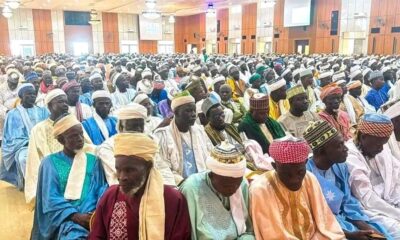
Osinbajo spoke when he received on a courtesy call a delegation of Imams, Islamic scholars and Muslim leaders.
The delegation of more than 25 Islamic clerics, intellectuals and leaders of different groups was drawn from higher institutions, National Council of Ulamas, Qadiriyya Movement, Fitiyanul Islam of Nigeria, Dariya Sect, National Council of Muslim Youths, Muslim Students Society of Nigeria, Jammat Tajdidul Islamy, Salafiyya Youth Movement, and Imams from the National Mosque and Legislative Quarters in Apo, Abuja among others.
Addressing the delegation led by Prof. Siraj Abdulkarim from Ahmadu Bello University, Zaria, the National Chairman of the Community and Youth Development (CYD is a public affairs group of Ulamas), the VP also noted: “Until you engage with the people, you can’t tell what they and others want.
“Engagement is so important.
“I believe very strongly in engagement.”
He narrated his experience since becoming VP on how people welcome engagement by their leaders even in difficult circumstances.
At the meeting, which turned out to be an exciting interactive session between the Islamic leaders and the Vice President, issues such as how to promote Nigeria’s unity were tabled and discussed.
The delegation members also engaged in good-natured banter on how the interaction was one among men of God and how the VP and his guests all belong to the same constituency of religious leaders in the country.
READ ALSO:
- Teacher drove me to hotel, raped, threatened to kill me, says 15-year-old student
- 2023: Don’t Vote For Atiku, Saraki, Peter Obi, Obasanjo Tells Nigerians
- Putin threatens to turn off gas supplies to Europe on Friday unless countries pay in roubles
While welcoming his guests, Osinbajo noted his delight at the coming of the delegation, saying: “It is not often that one gets the honour of such a visit.”
Earlier, one of the leaders of the delegation and Chief Imam of the Lagos State House of Assembly, Dr. Abdul Hakeem Abdul Lateef, described the VP as a leader who loves all Nigerians, regardless of religious or ethnic differences.
Late added that members of the delegation “are eager to collaborate with Your Excellency.
“We are here in recognition of your love for all Nigerians and your belief in the harmonious existence of our country.
“We understand the kind of love you have for all Nigerians.”
Abdul Lateef, who was formerly Lagos State Commissioner for Home Affairs, also observed that in the VP’S office, no less than 18 Muslims were part of the senior cadre of staff, including the Deputy Chief of Staff, Rahman Ade Ipaye, who is the head of the entire VP’s staff.
Abdulkarim also noted: “We are here because we love this country.”
He added that the unnecessary rivalry between Christians and Muslims has to be doused and called on the VP to initiate a programme to further promote understanding and unity. He also called for a more invigorating fight against corruption in the country.
Also in his remarks, the VP asked members of the delegation to suggest ways for the country to attain more unity and promised that the interaction with members of the delegation and such other groups in the country will not be a one-off.
Having heard from several of the members of the delegation who raised different issues bothering on the unity of the country, good governance, religious harmony among others, the VP stated after about an hour into the meeting.
He said: “I am enriched from what I have heard today and I have noted all the issues.
“I wish we had a bit more time.
“I agree we should engage more.
“The issues you have raised show us clearly that the future of this country lies with the elites, especially religious and political elites.
Prof. Osinbajo urged religious and political elites to show more responsibility in ensuring peace and positive changes in society.
According to him, religious elites, just like the political elites, are responsible for ensuring positive change.
He suggested “the creation of a forum of religious leaders who see themselves more on a rescue mission with the purpose of forging more understanding” among the citizenry.
The VP also observed that Nigeria is a country with both Muslim and Christian population, noting that even in the South West, both religions are practised in many families.
He then said that “as Christians and Muslims we must preach love and tolerance.”
In his own remarks, the Chief Imam of Abuja National Mosque, Prof. Ibrahim Maqari, said that they (as religious leaders) also have “a duty to pray for Nigeria” which they have been doing.
In the same vein, the President of the Muslim Students’ Society of Nigeria, Ustaz Shehu Usman, commended the Vice President for his “invaluable contribution to nation-building,” while another member of the delegation, Sheikh Dr. Haroun Ajah, the South East Coordinator of the Council of Ulama, praised the Vice President for being “sound, exceptional and intelligent.”
EAGLE








News
OMODA & JAECOO Race Past 1.4m Sales, Expand Push into AI, Electrification

- OMODA & JAECOO Exceed 1.4m Global Sales, Expand Push into AI, Electrification
OMODA & JAECOO have surpassed 1.4 million cumulative global vehicle sales in just three and a half years, marking a major milestone in their international expansion as the automotive brands step up investments in electrification, artificial intelligence and autonomous mobility.
The achievement, announced following the 2026 International User Summit held in October in Wuhu, China, underscores the brands’ rapid growth and ambitions to strengthen their position in an increasingly technology-driven global automotive market.
With operations spanning 79 markets worldwide, OMODA & JAECOO are now looking beyond vehicle sales to develop an integrated mobility ecosystem built around intelligent technologies, alternative powertrains and improved customer experiences.
The summit, themed “DRIVE TO THE NEXT VIBE,” brought together customers, media representatives and business partners to showcase the brands’ latest innovations, future product plans and expanding research and development capabilities.
One of the major attractions was the global debut of the OMODA X, a futuristic cross-off-road vehicle designed to combine urban practicality with a bold, adventure-inspired exterior. Its unveiling was accompanied by a global user co-creation initiative, allowing participants from different markets to contribute ideas and interpretations of the new model.
The initiative reflects the company’s growing emphasis on customer participation in product development and brand building.
Intelligent mobility technology also took centre stage, with demonstrations of the Super Intelligent Valet Parking system (SIVP), which features automated vehicle summoning, parking-route planning and obstacle avoidance.
Another innovation, the Super Intelligent AI Space (SIAS), showcased voice-controlled cabin technology capable of processing multiple requests through a single instruction. The system also demonstrated personalised digital experiences, including music recommendations based on users’ moods.
On electrification, the Super Hybrid Marathon provided an opportunity to assess vehicle performance across urban roads, highways and mountainous terrain.
According to the manufacturer, the OMODA 5 NEXT SHS-H recorded fuel consumption of 4.5 litres per 100 kilometres and achieved a maximum driving range of 1,015 kilometres during the exercise.
The company said the evaluation went beyond fuel efficiency to examine power delivery, cabin insulation and passenger comfort under varying driving conditions.
Beyond conventional vehicle development, OMODA & JAECOO also outlined their ambitions in autonomous transportation through a purpose-built Level 4 Robotaxi programme.
The initiative involves proposed cooperation with UAE-based K2 and is designed around an integrated service model covering digital bookings, vehicle dispatch, cabin preparation, autonomous journeys and fleet maintenance.
The summit also highlighted the wider technology ecosystem associated with the brands through AiMOGA, which unveiled Mobo, a home companion robot, and opened global pre-orders.
Designed to recognise family members, remember individual preferences and support everyday interactions, Mobo illustrates the company’s ambition to extend artificial intelligence and robotics beyond the automotive environment into domestic life.
Supporting these initiatives is increased investment in research and innovation. OMODA & JAECOO disclosed that research and development expenditure by its parent company, Chery, reached RMB 6.672 billion in the first half of 2026, representing a 28.3 per cent increase over the corresponding period in 2025.
The latest sales milestone follows the brands’ achievement of their first one million cumulative global sales earlier in 2026, highlighting the pace of their expansion across international markets.
For OMODA & JAECOO, the next phase of growth will depend not only on expanding their geographical footprint but also on translating technological innovation into practical benefits for customers.
Although some of the technologies unveiled at the summit remain at different stages of development and commercial introduction, the event offered a glimpse into the brands’ long-term strategy as competition increasingly shifts towards intelligent vehicles, electrification, connectivity and autonomous mobility.
News
National Assembly Fires State Police Bill to Tinubu as 29 States Defy Status Quo
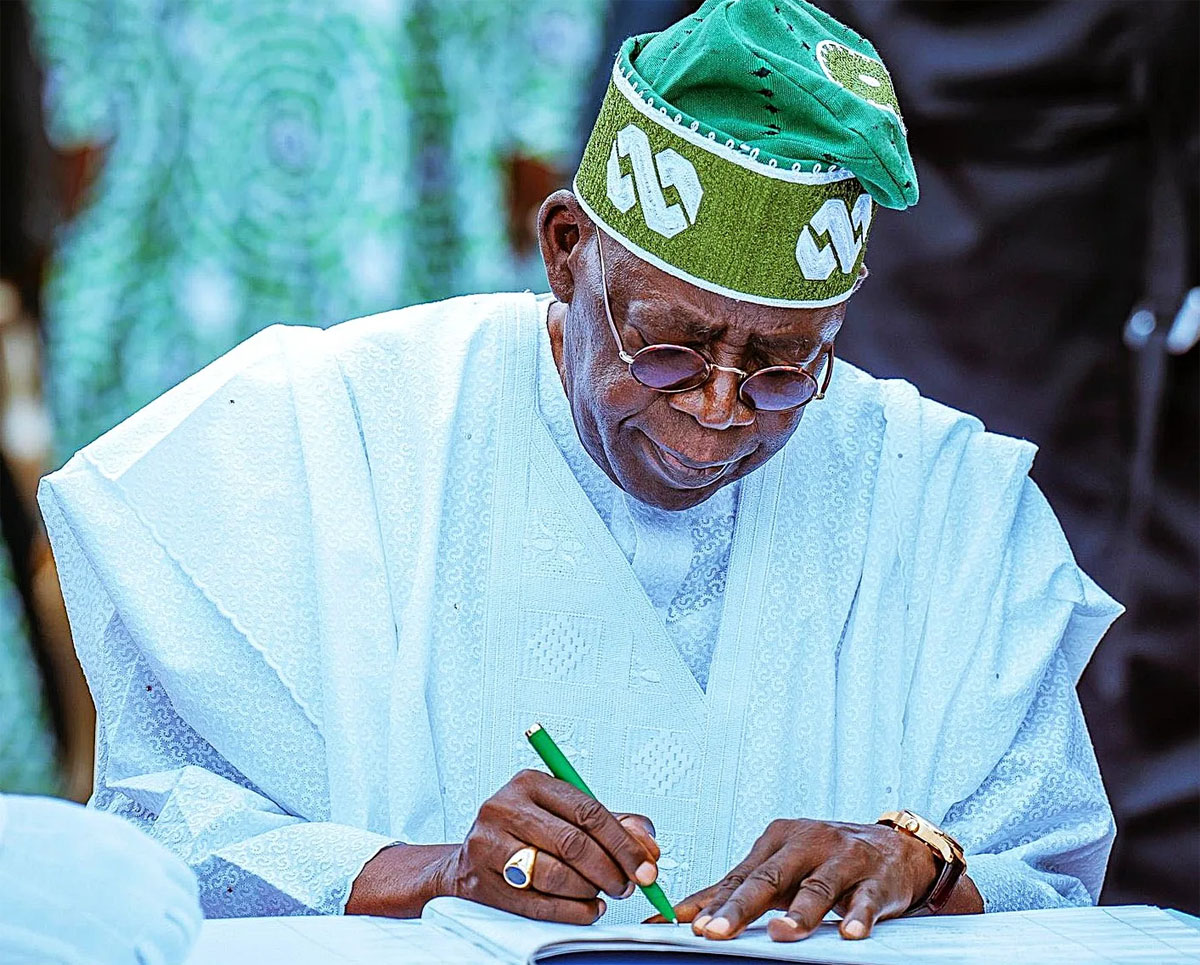
National Assembly Fires State Police Bill to Tinubu as 29 States Defy Status Quo
ABUJA — Nigeria’s long-running debate over the establishment of state police has reached a significant legislative milestone following the endorsement of the proposed constitutional amendment by at least 29 State Houses of Assembly.
The National Assembly on Wednesday announced plans to transmit the State Police Bill to President Bola Ahmed Tinubu, following the endorsement of the proposal by more than the constitutionally required two-thirds of the 36 state legislatures.
Deputy Speaker of the House of Representatives, Benjamin Kalu, disclosed the development during plenary, describing the support secured from the state assemblies as a major step towards decentralising Nigeria’s policing system.
Kalu said the Clerk to the National Assembly would transmit the bill to the President on Wednesday for the next stage of the process.
“The State Police Bill has received the backing of 29 State Assemblies. Later today, the Clerk to the National Assembly will transmit it to the President for assent,” he said.
Under Section 9 of the 1999 Constitution, a constitutional amendment requires approval from at least two-thirds of the 36 State Houses of Assembly, representing 24 states.
The 29 approvals announced by the Deputy Speaker therefore exceed the required threshold, moving the proposed reform closer to the establishment of state police services across the federation.
The development follows weeks of legislative consultations after the proposed constitutional amendment was forwarded to all 36 state assemblies on September 16, 2026, for consideration and approval.
The Clerk to the National Assembly, Kamoru Ogunlana, had earlier confirmed that 28 state assemblies had approved the proposal as of Tuesday, November 3, following the verification of reports and accompanying votes and proceedings submitted by the state legislatures.
The proposed amendment seeks to create a constitutional framework for State Police Services, allowing individual states to establish their own police structures alongside the existing Nigeria Police Force.
The proposal has gained renewed attention amid persistent security challenges, including kidnapping, banditry, terrorism and communal violence in different parts of the country.
Supporters of state policing have consistently argued that decentralising the police structure would improve intelligence gathering, strengthen community-based security and enable faster responses to criminal activities.
They also maintain that state-controlled police formations would be better positioned to understand local languages, customs, geographical terrain and security threats.
However, the proposal has continued to attract concerns over the possible misuse of state police by politically powerful governors, inadequate funding, human rights violations and the potential use of security agencies against political opponents.
The debate has therefore centred not only on the establishment of state police but also on the need for effective oversight, accountability and safeguards against political interference.
Although the National Assembly has indicated that the amendment will be forwarded to President Tinubu, the precise constitutional procedure surrounding presidential assent and the final authentication of a constitutional alteration remains an important issue to watch.
The development does not mean that state police operations have commenced. Further formal steps, including the completion and publication of the constitutional alteration and the development of the necessary implementation framework, will be required before the proposed system becomes operational.
Nigeria currently operates a centrally controlled police structure under the Federal Government, with the Nigeria Police Force responsible for policing across the 36 states and the Federal Capital Territory.
The proposed reform is expected to introduce a dual policing arrangement, with federal and state police services operating under their respective legal frameworks.
For now, attention has shifted to the next steps by the National Assembly and the Presidency as the country moves closer to a potentially significant restructuring of its security architecture.
National Assembly Fires State Police Bill to Tinubu as 29 States Defy Status Quo
News
Tinubu Reveals How He Worked As Taxi Driver In US Before Becoming Nigeria’s President
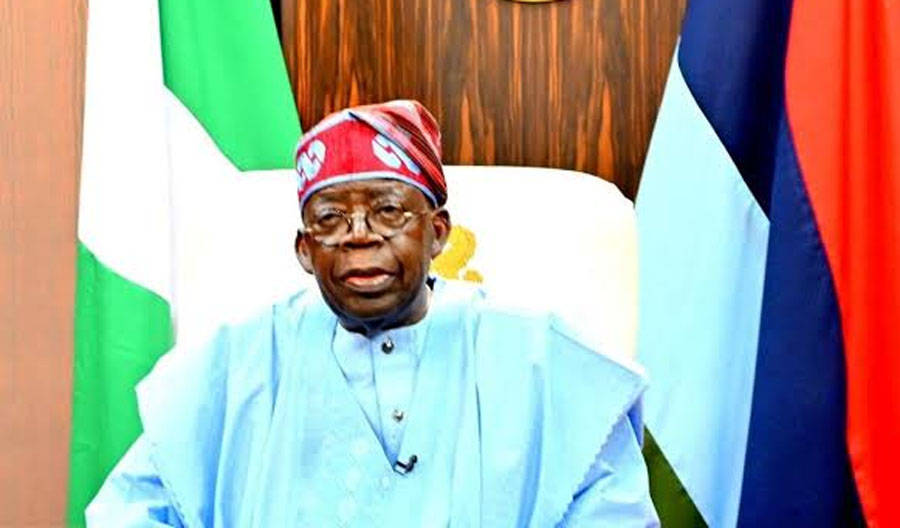
Tinubu Reveals How He Worked As Taxi Driver In US Before Becoming Nigeria’s President
President Bola Ahmed Tinubu has opened up about an aspect of his life in the United States, revealing that he once worked as a taxi driver while struggling to make ends meet before rising to political prominence in Nigeria.
The revelation offers a glimpse into the Nigerian leader’s experiences abroad and how his personal journey has influenced his views on education, financial independence and opportunities for young people.
Tinubu reportedly made the disclosure while explaining the thinking behind his administration’s student loan programme, drawing from his experiences during his years in the United States.
Long before becoming Lagos State governor and eventually President of Nigeria, Tinubu spent part of his life in the United States, where he reportedly engaged in different activities to sustain himself.
Among the experiences he recalled was working as a taxi driver, including operating what was described as a gypsy cab.
The experience, according to the account, exposed him to the realities of struggling to earn a living and the determination required to overcome financial difficulties in a foreign country.
His disclosure has brought renewed attention to his personal history, particularly the challenges he encountered before establishing himself in Nigeria’s political landscape.
Tinubu’s reference to his experience abroad also provided an insight into his administration’s justification for introducing the Nigerian Education Loan Fund (NELFUND), which provides financial assistance to eligible students in tertiary institutions.
The programme is designed to help students from financially disadvantaged backgrounds access higher education without being prevented by their families’ economic circumstances.
By linking his personal experiences to the initiative, the President appeared to emphasise the importance of creating opportunities for young Nigerians to pursue their educational ambitions despite financial limitations.
The student loan scheme has remained one of the major education initiatives of his administration, although its implementation and repayment arrangements have generated public discussions.
The disclosure has generated interest because it offers another perspective on the personal journey of a president whose political career has largely been associated with elite political circles and high-level governance.
For some observers, his account highlights the struggles that can precede success, while also drawing attention to the importance of education, hard work and access to opportunities.
Tinubu’s journey from his reported experience as a taxi driver in the United States to Nigeria’s highest political office represents a remarkable chapter in his personal and political history.
However, his remarks have also renewed conversations about how personal experiences of hardship should translate into policies that address the economic challenges facing ordinary Nigerians, particularly students and young people.
Tinubu Reveals How He Worked As Taxi Driver In US Before Becoming Nigeria’s President
-

 Sports2 days ago
Super Falcons Receive $100,000 Each as Tinubu Finally Fulfils WAFCON Pledge
-
 Politics2 days ago
APC Dumps Adeleke’s Campaign Structure, Unveils Separate 168-Member Council in Osun
-

 metro2 days ago
Three Homeless Men Shot Dead in Midnight Attack at Lagos Bus Stop
-

 metro3 days ago
Court Orders 18-Year-Old Fraudster To Pay ₦1.2m Over $800 Lottery Scam
-

 metro3 days ago
Contempt: Court Orders Arrest, Remands Lagos NURTW Chairman Sego, Secretary in Kirikiri
-
 metro3 days ago
Gunmen Intercept Family Car, Abduct Woman, Two Children, Release Husband in Abuja
-

 News3 days ago
Tinubu Approves SUVs for FCT Traditional Rulers, Four Buses for Youths, says Wike
-
 News3 days ago
I Believe God Has Answered My Prayer, Says Tinubu After Entering Holy Ka’abah