

metro
Lagos policeman caught smoking weed, IGP orders probe
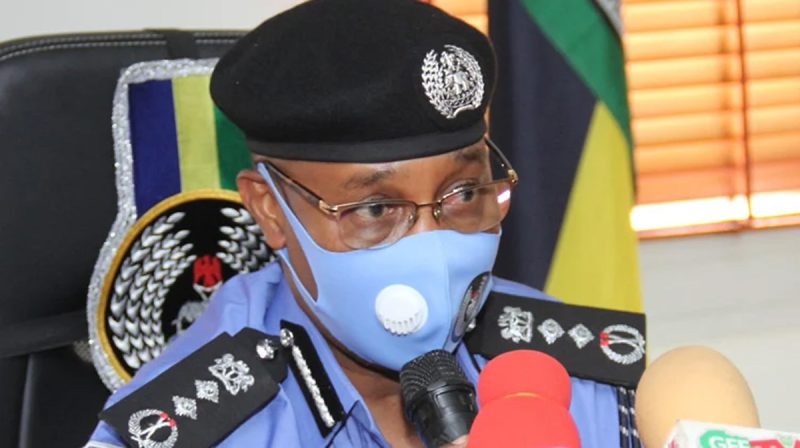
The Inspector-General of Police, Usman Baba, has ordered an investigation to unravel the identity of an officer captured smoking weed in public in the Ijora area of Lagos State.
Sunday PUNCH gathered that the picture, which was taken by a concerned fellow, was posted online.
The post which went viral was reposted by Instablog on Instagram.
A message attached to the post read, “Nigerian police officer at Ijora Lagos smoking weed on duty.”
READ ALSO:
- NRC clarifes Osun railway land dispute, accuses mischief makers of incitement
- Days after auto crash, Jonathan visits injured security aide
- 2023 presidency: Amaechi joins race, says he’s on rescue mission
Reacting to the development, the acting Force Public Relations Officer, CSP Muyiwa Adejobi, while condemning the incident, said the IGP would take necessary disciplinary action against the errant policeman.
He noted that the Lagos State Police Command had been contacted to fish out the officer for appropriate sanction.
He said, “The police have commenced necessary action on this ugly scene. We have contacted the Lagos command to fish him out, name and shame him, and necessary disciplinary measures will be taken from the office of the IGP with immediate effect.
“This is condemned in its totality. It’s quite unfortunate that we can see an officer of the police, in uniform, degenerate to this level. We just kick against this to serve as a deterrent to others.”
PUNCH









metro
Terrorists Kill Muslim Worshippers, Village Head, Wife in Niger Attack, Burn Palace

Terrorists Kill Muslim Worshippers, Village Head, Wife in Niger Attack, Burn Palace
MINNA, Niger State — Terrorists have reportedly killed several Muslim worshippers, a village head and his wife during coordinated attacks on two communities in Borgu Local Government Area of Niger State, setting the traditional ruler’s palace ablaze and abducting an unspecified number of residents.
The deadly attacks, which occurred on Saturday, November 21, 2026, targeted Lumman-Ba’are and neighbouring Gada-Oli, also known as Gadan Oli, leaving several residents dead, homes destroyed and many others fleeing for safety.
The first assault reportedly occurred at about 5:00 a.m. when heavily armed gunmen stormed Lumman-Ba’are and opened fire on Muslim worshippers observing their early morning prayers.
The attackers reportedly shot dead the village head and his wife before setting the traditional ruler’s palace on fire. Several other residents were also killed, while an unspecified number of people were abducted.
A community source disclosed that the attackers struck while residents were gathered for their obligatory dawn prayers, shooting indiscriminately at people in the community.
The source put the death toll at 11, adding that children were among those killed in the attack. The incident reportedly triggered panic, forcing scores of residents to abandon their homes and flee to neighbouring communities for safety.
The violence reportedly spread to Gada-Oli later in the afternoon, around 2:00 p.m., when the gunmen launched another assault on the neighbouring community.
According to local accounts, the attackers struck while Muslim residents were observing their afternoon prayers, opening fire on worshippers and other villagers without regard for age or gender.
Several houses were reportedly set ablaze during the afternoon raid, although the exact number of people killed or injured in the attack had yet to be established as of the time of filing this report.
Following the attacks, the bodies of the slain village head and his wife were evacuated to New Bussa, the administrative headquarters of Borgu Local Government Area, where they were subsequently buried.
Confirming the Lumman-Ba’are attack, the spokesperson for the Niger State Police Command, SP Wasiu Abiodun, said the police received a distress report about the invasion at approximately 5:00 a.m. on Saturday.
Abiodun, however, gave an initial casualty figure of five, lower than the 11 deaths reported by community sources.
In a statement, the police spokesperson said: “On 21/11/2026 at about 5:00 a.m., a report received indicated that suspected armed men invaded Lumman-Ba’are village, Borgu LGA, and attacked the community, while about five persons reportedly lost their lives during the attack.”
He explained that joint security teams had been deployed to the affected community to restore normalcy and track down those responsible for the killings.
“Joint security teams have been deployed to the location, and efforts to apprehend the suspected perpetrators are ongoing. Further developments will be communicated,” Abiodun stated.
However, the police had yet to provide further details on the reported afternoon attack on Gada-Oli, the alleged burning of several houses or the number of residents abducted during the coordinated raids.
The discrepancy between the casualty figures provided by community sources and the police also leaves the actual death toll uncertain, as security authorities continue efforts to establish the full extent of the attacks.
Terrorists Kill Muslim Worshippers, Village Head, Wife in Niger Attack, Burn Palace
SEO meta title: Terrorists Kill Muslim Worshippers, Village Head in Niger Attack
Meta description: Terrorists reportedly kill Muslim worshippers, a village head and his wife in Borgu, Niger State, burn a palace and abduct residents in fresh attacks.
Focus keyphrase: Terrorists kill Muslim worshippers in Niger State
Suggested tags: Niger State attacks, Borgu LGA, Muslim worshippers killed, Lumman-Ba’are, Gada-Oli, terrorism in Nigeria, village head killed.
Editorial note: The headline is dramatic while retaining the central facts. The report also clearly distinguishes the community’s claim of 11 deaths from the police’s initial figure of five to avoid presenting an unverified casualty figure as established fact.
metro
Yobe: Soldiers Feared Dead, Several Injured In Military Vehicle Crash
Yobe: Soldiers Feared Dead, Several Injured In Military Vehicle Crash
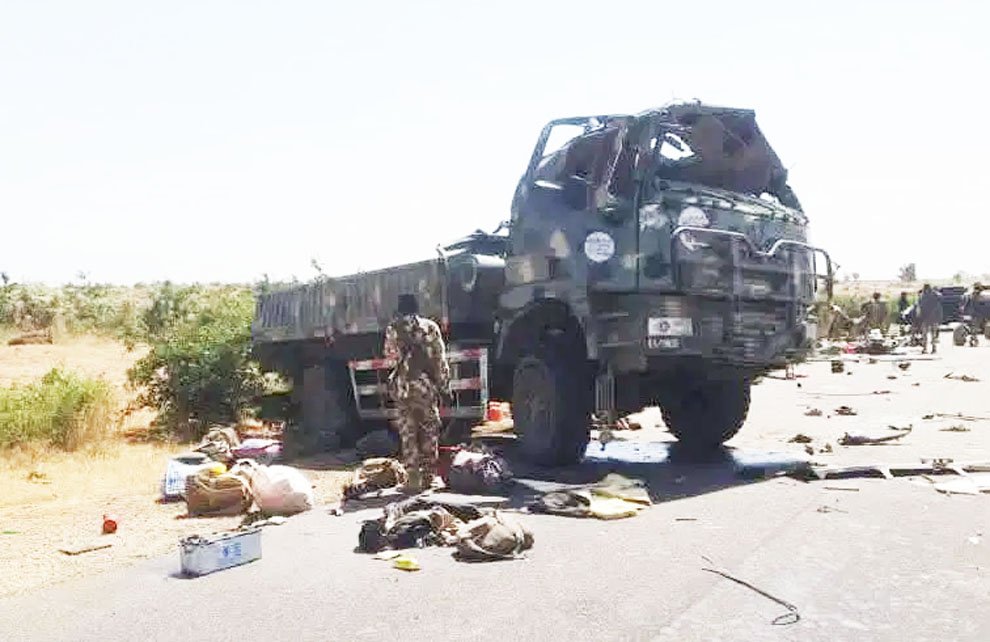
Several soldiers are feared dead while others sustained injuries following a road accident involving a military vehicle in Yobe State, northeastern Nigeria.
The accident reportedly occurred on Friday, November 20, at Garin Malam Adamu, near Buni Yadi, the headquarters of Gujba Local Government Area.
Reports said the soldiers were travelling from Buni Yadi to Damaturu, the state capital, when the military vehicle crashed.
READ ALSO:
- Gombe: Three Killed, 13 Injured as Alleged Military Shooting Sparks Outcry
- Jimmy Odukoya Sues Sister, Church Trustees Over Removal as Senior Pastor
- UNILAG Gets 10 CNG Buses as FG Expands Campus Transport Scheme to 60 Institutions
The injured personnel and other victims were reportedly evacuated to the Yobe State University Teaching Hospital in Damaturu for medical attention.
Although the exact number of soldiers killed or injured has not been officially established, preliminary reports attributed the accident to the poor condition of the road where the incident occurred.
Military authorities had yet to officially confirm the crash or disclose the casualty figures as of the time of reporting.
The circumstances surrounding the accident remain unclear, with further details expected from the military and relevant authorities.
Yobe: Soldiers Feared Dead, Several Injured In Military Vehicle Crash
metro
Illegal Gun Factories: Why Nigeria Cannot Stop Arms Proliferation
Illegal Gun Factories: Why Nigeria Cannot Stop Arms Proliferation
The discovery of another clandestine firearms manufacturing workshop in Kaduna State has once again exposed a disturbing dimension of Nigeria’s worsening security crisis: the underground industry supplying weapons to the criminal networks and armed groups responsible for violence across the country.
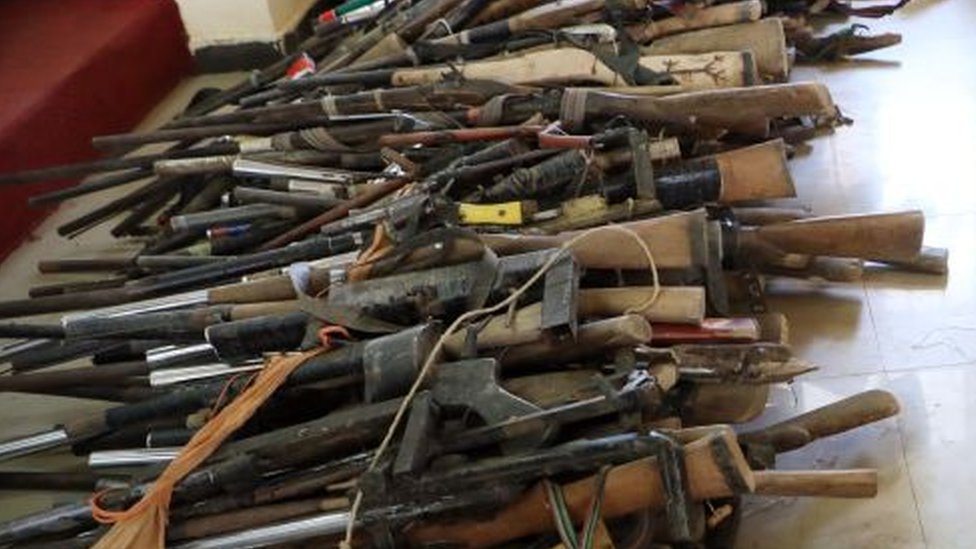
Operatives of the National Drug Law Enforcement Agency (NDLEA), acting on intelligence, recently uncovered the facility at Sabon Garin Kangin, in Igabi Local Government Area of Kaduna State, arresting a 45-year-old suspect, Sagiru Musa, and recovering 17 locally manufactured Dane guns, two pistols, 25 gun pipes and other equipment used in illegal firearms production.
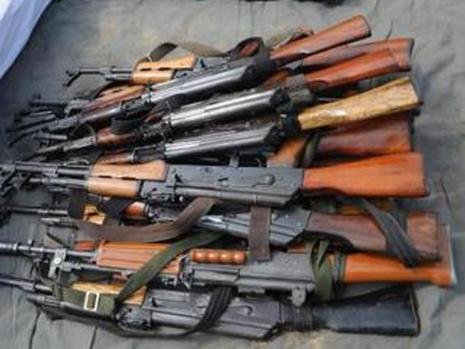
The operation came amid other security discoveries involving live AK-47 ammunition and substantial quantities of illicit drugs. NDLEA Chairman, Brigadier-General Mohamed Buba Marwa (retd.), has repeatedly drawn attention to the connection between drug trafficking, substance abuse and violent criminal activities.
While the Kaduna operation deserves commendation, its significance extends beyond the weapons recovered and the suspect arrested. It raises a more troubling question: why do illegal firearms manufacturing facilities continue to emerge despite years of security raids, arrests and weapons seizures?
The answer lies in a pattern that has repeatedly surfaced across Kaduna, Plateau and other parts of the North-Central region. These discoveries are not isolated incidents but evidence of an underground arms economy sustained by insecurity, criminal demand, economic desperation and weaknesses in law enforcement.
In September 2023, troops of Operation Safe Haven uncovered a major illegal firearms manufacturing facility in Kafanchan, Jema’a Local Government Area of Kaduna State. The operation led to the recovery of locally fabricated weapons, military-grade rifles, pistols, revolvers, ammunition and equipment used in manufacturing firearms. Investigations reportedly revealed that the facility had supplied weapons to customers in Kaduna and neighbouring Plateau State for several years.
In July 2025, another operation in Giroji Village, Makarfi Local Government Area of Kaduna State, resulted in the arrest of four suspects, two of whom were reportedly caught actively fabricating firearms.
Plateau State has equally witnessed repeated discoveries of illegal weapons manufacturing facilities, particularly around Vom in Jos South, Heipang in Barkin Ladi and Mangu. Operations in these communities have yielded locally fabricated Dane guns, pistols, unfinished AK-47 components and other weapons manufacturing equipment.
A March 2026 investigation further highlighted the scale of the problem, reporting that Plateau accounted for seven of approximately 18 reported raids on illegal gun factories nationwide since 2019, the highest number attributed to any state in the investigation.
The situation became even more revealing in June 2026 when senior military officers of Operation Enduring Peace disclosed that some arrested firearms fabricators initially claimed they were manufacturing weapons for communal self-defence but later admitted selling them to Fulani militias because the buyers offered higher prices.
That disclosure exposes the commercial character of the illegal arms trade. It demonstrates how weapons produced under the justification of community protection can eventually find their way into the hands of groups whose activities may threaten the very communities they claim to defend.
Indeed, most of these illegal facilities are not sophisticated industrial factories. They are often ordinary workshops operated by blacksmiths, welders and other skilled artisans who have diverted their technical abilities towards producing firearms. Iron pipes, gas cylinders, filing machines, welding sets and other readily available materials can be converted into instruments of violence.
The skills themselves are not the problem. Blacksmithing and metalworking remain legitimate occupations that support livelihoods and local economic activities. The danger emerges when these skills are redirected towards illegal weapons production and connected to an expanding network of buyers, distributors and criminal intermediaries.
Demand remains the principal driving force. Banditry, kidnapping, communal violence, armed militias and the growing perception of inadequate security have created a market for locally manufactured firearms. In communities repeatedly exposed to attacks, some residents may see acquiring weapons as a necessary means of protecting themselves and their families.
But this creates a dangerous cycle. Weapons purchased for protection can be sold, stolen, captured or diverted into criminal networks. The market does not distinguish between those who claim to be defending their communities and those seeking to attack others. It responds to money, opportunity and demand.
Economic desperation also plays a significant role. For unemployed youths and struggling artisans, illegal weapons production may appear more financially rewarding than legitimate metalwork. When criminal buyers are willing to pay higher prices, the temptation to abandon lawful production for an illegal but lucrative business becomes stronger.
This is why repeated security raids, although necessary, have not provided a lasting solution. Arresting a manufacturer and dismantling a workshop may disrupt production temporarily, but it does not automatically eliminate the customers, financiers, distributors and wider networks sustaining the business. Another workshop can emerge elsewhere, often with different operators but serving the same market.
The security response must therefore move beyond the announcement of arrests and recovered weapons. Nigerians deserve to know what happens to suspects after their arrest, whether investigations lead to prosecution, how many convictions are secured and whether the wider criminal networks behind the facilities are successfully dismantled.
Without transparent prosecution and sustained investigations, the deterrent effect of security operations may remain limited. Arrests that do not lead to credible trials can deepen public cynicism and create the impression that illegal weapons manufacturing is a business that can be resumed once the immediate security pressure subsides.
The problem also raises a fundamental question about the authority and responsibility of the Nigerian state. German sociologist Max Weber famously defined the state by its successful claim to the monopoly of the legitimate use of physical force within a given territory. The principle suggests that the responsibility for maintaining security and regulating the legitimate use of force rests primarily with the state.
Where private individuals and organised groups increasingly manufacture and circulate firearms outside the law, that authority comes under serious pressure.
It is important, however, not to dismiss the fears of communities that have repeatedly suffered attacks. Residents who feel abandoned by the authorities may regard locally acquired firearms as instruments of survival rather than criminal enterprise. Their concerns deserve attention, particularly where longstanding communal grievances and insecurity have remained unresolved.
Nevertheless, uncontrolled private weapons production cannot become an alternative security arrangement. What begins as an attempt at self-defence can escalate into an arms race, reprisals and further bloodshed. A society in which competing groups independently manufacture and acquire weapons risks deepening the insecurity it seeks to escape.
Nigeria must therefore confront both the supply and demand sides of the illegal arms economy. Security agencies should strengthen intelligence gathering, investigate the financial and distribution networks behind illegal firearms production and ensure that those responsible are prosecuted. Investigations must not stop with workshop operators when evidence points to financiers, suppliers and major buyers.
At the same time, the government needs a clearer regulatory framework for traditional metalworking activities. Legitimate artisans should not be criminalised because of the illegal activities of a few, but appropriate licensing, monitoring and inspection mechanisms could help identify suspicious production activities. Such measures should be accompanied by vocational support and alternative livelihood programmes for vulnerable artisans and unemployed youths.
More importantly, the government must address the insecurity creating the demand for these weapons. Communities cannot be expected to abandon the desire for self-protection if attacks, kidnappings and communal violence continue without effective intervention. Security agencies must improve protection for vulnerable communities, while governments must ensure that victims receive justice and perpetrators are held accountable.
Inter-agency cooperation must also become more systematic. The NDLEA, police, military, Department of State Services and other relevant institutions need to share intelligence and investigate the connections between illicit drugs, arms trafficking, organised crime and violent groups. The relationship between drugs and weapons trafficking should not be treated as an occasional discovery but as part of a broader criminal economy requiring coordinated intervention.
Ultimately, the latest discovery in Kaduna should not be celebrated merely as another successful raid. It should serve as a reminder that Nigeria’s firearms proliferation problem remains unresolved. Security agencies have demonstrated that they can locate and dismantle illegal manufacturing facilities. The greater challenge is preventing new ones from emerging.
The country’s security crisis is not sustained by gunmen alone. Behind the violence is an underground economy that manufactures, finances, distributes and supplies the weapons used against innocent citizens. Until that economy is dismantled and the conditions sustaining it are addressed, every successful raid will remain a temporary victory against a problem that continues to regenerate.
Nigeria must move beyond counting recovered guns and arrested suspects to confronting the networks, economic incentives and governance failures that keep the illegal arms trade alive. That is the difference between winning individual security operations and securing the country.
Illegal Gun Factories: Why Nigeria Cannot Stop Arms Proliferation
-

 metro2 days ago
FG’s ₦100,000 Family Grant: Eligibility, How to Apply and Payment Procedure Revealed
-

 Sports2 days ago
Ex-Super Eagles Captain Segun Odegbami Survives Death as Three Assailants Machete Him in Abeokuta Home
-

 Business3 days ago
NNPCL, MRS, Other Marketers Slash Petrol Prices Across Nigeria As Motorists Get Fresh Relief
-

 metro2 days ago
Cleveland Girl, 11, Gets 7-Year Juvenile Sentence Over Rape, Attempted Murder of 5-Year-Old
-

 News3 days ago
Agunbiade Proposes Council of Grand Chief Imams for Yorubaland, Edo, Delta
-

 metro1 day ago
Hoodlums Descend on Tinubu’s Praise Singer Rarara at Abuja Mosque, Tear His Clothes
-

 metro2 days ago
Honesty Cost Lagos Taxi Driver His Job, Marriage After Returning ₦21,000 Passenger Left in His Cab
-

 metro3 days ago
‘My Wife and I Are Parallel’: Peter Obi Makes Candid Revelation About Margaret’s Spending Habits