

Politics
2023 presidency: APC northern govs disagree with national chairman, insist on southern candidate

Northern Governors of the All Progressives Congress, on Monday insisted the party should zone its presidential ticket to the South.
They stated this after meeting with President Muhammadu Buhari at the Presidential Villa, Abuja, on the issue.
This is coming after the party’s National Chairman, Senator Abdullahi Adamu, had reportedly announced the incumbent Senate President Ahmed Lawan as the consensus presidential candidate of the APC, less than 24 hours to the primary election in Abuja.
The governors in attendance during the meeting with the President are Abubakar Bagudu of Kebbi, Simon Lalong of Plateau, Abubakar Badaru of Jigawa, Aminu Masari of Katsina, Abdullahi Sule of Nasarawa, Bello Matawalle of Zamfara, Abdullahi Ganduje of Kano, Abubakar Bello of Niger, Yahaya Inuwa of Gombe, Babagana Zulum of Borno, Nasir El-Rufai of Kaduna and AbdulRahman Abdulrazaq of Kwara.
The northern governors had after their meeting Saturday night asked the party to zone its presidential ticket to the South.
They also asked aspirants from the northern region to withdraw. These include their Kogi State counterpart, Governor Yahaya Bello, who is also vying for the party’s Presidential ticket.
READ ALSO:
- Breaking! Finally, Presidency Replies Tinubu Over Abeokuta Comments on Buhari
- JUST IN: APC NWC members divided over announcement of Lawan as consensus candidate
- Breaking: Buhari Meets Northern Governors debunks claim on consensus Candidate
According to a communiqué signed after the meeting, the governors said, “After a careful deliberation, we wish to state our firm conviction that after eight years in the office of President Muhammadu Buhari, the presidential candidate of the APC for the 2023 elections should be one of our teeming members from the southern states of Nigeria.
“It is a question of honour for the APC, an obligation that is not in any way affected by the decisions taken by another political party.”
Speaking on behalf of the governors, Simon Lalong of Plateau State regretted that the communiqué from the meeting got leaked to the public before they officially informed the President of their resolution.
He, however, noted that the governors had to inform the President in person as part of last-minute preparations for tomorrow’s primary elections.
Asked why their Kogi State counterpart, Bello, was absent from the meeting, Governor El-Rufai (of Kaduna) said it was not compulsory for all 14 of them to agree on the southern ticket.
He said Bello had excused himself from the meeting with the President because he rejected the resolution made by the governors.


Politics
Trouble in ADC as Momodu, South-West Leaders Raise Alarm Over Atiku Campaign

Trouble in ADC as Momodu, South-West Leaders Raise Alarm Over Atiku Campaign
Fresh cracks have emerged within the African Democratic Congress (ADC) over the management of the 2027 presidential campaign of former Vice-President Atiku Abubakar, following allegations that influential party leaders and key members of his campaign team are being sidelined.
Those reportedly affected include veteran journalist and publisher Dele Momodu, who was appointed Deputy Director-General in charge of Media and Communications of the ADC Presidential Campaign Council, as well as some South-West party leaders who have accused Atiku of relying on personal associates rather than established party structures.
The development has reportedly generated discontent within the opposition party, raising questions about internal coordination, leadership relations and the effectiveness of the campaign machinery ahead of the 2027 general election.
Momodu’s reported marginalisation has particularly exposed divisions within the campaign council’s media directorate, where disagreements over responsibilities and control of publicity activities are said to have created competing centres of influence.
When Atiku unveiled his presidential campaign council on September 24, Momodu was named Deputy Director-General in charge of Media and Communications.
Former Peoples Democratic Party (PDP) National Publicity Secretary, Kola Ologbondiyan, was appointed Director of Media and Publicity, while Phrank Shaibu, Atiku’s Senior Special Assistant on Public Communication, was named Director of Strategic Communications.
Other members of the media team include Ladan Salihu, who oversees Branding; Moji Rhodes-Vvour, responsible for Digital and Online Media; and David Iyofor, who handles Content Development.
Kenneth Okonkwo, Keturah King and Nana Kazure were also appointed as spokespersons.
READ ALSO:
- Iran Unveils ‘We Will Kill Trump’ Billboard in Tehran Amid Rising Tensions With US
- Tinubu’s Re-election: Osun APC Leaders Reject Oyebamiji-Led Campaign Council
- Tragedy: Spanish Footballer Jesús de Miguel Dies at 30 After On-Field Collision
However, reports indicate that the arrangement has not translated into a coordinated media operation, with Ologbondiyan and Shaibu allegedly running separate publicity activities without adequately involving Momodu.
Sources within the campaign reportedly claimed that Momodu had been excluded from important strategy meetings, press operations and key decisions, despite his position as head of the media and communications directorate.
The disagreement is said to have created two competing camps within the media team, with Momodu reportedly on one side and Ologbondiyan and Shaibu on the other.
The latest indication of the alleged division emerged on Tuesday, November 3, when Atiku addressed a press conference in Abuja to announce the commencement of his presidential campaign.
Momodu and the ADC National Publicity Secretary, Mallam Bolaji Abdullahi, were reportedly absent from the event, while Shaibu was said to have coordinated the media engagement.
The event was reportedly the third press conference organised by Atiku without Momodu’s presence, further fuelling speculation about the veteran journalist’s influence within the campaign structure.
Momodu, who also played a media role in Atiku’s 2023 presidential campaign under the PDP, reportedly returned to Lagos after attending the inauguration of the campaign council on October 9.
His absence from subsequent major media engagements has raised questions about whether he has been able to exercise the responsibilities attached to his appointment.
Efforts to obtain his reaction to the reported disagreements were unsuccessful, according to media reports.
Beyond the disagreements within the media directorate, Atiku is also facing complaints from some ADC leaders in the South-West, who have accused him of marginalising the party’s existing structures in the region.
Some state chairmen and governorship candidates reportedly expressed dissatisfaction with the former Vice-President’s approach to political engagements, alleging that he had been conducting activities through personal friends and loyalists while leaving recognised party officials on the sidelines.
The complaints were reportedly raised at a meeting held in Ibadan, Oyo State, on September 4, where some South-West ADC leaders approached the party’s National Secretary, Rauf Aregbesola, to seek clarification on Atiku’s relationship with the party’s regional structures.
According to reports, the aggrieved leaders insisted that the presidential candidate should channel his political activities through established party structures rather than relying mainly on personal associates.
One of the governorship candidates who reportedly attended the meeting said almost all the ADC leaders present expressed dissatisfaction with what they described as their exclusion from Atiku’s political activities.
The leaders were also said to have complained about the slow pace of campaign mobilisation in the region, attributing the situation partly to the lack of adequate engagement with party officials.
Some reportedly questioned why state party chairmen were not being sufficiently carried along in the organisation of campaign activities.
The Chairman of the ADC Local Government Chairmen in Lagos State, Adewole Ijaogbomo, also reportedly accused some individuals of taking control of Atiku’s campaign activities in the state while established party leaders were being excluded.
He urged the former Vice-President to address the situation, warning that the alleged marginalisation could undermine the party’s mobilisation efforts.
However, Atiku’s camp has rejected allegations that the presidential candidate is deliberately sidelining ADC leaders.
His Director of Strategic Communications, Phrank Shaibu, described the claims as unfounded, arguing that state campaign coordinators and their respective councils had not yet been announced or inaugurated.
According to him, it was therefore premature to accuse the presidential candidate of excluding state executives from campaign structures that had not been formally constituted.
Shaibu maintained that Atiku respects the party’s leadership, members and established structures, describing suggestions that he was conducting political activities outside the party framework as opposition conjecture.
The ADC National Publicity Secretary, Bolaji Abdullahi, has also defended the party’s campaign arrangements, explaining that national party officers do not necessarily have to be appointed into the presidential campaign council.
Abdullahi said party officials had responsibilities beyond the presidential campaign and could support the candidate without holding positions in the campaign council.
He gave the explanation amid questions over the absence of Aregbesola and other senior party officials from the published campaign council list.
The ADC South-West leadership has also pushed back against suggestions that the reported disagreements represent a broader institutional crisis within the party.
The controversy comes as Atiku seeks to consolidate the ADC’s political structures and build a formidable opposition platform capable of challenging President Bola Ahmed Tinubu and the ruling All Progressives Congress (APC) in the 2027 presidential election.
The South-West is considered a strategically important region in the contest, particularly because of Tinubu’s political influence in the zone.
With allegations of internal divisions emerging in both the campaign’s media operations and regional political structures, the ability of Atiku and the ADC leadership to resolve grievances and establish a coordinated campaign machinery could prove crucial to their electoral ambitions.
Trouble in ADC as Momodu, South-West Leaders Raise Alarm Over Atiku Campaign
Politics
2027: Obasanjo’s Son Joins Tinubu’s Re-Election Movement, Reveals 12-Year APC Loyalty
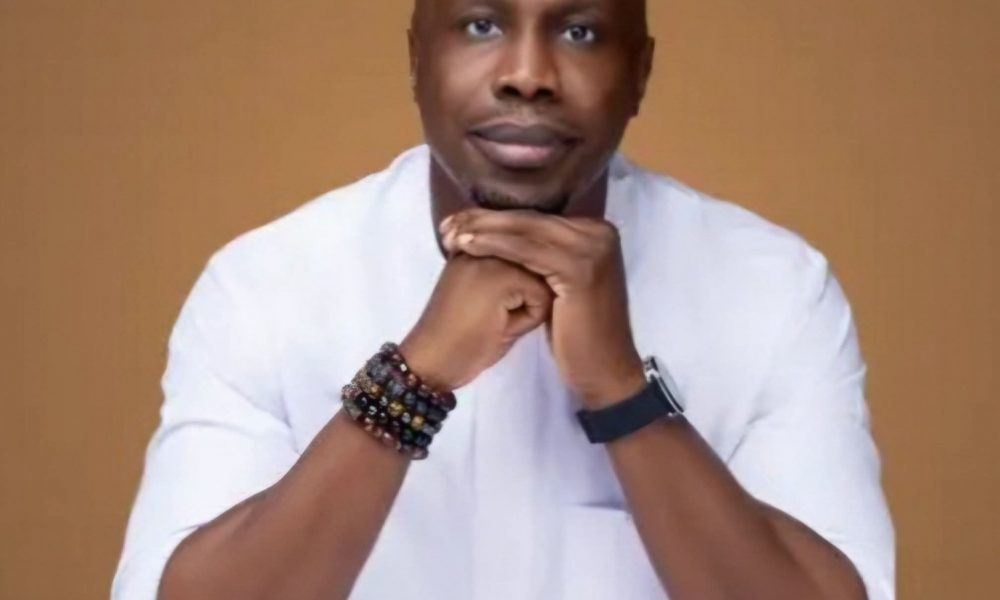
2027: Obasanjo’s Son Joins Tinubu’s Re-Election Movement, Reveals 12-Year APC Loyalty
By Newstrends Political Desk
ABUJA — In a significant political development ahead of Nigeria’s 2027 presidential election, Hon. Olujuwon Obasanjo, son of former President Olusegun Obasanjo, has thrown his weight behind President Bola Ahmed Tinubu’s second-term ambition, joining a political mobilisation group campaigning for the President’s re-election.
The younger Obasanjo has been appointed Special Adviser on Political Affairs to the PBAT Door-to-Door Movement, an organisation established to mobilise grassroots support for Tinubu’s re-election bid.
His decision, which comes amid increasing political realignments ahead of the 2027 general elections, has attracted attention because of the political differences between his position and the widely reported opposition stance of his father towards the Tinubu administration.
Olujuwon announced his support for the President during a visit to the movement’s headquarters in Abuja on Wednesday, November 4, 2026, where he was received by the organisation’s National Coordinator, Comrade Sunday Adekanbi Asuku.
He was subsequently taken on a guided tour of the facility to familiarise himself with the movement’s organisational structure and operations.
Describing his appointment as an honour and privilege, the former president’s son commended the organisation for its grassroots mobilisation, community outreach programmes and efforts to promote the activities of the Tinubu administration.
He disclosed that he had been following the movement’s activities for some time and was impressed by its interventions across different communities.
According to him, he was prepared to contribute his experience and political knowledge towards advancing the organisation’s objectives and securing Tinubu’s re-election in 2027.
Explaining his decision to support the President, Olujuwon argued that Tinubu had started on a good note, insisting that Nigerians, particularly young people, should support the administration’s ongoing reforms to ensure continuity in governance.
He also identified salary payments, infrastructure development and investment opportunities as some of the areas where he believed the country had recorded progress.
He maintained that the achievements should be sustained, expressing confidence that continued support for Tinubu would enable the administration to consolidate its policies and deliver more dividends of democracy.
In another significant revelation, Olujuwon disclosed that he had been a member of the All Progressives Congress (APC) since 2014.
He also addressed the possibility of differing political interests within the Obasanjo family, explaining that members of his family were allowed to hold independent political views and pursue their political ambitions without hostility.
His declaration effectively underscored his decision to pursue a political path independent of his father’s political preferences.
Earlier, the National Coordinator of the PBAT Door-to-Door Movement, Sunday Adekanbi Asuku, welcomed Olujuwon into the organisation, describing him as an experienced political figure with a strong background in leadership and governance.
Asuku expressed optimism that the younger Obasanjo’s experience and understanding of political mobilisation would strengthen the movement and expand its activities across the country.
He said the organisation was delighted by Olujuwon’s decision to join, adding that his political experience would be valuable in advancing its objectives and strengthening its nationwide mobilisation efforts.
The development represents another political realignment ahead of the 2027 presidential contest, as supporters of Tinubu intensify efforts to build alliances and expand the President’s political support base.
With the former president’s son now openly backing Tinubu’s second-term ambition, attention is likely to focus on the political implications of his decision and what it signals about the growing diversity of political positions within prominent Nigerian political families.
2027: Obasanjo’s Son Joins Tinubu’s Re-Election Movement, Reveals 12-Year APC Loyalty
Politics
Appeal Court Upholds INEC’s Recognition of Wike-Backed PDP Leadership, Dismisses Turaki Faction’s Suit

Appeal Court Upholds INEC’s Recognition of Wike-Backed PDP Leadership, Dismisses Turaki Faction’s Suit
Abuja, Nigeria — The Court of Appeal in Abuja has delivered a significant judicial setback to the faction of the Peoples Democratic Party (PDP) led by Kabiru Tanimu Turaki, affirming the refusal of the Independent National Electoral Commission (INEC) to recognize the group’s Interim National Working Committee. In a unanimous judgment delivered on Wednesday, a three-member panel of the appellate court dismissed the appeal marked CA/ABJ/CV/1221/2026, which was filed by Senator Adolphus Wabara and seven others. The panel, presided over by Justice Ugochukwu Anthony Ogakwu, with Justices Laja Balogun and Ruquayat Oremei Ayoola, upheld the earlier decision of the Federal High Court in Abuja, which had declined to compel INEC to recognize the Turaki-led interim leadership.
The legal battle stems from the protracted leadership crisis that has rocked Nigeria’s main opposition party. The Turaki-led Interim National Working Committee was constituted following a National Executive Committee meeting held in the wake of a Supreme Court judgment on the party’s leadership dispute. However, the Wike-backed faction, which enjoys INEC’s recognition, has consistently challenged the legitimacy of the interim committee. The appellants had approached the appellate court seeking to set aside the Federal High Court judgment delivered by Justice Salim, which refused to compel INEC to recognize the interim committee. They argued that the party’s internal mechanisms had been exhausted and that the electoral body was bound to recognize the new leadership structure.
In its ruling on Wednesday, the Court of Appeal found no merit in the appeal, upholding the lower court’s decision in its entirety. The panel held that the appellants failed to establish a legal basis for compelling INEC to recognize a leadership structure that emerged outside the established constitutional framework of the party. The judgment reinforces the position of the Wike-backed leadership, which has maintained that only a leadership recognized by the courts and the electoral commission can lawfully run the affairs of the PDP.
Reacting to the judgment, the Turaki-led faction expressed disappointment but resolved to challenge the decision at the Supreme Court. In a statement issued on Wednesday by its National Publicity Secretary, Comrade Ini Ememobong, the group said it respected the court’s decision but remained committed to pursuing what it described as justice. “We are determined to take our quest for justice anchored on truth to the apex court in the land. It is our belief that no matter how deep the truth is buried, if those seeking it are persistent in digging, it will one day resurface,” the statement read. Ememobong disclosed that the group’s lawyers had been instructed to immediately commence the process of appealing the judgment before the Supreme Court. “We have instructed our lawyers to immediately file an appeal before the Supreme Court, in the hope that justice will eventually be done,” he added.
The faction also emphasized the importance of a strong opposition party to Nigeria’s democratic development, arguing that the PDP must remain an independent political force capable of holding the ruling party accountable. “The PDP, as the main opposition party, must provide a credible alternative to the ruling party and not become its appendage. Democracy survives only when the opposition is strong enough to effectively engage the government,” the statement added.
The latest ruling is another development in the prolonged leadership crisis rocking the PDP, which has been characterized by competing claims over the control of the party’s national leadership and structures. With the 2027 general elections approaching, the party’s ability to present a united front remains a critical challenge. The Turaki faction has urged party members to remain steadfast as the legal battle moves to the Supreme Court, expressing confidence that the eventual outcome would strengthen multiparty democracy in the country. As the case heads to the apex court, the PDP’s leadership tussle continues to test the resilience of Nigeria’s judicial system and the internal democratic processes of political parties.
Appeal Court Upholds INEC’s Recognition of Wike-Backed PDP Leadership, Dismisses Turaki Faction’s Suit
-

 Sports2 days ago
Super Falcons Receive $100,000 Each as Tinubu Finally Fulfils WAFCON Pledge
-
 Politics2 days ago
APC Dumps Adeleke’s Campaign Structure, Unveils Separate 168-Member Council in Osun
-

 metro2 days ago
Three Homeless Men Shot Dead in Midnight Attack at Lagos Bus Stop
-

 metro2 days ago
Oyo Boxer Stabbed to Death with Broken Bottle After Street Fight in Ibadan
-

 International2 days ago
Iran Unveils ‘We Will Kill Trump’ Billboard in Tehran Amid Rising Tensions With US
-

 Entertainment2 days ago
Ned Nwoko Breaks Silence on Regina Daniels’ Health, Warns Bloggers Over Fake Reports
-

 International2 days ago
US Strikes Iran’s Qeshm Island as Tensions Escalate Around Strait of Hormuz
-

 metro2 days ago
Terrorists Kill Five Police Officers in Deadly Convoy Ambush on Sokoto-Zamfara Highway