

Business
Remove VAT on diesel. MAN tells FG
The Manufacturers Association of Nigeria (MAN) has asked the Federal Government to remove the value added tax (VAT) on diesel as an instant stimulus for an immediate price reduction.
Segun Ajayi-Kadir, director-general, MAN, made the call in a statement issued on Saturday in Lagos.
The association also called on the federal government to avert the total shutdown of production operations, adding that industries were being converted to warehouses of imported goods and event centres.
“MAN is greatly concerned about the implications of the over 200 per cent increase in the price of diesel on the Nigerian economy and the manufacturing sector in particular,” the statement reads.
“More worrisome is the deafening silence from the public sector as regards the plight of manufacturers.
“As a matter of urgency, the government should address the challenge of repeated collapses of the national grid which is causing acute electricity shortage, especially for manufacturers.”
The group also urged the government to develop a response strategy to address challenges emanating from the armed conflict between Russia and Ukraine.
“In light of the gravity of the precarious situation that we have found ourselves as a nation and the looming dangers ahead, the expectations of manufacturers in Nigeria are as follows: that government should urgently allow manufacturers and independent petroleum products marketing companies to also import AGO (diesel) from the Republic of Niger and Chad by immediately opening up border posts in that axis to cushion the effect of the supply gap driven the high cost of AGO (Automotive Gas Oil),” it said.
The association also requested the government to “issue licences to manufacturing concerns and operators in the aviation industry to import diesel and aviation fuel directly to avert the avoidable monumental paralysis of manufacturing activities arising from total shut down of production operations and movement of persons for business activities”.
“More worrisome is the deafening silence from the public sector as regards the plight of manufacturers. Four obvious questions that readily come to mind that are seriously begging for answers are: What can we do as a nation to strengthen our economic absorbers from external shocks? Should manufacturing companies that are already battered with multiple taxes, poor access to foreign exchange, and now over 200 per cent increase in the price of diesel be advised to shut down operations? Should we fold our arms and allow the economy to slip into the valley of recession again? Is the nation well equipped to manage the resulting explosive inflation and unemployment rates?” it added.
It also implored the government to continue to support manufacturing to accelerate recovery from COVID-19 and previous bouts of recession.AN said this was to avert the complete shutdown of factories nationwide with a multiplier effect on employment.
The MAN also asked the federal government to “as a matter of priority develop a National Response and Sustainability Strategy (NRSS) to address challenges emanating from the ongoing invasion of Ukraine by Russia”.
The MAN also called on the government to “address the challenge of the repeated collapse of the national grid (twice within a week), which is causing acute electricity shortage in the country, especially for manufacturers”.
It demanded that the government should “remove VAT on AGO as an instant stimulus for an immediate price reduction and expedite action in reactivating or privatising the petroleum products refineries in the country”.
It also demanded that the government should “restrict the export of maize, cassava, wheat, food-related products and other manufacturing inputs available in the country; and grant concessional foreign exchange allocation at the official rate to manufacturers for the importation of productive inputs that are not locally available”.
The association represents over 3,000 manufacturers across 10 sectors, 76 sub-sectors, and 16 industrial zones.











Business
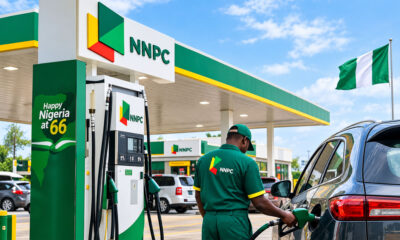
NNPC Petrol Discount: Motorists Must Download App to Save ₦66 Per Litre
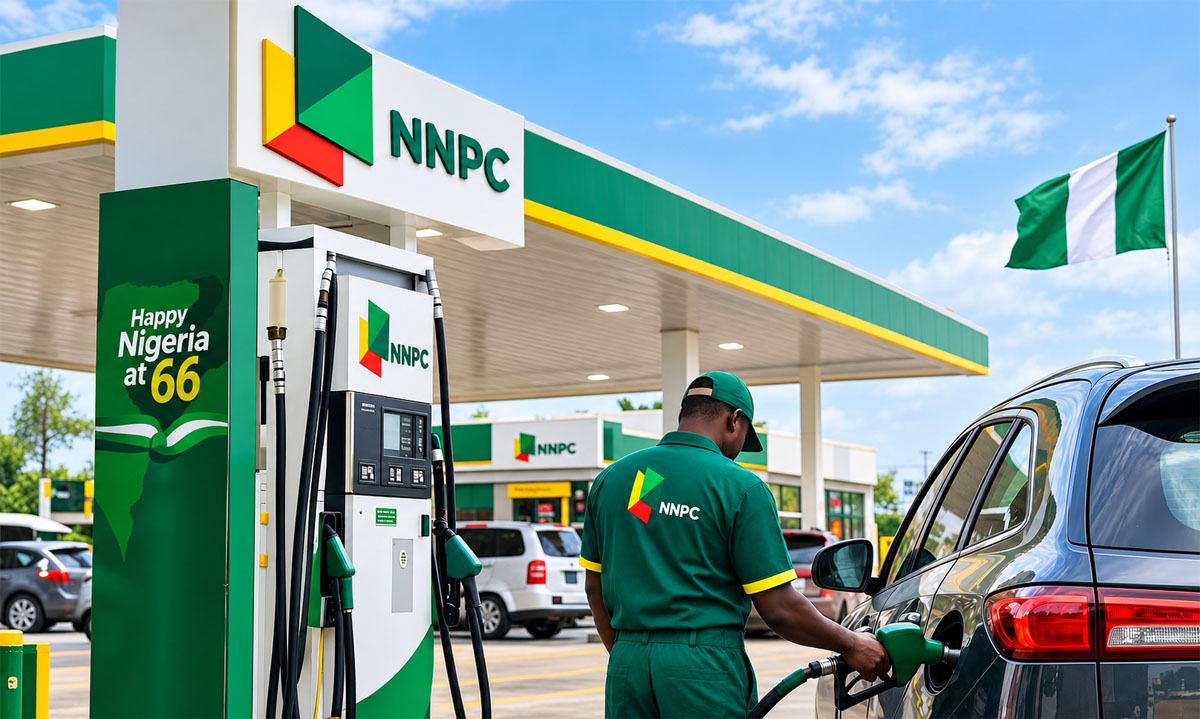
The Nigerian National Petroleum Company Limited (NNPC) has made access to its ₦66-per-litre petrol discount conditional on customers downloading its mobile application and paying digitally, meaning motorists who pay directly at the pump may have to pay the higher displayed price.
Checks at NNPC retail outlets in Abuja showed that petrol was selling for ₦1,405 per litre for customers paying directly at the pump, while motorists using the company’s mobile application paid ₦1,339 per litre, according to a report by Saturday PUNCH published on October 10, 2026.
The difference of ₦66 per litre means motorists must complete the required digital payment process to benefit from the discount. The price reduction is not automatically applied to customers paying directly at the pump.
A fuel attendant at the NNPC mega station along Obasanjo Way in Abuja reportedly confirmed that customers had to download the application and pay through it to qualify for the lower price. Similar arrangements were observed at other NNPC outlets in the Federal Capital Territory.
The payment condition has raised questions about access to the relief initiative, particularly for motorists who prefer cash transactions or do not have smartphones, reliable internet access or experience using mobile payment applications.
READ ALSO:
- Panama Earthquake: 27 Injured as Powerful 7.7-Magnitude Tremor Damages Hundreds of Buildings
- EFCC Wins ₦132m Money Laundering Case as Court Orders Forfeiture of Lagos Properties
- Hardship: ACF Gives Tinubu Three Months to Deliver Relief, Demands Clear Timelines
NNPC introduced the petrol discount on October 1, 2026, as part of activities marking Nigeria’s 66th Independence Anniversary. The company subsequently announced that the offer would continue until October 31, 2026, at its retail stations nationwide.
The company said the initiative was intended to provide temporary relief to households and businesses facing rising fuel costs amid increases in global crude oil prices linked to tensions and conflict in the Middle East.
The Federal Government also announced a 30-day relief measure under which NNPC Retail would forgo its retail profit margin and sell petrol at cost. Finance Minister and Coordinating Minister of the Economy, Taiwo Oyedele, said the intervention was designed to cushion the impact of rising fuel prices on Nigerians, particularly vulnerable households and commercial transport operators.
NNPC has maintained that the discount is a temporary relief measure and does not represent a return to the petrol subsidy regime.
However, requiring motorists to use a mobile application to access the price reduction means that customers’ ability to benefit depends on their access to and use of the approved digital payment channel.
For commercial drivers and other frequent petrol buyers, the difference could add up over time. A motorist purchasing 20 litres, for example, would save ₦1,320 at the discounted rate compared with the higher price reported at the Abuja outlets.
The discount also carries a financial cost for NNPC. According to Saturday PUNCH, the company could forgo an estimated ₦4.62 billion in gross revenue if its average monthly petrol sales qualified for the reduction.
The observed prices in Abuja do not necessarily represent the pump price at every NNPC station nationwide, as retail prices may vary by location and prevailing supply conditions.
Motorists intending to benefit from the offer before its scheduled end on October 31 should confirm the payment requirements at participating NNPC stations and ensure they are using the company’s approved application.
The initiative comes as Nigerians continue to face pressure from petrol prices and the resulting effects on transport fares, food distribution, household expenses and business operating costs.
NNPC Petrol Discount: Motorists Must Download App to Save ₦66 Per Litre
Business
Fitch Gives Tinubu Fresh Economic Boost as Nigeria’s Outlook Turns Positive
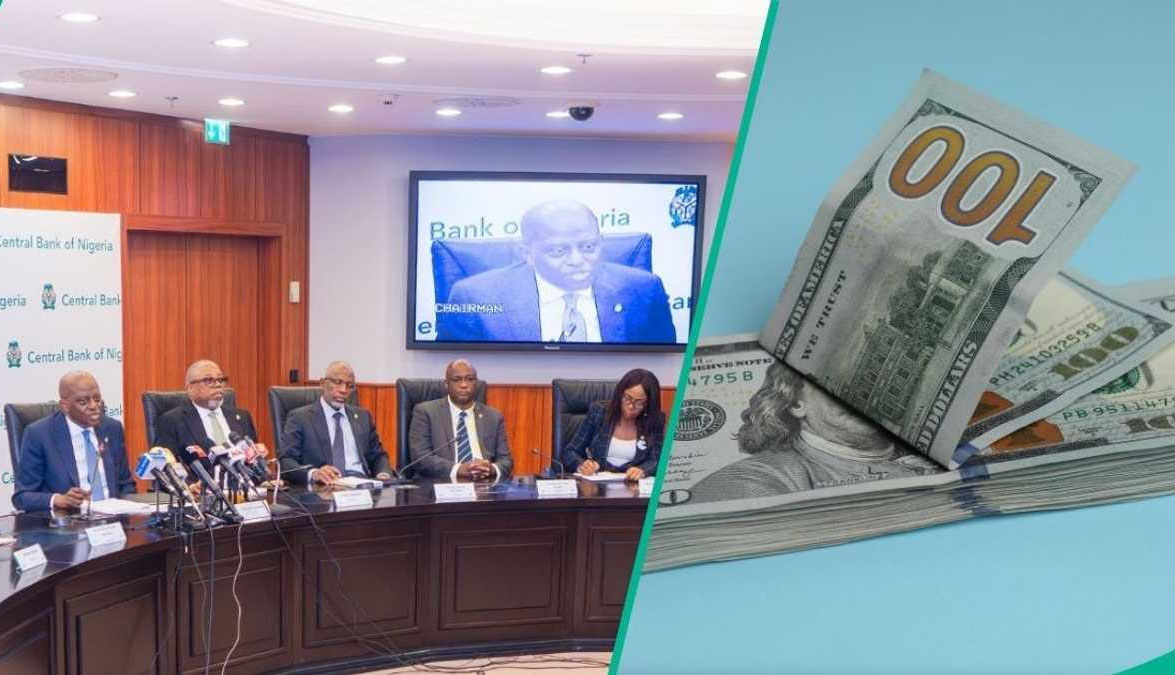
Fitch Ratings has revised Nigeria’s economic outlook from stable to positive, citing improvements in foreign exchange reserves, monetary policy, exchange rate reforms and moderating inflation under President Bola Ahmed Tinubu.
The international credit rating agency announced the decision on Friday, October 9, 2026, while affirming Nigeria’s long-term issuer default ratings at ‘B’. The revised outlook signals the possibility of a future credit rating upgrade if the country sustains its economic reforms and strengthens its financial position.
The Federal Government disclosed the development on Saturday through the Minister of Finance and Coordinating Minister of the Economy, Taiwo Oyedele, who described the assessment as an endorsement of the administration’s economic reform programme.
Fitch’s decision reflects growing confidence in Nigeria’s macroeconomic policy framework and external financial position. The agency also expressed confidence that the government would maintain its reform momentum despite the approach of the 2027 general elections.
One of the key factors behind the positive outlook is the significant improvement in Nigeria’s foreign exchange reserves, which reportedly reached $54.9 billion as of September 25, 2026, compared with approximately $32 billion in mid-April 2024.
Fitch attributed the increase to stronger activity in the formal foreign exchange market, portfolio investment inflows, higher export receipts and remittances from Nigerians living abroad.
The agency projected that Nigeria’s current account surplus would reach 6.4 per cent of gross domestic product (GDP) in 2026. It also expects foreign exchange reserves to cover approximately 6.3 months of current external payments by the end of the year, providing a stronger buffer against external economic shocks.
READ ALSO:
- Ronaldo Hits 980th Career Goal as Al-Nassr Win After Portugal Fallout
- Osun: Family Questions Police Suicide Claim After Man Dies in Cell
- ‘You Copied My Idea Poorly, Like a Dull Student’ – Atiku Fires at Tinubu Over Petrol Discount
Nigeria’s economic growth prospects also informed the revised outlook. Fitch forecast that the country’s real GDP would expand by 4.3 per cent in 2026, up from 4.0 per cent in 2025, with growth expected to remain above four per cent in 2027 and 2028.
The agency expects non-oil activities to remain a major driver of economic expansion, reflecting the importance of sectors beyond crude oil to Nigeria’s long-term economic prospects.
On inflation, Fitch projected average annual inflation of 15.4 per cent in 2026, significantly below the levels recorded in 2024. It attributed the expected moderation partly to greater stability in the naira and the effects of restrictive monetary policy.
However, the agency cautioned that inflation would remain high compared with countries with similar credit ratings, meaning that the cost of living and pressure on household budgets would continue to pose challenges.
Developments in the oil sector also contributed to the improved assessment. Fitch reported that crude oil production, excluding condensates, increased by 10 per cent quarter-on-quarter in the second quarter of 2026, while output reportedly met Nigeria’s OPEC target of 1.5 million barrels per day from May.
The expansion of domestic refining capacity, particularly the ramp-up of the Dangote refinery and the rehabilitation of other facilities, has also helped reduce reliance on imported refined petroleum products and associated foreign exchange demand.
The Federal Government attributed the improved outlook to major policy decisions introduced under Tinubu, including the removal of the petrol subsidy, foreign exchange market reforms and changes to the tax system.
Oyedele said the administration would continue implementing the reforms to reduce Nigeria’s cost of borrowing, attract private investment and encourage job creation.
The government also pledged to sustain a transparent, market-reflective foreign exchange regime, improve tax administration, strengthen debt management and increase non-oil revenue.
Despite the positive assessment, Fitch identified several risks that could limit Nigeria’s economic progress. These include weak governance indicators, dependence on hydrocarbons, persistent inflation, security challenges and low government revenue relative to the size of the economy.
The agency also projected that Nigeria’s general government fiscal deficit would widen to 3.6 per cent of GDP in 2026 amid spending pressures. Although tax reforms could improve revenue collection, implementation challenges may limit the gains.
Fitch forecast that general government debt would average 32 per cent of GDP between 2026 and 2028, below the 56 per cent median for countries in the ‘B’ rating category.
The positive outlook does not amount to an immediate upgrade of Nigeria’s credit rating. Rather, it indicates that Fitch could raise the rating in the future if economic reforms continue, macroeconomic stability improves and fiscal pressures ease.
The latest assessment follows other positive developments in Nigeria’s credit standing in 2026. S&P Global Ratings upgraded Nigeria’s rating from ‘B-’ to ‘B’ in May, while Moody’s Ratings revised its outlook on the country to positive in August, according to the Federal Government.
For the Tinubu administration, the latest Fitch decision provides an important boost to its economic reform agenda. However, the ultimate test will be whether improvements in economic indicators translate into tangible benefits for Nigerians through lower inflation, stronger purchasing power, increased employment and sustainable business growth.
Fitch Gives Tinubu Fresh Economic Boost as Nigeria’s Outlook Turns Positive
Auto
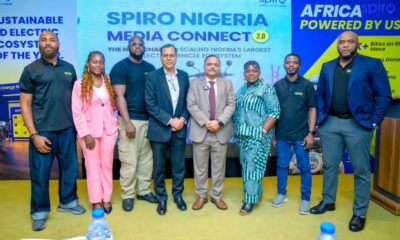
Electric Mobility: Spiro Unveils Expansion Plan, Names Nigeria New MD
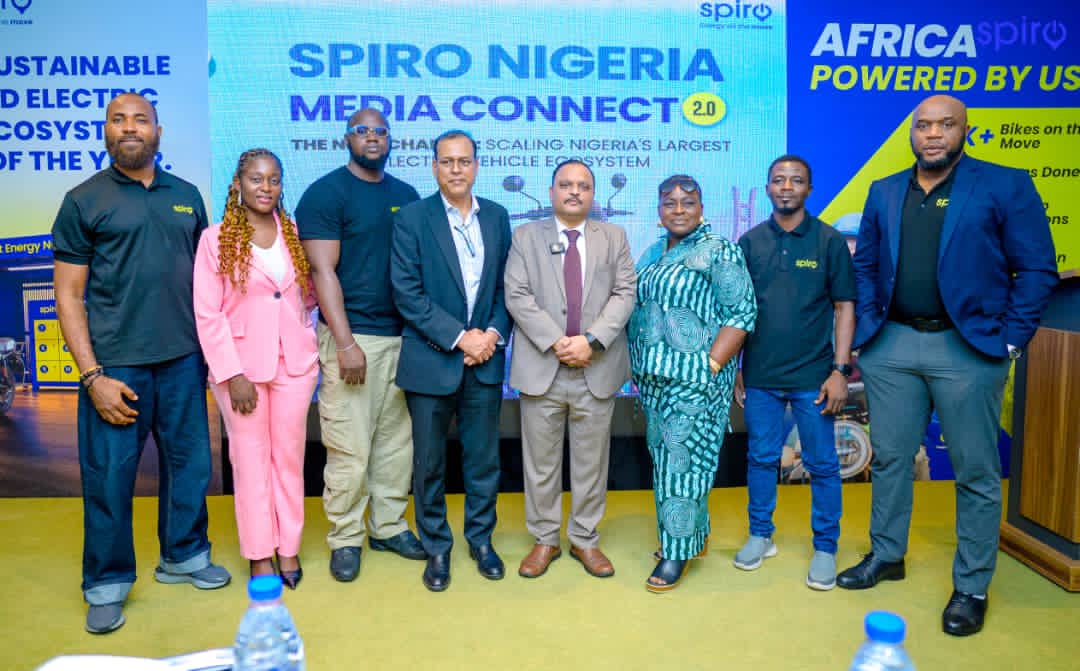
Electric Mobility: Spiro Unveils Expansion Plan, Names Nigeria New MD
Spiro, Africa’s leading electric mobility company, is stepping up plans to expand its footprint in Nigeria, strengthen its battery-swapping infrastructure and deepen partnerships to make electric motorcycles more accessible and affordable to riders.
The company unveiled the growth strategy at the second edition of its Media Connect event in Lagos, where it formally introduced its new Country Head and Managing Director, Mr Prasad Sane, who will lead its operations and expansion drive in the country.
Sane said Spiro would consolidate its presence in Lagos, Ogun and Oyo states while exploring opportunities to extend its operations to additional markets, as it seeks to accelerate Nigeria’s transition to cleaner and more sustainable transportation.
The event brought together journalists covering business, technology, mobility and sustainability to discuss the company’s progress, infrastructure development and long-term ambitions for Nigeria’s electric mobility market.
Addressing the gathering, Sane said the company was moving beyond the deployment of electric motorcycles to building an integrated mobility ecosystem designed to improve riders’ earnings, reduce operating costs and create economic opportunities.
“Today is about progress, partnership and purpose. A year ago, we shared our vision for electric mobility in Nigeria. Today, we are demonstrating tangible results and a clear path forward,” he said.
He added that his mandate was to make Spiro one of the most trusted, affordable and accessible electric mobility solutions for Nigerians, beginning with its existing focus markets.
“My mandate is simple: to make Spiro the most trusted, affordable and accessible electric mobility solution for Nigerians, beginning with Lagos, Ogun and Oyo states.
“We are moving beyond electric bikes to build a complete ecosystem centred on our promise of ‘Energy on the Move’,” Sane stated.
A major pillar of the company’s strategy is its battery-swapping technology, which allows riders to exchange depleted batteries for fully charged ones in under a minute, reducing downtime and eliminating the need to wait for conventional recharging.
According to Sane, the model offers riders an alternative to rising fuel and maintenance costs while supporting efforts to reduce carbon emissions and improve the economics of commercial motorcycle operations.
“Electric mobility is no longer the future. It is the present, and Nigeria is poised to lead the transition,” he said.
Under its expansion plan, Spiro intends to accelerate the deployment of battery-swapping stations and service centres across Lagos, Ogun and Oyo states to improve accessibility, operational efficiency and customer support.
The company also plans to extend its geographical reach beyond the three states, bringing its electric motorcycles and related services to more Nigerian markets.
Another priority is strengthening partnerships with financial institutions, logistics companies and rider communities to improve access to electric motorcycles and its Battery-as-a-Service solutions.
The approach is expected to support wider adoption by riders who may face financial barriers to acquiring electric motorcycles outright, while helping businesses explore cleaner and potentially more cost-effective transportation options.
Spiro also plans to scale up local assembly operations, technical training and after-sales support, with a focus on creating employment opportunities, particularly for young Nigerians and women.
The company said the measures would help strengthen its operational capacity while developing local skills and supporting the growth of Nigeria’s electric mobility ecosystem.
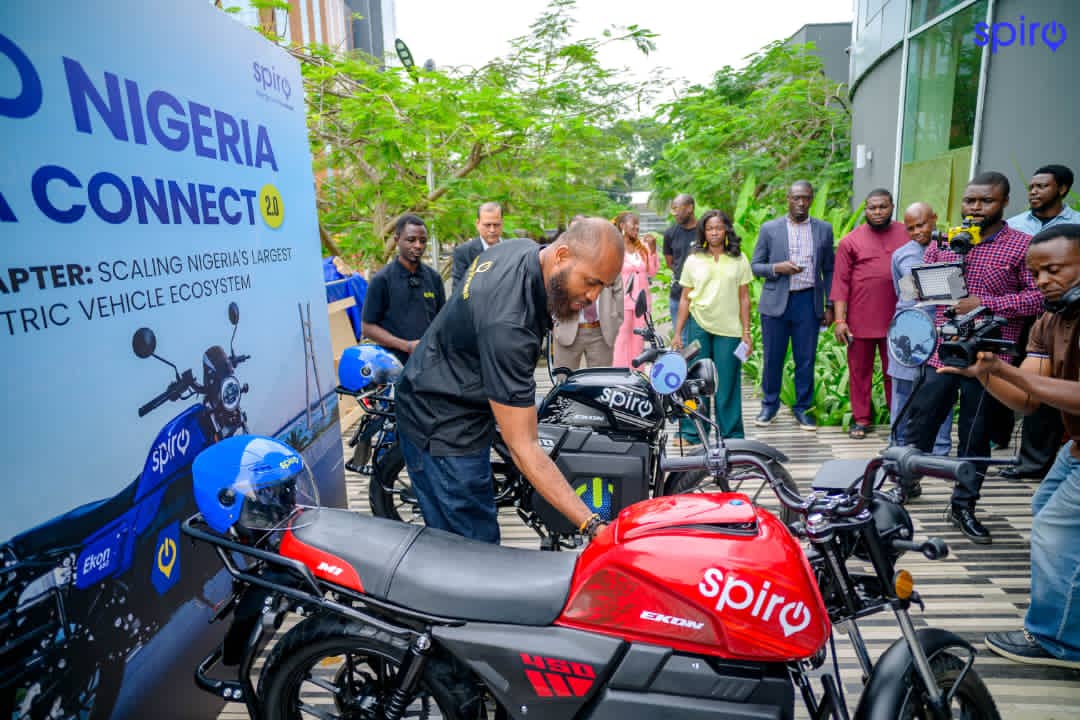
The Media Connect event featured live product demonstrations and operational showcases, alongside the unveiling of the Spiro Ekon M1 Version 3, highlighting the company’s efforts to develop its electric motorcycle offerings for the Nigerian market.
Spiro, which received the West Africa Sustainable Award (WASA), is positioning its expansion around electric motorcycles and battery-swapping infrastructure as it seeks to contribute to the growth of sustainable mobility across Nigeria.
-
 metro1 day ago
Tension in Kano as Phone Traders Confront Chinese Sellers Over Cheaper Phones
-

 metro2 days ago
Police Launch Manhunt After Fresh Attacks, Kidnappings Rock Four Nigerian States
-
 Health2 days ago
NAFDAC Raises Alarm Over Toxic Pesticides in Beans, Seizes ₦800m Banned Chemicals
-

 metro3 days ago
2027: Ekiti Driver Takes ₦3.5m Loan to Back Tinubu’s Re-election Bid
-
 Business2 days ago
NNPC Petrol Discount: Motorists Must Download App to Save ₦66 Per Litre
-
 Auto3 days ago
Electric Mobility: Spiro Unveils Expansion Plan, Names Nigeria New MD
-

 metro2 days ago
EFCC Wins ₦132m Money Laundering Case as Court Orders Forfeiture of Lagos Properties
-

 Entertainment1 day ago
‘My Wife Fed Actresses I Was Dating Despite Knowing About Our Affairs’ – Yinka Quadri