

News
Govs to Buhari: Sack workers aged 50yrs, levy anyone earning over N30,000
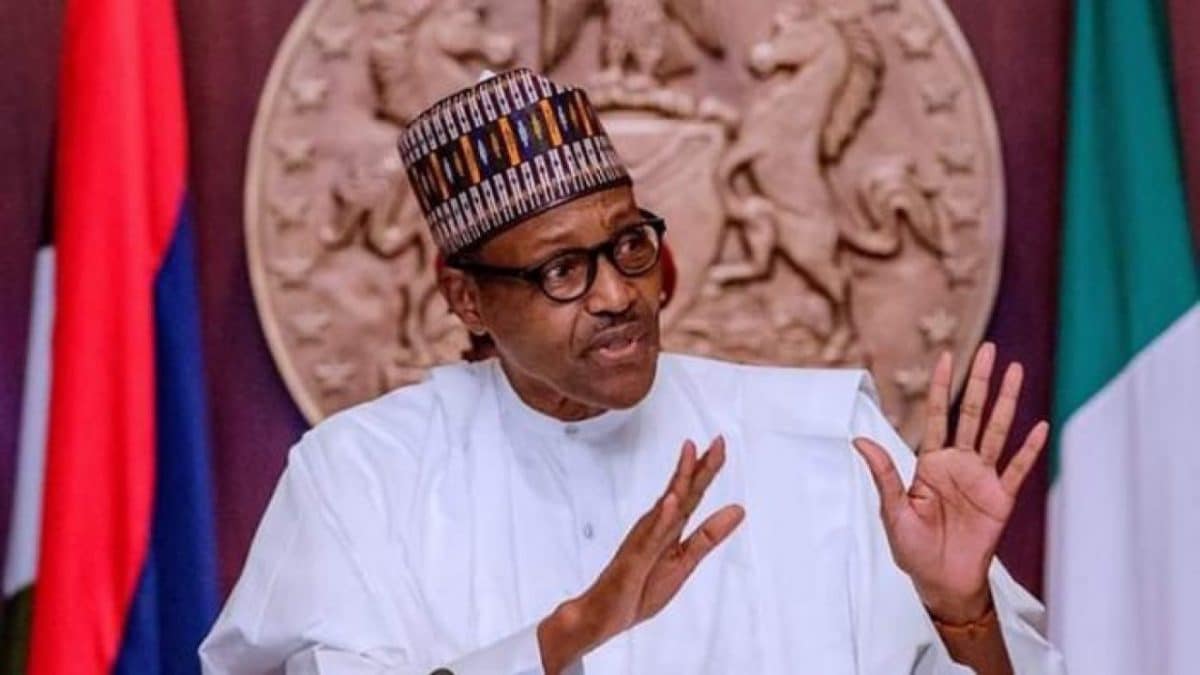
In a bid to prevent the nation from imminent economic collapse, the Nigerian governors have advised the federal government to retire all federal civil servants who are older than 50 years.
The governors also want the government to raise taxes across boars as well as levy anyone earning N30,000 and above monthly.
The governors made the proposal at a meeting with President Muhammadu Buhari in July, an online publication, PREMIUM TIMES exclusively gathered from sources privy to details of the meeting.
The proposal also urged the government to begin implementation of the updated Stephen Oronsaye Report, which suggested merger and shutdown of agencies and parastatals with duplicated or contested functions as a way to address bureaucratic inefficiency and reduce the cost of governance.
Officials familiar with details of the meeting, who spoke to PREMIUM TIMES, explained that the governors were concerned about the deteriorating state of the economy and a proposal to restore fiscal discipline was presented to the federal government.
The federal civil service employs just about 89,000 people but will spend about N4.1 trillion on personnel costs this year, from its N17 trillion budget for the entire country. It is not clear how many workers are above 50 years of age, or how much goes to them.
The suggestion comes as indications emerge that the nation may be teetering towards the cliff of economic collapse.
The online publication had reported that Nigeria’s external reserves amount to only $15 billion, well below the $36 billion balance on the gross external reserves claimed by the bank. With the nation spending N5.9 trillion on imports in the first quarter of the year, reserves of $15 billion would barely cover four months of import.
Last week, details emerged that the balance in Nigeria’s Excess Crude Account had depleted significantly from $35.37m to $376,655, leaving the nation with no buffers to stabilize the economy and its currency. Yet another indication emerged recently that the nation was broke as debt service surpassed revenue.
READ ALSO:
- FG can’t borrow N1.1trn to end ASUU strike – Keyamo
- Gunmen Abduct 3 Children in Kogi, Demand N100m Ransom
- N26bn Debt: Court Grants Access Bank’s Request to Take over Sunny Odogwu Properties
According to details of the 2022 fiscal performance report for January through April, Nigeria’s total revenue stood at N1.63 trillion while debt servicing stood at N1.94 trillion, showing a variance of over N300 billion.
As part of measures to restore fiscal discipline, the governors advised the federal government to reduce expenditure immediately by eliminating petrol subsidy and NNPC-funded projects, cap the Social Investment Programme (SIP) and National Poverty Reduction with Growth Strategy (NPRGS) budgets to N200 billion, eliminate extra-constitutional deductions from FAAC, and reduce SWV items for SDG and NASS Constituency projects.
The governors, according to the sources, also asked the government to reduce duplications (e.g. empowerment programmes) and waste, reduce 1% granted to NASENI to 0.2%, amend the Act in 2022 Finance Bill, reduce personnel costs of federal government MDAs, and expedite privatization of non-performing assets like the NDPHC power plants.
Similarly, the governors urged that the 2023 – 2025 MTEF should reflect the suggestions and government’s commitment to restore fiscal discipline while the planned 22% increase in salaries in 2023 be reconsidered. They added that the fiscal deficit should be reduced to no more than 2% of GDP in 2023 – 2025.
Foreign Exchange and Reserves
To conserve foreign exchange and grow the reserves, the governors suggested that foreign trips by MDAs, including budgetary-independent agencies such as FIRS, NPA, NIMASA and NCC, be put on hold for at least one year.
They also urged the Ministry of Foreign Affairs not to issue requests for Visas to foreign embassies for federal government officials and their families, unless express approval is granted by the presidency.
The governors further suggested the movement from State Income Taxation to Consumption Taxation, adding that with the introduction of 3% Federal Income Tax, state-level PIT should be abolished.
Similarly, they suggested that state Sales Taxes (flat rate of 10%) should be enacted for the 36 States and FCT, VAT levels increased to 10% with a timeline to raise it to between 15% and 20%, as well as re-introduction and passage of VAT into the Exclusive List. It was not clear whether all governors agreed with the position on VAT being moved to the exclusive list.
To improve tax revenues, they suggested that the federal government should introduce a flat 3% Federal Personal Income Tax on all Nigerians earning more than N30,000 per month, adding that persons earning less than N30,000 per month whether employed or not, including farmers and traders, should pay a monthly FPIT of N100.
Similarly, telecoms firms and NIMC should collaborate to ensure deduction of this from phone credit of individuals and linking to NIN and BVN.
The governors also suggested centralization of the collection of all federal oil and non-oil taxes in one agency, the FIRS, while Customs, NPA, and others assess and issue demands.
They suggested that the Federal Government improve crude oil and gas production, resolve lingering issues of ownership of gas in PSCs (eg Nnwa-Doro, OML 129) to help position Nigeria to take advantage of the gas needs in Europe, and provide incentives to expedite development of vandalism-resistant deep offshore fields like Bonga SW (Shell), Preweoi (Total), Zabazaba (ENI) and Owowo (Exxon).
The governors equally advised the government to encourage (and pre-finance, if necessary) Dangote Refinery to early completion to reduce massive future outflows of foreign exchange.
VANGUARD






News
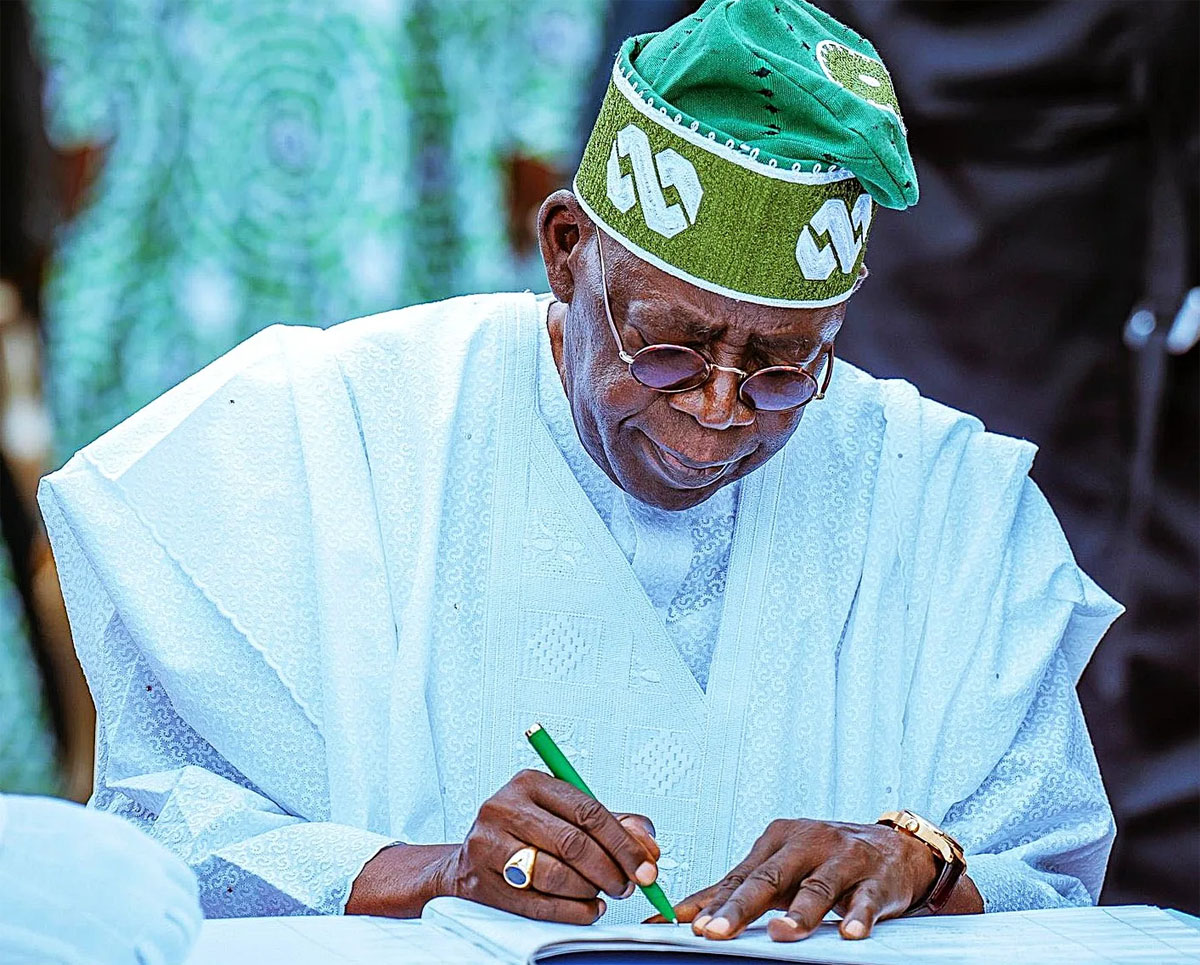
National Assembly Fires State Police Bill to Tinubu as 29 States Defy Status Quo
National Assembly Fires State Police Bill to Tinubu as 29 States Defy Status Quo
ABUJA — Nigeria’s long-running debate over the establishment of state police has reached a significant legislative milestone following the endorsement of the proposed constitutional amendment by at least 29 State Houses of Assembly.
The National Assembly on Wednesday announced plans to transmit the State Police Bill to President Bola Ahmed Tinubu, following the endorsement of the proposal by more than the constitutionally required two-thirds of the 36 state legislatures.
Deputy Speaker of the House of Representatives, Benjamin Kalu, disclosed the development during plenary, describing the support secured from the state assemblies as a major step towards decentralising Nigeria’s policing system.
Kalu said the Clerk to the National Assembly would transmit the bill to the President on Wednesday for the next stage of the process.
“The State Police Bill has received the backing of 29 State Assemblies. Later today, the Clerk to the National Assembly will transmit it to the President for assent,” he said.
Under Section 9 of the 1999 Constitution, a constitutional amendment requires approval from at least two-thirds of the 36 State Houses of Assembly, representing 24 states.
The 29 approvals announced by the Deputy Speaker therefore exceed the required threshold, moving the proposed reform closer to the establishment of state police services across the federation.
The development follows weeks of legislative consultations after the proposed constitutional amendment was forwarded to all 36 state assemblies on September 16, 2026, for consideration and approval.
The Clerk to the National Assembly, Kamoru Ogunlana, had earlier confirmed that 28 state assemblies had approved the proposal as of Tuesday, November 3, following the verification of reports and accompanying votes and proceedings submitted by the state legislatures.
The proposed amendment seeks to create a constitutional framework for State Police Services, allowing individual states to establish their own police structures alongside the existing Nigeria Police Force.
The proposal has gained renewed attention amid persistent security challenges, including kidnapping, banditry, terrorism and communal violence in different parts of the country.
Supporters of state policing have consistently argued that decentralising the police structure would improve intelligence gathering, strengthen community-based security and enable faster responses to criminal activities.
They also maintain that state-controlled police formations would be better positioned to understand local languages, customs, geographical terrain and security threats.
However, the proposal has continued to attract concerns over the possible misuse of state police by politically powerful governors, inadequate funding, human rights violations and the potential use of security agencies against political opponents.
The debate has therefore centred not only on the establishment of state police but also on the need for effective oversight, accountability and safeguards against political interference.
Although the National Assembly has indicated that the amendment will be forwarded to President Tinubu, the precise constitutional procedure surrounding presidential assent and the final authentication of a constitutional alteration remains an important issue to watch.
The development does not mean that state police operations have commenced. Further formal steps, including the completion and publication of the constitutional alteration and the development of the necessary implementation framework, will be required before the proposed system becomes operational.
Nigeria currently operates a centrally controlled police structure under the Federal Government, with the Nigeria Police Force responsible for policing across the 36 states and the Federal Capital Territory.
The proposed reform is expected to introduce a dual policing arrangement, with federal and state police services operating under their respective legal frameworks.
For now, attention has shifted to the next steps by the National Assembly and the Presidency as the country moves closer to a potentially significant restructuring of its security architecture.
National Assembly Fires State Police Bill to Tinubu as 29 States Defy Status Quo
News
Tinubu Reveals How He Worked As Taxi Driver In US Before Becoming Nigeria’s President
Tinubu Reveals How He Worked As Taxi Driver In US Before Becoming Nigeria’s President
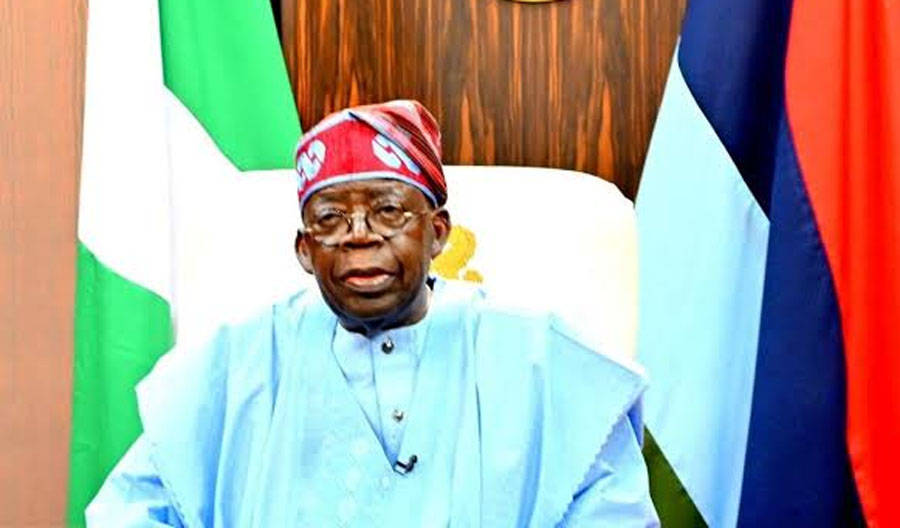
President Bola Ahmed Tinubu has opened up about an aspect of his life in the United States, revealing that he once worked as a taxi driver while struggling to make ends meet before rising to political prominence in Nigeria.
The revelation offers a glimpse into the Nigerian leader’s experiences abroad and how his personal journey has influenced his views on education, financial independence and opportunities for young people.
Tinubu reportedly made the disclosure while explaining the thinking behind his administration’s student loan programme, drawing from his experiences during his years in the United States.
Long before becoming Lagos State governor and eventually President of Nigeria, Tinubu spent part of his life in the United States, where he reportedly engaged in different activities to sustain himself.
Among the experiences he recalled was working as a taxi driver, including operating what was described as a gypsy cab.
The experience, according to the account, exposed him to the realities of struggling to earn a living and the determination required to overcome financial difficulties in a foreign country.
His disclosure has brought renewed attention to his personal history, particularly the challenges he encountered before establishing himself in Nigeria’s political landscape.
Tinubu’s reference to his experience abroad also provided an insight into his administration’s justification for introducing the Nigerian Education Loan Fund (NELFUND), which provides financial assistance to eligible students in tertiary institutions.
The programme is designed to help students from financially disadvantaged backgrounds access higher education without being prevented by their families’ economic circumstances.
By linking his personal experiences to the initiative, the President appeared to emphasise the importance of creating opportunities for young Nigerians to pursue their educational ambitions despite financial limitations.
The student loan scheme has remained one of the major education initiatives of his administration, although its implementation and repayment arrangements have generated public discussions.
The disclosure has generated interest because it offers another perspective on the personal journey of a president whose political career has largely been associated with elite political circles and high-level governance.
For some observers, his account highlights the struggles that can precede success, while also drawing attention to the importance of education, hard work and access to opportunities.
Tinubu’s journey from his reported experience as a taxi driver in the United States to Nigeria’s highest political office represents a remarkable chapter in his personal and political history.
However, his remarks have also renewed conversations about how personal experiences of hardship should translate into policies that address the economic challenges facing ordinary Nigerians, particularly students and young people.
Tinubu Reveals How He Worked As Taxi Driver In US Before Becoming Nigeria’s President
News
I Believe God Has Answered My Prayer, Says Tinubu After Entering Holy Ka’abah
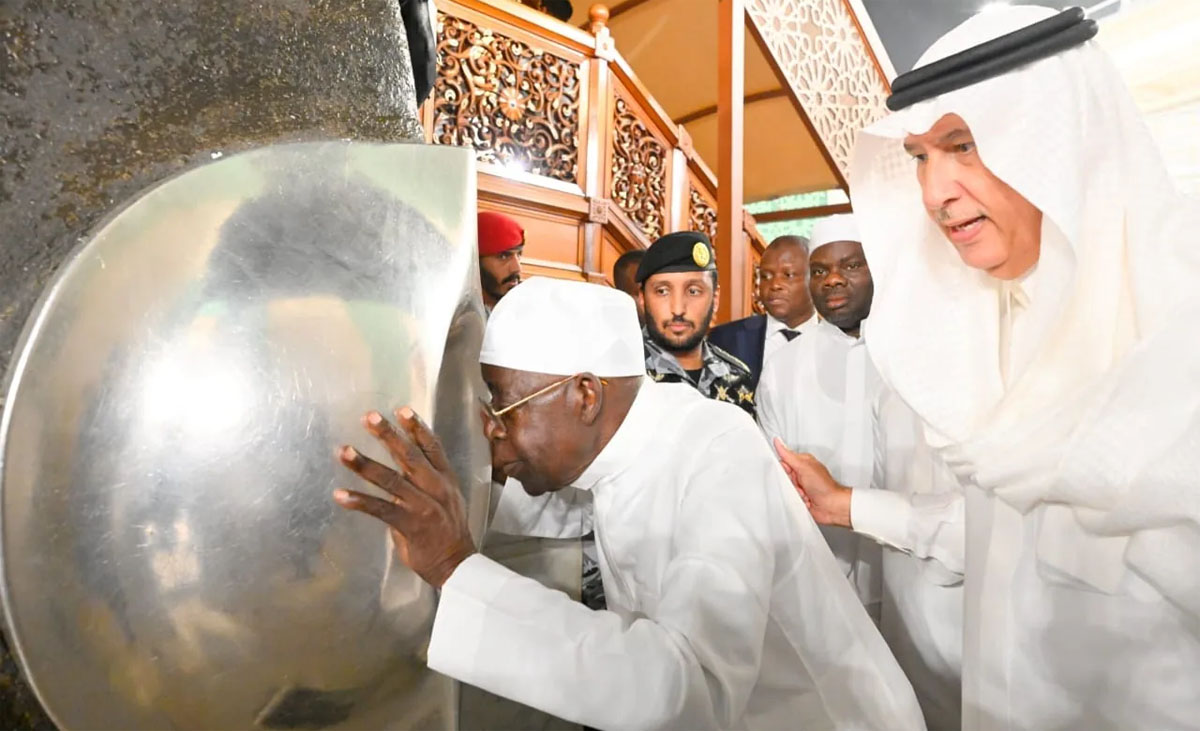
President Bola Ahmed Tinubu has expressed confidence that Almighty Allah has answered his prayers for wisdom and resilience to continue serving Nigerians, following his recent spiritual journey to Saudi Arabia, where he performed the lesser Hajj (Umrah) and was granted access to pray inside the Holy Ka’abah in Makkah.
The President made the disclosure on Monday, November 2, 2026, while reflecting on his spiritual experience and expressing appreciation to Saudi Arabia’s leadership for granting him and members of his Nigerian delegation the rare privilege of entering Islam’s most sacred structure.
Tinubu said he specifically prayed for divine wisdom and strength to discharge his responsibilities as Nigeria’s President, adding that he believed his request had been granted.
“Well, I asked for wisdom and resilience to continue to serve the people. I know that prayer has been granted. Before the 2023 election, I did the same thing. I asked Allah to bless my Umrah then, and He did. And I promised that I would come back to thank Him,” the President said.
According to a statement by his Special Adviser on Information and Strategy, Bayo Onanuga, Tinubu offered prayers of gratitude to Almighty Allah for the opportunity to serve as Nigeria’s President and Commander-in-Chief of the Armed Forces.
The President was led into the Ka’abah by Sheikh Dahlulah Muthawal of Masjid al-Haram.
He subsequently thanked the Custodian of the Two Holy Mosques, King Salman bin Abdulaziz Al Saud, and Saudi Crown Prince Mohammed bin Salman for granting him and members of the Nigerian delegation access to the sacred site.
READ ALSO:
- Footballer Dies as Trailer Rams Car Into Bus on Lagos-Ibadan Expressway
- Gunmen Intercept Family Car, Abduct Woman, Two Children, Release Husband in Abuja
- Dino Melaye Challenges Tinubu to Quranic Recitation Contest After Umrah Trip
Tinubu described the experience as historic and deeply cherished, saying the hospitality extended to him reflected the longstanding friendship and cooperation between Nigeria and Saudi Arabia.
“I want to say a big thank you for the faith, for the recognition. I can’t believe the fencing of the Ka’abah is in Green-White-Green, which reminds us of the Nigerian identity,” he said.
He also expressed gratitude to the Saudi authorities for recognising him as the leader of the Nigerian delegation and facilitating the spiritual exercise.
“We are all facing challenges and hostility around us. We will overcome them with faith in God Almighty. I’m grateful forever. I thank the King and the royal Crown Prince,” Tinubu added.
The President also spoke about the relationship between divine authority and political leadership, referring to Surah Aal-Imran, Verse 26 of the Holy Qur’an, which states that Allah grants sovereignty to whom He wills and takes it away from whom He wills.
According to Tinubu, political power is a trust that must be exercised responsibly, with humility and in the interest of the people.
“There is no other God but Almighty Allah. He is the giver and the taker. He owns power and authority. He says, ‘If I give you, use it well. If you don’t use it in accordance with my dictates, I can take it from you and give it to another person. I am the only One who has that authority,’” he said.
Tinubu maintained that his emergence as Nigeria’s leader was a special favour from God, considering the country’s large population and the number of people who could potentially occupy the position.
“I have faith in that, and I believe extremely well that He has done me and my country a great favour. Out of many millions of people, to be the President and Commander-in-Chief is a favour that only Almighty God can do to a human being,” he stated.
The President also used the occasion to reaffirm his commitment to Project Nigeria, promising to intensify efforts towards economic prosperity, national development and improved opportunities for young Nigerians.
“My commitment to Project Nigeria is higher. I am determined to usher in prosperity and fully develop the country, consistent with the wish of Allah and the support of the people,” he said.
He urged Nigerians to put Allah first, follow their consciences and pursue the right path towards national greatness.
On the economy, Tinubu expressed optimism about the country’s direction, insisting that the economic foundation was solid and that Nigeria had emerged from a difficult period.
“The foundation is solid, and the economy has come out of the dark tunnel. This is inspiring,” he said.
He stressed that sustained investment in young Nigerians was essential to the country’s future, warning that today’s leadership decisions would determine how future generations assess those currently in positions of authority.
“We need to build a future for our youth. If we don’t invest in their future, how do we want to be remembered as leaders 50 years from now? That’s the main thing. So this is a rare privilege to lead the country,” he added.
Among those who accompanied Tinubu during the spiritual exercise were Attorney-General of the Federation and Minister of Justice, Lateef Fagbemi; Coordinating Minister of Health and Social Welfare, Muhammad Ali Pate; and governors of Borno, Sokoto, Jigawa, Kaduna, Yobe and Kwara states.
Chairman of BUA Group, Abdul Samad Rabiu, and Oando Chief Executive Officer, Wale Tinubu, were also among the delegation.
The President’s reflections followed his recent Umrah pilgrimage, during which he offered prayers for Nigeria, its people and his continued service to the country.
I Believe God Has Answered My Prayer, Says Tinubu After Entering Holy Ka’abah
-

 Sports1 day ago
Super Falcons Receive $100,000 Each as Tinubu Finally Fulfils WAFCON Pledge
-
 Politics1 day ago
APC Dumps Adeleke’s Campaign Structure, Unveils Separate 168-Member Council in Osun
-

 metro1 day ago
Three Homeless Men Shot Dead in Midnight Attack at Lagos Bus Stop
-
 metro2 days ago
Three Dead, Five Rescued as Two-Storey Building Collapses in Osun
-

 Auto3 days ago
Nigeria’s Auto Dealers Face New Challenge as After-Sales Service Takes Centre Stage
-

 International2 days ago
Badenoch Rejects Slave Trade Apology, Says African Kingdoms Also Profited From Slavery
-
 metro3 days ago
NDLEA Arrests Woman With 266 Rounds of Live AK-47 Ammunition on Abuja-Kaduna Expressway
-

 metro2 days ago
Court Orders 18-Year-Old Fraudster To Pay ₦1.2m Over $800 Lottery Scam