

Politics
Atiku expected back in Nigeria Sunday to receive Shekarau into PDP

Presidential candidate of the Peoples Democratic Party (PDP), Atiku Abubakar, is expected to jet back to the country to receive Ibrahim Shekarau into the party.
Shekarau, a former Kano state governor, recently said he was done with the New Nigeria Peoples Party (NNPP), where he claimed to have been unfairly treated after joining a few months ago.
Atiku is expected to return from Europe on Sunday, where he met with Rivers State Governor Nyesom Wike to urge him not to dump the PDP.
The former vice-president is billed to meet with Shekarau ahead of his official defection to the PDP, according to a report by TheCable on Saturday.
Shekerau left the All Progressives Congress (APC) for the NNPP in May 2022 after months of leadership tussle with Abdullahi Ganduje, governor of Kano.
The senator representing Kano central said APC’s inability to settle the crisis between his faction and Ganduje’s camp resulted in his exit.
But his new alliance with the NNPP would prove to be short-lived. A few days ago, Shekarau opened up on his disgruntlement with the party.
He said the NNPP under the leadership of Rabiu Kwankwaso, the party’s presidential candidate, failed to integrate his supporters.
Shekarau accused Kwankwaso of betraying the agreement they had before his defection.
“I will never be a party to injustice. My integrity is utmost and not any political position that will make me compromise it and that of my people. Nobody will use position or money against my integrity,” he had said.
“Nobody will use money to change my conscience. I was a governor for eight years in Kano and people believed in my integrity.”
Shekarau’s imminent return to the major opposition party represents a full-circle moment for him
Until 2018, he was a member of the PDP, with his exit stemming from the internal rift in the Kano chapter of the party.
One faction was loyal to him while another was under the control of Kwankwaso, who was also in PDP at the time.
When he announced his defection, Shekarau blamed the national leadership of the party for failing to resolve the crisis following the controversial dissolution of the state executive committee.
Despite being out of the office of governor since 2011, Shekarau is believed to still have a decent political structure in Kano.
The state, governed by Ganduje, has been controlled by the ruling APC since 2015.
With the 2023 elections fast approaching, the PDP is working to encroach into the APC strongholds, especially as it contends with a yet-to-be-resolved internal crisis.







Politics
Tinubu Personally Asked Me to Fight Governor’s Impeachment, Warned Democracy Could Collapse – Olanipekun

Tinubu Personally Asked Me to Fight Governor’s Impeachment, Warned Democracy Could Collapse – Olanipekun
ABUJA — Chief Wole Olanipekun, a Senior Advocate of Nigeria (SAN), has revealed that President Bola Tinubu personally contacted him and directed him to assemble a team of lawyers to challenge the controversial impeachment of a state governor, warning that allowing such a removal could lead to the collapse of Nigeria’s democracy.
Olanipekun disclosed this while recounting his longstanding professional relationship with Tinubu at the presentation of his six-volume book, Wole Olanipekun Through the Cases, in Abuja on Thursday.
The event, held at the Body of Benchers Complex, also marked the senior lawyer’s 75th birthday, 50 years at the Nigerian Bar and 35 years as a Senior Advocate of Nigeria.
Tinubu attended the ceremony, unveiled the six-volume publication and conferred the national honour of Grand Commander of the Order of the Niger (GCON) on the prominent legal practitioner.
Recounting how the President reached out to him following the governor’s impeachment, Olanipekun said Tinubu called him at home and questioned his involvement in the political crisis.
According to the senior lawyer, he was asleep when the telephone call came in and was surprised by the President’s remarks.
He recalled Tinubu asking him: “Son, have you heard that the President said you have removed the governor of your state?”
Olanipekun said he responded by asking what he was expected to do, explaining that he was sleeping when the call came.
He further recalled Tinubu’s humorous response: “There is no sleep for the wicked.”
The SAN said he was taken aback by the remark and questioned why he would be described as wicked simply because a governor had been impeached.
However, he disclosed that Tinubu subsequently gave him a direct instruction to constitute a legal team and challenge the impeachment.
According to Olanipekun, the President warned that allowing governors to be removed through such a process could undermine the country’s democratic system.
He quoted Tinubu as saying: “Please go and set up a team to fight it. This democracy will collapse if you allow governors to be removed that way.”
Olanipekun said he and other lawyers accepted the challenge and pursued the legal battle, which eventually reached the Supreme Court.
He described the eventual judicial decision as an important moment in Nigeria’s democratic history, noting that the court rejected the circumstances surrounding the governor’s removal.
Although Olanipekun did not specifically identify the governor or the state during his remarks, the account appears to relate to the 2006 impeachment crisis involving former Oyo State Governor, Senator Rashidi Ladoja.
In January 2006, 18 members of the Oyo State House of Assembly initiated moves to remove Ladoja from office and replace him with his deputy, Christopher Alao-Akala.
The impeachment was challenged in court, with Olanipekun among the lawyers involved in the legal proceedings.
The Court of Appeal subsequently nullified Ladoja’s removal, while the Supreme Court, on December 7, 2006, dismissed an appeal by the lawmakers challenging the decision.
The apex court upheld the position that the impeachment process was unconstitutional.
Beyond the Ladoja impeachment controversy, Olanipekun also recalled Tinubu’s involvement in efforts to challenge the dissolution of the National Assembly following the 1993 military coup led by the late General Sani Abacha.
He said Tinubu and some other senators had approached him and the late Chief Ganiyu Oyesola Kolawole Ajayi, popularly known as G.O.K. Ajayi, SAN, during a meeting at the Lagos residence of late Senator Odi Adewumi.
According to him, the politicians briefed the senior lawyers to challenge the dissolution of the National Assembly in court.
Olanipekun said they eventually filed an action but later withdrew it because of circumstances surrounding the political situation at the time.
He explained that they subsequently lost contact with their clients, making it difficult to continue pursuing the case.
The senior lawyer further recalled that Tinubu later returned and engaged him and other lawyers, including Chief Chi Williams, in handling some of his legal matters.
He also disclosed that Tinubu wrote him a letter in July 2003 after the conclusion of a legal case involving Mitchell Williams and the President.
Olanipekun said the letter contained commendations that deeply humbled him, adding that he intended to preserve it for inclusion in his memoirs.
Emphasising that his account was based on personal professional experience rather than political considerations, the SAN said he was speaking about events he had directly witnessed.
He also offered his perspective on the meaning of democracy, arguing that the concept goes beyond elections and the transfer of political power.
According to him, democracy must be built on public confidence, responsible leadership and the protection of citizens’ rights.
“Democracy is the government of the people. It’s more than that. Far more than that. It is God. It is confidence. It is leadership,” he said.
His revelations have brought renewed attention to the role played by lawyers and the judiciary in defending Nigeria’s democratic institutions, particularly during periods of political instability.
Tinubu Personally Asked Me to Fight Governor’s Impeachment, Warned Democracy Could Collapse – Olanipekun
Politics
Just in: Court Sacks Ribadu, Orders INEC to Restore Suleiman as Adamawa ADC Candidate
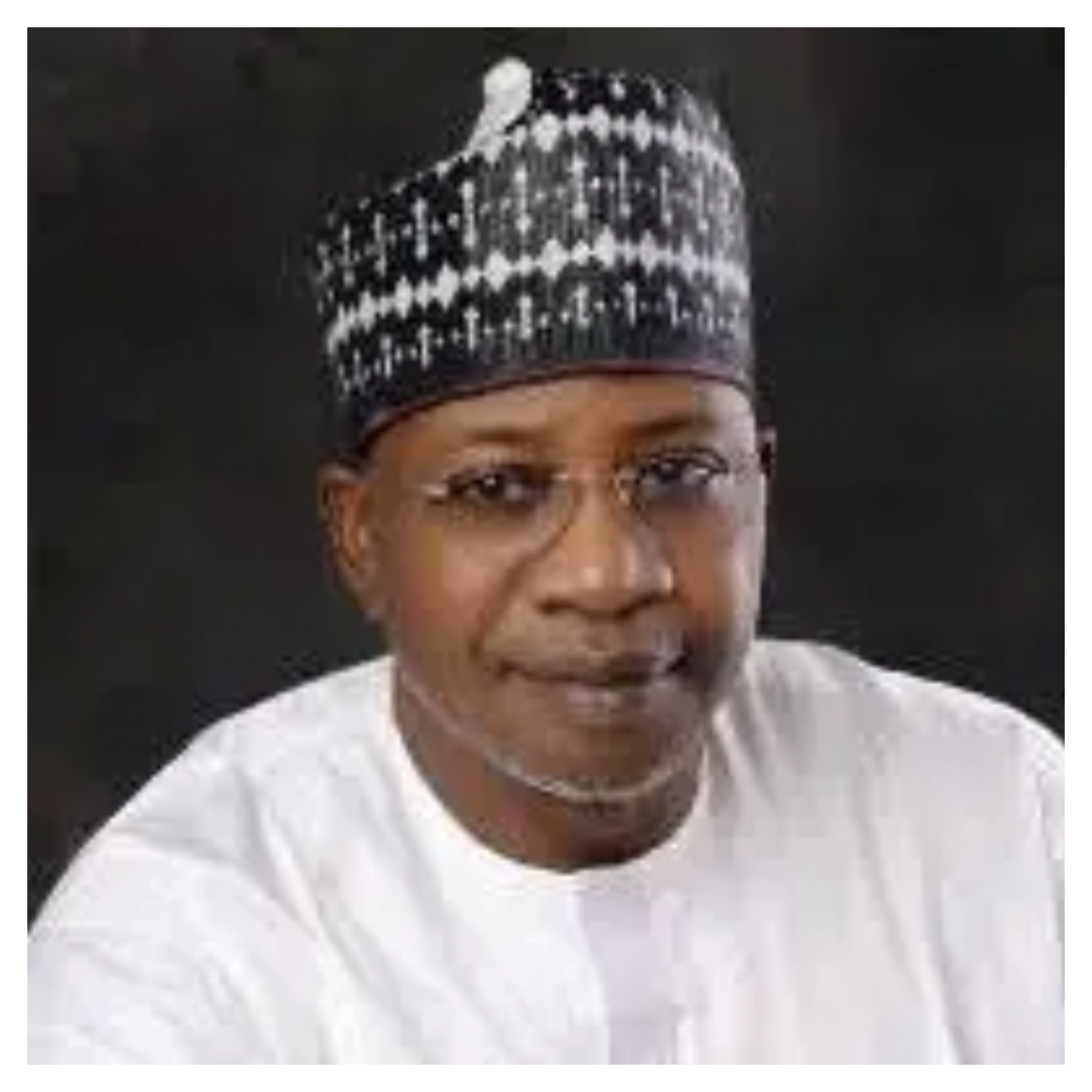
Just in: Court Sacks Ribadu, Orders INEC to Restore Suleiman as Adamawa ADC Candidate
The Federal High Court in Abuja has nullified the emergence of Tukur Ribadu as the African Democratic Congress (ADC) governorship candidate in Adamawa State, directing the Independent National Electoral Commission (INEC) to immediately restore Ambassador Omar Suleiman as the party’s rightful candidate.
The judgment followed a legal challenge instituted by Suleiman, who contested his replacement after initially emerging as the ADC candidate through the party’s governorship primary in Adamawa State.
Suleiman, a cousin of former Secretary to the Government of the Federation, Babachir Lawal, was subsequently replaced by Ribadu, reportedly a loyalist of former Vice President Atiku Abubakar.
Dissatisfied with the decision, Suleiman approached the court to challenge the substitution, insisting that his emergence from the party primary could not be overturned unlawfully.
Delivering its judgment, the court held that a duly nominated candidate could only be replaced under the law if the candidate voluntarily withdraws from the race or dies.
It ruled that since Suleiman had neither withdrawn his candidacy nor died, the decision to substitute him with Ribadu was unlawful and could not stand.
The court consequently declared Ribadu’s replacement of Suleiman null and void and ordered INEC to immediately reinstate Suleiman as the ADC governorship candidate for Adamawa State.
The ruling represents a significant development in the ADC’s governorship nomination dispute in Adamawa, effectively restoring Suleiman’s claim to the party’s ticket.
Politics
2027: Sowore Fires Back at Fashola, Promises Free Education, Vows to Scrap NELFUND
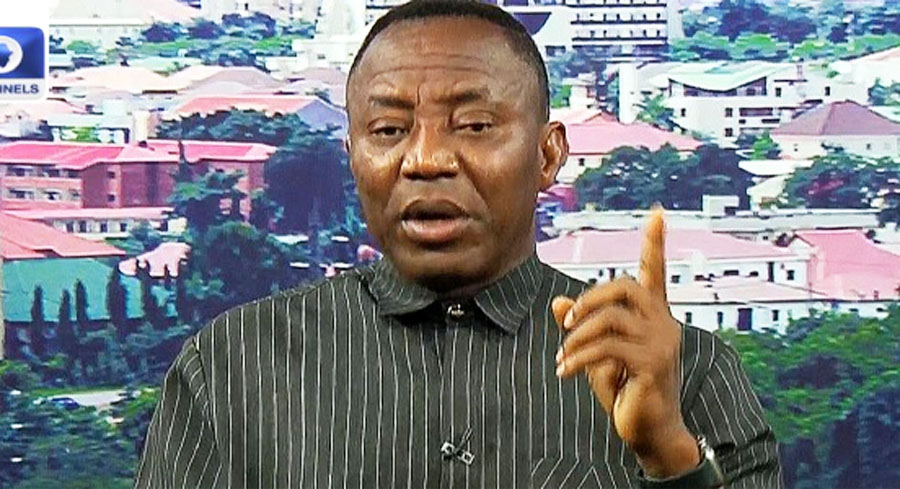
2027: Sowore Fires Back at Fashola, Promises Free Education, Vows to Scrap NELFUND
ABUJA – The presidential candidate of the African Action Congress (AAC), Omoyele Sowore, has vowed to abolish the Nigerian Education Loan Fund (NELFUND) if elected president in 2027, promising to replace the student loan scheme with publicly funded study grants.
Sowore made the declaration on Thursday, November 19, 2026, while responding to former Lagos State Governor, Babatunde Fashola, who challenged opposition presidential candidates to campaign on a promise to scrap the student loan programme introduced by President Bola Ahmed Tinubu’s administration.
In a statement shared on his Facebook page, the human rights activist criticised Fashola’s defence of the scheme, describing him as one of the most deceptive figures working with the Tinubu administration.
Sowore argued that access to education should be a fundamental right rather than a financial burden that forces young Nigerians to borrow money to obtain university degrees.
He said an AAC-led government would abolish NELFUND and introduce a system of study grants supported by public funding.
” #Sowore2027 will abolish NELFUND‘s student loan scheme and replace it with study grants,” he declared.
“For the avoidance of doubt, under an @aacparty-run government, education will be a right, not a privilege, and young Nigerians should not have to mortgage their future to obtain a degree.”
The AAC candidate further accused Nigerian political leaders of promoting student loans for ordinary citizens while allegedly sending their own children to expensive schools abroad.
READ ALSO:
- ADC Crisis: INEC Explains Why Atiku’s Name Remains on 2027 Presidential Candidates’ List
- Adeleke Rejects Proposed Naming of Osogbo Stadium After Him, Orders Removal of Signpost
- Man Arrested After Allegedly Shooting Brother Dead Over Family Dispute
He questioned why young Nigerians should be expected to accumulate debts to access higher education when, according to him, public officials enjoy educational opportunities that ordinary families cannot afford.
Sowore described the student loan arrangement as a form of financial burden on young people, insisting that his proposed alternative would guarantee access to education without forcing students to repay loans after graduation.
“We reject the peonage they package as student loans. Our commitment is to study grants and publicly funded education,” he added.
Fashola had challenged opposition politicians to openly declare their intention to abolish NELFUND if they came to power, arguing that students benefiting from the initiative and their families would oppose such a proposal.
The former governor made the challenge on Tuesday, November 17, during an appearance on Channels Television’s Politics Today, where he defended the Tinubu administration’s economic policies and described NELFUND as an intervention designed to reduce the financial burden on Nigerian families.
Fashola explained that the scheme was introduced to help families meet educational expenses, particularly school fees and students’ upkeep allowances, while preserving household income for other essential needs such as rent, transportation and healthcare.
He maintained that more than one million Nigerians had benefited from the initiative and challenged opposition candidates to test its popularity by promising to discontinue it.
“I challenge the opponents to promise to scrap NELFUND and see how the people and the students who are benefiting from it and the families will vote. I know they won’t dare to,” he said.
NELFUND was established in April 2024 after President Tinubu signed the Student Loans (Access to Higher Education) Act into law. The initiative provides interest-free loans to eligible students in Nigerian tertiary institutions to support their educational expenses.
According to figures released by the fund, NELFUND had disbursed more than ₦372 billion to 1,635,676 beneficiaries across 312 tertiary institutions as of October 3, 2026.
The latest exchange has brought the future of the student loan programme into the political debate ahead of the 2027 presidential election, with Sowore advocating publicly funded study grants while Fashola has defended the existing loan arrangement.
Sowore’s position forms part of his broader education policy argument that government should prioritise public investment in education rather than make students depend on loans to finance their studies.
The debate is expected to remain an issue in the campaigns as Nigerians consider competing proposals on education financing, access to tertiary institutions and the cost of higher education.
2027: Sowore Fires Back at Fashola, Promises Free Education, Vows to Scrap NELFUND
-

 metro2 days ago
Viral Video: Nigerian Army Explains Why Soldiers, DSS Operatives Met Bandits In Kwara Forest
-

 International1 day ago
Islam Set to Overtake Christianity as World’s Largest Religion by 2035
-

 Business1 day ago
NNPCL, MRS, Other Marketers Slash Petrol Prices Across Nigeria As Motorists Get Fresh Relief
-
 News3 days ago
BREAKING: Fountain Of Life Crisis Deepens As Trustees Reaffirm Jimmy Odukoya’s Removal, Appoint Interim Leader
-
 metro2 hours ago
FG’s ₦100,000 Family Grant: Eligibility, How to Apply and Payment Procedure Revealed
-
 News1 day ago
Agunbiade Proposes Council of Grand Chief Imams for Yorubaland, Edo, Delta
-

 News1 day ago
Adeleke Rejects Proposed Naming of Osogbo Stadium After Him, Orders Removal of Signpost
-

 Education2 days ago
Panic As Fire Engulfs Nigerian University Hostel, Destroys Students’ Valuables