

Education
ASUU votes to continue strike, after NEC meeting

There is no end in sight yet to the ongoing strike by university lecturers as Academic Staff Union of Universities ended a crucial National Executive Council meeting in Abuja with a resolution to continue with the industrial action.
The strike, which in the seventh month, has paralysed public universities in the country. And efforts by stakeholders to resolve the crisis have not been successful.
The National Parent Teacher Association of Nigeria has suggested payment of N10,000 per student to help fund the universities but ASUU rejected the offer.
National President of NAPTAN, Alhaji Haruna Danjuma, also expressed optimism that ASUU would call off the strike after the NEC meeting of the union in Abuja.
National President of the National Association of Nigerian Students, Sunday Asefon, said if the lecturers were really fighting for students, they should suspend the strike.
The union commenced the nationwide industrial action on February 14, 2022 and has extended it several times due to its inability to reach any agreement with the Federal Government.
Various ASUU branches held their congresses last week to review the situation and the majority voted for another rollover of the indefinite strike.
The renegotiation of the 2009 agreement and the replacement of IPPIS with UTAS are the major demands of the striking lecturers.
Meanwhile, human rights lawyer, Femi Falana, says the FG does not have the legal backing to proscribe ASUU over its continued strike.
Falana said this in reaction to speculations that the government was planning to proscribe ASUU for failing to call off the strike.
Falana in a statement said ASUU’s right had been guaranteed under Section 40 of the 1999 Constitution and Article 10 of the African Charter on Human and Peoples Rights (Ratification and Enforcement) Act.
He also cited the freedom of association and protection of the right to organise convention No 87 of the International Labour Organisation Convention, which refrains the FG from banning or suspending trade unions.
He said Nigeria “has ratified the ILO Convention and it is pertinent to note that parties to the convention are obligated to ensure the right of both employers and employees to join an organisation of their choice and free from any influence of authorities which belong to the core principles of the ILO.”
“To ban ASUU, the Federal Government will have to amend the fundamental right of citizens to freedom of association enshrined in Chapter 4 of the Constitution,” Falana said.











Education
Nigerian Universities Producing Certificate Holders, Not Problem-Solvers, Says Ojuolape
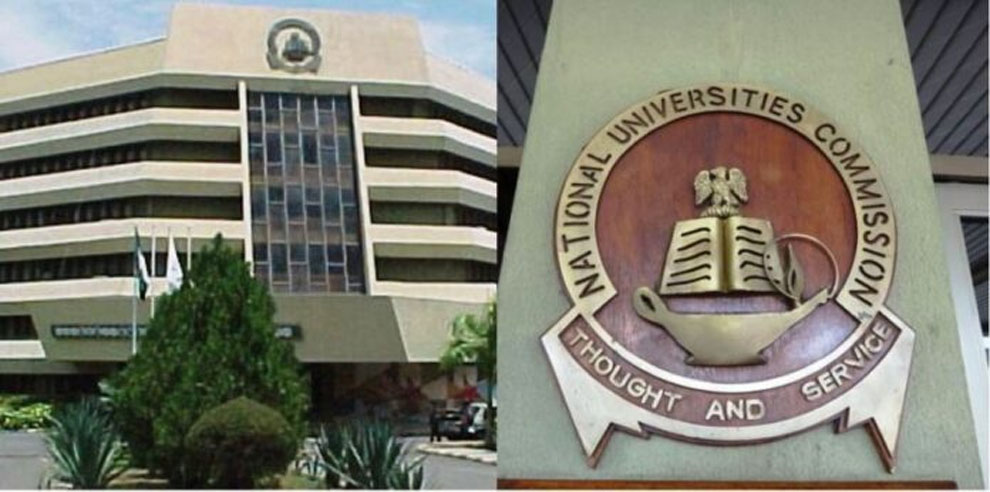
Nigerian Universities Producing Certificate Holders, Not Problem-Solvers, Says Ojuolape
Public affairs analyst calls for urgent curriculum overhaul, stronger industry partnerships and skills-based education
A public affairs analyst and human capital development advocate, Mr Adesola Adefemi Ojuolape, has called for a comprehensive overhaul of Nigeria’s university education system, warning that outdated curricula and excessive emphasis on certificates are leaving many graduates without the practical skills required to compete in the modern labour market.
Ojuolape argued that several academic programmes in Nigerian universities needed urgent reassessment to ensure their relevance to the country’s economic needs, technological advancement and changing employment opportunities.
In a commentary on the state of university education, he expressed concern that the country continued to produce large numbers of graduates without adequately equipping them with the practical knowledge, entrepreneurial abilities and problem-solving skills needed to secure employment or establish sustainable businesses.
According to him, the growing disconnect between university education and the demands of industry has contributed to graduate unemployment, underemployment and frustration among young Nigerians.
He maintained that obtaining a university degree should not be the ultimate objective of education, stressing that graduates must also possess demonstrable skills that enable them to create value, solve practical problems and contribute meaningfully to national development.
Ojuolape said the persistence of outdated teaching methods and curricula had weakened the capacity of some academic programmes to prepare students for the realities of the 21st-century economy, which increasingly depends on technology, innovation, productivity and entrepreneurship.
He called on the Federal Government and the National Universities Commission (NUC) to review existing programmes and identify those requiring modernisation, restructuring, merger or discontinuation.
The analyst also urged universities to strengthen practical training and establish functional skills acquisition centres, technology hubs and entrepreneurship laboratories to complement classroom instruction.
He said universities should build stronger partnerships with industries and employers to ensure that academic programmes reflect current workplace requirements and emerging economic opportunities.
Ojuolape further challenged university administrators and lecturers to update their knowledge and teaching methods, arguing that the rapid pace of technological change had made continuous professional development essential.
He expressed concern that students could spend several years pursuing degrees without acquiring the practical competencies needed to translate their qualifications into employment, entrepreneurship or other productive ventures.
To illustrate his argument, he compared the conventional four-year university route with the possibility of acquiring marketable technical or digital skills within a shorter period, depending on the field and the learner’s commitment.
He identified software development, data analytics, artificial intelligence, cybersecurity, digital marketing, graphic design, renewable energy installation, fashion design, catering, agriculture and other technical trades as areas in which young people could develop commercially useful competencies.
However, he stressed the need for students to make informed educational choices based on their interests, abilities and the practical opportunities available in their chosen fields.
The advocate also called on parents to reconsider the pressure they sometimes place on their children to obtain university admission or pursue particular courses for reasons of family prestige rather than suitability or career prospects.
He advised parents to examine the relevance of academic programmes and the opportunities they offer before committing their resources to university education.
For students, Ojuolape recommended careful consideration of career options, market demands and opportunities for acquiring practical skills, rather than pursuing admission simply to obtain graduate status.
He argued that technical and vocational education should receive greater recognition and investment, noting that skilled workers and entrepreneurs could make significant contributions to economic growth and job creation.
According to him, the ability to solve problems, provide services and create economic value should become a central consideration in evaluating the effectiveness of education.
Ojuolape warned that without substantial reforms, Nigeria risked continuing to produce graduates whose qualifications did not adequately match available employment opportunities or the practical needs of businesses and industries.
He therefore called for a shift from a predominantly certificate-driven system towards one that combines academic knowledge with practical competence, innovation, entrepreneurship and productivity.
While advocating reforms, his position places the responsibility on government, university administrators, lecturers, parents and students to work towards an educational system that prepares young Nigerians for both employment and self-employment.
He maintained that the ultimate measure of a successful education system should include its ability to equip learners with relevant knowledge, practical skills and the capacity to contribute to society.
Ojuolape concluded that Nigerian universities must respond more effectively to changing economic and technological realities if the country hopes to develop a competitive workforce and reduce the growing gap between educational qualifications and employability.
Nigerian Universities Producing Certificate Holders, Not Problem-Solvers, Says Ojuolape
Education
Cross River Seals 58 Schools in Crackdown on Unapproved Education Centres
Cross River Seals 58 Schools in Crackdown on Unapproved Education Centres
The Cross River State Government has shut down 58 unapproved schools in an intensified statewide crackdown on institutions operating without the mandatory Approval to Operate (ATO), warning proprietors against reopening without official authorisation.
The enforcement exercise, being conducted by the state Ministry of Education through its Department of Quality Assurance, targets schools that have failed to meet the regulatory requirements for operating nursery, primary and secondary educational institutions.
The Commissioner for Education, Stephen Odey, said the exercise was aimed at enforcing education standards, protecting pupils and students, and ensuring that schools operate within the state’s approved regulatory framework.
The government said the inspections would continue across Cross River State’s 18 local government areas as authorities work to identify unapproved institutions and ensure compliance with existing regulations.
Odey warned that schools sealed during the operation must not resume activities until they have obtained the necessary approval from the relevant authorities. He also cautioned proprietors against violating closure orders, saying offenders could face further sanctions.
READ ALSO:
- INEC Raises Alarm Over Fake APC Result Naming Okorocha, Seeks DSS, Police Probe
- Fitch Gives Tinubu Fresh Economic Boost as Nigeria’s Outlook Turns Positive
- Ronaldo Hits 980th Career Goal as Al-Nassr Win After Portugal Fallout
According to the state government, the enforcement campaign is not intended to victimise school owners but to ensure that all educational institutions meet the minimum requirements for safe and effective teaching and learning.
Among the schools identified in the government’s October 10 announcement were Impact Group of Schools, Gospel Beacon Academy and Divvy Bliss Schools in Calabar Municipality.
Others included Warriors Seed Academy, Children of Promise Christian School and Future Amazing International Schools in Calabar South.
In Odukpani Local Government Area, the government listed De-Royal Academy School, Maria Assumpta Nursery/Primary School and Success Kids Nursery/Primary School among the affected institutions.
Five schools were also identified in Akamkpa Local Government Area: Creative Brain International School, St. Luck’s Anglican Nursery/Primary School, Our Lady of Perpetual Help, Hot Brain Academy and Armour Christian International School.
The latest closures followed earlier enforcement exercises announced by the government during the week. On October 9, authorities reported identifying 15 schools operating without approval in Calabar Municipality, Odukpani and Yakurr. On October 8, another nine schools were reported shut in Calabar Municipality, while 14 schools were identified in Calabar South on October 7.
The successive operations form part of the government’s effort to strengthen school regulation and quality assurance across the state. However, the individual batches should not be added together without a consolidated list confirming that no school has been counted more than once.
The government has urged proprietors of affected schools to approach the appropriate authorities to regularise their operations and obtain the necessary approvals before reopening.
Parents and guardians have also been encouraged to verify the approval status of schools attended by their children to ensure that the institutions comply with the state’s requirements.
The closures could disrupt learning for pupils and students whose schools have been affected, particularly where families need to find alternative institutions. The government has not provided a consolidated public list of all 58 schools in the reports reviewed or announced a common reopening date for the affected institutions.
The crackdown follows an earlier warning issued by the state government in August 2025, when it announced plans to close unapproved nursery, primary and secondary schools from September of that year.
The state government has maintained that compliance with school approval requirements is necessary to uphold educational standards and ensure that institutions operate within the law.
Cross River Seals 58 Schools in Crackdown on Unapproved Education Centres
Education
FG Releases Eight-Month Arrears After SSANU Strike Threat

FG Releases Eight-Month Arrears After SSANU Strike Threat
The Federal Government has released eight months’ salary arrears owed members of the Senior Staff Association of Nigerian Universities (SSANU), less than 48 hours after the union issued a 14-day ultimatum threatening an indefinite strike.
SSANU had issued the ultimatum over the implementation of the 2026 FGN/SSANU Agreement and demanded payment of outstanding entitlements, warning that failure to act would lead to a “total, comprehensive and indefinite strike action.”
The union’s demands included payment of outstanding Consolidated University Teaching and Tertiary Institutions Salary Structure (CONTTA) arrears calculated from January 1, 2026.
It also demanded payment of two months’ salaries withheld during the 2022 industrial action, as well as one-year arrears arising from the approved 25 per cent and 35 per cent salary increases.
READ ALSO:
- Yobe: 9-Year-Old Boy Burns Stepmothers, Brothers To Death In Revenge Attack
- 2027: Donald Duke Pledges To Bring Petrol Price Down To N300 Per Litre
- Olu of Warri Denies N2.7tn Pipeline Deal, Demands Evidence From Dokubo
Confirming the release, SSANU National President, Mohammed Haruna Ibrahim, said members would begin receiving alerts reflecting the payment.
Ibrahim commended the Minister of Education, Tunji Alausa, for intervening in the matter and facilitating the release of the funds.
However, the payment does not resolve all of the union’s outstanding demands. SSANU has maintained that the government must settle the remaining arrears and ensure full implementation of the 2026 agreement.
The development has nevertheless eased an immediate threat of disruption in the Nigerian university system, coming just days after the union warned of a nationwide industrial action.
SSANU has urged affected members to liaise with their respective university managements to ensure that the released funds are properly and promptly paid.
The latest development comes amid continuing concerns over university workers’ salaries, arrears and welfare, as well as the implementation of agreements between the Federal Government and university-based unions.
FG Releases Eight-Month Arrears After SSANU Strike Threat
-

 metro3 days ago
VIDEO: Outrage as Indian National Assaults Nigerian Truck Drivers in Lagos
-

 metro2 days ago
Osogbo Cultism Crackdown: Six Suspects Arrested as Police Recover Drugs, Charms
-

 metro2 days ago
Money Rituals: Four Arrested in Kwara Over Suspected Human Parts
-

 News2 days ago
2027 Elections: INEC Reveals Why Pantami, Adebutu, Others Were Excluded
-

 Politics3 days ago
2027: Tompolo Unveils 57 Tinubu Campaign Vehicles, Warns Lagosians Against 2023 Repeat
-

 Politics2 days ago
2027: Adeleke’s Camp Promises 1.5 Million Votes for Tinubu in Osun
-

 metro2 hours ago
₦130m Toyota Tundra Wrecked: Lagos Dealer Questions Police Over Suspect’s Release
-

 metro2 days ago
IPOB Denies Monday Sit-at-Home Return, Challenges Police to Produce Evidence