

Politics
2023: Obi Unveils Manifesto, Lists 7 Priority Areas

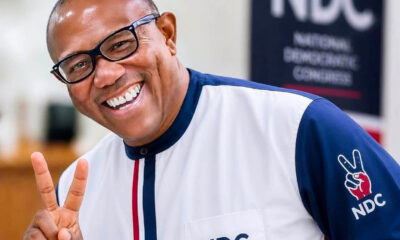
The Presidential candidate of Labour Party (LP) Peter Obi has finally unveiled his manifesto titled “Obi/Baba-Ahmed Pact with Nigerians.”
The National Publicity Secretary of the Labour Party, Abayomi Aranbambi, confirmed the development of Daily Trust on Saturday night.
The Manifesto sited by Daily Trust however promises seven key priority areas that were needed to jump start the economy and move the country from Consumption to production.
Some of the priority areas according to the pact includes to secure the country, end banditry and insurgency; and unite the country in such a way “that no one is left behind.”
Obi also promised to “Shift emphasis from consumption to production by running a production-centered economy that is driven by an agrarian revolution and export-oriented industrialization.
READ ALSO:
- Community goes spiritual as Ondo monarch’s kidnappers demand N100m
- Tinubu in London, set for Chatham House lecture tomorrow
- Osun Tribunal: Adeleke’s certificates admitted as exhibits as Oyetola, APC close case
” Restructure the polity through effective legal and institutional civil service. Leapfrog Nigeria into the 4th Industrial Revolution (4IR), through the application of scientific and technological innovations to create reforms to entrench the rule of law, aggressively fight corruption, reduce cost of governance, and establish an honest and efficient a digital economy.
“Build expansive and world-class infrastructure for efficient power scholarship and research, quality healthcare, and entrepreneurship
global competitiveness through investment in world-class supply, rail, road and air transportation, and pipeline network, entrepreneurial public sector governance.”
Others, according to the document promises, are enhancing the human capital of Nigerian youths for productivity and through integrated public-private partnerships and education.
The Labour Party presidential candidate also promised to conduct “an afro-centric diplomacy that protects the rights of Nigerian citizens abroad and advance the economic interests of Nigerians and Nigerian businesses in a changing world.”





Politics
No Office of the First Lady Under My Presidency, Vows Omoyele Sowore
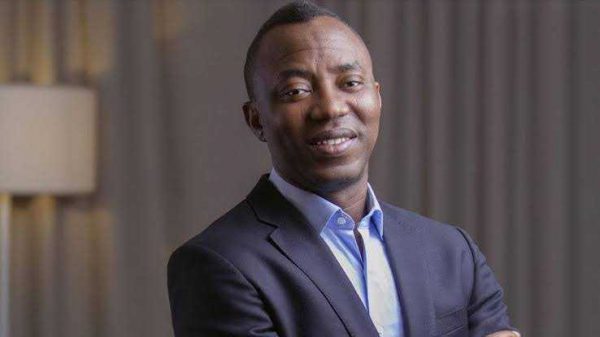
No Office of the First Lady Under My Presidency, Vows Omoyele Sowore
The AAC candidate pledges to slash governance costs by ₦4 trillion, abolish gubernatorial security votes, and end unconstitutional spending.
African Action Congress (AAC) presidential candidate Omoyele Sowore has pledged to eliminate the Office of the First Lady if he wins the 2027 presidential election, describing the ceremonial post as an unconstitutional drain on national resources. Sowore emphasized that Nigeria’s 1999 Constitution provides no legal standing or budgetary allocation for the spouse of the head of state.
Consequently, Sowore clarified that while entering the State House will not alter his marriage, his administration will refuse to assign official duties, staff, or public funds to his spouse.
Instead, he promised to champion women’s voices across all levels of government by appointing qualified female leaders to legitimate, constitutional offices rather than maintaining a ceremonial platform.
He condemned the continued allocation of taxpayer revenue to unofficial positions, arguing that such expenditures divert critical capital from infrastructure and social welfare.
Furthermore, the AAC candidate outlined a comprehensive austerity framework intended to slash the cost of governance by approximately ₦4 trillion. Central to this strategy, Sowore vowed to initiate constitutional amendments to outlaw discretionary security votes for state governors, a long-debated pool of funds historically shielded from public accounting.
Ultimately, he insisted that transferring these discretionary funds directly into state treasuries will help governments pay public sector wages consistently and fund vital public services.
No Office of the First Lady Under My Presidency, Vows Omoyele Sowore
Politics
Otti: I Won’t Become Political Godfather After Leaving Office
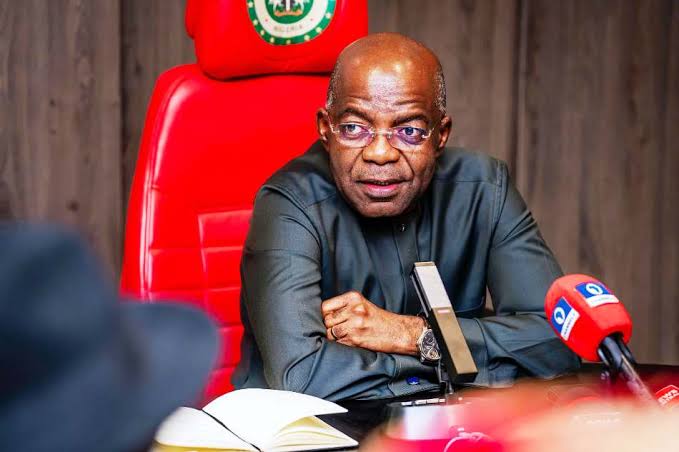
Otti: I Won’t Become Political Godfather After Leaving Office
Abia State Governor Alex Otti has said he will not become a political godfather or impose a successor on the state after completing his second term in 2031.
Otti spoke in Umuahia on Thursday while receiving former Social Democratic Party governorship candidate Ngozi Johnson-Chukwunenye and her supporters into the Labour Party.
The governor said he would prefer a successor to emerge based on merit and competence rather than what he described as a “sit-tight” approach to political leadership.
“I don’t want to be a godfather, and I don’t tolerate godfathers” Otti said, adding that political stakeholders should consider those capable of doing the job before supporting a candidate.
He also reiterated that he does not plan to seek another elective position after his second term, saying younger people should be given opportunities to take up leadership roles.
Otti Highlights Youth Leadership Programme
The governor said his administration was already preparing young people for future leadership through initiatives such as the Abia Leadership Academy.
According to him, more than 1,080 people aged between 16 and 25 had recently graduated from the academy.
Otti said the programme was intended to help prepare a new generation of leaders rather than encourage prolonged political control by individuals.
Meanwhile, he said his administration would continue extending its development projects beyond Aba and Umuahia into other parts of the state.
He said the government initially focused on the two major cities before moving into the hinterland with additional projects.
Otti: I Won’t Become Political Godfather After Leaving Office
Politics
2027: Tinubu May Mediate Wike-APC Governors Rift In France
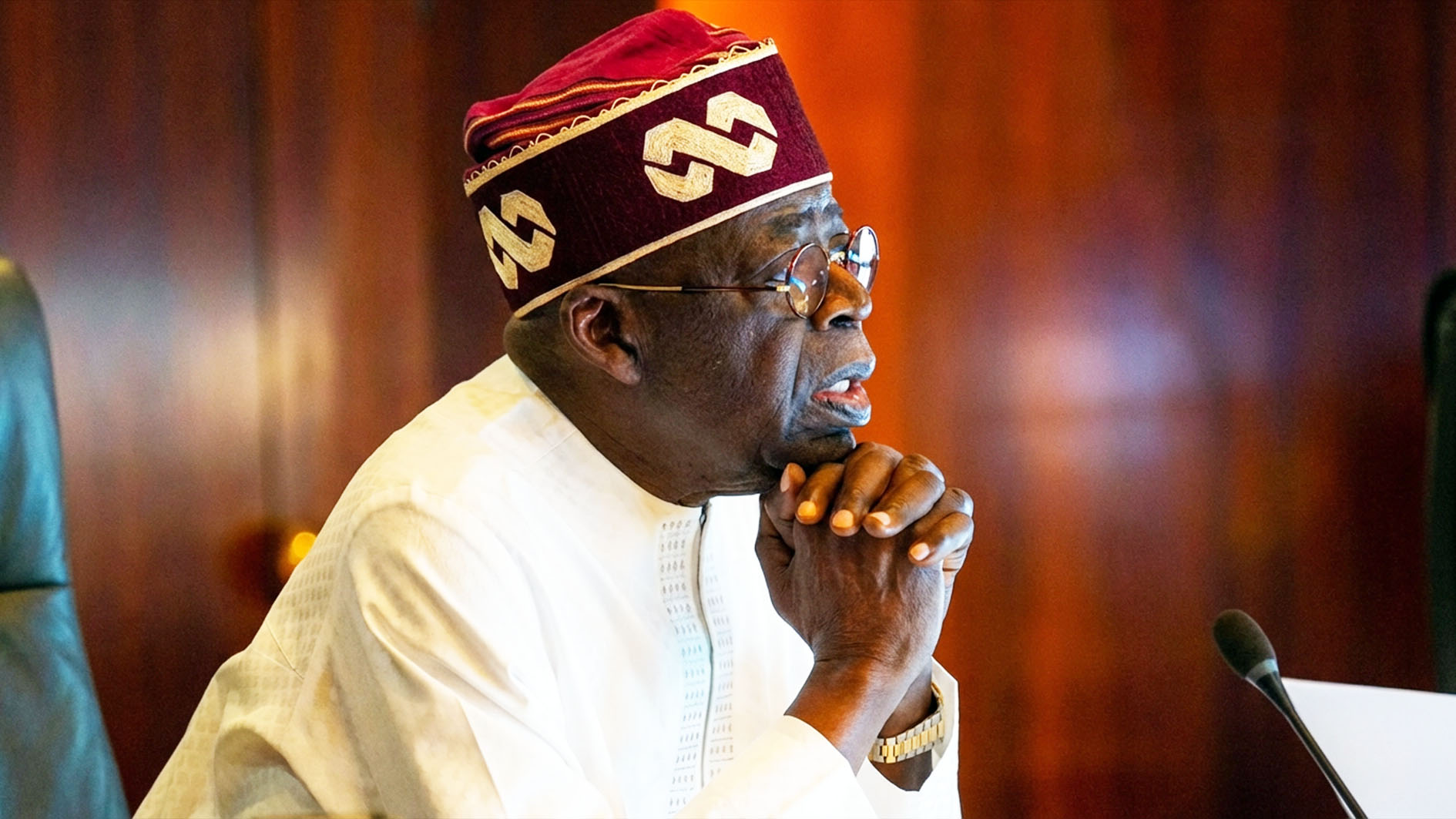
2027: Tinubu May Mediate Wike-APC Governors Rift In France
President Bola Ahmed Tinubu may intervene in the growing disagreement between Minister of the Federal Capital Territory, Nyesom Wike, and governors elected on the platform of the All Progressives Congress (APC), as political activities intensify ahead of the 2027 general elections.
A senior presidential aide was quoted as saying that Tinubu could meet the concerned political actors while in France, where the President is currently on vacation. The aide said the intervention was likely to take place abroad before the end of the week.
The reported meeting has not been officially confirmed, and no formal truce has been announced between Wike and the APC governors.
The disagreement centres on Wike’s Rainbow Coalition, which he has been promoting in support of Tinubu’s re-election while maintaining that the platform is separate from the APC.
Wike, who remains a member of the Peoples Democratic Party (PDP) while serving as FCT minister, has said his support for Tinubu does not prevent the PDP from fielding candidates for governorship, National Assembly and State House of Assembly elections.
Through his Senior Special Assistant on Public Communications and Social Media, Lere Olayinka, Wike said he would mobilise support for Tinubu at the presidential level but had never promised that the PDP would withdraw from other electoral contests.
He has also maintained that he never approached the APC governors to join the Rainbow Coalition and that President Tinubu is aware of his political activities.
READ ALSO:
- 2027: Sowore Says He’d Rather Die Than Travel Abroad For Medical Treatment
- Toyin Abraham Rejects Lagos APC Campaign Council Inclusion
- FG Suspends Niger NSCDC Commandant As 37 Suspected Illegal Miners Die In Custody
Wike has cited the 2023 elections in states such as Imo, Abia, Enugu and Ebonyi to argue that voters can support different parties in presidential and state or legislative elections held on the same day.
The position has drawn opposition from the Progressive Governors’ Forum (PGF).
Its Chairman and Imo State Governor, Hope Uzodimma, said after a meeting of APC governors in Abuja that they would not support political arrangements capable of undermining the APC, Tinubu’s re-election or the party’s candidates.
APC leaders in the South-East have also rejected Wike’s Rainbow Coalition and criticised his comments about the Progressive Governors, urging party members to maintain support for APC candidates across the ballot.
The disagreement has attracted differing reactions within the ruling party.
Ima Niboro, a spokesperson for the APC Presidential Campaign Council, described the situation as a disagreement among political actors who broadly support Tinubu’s re-election but differ over how that support should operate alongside other electoral contests.
Niboro urged Wike and the APC governors to end the public exchanges and concentrate on grassroots mobilisation.
Other APC figures have also taken different positions. Former House Minority Leader Farouk Adamu-Aliyu warned against any attempt to weaken the APC, while Kano politician Abdulmumin Jibrin urged APC governors not to embarrass Wike, arguing that the FCT minister remains relevant to Tinubu’s re-election effort.
The issue has consequently become a matter of political coordination within the wider camp backing Tinubu for 2027.
For Wike, supporting Tinubu at the presidential level can coexist with the PDP contesting other elections. The APC governors have instead stressed the need to protect the party’s candidates and structures.
The reported France intervention is therefore being viewed as a possible effort by Tinubu to manage the competing interests before they affect broader preparations for the 2027 elections.
However, the available report does not establish that a specific peace meeting between Tinubu, Wike and the APC governors has been scheduled in France. It only indicates that the President could intervene while abroad.
The outcome of any such intervention remains uncertain, while Wike continues to support Tinubu’s re-election and the APC governors maintain their position on party candidates.
2027: Tinubu May Mediate Wike-APC Governors Rift In France
-

 International2 days ago
Islamic Council Condemns Attempted Attack on Holy City of Mecca
-
 News2 days ago
Keep Politics Out of My Office — Ogbomoso Grand Chief Imam Warns Politicians, Bloggers
-

 metro3 days ago
Lagos Power Outage: Ikeja Electric Blames TCN as Businesses, Homes Groan
-

 metro2 days ago
Niger Mosque Abductions: Terrorists Execute 30 of 500 Captive Muslim Worshippers
-

 Entertainment2 days ago
BREAKING: Olu Jacobs Dies at 84, Atiku Mourns Cultural Icon
-

 International3 days ago
US Court Blocks Trump Visa Rule Limiting Stay of Foreign Students, Journalists
-
 metro3 days ago
Fatal NURTW Leadership Clash in Osun Leaves Two Dead; State Orders Park Shut Down
-

 Business1 day ago
Fuel Prices Climb to ₦1,500 per Litre Across Nigeria, Sparking Calls for Urgent Action