

metro
Kaduna, Kogi, Zamfara govts drag FG to Supreme Court over naira scarcity
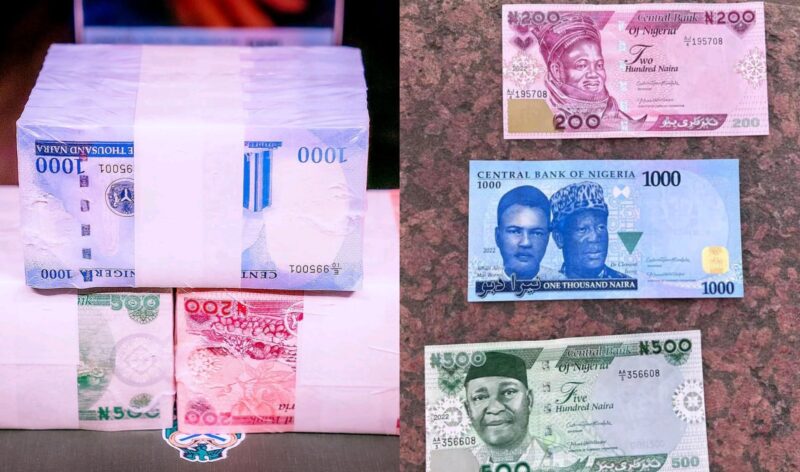
Worried by the effects the Central Bank of Nigeria (CBN)’s naira redesign policy is having on the residents of their states, the governments of Kaduna, Kogi and Zamfara have dragged the Federal government before the Supreme Court, seeking a restraining order to stop the full implementation of the policy.
In a motion ex-parte filed on their behalf by their lawyer, AbdulHakeem Uthman Mustapha (SAN), the three northern states are urging the apex court to grant them an interim injunction stopping the Federal Government either by itself or acting through the CBN, the commercial banks or its agents from carrying out its plan of ending the timeframe within which the now older versions of the 200, 500 and 1000 denominations of the Naira may no longer be legal tender on February 10, 2023.
The Plaintiffs in the suit are the three Attorneys-General and Commissioners of Justice of the three states, while the Attorney-General of the Federation and Minister of Justice, Abubakar Malami (SAN), is the sole Respondent.
The Plaintiffs said that since the announcement of the new naira note policy, there has been an acute shortage in the supply of the new naira notes in Kaduna, Kogi and Zamfara States and that citizens who have dutifully deposited their old naira notes have increasingly found it difficult and sometimes next to impossible to access new naira notes to go about their daily activities.
READ ALSO:
- Tinubu most suitable to succeed Buhari, says Afenifere
- Naira redesign hardships: We’ll reconvene before elections if… – Gbajabiamila
- Man arrested for shooting his younger sister’s boyfriend in Ogun State
They also cited the inadequacy of the notice coupled with the haphazard manner in which the exercise is being carried out and the attendant hardship same is wrecking on Nigerians, which has been well acknowledged even by the Federal Government of Nigeria itself.
The Plaintiffs further maintained that the ten-day extension by the Federal Government is still insufficient to address the challenges bedeviling the policy.
Recall that over the weekend, the CBN Governor at a press conference held in Lagos insisted that that the apex bank will not extend the deadline for swapping old naira notes with the newly redesigned ones.
In the suit filed at the apex court, the Plaintiffs have also filed a motion on notice to abridge the time within which the Respondent may file and serve his Counter-Affidavit to this Suit and an order for an accelerated hearing of this matter.
The states are seeking a declaration that the Demonetization Policy of the Federation being currently carried out by the Central Bank of Nigeria under the directive of the President of the Federal Republic of Nigeria is not in compliance with the extant provisions of the Constitution of the Federal Republic of Nigeria 1999 (as amended), Central Bank of Nigeria Act, 2007 and actual laws on the subject.
They are also asking the court to make a declaration that the three-month notice given by the Federal Government of Nigeria through the Central Bank of Nigeria under the directive of the President of the Federal Republic of Nigeria, the expiration of which will render the old Banknotes inadmissible as legal tender, is in gross violation of the provisions of Section 20(3) of the Central Bank of Nigeria Act 2007 which specifies that Reasonable Notice must be given before such a policy.
The Plaintiffs are also urging the court for a declaration that given the express provisions of Section 20(3) of the Central Bank of Nigeria Act 2007, the Federal Government of Nigeria, through the Central Bank of Nigeria, has no powers to issue a timeline for the acceptance and redeeming of banknotes issued by the Bank, except as limited by Section 22(1) of the CBN Act 2007. The Central Bank shall at all times redeem its bank notes.
The Plaintiffs further want the court to direct the immediate suspension of the demonetisation of the Federal Government of Nigeria through the Central Bank of Nigeria under the directive of the President of the Federal Republic of Nigeria until it complies with the relevant provisions of the law.
READ ALSO:
- South Africa detects two imported cholera cases
- New Naira Notes: Why we didn’t dispense N6m in our vault — Sterling Bank
- One injured as hoodlums attack Adamawa gov’s wife’s convoy
In an affidavit filed in support of the suit and sworn to by the Attorney General and Commissioner for Justice, Kaduna State, Aisha Dikko, she averred that although the naira redesign policy was introduced to encourage the cashless policy of the Federal government, it is not all transactions that can be conveniently carried out through electronic means.
She maintained that several transactions still require cash in exchange for goods and services hence the need for the Federal Government to have sufficient money available in circulation for the smooth running of the economy.
Dikko also pointed out that the Federal Government has embarked on the policy within a narrow and unworkable time frame, and this has adversely affected Nigerian citizens within Kaduna, Kogi and Zamfara States as well as their Governments, especially as the newly redesigned naira notes are not available for use by the people as well as the State Governments.
“That the majority of the indigenes of the Plaintiffs’ states who reside in the rural areas have been unable to exchange or deposit their old naira notes as there are no banks in the rural areas where the majority of the population of the states reside.
“Most people in rural areas of the Plaintiffs’ states do not have bank accounts and have so far been unable to deposit their life savings which are still in the old naira notes.
“There is restiveness amongst the people in the various states because of the hardship being suffered by the people, and the situation will sooner than later degenerate into the breakdown of law and order.
“The Plaintiff State Governments cannot stand by as they are duty-bound to protect citizens in their states and prevent the breakdown of law and order.
“I know that if the Federal Government of Nigeria had given sufficient and reasonable time for the naira redesign policy, all the current hardship and loss being experienced by the Plaintiffs’ State Governments as well as people in the various states would have been avoided.
“I know that the 10-day extension by the Federal Government is still insufficient to address the challenges bedevilling the policy. I also understand that the Federal Government cannot bar Nigerians from redeeming their old naira notes at any time, even though the senior notes are no longer legal tender.
“Unless this Honourable Court intervenes, the Government and people of Kaduna, Kogi and Zamfara State will continue to go through a lot of hardship and would ultimately suffer great loss as a result of the insufficient and unreasonable time within which the Federal Government is embarking on the ongoing currency redesign policy,” she stated.
No date has been fixed for the hearing of the suit.
Channels








metro
From One Goat to a Global Empire: Dino Melaye’s Inspiring Journey to Financial Freedom
From One Goat to a Global Empire: Dino Melaye’s Inspiring Journey to Financial Freedom
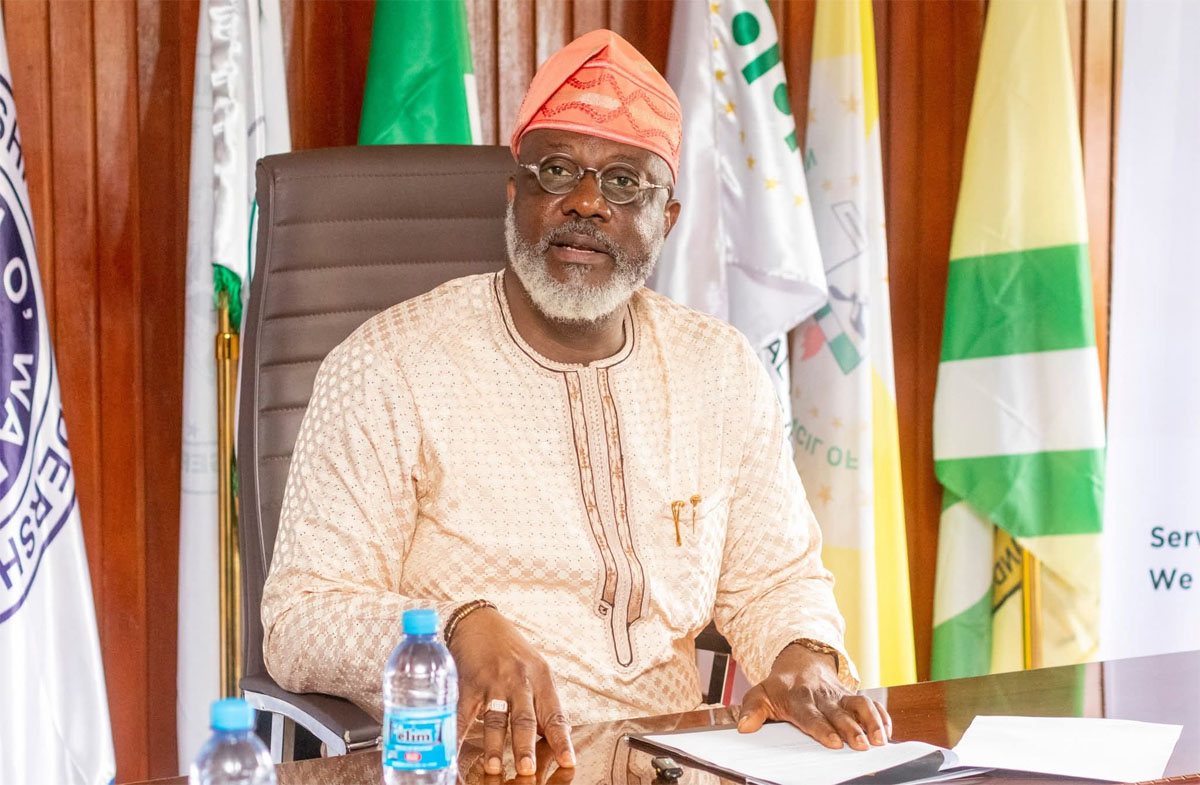
Former Nigerian Senator Dino Melaye has shared the remarkable story of how a single goat he purchased at age 12 funded his education from secondary school through university—and ultimately launched him on a path to international investment success that spans three continents.
The former Kogi West senator made the revelation during an appearance on the KAA Truths podcast on Thursday, August 14, 2026, where he opened up about his journey from humble beginnings to acquiring a diversified portfolio of businesses, shares, and properties across Qatar, Oman, the United Arab Emirates, the United States, and Sweden .
Melaye’s story begins in childhood, long before his political career. At just 12 years old, he made a modest yet strategic purchase—a single goat. That goat reproduced, and Melaye sold its offspring to fund his education. What started as a small animal investment snowballed into a financial lifeline that carried him through secondary school and into higher education.
“At the age of 12, I bought a goat. And this goat would give birth, and I would sell the offspring of the goat to pay my school fees in secondary school. From the offspring of that goat, I paid for my WAEC, paid for my JAMB, I paid for my first year and second year in Ahmadu Bello University,” Melaye recounted .
The returns from that single goat covered not only his secondary school fees but also his West African Examinations Council (WAEC) examination fees, his Joint Admissions and Matriculation Board (JAMB) registration, and his tuition for the first two years at Ahmadu Bello University, Zaria—where he graduated with a degree in Geography in 2000 . He later obtained a law degree from Baze University in 2021 .
Melaye’s investment instincts did not stop with the goat. At age 18, he began investing internationally, purchasing shares in some of the world’s most prominent companies, including Apple, Microsoft, Uber, and Zoom . He recalled that his friends initially ridiculed his decision to buy Uber shares, but those same investments have since delivered substantial returns.
READ ALSO:
- 19-Year-Old Housewife Arrested for Allegedly Poisoning Husband 40 Days After Wedding
- Oyinlola Denies Adeleke’s Car Gift Claim: “Osun Govt Gave Me the Car, Not You”
- Tinubu Rejects Blame Game, Vows to Revive Refineries with Profitability Focus
“When I bought my Apple shares, I bought Microsoft too. When I bought shares in Uber, my friends were laughing at me: ‘Uber, what’s wrong with you?’ Today, I know what it is. When I also bought some shares in Zoom, people were laughing at me, then COVID came, and Zoom went up 400 per cent. So just ask God for direction,” Melaye said .
In addition to equities, Melaye disclosed that he purchased Eurobonds approximately 27 years ago when the euro was trading at about N60. He left the investment untouched and consistently reinvested the dividends, allowing the value to compound significantly over the decades .
The former senator also ventured into franchise businesses in the United States over 20 years ago. He began with a single outlet and expanded steadily over time .
“When I started investing in franchise businesses in America over 20 years ago, I started with one, one gave birth to two, two gave birth to three, three to four,” he said .
Melaye’s real estate journey is equally impressive. He started in Dubai by purchasing studio apartments and renting them out through Airbnb. From studios, he progressed to one-bedroom units, then two-bedroom apartments, and eventually purchased his own house on one of Dubai’s most expensive streets—a duplex in a prominent Downtown Dubai tower .
“When I started in Dubai, I began by buying studios and giving them out for Airbnb. From studios I bought a one-bedroom, from one bedroom I bought two bedrooms, from two bedrooms I bought my own house, in Downtown Dubai, on the most expensive street of Dubai, the first duplex in a tower,” he said .
Today, Melaye has transitioned from being a property owner to a property developer. “I don’t just have a portfolio of apartments in Dubai, I’m a developer. I’m building,” he stated .
Addressing critics who attribute his wealth solely to his time in political office, Melaye pointed out that he has been out of public office since 2019—seven years ago—yet his financial standing has not diminished .
“I’ve been out of public office since 2019. Seven years ago, my standards have not dropped. Definitely, you know there’s a second address,” he said .
He also claimed that he has never secured a government contract at either the federal or state level .
Melaye took time to distinguish between being rich and being wealthy, offering a perspective that resonates with aspiring investors .
“The difference between richness and wealth is that when you’re rich, you’re working for money, you go to work from 9 to 5, you have to attend meetings, you’re rich, but you’re working for money. But when you’re wealthy, money works for you,” Melaye explained .
He urged young Nigerians to develop the habit of investing, regardless of the amount available to them. “You don’t need trillions, millions, or hundreds of thousands to start investing — however small, start it,” he said .
Melaye attributed his financial journey to having a clear vision, remaining committed to it, and believing in divine favour. “I came from a very lowly background, but God, in his infinite mercy, out of his grace, out of divine favour, I am where I am today. And I should not be ashamed of it,” he reflected .
He also advised Nigerians to embrace discipline, hard work, tenacity, and sound decision-making. “Just be sincere with yourself. Believe in the supremacy of God over the universe. Be hardworking, be tenacious, make the right decisions, and have a second address,” he counselled .
Melaye, who served in the Senate from 2015 to 2019 representing Kogi West Senatorial District, has had a political career marked by both legislative achievements and controversies . His journey from a single goat to a global investment portfolio serves as a powerful testament to the virtues of early financial planning, consistent reinvestment, strategic risk-taking, and diversified asset allocation—lessons he hopes will inspire young Nigerians seeking financial independence.
From One Goat to a Global Empire: Dino Melaye’s Inspiring Journey to Financial Freedom
metro
19-Year-Old Housewife Arrested for Allegedly Poisoning Husband 40 Days After Wedding
19-Year-Old Housewife Arrested for Allegedly Poisoning Husband 40 Days After Wedding in Bauchi
Bauchi State Police have taken a 19-year-old woman into custody following allegations that she poisoned her husband’s meal less than six weeks into their marriage, in a case that has stunned the local community. Aisha Musa, a newlywed residing in Gwamma Village, Bauchi Local Government Area, was arrested on August 12, 2026, after she allegedly mixed a toxic substance into her husband’s food—barely 40 days after their wedding ceremony.
According to police reports, the incident unfolded at approximately 3:15 PM when Musa reportedly introduced the poison into the meal she had prepared for her spouse. The husband, whose identity has been withheld for privacy reasons, consumed the food and subsequently fell seriously ill. He was immediately rushed to the Abubakar Tafawa Balewa University Teaching Hospital (ATBUTH) in Bauchi, where medical staff confirmed he is now in stable condition and responding to treatment.
The alarm was raised by an anonymous female caller from the Wunti Dada area of Bauchi, who contacted the police around 7:40 PM on the same day. Officers from the ‘C’ Division, Tafawa Balewa Estate, swiftly mobilized to the scene, evacuated the victim, and arrested the suspect without incident.
READ ALSO:
- Oyinlola Denies Adeleke’s Car Gift Claim: “Osun Govt Gave Me the Car, Not You”
- Tinubu Rejects Blame Game, Vows to Revive Refineries with Profitability Focus
- Scores of Terrorists Killed, 60 Arrested in Nationwide Military Operations
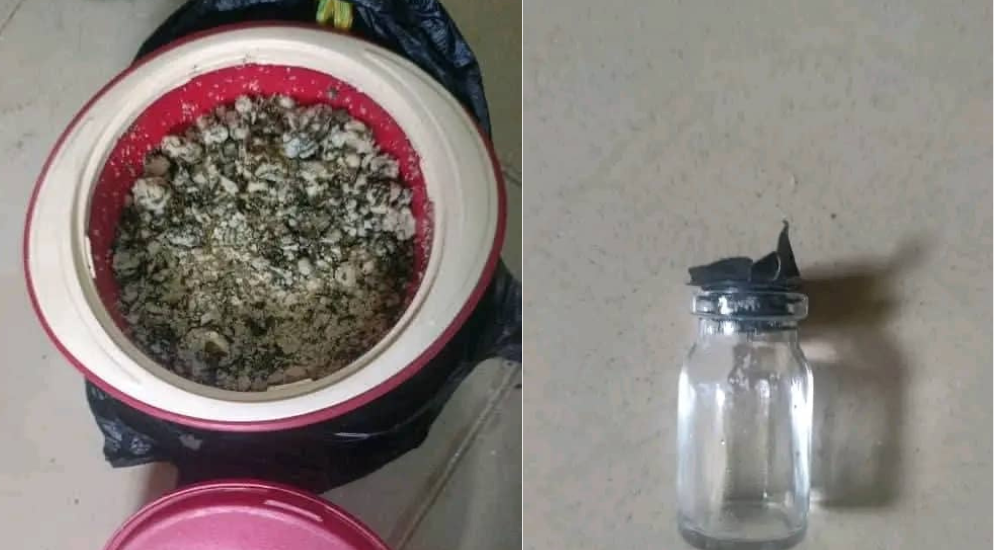
During initial interrogation, Musa allegedly confessed to the crime, admitting that she had intentionally mixed the poisonous agent into her husband’s meal. Investigators have since recovered key pieces of evidence, including an empty bottle believed to have contained the poison and remnants of the contaminated food, both of which have been registered as official exhibits.
The Commissioner of Police, CP Sani-Omolori Aliyu, has ordered that the case be transferred to the State Criminal Investigation Department (SCID) for a more comprehensive probe into the circumstances and motive behind the alleged act. The police have assured the public that the suspect will be charged in court as soon as investigations are concluded.
While the motive remains unclear, the case has drawn significant attention to domestic incidents involving young brides and has reignited conversations about gender-based violence, mental health support, and early marriage in the region. Community leaders have called for a fair and thorough investigation, urging both families to allow the legal process to take its course.
The police continue to appeal to the public for any additional information that may aid the investigation, reaffirming their commitment to ensuring justice for all parties involved.
19-Year-Old Housewife Arrested for Allegedly Poisoning Husband 40 Days After Wedding
metro
Scores of Terrorists Killed, 60 Arrested in Nationwide Military Operations
Scores of Terrorists Killed, 60 Arrested in Nationwide Military Operations
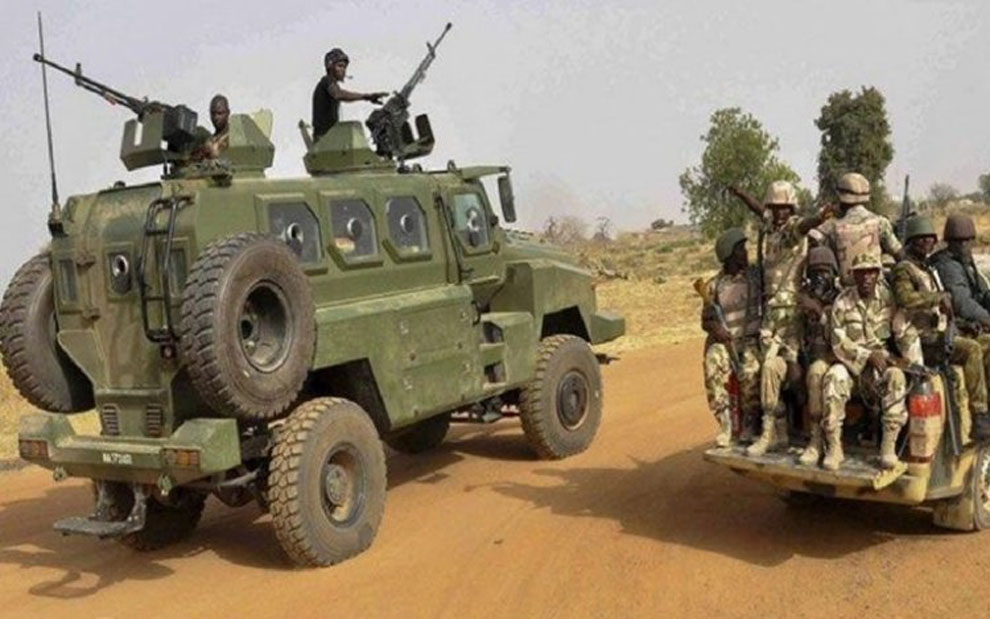
In a major coordinated offensive against terrorist networks, troops of the Nigerian Army have bombed scores of terrorists, arrested a high-profile operative linked to notorious terrorist leader Dogo Gide, and detained 60 suspected collaborators in separate intelligence-led operations across the country. The operations, recorded between August 12 and 13, 2026, also led to the recovery of weapons, military uniforms, and other items, according to military authorities. The Theatre Command, Joint Task Force North West, Operation Fansan Yamma, launched Operation Clean Sweep IV, a coordinated ground and air offensive aimed at intensifying pressure on terrorists and armed criminal elements across the region. The Media Information Officer, Lieutenant Colonel Aliyu Danja, said the operation brings coordinated ground and air actions to bear on identified threats across the North Western States, with the objective of degrading terrorist capabilities, disrupting their movements and logistics, and denying them the opportunity to establish footholds within Nigerian communities.
In Kaduna State, troops of 4 Demonstration Battalion arrested a suspected ISWAP operative at Kadage Check Point while he was allegedly conveying seven pairs of sewn foreign camouflage uniforms to a terrorist camp. Preliminary interrogation revealed that the suspect was a close confidant of Dogo Gide and had been supplying logistics to him, indicating the deep-rooted network of support that enables terrorist operations in the region. Troops recovered 23 yards of foreign camouflage material, two mobile phones, three ATM cards, and an identity card from the suspect, providing valuable intelligence for ongoing operations. The arrest of this high-value target is expected to disrupt supply chains to terrorist camps and weaken the operational capabilities of Dogo Gide’s network.
READ ALSO:
- Navy Rescues 22 Sea Robbery Victims, Recovers Hijacked Boat in Akwa Ibom
- Keyamo Issues One-Week Ultimatum to Airlines Over Debt Repayment Plans
- [ICYMI] How Nigerian Medical Doctor Was Promoted to Captain in US Army
In Adamawa State, troops of 226 Battalion, supported by hunters, raided a motor park in Gombi following intelligence on suspected terrorist collaborators allegedly disguising themselves as menial workers and hawkers. The operation led to the arrest of 60 suspects, who are currently being held for further investigation. This follows similar operations in the region, including the recent arrest of a 43-year-old suspected collaborator in Mubi South, Adamawa State, demonstrating the military’s sustained efforts to dismantle support networks for terrorist groups. The arrests send a strong message that those who provide support to terrorists, whether through logistics, shelter, or information, will face the full weight of the law.
In Katsina State, troops of Sector 2 conducted a clearance operation on August 12 around suspected terrorist enclaves in Dutsinma Local Government Area. The operation mounted significant pressure on the terrorists, compelling them to abandon their positions and withdraw into surrounding bushes, while clearance operations are ongoing in the general area. In Zamfara State, the Air Component of Operation Fansan Yamma conducted precision strikes on terrorists who had converged on motorcycles in Anka Local Government Area. The strikes reportedly neutralised scores of terrorists and forced survivors to abandon their motorcycles and flee into surrounding bushes, with air assets subsequently locating and engaging the fleeing terrorists. Troops of 1 Brigade also recovered an RPG bomb during a patrol around Tunga-Jambako in Maradun Local Government Area following an earlier terrorist ambush, highlighting the ongoing threat posed by terrorist elements in the region.
In Benue State, troops of Operation Whirl Stroke arrested five suspected terrorists during operations in Chito, Jootar, and Ikyior in Ukum Local Government Area. The troops destroyed the suspected enclaves and recovered two motorcycles and two locally fabricated guns, dealing a significant blow to terrorist operations in the state. The military also intercepted five women and seven children suspected to be family members of terrorists in Mafa Local Government Area of Borno State, with the group reportedly escaping from a terrorist enclave in Gazuwa Camp. Similarly, six male children were intercepted at Ajiri after reportedly escaping from Murofari Village following clashes between rival terrorist groups, indicating the internal conflicts and fragmentation within terrorist networks. In a related operation, troops of Operation SAVANNAH SHIELD foiled an advance by terrorists from Zamfara into Niger State, recovering an AK-47 rifle and 398 rounds of ammunition after following credible intelligence on the movement of terrorists riding about 200 motorcycles towards Inana Village in Rijau Local Government Area of Niger.
Danja said a major component of Operation Clean Sweep IV was the effort to contain and dismantle the Lakurawa terrorist network across the theatre. The Lakurawa group has deeper Sahelian roots in the Mali–Niger border region and emerged in northwestern Nigeria between 2016 and 2018 as a community self-defence force before transforming into a violent extremist group that imposes its own interpretation of Islamic law on communities it controls. “The operation is designed to prevent the infiltration and reinforcement of Lakurawa elements into Nigeria while denying the group the opportunity to exploit border areas as corridors for movement, logistics and the establishment of enclaves,” he said. The operation further seeks to block the activities of terrorist elements operating around the River Niger axis and the Kainji Lake National Park, thereby preventing them from using the area as a platform for projecting violence into adjoining communities and other parts of the North West. “The launch of Operation Clean Sweep IV underscores the proactive and sustained posture of Operation Fansan Yamma in confronting evolving terrorist threats across the region. The Theatre remains resolute in protecting civilian communities, securing Nigeria’s territorial integrity and denying terrorist elements the opportunity to regroup, reinforce or establish operational footholds,” Danja said.
Scores of Terrorists Killed, 60 Arrested in Nationwide Military Operations
-
 International2 days ago
Iran Had Detailed Intel on Trump’s Location Before Secret Turkey Escape
-
 News3 days ago
Tinubu Vows to Secure Nigeria, Declares Unity Non-Negotiable Amid Worsening Insecurity
-

 News2 days ago
FG to Attach 300 NYSC Corps Members to CNG Workshops for Skills Training
-

 metro3 days ago
Nigeria Needs Competent, Ethical Young Leaders, Says HAVEK Leadership Academy
-
 metro2 days ago
Seven Miners Killed in Plateau Mining Pit Collapse, Renewing Urgent Calls for Safety Reform
-

 News3 days ago
Ronaldo Marries Georgina Rodriguez in Intimate Portugal Wedding Ceremony
-

 metro3 days ago
Osun guber: Adeyanju petitions US, UK, Canada to sanction Fadahunsi over ‘kill accord’ comment
-

 International3 days ago
Pentagon Confirms 153 Civilians Killed in US Military Operations in 2025