

metro
Market women protest rejection of old notes in Lagos (VIDEO)

Aggrieved market women have protested the rejection of old banknotes by business owners in Lagos.
The women, seen wailing in a yet-to-be-identified community, wanted President Muhammadu Buhari to address the Supreme Court ruling on the recirculation of old notes.
“I went to the market to buy some goods but the old notes were not collected from me,” said one of the women.
READ ALSO:
- NLC gives FG seven days to address cash problem
- FG to improve welfare, allowances of corps members
- APC Meeting: No decision on zoning of NASS Leadership yet – Gbajabiamila, Ndume
The Supreme Court had ruled that N500 and N1,000 old banknotes be legal tender till December 31, 2023.
The Nigerian Bar Association, on Monday, condemned Buhari’s silence on the apex court’s March 3 ruling, adding that the controversial cashless policy had “brought hardship to Nigerians and the situation has not abated”.
Reacting, Lagos State Governor, Babajide Sanwo-Olu, said that “there is no reason to reject the old notes”, urging “business owners, especially retailers, to accept the old N500 and N1,000 notes in line with the Supreme Court judgement that the currency remains legal tender until December 31, 2023”.










metro
Fountain of Life Challenges Court Warrant, Says Jimmy Odukoya Remains Senior Pastor
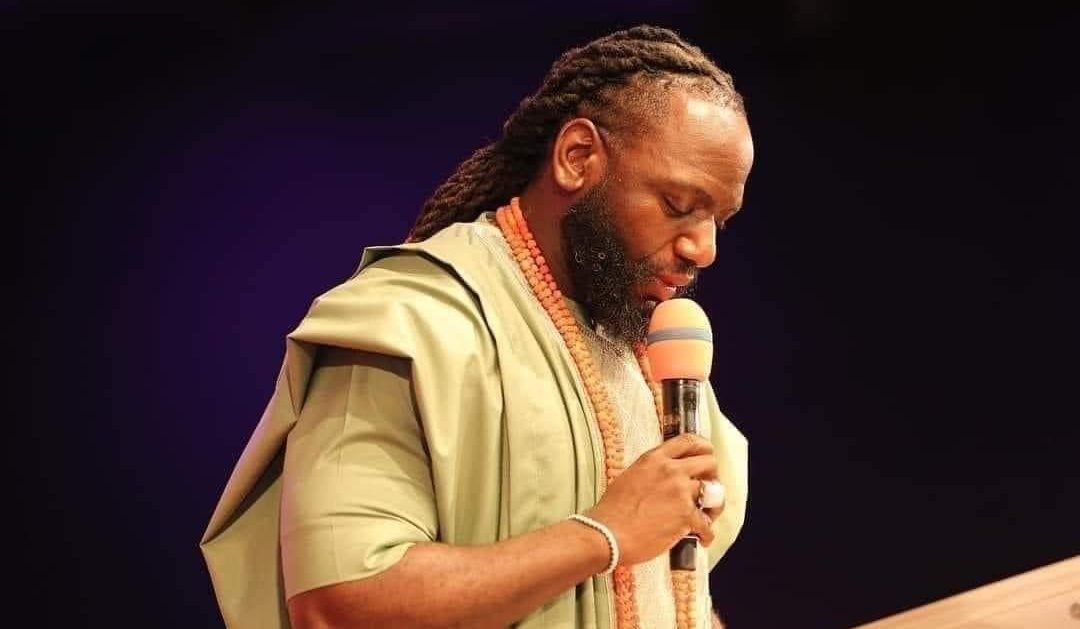
Fountain of Life Jimmy Odukoya arrest warrant
The Fountain of Life Church has faulted the issuance of a bench warrant against its Senior Pastor, Jimmy Odukoya, describing the court proceedings that led to the order as questionable and insisting that he remains the church’s duly appointed leader.
The church said it was concerned about the proceedings at the Lagos State High Court on Thursday, November 26, which culminated in the issuance of the warrant against Odukoya and the subsequent recusal of the presiding judge.
In a statement issued on Thursday, the church said its legal team maintained that Odukoya had not been duly served with the restraining order, originating processes and accompanying court documents, either personally or through substituted service as directed by the court.
It argued that the court’s directives on service, contained in orders issued on November 18 and 23, had not been fulfilled before the proceedings that led to the bench warrant.
The church also disclosed that its lawyers had filed a notice of appeal and two separate applications challenging the court’s orders, their enforcement, the court’s jurisdiction and the contempt proceedings.
It questioned why the matter was heard on Thursday despite allegedly not appearing on the court’s cause list for the day.
The church further claimed that journalists were directed to leave the courtroom before the bench warrant was issued, adding that the presiding judge recused herself after the order was made.
According to the church, the warrant was issued without the court first determining the pending applications challenging the earlier orders.
It said the developments occurred within eight days of the initial ex parte order and before December 1, the date originally scheduled for the matter to be mentioned.
READ ALSO:
- Niger Communal Violence: Bago Pledges ₦148m as 74 People Die in Kambari-Fulani Clash
- ‘Useful Errand Boy’ — Imo APC Rejects Wike’s Bid To Lead Tinubu Campaign
- Kenyan Pastor Serving 200 Years For Murder Convicted Of Terrorism-Related Charges
The church said the circumstances raised serious concerns about due process, fair hearing and the administration of justice.
It added that its legal representatives were challenging the orders and related procedural and jurisdictional issues before the appropriate courts, including the Court of Appeal.
Clarifying the legal implications of the warrant, the church said its issuance did not constitute a conviction or a final determination of the substantive leadership dispute.
“The Church maintains its position, based on the advice of its legal representatives, that Pastor Jimmy Odukoya remains its duly appointed Senior Pastor and Chairman of the Board of Trustees,” the statement read.
The church reaffirmed its commitment to the rule of law and constitutional governance, saying it would pursue all available legal remedies within the Nigerian judicial system.
It also appealed to members, friends and the general public to remain calm, united and prayerful while the legal proceedings continued.
Background to Fountain of Life leadership crisis
The controversy followed a leadership dispute at the church after a faction of its Board of Trustees announced Odukoya’s removal as Senior Pastor in November, citing succession instructions allegedly left by the late founder, Pastor Taiwo Odukoya.
The trustees claimed that a video recording made by the late founder in December 2021 contained instructions concerning his preferred successor, which they said was not disclosed before Jimmy’s appointment in September 2023.
The board subsequently announced that it no longer recognised Jimmy Odukoya as Senior Pastor and named Pastor Rotimi Okpaise as interim spiritual and administrative leader.
Odukoya rejected his removal, arguing that the decision was not supported by a valid resolution under the church’s constitution. He also instituted legal proceedings to challenge the trustees’ action.
The court later issued an order restraining him from presenting himself as Senior Pastor and Spiritual Head of the church, leading to the contempt proceedings and eventual bench warrant after he failed to appear.
The church’s leadership dispute remains unresolved, with legal challenges pending before the courts.
Fountain of Life Challenges Court Warrant, Says Jimmy Odukoya Remains Senior Pastor
metro
Niger Communal Violence: Bago Pledges ₦148m as 74 People Die in Kambari-Fulani Clash

Niger Communal Violence: Bago Pledges ₦148m as 74 People Die in Kambari-Fulani Clash
At least 74 people have been killed in a deadly communal clash between Kambari vigilantes and Fulani communities in Borgu Local Government Area of Niger State, prompting Governor Mohammed Umaru Bago to announce ₦148 million in compensation to families of the victims.
The governor announced the compensation during a condolence visit to the Emir of Borgu, Alhaji Halilu Sani Dantoro, at his palace in New Bussa, where he appealed to residents to end the violence and embrace peaceful coexistence.
Bago said the state government would pay ₦2 million to each of the 74 families who lost relatives, bringing the total compensation to ₦148 million.
He also promised to provide foodstuffs and building materials to affected residents, while assuring them that the government would assess the destruction caused by the violence and rebuild communities whose houses were burnt.
The deadly confrontation reportedly followed an attack on Lumman-Ba’are community last Saturday by suspected terrorists, who killed the village head, Mallam Bawa Muhammad, his wife and three of their children.
The attackers also reportedly set the village head’s palace ablaze.
The attack triggered reprisal violence after some Kambari vigilantes allegedly linked the assailants to Gada Oli, a community located about 70 kilometres away.
A community leader said the vigilantes mobilised and attacked people along the route to Gada Oli, including residents of Wawa, where several Fulani settlements are located.
The reprisals reportedly escalated into widespread violence, leaving dozens dead and communities devastated.
Bago calls for peace, warns against ethnic reprisals
Reacting to the killings, Bago expressed sadness over the breakdown of peaceful relations between the Kambari and Fulani communities, noting that both groups had coexisted for many years.
READ ALSO:
- ‘Useful Errand Boy’ — Imo APC Rejects Wike’s Bid To Lead Tinubu Campaign
- Kenyan Pastor Serving 200 Years For Murder Convicted Of Terrorism-Related Charges
- Tinubu Offers Abuja Homes, N100m each to Families of Air Force Crash Victims
He urged residents to resist ethnic divisions and avoid further retaliation, warning that the violence could degenerate into ethnic cleansing if not urgently contained.
The governor said there was no victor in the conflict, stressing that continued hostilities would only deepen the suffering of residents and undermine development in the area.
He appealed to the warring communities to lay down their arms, exercise restraint and work towards restoring peace.
Bago also announced plans for an amnesty programme to encourage residents to surrender illegal firearms, saying the initiative would be organised in collaboration with the National Centre for the Control of the Proliferation of Small Arms and Light Weapons.
According to him, the programme would be held in Borgu to discourage the possession of illegal weapons and promote lasting peace.
Police deploy counter-terrorism personnel
Meanwhile, the Inspector-General of Police, Olatunji Rilwan-Disu, has ordered the deployment of additional personnel from the Police Counter-Terrorism Unit to the affected communities.
The IGP, represented by the Deputy Inspector-General of Police in charge of Operations, Shehu Umar Nadada, visited Lumman-Ba’are to assess the security situation and engage community leaders.
Nadada described the killings and subsequent communal violence as troubling, urging residents not to allow terrorist attacks and banditry to fuel ethnic divisions.
He assured the communities that additional operational assets would be deployed to strengthen security and prevent further attacks.
The Emir of Borgu, in his remarks, said the kingdom had been grappling with insurgency, banditry and kidnapping before the latest clashes erupted.
He attributed the growing mistrust among communities partly to repeated attacks by armed groups, saying the emirate council had been engaging stakeholders in dialogue to promote unity and cooperation.
The monarch called on the state and Federal Governments to intensify efforts to address insecurity and restore lasting peace across Borgu Kingdom.
The latest violence has heightened concerns over worsening insecurity in parts of Niger State, where attacks, kidnappings and communal tensions have repeatedly displaced residents and disrupted livelihoods.
Niger Communal Violence: Bago Pledges ₦148m as 74 People Die in Kambari-Fulani Clash
metro
Kenyan Pastor Serving 200 Years For Murder Convicted Of Terrorism-Related Charges
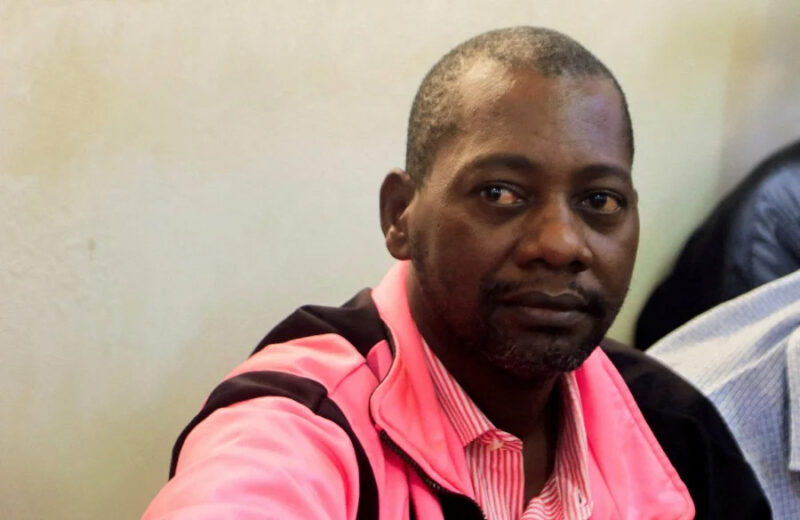
Kenyan Pastor Serving 200 Years For Murder Convicted Of Terrorism-Related Charges
A Kenyan pastor already serving a 200-year prison sentence for the murder of 191 people has been convicted of additional terrorism-related offences in connection with the deadly Shakahola religious tragedy.
Pastor Paul Mackenzie, founder of the Good News International Church, was convicted by a court in Mombasa, Kenya, following proceedings over the activities of his religious movement and the deaths of hundreds of followers.
The latest conviction adds to his growing list of criminal convictions arising from the shocking incident, which attracted international attention after authorities uncovered mass graves in Shakahola Forest, Kilifi County.
According to reports, Mackenzie was found guilty of offences including organised criminal activity, radicalisation, facilitating the commission of a terrorist act and possessing an article connected with an offence under Kenya’s Prevention of Terrorism Act.
He had pleaded not guilty to the charges, while his defence team reportedly indicated plans to appeal.
The case is connected to the activities of Mackenzie’s church, whose followers were allegedly encouraged to undertake extreme fasting in preparation for what he reportedly described as the end of the world.
Investigations revealed that numerous followers, including children, died after allegedly being instructed to starve themselves to death in the belief that doing so would enable them to reach heaven.
The shocking discoveries began in April 2023 when Kenyan authorities started exhuming bodies from shallow graves in Shakahola Forest. More than 400 bodies were eventually recovered, making the incident one of the deadliest religious-related tragedies in Kenya’s history.
In November 2026, Mackenzie was sentenced to 200 years in prison after being convicted of murdering 191 people, comprising 190 children and one adult.
The sentence reportedly comprised 100 years for murders by starvation and another 100 years for direct homicide.
The court found him responsible for his role in the deaths, which prosecutors linked to the activities of his religious movement.
The latest terrorism-related conviction represents another major legal setback for the pastor, who also faces other proceedings connected to the Shakahola tragedy.
The incident has renewed concerns about religious extremism, the protection of vulnerable followers and the need for stronger oversight of religious organisations in Kenya.
Kenyan President William Ruto had previously acknowledged the government’s failure to prevent the tragedy, describing the deaths as a disturbing national incident.
Mackenzie’s prosecution remains one of the most significant legal responses to the mass deaths, as authorities continue efforts to establish accountability for the victims and their families.
Kenyan Pastor Serving 200 Years For Murder Convicted Of Terrorism-Related Charges
-
 metro2 days ago
Oyoland Grand Chief Imam Moves to End Feud, Seeks Reconciliation Among Markaziyya, Adabiyyah, Mahdul ‘Arabi
-

 metro23 hours ago
Nigerian Health Worker, 26, Found Dead in Canada After Returning From Work
-
 metro24 hours ago
Phone-Tapping Claim: I Lied to Unsettle Tinubu Government – El-Rufai
-

 News3 days ago
Omokri Arrives in Mexico to Assume Duty as Nigerian Ambassador, Thanks Govt for Ministerial Reception
-

 metro1 day ago
‘I Came to Nigeria for Love, Now I’m Stranded, Begging for Rent’ — American Woman Married to Enugu Man Cries Out
-

 Politics18 hours ago
BREAKING: Makinde Reportedly Agrees to Back Atiku’s Presidential Bid
-
 metro3 days ago
Tinubu Gives Igboho Fresh Security Mandate Across South-West
-
 News3 days ago
BREAKING: Court Sacks Omo-Agege as NDC Senatorial Candidate, Orders INEC to Remove His Name