

Politics
APC in Rivers contested against INEC not PDP – Amaechi

Former Minister of Transportation, Rotimi Amaechi, has condemned the elections conducted by the Independent National Electoral Commission on Saturday across the country.
He described the elections as ‘completely hopeless’ while speaking with journalists in Rivers State on Saturday.
For instance, in Rivers State, he said the All Progressives Congress contested the elections not against the Peoples Democratic Party and other political parties but INEC.
Amaechi said he was one of those who kicked against Prof. Mahmood Yakubu’s reappointment as INEC chairman, adding that his handing of the elections in Rivers and other states did not come to him as a surprise.
He said a member of Bola Tinubu’s camp nominated Yakubu for the INEC job.
Tinubu was declared as the winner of the presidential election held on February 25 by INEC. This is currently being challenged at the tribunal by the PDP and the Labour Party.
Amaechi said, “I have spoken to everybody concerned on this issue before the election. There are those of us who opposed the reappointment of Mahmood.
“The person who nominated him for appointment is a member of Tinubu’s camp. So what were you expecting – success?
“Here in Rivers State, Mahmood worked under (Governor Nyesom) Wike as Executive Secretary of TETFUND; so what you see here in Rivers State is that APC, SDP and the rest are contesting election not against PDP – against INEC, against police.”







Politics
Shehu Sani Warns Northerners Against Celebrating Abuja Attack on Tinubu, Fears Ethnic Reprisals
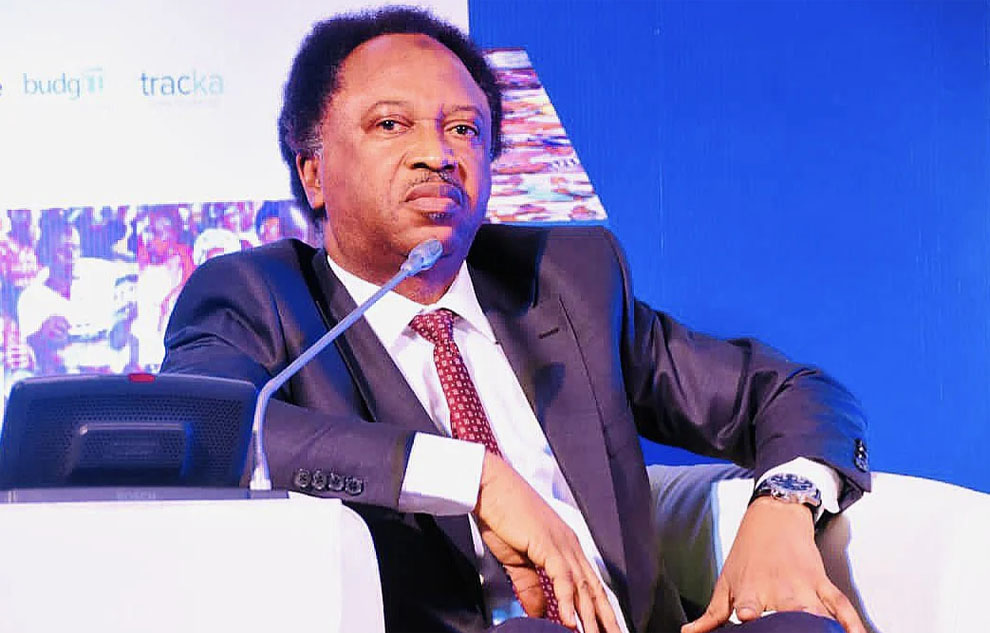
Shehu Sani Warns Northerners Against Celebrating Abuja Attack on Tinubu, Fears Ethnic Reprisals
ABUJA — Former Kaduna Central Senator, Shehu Sani, has cautioned Northerners against celebrating, justifying or encouraging attacks on President Bola Ahmed Tinubu, warning that similar incidents involving Northern political leaders in Southern Nigeria could trigger dangerous ethnic tensions and possible reprisals.
Sani said Nigerians should consider the consequences of allowing political disagreements to degenerate into hostility against leaders on the basis of their regional or ethnic backgrounds.
The former lawmaker gave the warning in a statement posted on his official X handle on Saturday, November 21, 2026, while drawing comparisons between attacks involving two Southern Nigerian presidents and a hypothetical situation in which a Northern presidential candidate or sitting president was subjected to similar treatment in the South.
Recalling the attack on former President Goodluck Jonathan’s campaign convoy in Bauchi State in January 2015 and the recent incident involving President Tinubu’s motorcade in Abuja, Sani observed that neither incident plunged the country into widespread ethnic unrest.
He, however, questioned whether Nigerians would demonstrate the same restraint if a Northern leader experienced similar hostility in a Southern state.
“Former President Goodluck was once reportedly pelted in Bauchi and the country was calm. President Tinubu was reportedly pelted in Abuja and the country is calm.
“Will there be the same calmness in the country if a Presidential candidate from the North or a future president from the North is pelted in Enugu or Ekiti?” he asked.
Warns Against Ethnic Reprisals
Sani expressed concern that an attack on a Northern political leader in the South could provoke angry reactions among youths in the North, potentially worsening the country’s already delicate ethnic and political relationships.
He illustrated the danger by asking whether Northern youths would take to the streets chanting provocative slogans such as “Shege Biafra” or “Shege Oduduwa” if a Northern presidential candidate or president were attacked in the South-East or South-West.
The former senator’s remarks appeared to be a warning against the dangerous consequences of normalising political violence and celebrating attacks on public officials simply because they belong to a different region.
He urged Northerners to demonstrate the same tolerance and restraint they would expect from other Nigerians if a political leader from their region became the target of public hostility.
“For those of us from the North, let’s not support, applaud or encourage what we can NEVER tolerate when the table turns,” he stated.
How Tinubu’s Abuja Motorcade Was Attacked
Sani’s intervention comes against the backdrop of the November 13 incident involving President Tinubu’s motorcade shortly after he attended Juma’at prayers at the Shehu Shagari Central Mosque in Area 1, Garki, Abuja.
As the presidential convoy departed the mosque, some youths reportedly gathered around the area, chanting anti-government slogans in Hausa, including “Ba ma yi, ba ma so”, meaning “We don’t want it; we don’t accept it”.
Videos circulated on social media also appeared to show some individuals throwing stones and other objects towards the presidential convoy.
The incident initially generated conflicting accounts, with presidential aide O’Tega Ogra dismissing some circulating videos as misleading.
However, the Federal Capital Territory Police Command subsequently confirmed that the motorcade had come under attack, disclosing that vehicles were damaged and some security operatives sustained injuries.
The police also announced the arrest of 78 suspects in connection with the incident.
President Tinubu subsequently directed the police to caution and release the detained suspects.
Political Tensions Mount Ahead of 2027 Elections
The Abuja incident has further heightened political tensions as Nigeria approaches the 2027 general elections.
The ruling All Progressives Congress (APC) has accused opposition interests, particularly the African Democratic Congress (ADC) and the Nigeria Democratic Congress (NDC), of being behind the incident. Both opposition parties have rejected the allegations.
The controversy has added to growing concerns about political intolerance, regional divisions and the possibility of violence as political activities intensify ahead of the next general elections.
Sani’s intervention has therefore brought renewed attention to the need for political maturity and restraint across the country’s diverse regions.
His central message is that political opposition should never become an excuse for violence, just as attacks on leaders should not be applauded simply because they belong to a different political party, ethnic group or geographical region.
With the 2027 elections approaching, the former senator’s warning underscores the importance of protecting Nigeria’s political stability from the dangers of ethnic hostility and retaliatory violence.
Shehu Sani Warns Northerners Against Celebrating Abuja Attack on Tinubu, Fears Ethnic Reprisals
Politics
‘Makinde Should Call Wike Uncle, Not Me’ – Ogun Fires Back

‘Makinde Should Call Wike Uncle, Not Me’ – Ogun Fires Back
A former member of the House of Representatives and chieftain of the Nigeria Democratic Congress (NDC), Sergius Ogun, has dismissed suggestions that Oyo State Governor Seyi Makinde should regard him as an elder political figure, insisting that he is senior to the governor.
Ogun made the remark while reacting to a reported comment involving Makinde and the Minister of the Federal Capital Territory (FCT), Nyesom Wike.
In a pointed response, the former lawmaker said he had heard that Makinde should be addressing Wike as “Uncle”, but maintained that such a description did not apply to his relationship with the Oyo governor.
“I heard he said Makinde should be calling him Uncle Wike. I’m senior to him. He’s not uncle to me,” Ogun was quoted as saying.
The exchange comes against the backdrop of the prolonged political disagreement between Makinde and Wike, which has repeatedly exposed divisions within the Peoples Democratic Party (PDP) and generated debate over political loyalty, seniority and influence.
READ ALSO:
- Gombe: Three Killed, 13 Injured as Alleged Military Shooting Sparks Outcry
- Jimmy Odukoya Sues Sister, Church Trustees Over Removal as Senior Pastor
- UNILAG Gets 10 CNG Buses as FG Expands Campus Transport Scheme to 60 Institutions
The disagreement intensified after Makinde accused Wike of promising President Bola Tinubu that he would help retain control of the PDP ahead of the 2027 general elections. Wike subsequently criticised Makinde, warning him against engaging in a political battle he might not be able to sustain.
Makinde and Wike, who were once political allies within the PDP, have since found themselves on opposing sides of the party’s leadership crisis and the emerging political alignments ahead of the 2027 elections.
Ogun’s intervention adds another voice to the increasingly heated political exchanges surrounding the two prominent politicians.
‘Makinde Should Call Wike Uncle, Not Me’ – Ogun Fires Back
Politics
2027: Oshiomhole Mocks Makinde, Questions His ‘Reset Nigeria’ Agenda
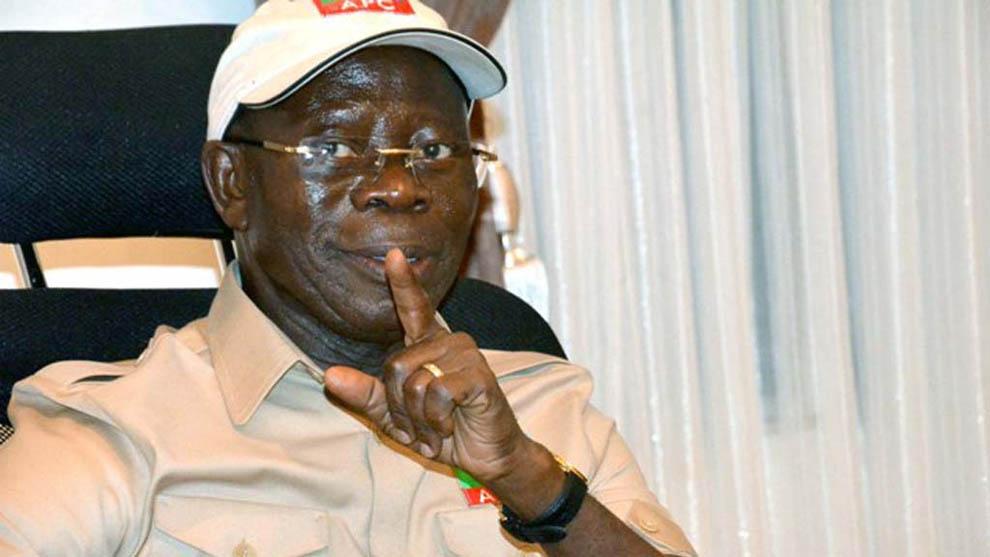
2027: Oshiomhole Mocks Makinde, Questions His ‘Reset Nigeria’ Agenda
IBADAN, Oyo State — Former Edo State Governor and Senator representing Edo North, Adams Oshiomhole, has taken a swipe at Oyo State Governor Seyi Makinde, challenging him to abandon his reported presidential ambition ahead of the 2027 general elections and support President Bola Ahmed Tinubu’s re-election bid.
Oshiomhole also questioned Makinde’s proposed *Reset Nigeria* agenda, demanding to know which policies of the Tinubu administration the Oyo governor intended to reverse if given the opportunity to lead the country.
The former APC National Chairman made the remarks on Saturday, November 21, during the All Progressives Congress (APC) presidential campaign rally at the historic Mapo Hall in Ibadan.
Addressing party supporters and political leaders at the gathering, Oshiomhole described the 2027 presidential election as a decisive moment for Nigeria, insisting that Tinubu deserved another opportunity to continue his administration.
He directly challenged Makinde, who has been identified in reports as the presidential candidate of the Allied Peoples Movement (APM), to reconsider his political ambition and align with the incumbent president.
“Drop your presidential dream, back Tinubu. This coming election is a decisive factor. We have a leader, the President of the Federal Republic of Nigeria, President Bola Ahmed Tinubu,” Oshiomhole declared.
The senator further urged Makinde to wait for another opportunity, insisting that the forthcoming election was not the appropriate time for the Oyo governor to pursue his presidential ambition.
Beyond the direct challenge, Oshiomhole devoted a significant part of his address to questioning Makinde’s *Reset Nigeria* campaign slogan, asking whether the governor intended to reverse what he described as some of the achievements of the Tinubu administration.
He particularly focused on three areas: the student loan scheme, infrastructure development and the welfare of university lecturers.
Oshiomhole Questions Makinde Over Student Loan Scheme
Questioning the governor’s position on the Federal Government’s student loan initiative, Oshiomhole asked whether Makinde’s proposed national reset would affect the scheme designed to provide financial assistance to students from economically disadvantaged backgrounds.
“Is Seyi Makinde angry because Tinubu is giving loans to the children of poor people in our universities? Is that what Makinde wants to reset?” he queried.
The former Edo governor suggested that the student loan programme was one of the policies the next administration should sustain rather than reverse.
He argued that providing financial support to students from less privileged backgrounds was important to expanding access to higher education and creating opportunities for young Nigerians.
Challenges Makinde Over Lagos-Calabar Coastal Highway
Oshiomhole also turned his attention to infrastructure development, citing the ongoing Lagos-Calabar Coastal Highway project as an example of what he considered a major achievement of Tinubu’s administration.
He questioned whether Makinde intended to discontinue the project if he eventually assumed the presidency.
“The President is creating massive infrastructure to connect Lagos to Calabar so that our people can move. Is that what Makinde wants to reset?” he asked.
The senator maintained that infrastructure projects connecting different parts of the country were necessary for economic growth, improved transportation and national development.
His comments formed part of his broader argument that the opposition should explain what exactly it intended to change about the current administration’s policies rather than simply campaign on the promise of a national reset.
University Lecturers’ Salaries: Oshiomhole Challenges Oyo Governor
The former labour leader also brought the welfare of university lecturers into the political argument, using the University of Ibadan as an example.
According to him, Nigerian universities previously experienced frequent disruptions caused by industrial actions, leaving students to spend additional time completing their academic programmes.
Oshiomhole argued that the Tinubu administration had improved lecturers’ remuneration, claiming that the development had helped stabilise academic activities.
He recalled the situation in which lecturers would teach for a few days before embarking on industrial action for several days.
“For a long time, a lecturer would teach for two days and then go on strike for three days. Is that not the truth?” he asked.
He subsequently questioned whether Makinde’s proposed national reset would reverse the alleged improvements in lecturers’ welfare.
“Does Makinde want to reset this policy? Does he want the strike to return? Does he want to reduce the salaries of lecturers?” Oshiomhole asked.
He maintained that paying university lecturers adequately would encourage qualified and intelligent people to remain in the teaching profession, which he described as one of the noblest professions.
Oshiomhole further argued that improving the welfare of lecturers was essential to developing the country’s future workforce and strengthening the education sector.
Tinubu Campaigns for Second Term in Ibadan
The political exchange took place as Tinubu intensified his re-election campaign in the South-West ahead of the January 16, 2027 presidential election.
The Ibadan rally attracted several prominent APC leaders, including Vice-President Kashim Shettima, Senate President Godswill Akpabio, APC National Chairman Nentawe Yilwatda and governors from different parts of the country.
Other political figures at the gathering included Senate Leader Opeyemi Bamidele and several serving and former political officeholders.
Speaking at the rally, Tinubu appealed to residents of the South-West to support his administration, insisting that the difficult economic reforms undertaken by his government would eventually deliver greater prosperity.
The President also announced that his administration had signed a Memorandum of Understanding with Chinese automobile manufacturer Yutong to reopen the defunct Leyland automobile assembly plant in Ibadan.
According to Tinubu, the facility would be revived for public transport vehicle production and automobile assembly, with the expectation that it would stimulate industrial activities and create economic opportunities.
He also promised improvements in electricity supply, saying his administration was working towards addressing the country’s power challenges.
Meanwhile, Osun State Governor Ademola Adeleke, speaking on behalf of South-West governors, urged residents of the region to support Tinubu’s second-term ambition.
He called on voters across the six South-West states to back the President in the January 2027 election.
Ekiti State Governor Biodun Oyebanji also urged the electorate to support Tinubu and other APC candidates, insisting that the region should unite behind the ruling party.
Political Tension Builds Ahead of 2027
Oshiomhole’s comments underscore the growing political exchanges ahead of the 2027 general elections, with the ruling APC seeking to consolidate its position while opposition figures and parties prepare to challenge Tinubu.
Makinde’s reported presidential ambition and his *Reset Nigeria* message have become subjects of political debate, particularly among supporters of the ruling party.
However, Oshiomhole’s questions have also placed the spotlight on the substance of the proposed agenda, particularly the policies an alternative administration would retain, reform or discontinue.
With the election approaching, Nigerians are expected to hear more competing arguments from political parties and their presidential candidates over the economy, education, infrastructure, security and governance.
2027: Oshiomhole Mocks Makinde, Questions His ‘Reset Nigeria’ Agenda
-
 metro2 days ago
FG’s ₦100,000 Family Grant: Eligibility, How to Apply and Payment Procedure Revealed
-
 Sports2 days ago
Ex-Super Eagles Captain Segun Odegbami Survives Death as Three Assailants Machete Him in Abeokuta Home
-

 Business3 days ago
NNPCL, MRS, Other Marketers Slash Petrol Prices Across Nigeria As Motorists Get Fresh Relief
-

 metro2 days ago
Cleveland Girl, 11, Gets 7-Year Juvenile Sentence Over Rape, Attempted Murder of 5-Year-Old
-
 News3 days ago
Agunbiade Proposes Council of Grand Chief Imams for Yorubaland, Edo, Delta
-
 metro1 day ago
Hoodlums Descend on Tinubu’s Praise Singer Rarara at Abuja Mosque, Tear His Clothes
-

 metro2 days ago
Honesty Cost Lagos Taxi Driver His Job, Marriage After Returning ₦21,000 Passenger Left in His Cab
-
 metro3 days ago
‘My Wife and I Are Parallel’: Peter Obi Makes Candid Revelation About Margaret’s Spending Habits