

Politics
Electoral Hub urges tribunal judges to be neutral, fair

Electoral Hub urges tribunal judges to be neutral, fair
…advises political parties, media, civil society
Successive elections in Nigeira have been widely characterized by contestations and the effort towards their amicable resolution through the judiciary. Events in the aftermath of the 2023 general election, held February 25 and March 18, 2023 across the country allude to this. The election, albeit lauded for attempts towards improving transparency, produced results that sparked contestations and grievances amongst contestants, citizens, civil society actors and other critical stakeholders in the country. In response, four (4) of the eighteen (18) political parties (and their candidates) that partook in the 2023 general presidential elections turned to the judiciary for resolution of disputes. The National Judicial Council (NJC) under the leadership of the Chief Justice of Nigeria (CJN) Olukayode Ariwoola had constituted a total of 257 Judges to hear petitions arising from the 2023 general election[1].
READ ALSO:
- US jury finds Donald Trump sexually abused E Jean Carroll
- Tribunal dismisses APP petition against Tinubu election
- Abuja taxi driver bags 18-month jail for stabbing traffic officer
Monday May 8, 2023, marks the onset of proceedings for the 2023 election petition tribunals. Interlocutors, political commentators, and historical antecedents have widely reiterated the importance of election judicial process in the country’s democracy. As previous experiences have shown, tribunal rulings could either nullify the election or uphold the results of the polls by dismissing petitions, making it almost as important as the voting process itself. It is, therefore, important that the judicial process in the election tribunals is conducted in conformity with extant provisions to produce just outcomes. This points to two critical issues which stakeholders must not lose sight of as the judicial process proceeds:
- The need for compliance with extant legislations guiding the process, and
- The need for an ‘unbiased’ and open judiciary.
Recognizing the above and in line with The Electoral Hub’s commitment to promoting electoral knowledge, accountability, and electoral integrity, we call on all stakeholders to discharge their duties conscientiously and conform with the rule of law. The Electoral Hub specifically call on the judicial panelists, political parties and their candidates, civil society actors and organisations, and the general public to take steps towards ensuring the credibility of the election judicial process.








Politics
Lagos APC Orders 2027 Candidates to Stay in Nigeria Until After Election

Lagos APC Orders 2027 Candidates to Stay in Nigeria Until After Election
The Lagos State chapter of the All Progressives Congress (APC) has directed all its candidates contesting the 2027 general elections to remain in Nigeria until after the polls, as the party formally activates its campaign machinery and begins an intensified grassroots mobilisation drive across the state.
The directive was issued by the Lagos APC chairman, Cornelius Ojelabi, on Friday, September 18, 2026, during the inauguration of the party’s 1,235-member 2027 campaign council at the APC secretariat on ACME Road, Ikeja.
Ojelabi told the candidates to cooperate with the campaign council and remain available for campaign activities, stressing the importance of coordination and accountability within the party’s election structure.
“To our candidates, cooperate with the campaign council and make yourself available. After today’s inauguration, no candidate is allowed to travel outside the country until after the general elections,” Ojelabi said.
The directive is an internal instruction by the Lagos APC to its candidates and should not be interpreted as a government-imposed restriction on international travel. It does not amount to a travel ban on members of the general public.
The travel directive came as the party inaugurated a large campaign structure designed to coordinate its activities across Lagos ahead of the 2027 elections.
Former Minister of State for Defence and former senator, Musiliu Obanikoro, is serving as Director-General of the campaign council, while Governor Babajide Sanwo-Olu is listed as chairman and Deputy Governor and APC governorship candidate Kadri Obafemi Hamzat as deputy chairman.
READ ALSO:
- BREAKING: Bloodbath at Pakistan Mosque as Suicide Blast Kills 21, Injures 103
- Xenophobia: FG Brings 33 More Nigerians Home From South Africa
- Falconets Thrash England 3-0, Face Colombia in U-20 World Cup Quarter-Finals
The campaign structure also includes APC Lagos chairman Ojelabi as Vice-Chairman I, Lagos State House of Assembly Speaker Mudashiru Obasa as Vice-Chairman II and Damilola Sonayon James as Vice-Chairman III.
At the advisory level, Prince Tajudeen Olusi is chairman of the Governance Advisory Council, while Sanwo-Olu heads the Advisory Council. Former Lagos governors Babatunde Fashola and Akinwunmi Ambode are listed as co-chairmen.
Other prominent figures in the structure include President Bola Ahmed Tinubu’s Chief of Staff, Femi Gbajabiamila, and former Minister of Health Adeleke Mamora.
The campaign council has multiple directorates and committees responsible for areas including legal and compliance, party and inter-party affairs, administration and logistics, finance and fundraising, ICT, traditional institutions, diaspora engagement and residents’ associations.
The structure also provides for coordination across Lagos’ senatorial districts, local government areas and other grassroots political structures.
Ojelabi said the party would adopt a decentralised grassroots strategy, with members expected to work directly within communities, wards and polling areas.
He described the approach as “operation man your polling booth”, saying the party intended to deploy its members and leaders to polling locations to mobilise voters.
The APC chairman put the party’s target at five million votes from a projected seven million voters in Lagos. That figure is a campaign target announced by the party and does not represent an established election result or independent projection.
Ojelabi also urged members to respect the law and maintain discipline within the campaign structure. He called for an election campaign free from hatred, thuggery and violence, stressing the importance of peaceful political engagement.
Hamzat, who is the APC’s candidate for the 2027 Lagos governorship election, urged party members to base their campaign on what they describe as the records and achievements of APC-led administrations.
He said campaign messages should focus on facts, data and measurable outcomes, citing areas including taxation, infrastructure, agriculture and security.
Hamzat also referenced major infrastructure projects, including the Lagos-Calabar Coastal Highway, while calling on party members to explain the administration’s policies and programmes to voters during the campaign.
The governorship candidate also urged APC members to mobilise voters at the community level and work for the party’s candidates contesting the Senate, House of Representatives and Lagos State House of Assembly elections.
Obanikoro, as Director-General of the campaign council, also called for unity and commitment among members of the campaign structure as the party begins its electioneering activities.
The inauguration brings together serving and former political office holders, elected representatives, candidates and other party stakeholders as the Lagos APC prepares for the 2027 electoral cycle.
The party’s campaign structure is expected to coordinate its activities across the state while keeping candidates and grassroots members engaged throughout the election period.
The directive that APC candidates should remain in Nigeria until after the election therefore forms part of the party’s internal campaign coordination strategy, coming at a time when political parties are organising their structures ahead of the 2027 general elections.
Lagos APC Orders 2027 Candidates to Stay in Nigeria Until After Election
Politics
Yayi Ancestry Row: Stepmother Sets Record Straight as Legal Battle Looms

Politics
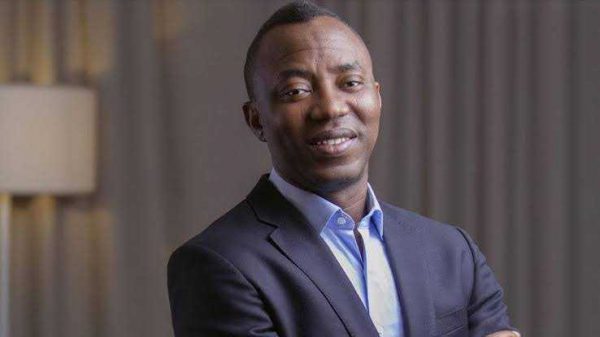
No Office of the First Lady Under My Presidency, Vows Omoyele Sowore
No Office of the First Lady Under My Presidency, Vows Omoyele Sowore
The AAC candidate pledges to slash governance costs by ₦4 trillion, abolish gubernatorial security votes, and end unconstitutional spending.
African Action Congress (AAC) presidential candidate Omoyele Sowore has pledged to eliminate the Office of the First Lady if he wins the 2027 presidential election, describing the ceremonial post as an unconstitutional drain on national resources. Sowore emphasized that Nigeria’s 1999 Constitution provides no legal standing or budgetary allocation for the spouse of the head of state.
Consequently, Sowore clarified that while entering the State House will not alter his marriage, his administration will refuse to assign official duties, staff, or public funds to his spouse.
Instead, he promised to champion women’s voices across all levels of government by appointing qualified female leaders to legitimate, constitutional offices rather than maintaining a ceremonial platform.
He condemned the continued allocation of taxpayer revenue to unofficial positions, arguing that such expenditures divert critical capital from infrastructure and social welfare.
Furthermore, the AAC candidate outlined a comprehensive austerity framework intended to slash the cost of governance by approximately ₦4 trillion. Central to this strategy, Sowore vowed to initiate constitutional amendments to outlaw discretionary security votes for state governors, a long-debated pool of funds historically shielded from public accounting.
Ultimately, he insisted that transferring these discretionary funds directly into state treasuries will help governments pay public sector wages consistently and fund vital public services.
No Office of the First Lady Under My Presidency, Vows Omoyele Sowore
-

 metro2 days ago
Niger Mosque Abductions: Terrorists Execute 30 of 500 Captive Muslim Worshippers
-

 Business2 days ago
Fuel Prices Climb to ₦1,500 per Litre Across Nigeria, Sparking Calls for Urgent Action
-

 Entertainment3 days ago
BREAKING: Olu Jacobs Dies at 84, Atiku Mourns Cultural Icon
-

 News3 days ago
Blue Line Rail, Hospitals Get Boost as Lagos Approves ₦200bn Bond and Budget Reordering
-

 News2 days ago
OAU Investigates Death of Final-Year Student as Police Begin Probe
-
 metro3 days ago
Tinubu Rewards Qur’anic Champion Maryam Dan’Azumi With N20m
-

 News1 day ago
ECOWAS Biometric Card Expands as Seven Countries Begin Rollout
-
 Interview2 days ago
He Does Not Lose Elections”: Abdulmumin Jibrin Predicts 65% Landslide for Tinubu in 2027