

News
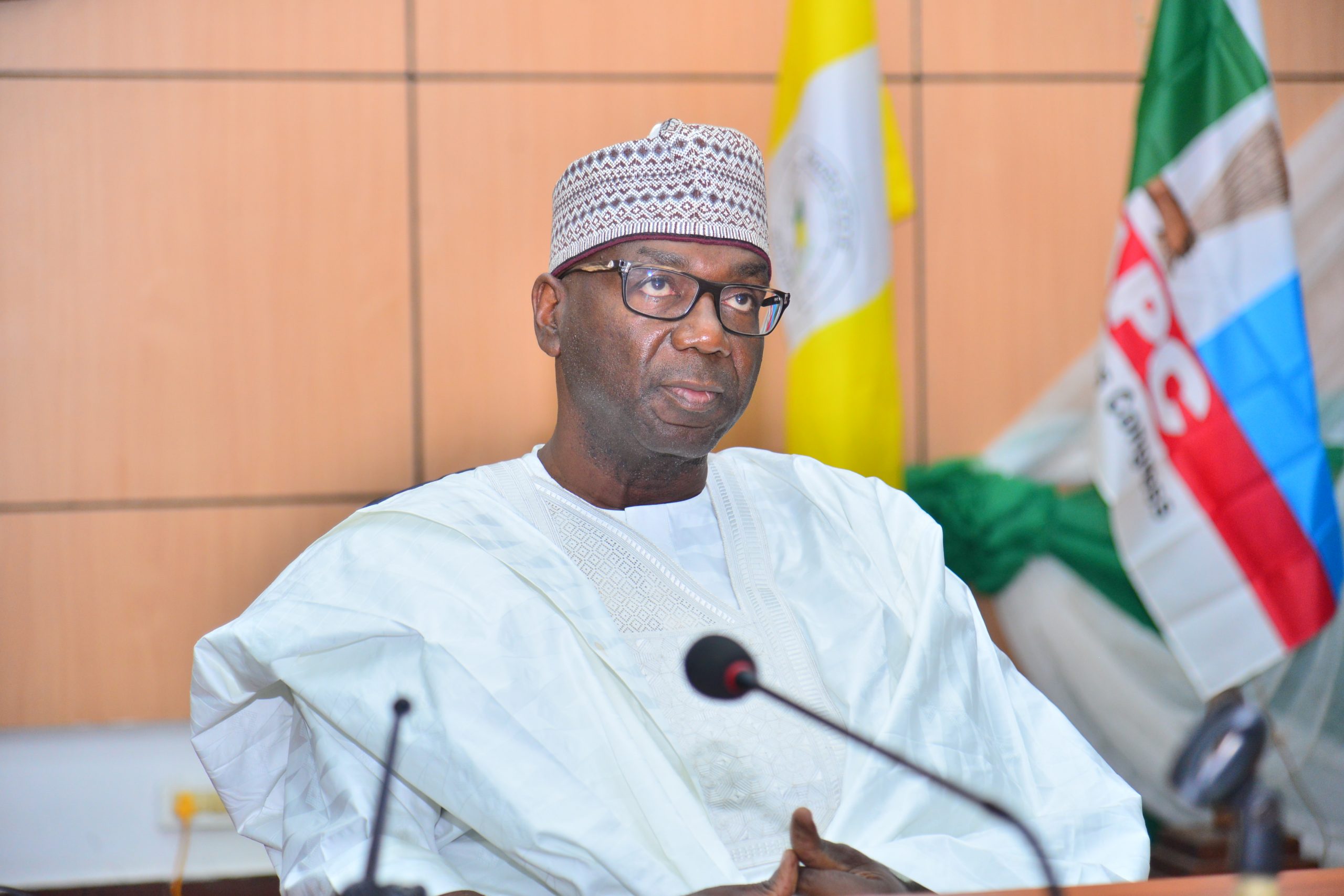
AbdulRazaq becomes new chairman of Nigeria Governors Forum
AbdulRazaq becomes new chairman of Nigeria Governors Forum
Kwara State Governor AbdulRazaq AbdulRahman has emerged as the new Chairman of the Nigeria Governors’ Forum.
His Chief Press Secretary, Rafiu Ajakaye, disclosed this in a statement released on Wednesday to journalists in Ilorin.
He said exalted office was bestowed on the Kwara governor by his colleagues.
The governor among others pledged to uphold the ideals and vision of the NGF
as a most credible, authoritative, influential and effective inter-party platform for consensus building and peaceful resolution and advancement of pan-Nigeria goals, interests and aspirations
The statement read,”I want to thank Allah, exalted is He, for the historic event in which my brother Governors bestowed upon me the Chairmanship of the Nigeria Governors’ Forum (NGF).
“The significance and the huge responsibilities of this office are not lost on me.
“I hereby pledge to uphold the ideals and vision of the NGF whilst recognising and appreciating the eminent track record of the institution as a most credible, authoritative, influential and effective inter-party platform for consensus building and peaceful resolution and advancement of pan-Nigeria goals, interests and aspirations.
“l will ensure regular consultation with all members in order to arrive at consensus on all issues for the advancement and promotion of national interest, peace, progress, and stability of the nation.”
It also said, “As a body, we will also continue our tradition of maintaining a close and cordial relationship with His Excellency the President, the National Assembly, all Federal and State institutions, the business community, the civil society, media, and development partners.
“Finally, l wish to thank my dear colleagues for the confidence reposed in me as the new Chairman of NGF.”




News
Court Freezes Nigerian Governors’ Forum Accounts Over N135.5bn Paris Club Funds
Court Freezes Nigerian Governors’ Forum Accounts Over N135.5bn Paris Club Funds
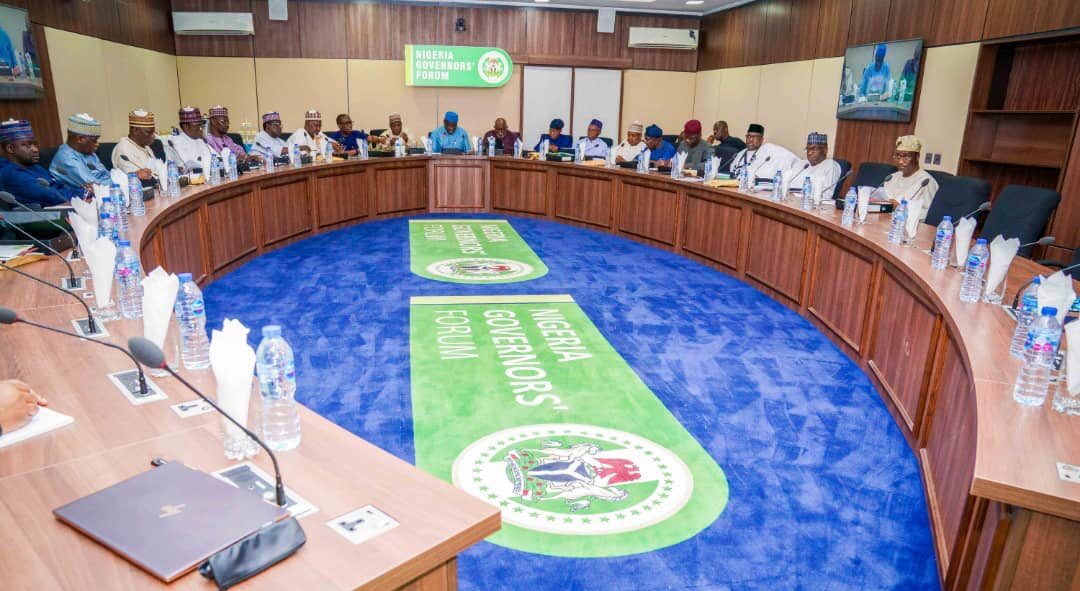
ABUJA, Nigeria — The Nigerian Governors’ Forum (NGF) has suffered a major legal setback following an order by the High Court of the Federal Capital Territory (FCT), Abuja, directing the freezing of $100 million, equivalent to approximately N135.58 billion, linked to the controversial Paris Club refunds dispute.
The court also ordered 29 commercial banks operating in Nigeria to preserve funds belonging to the NGF in their custody up to the disputed amount, pending further proceedings in a legal battle over outstanding professional fees allegedly owed to a legal practitioner.
The interim order was granted on November 19, 2026, by Justice O.C. Agbaza, following an ex parte application filed by Dr Ted Iseghohi-Edwards, who is seeking to recover the money under an indemnity allegedly issued by the governors’ umbrella body.
The case involves the Incorporated Trustees of the Nigerian Governors’ Forum as the first respondent, while 29 commercial banks were joined as co-respondents.
Court Restrains NGF From Accessing Disputed Funds
In granting the application, Justice Agbaza issued an interim Mareva injunction restraining the Incorporated Trustees of the NGF, their agents, representatives and other persons acting on their behalf from withdrawing, transferring, dissipating, concealing or otherwise dealing with the disputed $100 million or its naira equivalent.
The restriction is intended to preserve the funds while the court considers the substantive application for an interlocutory injunction.
The judge also extended the restrictions to the 29 banks, directing them not to release, transfer, convert, withdraw or otherwise deal with funds belonging to the NGF within their custody up to the aggregate amount covered by the order.
The financial institutions were further directed to disclose, within 48 hours of receiving the court order, whether the NGF maintains accounts with them containing the disputed funds.
They are also required to identify the relevant accounts, disclose their currencies and available balances, and state the amounts preserved in compliance with the order.
How The N135.5bn Dispute Started
The dispute reportedly arose from an indemnity dated December 20, 2018, allegedly issued by the Nigerian Governors’ Forum to Dr Iseghohi-Edwards.
The arrangement was connected to the Federal Government’s payment of $100 million to the NGF as a stakeholder in the Paris Club refunds controversy.
According to the claimant’s case, the money was held under an arrangement pending the determination of the Federal Government’s liability for professional legal and consultancy fees arising from the refund transactions.
Iseghohi-Edwards is contending that the condition contained in the indemnity has been fulfilled, thereby making the $100 million payable to him.
He is consequently seeking to recover the amount, which translates to approximately N135.58 billion based on the applicable exchange rate used in the court proceedings.
The claimant reportedly maintained that the indemnity issued by the NGF established its obligation to pay him once the relevant condition concerning the Federal Government’s liability had been satisfied.
Claimant Alleges NGF Failed To Honour Payment Undertaking
In pursuing the matter, Iseghohi-Edwards told the court that he formally demanded payment from the NGF through a letter dated October 8, 2026.
However, he alleged that the forum failed to honour the undertaking contained in the indemnity, prompting him to seek judicial intervention to recover the disputed amount.
He expressed fears that the money could be transferred, disbursed or otherwise dissipated before the determination of his substantive claim, potentially making it difficult to enforce any eventual judgment in his favour.
The claimant also reportedly informed the court that he could not independently establish the specific bank accounts holding the funds without an appropriate judicial order.
He therefore argued that the interim injunction was necessary to preserve the subject matter of the dispute and prevent the proceedings from being rendered ineffective.
The application was brought pursuant to Orders 30(3) and 32(1) of the High Court of the Federal Capital Territory Civil Procedure Rules, alongside the court’s inherent jurisdiction.
The claimant also undertook to abide by any order for damages should the court subsequently determine that the interim injunction ought not to have been granted.
29 Commercial Banks Affected By The Order
Among the financial institutions listed as respondents in the case are Access Bank, Alpha Morgan Bank, Ecobank Nigeria, Fidelity Bank, First Bank of Nigeria, Sterling Bank, United Bank for Africa, Unity Bank, Zenith Bank and Jaiz Bank.
Others include Guaranty Trust Bank, Keystone Bank, Stanbic IBTC Bank, Standard Chartered Bank, Wema Bank, Union Bank of Nigeria, First City Monument Bank, Lotus Bank, Parallex Bank and Polaris Bank.
The remaining banks are Globus Bank, SunTrust Bank, Citibank Nigeria, Nova Bank, Optimus Bank, Premium Trust Bank, Signature Bank, Tatum Bank and Titan Trust Bank.
The order requires the banks to preserve any funds belonging to the NGF in their custody up to the aggregate sum of $100 million or its naira equivalent.
The directive also requires them to provide the necessary account information within the stipulated 48-hour period after service of the order.
Court Fixes December 1 For Further Hearing
Justice Agbaza has adjourned the matter until December 1, 2026, for the hearing of the claimant’s Motion on Notice seeking an interlocutory injunction.
The claimant was also directed to serve the court order and relevant originating processes on all the respondents.
The interim Mareva injunction is a preservation measure intended to prevent the disputed funds from being moved or dissipated while the court considers the application for further relief.
It does not, in itself, amount to a final determination that the NGF is liable to pay the claimant or that the money has been awarded to him.
The December 1 hearing is therefore expected to be an important stage in the legal battle over the disputed $100 million linked to the Paris Club refunds controversy.
The development adds another dimension to the longstanding controversy surrounding professional fees, consultancy payments and financial obligations arising from Nigeria’s Paris Club loan refund transactions.
Court Freezes Nigerian Governors’ Forum Accounts Over N135.5bn Paris Club Funds
News
BREAKING: Court Sacks Omo-Agege as NDC Senatorial Candidate, Orders INEC to Remove His Name
BREAKING: Court Sacks Omo-Agege as NDC Senatorial Candidate, Orders INEC to Remove His Name
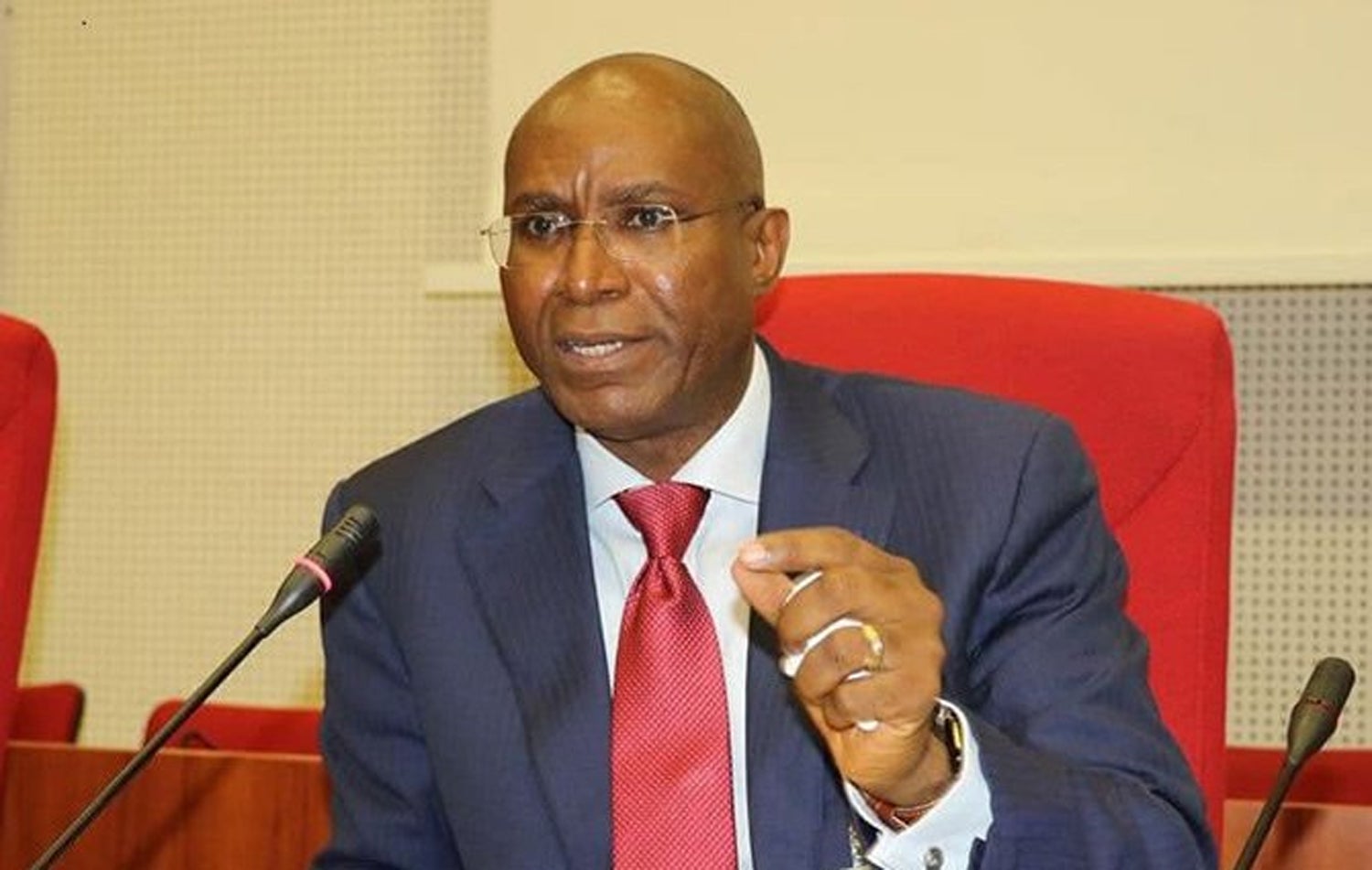
A major legal setback has hit former Deputy President of the Senate, Senator Ovie Omo-Agege, following a Federal High Court judgment nullifying his nomination as the Nigeria Democratic Congress (NDC) candidate for the Delta Central Senatorial District in the 2027 general elections.
The Federal High Court sitting in Warri, Delta State, on Tuesday declared Omo-Agege’s emergence as the NDC senatorial candidate invalid, directing the Independent National Electoral Commission (INEC) to remove his name from its list of candidates for the forthcoming election.
The court, presided over by Justice Hyeladzira Ajiya Nganjiwa, also restrained the former lawmaker from presenting or parading himself as the NDC’s senatorial candidate for Delta Central.
The judgment was delivered in suit number FHC/WR/CS/120/2026, instituted by Professor Alexander Osondu Akpodiete, who challenged the legality of Omo-Agege’s participation in the party’s senatorial primary election.
At the centre of the legal dispute were questions surrounding Omo-Agege’s resignation from the All Progressives Congress (APC), his membership of the NDC and whether he satisfied the statutory requirements to participate in the party’s primary election.
In its judgment, the court held that the NDC failed to comply with mandatory provisions of the Electoral Act concerning the submission of political parties’ membership registers to INEC before conducting primary elections.
Justice Nganjiwa reportedly observed that Omo-Agege’s name was missing from the NDC membership register submitted to INEC at least 21 days before the party’s primary election.
READ ALSO:
- Uduere Killings: Ughelli Chairman Accuses Omo-Agege’s Camp of Triggering Deadly Clash, Demands IGP Probe
- ‘Shame on You’: Fayose Blasts Nigerian Youths Over Poor Protest Turnout
- KWAM 1 Warns Tinubu Over Economic Hardship, Says Nigerians Should Not Suffer to Death
The court further held that the NDC failed to provide credible evidence establishing that an updated membership register containing Omo-Agege’s name was submitted to the electoral commission within the legally prescribed period.
According to the court, participation in a political party’s primary election is subject to compliance with statutory membership requirements, and a candidate cannot acquire a valid nomination through a process that violates the law.
Another important issue considered by the court concerned Omo-Agege’s previous membership of the APC and his participation in the party’s senatorial primary election.
Justice Nganjiwa reportedly observed that Omo-Agege participated in the APC senatorial primary conducted on May 18, 2026.
The court considered this development relevant in determining his political affiliation at the material time and whether he was qualified to participate in the NDC primary.
The issue of when Omo-Agege formally resigned from the APC and joined the NDC had featured prominently during the proceedings, with conflicting submissions presented by the parties.
Before determining the substantive issues, Justice Nganjiwa dismissed five preliminary objections raised by Omo-Agege, the NDC and INEC.
The objections had challenged the competence of the suit and sought to prevent the court from proceeding with the matter.
The judge also addressed the question of an affidavit previously filed and subsequently withdrawn during the proceedings. She held that once an affidavit is formally withdrawn, it ceases to form part of the materials available to the court for determining the dispute and cannot subsequently be relied upon.
The court emphasised that political parties must strictly comply with electoral laws when selecting candidates for elective positions.
One of the most significant consequences of Tuesday’s judgment concerns the possibility of the NDC fielding another candidate for the Delta Central senatorial contest.
Justice Nganjiwa reportedly held that the statutory period within which political parties could conduct fresh primaries to nominate candidates had already elapsed.
This means the party may be unable to organise another primary election to replace Omo-Agege within the legally permitted timeframe.
The development raises questions about the NDC’s position in the Delta Central senatorial race and the legal options available to the party following the judgment.
The judgment comes against the backdrop of heightened political tension in Delta State, particularly following a reported deadly attack on Omo-Agege’s campaign entourage during a visit to Uduere community.
The incident reportedly claimed four lives and left several others injured, further intensifying political disagreements surrounding the former Deputy Senate President’s activities in the state.
However, Tuesday’s court judgment arose from a separate legal challenge concerning his eligibility and emergence as the NDC candidate.
As of the time of filing this report, neither Omo-Agege nor the national leadership of the Nigeria Democratic Congress had issued an official statement responding to the judgment.
It also remains to be seen whether the former Delta Central senator and the party will pursue further legal action against the decision.
The ruling represents a significant development in the preparations for the 2027 general elections, with its implications extending beyond Omo-Agege’s political ambition to the NDC’s participation in the Delta Central senatorial contest.
BREAKING: Court Sacks Omo-Agege as NDC Senatorial Candidate, Orders INEC to Remove His Name
News
2027 POLLS: ‘INEC, You Must Explain!’ — Fresh Questions Over Alleged IReV Results ‘Cleanup’
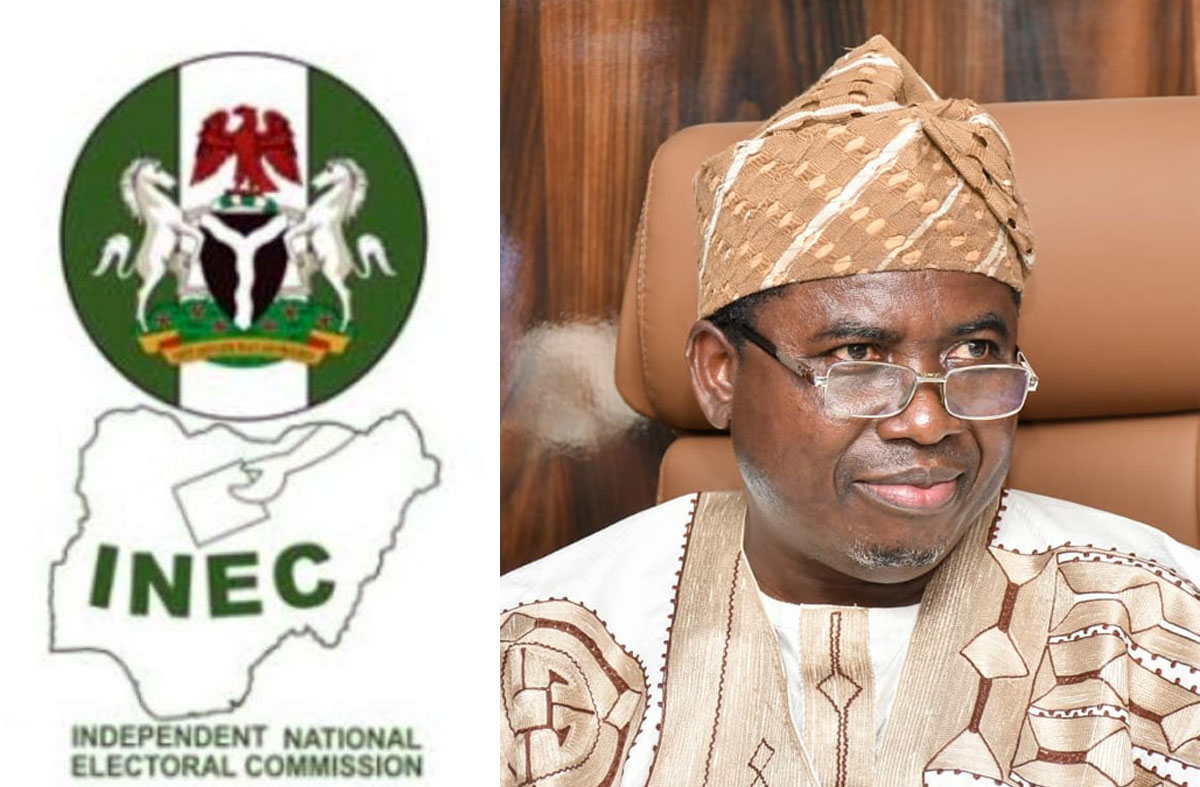
2027 POLLS: ‘INEC, You Must Explain!’ — Fresh Questions Over Alleged IReV Results ‘Cleanup’
ABUJA — Fresh concerns have emerged over the integrity of Nigeria’s electoral technology ahead of the 2027 general elections, following questions surrounding the preservation of election-result records and metadata on the Independent National Electoral Commission’s (INEC) Result Viewing Portal (IReV).
The controversy has brought renewed attention to the demand for transparency from electoral authorities, particularly over allegations that changes to uploaded election result records could make it difficult for Nigerians to independently verify the circumstances surrounding their transmission.
Broadcast journalist and Channels Television anchor, Seun Okinbaloye, has been associated with the growing public debate over INEC’s preparedness for the 2027 elections, amid mounting concerns about the credibility of the electoral process.
The central question confronting the commission is whether Nigerians can be assured that every result uploaded to its portal, together with the digital information attached to it, will remain accessible and verifiable.
CONTROVERSY OVER IReV METADATA
The latest concerns gained prominence during a stakeholder roundtable on election results tabulation organised by Yiaga Africa in Abuja on November 17, 2026.
At the meeting, a participant representing MundX Analytics, an election-observation technology platform, questioned INEC about its plans to preserve the metadata attached to polling-unit results uploaded to IReV during the 2027 general elections.
Metadata contains important digital information about uploaded documents, including the time of upload, the device used and the location from which the result was transmitted.
The participant reportedly raised concerns that deleting or altering such information could make it difficult for independent observers to establish when, where and how election results were uploaded.
He cited findings from an examination of results uploaded during previous elections, which allegedly identified instances of result sheets uploaded as early as 5 a.m. on election day, as well as multiple results uploaded using the same mobile device.
Such findings, according to the participant, raised questions about the circumstances surrounding the uploading of some election results and reinforced the need for an independently verifiable digital audit trail.
INEC GIVES ASSURANCE
Responding to the concerns, INEC’s Director of Information and Communication Technology, Lawrence Bayode, assured participants that the commission would preserve the metadata attached to election results uploaded to IReV during the 2027 elections.
“I can assure you those metadata will remain intact,” Bayode reportedly said.
He, however, explained that he could not speak for previous elections, adding that the commission still had metadata relating to elections conducted in the Federal Capital Territory, Ekiti and Osun states.
According to him, the results uploaded during those elections showed greater consistency, with no discrepancies identified on the portal.
The assurance is significant because metadata can provide independent observers with information needed to investigate suspicious upload patterns and establish the history of electronic election records.
WHAT THE 2026 ELECTORAL ACT SAYS
The controversy is particularly important given the provisions of the Electoral Act 2026, which introduced a clearer statutory requirement for electronic transmission of polling-unit results.
Section 60(3) of the new legislation provides that presiding officers shall electronically transmit results from polling units to the IReV portal after the prescribed Form EC8A has been signed and stamped, and countersigned by candidates or their polling agents where available.
The provision also states that where electronic transmission becomes impossible because of communication failure, the signed Form EC8A shall remain the primary source for the collation and declaration of results.
This makes the preservation and accessibility of uploaded election records particularly important as political parties, observers and members of the public prepare to scrutinise the electoral process.
FRESH QUESTIONS AHEAD OF 2027
The growing debate over IReV comes amid other concerns about INEC’s technological preparedness for the next general elections.
At the same stakeholder engagement, INEC disclosed that it had yet to develop and test the infrastructure required to publish results from ward, local government and state collation levels on IReV ahead of the 2027 elections.
The commission’s ICT director said the platform currently provides access to polling-unit results but does not yet have the necessary system for publishing results from subsequent levels of collation.
Democracy advocates have argued that extending electronic publication to these stages would improve transparency and make it easier to identify discrepancies between polling-unit results and figures recorded during collation.
With the 2027 elections approaching, Nigerians are increasingly demanding clear explanations about how INEC manages, stores, verifies and protects electronic election records.
For many stakeholders, the issue goes beyond uploading result sheets. It is also about ensuring that the original records and their digital histories remain available for independent examination whenever questions arise.
INEC’s assurance that metadata will remain intact is therefore an important commitment that Nigerians will expect the commission to demonstrate through transparent procedures and verifiable safeguards.
2027 POLLS: ‘INEC, You Must Explain!’ — Fresh Questions Over Alleged IReV Results ‘Cleanup’
-

 metro2 days ago
Chibok Girl Escapes After Eight Years in Boko Haram Captivity, Reveals 20 Classmates Still Held
-

 metro1 day ago
‘I Paid My Ex-Husband Before He Slept With Me’ – Islamic Preacher Kaola Makes Shocking Revelation
-

 Politics1 day ago
Kwankwaso Made Me Swear on Qur’an to Join APC After Election Victory — Gov Yusuf Reveals Tinubu Deal
-

 Politics2 days ago
‘Makinde Should Call Wike Uncle, Not Me’ – Ogun Fires Back
-

 News2 days ago
How I Linked Wike With Tinubu After His Son’s Death – Donu Kogbara Reveals
-

 Education1 day ago
South-West Leaders Challenged to Emulate Kwankwaso, Invest in Education of Poor Children
-
 Politics1 day ago
2027: Makinde Invokes 1966 Coup, Questions Obi-Kwankwaso Ticket
-
 Politics2 days ago
Shehu Sani Warns Northerners Against Celebrating Abuja Attack on Tinubu, Fears Ethnic Reprisals