

News
We haven’t changed, says PDP G-5 after meeting Tinubu
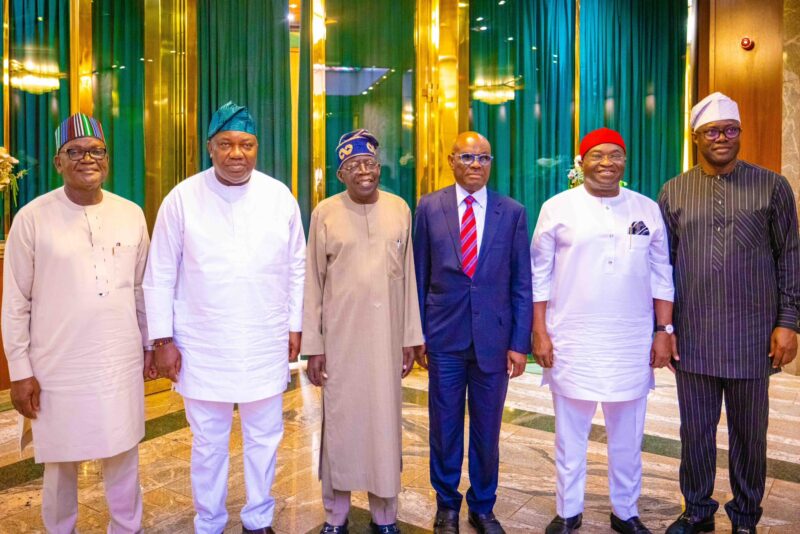
We haven’t changed, says PDP G-5 after meeting Tinubu
President Bola Tinubu on Thursday evening at the Presidential Villa met with members of the Peoples Democratic Party’s ‘G5 Governors’ also known as the Integrity Group.
The G5 group, made up of Governor Seyi Makinde of Oyo State and former governors Nyesom Wike of Rivers, Okezie Ikpeazu of Abia, Ifeanyi Ugwuwanyi of Enugu and Samuel Ortom of Benue have reportedly been friendly with President Tinubu, and contributed to his electoral victory on February 25, 2023.
Speaking to newsmen, on behalf of the group, after the meeting, Governor Makinde said they were at the State House to intimate President Tinubu with the happenings in the country,
The Oyo governor also disclosed that the complete number of the G5 members came to remind the President of what they represent, which include fairness, justice and equity.
He said, “Nation-building is a difficult task, you have to keep evaluating what you are doing, where you are going, so we have to keep seeing the President to let him know what is happening and for this evening, the G5 (the Integrity Group), we came to let the President know what we stood for; fairness, justice and equity and we haven’t changed”, he said.
Asked what next for the G5, Makinde said, “We’re going towards Mr President coming with us on the route for fairness, for justice and for equity in Nigeria”.
Governor Makinde and former Governor Wike have visited the Villa a couple of times since last week.







News
2027: INEC’s Mock Poll Tests BVAS, Exposes Low Turnout, Logistical Gaps

INEC 2027 Mock Poll Exposes BVAS Glitches, Low Turnout
The Independent National Electoral Commission (INEC) has identified strengths and weaknesses in its preparations for the 2027 general elections following a nationwide mock accreditation and voting exercise that exposed technical glitches, poor voter turnout, inadequate sensitisation and logistical challenges in several states.
The exercise, conducted on Saturday, November 28, across selected polling units in the 36 states and the Federal Capital Territory (FCT), was designed to test the upgraded Bimodal Voter Accreditation System (BVAS), electronic result transmission and the INEC Result Viewing Portal (IReV) ahead of the elections.
While INEC officials described the exercise as encouraging in some locations, reports from across the country showed that voters’ participation was generally low, with some polling units recording only a handful of participants and others reporting no turnout several hours after commencement.
The mock poll also revealed problems involving late arrival or absence of electoral officials, delayed distribution of materials, malfunctioning BVAS devices and cases of voters unable to locate their names on the register or discover that their polling units had not been selected for the exercise.
INEC Chairman, Prof. Joash Ojo Amupitan, who monitored the exercise in Plateau State, expressed satisfaction with the performance of the technology in locations he visited, describing the process as impressive.
He said the mock accreditation was organised to identify technical and operational difficulties and address them before the actual elections, assuring Nigerians that the commission remained committed to conducting free, fair, credible and transparent polls.
However, low voter turnout emerged as one of the most widespread challenges, with reports from several states indicating limited public awareness of the exercise.
READ ALSO:
- How Senator Adebule Reportedly Collapsed During APC Campaign Before Her Death
- Canada’s ICAS Stops Assessing Certificates From Four Nigerian Universities, Graduates Face Uncertainty
- BREAKING: Lagos Senator Idiat Adebule Dies at 56, Hours After Birthday Celebration
In Kogi, Kano, Imo, Abia, Anambra, Cross River and Benue, among other states, polling units recorded poor participation, with some electoral officials waiting for hours for voters to arrive.
In Kano, turnout was particularly low in some locations. At Kankorofi Quranic School, no voter had been accredited as of 10am, while only eight out of 736 registered voters participated at one polling unit in Konar Goje. Another unit in the area recorded just four participants out of 546 registered voters.
Similar reports emerged from Anambra, where only a few voters participated in some polling units despite the deployment of electoral officials across the state.
In Benue, 11 out of 745 registered voters participated at Madikpo Tokumbo Market polling unit in Makurdi, while six voters were accredited at LGEA Primary School, Wurukum, out of 833 registered voters.
The poor turnout was blamed largely on inadequate publicity, with several residents saying they were unaware that INEC was conducting a mock election. The exercise also coincided with the monthly environmental sanitation period in some states, further affecting participation.
Beyond voter apathy, logistical shortcomings affected the exercise in parts of the country.
In Kaduna State, voters and party agents in Chikun Local Government Area reportedly waited for hours without electoral officials arriving at some designated polling units. At Narayi LGEA Primary School and Ungwan Yelwa Primary School, the exercise had yet to commence by late morning, prompting complaints from residents and political party agents.
In Enugu, some electoral officials arrived late at polling centres, with reports indicating that personnel reached certain locations between 9.30am and 10am. Voters also complained about difficulty locating their designated polling units, while some said they visited centres only to discover that their units were not part of the simulation.
READ ALSO:
- HAP Autos Unveils OMODA and JAECOO with 7-Year Warranty, Eyes Nigerian Vehicle Production
- Mitsubishi L200 4×4 Goes for ₦42m as Massilia Motors Unveils Year-End Bonanza
- Portable Mocks Peter Obi, Reveals What Happened During Flight Encounter With Presidential Hopeful
Technical challenges were also recorded in some locations, raising questions about the reliability of the accreditation devices under different conditions.
In Ondo State, BVAS reportedly malfunctioned at some polling units. At Tipper Garage in Akure, only two voters were accredited out of 470 registered voters, while other units recorded similarly low participation.
In Lagos, concerns were raised over BVAS devices failing to recognise some Permanent Voter Cards (PVCs) in parts of Ifako-Ijaiye and Iju. However, the Resident Electoral Commissioner, Prof. Ayobami Salami, reported smooth accreditation at a polling unit in Surulere, where he said voters were processed in less than a minute without complaints.
Delta State also recorded concerns over the speed of accreditation, with Isoko North Local Government Chairman, Godwin Ogorugba, claiming that the process took between 25 and 30 minutes for a single voter at a polling unit, raising questions about the system’s capacity to handle large numbers on election day.
In Nasarawa State, some voters reportedly discovered that their polling units had been changed without their knowledge, while others could not find their names on the register. Similar complaints were recorded in Bayelsa, where voters said their names were missing from polling-unit registers despite having voted at the locations during previous elections.
The electronic transmission and result-uploading process also formed a major part of the exercise, with INEC testing safeguards built into the BVAS and IReV system to prevent discrepancies in accreditation figures and polling-unit results.
In Rivers State, the electronic EC8A result form integrated into BVAS was highlighted as a potential improvement in election result management, particularly in ensuring that the number of accredited voters tallies with figures entered on result sheets before transmission.
Election observers also raised concerns about the exercise. Yiaga Africa reported that accreditation and mock voting had commenced in 195 of the 300 polling units monitored by its citizen observers as of 10am, representing 65 per cent of the observation sample.
The group said its findings pointed to operational, technological and procedural issues that required attention before the 2027 elections.
INEC had earlier directed Resident Electoral Commissioners across the states and the FCT to address operational and logistical shortcomings ahead of the mock poll, with instructions to submit comprehensive reports on technical failures, network problems and procedural bottlenecks.
The commission is expected to use feedback from the exercise to improve its systems, strengthen logistics, train personnel and intensify voter education ahead of the 2027 general elections.
The presidential and National Assembly elections are scheduled for January 16, 2027, while governorship and State Houses of Assembly elections are slated for February 6, 2027.
The mock poll has provided INEC with an opportunity to assess its preparedness under field conditions, but the challenges recorded suggest that technology alone may not guarantee a smooth election without effective logistics, adequate public sensitisation, reliable voter registers and timely deployment of officials.
INEC 2027 Mock Poll Exposes BVAS Glitches, Low Turnout
News
How Senator Adebule Reportedly Collapsed During APC Campaign Before Her Death
How Senator Adebule Reportedly Collapsed During APC Campaign Before Her Death
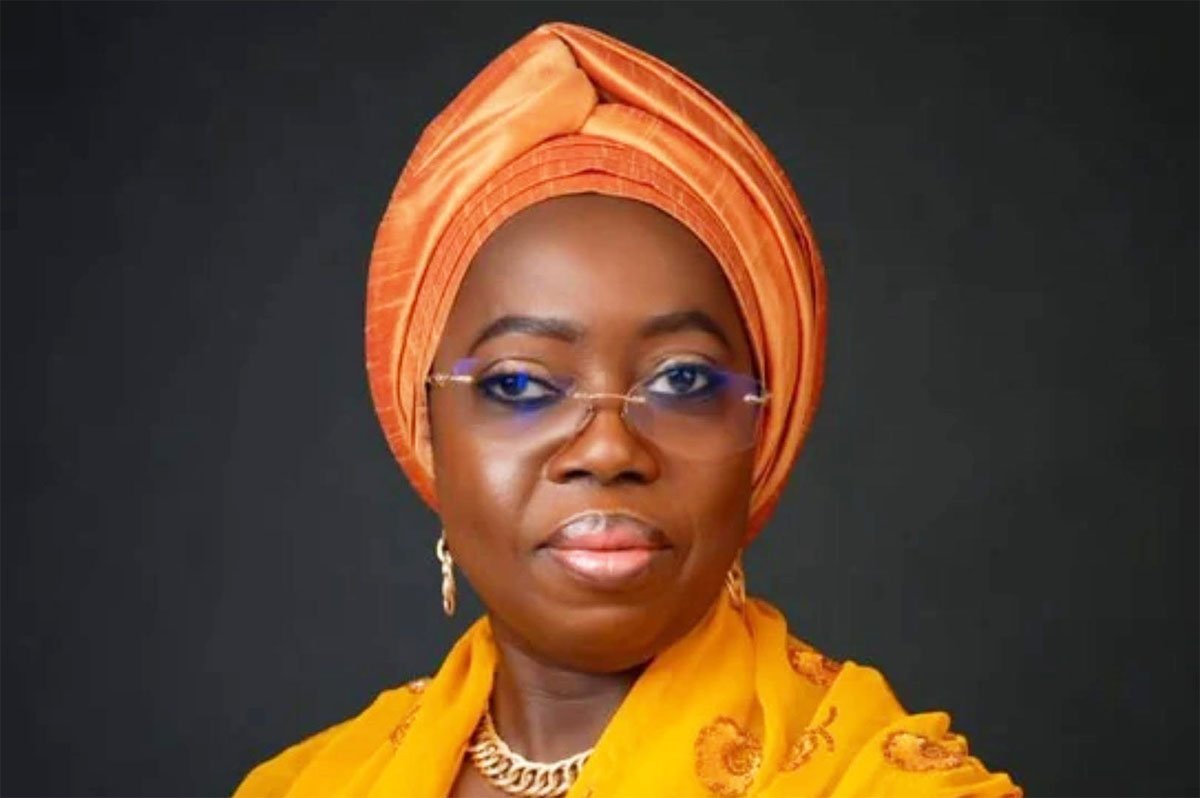
New details have emerged about the circumstances surrounding the death of Senator Idiat Oluranti Adebule, with reports indicating that the former Lagos State deputy governor collapsed during an All Progressives Congress (APC) campaign activity before she was rushed to a hospital.
Adebule, who represented Lagos West Senatorial District, reportedly slumped while participating in campaign activities in her constituency on Saturday, November 28, ahead of the 2027 general elections.
Sources within the Lagos State APC told Sunday PUNCH that the 56-year-old lawmaker was immediately taken to a private hospital in the Government Reservation Area (GRA), Ikeja, where she was pronounced dead.
One of the party sources described the incident as shocking, saying efforts to save her life were unsuccessful.
“She collapsed during a campaign in her senatorial district. She was rushed to a hospital, but she could not make it. Quite unfortunate. It is a sad day for us,” the source reportedly said.
Another source familiar with the development disclosed that Adebule had allegedly been managing an undisclosed health condition before her death.
According to the source, the senator continued to participate in political activities despite her reported health challenges and was recently seen during a house-to-house campaign exercise in FESTAC Town, Lagos.
READ ALSO:
- Portable Mocks Peter Obi, Reveals What Happened During Flight Encounter With Presidential Hopeful
- Police Issue Omo-Agege Fresh Ultimatum, Arrest Four, Declare 14 Others Wanted Over Uduere Violence
- Patience Jonathan Challenges Claims Of Goodluck’s Second Wife, Cites Court Marriage In Viral Interview
Duchess International Hospital in Ikeja was identified as the medical facility where she was reportedly taken after collapsing.
However, neither her family nor the authorities had publicly disclosed the specific medical condition she may have been managing or officially established the cause of her death.
The development comes barely a day after Adebule celebrated her 56th birthday on Friday, November 27, 2026.
In a birthday message shared on her X account, the senator expressed gratitude to Almighty Allah for the gift of life, praying for renewed strength to continue serving humanity and contributing to the development of Lagos West, Lagos State and Nigeria.
Her sudden death has sent shockwaves through the Lagos APC, prompting the party to suspend campaign activities across the state in honour of the late lawmaker.
The APC described her death as an enormous and irreparable loss, citing her contributions to public service, political organisation and the development of Lagos State.
Adebule was reportedly preparing to seek re-election for a second term in the Senate before her death.
She served as Deputy Governor of Lagos State from 2015 to 2019 under former Governor Akinwunmi Ambode and was elected to the Senate in 2023. Before becoming deputy governor, she served as Secretary to the Lagos State Government.
Her death has continued to attract condolences from political leaders, colleagues and associates, following the announcement of her passing in a breaking news report on Saturday.
How Senator Adebule Reportedly Collapsed During APC Campaign Before Her Death
News
Canada’s ICAS Stops Assessing Certificates From Four Nigerian Universities, Graduates Face Uncertainty

Canada’s ICAS Stops Assessing Certificates From Four Nigerian Universities, Graduates Face Uncertainty
Thousands of Nigerian graduates seeking educational, professional and immigration opportunities in Canada have been thrown into uncertainty following a decision by Canada’s International Credential Assessment Service (ICAS) to stop accepting academic qualifications from four Nigerian universities.
The affected institutions are Imo State University (IMSU), the Federal University of Technology, Owerri (FUTO), Enugu State University of Science and Technology (ESUT), and the University of Benin (UNIBEN).
ICAS announced the development in a notice published on its official website, stating that applications relating to studies completed at the four institutions would not be included in its credential assessment process.
The notice, listed under the agency’s Nigerian educational documentation requirements, specifically warned prospective applicants against submitting qualifications obtained from the affected universities.
It stated, “Please note that ICAS is not currently accepting applications for study completed at Imo State University, the Federal University of Technology, Owerri, Enugu State University of Science and Technology and the University of Benin.
“If you submit documentation for study completed at one of the above institutions, it will not be included in the assessment.”
The development was brought to public attention by education technologist Alex Onyia, who expressed concern over its potential consequences for thousands of Nigerian graduates.
Onyia, in a post on X on Saturday, described the situation as a dangerous academic crisis, warning that graduates who had legitimately spent several years obtaining their qualifications could become victims of alleged irregularities within the university system.
He also raised concerns about the possibility of similar restrictions by the World Education Services (WES), another international organisation involved in evaluating foreign academic qualifications.
The education technologist attributed the development to concerns surrounding alleged academic corruption, warning that innocent graduates could suffer the consequences of misconduct allegedly perpetrated by individuals within the university system.
READ ALSO:
- BREAKING: Lagos Senator Idiat Adebule Dies at 56, Hours After Birthday Celebration
- HAP Autos Unveils OMODA and JAECOO with 7-Year Warranty, Eyes Nigerian Vehicle Production
- Mitsubishi L200 4×4 Goes for ₦42m as Massilia Motors Unveils Year-End Bonanza
He recalled his campaign against academic fraud at Abia State University (ABSU), pointing out that the institution was not among the four universities named in the ICAS notice.
Onyia also urged the University of Nigeria, Nsukka (UNN), to regard the development as a warning and take urgent steps to address alleged academic irregularities before similar problems affect its graduates.
According to him, individuals who benefit from academic fraud might eventually leave the system without facing consequences, while graduates who legitimately obtained their qualifications could spend years struggling to secure international recognition.
The decision has renewed concerns about the credibility of Nigerian university qualifications, institutional accountability and the international reputation of the country’s higher education system.
However, ICAS has not provided a public explanation for its decision or indicated how long the restriction will remain in place.
It is also important to note that the announcement concerns ICAS credential assessments for studies completed at the four named universities. It does not, by itself, amount to a general Canadian government ban on graduates of the institutions or establish that all Canadian credential assessment organisations have adopted the same position.
The affected universities are yet to be publicly reported as having issued official responses to the development.
For graduates planning to pursue further education, employment or immigration opportunities in Canada, the development could create additional uncertainty, particularly where an ICAS assessment is required.
Canada’s ICAS Stops Assessing Certificates From Four Nigerian Universities, Graduates Face Uncertainty
-

 News18 hours ago
BREAKING: Lagos Senator Idiat Adebule Dies at 56, Hours After Birthday Celebration
-
 Politics3 days ago
BREAKING: Makinde Reportedly Agrees to Back Atiku’s Presidential Bid
-
 metro22 hours ago
Patience Jonathan Challenges Claims Of Goodluck’s Second Wife, Cites Court Marriage In Viral Interview
-
 News2 days ago
Adeleke Begins Second Term, Pledges Industrialisation, Jobs, Infrastructure
-
 Politics2 days ago
Fayose Accuses Obasanjo Of Using Tinubu Visit To Pursue Daughter’s Governorship Ambition
-
 Politics2 days ago
OK Movement Faction Withdraws Support for Obi, NDC, Pulls Nationwide Structures
-
 News4 hours ago
Canada’s ICAS Stops Assessing Certificates From Four Nigerian Universities, Graduates Face Uncertainty
-
 metro2 days ago
BREAKING: Sanwo-Olu Cancels November 28 Environmental Sanitation Exercise Over INEC Mock Accreditation