

News
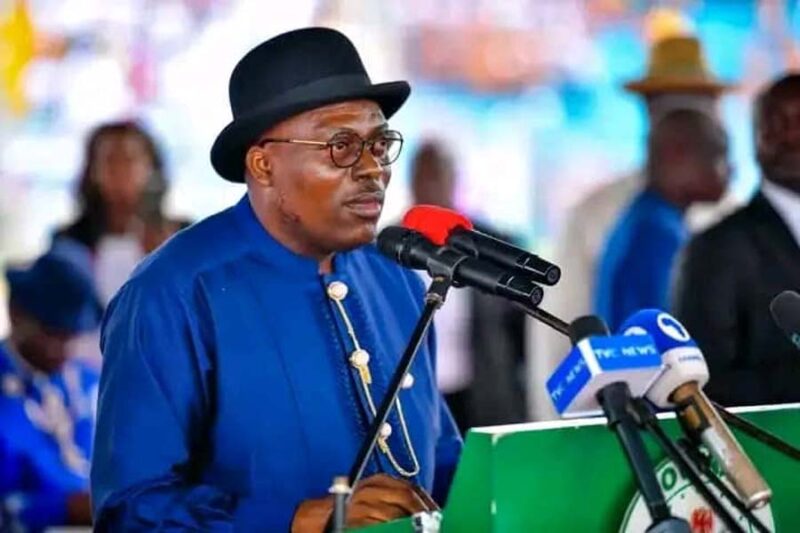
BREAKING: Rivers crisis takes new dimension, as Lawmakers rule against Gov Fubara
BREAKING: Rivers crisis takes new dimension, as Lawmakers rule against Gov Fubara
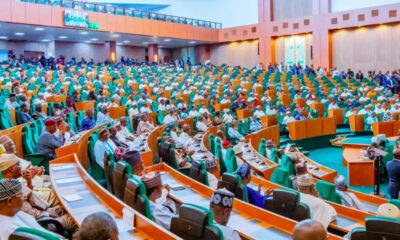
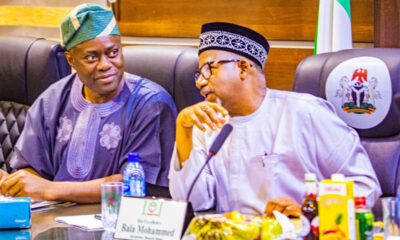
The Rivers State House of Assembly on Friday ruled against Governor Siminalayi Fubara to enact the Rivers State House of Assembly, RSHA, Service Commission Law.
The House ruled against Fubara after convening an impromptu sitting.
This is the second time the state lawmakers will override Fubara’s assent on bills.
In January, the House ruled against Fubara’s assent to four Bills that were earlier passed and sent to him for assent.
The House decided to override the Governor’s assent during its 99th legislative sitting at the Assembly quarters.
This was contained in a statement issued by Martins Wachukwu, media aide to the Speaker of the State Assembly and sent to newsmen.
READ ALSO:
- Police nab make-up artist, 3 others for faking kidnap, demanding N5m ransom
- 23-year-old lady declared missing after breaking fast in polytechnic
- 3 students die in stampede as Nasarawa students loot State Govt rice
The statement said the lawmakers decided after the Governor withheld his assent to the four Bills via letters to the House, which were read on the floor of the House; stating that such amendments would create confusion and breach constitutional provisions.
Remarking on the Rivers State Houe of Assembly Fund Management Bill, which was re-presented by the Majority Leader, Major Jack, and debated by members, the Speaker, Martin Amaewhule, cited Section 100(5) of the Constitution of the Federal Republic of Nigeria 1999 as altered, which empowers the House to override the Governor, where the Governor withholds his assent.
In like manner, the Rivers State Local Government Law (Amendment) Bill, the Rivers State Traditional Rulers’ Law (Amendment) Bill, and the Rivers State Advertisement and Use of State-owned Property Prohibition (Repeal) Bill were all represented, debated, and voted upon with a unanimous decision to override the Governor’s assent.
BREAKING: Rivers crisis takes new dimension, as Lawmakers rule against Gov Fubara







News
Tinubu to Nigerians: We Are Correcting Past Mistakes, Give Us More Time
Tinubu to Nigerians: We Are Correcting Past Mistakes, Give Us More Time
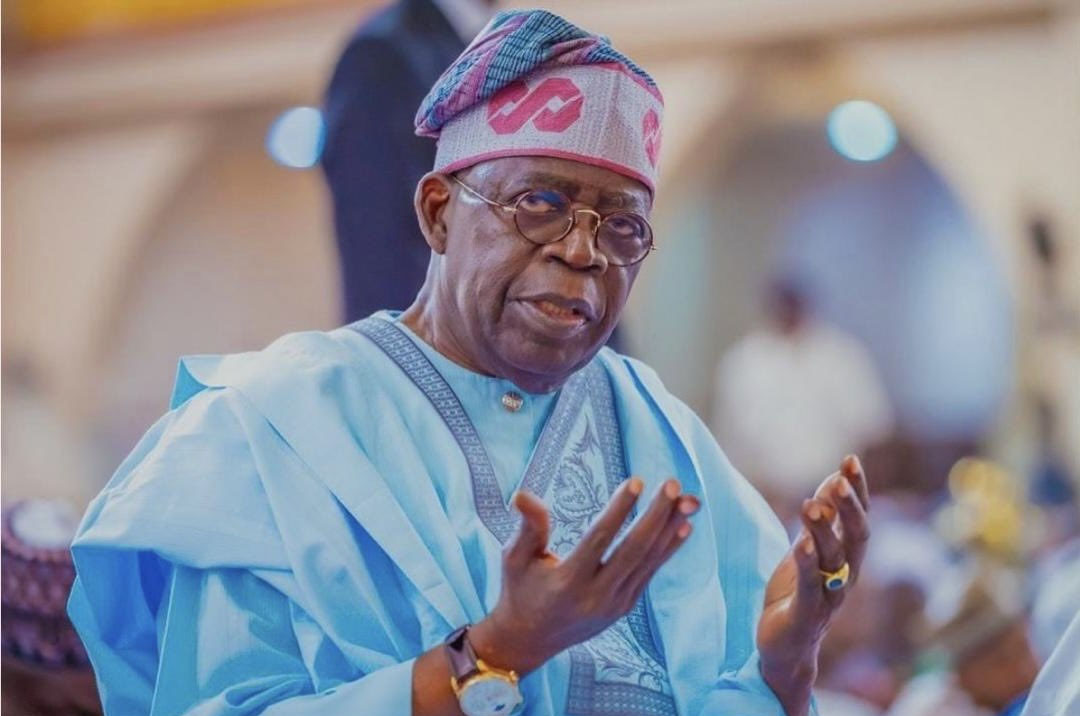
President Bola Ahmed Tinubu has appealed to Nigerians to give his administration more time to complete its economic reforms, assuring citizens that the difficult phase of stabilising the economy is giving way to a new focus on growth, production and shared prosperity.
Tinubu made the appeal through the Speaker of the House of Representatives, Tajudeen Abbas, who represented him at a special Juma’at prayer at the National Mosque in Abuja as part of activities marking Nigeria’s 66th Independence Anniversary.
The President urged Nigerians not to lose hope in the country’s recovery, saying the government was working to correct what it described as longstanding structural and fiscal problems inherited from previous administrations.
Abbas conveyed Tinubu’s message that Nigerians had made significant sacrifices and should continue to give the administration the opportunity to complete its reform programme.
The President said Nigeria was on the right path, adding that there was light at the end of the tunnel and that peace and development were returning to the country.
The appeal comes more than three years after Tinubu introduced some of his administration’s most significant economic measures, including the removal of the petrol subsidy and changes to the foreign-exchange system.
The reforms have also included changes to the tax system, efforts to improve government revenue, measures to attract investment and programmes aimed at expanding domestic production.
The Federal Government has argued that the measures were necessary to address longstanding fiscal and economic distortions, although they have also been accompanied by significant adjustments in the cost of living.
Minister of Information and National Orientation Mohammed Idris said Nigeria was moving from the difficult phase of reform and stabilisation towards growth, production and shared prosperity.
READ ALSO:
- Fake Agency Scandal: Gbajabiamila Says He Never Betrayed Tinubu’s Trust
- Deputy Director’s Death: NLC Shuts Delta Secretariat, Begins Indefinite Strike
- 2027: NDC State Chairmen Reject Obi-Kwankwaso Movement’s Parallel Structures
Idris cited official economic data showing that Nigeria’s real GDP grew by 4.43 per cent in the second quarter of 2026, compared with 4.23 per cent in the corresponding period of 2025.
He also pointed to improvements in foreign reserves, domestic refining capacity, investment and productive activity as indicators the government considers evidence of progress.
The minister further highlighted Nigeria’s removal from the Financial Action Task Force (FATF) Grey List and its return to the JP Morgan Emerging Markets Bond Index after 11 years.
According to the Federal Government, the next phase of the reform programme is focused on ensuring that improvements in economic indicators translate into tangible benefits for households, including jobs, higher incomes, access to education and credit, lower costs and wider economic opportunities.
Secretary to the Government of the Federation George Akume said the government’s task was now to consolidate the gains from the reforms and ensure that ordinary Nigerians benefited from the resulting economic opportunities.
He said the Federal Government was mobilising revenue, improving public finances and implementing programmes covering infrastructure, agriculture, education, healthcare and social protection, while stressing the need to protect vulnerable Nigerians.
The government has also continued to defend the removal of the petrol subsidy, arguing that the policy freed resources that could be redirected towards development and public services.
Tinubu, in his third-anniversary address in May, said the country had faced substantial fiscal pressures, unsustainable fuel subsidies, exchange-rate distortions and declining revenues when his administration took office.
He acknowledged that the reforms had imposed sacrifices on families, workers and businesses but argued that the decisions were necessary to prevent deeper fiscal and economic problems.
The President also cited progress in infrastructure, oil and gas, domestic refining, agriculture, education, housing, healthcare and telecommunications.
According to Tinubu, more than 2,700 kilometres of highways and major roads were under construction, reconstruction or rehabilitation, while rail projects were also being advanced.
He further highlighted increased domestic refining capacity and said the government was working to reduce dependence on imported petroleum products and conserve foreign exchange.
On education, Tinubu said the Nigerian Education Loan Fund (NELFUND) had provided more than 1.5 million students with access to higher education, while the government had also expanded consumer credit and housing initiatives.
The President said the administration’s next priority was to ensure that the benefits of the reforms were felt more directly in the daily lives of Nigerians.
The government has particularly emphasised food production, transportation costs and employment as areas where economic improvements should become more visible.
The Federal Government has also promoted compressed natural gas and electric vehicles as part of its efforts to reduce transportation costs and lessen dependence on petrol.
In agriculture, Minister of Agriculture and Food Security Abubakar Kyari said improved access to farmland in previously affected areas, alongside government support for fertiliser and improved seeds, was contributing to increased production.
However, the government has acknowledged that significant challenges remain.
Idris said the country had not completely resolved its security challenges, although he said the government had increased investment in equipment, intelligence, personnel and inter-agency coordination.
The reform programme also continues to attract public debate because of its impact on household finances, with Nigerians still dealing with the effects of food prices, transportation costs and other living expenses.
The administration’s stated objective is therefore to move beyond macroeconomic stabilisation and ensure that improvements in GDP growth, public finances, investment and production translate into better living standards.
Tinubu’s latest appeal for patience comes as Nigeria prepares to mark 66 years of independence, with the Federal Government using the anniversary to highlight both the country’s challenges and its reform agenda.
The theme of the government’s anniversary programme is “From Reforms to Stability: Consolidating Nigeria’s Renewed Hope for Shared Prosperity.”
The anniversary programme includes the Juma’at service, a church service, an Independence Day public lecture and a nationwide broadcast by President Tinubu on October 1.
As the administration moves into the next phase of its programme, Tinubu is asking Nigerians to remain patient while the government works to translate its stated economic gains into greater prosperity, employment, lower costs and improved opportunities.
The extent to which those reforms produce measurable improvements in the daily lives of Nigerians is expected to remain a central issue as the country moves towards the next phase of the administration’s economic programme.
Tinubu to Nigerians: We Are Correcting Past Mistakes, Give Us More Time
News
Fake Agency Scandal: Gbajabiamila Says He Never Betrayed Tinubu’s Trust
Fake Agency Scandal: Gbajabiamila Says He Never Betrayed Tinubu’s Trust
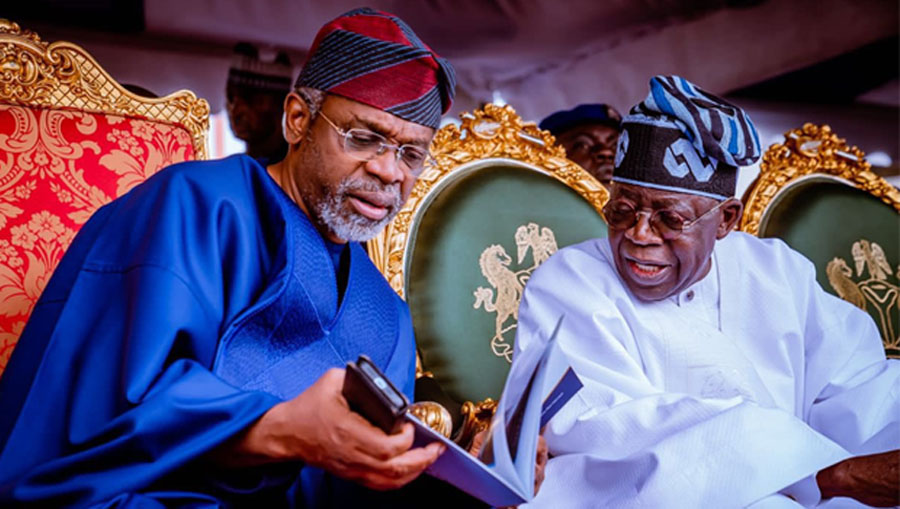
Chief of Staff to President Bola Ahmed Tinubu, Femi Gbajabiamila, has said the controversy surrounding the purported Presidential Foreign Investment Promotion Council (PFIPC) subjected him to an unexpected test but did not lead him to betray the trust placed in him by the President.
Gbajabiamila made the remarks while speaking at his 2026 Mega Empowerment Programme at the National Stadium in Surulere, Lagos, where he addressed allegations that had linked him to the activities of the purported government agency.
He said the controversy generated accusations, attacks and questions about his integrity but maintained that investigations by relevant government authorities had not established his involvement in the activities of the organisation.
“The past few months have tested me in ways I never expected. Stories were written, strange accusations were made, lies were told, and my integrity was questioned,” Gbajabiamila said.
The controversy centres on Adeniyi Adeyemi, who presented himself as the Director-General of the purported PFIPC and made allegations linking Gbajabiamila to his appointment.
Adeyemi had claimed that the Chief of Staff was involved in his appointment and made other allegations concerning the purported agency’s finances. Gbajabiamila denied the allegations and maintained that he neither appointed Adeyemi nor authorised the activities of the organisation.
The Presidency later disowned the PFIPC, stating that the organisation had no legal basis as a Federal Government agency.
President Tinubu subsequently directed the Independent Corrupt Practices and Other Related Offences Commission (ICPC) to investigate the matter, including how the purported agency operated within government structures and how official-looking documents were used to support its activities.
Gbajabiamila appeared before the ICPC in July to answer questions as part of the investigation.
The ICPC subsequently submitted an interim report to President Tinubu, stating that its investigation found no evidence linking Gbajabiamila to Adeyemi’s appointment or to the purported PFIPC.
The commission said Adeyemi was never appointed by the Federal Government or any government authority and that the purported PFIPC was not created by any law, executive order or other valid government instrument.
READ ALSO:
- Woman Busted With Alleged Alcohol Hidden in Water Pack at Ogun Prison
- Abuja Police Arrest Woman, Two Hotel Workers Over Man’s Body Dumped Under Bridge
- Bauchi Police Arrest 26-Year-Old Man Over Rape Of 50-Year-Old Woman
The ICPC also said the purported appointment letter, gazette and other official-looking documents used to support the existence of the organisation were forged.
Investigators found that the purported appointment letter dated March 2024 was presented on fake State House letterhead and falsely attributed a signature to Gbajabiamila. The commission said its review of official records found no evidence that the letter originated from the Office of the Chief of Staff.
The ICPC further said there was no record of official correspondence involving Adeyemi or the PFIPC in the Chief of Staff’s correspondence systems during the period examined.
The commission recommended the prosecution of Adeyemi for alleged offences including forgery and impersonation, while also recommending administrative sanctions against public officers whose actions, omissions or negligence may have facilitated the operation of the purported organisation.
The anti-corruption agency, however, said its investigation was continuing to establish whether other individuals participated in or facilitated the alleged scheme.
The House of Representatives also investigated the controversy through an ad hoc committee chaired by Yusuf Gagdi.
In its preliminary findings, the committee said it found no evidence that Gbajabiamila authorised, approved, established or participated in the activities of the purported organisation.
The committee said evidence before it indicated that Gbajabiamila took steps to alert security and investigative agencies and initiate administrative verification after concerns about the organisation were brought to his attention.
House investigators also concluded that the purported appointment letter bearing Gbajabiamila’s name was not authentic State House correspondence.
The committee said the document’s letterhead, reference number, format and administrative features differed from genuine State House documents and that evidence obtained during the investigation showed that the Presidency had neither issued nor approved Adeyemi’s purported appointment.
The lawmakers also examined a purported presidential executive order and a document presented as an Act of the National Assembly establishing the organisation.
The committee said preliminary evidence indicated that neither document was authentic, adding that the purported parliamentary legislation had not passed through the required legislative process or been gazetted as an Act of the Federation.
The investigation has also expanded into the financial activities allegedly connected to Adeyemi.
The House panel said it identified about 58 bank accounts linked through Bank Verification Number and other identifying information associated with Adeyemi. More than 30 of the accounts were reportedly connected to about nine agencies, companies, foundations or related entities.
The committee stressed that the existence of the accounts did not, by itself, establish that every account or transaction was unlawful, saying investigators were still reconciling registration records, account mandates, beneficial ownership information and transaction histories.
The panel said it was also examining how the purported organisation gained access to government facilities, official-looking documentation, administrative processes and other structures despite the absence of a valid legal instrument establishing it.
According to the committee, about 39 people were presented or represented as employees of the purported organisation.
The House investigation was triggered by concerns over the appearance of the purported organisation in the 2026 Federal Government budget framework, including an allocation associated with the Presidential Economic Advisory Council/Presidential Foreign Investment Promotion Council.
READ ALSO:
- Deputy Director’s Death: NLC Shuts Delta Secretariat, Begins Indefinite Strike
- 2027: NDC State Chairmen Reject Obi-Kwankwaso Movement’s Parallel Structures
- South Africa: 27 Killed, 26 Injured in Separate Mass Shootings
The committee said it was still determining whether any appropriation, warrant, cash backing or actual release of funds was made to the purported organisation.
The ICPC, meanwhile, said it found no evidence that Federal Government funds were approved or disbursed to the purported PFIPC or its operators.
The commission said the organisation allegedly appropriated the identity and office facilities previously associated with the Presidential Economic Advisory Council (PEAC).
It also said its investigation uncovered two other purported fictitious agencies allegedly connected to the scheme and identified weaknesses in government verification procedures and inter-agency oversight.
The findings have consequently shifted attention beyond the allegations against Gbajabiamila to broader questions about government document verification, official correspondence, agency authentication, public-sector oversight and access to government facilities.
House committee chairman Gagdi has also stressed that the investigation was not designed solely around Gbajabiamila or Adeyemi.
He said the panel investigated everyone connected to the controversy and focused on establishing how an organisation that lacked legal backing was able to penetrate government systems and become associated with the federal budget and public institutions.
The House panel has emphasised that its findings are preliminary and do not represent the final position of the National Assembly. It said further work was required to establish individual and institutional responsibilities and determine appropriate administrative, civil, financial or criminal action where necessary.
Adeyemi, who is facing separate legal proceedings connected to the controversy, has denied wrongdoing and challenged some of the allegations against him.
Gbajabiamila, meanwhile, said the controversy would not distract him from carrying out his responsibilities as Chief of Staff.
“No amount of money, no amount of blackmail or lies, whether sponsored from within or outside, will detract me from my work and the work Mr President has given me to do,” he said.
He also reaffirmed his political loyalty to Tinubu, saying that even where the President’s political decisions had not always reflected his personal preferences, he remained committed to the administration’s Renewed Hope agenda.
“In politics, loyalty is the currency we spend the most,” Gbajabiamila said.
The PFIPC scandal has therefore developed into a broader investigation into alleged document forgery, impersonation, financial activities and weaknesses within government verification systems, while the ICPC’s interim findings and the House committee’s preliminary report have found no evidence linking Gbajabiamila to the establishment or operation of the purported agency.
Further investigations and legal proceedings are expected to determine the responsibility of individuals and institutions allegedly connected to the controversy.
Fake Agency Scandal: Gbajabiamila Says He Never Betrayed Tinubu’s Trust
News
MURIC Blasts Nigeria Over UNGA Stance on Palestine, Netanyahu
MURIC Blasts Nigeria Over UNGA Stance on Palestine, Netanyahu
The Muslim Rights Concern (MURIC) has launched a scathing criticism of Nigeria’s conduct at the 2026 United Nations General Assembly, accusing the Federal Government of failing to give the Palestinian crisis the attention it deserves.
MURIC said Nigeria’s failure to include the Palestinian question in its position paper, coupled with its decision not to join countries that walked out during Israeli Prime Minister Benjamin Netanyahu’s address, was deeply regrettable.
The group’s Executive Director, Professor Ishaq Akintola, made the allegations in a statement issued on Saturday, September 26, 2026.
MURIC described Nigeria’s performance at the international gathering as “shocking, woeful, deplorable and despicable,” arguing that the country should have taken a stronger position on the humanitarian situation in Gaza.
According to the organisation, Nigeria failed to include the Palestinian question in its position paper presented during the UN General Assembly on Thursday, September 24.
The group further alleged that Nigerian delegates declined to join 77 other countries whose representatives walked out of the General Assembly chamber during Netanyahu’s speech.
MURIC: Gaza crisis cannot be ignored
MURIC said Nigeria’s position was particularly disturbing against the backdrop of the humanitarian crisis in Gaza and the international legal controversy surrounding Netanyahu.
“Bearing in mind the universal notoriety of the Israeli Prime Minister, the fact that he is now an international criminal who has been declared wanted by the International Criminal Court (ICC) and the horrendous crimes against humanity committed by Israel against the people of Gaza, we consider Nigeria’s performance at the international event as shocking, woeful, deplorable and despicable,” Akintola said.
The organisation also cited casualty figures which it said showed the scale of the devastation in Gaza.
READ ALSO:
- Why I Accept My Daughters’ Same-Sex Relationships — Charly Boy
- Katsina: Troops Rescue 14 Kidnap Victims, Arrest Three Terrorist Couriers With N2.7m
- 2027: Fayemi Denies Galadima’s Claim He Is Coordinating Opposition Group Against Tinubu
MURIC stated that more than 73,922 Palestinians had been killed, while about 174,995 others had been wounded.
The group said Gaza’s medical facilities had been stretched beyond their limits, while large parts of the territory had suffered extensive destruction.
According to MURIC, women and children constitute a substantial proportion of those affected by the conflict.
Food, water, electricity crisis
The Islamic rights organisation also raised concerns about what it described as prolonged shortages of essential supplies in Gaza.
MURIC alleged that Palestinians had endured shortages of food, water, fuel and electricity, with children and pregnant women among those affected.
The group further claimed that homes were still being demolished and that children in Gaza had been deprived of normal access to education.
“The people of Gaza had no food, no water, no fuel and no electricity for months. Children and pregnant women are among the Palestinian victims deprived of essential facilities. As we speak, hundreds of Gaza homes are being demolished. Gaza children cannot go to school,” the statement said.
‘Hold Nigerian government accountable’
MURIC called on Nigerians who are concerned about justice and human rights to scrutinise the Federal Government’s position on the Palestinian issue.
The organisation urged Nigerians to demand explanations for Nigeria’s diplomatic decisions at the United Nations, particularly its decision not to participate in the walkout during Netanyahu’s address.
“We charge Nigerians who believe in justice, fairness and the interconnectivity of humanity to hold the current government of Nigeria accountable for smearing the image of our great country, for mortgaging its future and for hobnobbing with capitalist imperialists who are bent on oppressing poor nations of the world,” Akintola said.
The group also called on Nigeria’s human rights community to publicly speak out over the country’s position on Palestine.
MURIC urges human rights groups to speak up
“We urge the Nigerian human rights community to speak up on Nigeria’s regrettable stance on the Palestinian question,” the statement added.
MURIC’s criticism comes amid continuing international debate over the war in Gaza, the humanitarian situation in the territory and the diplomatic positions adopted by governments at the United Nations.
The organisation maintained that Nigeria, as one of Africa’s major diplomatic powers, should pay greater attention to issues of civilian protection, human rights and the Palestinian question when taking positions at international forums.
MURIC Blasts Nigeria Over UNGA Stance on Palestine, Netanyahu
-

 News2 days ago
Anambra Releases ₦473m Salary Arrears Document as Obi’s Debt Claim Sparks Fresh Dispute
-
 News2 days ago
Keyamo: ₦70,000 Minimum Wage No Longer Enough as Cost of Living Soars
-
 metro2 days ago
EFCC Chairman Raises Alarm Over Alleged Theft of Nigeria’s Public Funds
-
 Business3 days ago
FG Seeks Private Capital, States’ Support to Transform Nigeria’s Ports
-

 Sports1 day ago
AFCON 2027 Qualifier: Nigeria Fight Back to Beat Madagascar 2-1 in Uyo
-

 Entertainment2 days ago
Jetour Takes Adventure Beyond the Road, Brings Solar-powered Borehole to Ibeju-Lekki community
-
 Politics2 days ago
2027: Otti Explains Why He Supports Tinubu Despite Remaining in Labour Party
-
 metro3 days ago
MURIC Condemns NMDPRA Over Fresh 830,000-Tonne Petrol Import Approval