

News
Rain wreaks havoc in Ogun community, destroys electric poles

Rain wreaks havoc in Ogun community, destroys electric poles
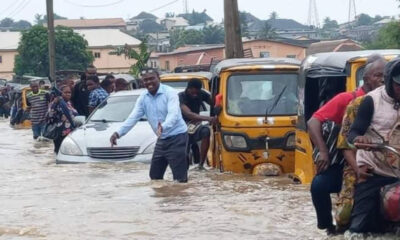
Heavy rains on Sunday destroyed many buildings and poles bearing electricity cables in the Sango area of Ogun State.
A long bus painted in yellow colour and believed to be used to convey people going to a worship centre, was seen abandoned in the middle of the road after about three poles fell on it.






News
BREAKING: Court Sacks Omo-Agege as NDC Senatorial Candidate, Orders INEC to Remove His Name
BREAKING: Court Sacks Omo-Agege as NDC Senatorial Candidate, Orders INEC to Remove His Name
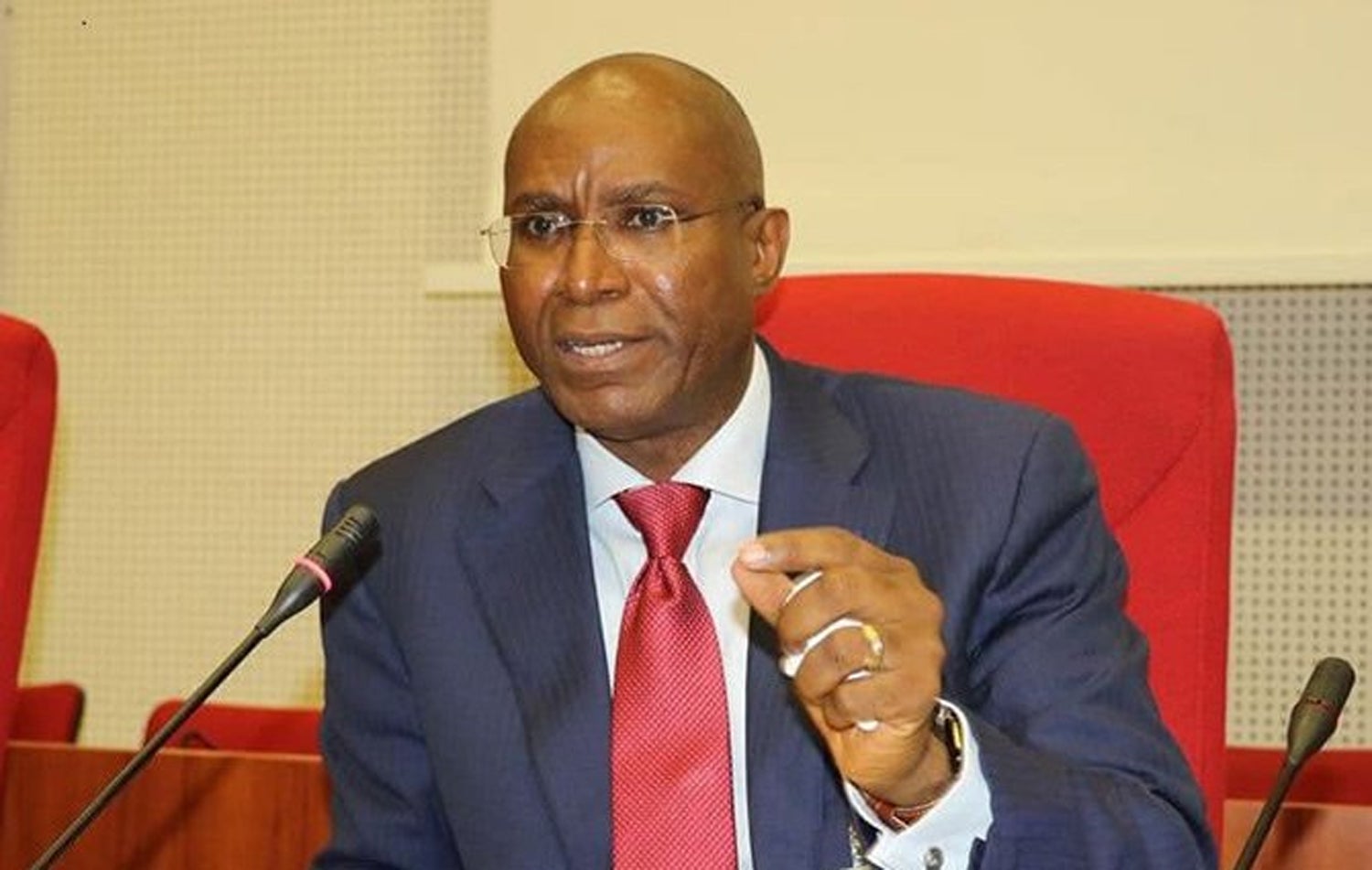
A major legal setback has hit former Deputy President of the Senate, Senator Ovie Omo-Agege, following a Federal High Court judgment nullifying his nomination as the Nigeria Democratic Congress (NDC) candidate for the Delta Central Senatorial District in the 2027 general elections.
The Federal High Court sitting in Warri, Delta State, on Tuesday declared Omo-Agege’s emergence as the NDC senatorial candidate invalid, directing the Independent National Electoral Commission (INEC) to remove his name from its list of candidates for the forthcoming election.
The court, presided over by Justice Hyeladzira Ajiya Nganjiwa, also restrained the former lawmaker from presenting or parading himself as the NDC’s senatorial candidate for Delta Central.
The judgment was delivered in suit number FHC/WR/CS/120/2026, instituted by Professor Alexander Osondu Akpodiete, who challenged the legality of Omo-Agege’s participation in the party’s senatorial primary election.
At the centre of the legal dispute were questions surrounding Omo-Agege’s resignation from the All Progressives Congress (APC), his membership of the NDC and whether he satisfied the statutory requirements to participate in the party’s primary election.
In its judgment, the court held that the NDC failed to comply with mandatory provisions of the Electoral Act concerning the submission of political parties’ membership registers to INEC before conducting primary elections.
Justice Nganjiwa reportedly observed that Omo-Agege’s name was missing from the NDC membership register submitted to INEC at least 21 days before the party’s primary election.
READ ALSO:
- Uduere Killings: Ughelli Chairman Accuses Omo-Agege’s Camp of Triggering Deadly Clash, Demands IGP Probe
- ‘Shame on You’: Fayose Blasts Nigerian Youths Over Poor Protest Turnout
- KWAM 1 Warns Tinubu Over Economic Hardship, Says Nigerians Should Not Suffer to Death
The court further held that the NDC failed to provide credible evidence establishing that an updated membership register containing Omo-Agege’s name was submitted to the electoral commission within the legally prescribed period.
According to the court, participation in a political party’s primary election is subject to compliance with statutory membership requirements, and a candidate cannot acquire a valid nomination through a process that violates the law.
Another important issue considered by the court concerned Omo-Agege’s previous membership of the APC and his participation in the party’s senatorial primary election.
Justice Nganjiwa reportedly observed that Omo-Agege participated in the APC senatorial primary conducted on May 18, 2026.
The court considered this development relevant in determining his political affiliation at the material time and whether he was qualified to participate in the NDC primary.
The issue of when Omo-Agege formally resigned from the APC and joined the NDC had featured prominently during the proceedings, with conflicting submissions presented by the parties.
Before determining the substantive issues, Justice Nganjiwa dismissed five preliminary objections raised by Omo-Agege, the NDC and INEC.
The objections had challenged the competence of the suit and sought to prevent the court from proceeding with the matter.
The judge also addressed the question of an affidavit previously filed and subsequently withdrawn during the proceedings. She held that once an affidavit is formally withdrawn, it ceases to form part of the materials available to the court for determining the dispute and cannot subsequently be relied upon.
The court emphasised that political parties must strictly comply with electoral laws when selecting candidates for elective positions.
One of the most significant consequences of Tuesday’s judgment concerns the possibility of the NDC fielding another candidate for the Delta Central senatorial contest.
Justice Nganjiwa reportedly held that the statutory period within which political parties could conduct fresh primaries to nominate candidates had already elapsed.
This means the party may be unable to organise another primary election to replace Omo-Agege within the legally permitted timeframe.
The development raises questions about the NDC’s position in the Delta Central senatorial race and the legal options available to the party following the judgment.
The judgment comes against the backdrop of heightened political tension in Delta State, particularly following a reported deadly attack on Omo-Agege’s campaign entourage during a visit to Uduere community.
The incident reportedly claimed four lives and left several others injured, further intensifying political disagreements surrounding the former Deputy Senate President’s activities in the state.
However, Tuesday’s court judgment arose from a separate legal challenge concerning his eligibility and emergence as the NDC candidate.
As of the time of filing this report, neither Omo-Agege nor the national leadership of the Nigeria Democratic Congress had issued an official statement responding to the judgment.
It also remains to be seen whether the former Delta Central senator and the party will pursue further legal action against the decision.
The ruling represents a significant development in the preparations for the 2027 general elections, with its implications extending beyond Omo-Agege’s political ambition to the NDC’s participation in the Delta Central senatorial contest.
BREAKING: Court Sacks Omo-Agege as NDC Senatorial Candidate, Orders INEC to Remove His Name
News
2027 POLLS: ‘INEC, You Must Explain!’ — Fresh Questions Over Alleged IReV Results ‘Cleanup’
2027 POLLS: ‘INEC, You Must Explain!’ — Fresh Questions Over Alleged IReV Results ‘Cleanup’
ABUJA — Fresh concerns have emerged over the integrity of Nigeria’s electoral technology ahead of the 2027 general elections, following questions surrounding the preservation of election-result records and metadata on the Independent National Electoral Commission’s (INEC) Result Viewing Portal (IReV).
The controversy has brought renewed attention to the demand for transparency from electoral authorities, particularly over allegations that changes to uploaded election result records could make it difficult for Nigerians to independently verify the circumstances surrounding their transmission.
Broadcast journalist and Channels Television anchor, Seun Okinbaloye, has been associated with the growing public debate over INEC’s preparedness for the 2027 elections, amid mounting concerns about the credibility of the electoral process.
The central question confronting the commission is whether Nigerians can be assured that every result uploaded to its portal, together with the digital information attached to it, will remain accessible and verifiable.
CONTROVERSY OVER IReV METADATA
The latest concerns gained prominence during a stakeholder roundtable on election results tabulation organised by Yiaga Africa in Abuja on November 17, 2026.
At the meeting, a participant representing MundX Analytics, an election-observation technology platform, questioned INEC about its plans to preserve the metadata attached to polling-unit results uploaded to IReV during the 2027 general elections.
Metadata contains important digital information about uploaded documents, including the time of upload, the device used and the location from which the result was transmitted.
The participant reportedly raised concerns that deleting or altering such information could make it difficult for independent observers to establish when, where and how election results were uploaded.
He cited findings from an examination of results uploaded during previous elections, which allegedly identified instances of result sheets uploaded as early as 5 a.m. on election day, as well as multiple results uploaded using the same mobile device.
Such findings, according to the participant, raised questions about the circumstances surrounding the uploading of some election results and reinforced the need for an independently verifiable digital audit trail.
INEC GIVES ASSURANCE
Responding to the concerns, INEC’s Director of Information and Communication Technology, Lawrence Bayode, assured participants that the commission would preserve the metadata attached to election results uploaded to IReV during the 2027 elections.
“I can assure you those metadata will remain intact,” Bayode reportedly said.
He, however, explained that he could not speak for previous elections, adding that the commission still had metadata relating to elections conducted in the Federal Capital Territory, Ekiti and Osun states.
According to him, the results uploaded during those elections showed greater consistency, with no discrepancies identified on the portal.
The assurance is significant because metadata can provide independent observers with information needed to investigate suspicious upload patterns and establish the history of electronic election records.
WHAT THE 2026 ELECTORAL ACT SAYS
The controversy is particularly important given the provisions of the Electoral Act 2026, which introduced a clearer statutory requirement for electronic transmission of polling-unit results.
Section 60(3) of the new legislation provides that presiding officers shall electronically transmit results from polling units to the IReV portal after the prescribed Form EC8A has been signed and stamped, and countersigned by candidates or their polling agents where available.
The provision also states that where electronic transmission becomes impossible because of communication failure, the signed Form EC8A shall remain the primary source for the collation and declaration of results.
This makes the preservation and accessibility of uploaded election records particularly important as political parties, observers and members of the public prepare to scrutinise the electoral process.
FRESH QUESTIONS AHEAD OF 2027
The growing debate over IReV comes amid other concerns about INEC’s technological preparedness for the next general elections.
At the same stakeholder engagement, INEC disclosed that it had yet to develop and test the infrastructure required to publish results from ward, local government and state collation levels on IReV ahead of the 2027 elections.
The commission’s ICT director said the platform currently provides access to polling-unit results but does not yet have the necessary system for publishing results from subsequent levels of collation.
Democracy advocates have argued that extending electronic publication to these stages would improve transparency and make it easier to identify discrepancies between polling-unit results and figures recorded during collation.
With the 2027 elections approaching, Nigerians are increasingly demanding clear explanations about how INEC manages, stores, verifies and protects electronic election records.
For many stakeholders, the issue goes beyond uploading result sheets. It is also about ensuring that the original records and their digital histories remain available for independent examination whenever questions arise.
INEC’s assurance that metadata will remain intact is therefore an important commitment that Nigerians will expect the commission to demonstrate through transparent procedures and verifiable safeguards.
2027 POLLS: ‘INEC, You Must Explain!’ — Fresh Questions Over Alleged IReV Results ‘Cleanup’
News
How I Linked Wike With Tinubu After His Son’s Death – Donu Kogbara Reveals
How I Linked Wike With Tinubu After His Son’s Death – Donu Kogbara Reveals
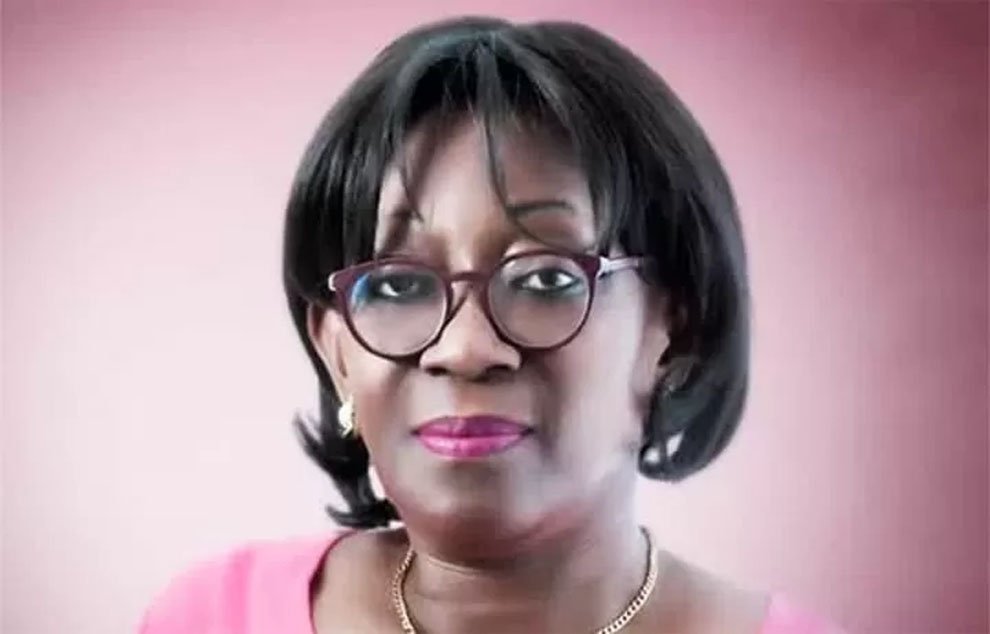
Veteran Nigerian journalist and public affairs commentator, Donu Kogbara, has revealed how she helped facilitate a meeting between President Bola Ahmed Tinubu and the Minister of the Federal Capital Territory (FCT), Nyesom Wike, in London several years before the 2023 general election.
Kogbara made the revelation during an appearance on Channels Television’s Inside Sources, where she recounted how a personal tragedy involving Tinubu unexpectedly brought the two influential politicians together.
According to the veteran journalist, the encounter took place around 2018 or 2019, when Wike was still the governor of Rivers State and had travelled to London for an engagement at Chatham House.
Kogbara explained that she was also in London when news emerged that Tinubu had lost his son. Moved by the development, Wike reportedly expressed a desire to visit the former Lagos State governor and personally offer his condolences.
However, because the two politicians did not have an established direct relationship at the time, arrangements had to be made through an intermediary.
Kogbara said she took the initiative by contacting a senior aide to Tinubu, who subsequently facilitated the meeting between the two men.
She recalled that the encounter was cordial, explaining that her intervention was simply to help Wike convey his condolences following the bereavement.
The journalist, however, clarified that she could not say with certainty whether it was their very first encounter, as she was unaware of any possible earlier meeting between them.
READ ALSO:
- Gombe: Three Killed, 13 Injured as Alleged Military Shooting Sparks Outcry
- Jimmy Odukoya Sues Sister, Church Trustees Over Removal as Senior Pastor
- UNILAG Gets 10 CNG Buses as FG Expands Campus Transport Scheme to 60 Institutions
Interestingly, Kogbara admitted that she never imagined the significance the encounter might eventually assume in Nigerian politics, particularly given the subsequent relationship between both men and the political developments in Rivers State.
She suggested that the connection formed around that period was relevant to understanding the political dynamics that later emerged between Wike and Tinubu.
The revelation offers additional insight into the political contacts that preceded the dramatic realignment of forces ahead of the 2023 presidential election.
In August 2022, Tinubu, then the presidential candidate of the All Progressives Congress (APC), held a widely reported meeting with Wike and some governors of the opposition Peoples Democratic Party (PDP) in London. The meeting came amid the deepening crisis within the PDP following Wike’s disagreement with the party’s presidential candidate, Atiku Abubakar, over the party’s leadership and choice of running mate.
Wike subsequently became a key political figure in the events surrounding the 2023 presidential election. Despite remaining in the PDP, he openly supported Tinubu’s emergence and was later appointed Minister of the Federal Capital Territory.
During the same television appearance, Kogbara also criticised aspects of the Tinubu administration, describing the President’s governing approach as imperial. She particularly questioned the decision to restore Nigeria’s former national anthem, arguing that such a major national decision required broader consultation.
Her comments have renewed attention on the relationship between Tinubu and Wike, as well as the political circumstances surrounding the minister’s eventual alignment with the President.
How I Linked Wike With Tinubu After His Son’s Death – Donu Kogbara Reveals
-

 metro2 days ago
Chibok Girl Escapes After Eight Years in Boko Haram Captivity, Reveals 20 Classmates Still Held
-
 metro1 day ago
‘I Paid My Ex-Husband Before He Slept With Me’ – Islamic Preacher Kaola Makes Shocking Revelation
-

 Education3 days ago
UNILAG Gets 10 CNG Buses as FG Expands Campus Transport Scheme to 60 Institutions
-

 metro3 days ago
Jimmy Odukoya Sues Sister, Church Trustees Over Removal as Senior Pastor
-

 Politics1 day ago
Kwankwaso Made Me Swear on Qur’an to Join APC After Election Victory — Gov Yusuf Reveals Tinubu Deal
-

 Politics2 days ago
‘Makinde Should Call Wike Uncle, Not Me’ – Ogun Fires Back
-

 News2 days ago
How I Linked Wike With Tinubu After His Son’s Death – Donu Kogbara Reveals
-

 Education1 day ago
South-West Leaders Challenged to Emulate Kwankwaso, Invest in Education of Poor Children