

International
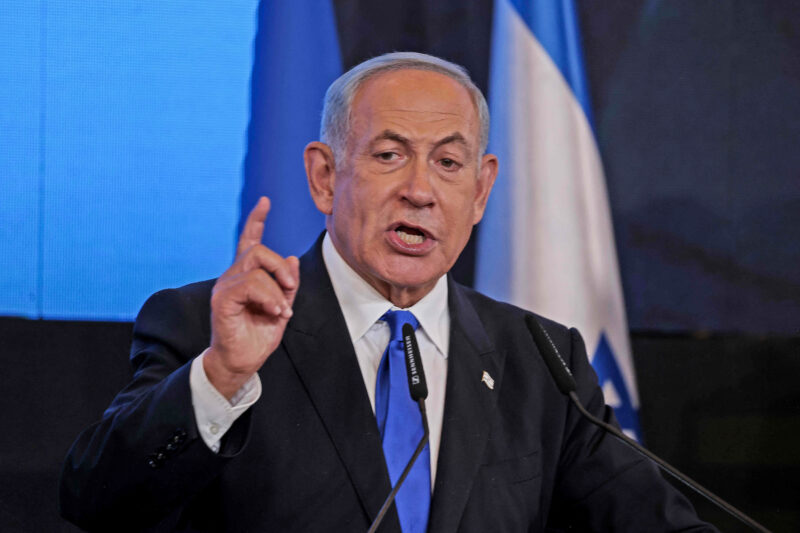
Netanyahu: Israeli forces will move to Lebanon border as Rafah winds down
Netanyahu: Israeli forces will move to Lebanon border as Rafah winds down
Israel’s prime minister has said the “intense phase” of fighting Hamas in Gaza is nearly over, allowing forces to move to the northern border with Lebanon to confront its ally Hezbollah.
In his first Israeli media interview since the start of the war in October, Benjamin Netanyahu said he expected the ground operation in the southern Gaza city of Rafah to be completed soon.
But he stressed that “doesn’t mean the war is about to end”, with action continuing until Hamas was completely driven from power.
Addressing the escalating hostilities with Hezbollah, which have raised fears of a wider regional war, he said: ″We can fight on several fronts and we are prepared to do that.”
Hezbollah has been launching missiles, rockets and drones into northern Israel in support of Hamas since the day after the 7 October attacks in southern Israel, when gunmen from Gaza killed about 1,200 people and took 251 others as hostages.
More than 37,620 people have been killed in Gaza during the military campaign that Israel launched in response, according to the Palestinian territory’s Hamas-run health ministry.
Mr Netanyahu suggested in his interview with Israeli Channel 14 TV on Sunday that the seven-week Israeli operation in Rafah – which has displaced more than a million Palestinians – would be the last major offensive of the war.
“The intense phase of the fighting against Hamas is about to end,” he said. “It doesn’t mean that the war is about to end, but the war in its intense phase is about to end in Rafah.”
Israeli forces would “continue mowing the grass all the time”, he added. “We will not give up.”
READ ALSO:
- Five killed, dozens injured in Russian missile attack on Ukraine’s Pokrovsk
- Cleaner bags life jail for sexually assaulting baby in church
- Wikileaks founder Julian Assange to leave prison after US plea deal
Mr Netanyahu also said he was ready for a “partial deal” that would secure the release of the remaining 116 hostages still in captivity – 41 of whom are presumed dead – but that he was committed to completing “the goal of destroying Hamas”.
Hamas, which is demanding a permanent ceasefire and full Israeli withdrawal as part of any deal, said the comment showed the prime minister’s “clear rejection” of the proposal outlined last month by US President Joe Biden and backed by the UN Security Council.
The first phase of the plan – which Mr Biden said had been put forward by Israel – would last six weeks and include a temporary ceasefire that would see the release of some of the hostages. The second phase would see all the other living hostages freed during a “permanent cessation of hostilities”, with the latter subject to further negotiations.
In a speech at Israel’s parliament on Monday, Mr Netanyahu said his “position has not changed” and that he remained “committed to the Israeli proposal welcomed by President Biden”.
Later, the Hostages and Missing Families Forum released graphic video footage, filmed by Hamas gunmen, showing the abduction on 7 October of three of the remaining hostages – Hersh Goldberg-Polin, 23, Or Levy, 33, and Eliya Cohen, 26.
“We must approve and implement an agreement that will bring all hostages home – the living for rehabilitation and the murdered for proper burial!” the forum said.
Hamas also condemned the reported killing on Sunday of eight people in an Israeli air strike on a vocational college in Gaza City run by the UN Palestinian refugee agency, Unrwa, which was being used as an aid distribution point. The Israel Defense Forces (IDF) said buildings were being used for military purposes by Hamas, which the group rejected as a “lie”.
The IDF announced on Monday that it had killed a Hamas commander responsible for projects and development at the group’s weapons manufacturing headquarters in an overnight air strike, without giving a location.
It also said troops were continuing to carry out raids in the Rafah area, and that they had located weapons, dismantled several underground tunnel shafts and eliminated “a number of armed terrorists”.
According to the IDF, chief of staff Lt Gen Herzi Halevi told troops in Rafah: “We are clearly approaching the point where we can say we have dismantled the Rafah Brigade, that it is defeated not in the sense that there are no more terrorists, but in the sense that it can no longer function as a fighting unit.”
Mr Netanyahu said that once the current phase of the Gaza war was over, Israeli forces would “face north”.
He stated that the redeployment of troops to the border with Lebanon would be “first and foremost for defensive purposes”, but that it would also allow tens of thousands of Israelis displaced by Hezbollah rocket and missile attacks to return home.
“If we can, we will do this diplomatically. If not, we will do it in another way. But we will bring all [the residents] home.”
Israel wants Hezbollah to agree to withdraw its fighters several kilometres back from the border, in line with a UN Security Council resolution passed at the end of their war in 2006. However, Hezbollah says there will be no ceasefire agreement before there is one in Gaza.
READ ALSO:
- Security: FAAN sends armed special force to five airports
- Missing Ogun pregnant woman found in Kwara, faked kidnap – Police
- Napoli plans to slash asking price for Victor Osimhen
In addition to forcing tens of thousands of residents in northern Israel to flee their homes, Hezbollah’s attacks have so far killed at least 25 people in Israel. The IDF has responded with air and artillery strikes in Lebanon, which the UN says have reportedly killed more than 400 people and displaced tens of thousands.
The cross-border exchanges have been intensifying in recent weeks, along with threats from both sides.
On Monday, the IDF said fighter jets had struck a number of Hezbollah “terror targets” in southern Lebanon overnight, including a military structure in Aitaroun and infrastructure in Kfarkela and Khiam.
Lebanon’s state-run National News Agency said there had been an air strike on a house in Aitaroun and that no casualties were reported.
The IDF also said two Israeli reservists in a local security team had been injured, one seriously, by a Hezbollah anti-tank missile attack in the Israeli border town of Metula on Sunday night.
On Sunday, the chairman of the US military’s joint chiefs of staff warned that an Israeli offensive in Lebanon could “drive up the potential for a broader conflict” that draws in Iran and other Iran-backed groups.
“Hezbollah is more capable than Hamas as far as overall capability, number rockets and the like. And I would just say I would see Iran be more inclined to provide greater support to Hezbollah,” General CQ Brown told reporters.
He also said it would be “harder” for the US to defend Israel from attacks by Hezbollah than it was during Iran’s attack on Israel in April, when almost all of the drones and missiles it launched were intercepted.
His remarks came as Israeli Defence Minister Yoav Gallant visited Washington to discuss the next phase of the Gaza war and Hezbollah. Before leaving, Mr Gallant said Israel was “prepared for any action that may be required in Gaza, Lebanon, and in more areas”.
Last week, the IDF confirmed that operational plans for an offensive against Hezbollah had been approved and Foreign Minister Israel Katz warned that Hezbollah would be destroyed “in an all-out war”.
Hezbollah’s leader, Hassan Nasrallah, said it was not interested in a full-scale conflict, but that if one breaks out “there will be no place safe” in Israel.
UN Secretary General Antonio Guterres said people in the region could “not afford Lebanon to become another Gaza”.
Netanyahu: Israeli forces will move to Lebanon border as Rafah winds down
BBC









International
Trump Can Resume Third-Country Deportations Temporarily, US Supreme Court Rules
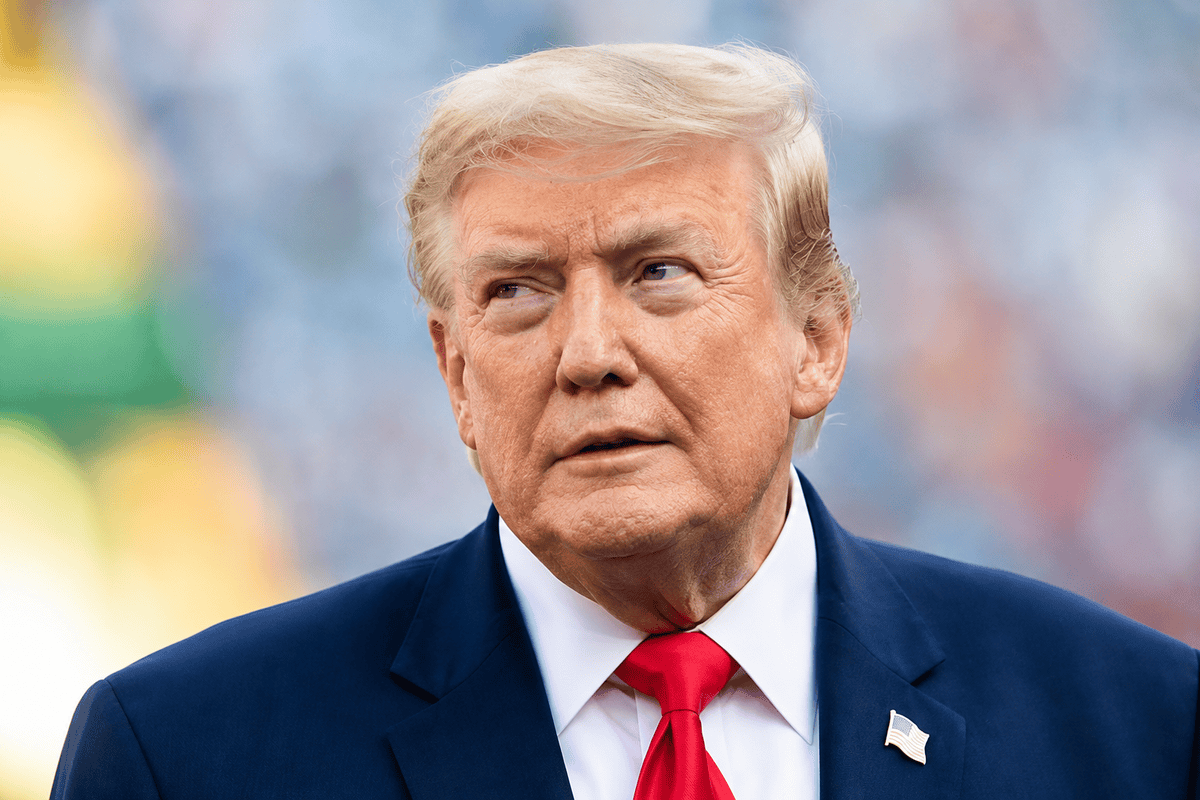
Trump Can Resume Third-Country Deportations Temporarily, US Supreme Court Rules
The US Supreme Court has temporarily cleared the way for President Donald Trump’s administration to resume deporting migrants to countries other than their own while the justices consider the legality of the policy.
The emergency order issued Tuesday temporarily suspends a lower-court restriction that required migrants facing third-country deportation to receive adequate notice and an opportunity to raise concerns about possible persecution or torture in the country to which they were being sent.
The Supreme Court’s action is not a final ruling on the legality of the deportation policy. Instead, it allows the Trump administration to proceed with the removals for now while the broader legal challenge moves forward.
The justices have agreed to hear arguments on the case in December, when they are expected to consider whether the policy violates migrants’ due-process rights and whether lower courts had the authority to impose restrictions on the deportations.
The dispute centres on the administration’s policy of sending migrants to third countries rather than returning them directly to their countries of citizenship. Such removals have been used where migrants cannot be returned to their home countries or where those countries refuse to accept them.
READ ALSO:
- Flood Cuts Off Part of Agbarho-Ughelli Road, Strands Commuters in Delta
- Dangote Draws Battle Lines as Fuel Import Fight Heads Back to Court
- Tinubu Returns After 30 Days in Europe, Says ‘I’m Healthy and Ready to Work’
The Trump administration has defended the policy as an important immigration enforcement tool, saying receiving countries provide assurances that deported migrants will not be persecuted or tortured.
The legal challenge intensified after a federal judge in Boston ruled that migrants should have a meaningful opportunity to raise safety concerns before being removed to a third country. A federal appeals court subsequently upheld the requirement, prompting the administration to seek emergency intervention from the Supreme Court.
Tuesday’s order temporarily puts that lower-court restriction on hold. This means third-country deportations can continue for now, but the Supreme Court has not yet determined whether the administration’s policy complies with US law.
The Supreme Court’s unsigned emergency order did not provide an explanation for the decision. Justices Sonia Sotomayor, Elena Kagan and Ketanji Brown Jackson indicated that they would have left the lower-court restriction in place.
The administration has already deported more than 25,000 migrants to third countries, according to figures presented in the legal proceedings. The destinations have included countries in Latin America and Africa.
Government lawyers have argued that lower-court restrictions have created logistical difficulties for immigration authorities, including cancelled deportation flights and delays in carrying out removal orders.
Lawyers representing migrants, however, have challenged the policy on due-process and safety grounds, arguing that people facing removal should have an opportunity to explain why they fear persecution, torture or other serious harm in the countries where they are being sent.
The case therefore remains unresolved. The Supreme Court’s latest order merely allows the deportations to proceed temporarily while the court reviews the underlying legal questions.
The December hearing will give the justices an opportunity to consider the broader dispute and determine whether the administration can continue the policy under the legal framework being challenged.
Until that review is completed and a final ruling is issued, Tuesday’s action should be understood as a temporary suspension of the lower-court restrictions, rather than a final Supreme Court approval of Trump’s third-country deportation policy.
Trump Can Resume Third-Country Deportations Temporarily, US Supreme Court Rules
International
US Judge Blocks Trump From Tying Counterterrorism Grants to Election Rules

US Judge Blocks Trump From Tying Counterterrorism Grants to Election Rules
A US federal judge has blocked the Donald Trump administration from conditioning counterterrorism grants for states and local governments on changes to how elections are administered.
US District Judge Amir H. Ali of the District Court for the District of Columbia issued the ruling on Monday, September 28, 2026, finding that the Federal Emergency Management Agency (FEMA) exceeded the authority granted to it by Congress by attaching the election-related conditions to homeland security funding.
The case followed a lawsuit filed by Nashville and Davidson County, Tennessee; Columbus, Ohio; and several Texas counties, including Harris, El Paso, Dallas and Travis counties.
The local governments challenged conditions FEMA had attached to its 2026 Homeland Security Grant Program, arguing that Congress authorised the programme to help communities prevent, prepare for and respond to terrorism and other security threats, rather than to regulate routine election administration.
The programme provides more than $1 billion in federal funding to state, local and tribal governments. Under the policy challenged in court, FEMA planned to withhold 20 per cent of certain grant awards until recipients complied with specified election-related requirements.
READ ALSO:
- School Attack: 13-Year-Old Student Kills Teacher, Injures Two
- Bauchi Woman Arrested After Co-Wife Dies in Alleged Pestle Attack
- Breaking: Tinubu Ends Extended European Vacation, Departs Paris for Nigeria
Among the requirements were plans to move away from voting systems that use QR codes or barcodes to count ballots and toward equipment that accepts hand-marked paper ballots.
Recipients also had to demonstrate that they conducted a manual audit of at least five per cent of ballots, reconcile the number of voters who participated in federal elections with the number of ballots cast, and use the Department of Homeland Security’s Systematic Alien Verification for Entitlements (SAVE) database to verify citizenship information in voter-registration records.
The conditions also covered citizenship verification for people working at polling places or operating election systems.
The Trump administration defended the requirements as measures intended to strengthen election security against threats including foreign interference and cyberattacks.
However, Judge Ali ruled that the disputed conditions were not sufficiently connected to the purpose of the counterterrorism grants and that Congress had not authorised FEMA to use the programme to impose the election-administration requirements.
In his 24-page ruling, Ali distinguished between measures designed to protect election infrastructure from security threats and requirements governing routine election procedures, such as ballot formats, voter-roll administration and election audits.
The ruling prevents the administration from conditioning the affected Homeland Security Grant Program funding on compliance with the challenged election requirements while the litigation continues.
A separate lawsuit brought by a coalition of states challenging similar conditions remains pending.
The case comes ahead of the November 3, 2026 US midterm elections, adding another legal dispute to the wider debate over the division of authority between the federal government and states in administering US elections.
The latest ruling does not determine whether the individual election-security measures are effective or appropriate as policy. Instead, it addresses whether FEMA had the legal authority to make compliance with those measures a condition for receiving counterterrorism funding.
The broader Homeland Security Grant Program remains in place, while the administration and the plaintiffs may pursue further legal proceedings.
US Judge Blocks Trump From Tying Counterterrorism Grants to Election Rules
International
Five Arrested Near US-Used RAF Fairford in UK Terror Probe

Five Arrested Near US-Used RAF Fairford in UK Terror Probe
British police have arrested five men near RAF Fairford in Gloucestershire over suspected explosives offences, with the suspects subsequently detained on suspicion of preparing a terrorist act.
The arrests followed a report at about 12:45 a.m. on Sunday, September 27, 2026, concerning three suspicious vehicles that appeared to be travelling towards the air base. Armed officers responded and arrested the five men in the nearby Whelford area.
According to Counter Terrorism Policing, the men were initially arrested on suspicion of offences under the Explosives Act before being further arrested on suspicion of preparing a terrorist act contrary to Section 5 of the Terrorism Act. All five remained in custody as investigators continued gathering evidence.
The incident prompted authorities to declare a major incident, with about 85 households evacuated from Whelford as a precaution.
The evacuated residents were taken to a nearby leisure centre while police established a cordon around the vehicles. The Army’s specialist explosive ordnance disposal team was deployed to examine the vehicles and assess any potential threat.
Counter Terrorism Policing said the investigation was still in its early stages and that officers were working with Gloucestershire Police and other agencies to establish the circumstances surrounding the incident.
Police have not publicly confirmed that an attack on RAF Fairford was planned or that the suspects had entered the military installation. Investigators are examining why the vehicles were in the area and what materials, if any, were associated with them.
READ ALSO:
- Kano Upgrades Five PHCs to General Hospitals, Begins Assessment
- Iran Claims Capture of Second US Underwater Drone in Strait of Hormuz
- Kubwa Explosion: Vehicle Crashes Into Gas Outlet, Damages Nine Shops
The investigation is particularly significant because RAF Fairford is a British military air base used by the United States Air Force. The installation hosts US military personnel and has been used by American aircraft during operations connected with the conflict involving Iran.
The US Air Force said its personnel at Fairford remained vigilant but declined to disclose specific force-protection measures for operational security reasons.
The security operation involved armed police, roadblocks and specialist bomb-disposal personnel. A 400-metre cordon was established around the vehicles while the evacuation was carried out.
Investigators are expected to examine the vehicles, materials and other evidence recovered during the operation as they seek to establish whether there was a planned attack and, if so, its intended target and motive.
The arrests have drawn additional attention because of heightened security around US military installations in Britain. RAF Fairford has become strategically important because of its use by US forces during the conflict involving Iran.
However, British authorities have not publicly linked the five suspects to Iran, any other state or a particular extremist organisation. Any claims about their motive or intended target remain subject to investigation.
The US military has said it remains in close coordination with British authorities and continues to take appropriate measures to protect its personnel and facilities.
British officials have said the incident is believed to be contained, although a substantial security presence is expected to remain in the area while investigators complete their work.
Deputy Assistant Commissioner Vicki Evans, the UK Counter Terrorism Policing senior national coordinator, said investigators were still working to establish what happened.
The five men remain in custody and have not been convicted of any offence. The allegations against them will have to be tested through the British legal process as the UK counter-terrorism investigation continues.
Five Arrested Near US-Used RAF Fairford in UK Terror Probe
-

 metro1 day ago
Osogbo Food Bonanza Turns Nightmare as Discount Vendor Vanishes With Customers’ Millions
-

 metro2 days ago
24 Hours in Darkness: Iju Ishaga Residents, Businesses Count Losses as Ikeja Electric Fails to Restore Power
-

 metro3 days ago
Passenger Dies After Jumping From Moving Bus In Lagos
-

 Politics3 days ago
APC Sweeps Enugu LG Election, Wins All 17 Chairmanship, 260 Councillorship Seats
-

 News2 days ago
Agbede Mourns Baba Alado, Says Mushin Has Lost Pillar of Peace
-

 Education1 day ago
FG Releases 2026–2028 Approved Textbooks, Introduces QR Codes for Tracking
-

 Sports1 day ago
Nigeria XI vs Guinea-Bissau: Awoniyi, Lookman, Adams Lead Super Eagles Attack
-

 metro1 day ago
Hamzat Clarifies Lagos Traffic ‘Lifestyle’ Remark After Backlash